Improving Deep
 Learning with
 VoiceThread
     a Flipped Classroom Model


  Michelle Pacansky-Brock
        brocansky@gmail.com
http://www.TeachingWithoutWalls.com
            @brocansky
What is deep learning?
“Deep learning — learning associated with higher-
order cognitive tasks — is typically contrasted with
rote memorization. Memorization may help students
pass an exam, but it doesn’t necessarily expand
students’ understanding of the world around them,
help them make connections across disciplines, or
promote the application of knowledge and skills in
new situations.”


                      “The Heart of Student Success.”
                      http://www.ccsse.org/
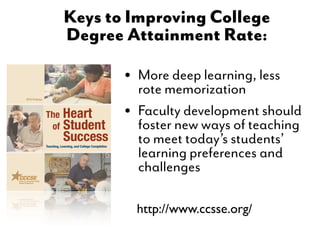
Keys to Improving College
Degree Attainment Rate:

       • Morememorization less
         rote
               deep learning,

       • Faculty development should
         foster new ways of teaching
         to meet today’s students’
         learning preferences and
         challenges

         http://www.ccsse.org/
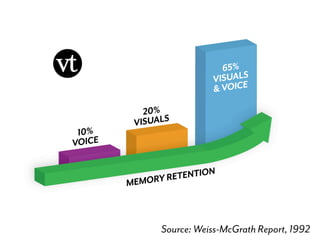
Source: Weiss-McGrath Report, 1992
How can VoiceThread be used to
improve learning in a lecture-based
      learning environment?
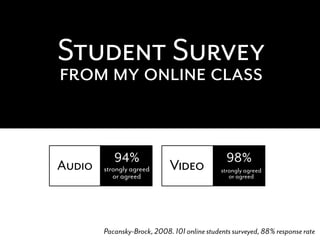
Did the audio and video
 Student Survey
 comments increase the
sense that your instructor
 from my online class
   was present in your
  learning experience?
           94%                                  98%
Audio   strongly agreed      Video            strongly agreed
           or agreed                             or agreed


        Pacansky-Brock, 2008. 101 online students surveyed, 88% response rate
Provides built-in support for
learners with cognitive disabilities.
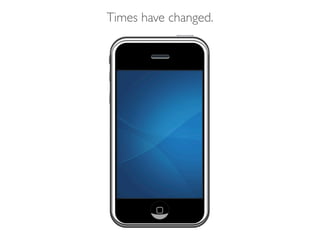
Times have changed.
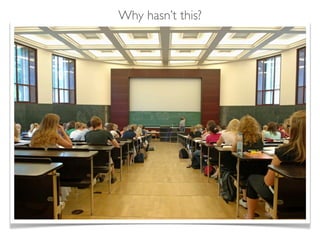
Why hasn’t this?
How Can Technology
         Be Used To:
• create more time for active learning in
  undergraduate classes that rely heavily on
  lecture?
• design inclusive learning environments that
  meet the needs of more students?
• increase interactions between students-
  instructor and students-students beyond the
  classroom?
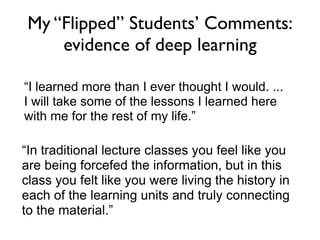
My “Flipped” Students’ Comments:
     evidence of deep learning

“I learned more than I ever thought I would. ...
I will take some of the lessons I learned here
with me for the rest of my life.”

“In traditional lecture classes you feel like you
are being forcefed the information, but in this
class you felt like you were living the history in
each of the learning units and truly connecting
to the material.”
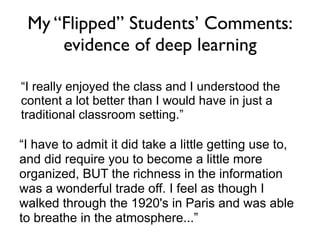
My “Flipped” Students’ Comments:
     evidence of deep learning

“I really enjoyed the class and I understood the
content a lot better than I would have in just a
traditional classroom setting.”

“I have to admit it did take a little getting use to,
and did require you to become a little more
organized, BUT the richness in the information
was a wonderful trade off. I feel as though I
walked through the 1920's in Paris and was able
to breathe in the atmosphere...”
My “Flipped” Students’ Comments:
     evidence of deep learning
“[The class] made me look at the images I
see every day in a new way. I also liked the
way that the class was set up. I think that
more classes should be taught this way.”

“The material presented in this class prompted
me to evaluate my experiences as a female in
terms of my connections to females who have
lived before me, females now and those who
will soon arrive on the scene.”
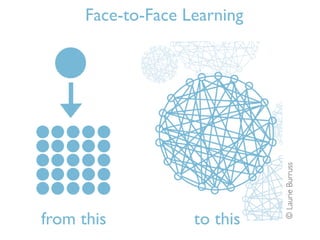
Face-to-Face Learning


                              © Laurie Burruss
from this           to this
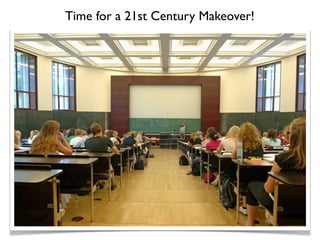
Time for a 21st Century Makeover!
How Did It Work?
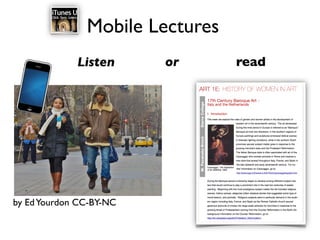
Mobile Lectures
             Listen      or      read


by Ed Yourdon CC-BY-NC
Effect on Student Learning?
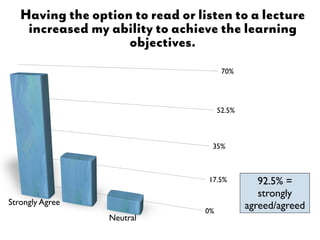
Having the option to read or listen to a lecture
    increased my ability to achieve the learning
                    objectives.
                                        70%


                                       52.5%


                                   35%


                                  17.5%           92.5% =
                                                  strongly
Strongly Agree                                 agreed/agreed
                                  0%
                 Neutral
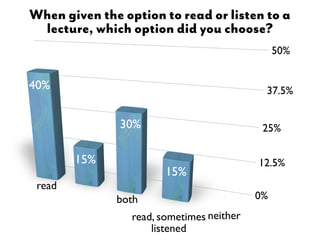
When given the option to read or listen to a
 lecture, which option did you choose?
                                                50%


40%                                         37.5%


               30%                          25%

        15%                                12.5%
                        15%
 read
              both                         0%
                 read, sometimes neither
                     listened
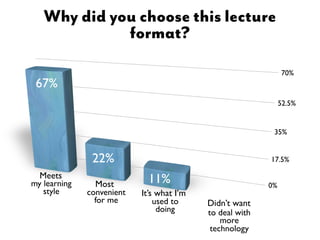
Why did you choose this lecture
             format?
                                                               70%
 67%
                                                               52.5%


                                                           35%


               22%                                        17.5%

  Meets                      11%
my learning     Most                                      0%
   style      convenient   It’s what I’m
                for me         used to     Didn’t want
                                doing      to deal with
                                               more
                                            technology
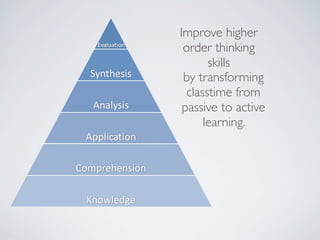
Improve higher
 order thinking
       skills
 by transforming
  classtime from
 passive to active
      learning.
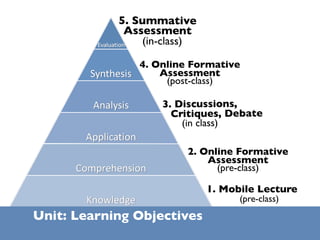
5. Summative
             Assessment
                (in-class)

               4. Online Formative
                   Assessment
                    (post-class)

                   3. Discussions,
                     Critiques, Debate
                       (in class)

                        2. Online Formative
                            Assessment
                              (pre-class)

                             1. Mobile Lecture
                                   (pre-class)
Unit: Learning Objectives
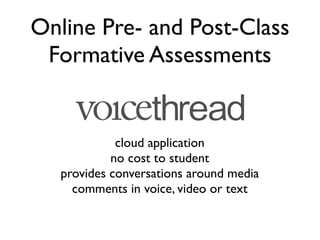
Online Pre- and Post-Class
 Formative Assessments


             cloud application
            no cost to student
   provides conversations around media
     comments in voice, video or text
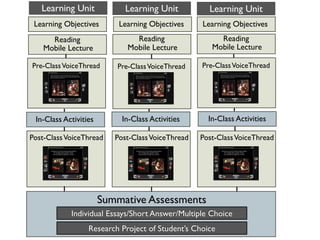
Learning Unit             Learning Unit           Learning Unit
 Learning Objectives       Learning Objectives     Learning Objectives
      Reading                  Reading                  Reading
    Mobile Lecture           Mobile Lecture           Mobile Lecture

Pre-Class VoiceThread     Pre-Class VoiceThread    Pre-Class VoiceThread


 In-Class Activities        In-Class Activities      In-Class Activities

Post-Class VoiceThread    Post-Class VoiceThread   Post-Class VoiceThread


                       Summative Assessments
            Individual Essays/Short Answer/Multiple Choice
                  Research Project of Student’s Choice
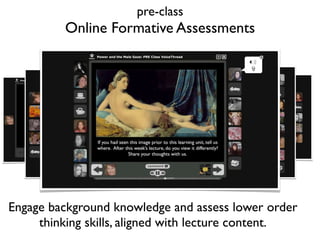
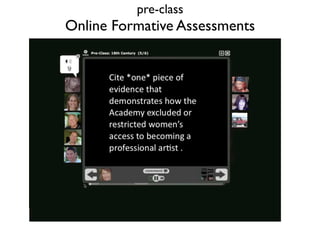
pre-class
          Online Formative Assessments


Engage background knowledge and assess lower order
     thinking skills, aligned with lecture content.
pre-class
Online Formative Assessments
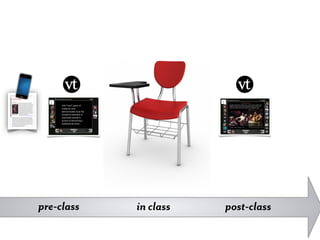
pre-class   in class   post-class
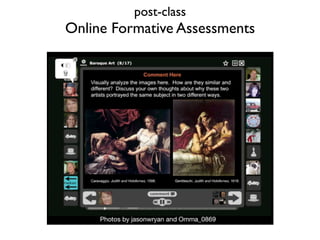
post-class
Online Formative Assessments
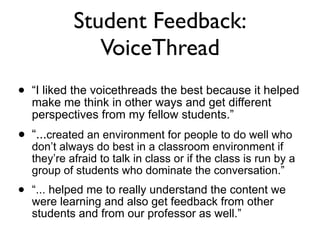
Student Feedback:
                VoiceThread
•   “I liked the voicethreads the best because it helped
    make me think in other ways and get different
    perspectives from my fellow students.”
•   “...created an environment for people to do well who
    don’t always do best in a classroom environment if
    they’re afraid to talk in class or if the class is run by a
    group of students who dominate the conversation.”
•   “... helped me to really understand the content we
    were learning and also get feedback from other
    students and from our professor as well.”
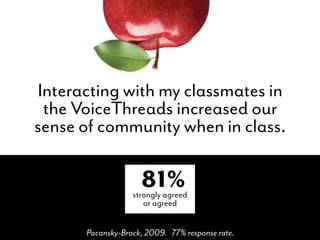
Interacting with my classmates in
 the VoiceThreads increased our
sense of community when in class.

                    81%
                  strongly agreed
                     or agreed


      Pacansky-Brock, 2009. 77% response rate.
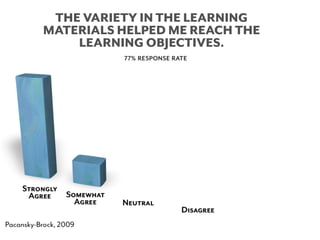
THE VARIETY IN THE LEARNING
MATERIALS HELPED ME REACH THE
    LEARNING OBJECTIVES.
           77% response rate
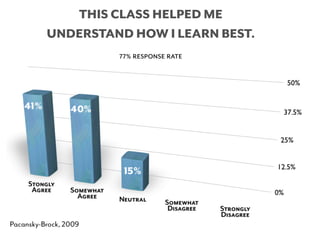
THIS CLASS HELPED ME
      UNDERSTAND HOW I LEARN BEST.
               77% response rate


41%      40%


                15%
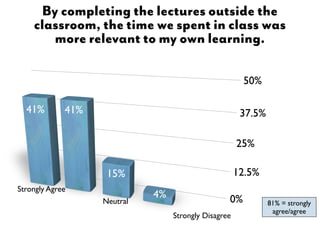
By completing the lectures outside the
    classroom, the time we spent in class was
       more relevant to my own learning.

                                                       50%

  41%        41%                                       37.5%

                                                      25%

                    15%                               12.5%
Strongly Agree
                             4%                   0%
                   Neutral                                     81% = strongly
                                                                agree/agree
                                  Strongly Disagree
Student Interview

Listen to the full 20-minute interview at:

   http://www.box.net/shared/eygt08tvmi
by Valerie Everett on Flickr


 Michelle Pacansky-Brock
   brocansky@gmail.com
www.teachingwithoutwalls.com

VoiceThread for Improving Deep Learning: a Flipped Classroom Model

  • 1.
    Improving Deep Learningwith VoiceThread a Flipped Classroom Model Michelle Pacansky-Brock brocansky@gmail.com http://www.TeachingWithoutWalls.com @brocansky
  • 2.
    What is deeplearning? “Deep learning — learning associated with higher- order cognitive tasks — is typically contrasted with rote memorization. Memorization may help students pass an exam, but it doesn’t necessarily expand students’ understanding of the world around them, help them make connections across disciplines, or promote the application of knowledge and skills in new situations.” “The Heart of Student Success.” http://www.ccsse.org/
  • 4.
    Keys to ImprovingCollege Degree Attainment Rate: • Morememorization less rote deep learning, • Faculty development should foster new ways of teaching to meet today’s students’ learning preferences and challenges http://www.ccsse.org/
  • 7.
  • 8.
    How can VoiceThreadbe used to improve learning in a lecture-based learning environment?
  • 9.
    Did the audioand video Student Survey comments increase the sense that your instructor from my online class was present in your learning experience? 94% 98% Audio strongly agreed Video strongly agreed or agreed or agreed Pacansky-Brock, 2008. 101 online students surveyed, 88% response rate
  • 10.
    Provides built-in supportfor learners with cognitive disabilities.
  • 11.
  • 12.
  • 13.
    How Can Technology Be Used To: • create more time for active learning in undergraduate classes that rely heavily on lecture? • design inclusive learning environments that meet the needs of more students? • increase interactions between students- instructor and students-students beyond the classroom?
  • 14.
    My “Flipped” Students’Comments: evidence of deep learning “I learned more than I ever thought I would. ... I will take some of the lessons I learned here with me for the rest of my life.” “In traditional lecture classes you feel like you are being forcefed the information, but in this class you felt like you were living the history in each of the learning units and truly connecting to the material.”
  • 15.
    My “Flipped” Students’Comments: evidence of deep learning “I really enjoyed the class and I understood the content a lot better than I would have in just a traditional classroom setting.” “I have to admit it did take a little getting use to, and did require you to become a little more organized, BUT the richness in the information was a wonderful trade off. I feel as though I walked through the 1920's in Paris and was able to breathe in the atmosphere...”
  • 16.
    My “Flipped” Students’Comments: evidence of deep learning “[The class] made me look at the images I see every day in a new way. I also liked the way that the class was set up. I think that more classes should be taught this way.” “The material presented in this class prompted me to evaluate my experiences as a female in terms of my connections to females who have lived before me, females now and those who will soon arrive on the scene.”
  • 17.
    Face-to-Face Learning © Laurie Burruss from this to this
  • 18.
    Time for a21st Century Makeover!
  • 19.
  • 20.
    Mobile Lectures Listen or read by Ed Yourdon CC-BY-NC
  • 21.
  • 22.
    Having the optionto read or listen to a lecture increased my ability to achieve the learning objectives. 70% 52.5% 35% 17.5% 92.5% = strongly Strongly Agree agreed/agreed 0% Neutral
  • 23.
    When given theoption to read or listen to a lecture, which option did you choose? 50% 40% 37.5% 30% 25% 15% 12.5% 15% read both 0% read, sometimes neither listened
  • 24.
    Why did youchoose this lecture format? 70% 67% 52.5% 35% 22% 17.5% Meets 11% my learning Most 0% style convenient It’s what I’m for me used to Didn’t want doing to deal with more technology
  • 25.
    Improve higher orderthinking skills by transforming classtime from passive to active learning.
  • 26.
    5. Summative Assessment (in-class) 4. Online Formative Assessment (post-class) 3. Discussions, Critiques, Debate (in class) 2. Online Formative Assessment (pre-class) 1. Mobile Lecture (pre-class) Unit: Learning Objectives
  • 27.
    Online Pre- andPost-Class Formative Assessments cloud application no cost to student provides conversations around media comments in voice, video or text
  • 28.
    Learning Unit Learning Unit Learning Unit Learning Objectives Learning Objectives Learning Objectives Reading Reading Reading Mobile Lecture Mobile Lecture Mobile Lecture Pre-Class VoiceThread Pre-Class VoiceThread Pre-Class VoiceThread In-Class Activities In-Class Activities In-Class Activities Post-Class VoiceThread Post-Class VoiceThread Post-Class VoiceThread Summative Assessments Individual Essays/Short Answer/Multiple Choice Research Project of Student’s Choice
  • 29.
    pre-class Online Formative Assessments Engage background knowledge and assess lower order thinking skills, aligned with lecture content.
  • 30.
  • 31.
    pre-class in class post-class
  • 32.
  • 33.
    Student Feedback: VoiceThread • “I liked the voicethreads the best because it helped make me think in other ways and get different perspectives from my fellow students.” • “...created an environment for people to do well who don’t always do best in a classroom environment if they’re afraid to talk in class or if the class is run by a group of students who dominate the conversation.” • “... helped me to really understand the content we were learning and also get feedback from other students and from our professor as well.”
  • 34.
    Interacting with myclassmates in the VoiceThreads increased our sense of community when in class. 81% strongly agreed or agreed Pacansky-Brock, 2009. 77% response rate.
  • 35.
    THE VARIETY INTHE LEARNING MATERIALS HELPED ME REACH THE LEARNING OBJECTIVES. 77% response rate
  • 36.
    THIS CLASS HELPEDME UNDERSTAND HOW I LEARN BEST. 77% response rate 41% 40% 15%
  • 37.
    By completing thelectures outside the classroom, the time we spent in class was more relevant to my own learning. 50% 41% 41% 37.5% 25% 15% 12.5% Strongly Agree 4% 0% Neutral 81% = strongly agree/agree Strongly Disagree
  • 38.
    Student Interview Listen tothe full 20-minute interview at: http://www.box.net/shared/eygt08tvmi
  • 39.
    by Valerie Everetton Flickr Michelle Pacansky-Brock brocansky@gmail.com www.teachingwithoutwalls.com