Flip
A new twist on the classroom “Flip”
Table of Content


•Traditional methods of Instruction

•Learning Pyramid

•The “Flip”

•Issues with the “Flip

•A twist on the “Flip”

•Students ask questions

•Resources

•Summary

•Sources
Traditional Methods of Instruction


“Sage on the Stage” approach
(aka Passive Learning)


•Expert (teacher) Lectures

•Students Listen (maybe)

•Knowledge is transferred ????

•Homework assigned (and completed?)

•Tests taken

•Knowledge forgotten (20% of what is heard is remembered)
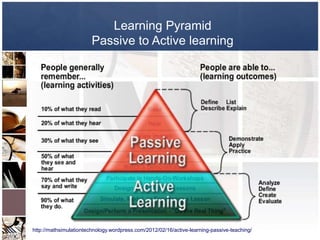
Learning Pyramid
                        Passive to Active learning


http://mathsimulationtechnology.wordpress.com/2012/02/16/active-learning-passive-teaching/
The “Flip”


  Traditional definition of the “Flipped Classroom”

  •videos take the place of direct instruction
  •students get individual time in class to work with
  their teacher on key learning activities

  It is called the flipped class because what used to
  be class work (the "lecture" is done at home via
  teacher-created videos and what used to be
  homework (assigned problems) is now done in
  class.

http://www.thedailyriff.com/articles/the-flipped-class-conversation-689.php
The “Flip”


Survey Results: 67% Educators Report Flipped
Classroom Improves Test Scores
88% of educators said flipping their classroom
improved their job satisfaction
67% report improved student test scores
80% claimed improved student attitude
99% would use it again next year


http://edudemic.com/2012/06/survey-results-67-educators-report-flipped-classroom-improves-test-scores/
So, What is a Flipped Classroom?


Select the link below for an overview of the “Flipped
Classroom” by Missy Braden


      Missy Braden's discussion of the flipped
      classroom at https://vimeo.com/55631288
Issues with the “Flip”


Some current issues and concerns include:

• Is the technology driving the pedagogy?

• Is the teacher still relevant?

• How much time and effort is needed to prepare videos and other replacements
for lectures?

• Will the students do there homework (where knowledge transfer takes place)?

• Will students come prepared for the “hands-on” learning activity?
A Twist on the Flip


The Students become the teacher – they prepare
the “Flip”
•Students are divided into teams and each team is
assigned a topic
•Each team prepares the flipped material during class
•The teacher becomes the subject matter expert and works
with each team during class time to prepare the flipped
material
•Flipped Materials are deployed as “homework” for all
students to review
A Twist on the Flip


•After reviewing flipped materials
    •Students may work on hand-on exercises (there are
    now multiple experts to help – the instructor and the
    group that prepared the flip)
   •Students create questions during class

•Questions can be answered by other students and/or
instructor

•As incentives, there could be a contest for which team
prepare the better flip and/or which student have the best
questions
Students Prepare Questions


How does it work/what are the steps?
• The teacher sets the stage with goals for the question
  formation technique
• Introduce rules for question development
• Provide instruction to begin the question formation
• Serve as a facilitator to help student ID open and
  closed-ended questions
• Help students prioritize the questions
• Give direction for use of questions
Students Prepare Questions


Growth in student thought processes:

• Metacognitive

• Convergent thinking

• Divergent thinking
Benefits of the “Twisted Flip” and
              Question Formation


By having the students prepare the flipped material teacher’s time is
freed up so they can work with individual groups and the students:
•become subject matter experts in order to teach others (peer
learning)
•learn by doing
•become active learners

 By having the students prepare questions, they:
 • develop critical thinking skills
 • gain a better understanding
Resources


Technology needs             Resources Available
Make videos                  Videos already available
•   Smart phone              •   Premade videos
•   Video camera             •   Khan Academy
•   Point and shoot camera   •   Knowmia
•   ipad or tablet or PC     •   Ted-Ed


Edit videos
•   Windows Movie Maker
•   Camtasia
•   Apple iMovie
Summary


•   Traditional methods are not effective (20% retention rate at best)
•   One solution is to flip the class which is not just watching videos and
    doing homework in school
•   Adding to the flip (the twist on the flip)
      •   Turns the students into subject matter experts
      •   Frees the teachers to help the students that need help
      •   Takes advantage of peer learning
      •   Transforms the learning from passive to active
•   Teaching by questioning facilitates a higher level of learning
•   There are resources already available to facilitate this transformation
•   It’s the pedagogy that matters – technology can facilitate the process but
    it is not required
•   This technique will work for K-12 through Higher Ed
SOURCES


Bergmann Jon, Overmyer Jerry & Wilie Brett,The Flipped Class: Myths vs.
Reality, The Daily Riff, 2012, retrieved at
http://www.thedailyriff.com/articles/the-flipped-class-conversation-689.php

Johnson, Claes, Active Learning – Passive Teaching
retrieved at
http://mathsimulationtechnology.wordpress.com/2012/02/16/active-learning-
passive-teaching/

Rothstein, Dan & Santana, Luz, Make Just One Change Teach Students to
Ask Their Own Questions Harvard Education Press, 2011

Survey Results: 67% Educators Report Flipped Classroom Improves Test
Scores retrieved at
http://edudemic.com/2012/06/survey-results-67-educators-report-flipped-
classroom-improves-test-scores

DNLE Go FORTH Final Project

  • 1.
    Flip A new twiston the classroom “Flip”
  • 2.
    Table of Content •Traditionalmethods of Instruction •Learning Pyramid •The “Flip” •Issues with the “Flip •A twist on the “Flip” •Students ask questions •Resources •Summary •Sources
  • 3.
    Traditional Methods ofInstruction “Sage on the Stage” approach (aka Passive Learning) •Expert (teacher) Lectures •Students Listen (maybe) •Knowledge is transferred ???? •Homework assigned (and completed?) •Tests taken •Knowledge forgotten (20% of what is heard is remembered)
  • 4.
    Learning Pyramid Passive to Active learning http://mathsimulationtechnology.wordpress.com/2012/02/16/active-learning-passive-teaching/
  • 5.
    The “Flip” Traditional definition of the “Flipped Classroom” •videos take the place of direct instruction •students get individual time in class to work with their teacher on key learning activities It is called the flipped class because what used to be class work (the "lecture" is done at home via teacher-created videos and what used to be homework (assigned problems) is now done in class. http://www.thedailyriff.com/articles/the-flipped-class-conversation-689.php
  • 6.
    The “Flip” Survey Results:67% Educators Report Flipped Classroom Improves Test Scores 88% of educators said flipping their classroom improved their job satisfaction 67% report improved student test scores 80% claimed improved student attitude 99% would use it again next year http://edudemic.com/2012/06/survey-results-67-educators-report-flipped-classroom-improves-test-scores/
  • 7.
    So, What isa Flipped Classroom? Select the link below for an overview of the “Flipped Classroom” by Missy Braden Missy Braden's discussion of the flipped classroom at https://vimeo.com/55631288
  • 8.
    Issues with the“Flip” Some current issues and concerns include: • Is the technology driving the pedagogy? • Is the teacher still relevant? • How much time and effort is needed to prepare videos and other replacements for lectures? • Will the students do there homework (where knowledge transfer takes place)? • Will students come prepared for the “hands-on” learning activity?
  • 9.
    A Twist onthe Flip The Students become the teacher – they prepare the “Flip” •Students are divided into teams and each team is assigned a topic •Each team prepares the flipped material during class •The teacher becomes the subject matter expert and works with each team during class time to prepare the flipped material •Flipped Materials are deployed as “homework” for all students to review
  • 10.
    A Twist onthe Flip •After reviewing flipped materials •Students may work on hand-on exercises (there are now multiple experts to help – the instructor and the group that prepared the flip) •Students create questions during class •Questions can be answered by other students and/or instructor •As incentives, there could be a contest for which team prepare the better flip and/or which student have the best questions
  • 11.
    Students Prepare Questions Howdoes it work/what are the steps? • The teacher sets the stage with goals for the question formation technique • Introduce rules for question development • Provide instruction to begin the question formation • Serve as a facilitator to help student ID open and closed-ended questions • Help students prioritize the questions • Give direction for use of questions
  • 12.
    Students Prepare Questions Growthin student thought processes: • Metacognitive • Convergent thinking • Divergent thinking
  • 13.
    Benefits of the“Twisted Flip” and Question Formation By having the students prepare the flipped material teacher’s time is freed up so they can work with individual groups and the students: •become subject matter experts in order to teach others (peer learning) •learn by doing •become active learners By having the students prepare questions, they: • develop critical thinking skills • gain a better understanding
  • 14.
    Resources Technology needs Resources Available Make videos Videos already available • Smart phone • Premade videos • Video camera • Khan Academy • Point and shoot camera • Knowmia • ipad or tablet or PC • Ted-Ed Edit videos • Windows Movie Maker • Camtasia • Apple iMovie
  • 15.
    Summary • Traditional methods are not effective (20% retention rate at best) • One solution is to flip the class which is not just watching videos and doing homework in school • Adding to the flip (the twist on the flip) • Turns the students into subject matter experts • Frees the teachers to help the students that need help • Takes advantage of peer learning • Transforms the learning from passive to active • Teaching by questioning facilitates a higher level of learning • There are resources already available to facilitate this transformation • It’s the pedagogy that matters – technology can facilitate the process but it is not required • This technique will work for K-12 through Higher Ed
  • 16.
    SOURCES Bergmann Jon, OvermyerJerry & Wilie Brett,The Flipped Class: Myths vs. Reality, The Daily Riff, 2012, retrieved at http://www.thedailyriff.com/articles/the-flipped-class-conversation-689.php Johnson, Claes, Active Learning – Passive Teaching retrieved at http://mathsimulationtechnology.wordpress.com/2012/02/16/active-learning- passive-teaching/ Rothstein, Dan & Santana, Luz, Make Just One Change Teach Students to Ask Their Own Questions Harvard Education Press, 2011 Survey Results: 67% Educators Report Flipped Classroom Improves Test Scores retrieved at http://edudemic.com/2012/06/survey-results-67-educators-report-flipped- classroom-improves-test-scores