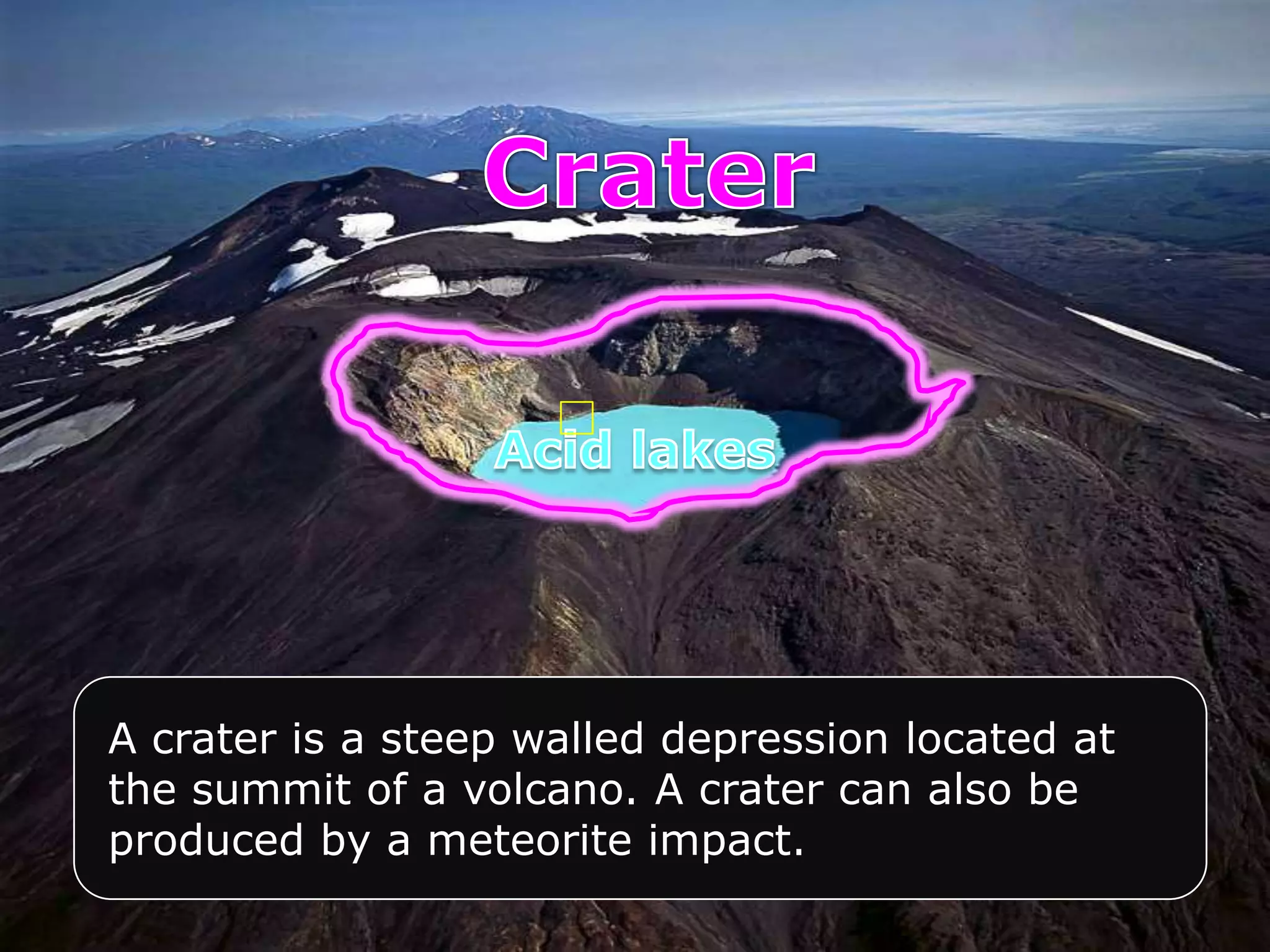

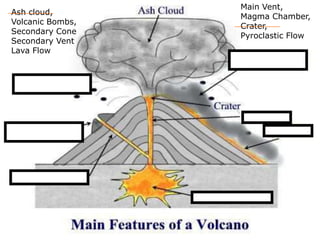
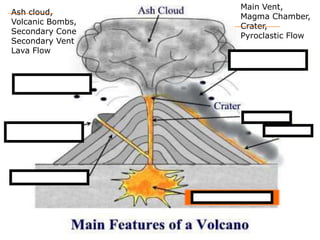
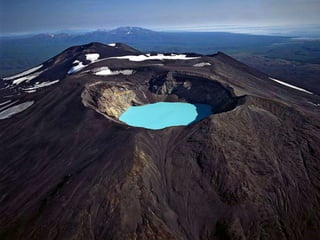
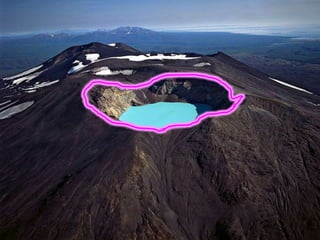
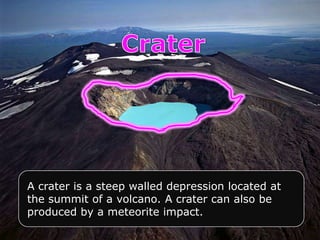
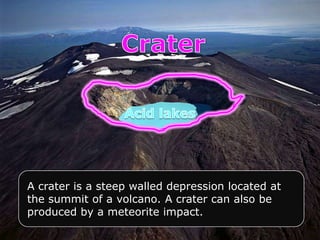
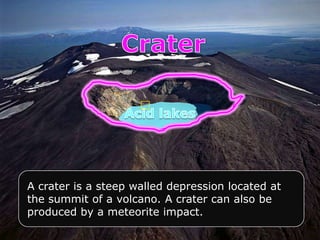
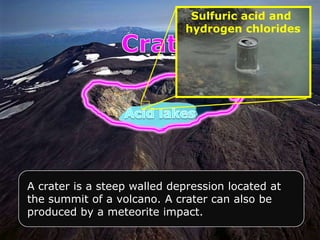
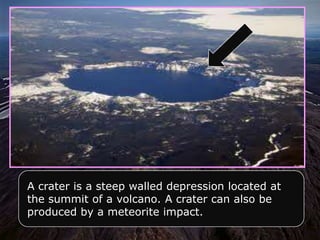
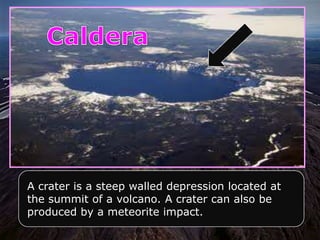
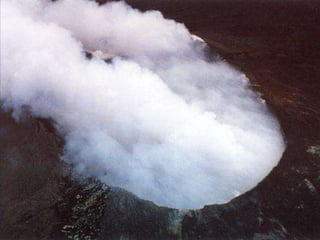
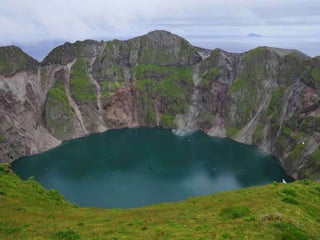
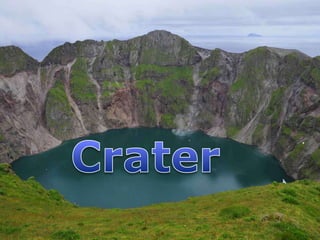


A crater is a steep walled depression located at
the summit of a volcano. A crater can also be
produced by a meteorite impact.
• RED SLIDE: These are notes that are very
important and should be recorded in your
science journal.
Copyright © 2010 Ryan P. Murphy
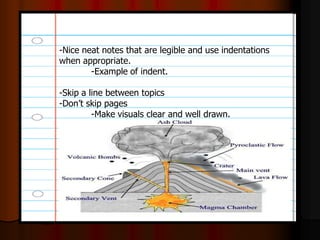
-Nice neat notes that are legible and use indentations
when appropriate.
-Example of indent.
-Skip a line between topics
-Don’t skip pages
-Make visuals clear and well drawn.
• RED SLIDE: These are notes that are very
important and should be recorded in your
science journal.
• BLACK SLIDE: Pay attention, follow
directions, complete projects as described
and answer required questions neatly.
Copyright © 2010 Ryan P. Murphy
http://sciencepowerpoint.com/Website Link:
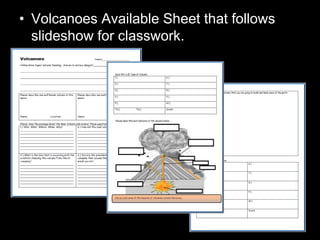
• Volcanoes Available Sheet that follows
slideshow for classwork.
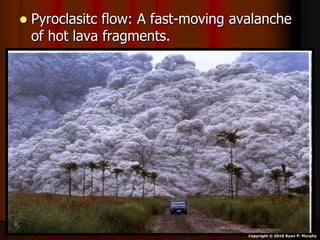
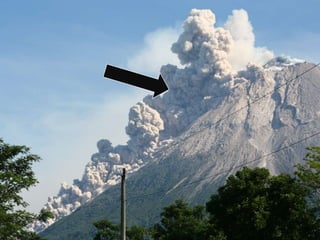
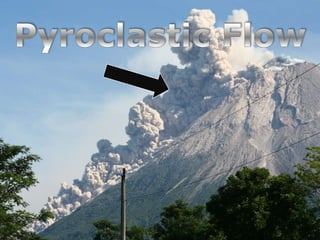
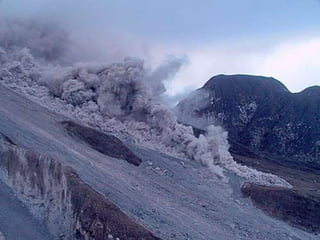
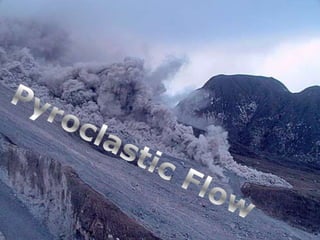
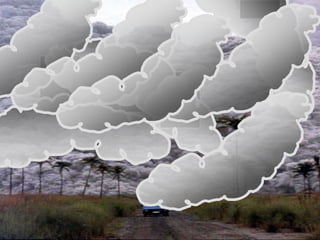
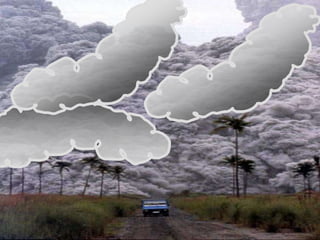
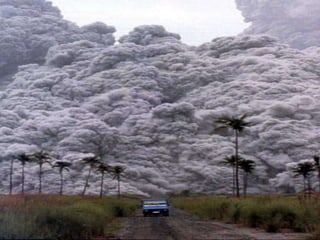
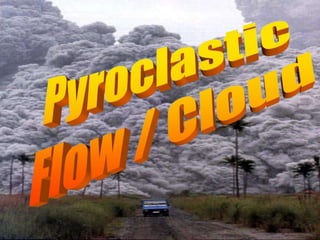
 Pyroclasitc flow: A fast-moving avalanche
of hot lava fragments.
Copyright © 2010 Ryan P. Murphy
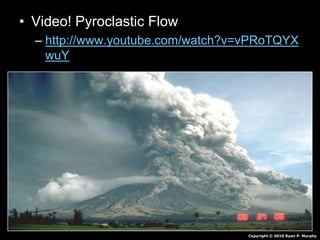
• Video! Pyroclastic Flow
– http://www.youtube.com/watch?v=vPRoTQYX
wuY
Copyright © 2010 Ryan P. Murphy
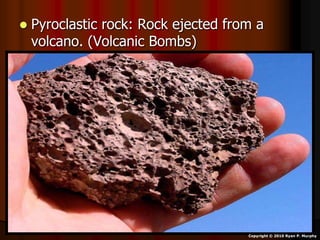
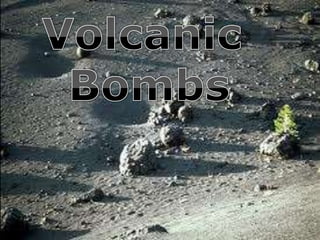
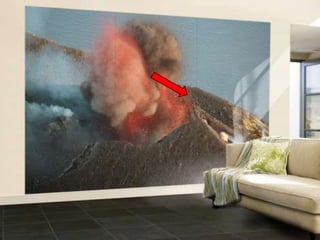
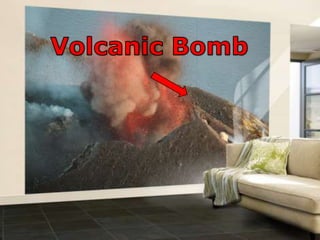
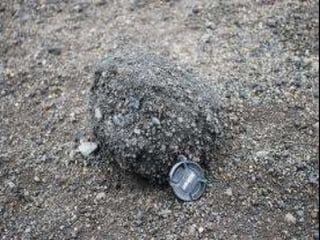
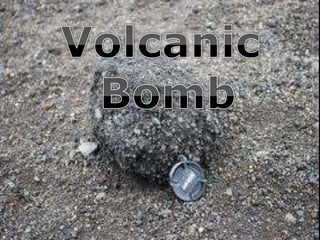
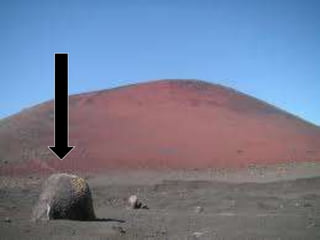
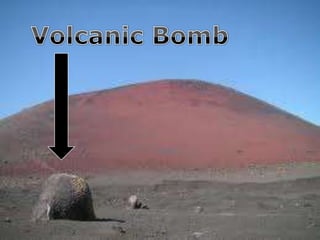
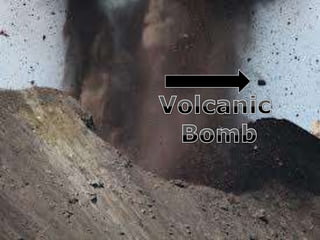
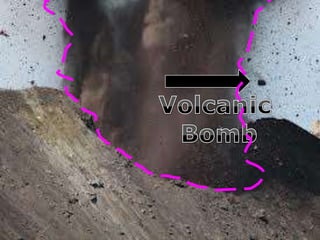
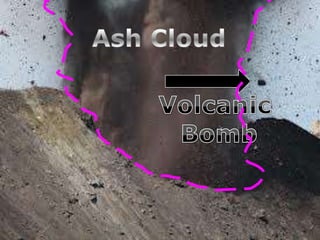
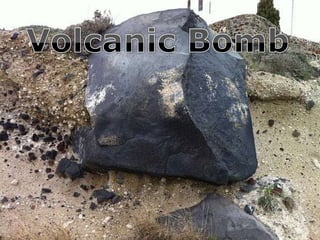
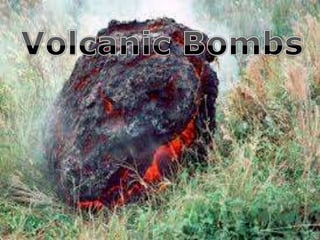
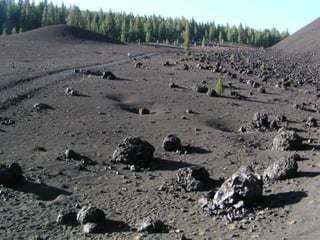
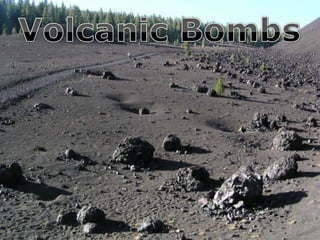
 Pyroclastic rock: Rock ejected from a
volcano. (Volcanic Bombs)
Copyright © 2010 Ryan P. Murphy
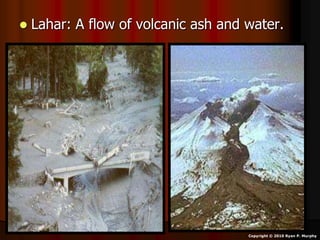
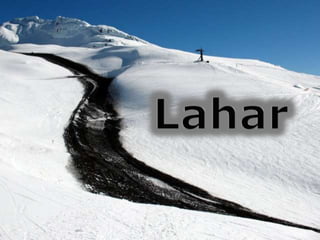
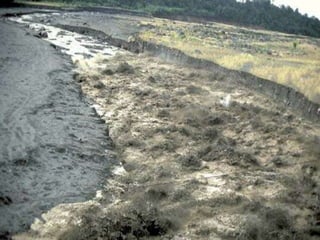
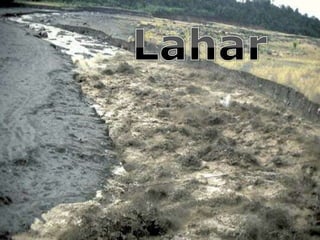
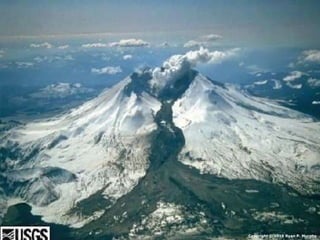
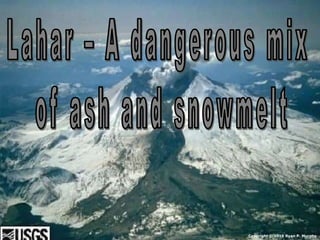
 Lahar: A flow of volcanic ash and water.
Copyright © 2010 Ryan P. Murphy
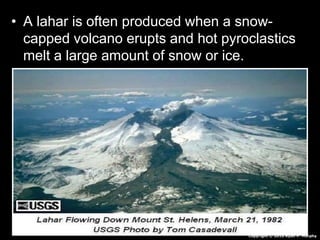
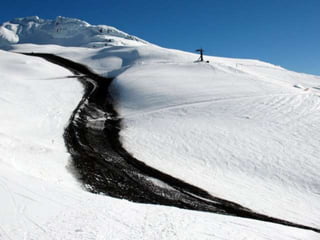
• A lahar is often produced when a snow-
capped volcano erupts and hot pyroclastics
melt a large amount of snow or ice.
Copyright © 2010 Ryan P. Murphy
• A lahar is often produced when a snow-
capped volcano erupts and hot pyroclastics
melt a large amount of snow or ice.
Copyright © 2010 Ryan P. Murphy
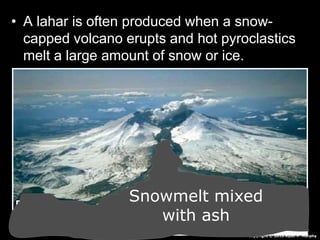
Snowmelt mixed
with ash
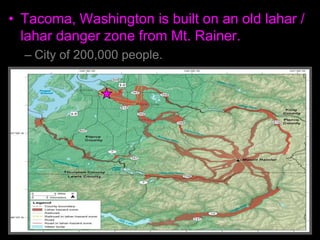
• Tacoma, Washington is built on an old lahar /
lahar danger zone from Mt. Rainer.
– City of 200,000 people.
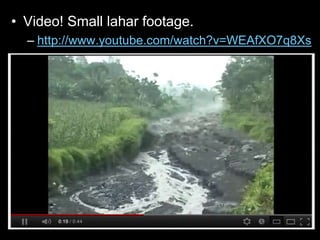
• Video! Small lahar footage.
– http://www.youtube.com/watch?v=WEAfXO7q8Xs
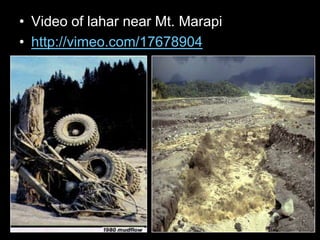
• Video of lahar near Mt. Marapi
• http://vimeo.com/17678904
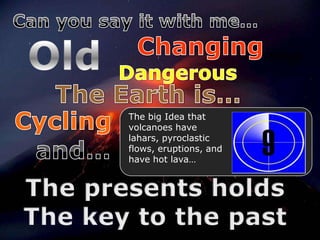
The big Idea that
volcanoes have
lahars, pyroclastic
flows, eruptions, and
have hot lava…
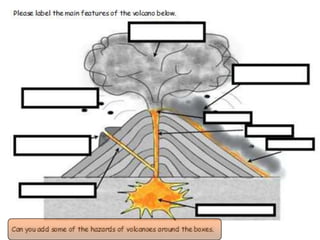
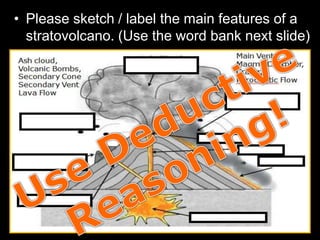
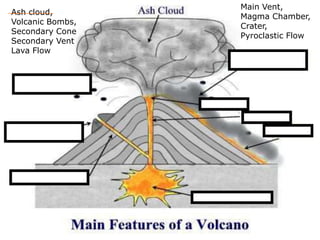
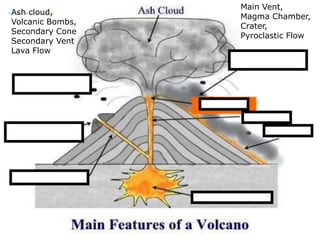
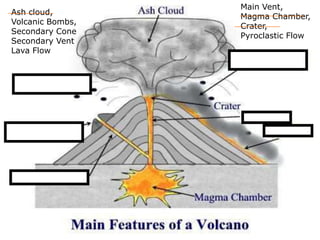
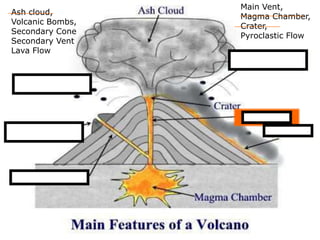
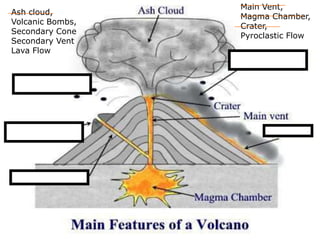
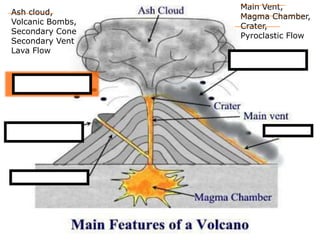
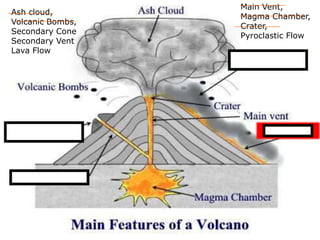
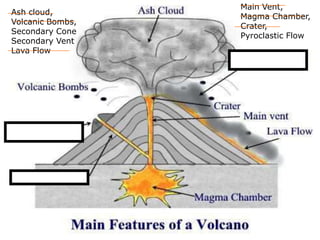
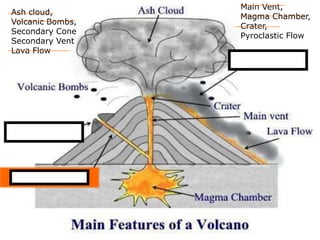
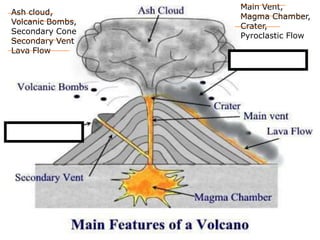
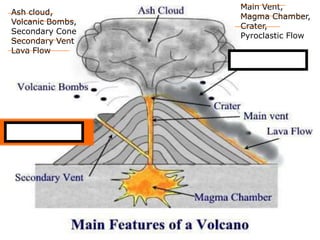
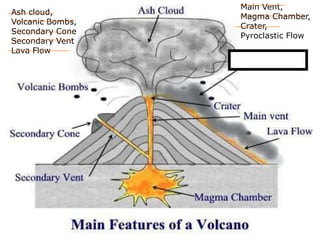
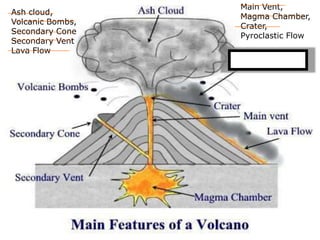
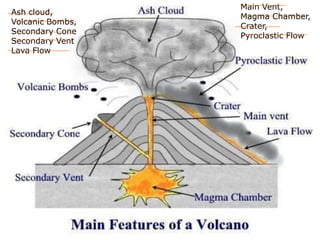
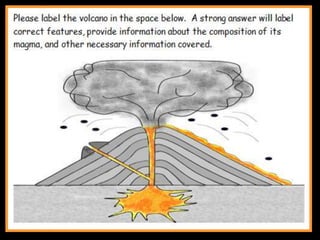
• Please sketch / label the main features of a
stratovolcano. (Use the word bank next slide)
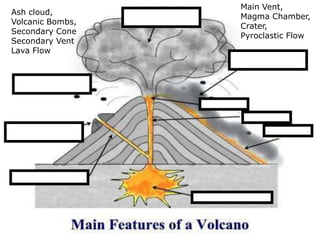
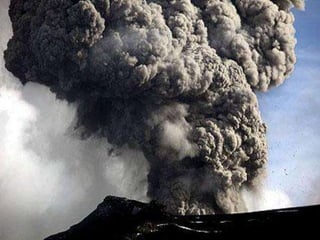
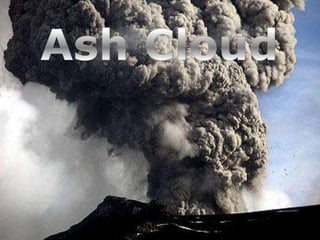
Ash cloud,
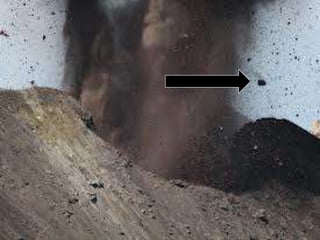
Volcanic Bombs,
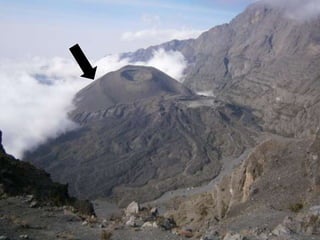
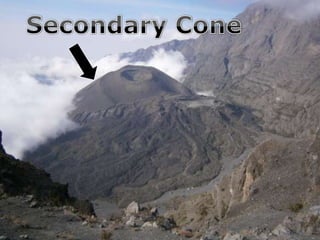
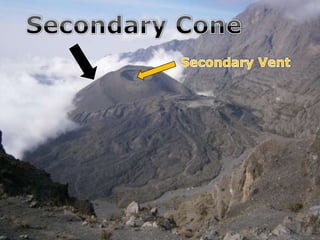
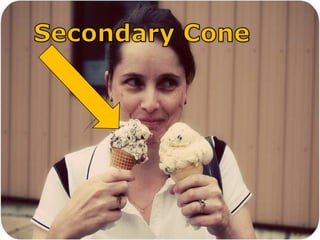
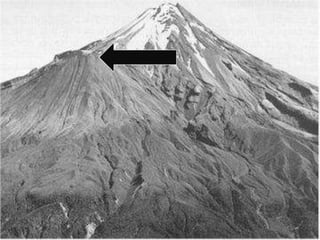
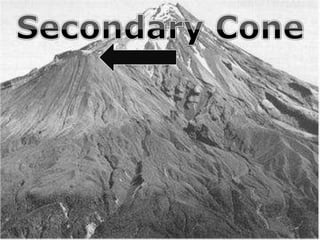
Secondary Cone
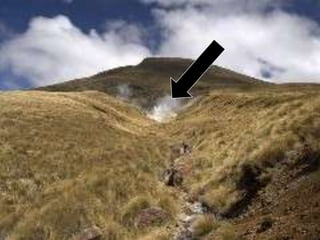
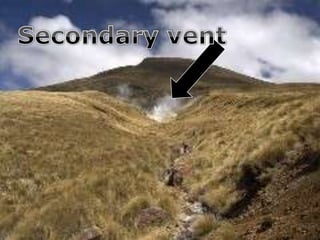
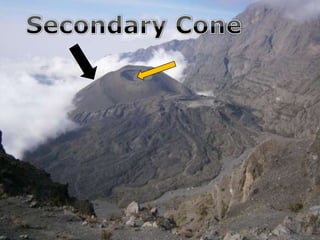
Secondary Vent
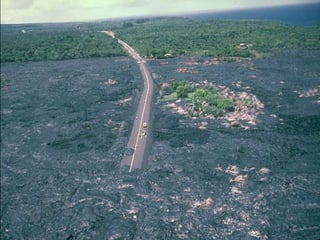
Lava Flow
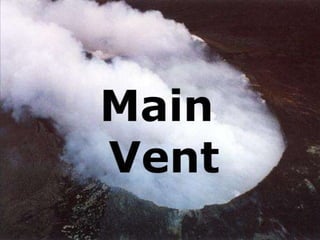
Main Vent,
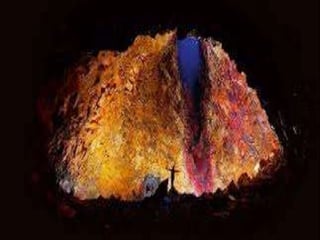
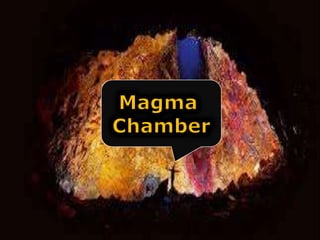
Magma Chamber,
Crater,
Pyroclastic Flow
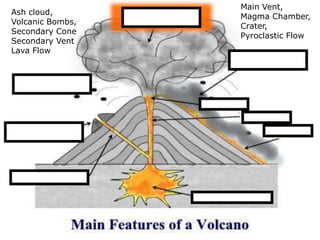
Ash cloud,
Volcanic Bombs,
Secondary Cone
Secondary Vent
Lava Flow
Main Vent,
Magma Chamber,
Crater,
Pyroclastic Flow
Ash cloud,
Volcanic Bombs,
Secondary Cone
Secondary Vent
Lava Flow
Main Vent,
Magma Chamber,
Crater,
Pyroclastic Flow
Ash cloud,
Volcanic Bombs,
Secondary Cone
Secondary Vent
Lava Flow
Main Vent,
Magma Chamber,
Crater,
Pyroclastic Flow
Ash cloud,
Volcanic Bombs,
Secondary Cone
Secondary Vent
Lava Flow
Main Vent,
Magma Chamber,
Crater,
Pyroclastic Flow
Ash cloud,
Volcanic Bombs,
Secondary Cone
Secondary Vent
Lava Flow
Main Vent,
Magma Chamber,
Crater,
Pyroclastic Flow
Ash cloud,
Volcanic Bombs,
Secondary Cone
Secondary Vent
Lava Flow
Main Vent,
Magma Chamber,
Crater,
Pyroclastic Flow
Ash cloud,
Volcanic Bombs,
Secondary Cone
Secondary Vent
Lava Flow
Main Vent,
Magma Chamber,
Crater,
Pyroclastic Flow
Ash cloud,
Volcanic Bombs,
Secondary Cone
Secondary Vent
Lava Flow
Main Vent,
Magma Chamber,
Crater,
Pyroclastic Flow
Ash cloud,
Volcanic Bombs,
Secondary Cone
Secondary Vent
Lava Flow
Main Vent,
Magma Chamber,
Crater,
Pyroclastic Flow
Ash cloud,
Volcanic Bombs,
Secondary Cone
Secondary Vent
Lava Flow
Main Vent,
Magma Chamber,
Crater,
Pyroclastic Flow
Ash cloud,
Volcanic Bombs,
Secondary Cone
Secondary Vent
Lava Flow
Main Vent,
Magma Chamber,
Crater,
Pyroclastic Flow
Ash cloud,
Volcanic Bombs,
Secondary Cone
Secondary Vent
Lava Flow
Main Vent,
Magma Chamber,
Crater,
Pyroclastic Flow
Ash cloud,
Volcanic Bombs,
Secondary Cone
Secondary Vent
Lava Flow
Main Vent,
Magma Chamber,
Crater,
Pyroclastic Flow
Ash cloud,
Volcanic Bombs,
Secondary Cone
Secondary Vent
Lava Flow
Main Vent,
Magma Chamber,
Crater,
Pyroclastic Flow
Ash cloud,
Volcanic Bombs,
Secondary Cone
Secondary Vent
Lava Flow
Main Vent,
Magma Chamber,
Crater,
Pyroclastic Flow
Ash cloud,
Volcanic Bombs,
Secondary Cone
Secondary Vent
Lava Flow
Main Vent,
Magma Chamber,
Crater,
Pyroclastic Flow
Ash cloud,
Volcanic Bombs,
Secondary Cone
Secondary Vent
Lava Flow
Main Vent,
Magma Chamber,
Crater,
Pyroclastic Flow
A crater is a steep walled depression located at
the summit of a volcano. A crater can also be
produced by a meteorite impact.
A crater is a steep walled depression located at
the summit of a volcano. A crater can also be
produced by a meteorite impact.
A crater is a steep walled depression located at
the summit of a volcano. A crater can also be
produced by a meteorite impact.
A crater is a steep walled depression located at
the summit of a volcano. A crater can also be
produced by a meteorite impact.
Sulfuric acid and
hydrogen chlorides
A crater is a steep walled depression located at
the summit of a volcano. A crater can also be
produced by a meteorite impact.
A crater is a steep walled depression located at
the summit of a volcano. A crater can also be
produced by a meteorite impact.
A crater is a steep walled depression located at
the summit of a volcano. A crater can also be
produced by a meteorite impact.
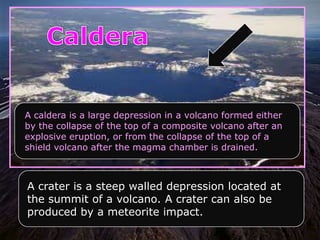
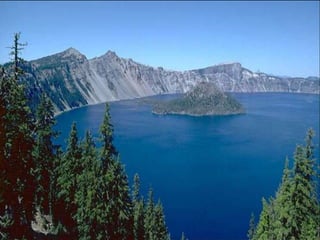
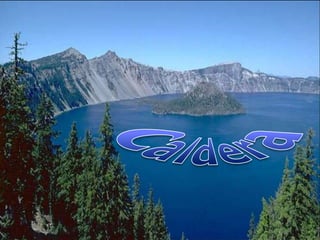
A caldera is a large depression in a volcano formed either
by the collapse of the top of a composite volcano after an
explosive eruption, or from the collapse of the top of a
shield volcano after the magma chamber is drained.
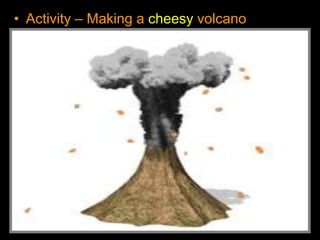
• Activity – Making a cheesy volcano
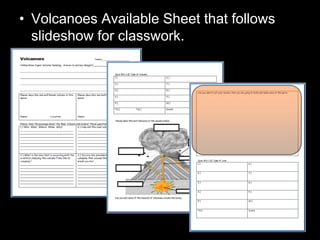
• Volcanoes Available Sheet that follows
slideshow for classwork.
1.) Select the type of volcano you are going
to create.
2.) Work inside tray to keep activity clean.
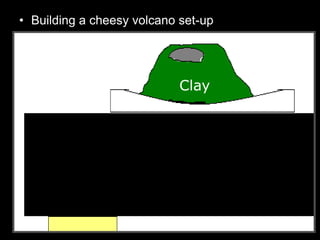
3.) Use the film canister to hold magma.
4.) Use clay and filler to surround canister.
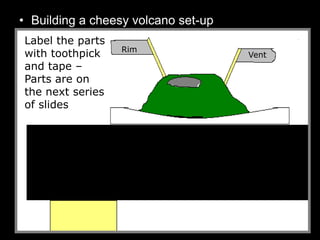
5.) Label parts of the volcano with toothpicks
and labeled flags.
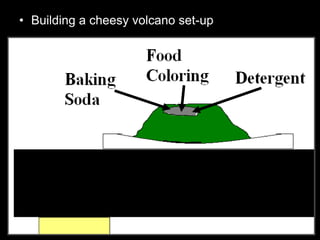
6.) Add baking soda, a drop of food coloring
and some dishwater detergent.
7.) Add Vinegar at end.
Copyright © 2010 Ryan P. Murphy
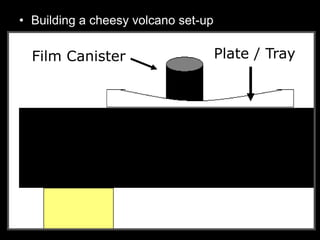
• Building a cheesy volcano set-up
Film Canister Plate / Tray
• Building a cheesy volcano set-up
Clay
• Building a cheesy volcano set-up
Rim
Vent
Label the parts
with toothpick
and tape –
Parts are on
the next series
of slides
Hold off on the eruption for
now. It will come soon.
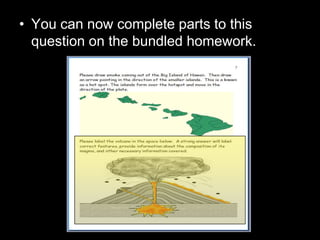
• You can now complete parts to this
question on the bundled homework.
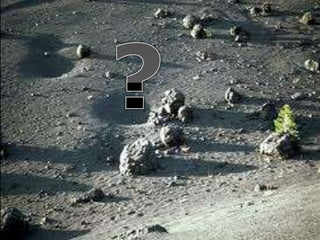
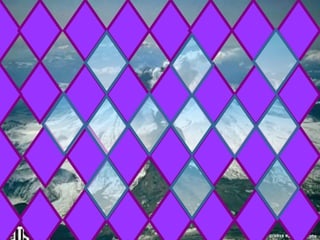
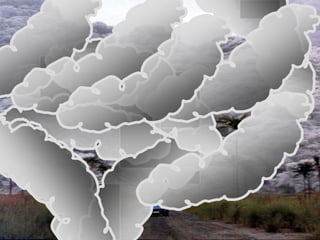
• Try and figure out the picture beneath the
boxes. Raise your hand when you think
you know.
– You only get one guess.
Copyright © 2010 Ryan P. Murphy
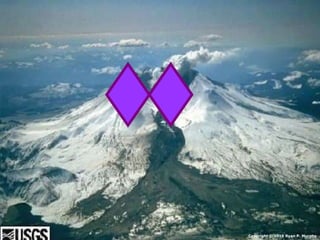
• Try and figure out the picture beneath the
boxes. Raise your hand when you think
you know.
– You only get one guess.
Copyright © 2010 Ryan P. Murphy
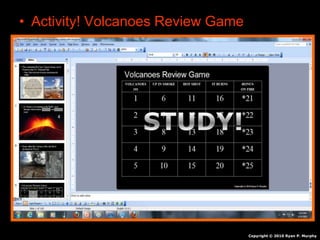
• Activity! Volcanoes Review Game
Copyright © 2010 Ryan P. Murphy
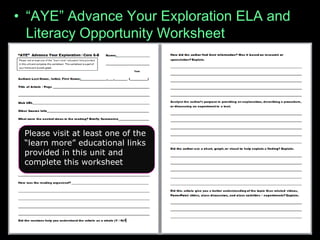
• “AYE” Advance Your Exploration ELA and
Literacy Opportunity Worksheet
– Visit some of the many provided links or..
– Articles can be found at (w/ membership to
NABT and NSTA)
• http://www.nabt.org/websites/institution/index.php?p=
1
• http://learningcenter.nsta.org/browse_journals.aspx?j
ournal=tst
Please visit at least one of the
“learn more” educational links
provided in this unit and
complete this worksheet
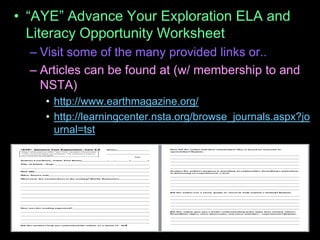
• “AYE” Advance Your Exploration ELA and
Literacy Opportunity Worksheet
– Visit some of the many provided links or..
– Articles can be found at (w/ membership to and
NSTA)
• http://www.earthmagazine.org/
• http://learningcenter.nsta.org/browse_journals.aspx?jo
urnal=tst
http://sciencepowerpoint.com/Website Link:
• This part of the PowerPoint roadmap is just one small
part of my Geology Topics Unit that I offer on TpT. This
unit includes…
• A six part 6,000 Slide PowerPoint Presentation / unit
roadmap full of activities, review questions, games, video
links, flashcards, materials list, and much more.
• A 18 bundled homework package, modified version, 19
pages of unit notes, 6 PowerPoint Review Games of
100+ slides each, videos, rubrics, and much more that
all chronologically follow the unit slideshow.
• This is a fantastic unit for any Earth Science Class.
• http://sciencepowerpoint.com/Geology_Unit.html
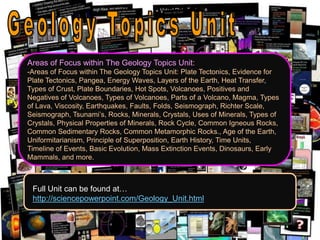
Areas of Focus within The Geology Topics Unit:
-Areas of Focus within The Geology Topics Unit: Plate Tectonics, Evidence for
Plate Tectonics, Pangea, Energy Waves, Layers of the Earth, Heat Transfer,
Types of Crust, Plate Boundaries, Hot Spots, Volcanoes, Positives and
Negatives of Volcanoes, Types of Volcanoes, Parts of a Volcano, Magma, Types
of Lava, Viscosity, Earthquakes, Faults, Folds, Seismograph, Richter Scale,
Seismograph, Tsunami’s, Rocks, Minerals, Crystals, Uses of Minerals, Types of
Crystals, Physical Properties of Minerals, Rock Cycle, Common Igneous Rocks,
Common Sedimentary Rocks, Common Metamorphic Rocks., Age of the Earth,
Uniformitarianism, Principle of Superposition, Earth History, Time Units,
Timeline of Events, Basic Evolution, Mass Extinction Events, Dinosaurs, Early
Mammals, and more.
Full Unit can be found at…
http://sciencepowerpoint.com/Geology_Unit.html
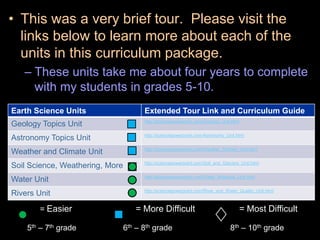
• This was a very brief tour. Please visit the
links below to learn more about each of the
units in this curriculum package.
– These units take me about four years to complete
with my students in grades 5-10.
Earth Science Units Extended Tour Link and Curriculum Guide
Geology Topics Unit http://sciencepowerpoint.com/Geology_Unit.html
Astronomy Topics Unit http://sciencepowerpoint.com/Astronomy_Unit.html
Weather and Climate Unit http://sciencepowerpoint.com/Weather_Climate_Unit.html
Soil Science, Weathering, More http://sciencepowerpoint.com/Soil_and_Glaciers_Unit.html
Water Unit http://sciencepowerpoint.com/Water_Molecule_Unit.html
Rivers Unit http://sciencepowerpoint.com/River_and_Water_Quality_Unit.html
= Easier = More Difficult = Most Difficult
5th – 7th grade 6th – 8th grade 8th – 10th grade
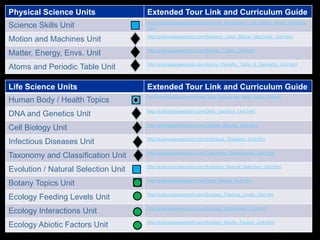
Physical Science Units Extended Tour Link and Curriculum Guide
Science Skills Unit http://sciencepowerpoint.com/Science_Introduction_Lab_Safety_Metric_Methods.
html
Motion and Machines Unit http://sciencepowerpoint.com/Newtons_Laws_Motion_Machines_Unit.html
Matter, Energy, Envs. Unit http://sciencepowerpoint.com/Energy_Topics_Unit.html
Atoms and Periodic Table Unit http://sciencepowerpoint.com/Atoms_Periodic_Table_of_Elements_Unit.html
Life Science Units Extended Tour Link and Curriculum Guide
Human Body / Health Topics
http://sciencepowerpoint.com/Human_Body_Systems_and_Health_Topics_Unit.html
DNA and Genetics Unit http://sciencepowerpoint.com/DNA_Genetics_Unit.html
Cell Biology Unit http://sciencepowerpoint.com/Cellular_Biology_Unit.html
Infectious Diseases Unit http://sciencepowerpoint.com/Infectious_Diseases_Unit.html
Taxonomy and Classification Unit http://sciencepowerpoint.com/Taxonomy_Classification_Unit.html
Evolution / Natural Selection Unit http://sciencepowerpoint.com/Evolution_Natural_Selection_Unit.html
Botany Topics Unit http://sciencepowerpoint.com/Plant_Botany_Unit.html
Ecology Feeding Levels Unit http://sciencepowerpoint.com/Ecology_Feeding_Levels_Unit.htm
Ecology Interactions Unit http://sciencepowerpoint.com/Ecology_Interactions_Unit.html
Ecology Abiotic Factors Unit http://sciencepowerpoint.com/Ecology_Abiotic_Factors_Unit.html
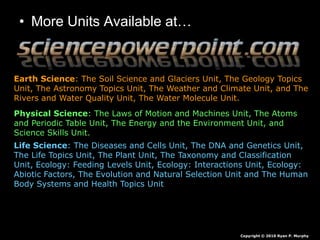
• More Units Available at…
Earth Science: The Soil Science and Glaciers Unit, The Geology Topics
Unit, The Astronomy Topics Unit, The Weather and Climate Unit, and The
Rivers and Water Quality Unit, The Water Molecule Unit.
Physical Science: The Laws of Motion and Machines Unit, The Atoms
and Periodic Table Unit, The Energy and the Environment Unit, and
Science Skills Unit.
Life Science: The Diseases and Cells Unit, The DNA and Genetics Unit,
The Life Topics Unit, The Plant Unit, The Taxonomy and Classification
Unit, Ecology: Feeding Levels Unit, Ecology: Interactions Unit, Ecology:
Abiotic Factors, The Evolution and Natural Selection Unit and The Human
Body Systems and Health Topics Unit
Copyright © 2010 Ryan P. Murphy
• The entire four year curriculum can be found at...
http://sciencepowerpoint.com/ Please feel free to
contact me with any questions you may have.
Thank you for your interest in this curriculum.
Sincerely,
Ryan Murphy M.Ed
www.sciencepowerpoint@gmail.com
http://sciencepowerpoint.com/Website Link:

Volcano Features, Earth Science Lesson PowerPoint, Buld a Volcano

  • 1.
    A crater isa steep walled depression located at the summit of a volcano. A crater can also be produced by a meteorite impact.
  • 3.
    • RED SLIDE:These are notes that are very important and should be recorded in your science journal. Copyright © 2010 Ryan P. Murphy
  • 4.
    -Nice neat notesthat are legible and use indentations when appropriate. -Example of indent. -Skip a line between topics -Don’t skip pages -Make visuals clear and well drawn.
  • 5.
    • RED SLIDE:These are notes that are very important and should be recorded in your science journal. • BLACK SLIDE: Pay attention, follow directions, complete projects as described and answer required questions neatly. Copyright © 2010 Ryan P. Murphy
  • 6.
  • 8.
    • Volcanoes AvailableSheet that follows slideshow for classwork.
  • 10.
     Pyroclasitc flow:A fast-moving avalanche of hot lava fragments. Copyright © 2010 Ryan P. Murphy
  • 11.
    • Video! PyroclasticFlow – http://www.youtube.com/watch?v=vPRoTQYX wuY Copyright © 2010 Ryan P. Murphy
  • 12.
     Pyroclastic rock:Rock ejected from a volcano. (Volcanic Bombs) Copyright © 2010 Ryan P. Murphy
  • 13.
     Lahar: Aflow of volcanic ash and water. Copyright © 2010 Ryan P. Murphy
  • 14.
    • A laharis often produced when a snow- capped volcano erupts and hot pyroclastics melt a large amount of snow or ice. Copyright © 2010 Ryan P. Murphy
  • 15.
    • A laharis often produced when a snow- capped volcano erupts and hot pyroclastics melt a large amount of snow or ice. Copyright © 2010 Ryan P. Murphy Snowmelt mixed with ash
  • 17.
    • Tacoma, Washingtonis built on an old lahar / lahar danger zone from Mt. Rainer. – City of 200,000 people.
  • 18.
    • Video! Smalllahar footage. – http://www.youtube.com/watch?v=WEAfXO7q8Xs
  • 19.
    • Video oflahar near Mt. Marapi • http://vimeo.com/17678904
  • 28.
    The big Ideathat volcanoes have lahars, pyroclastic flows, eruptions, and have hot lava…
  • 30.
    • Please sketch/ label the main features of a stratovolcano. (Use the word bank next slide)
  • 31.
    Ash cloud, Volcanic Bombs, SecondaryCone Secondary Vent Lava Flow Main Vent, Magma Chamber, Crater, Pyroclastic Flow
  • 32.
    Ash cloud, Volcanic Bombs, SecondaryCone Secondary Vent Lava Flow Main Vent, Magma Chamber, Crater, Pyroclastic Flow
  • 33.
    Ash cloud, Volcanic Bombs, SecondaryCone Secondary Vent Lava Flow Main Vent, Magma Chamber, Crater, Pyroclastic Flow
  • 34.
    Ash cloud, Volcanic Bombs, SecondaryCone Secondary Vent Lava Flow Main Vent, Magma Chamber, Crater, Pyroclastic Flow
  • 35.
    Ash cloud, Volcanic Bombs, SecondaryCone Secondary Vent Lava Flow Main Vent, Magma Chamber, Crater, Pyroclastic Flow
  • 36.
    Ash cloud, Volcanic Bombs, SecondaryCone Secondary Vent Lava Flow Main Vent, Magma Chamber, Crater, Pyroclastic Flow
  • 37.
    Ash cloud, Volcanic Bombs, SecondaryCone Secondary Vent Lava Flow Main Vent, Magma Chamber, Crater, Pyroclastic Flow
  • 38.
    Ash cloud, Volcanic Bombs, SecondaryCone Secondary Vent Lava Flow Main Vent, Magma Chamber, Crater, Pyroclastic Flow
  • 39.
    Ash cloud, Volcanic Bombs, SecondaryCone Secondary Vent Lava Flow Main Vent, Magma Chamber, Crater, Pyroclastic Flow
  • 40.
    Ash cloud, Volcanic Bombs, SecondaryCone Secondary Vent Lava Flow Main Vent, Magma Chamber, Crater, Pyroclastic Flow
  • 41.
    Ash cloud, Volcanic Bombs, SecondaryCone Secondary Vent Lava Flow Main Vent, Magma Chamber, Crater, Pyroclastic Flow
  • 42.
    Ash cloud, Volcanic Bombs, SecondaryCone Secondary Vent Lava Flow Main Vent, Magma Chamber, Crater, Pyroclastic Flow
  • 43.
    Ash cloud, Volcanic Bombs, SecondaryCone Secondary Vent Lava Flow Main Vent, Magma Chamber, Crater, Pyroclastic Flow
  • 44.
    Ash cloud, Volcanic Bombs, SecondaryCone Secondary Vent Lava Flow Main Vent, Magma Chamber, Crater, Pyroclastic Flow
  • 45.
    Ash cloud, Volcanic Bombs, SecondaryCone Secondary Vent Lava Flow Main Vent, Magma Chamber, Crater, Pyroclastic Flow
  • 46.
    Ash cloud, Volcanic Bombs, SecondaryCone Secondary Vent Lava Flow Main Vent, Magma Chamber, Crater, Pyroclastic Flow
  • 47.
    Ash cloud, Volcanic Bombs, SecondaryCone Secondary Vent Lava Flow Main Vent, Magma Chamber, Crater, Pyroclastic Flow
  • 48.
    Ash cloud, Volcanic Bombs, SecondaryCone Secondary Vent Lava Flow Main Vent, Magma Chamber, Crater, Pyroclastic Flow
  • 53.
    A crater isa steep walled depression located at the summit of a volcano. A crater can also be produced by a meteorite impact.
  • 54.
    A crater isa steep walled depression located at the summit of a volcano. A crater can also be produced by a meteorite impact.
  • 55.
    A crater isa steep walled depression located at the summit of a volcano. A crater can also be produced by a meteorite impact.
  • 56.
    A crater isa steep walled depression located at the summit of a volcano. A crater can also be produced by a meteorite impact. Sulfuric acid and hydrogen chlorides
  • 57.
    A crater isa steep walled depression located at the summit of a volcano. A crater can also be produced by a meteorite impact.
  • 58.
    A crater isa steep walled depression located at the summit of a volcano. A crater can also be produced by a meteorite impact.
  • 59.
    A crater isa steep walled depression located at the summit of a volcano. A crater can also be produced by a meteorite impact. A caldera is a large depression in a volcano formed either by the collapse of the top of a composite volcano after an explosive eruption, or from the collapse of the top of a shield volcano after the magma chamber is drained.
  • 109.
    • Activity –Making a cheesy volcano
  • 110.
    • Volcanoes AvailableSheet that follows slideshow for classwork.
  • 111.
    1.) Select thetype of volcano you are going to create. 2.) Work inside tray to keep activity clean. 3.) Use the film canister to hold magma. 4.) Use clay and filler to surround canister. 5.) Label parts of the volcano with toothpicks and labeled flags. 6.) Add baking soda, a drop of food coloring and some dishwater detergent. 7.) Add Vinegar at end. Copyright © 2010 Ryan P. Murphy
  • 112.
    • Building acheesy volcano set-up Film Canister Plate / Tray
  • 113.
    • Building acheesy volcano set-up Clay
  • 114.
    • Building acheesy volcano set-up
  • 115.
    • Building acheesy volcano set-up Rim Vent Label the parts with toothpick and tape – Parts are on the next series of slides
  • 116.
    Hold off onthe eruption for now. It will come soon.
  • 117.
    • You cannow complete parts to this question on the bundled homework.
  • 119.
    • Try andfigure out the picture beneath the boxes. Raise your hand when you think you know. – You only get one guess. Copyright © 2010 Ryan P. Murphy
  • 120.
    Copyright © 2010Ryan P. Murphy
  • 121.
    Copyright © 2010Ryan P. Murphy
  • 122.
    Copyright © 2010Ryan P. Murphy
  • 123.
    Copyright © 2010Ryan P. Murphy
  • 124.
    Copyright © 2010Ryan P. Murphy
  • 125.
    Copyright © 2010Ryan P. Murphy
  • 126.
    Copyright © 2010Ryan P. Murphy
  • 127.
    Copyright © 2010Ryan P. Murphy
  • 128.
    Copyright © 2010Ryan P. Murphy
  • 129.
    Copyright © 2010Ryan P. Murphy
  • 130.
    Copyright © 2010Ryan P. Murphy
  • 131.
    Copyright © 2010Ryan P. Murphy
  • 132.
    Copyright © 2010Ryan P. Murphy
  • 133.
    Copyright © 2010Ryan P. Murphy
  • 134.
    Copyright © 2010Ryan P. Murphy
  • 135.
    • Try andfigure out the picture beneath the boxes. Raise your hand when you think you know. – You only get one guess. Copyright © 2010 Ryan P. Murphy
  • 145.
    • Activity! VolcanoesReview Game Copyright © 2010 Ryan P. Murphy
  • 146.
    • “AYE” AdvanceYour Exploration ELA and Literacy Opportunity Worksheet – Visit some of the many provided links or.. – Articles can be found at (w/ membership to NABT and NSTA) • http://www.nabt.org/websites/institution/index.php?p= 1 • http://learningcenter.nsta.org/browse_journals.aspx?j ournal=tst Please visit at least one of the “learn more” educational links provided in this unit and complete this worksheet
  • 147.
    • “AYE” AdvanceYour Exploration ELA and Literacy Opportunity Worksheet – Visit some of the many provided links or.. – Articles can be found at (w/ membership to and NSTA) • http://www.earthmagazine.org/ • http://learningcenter.nsta.org/browse_journals.aspx?jo urnal=tst
  • 148.
  • 149.
    • This partof the PowerPoint roadmap is just one small part of my Geology Topics Unit that I offer on TpT. This unit includes… • A six part 6,000 Slide PowerPoint Presentation / unit roadmap full of activities, review questions, games, video links, flashcards, materials list, and much more. • A 18 bundled homework package, modified version, 19 pages of unit notes, 6 PowerPoint Review Games of 100+ slides each, videos, rubrics, and much more that all chronologically follow the unit slideshow. • This is a fantastic unit for any Earth Science Class. • http://sciencepowerpoint.com/Geology_Unit.html
  • 151.
    Areas of Focuswithin The Geology Topics Unit: -Areas of Focus within The Geology Topics Unit: Plate Tectonics, Evidence for Plate Tectonics, Pangea, Energy Waves, Layers of the Earth, Heat Transfer, Types of Crust, Plate Boundaries, Hot Spots, Volcanoes, Positives and Negatives of Volcanoes, Types of Volcanoes, Parts of a Volcano, Magma, Types of Lava, Viscosity, Earthquakes, Faults, Folds, Seismograph, Richter Scale, Seismograph, Tsunami’s, Rocks, Minerals, Crystals, Uses of Minerals, Types of Crystals, Physical Properties of Minerals, Rock Cycle, Common Igneous Rocks, Common Sedimentary Rocks, Common Metamorphic Rocks., Age of the Earth, Uniformitarianism, Principle of Superposition, Earth History, Time Units, Timeline of Events, Basic Evolution, Mass Extinction Events, Dinosaurs, Early Mammals, and more. Full Unit can be found at… http://sciencepowerpoint.com/Geology_Unit.html
  • 158.
    • This wasa very brief tour. Please visit the links below to learn more about each of the units in this curriculum package. – These units take me about four years to complete with my students in grades 5-10. Earth Science Units Extended Tour Link and Curriculum Guide Geology Topics Unit http://sciencepowerpoint.com/Geology_Unit.html Astronomy Topics Unit http://sciencepowerpoint.com/Astronomy_Unit.html Weather and Climate Unit http://sciencepowerpoint.com/Weather_Climate_Unit.html Soil Science, Weathering, More http://sciencepowerpoint.com/Soil_and_Glaciers_Unit.html Water Unit http://sciencepowerpoint.com/Water_Molecule_Unit.html Rivers Unit http://sciencepowerpoint.com/River_and_Water_Quality_Unit.html = Easier = More Difficult = Most Difficult 5th – 7th grade 6th – 8th grade 8th – 10th grade
  • 159.
    Physical Science UnitsExtended Tour Link and Curriculum Guide Science Skills Unit http://sciencepowerpoint.com/Science_Introduction_Lab_Safety_Metric_Methods. html Motion and Machines Unit http://sciencepowerpoint.com/Newtons_Laws_Motion_Machines_Unit.html Matter, Energy, Envs. Unit http://sciencepowerpoint.com/Energy_Topics_Unit.html Atoms and Periodic Table Unit http://sciencepowerpoint.com/Atoms_Periodic_Table_of_Elements_Unit.html Life Science Units Extended Tour Link and Curriculum Guide Human Body / Health Topics http://sciencepowerpoint.com/Human_Body_Systems_and_Health_Topics_Unit.html DNA and Genetics Unit http://sciencepowerpoint.com/DNA_Genetics_Unit.html Cell Biology Unit http://sciencepowerpoint.com/Cellular_Biology_Unit.html Infectious Diseases Unit http://sciencepowerpoint.com/Infectious_Diseases_Unit.html Taxonomy and Classification Unit http://sciencepowerpoint.com/Taxonomy_Classification_Unit.html Evolution / Natural Selection Unit http://sciencepowerpoint.com/Evolution_Natural_Selection_Unit.html Botany Topics Unit http://sciencepowerpoint.com/Plant_Botany_Unit.html Ecology Feeding Levels Unit http://sciencepowerpoint.com/Ecology_Feeding_Levels_Unit.htm Ecology Interactions Unit http://sciencepowerpoint.com/Ecology_Interactions_Unit.html Ecology Abiotic Factors Unit http://sciencepowerpoint.com/Ecology_Abiotic_Factors_Unit.html
  • 160.
    • More UnitsAvailable at… Earth Science: The Soil Science and Glaciers Unit, The Geology Topics Unit, The Astronomy Topics Unit, The Weather and Climate Unit, and The Rivers and Water Quality Unit, The Water Molecule Unit. Physical Science: The Laws of Motion and Machines Unit, The Atoms and Periodic Table Unit, The Energy and the Environment Unit, and Science Skills Unit. Life Science: The Diseases and Cells Unit, The DNA and Genetics Unit, The Life Topics Unit, The Plant Unit, The Taxonomy and Classification Unit, Ecology: Feeding Levels Unit, Ecology: Interactions Unit, Ecology: Abiotic Factors, The Evolution and Natural Selection Unit and The Human Body Systems and Health Topics Unit Copyright © 2010 Ryan P. Murphy
  • 161.
    • The entirefour year curriculum can be found at... http://sciencepowerpoint.com/ Please feel free to contact me with any questions you may have. Thank you for your interest in this curriculum. Sincerely, Ryan Murphy M.Ed www.sciencepowerpoint@gmail.com
  • 162.