This presentation outlines and illustrates the language and process of
visual analysis as discussed in the Composition textbook Frames of Mind.
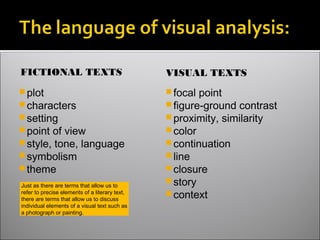
FICTIONAL TEXTS
plot
characters
setting
point of view
style, tone, language
symbolism
theme
VISUAL TEXTS
focal point
figure-ground contrast
proximity, similarity
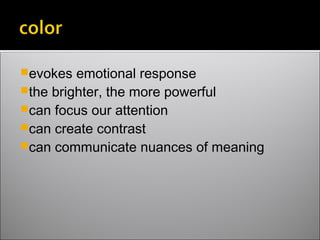
color
continuation
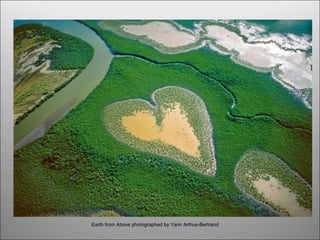
line
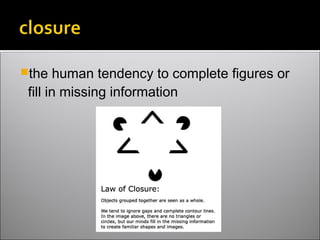
closure
story
context
Just as there are terms that allow us to
refer to precise elements of a literary text,
there are terms that allow us to discuss
individual elements of a visual text such as
a photograph or painting.
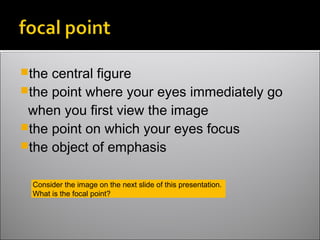
the central figure
the point where your eyes immediately go
when you first view the image
the point on which your eyes focus
the object of emphasis
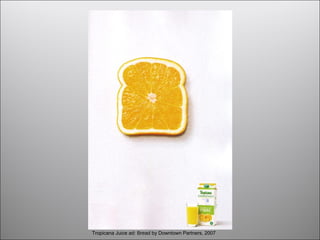
Consider the image on the next slide of this presentation.
What is the focal point?
Tropicana Juice ad: Bread by Downtown Partners, 2007
the difference between what’s in front and
what’s in back
the foreground and the background
the figure and the background
Think about the previous image of the orange juice ad. The focal point
was in sharp contrast to the mostly blank, white background. Consider a
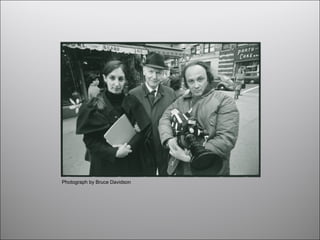
more complex image, the photograph that follows. First, identify the focal
point. Next, consider the background. How does the background contrast
with the focal point?
Photograph by Bruce Davidson
7
The group of three people in the front of the image is the focal point. Some
differences between the focal point and the background are that the individuals
in the foreground are posing while those in the background are not. The focal
point figures are in focus while the background figures are not. What is happening in the
background is spontaneous and natural; what is happening in the foreground is staged to
convey an attitude and a message.
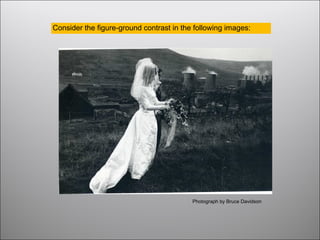
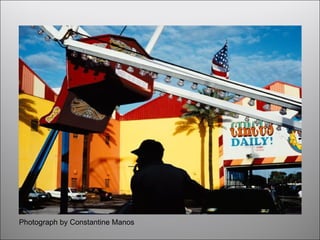
Consider the figure-ground contrast in the following images:
Photograph by Bruce Davidson
Photograph by Constantine Manos
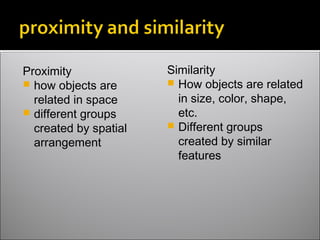
Proximity
 how objects are
related in space
 different groups
created by spatial
arrangement
Similarity
 How objects are related
in size, color, shape,
etc.
 Different groups
created by similar
features
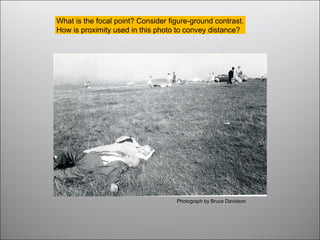
What is the focal point? Consider figure-ground contrast.
How is proximity used in this photo to convey distance?
Photograph by Bruce Davidson
evokes emotional response
the brighter, the more powerful
can focus our attention
can create contrast
can communicate nuances of meaning
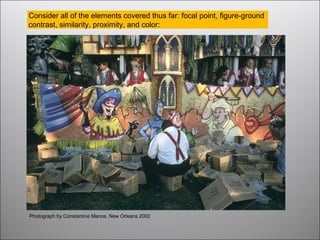
Consider all of the elements covered thus far: focal point, figure-ground
contrast, similarity, proximity, and color:
Photograph by Constantine Manos, New Orleans 2002
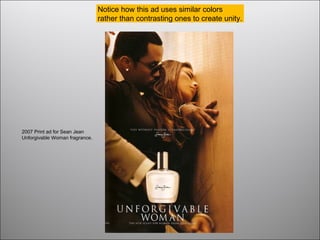
Notice how this ad uses similar colors
rather than contrasting ones to create unity.
2007 Print ad for Sean Jean
Unforgivable Woman fragrance.
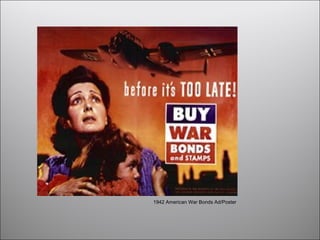
The continued visual line suggested by the
elements in the image
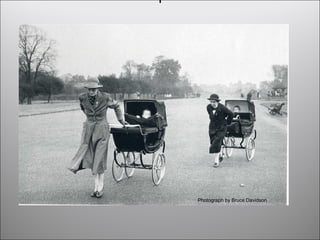
Follow the line of continuation in the following images, starting with
the focal point.
1942 American War Bonds Ad/Poster
Photograph by Bruce Davidson
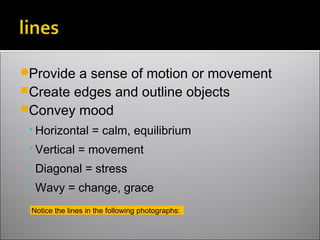
Provide a sense of motion or movement
Create edges and outline objects
Convey mood
 Horizontal = calm, equilibrium
 Vertical = movement
 Diagonal = stress
 Wavy = change, grace
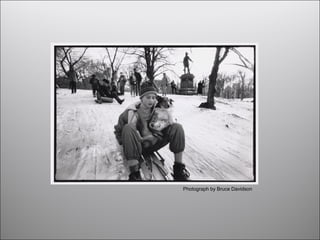
Notice the lines in the following photographs:
Photograph by Bruce Davidson
Earth from Above photographed by Yann Arthus-Bertrand
the human tendency to complete figures or
fill in missing information
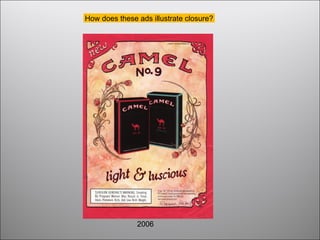
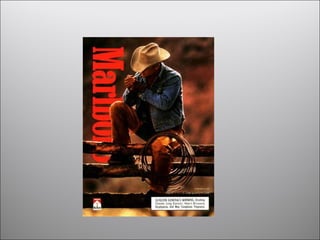
How does these ads illustrate closure?
2006
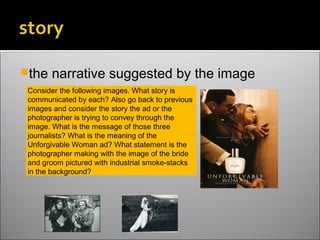
the narrative suggested by the image
Consider the following images. What story is
communicated by each? Also go back to previous
images and consider the story the ad or the
photographer is trying to convey through the
image. What is the message of those three
journalists? What is the meaning of the
Unforgivable Woman ad? What statement is the
photographer making with the image of the bride
and groom pictured with industrial smoke-stacks
in the background?
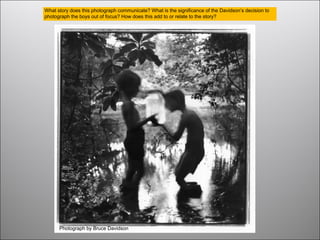
Photograph by Bruce Davidson
What story does this photograph communicate? What is the significance of the Davidson’s decision to
photograph the boys out of focus? How does this add to or relate to the story?
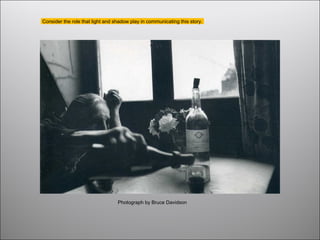
Photograph by Bruce Davidson
Consider the role that light and shadow play in communicating this story.
background information that enhances
understanding
includes the title of the image, if there is
one, the creator of the image, the date, the
location, as well as details about or from the
artist or photographer that contribute to our
understanding of the image
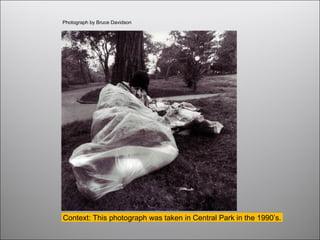
Context: This photograph was taken in Central Park in the 1990’s.
Photograph by Bruce Davidson
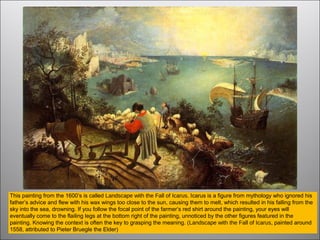
This painting from the 1600’s is called Landscape with the Fall of Icarus. Icarus is a figure from mythology who ignored his
father’s advice and flew with his wax wings too close to the sun, causing them to melt, which resulted in his falling from the
sky into the sea, drowning. If you follow the focal point of the farmer’s red shirt around the painting, your eyes will
eventually come to the flailing legs at the bottom right of the painting, unnoticed by the other figures featured in the
painting. Knowing the context is often the key to grasping the meaning. (Landscape with the Fall of Icarus, painted around
1558, attributed to Pieter Bruegle the Elder)
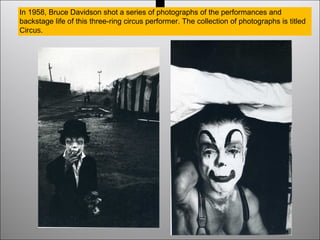
In 1958, Bruce Davidson shot a series of photographs of the performances and
backstage life of this three-ring circus performer. The collection of photographs is titled
Circus.
Photographs by Bruce Davidson
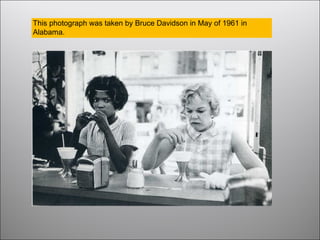
This photograph was taken by Bruce Davidson in May of 1961 in
Alabama.
33
Analyze the Image:
Identify the focal point.
Explain the figure-ground contrast.
Note the significance of proximity and similarity.
Describe the use of color and its effect.
Narrate the line of continuation from the focal point
through the rest of the image.
Describe lines in the image and explain their effects.
Does the image feature closure?
What is the context of the image? Who created the
image? When? Where? Does it have a title? How does
the context add to or reveal the meaning?
What is the central message communicated by the
image? What story does the image tell?
34
Responding to a Visual Analysis
Writing Assignment:
Begin by studying the image.
Answer each of the questions from the following slide in
as much detail as possible.
Focus the analysis on the elements that are the most
prominent in the image, that contribute most to the story it
communicates.
Follow the steps of the writing process and attend to the
specific requirements of the assignment you have been
given.
Clearly attribute the image to its author. Cite the image
following the text of your paper.
34
35
Examples
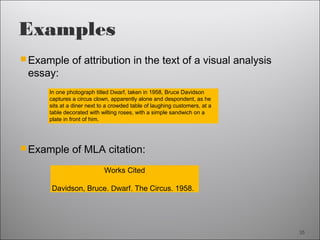
Example of attribution in the text of a visual analysis
essay:
Example of MLA citation:
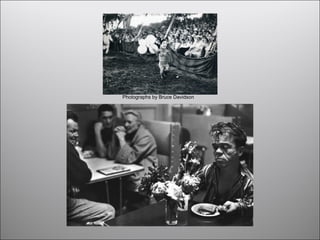
In one photograph titled Dwarf, taken in 1958, Bruce Davidson
captures a circus clown, apparently alone and despondent, as he
sits at a diner next to a crowded table of laughing customers, at a
table decorated with wilting roses, with a simple sandwich on a
plate in front of him.
Works Cited
Davidson, Bruce. Dwarf. The Circus. 1958.

Visual analysis for composition

  • 1.
    This presentation outlinesand illustrates the language and process of visual analysis as discussed in the Composition textbook Frames of Mind.
  • 2.
    FICTIONAL TEXTS plot characters setting point ofview style, tone, language symbolism theme VISUAL TEXTS focal point figure-ground contrast proximity, similarity color continuation line closure story context Just as there are terms that allow us to refer to precise elements of a literary text, there are terms that allow us to discuss individual elements of a visual text such as a photograph or painting.
  • 3.
    the central figure thepoint where your eyes immediately go when you first view the image the point on which your eyes focus the object of emphasis Consider the image on the next slide of this presentation. What is the focal point?
  • 4.
    Tropicana Juice ad:Bread by Downtown Partners, 2007
  • 5.
    the difference betweenwhat’s in front and what’s in back the foreground and the background the figure and the background Think about the previous image of the orange juice ad. The focal point was in sharp contrast to the mostly blank, white background. Consider a more complex image, the photograph that follows. First, identify the focal point. Next, consider the background. How does the background contrast with the focal point?
  • 6.
  • 7.
    7 The group ofthree people in the front of the image is the focal point. Some differences between the focal point and the background are that the individuals in the foreground are posing while those in the background are not. The focal point figures are in focus while the background figures are not. What is happening in the background is spontaneous and natural; what is happening in the foreground is staged to convey an attitude and a message.
  • 8.
    Consider the figure-groundcontrast in the following images: Photograph by Bruce Davidson
  • 9.
  • 10.
    Proximity  how objectsare related in space  different groups created by spatial arrangement Similarity  How objects are related in size, color, shape, etc.  Different groups created by similar features
  • 11.
    What is thefocal point? Consider figure-ground contrast. How is proximity used in this photo to convey distance? Photograph by Bruce Davidson
  • 12.
    evokes emotional response thebrighter, the more powerful can focus our attention can create contrast can communicate nuances of meaning
  • 13.
    Consider all ofthe elements covered thus far: focal point, figure-ground contrast, similarity, proximity, and color: Photograph by Constantine Manos, New Orleans 2002
  • 14.
    Notice how thisad uses similar colors rather than contrasting ones to create unity. 2007 Print ad for Sean Jean Unforgivable Woman fragrance.
  • 15.
    The continued visualline suggested by the elements in the image Follow the line of continuation in the following images, starting with the focal point.
  • 16.
    1942 American WarBonds Ad/Poster
  • 17.
  • 18.
    Provide a senseof motion or movement Create edges and outline objects Convey mood  Horizontal = calm, equilibrium  Vertical = movement  Diagonal = stress  Wavy = change, grace Notice the lines in the following photographs:
  • 19.
  • 20.
    Earth from Abovephotographed by Yann Arthus-Bertrand
  • 21.
    the human tendencyto complete figures or fill in missing information
  • 22.
    How does theseads illustrate closure? 2006
  • 24.
    the narrative suggestedby the image Consider the following images. What story is communicated by each? Also go back to previous images and consider the story the ad or the photographer is trying to convey through the image. What is the message of those three journalists? What is the meaning of the Unforgivable Woman ad? What statement is the photographer making with the image of the bride and groom pictured with industrial smoke-stacks in the background?
  • 25.
    Photograph by BruceDavidson What story does this photograph communicate? What is the significance of the Davidson’s decision to photograph the boys out of focus? How does this add to or relate to the story?
  • 26.
    Photograph by BruceDavidson Consider the role that light and shadow play in communicating this story.
  • 27.
    background information thatenhances understanding includes the title of the image, if there is one, the creator of the image, the date, the location, as well as details about or from the artist or photographer that contribute to our understanding of the image
  • 28.
    Context: This photographwas taken in Central Park in the 1990’s. Photograph by Bruce Davidson
  • 29.
    This painting fromthe 1600’s is called Landscape with the Fall of Icarus. Icarus is a figure from mythology who ignored his father’s advice and flew with his wax wings too close to the sun, causing them to melt, which resulted in his falling from the sky into the sea, drowning. If you follow the focal point of the farmer’s red shirt around the painting, your eyes will eventually come to the flailing legs at the bottom right of the painting, unnoticed by the other figures featured in the painting. Knowing the context is often the key to grasping the meaning. (Landscape with the Fall of Icarus, painted around 1558, attributed to Pieter Bruegle the Elder)
  • 30.
    In 1958, BruceDavidson shot a series of photographs of the performances and backstage life of this three-ring circus performer. The collection of photographs is titled Circus.
  • 31.
  • 32.
    This photograph wastaken by Bruce Davidson in May of 1961 in Alabama.
  • 33.
    33 Analyze the Image: Identifythe focal point. Explain the figure-ground contrast. Note the significance of proximity and similarity. Describe the use of color and its effect. Narrate the line of continuation from the focal point through the rest of the image. Describe lines in the image and explain their effects. Does the image feature closure? What is the context of the image? Who created the image? When? Where? Does it have a title? How does the context add to or reveal the meaning? What is the central message communicated by the image? What story does the image tell?
  • 34.
    34 Responding to aVisual Analysis Writing Assignment: Begin by studying the image. Answer each of the questions from the following slide in as much detail as possible. Focus the analysis on the elements that are the most prominent in the image, that contribute most to the story it communicates. Follow the steps of the writing process and attend to the specific requirements of the assignment you have been given. Clearly attribute the image to its author. Cite the image following the text of your paper. 34
  • 35.
    35 Examples Example of attributionin the text of a visual analysis essay: Example of MLA citation: In one photograph titled Dwarf, taken in 1958, Bruce Davidson captures a circus clown, apparently alone and despondent, as he sits at a diner next to a crowded table of laughing customers, at a table decorated with wilting roses, with a simple sandwich on a plate in front of him. Works Cited Davidson, Bruce. Dwarf. The Circus. 1958.

Editor's Notes

  • #7 Photo by Bruce Davidson: New York City
  • #9 Photo by Bruce Davidson
  • #10 Photo by Constantine Mano
  • #12 Bruce Davidson France 1951
  • #14 Photo by Constantine Mano
  • #15 Print ad for “Unforgivable Woman” by Sean Jean
  • #18 Photo by Bruce Davidson: 1951 France
  • #20 Photo by Bruce Davidson [Central park]
  • #21 Photo by Philippe Metois [also pg142]
  • #24 Classic Marlboro: also example of closure
  • #26 Photo by Keith Carter
  • #27 Photo by Bruce Davidson
  • #29 Photo by Bruce Davidson: 1992 Central park
  • #31 Bruce Davidson Circus 1958
  • #32 Bruce Davidson Circus 1958
  • #33 Photo by Bruce Davidson