Composition
A photograph captures a
moment in time which
can never be repeated.
The way you capture the
moment is the way it
will be seen, enjoyed,
and interpreted.
How will your photograph
truly capture what is
before you?
Remember the old phrase,
“A picture is worth a
thousand words.”
What do you want to say?
Think about the
photograph’s potential.
Consider the
possibilities.
Creating Choices
There is an infinite number of artistic
choices you can make. Never stop
with just ONE idea!
Composition
Theme
• What is the universal message of the
photograph?
• What does it imply or say?
• What makes the photograph worth taking?
• Theme creates the BIG IDEA behind a mere
image.
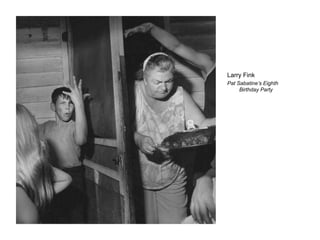
Larry Fink
Pat Sabatine’s Eighth
Birthday Party
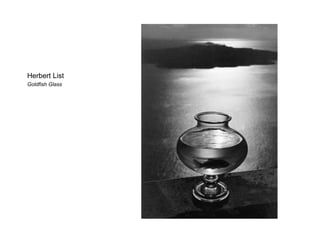
Herbert List
Goldfish Glass
Composition
Emphasis
• What is the subject?
• Where is the subject?
• Where should the viewer look?
• What is most important
• How do you emphasize one part of a
photograph and downplay another?
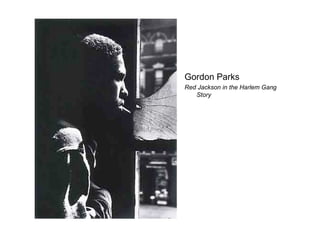
Gordon Parks
Red Jackson in the Harlem Gang
Story
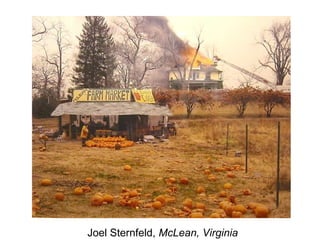
Joel Sternfeld, McLean, Virginia
Composition
Simplicity
• Simplify the composition
• Nothing weakens the theme
• Nothing in the view-finder competes with or
distracts from the subject, but adds to the
composition
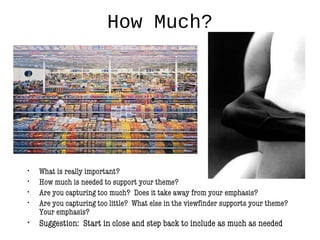
How Much?
• What is really important?
• How much is needed to support your theme?
• Are you capturing too much? Does it take away from your emphasis?
• Are you capturing too little? What else in the viewfinder supports your theme?
Your emphasis?
• Suggestion: Start in close and step back to include as much as needed
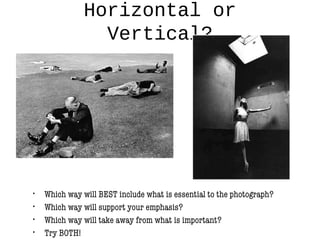
Horizontal or
Vertical?
• Which way will BEST include what is essential to the photograph?
• Which way will support your emphasis?
• Which way will take away from what is important?
• Try BOTH!
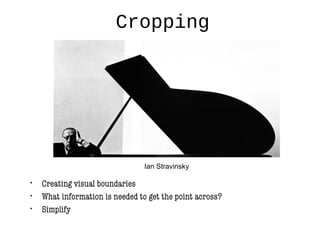
Cropping
• Creating visual boundaries
• What information is needed to get the point across?
• Simplify
Ian Stravinsky
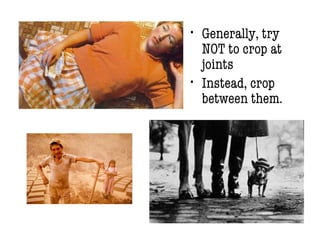
• Generally, try
NOT to crop at
joints
• Instead, crop
between them.
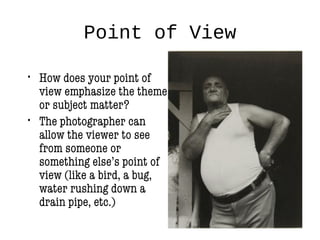
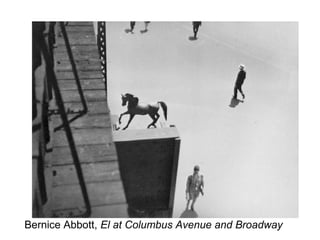
Point of View
• How does your point of
view emphasize the theme
or subject matter?
• The photographer can
allow the viewer to see
from someone or
something else’s point of
view (like a bird, a bug,
water rushing down a
drain pipe, etc.)
Bernice Abbott, El at Columbus Avenue and Broadway
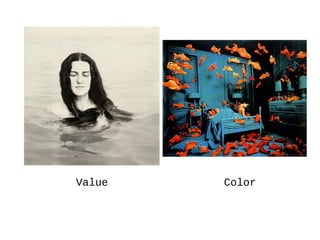
Contrast
The focal point may stand out from the
background because of a distinctive contrast.
Value Color
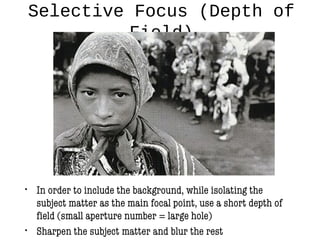
Selective Focus (Depth of
Field)
• In order to include the background, while isolating the
subject matter as the main focal point, use a short depth of
field (small aperture number = large hole)
• Sharpen the subject matter and blur the rest
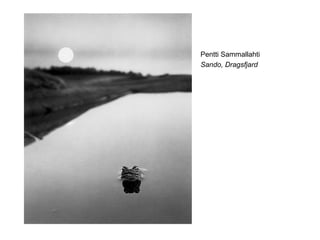
Pentti Sammallahti
Sando, Dragsfjard
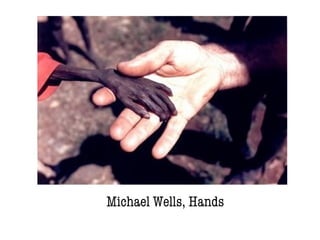
Michael Wells, Hands
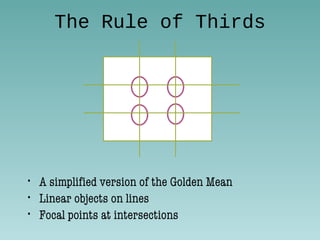
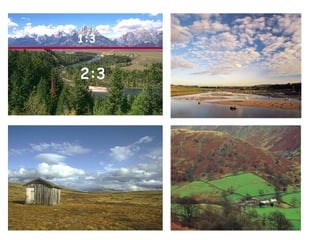
The Rule of Thirds
• A simplified version of the Golden Mean
• Linear objects on lines
• Focal points at intersections
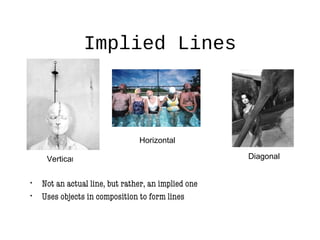
Implied Lines
• Not an actual line, but rather, an implied one
• Uses objects in composition to form lines
Vertical
Horizontal
Diagonal
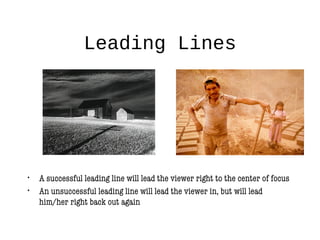
Leading Lines
• A successful leading line will lead the viewer right to the center of focus
• An unsuccessful leading line will lead the viewer in, but will lead
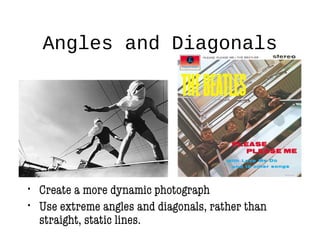
him/her right back out again
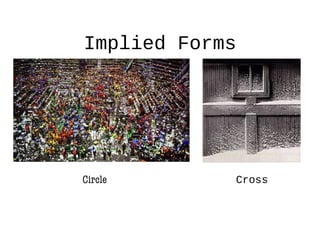
Implied Forms
Circle Cross
Angles and Diagonals
• Create a more dynamic photograph
• Use extreme angles and diagonals, rather than
straight, static lines.
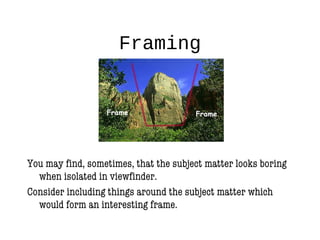
Framing
You may find, sometimes, that the subject matter looks boring
when isolated in viewfinder.
Consider including things around the subject matter which
would form an interesting frame.
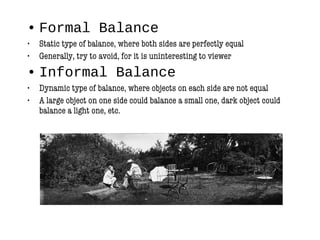
• Formal Balance
• Static type of balance, where both sides are perfectly equal
• Generally, try to avoid, for it is uninteresting to viewer
• Informal Balance
• Dynamic type of balance, where objects on each side are not equal
• A large object on one side could balance a small one, dark object could
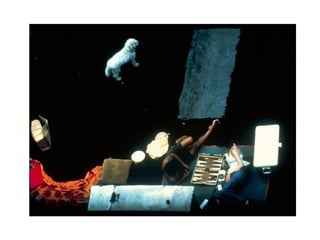
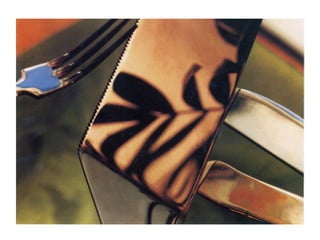
balance a light one, etc.
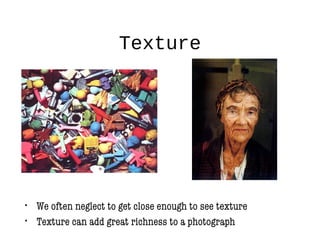
Texture
• We often neglect to get close enough to see texture
• Texture can add great richness to a photograph
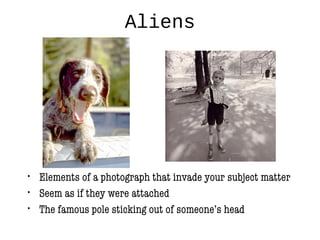
Aliens
• Elements of a photograph that invade your subject matter
• Seem as if they were attached
• The famous pole sticking out of someone’s head

Composition

  • 1.
  • 2.
    A photograph capturesa moment in time which can never be repeated.
  • 3.
    The way youcapture the moment is the way it will be seen, enjoyed, and interpreted.
  • 4.
    How will yourphotograph truly capture what is before you?
  • 5.
    Remember the oldphrase, “A picture is worth a thousand words.” What do you want to say?
  • 6.
    Think about the photograph’spotential. Consider the possibilities.
  • 7.
    Creating Choices There isan infinite number of artistic choices you can make. Never stop with just ONE idea!
  • 8.
    Composition Theme • What isthe universal message of the photograph? • What does it imply or say? • What makes the photograph worth taking? • Theme creates the BIG IDEA behind a mere image.
  • 9.
    Larry Fink Pat Sabatine’sEighth Birthday Party
  • 10.
  • 11.
    Composition Emphasis • What isthe subject? • Where is the subject? • Where should the viewer look? • What is most important • How do you emphasize one part of a photograph and downplay another?
  • 13.
    Gordon Parks Red Jacksonin the Harlem Gang Story
  • 14.
  • 15.
    Composition Simplicity • Simplify thecomposition • Nothing weakens the theme • Nothing in the view-finder competes with or distracts from the subject, but adds to the composition
  • 16.
    How Much? • Whatis really important? • How much is needed to support your theme? • Are you capturing too much? Does it take away from your emphasis? • Are you capturing too little? What else in the viewfinder supports your theme? Your emphasis? • Suggestion: Start in close and step back to include as much as needed
  • 17.
    Horizontal or Vertical? • Whichway will BEST include what is essential to the photograph? • Which way will support your emphasis? • Which way will take away from what is important? • Try BOTH!
  • 18.
    Cropping • Creating visualboundaries • What information is needed to get the point across? • Simplify Ian Stravinsky
  • 19.
    • Generally, try NOTto crop at joints • Instead, crop between them.
  • 20.
    Point of View •How does your point of view emphasize the theme or subject matter? • The photographer can allow the viewer to see from someone or something else’s point of view (like a bird, a bug, water rushing down a drain pipe, etc.)
  • 21.
    Bernice Abbott, Elat Columbus Avenue and Broadway
  • 22.
    Contrast The focal pointmay stand out from the background because of a distinctive contrast.
  • 23.
  • 24.
    Selective Focus (Depthof Field) • In order to include the background, while isolating the subject matter as the main focal point, use a short depth of field (small aperture number = large hole) • Sharpen the subject matter and blur the rest
  • 25.
  • 26.
  • 27.
    The Rule ofThirds • A simplified version of the Golden Mean • Linear objects on lines • Focal points at intersections
  • 30.
    Implied Lines • Notan actual line, but rather, an implied one • Uses objects in composition to form lines Vertical Horizontal Diagonal
  • 32.
    Leading Lines • Asuccessful leading line will lead the viewer right to the center of focus • An unsuccessful leading line will lead the viewer in, but will lead him/her right back out again
  • 35.
  • 36.
    Angles and Diagonals •Create a more dynamic photograph • Use extreme angles and diagonals, rather than straight, static lines.
  • 39.
    Framing You may find,sometimes, that the subject matter looks boring when isolated in viewfinder. Consider including things around the subject matter which would form an interesting frame.
  • 41.
    • Formal Balance •Static type of balance, where both sides are perfectly equal • Generally, try to avoid, for it is uninteresting to viewer • Informal Balance • Dynamic type of balance, where objects on each side are not equal • A large object on one side could balance a small one, dark object could balance a light one, etc.
  • 42.
    Texture • We oftenneglect to get close enough to see texture • Texture can add great richness to a photograph
  • 43.
    Aliens • Elements ofa photograph that invade your subject matter • Seem as if they were attached • The famous pole sticking out of someone’s head