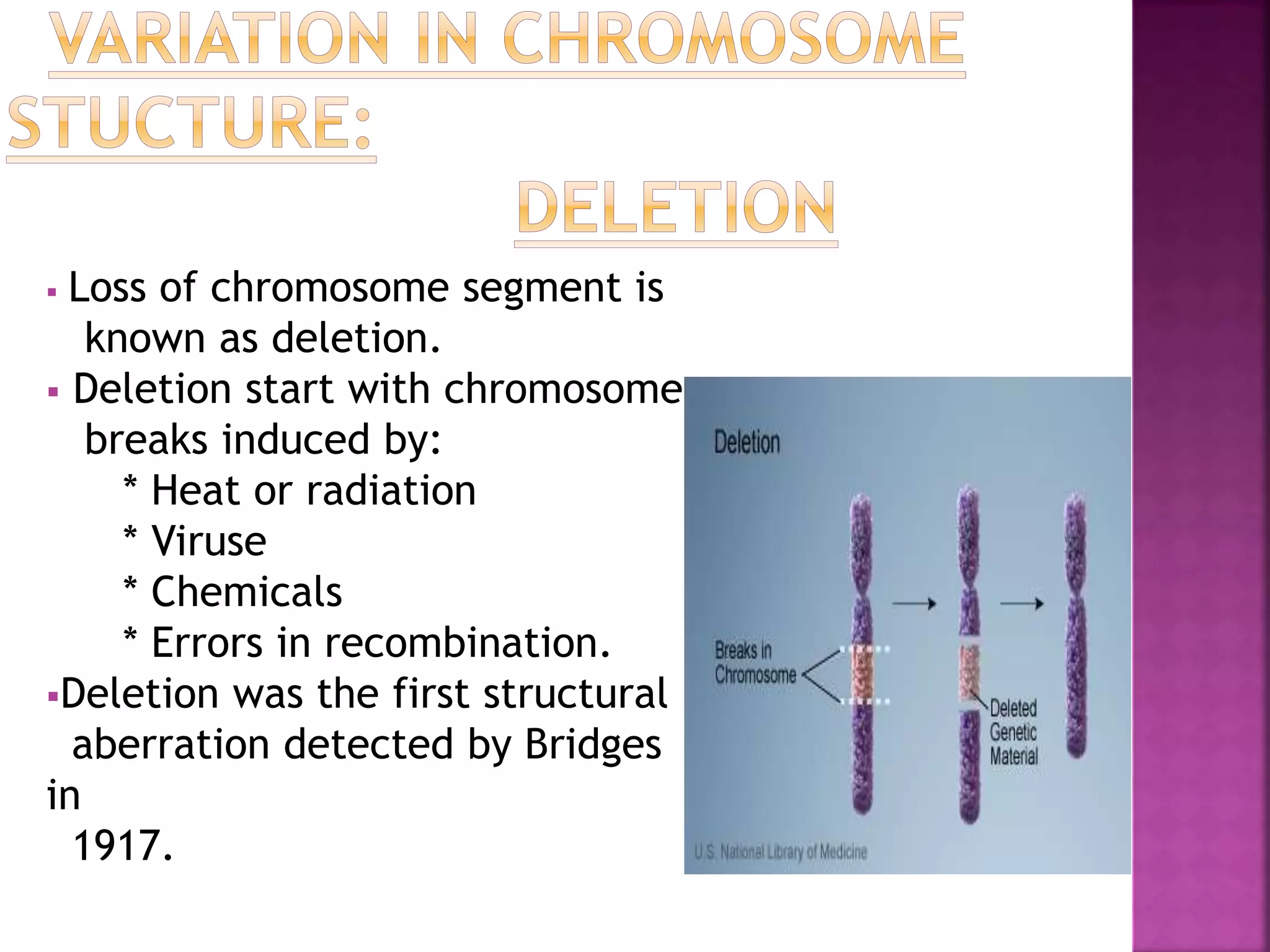
 Loss of chromosome segment is
known as deletion.
 Deletion start with chromosome
breaks induced by:
* Heat or radiation
* Viruse
* Chemicals
* Errors in recombination.
Deletion was the first structural
aberration detected by Bridges
in
1917.
 When homozygous, most deletions are lethal,
because most genes are necessary for life
and a homozygous deletion would have zero
copies of some genes.
 When heterozygous, the genes on the normal
homologue are hemizygous: there is only 1
copy of those genes.
 Crossing over is absent in deleted region of a
chromosome since this region is present in
only one copy in deletion heterozygotes
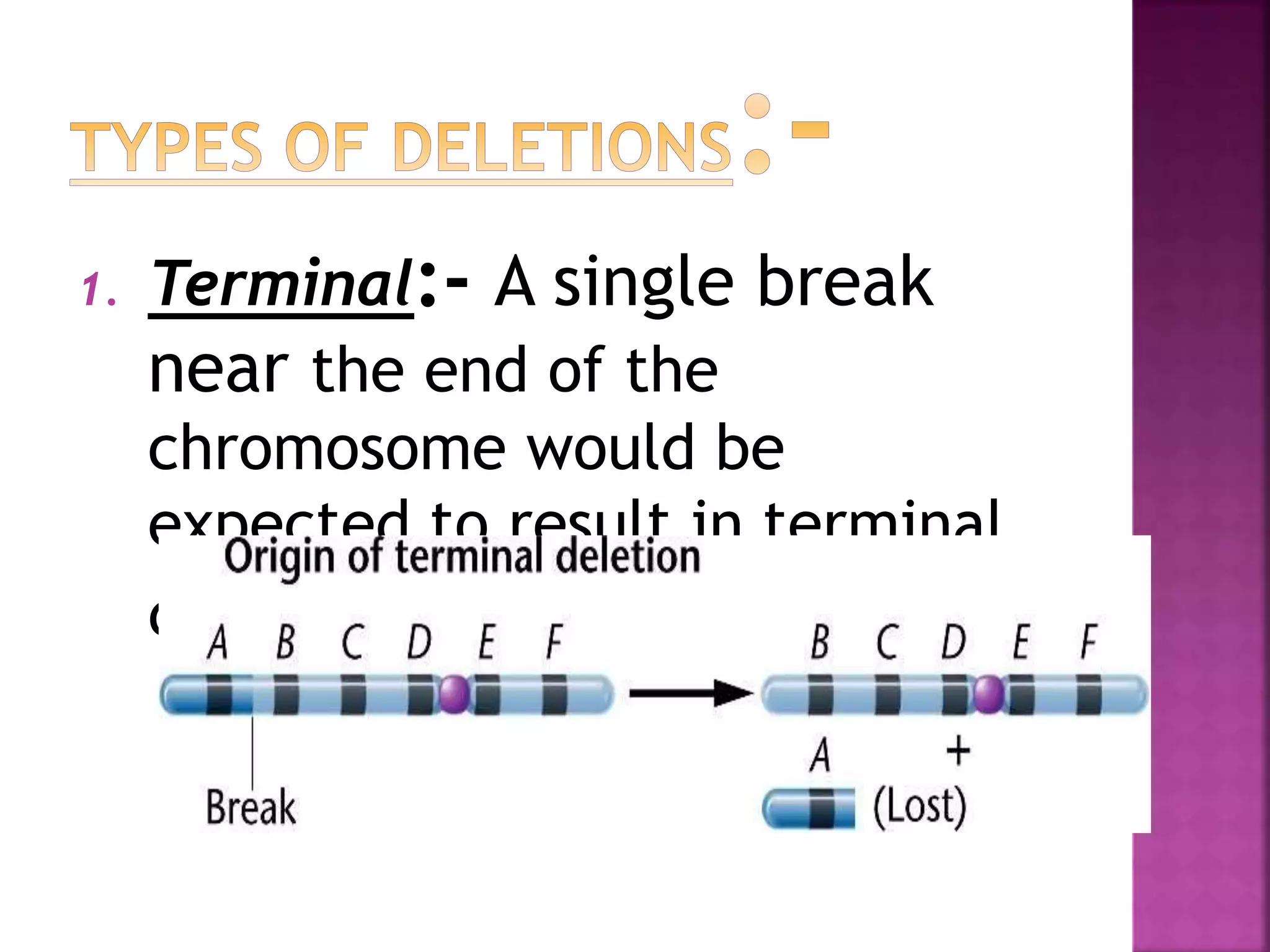
1. Terminal:- A single break
near the end of the
chromosome would be
expected to result in terminal
deletion.
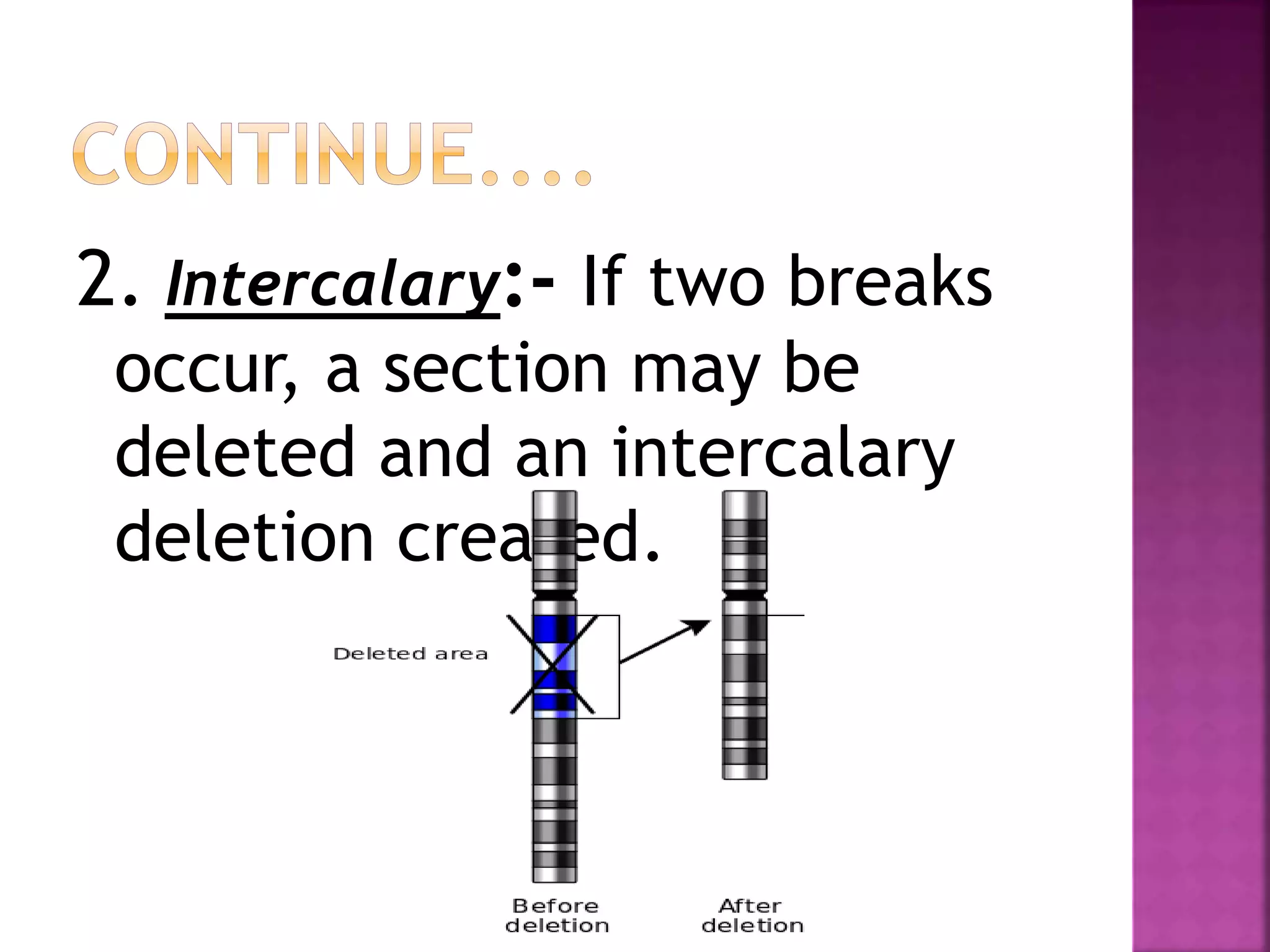
2. Intercalary:- If two breaks
occur, a section may be
deleted and an intercalary
deletion created.
Cri-du-chat (Cat cry syndrome):-
•The chromosome deficiency resulting from deletion
of
part of the short arm of chromosome 5.
•Characteristics are broad face and saddle nose,
physical and mental retardation.
Myelocytic leukemia:-
•A deletion of chromosome 22.
•It was described by P.C.Nowell and Hungerford
and was called “Philadelphia” (Ph’) chromosome.
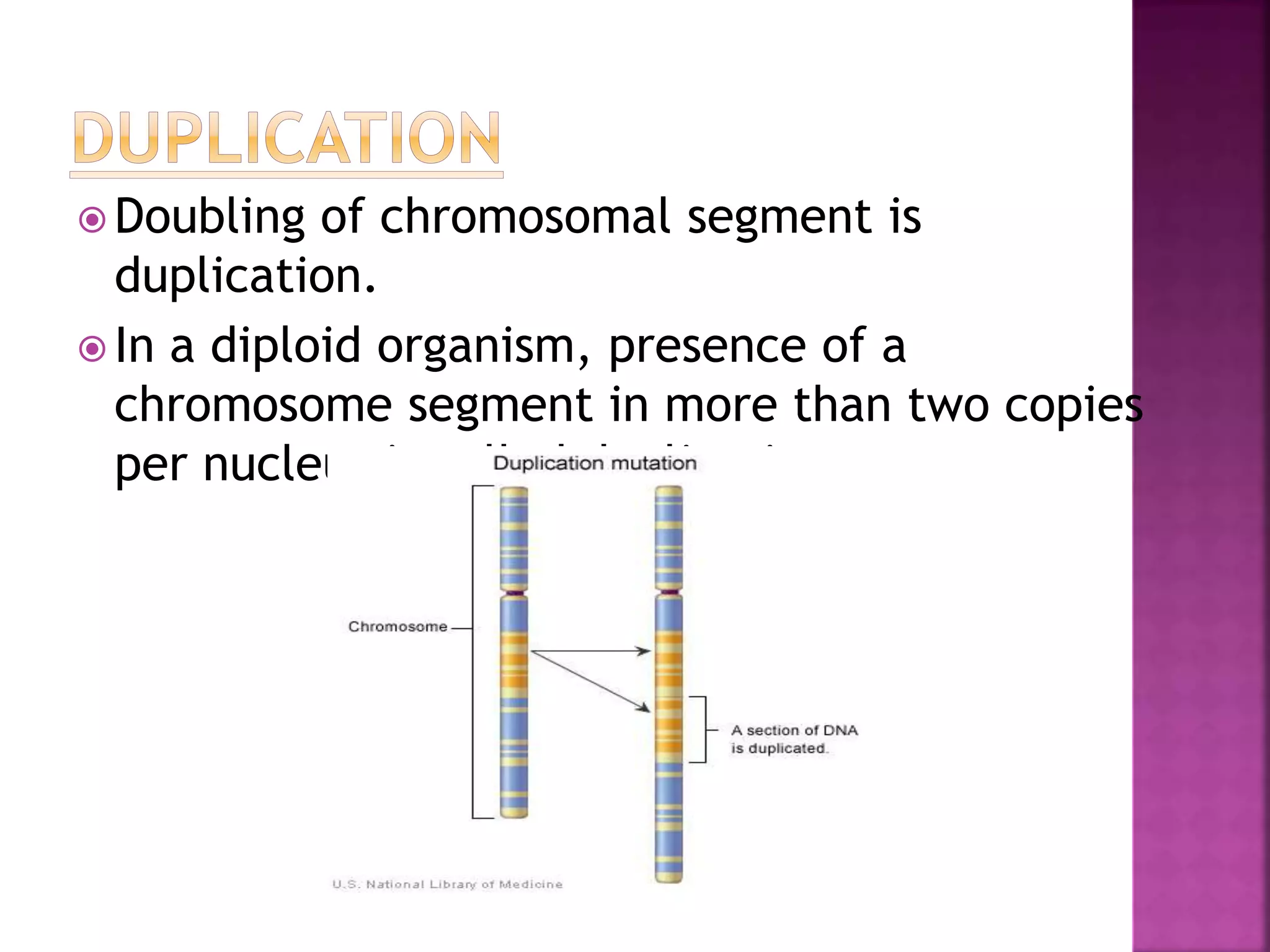
 Doubling of chromosomal segment is
duplication.
 In a diploid organism, presence of a
chromosome segment in more than two copies
per nucleus is called duplication.
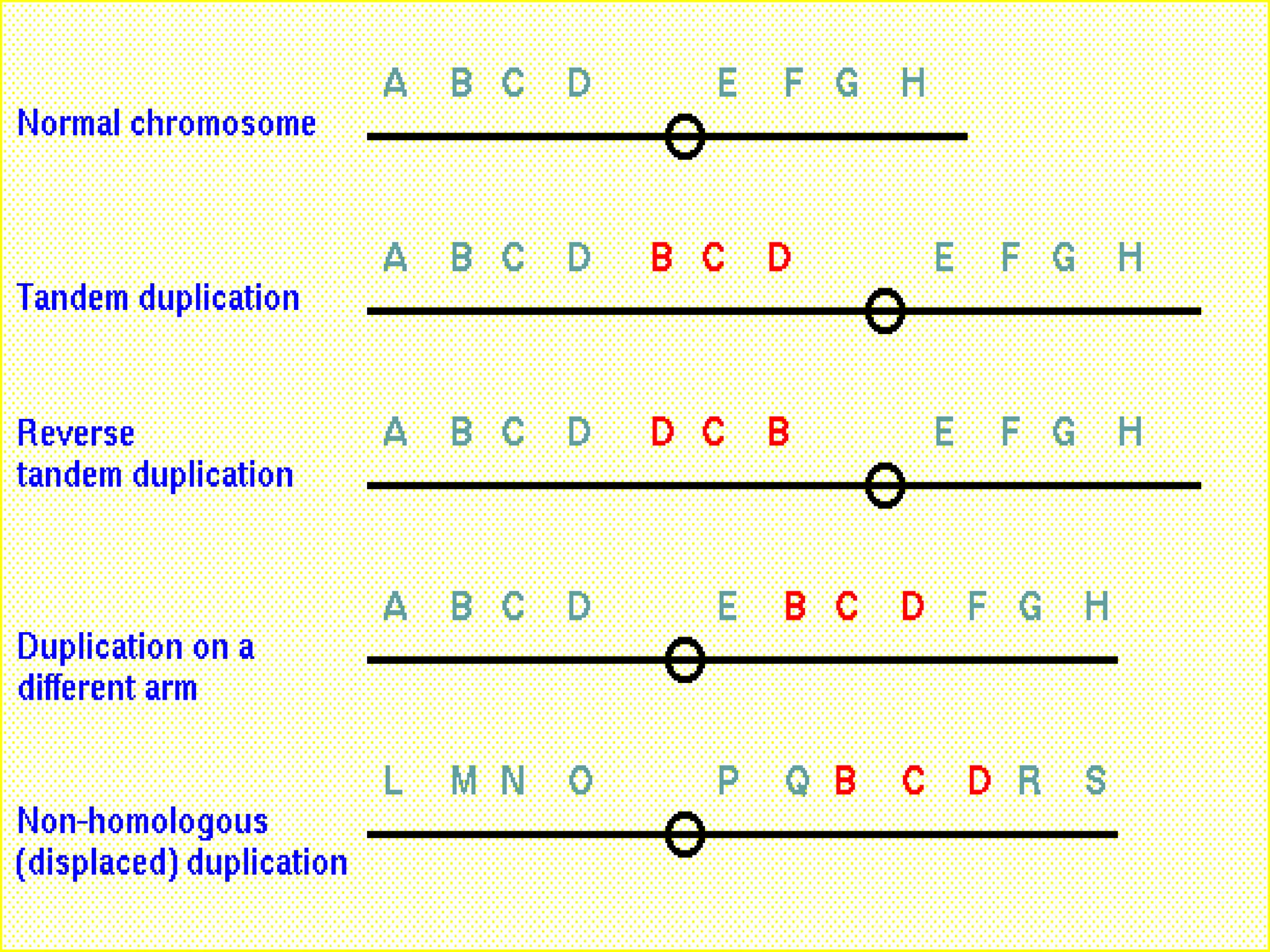
1. Tandem duplication:- Tandem duplication
are adjacent to each other.
2. Reverse tandem duplication:- Duplication
in genes arranged in the opposite order of
the normal.
3. Displaced duplication:- The extra segment
may be located in the same chromosome but
away from the normal segment.
4. Translocation duplication:- The additional
chromosome segment is located in a non-
homologous chromosome.
chromosomes

chromosomes

  • 2.
     Loss ofchromosome segment is known as deletion.  Deletion start with chromosome breaks induced by: * Heat or radiation * Viruse * Chemicals * Errors in recombination. Deletion was the first structural aberration detected by Bridges in 1917.
  • 3.
     When homozygous,most deletions are lethal, because most genes are necessary for life and a homozygous deletion would have zero copies of some genes.  When heterozygous, the genes on the normal homologue are hemizygous: there is only 1 copy of those genes.  Crossing over is absent in deleted region of a chromosome since this region is present in only one copy in deletion heterozygotes
  • 4.
    1. Terminal:- Asingle break near the end of the chromosome would be expected to result in terminal deletion.
  • 5.
    2. Intercalary:- Iftwo breaks occur, a section may be deleted and an intercalary deletion created.
  • 6.
    Cri-du-chat (Cat crysyndrome):- •The chromosome deficiency resulting from deletion of part of the short arm of chromosome 5. •Characteristics are broad face and saddle nose, physical and mental retardation. Myelocytic leukemia:- •A deletion of chromosome 22. •It was described by P.C.Nowell and Hungerford and was called “Philadelphia” (Ph’) chromosome.
  • 7.
     Doubling ofchromosomal segment is duplication.  In a diploid organism, presence of a chromosome segment in more than two copies per nucleus is called duplication.
  • 8.
    1. Tandem duplication:-Tandem duplication are adjacent to each other. 2. Reverse tandem duplication:- Duplication in genes arranged in the opposite order of the normal. 3. Displaced duplication:- The extra segment may be located in the same chromosome but away from the normal segment. 4. Translocation duplication:- The additional chromosome segment is located in a non- homologous chromosome.