VIRUS TAXONOMY AND
CLASSIFICATION
BY
DR JAWAD NAZIR
ASSISTANT PROFESSOR
DEPARTMENT OF MICROBIOLOGY
UNIVERSITY OF VETERINARY AND ANIMAL SCIENCES, LAHORE
Virus Taxonomy
Taxonomy and classification
 Science of grouping and naming of living organisms
 Universally accepted identical system
 Shows relationships among organisms
 Is a way to provide identification of an organism
 Phylogeny: The study of the evolutionary history of
organisms.
Virus Taxonomy
Linnean Taxonomy
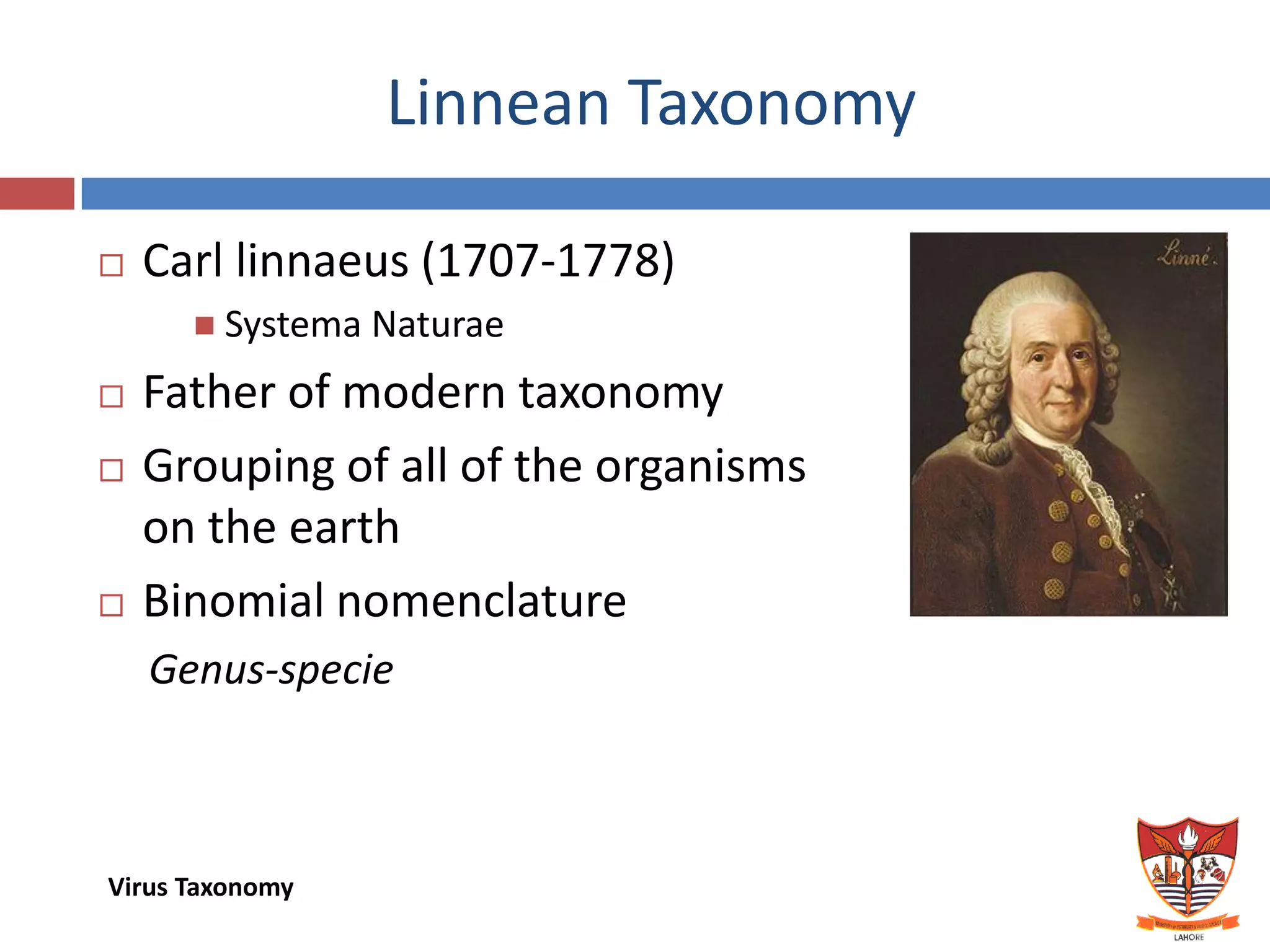
 Carl linnaeus (1707-1778)
 Systema Naturae
 Father of modern taxonomy
 Grouping of all of the organisms
on the earth
 Binomial nomenclature
Genus-specie
Virus Taxonomy
Virus taxonomy
 Early virus classification was based upon the
pathogenic effects and transmission patterns
 Hepatitis viruses
 Hepatitis A: Picornavirus
 Hepatitis B: Hepadnavirus
 Hepatitis C: Flavivirus
 In 1930 , virus structure and composition details
start to emerge that made possible to group viruses
on the basis of shared features of viruses
Virus Taxonomy
Virus taxonomy
 In 1966, International committee for nomenclature of viruses (ICNV) was
developed
 In 1973, International committee for taxonomy of viruses (ICTV) was
established
 ICTV governed by the virology division of the International union of
Microbiological societies
 Experts meet time to time to reconsider and revise the virus taxonomy
and nomenclature
 Most recent report was published in 2011 “9th report”
 Available online http://www.ictvonline.org/
Virus Taxonomy
Recent criteria for classification
 Type and character of viral genome
 Strategy of viral replication
 Structure of virus
Additional information by sequencing or partial
sequencing of viral genome
Virus Taxonomy
Virus taxonomy
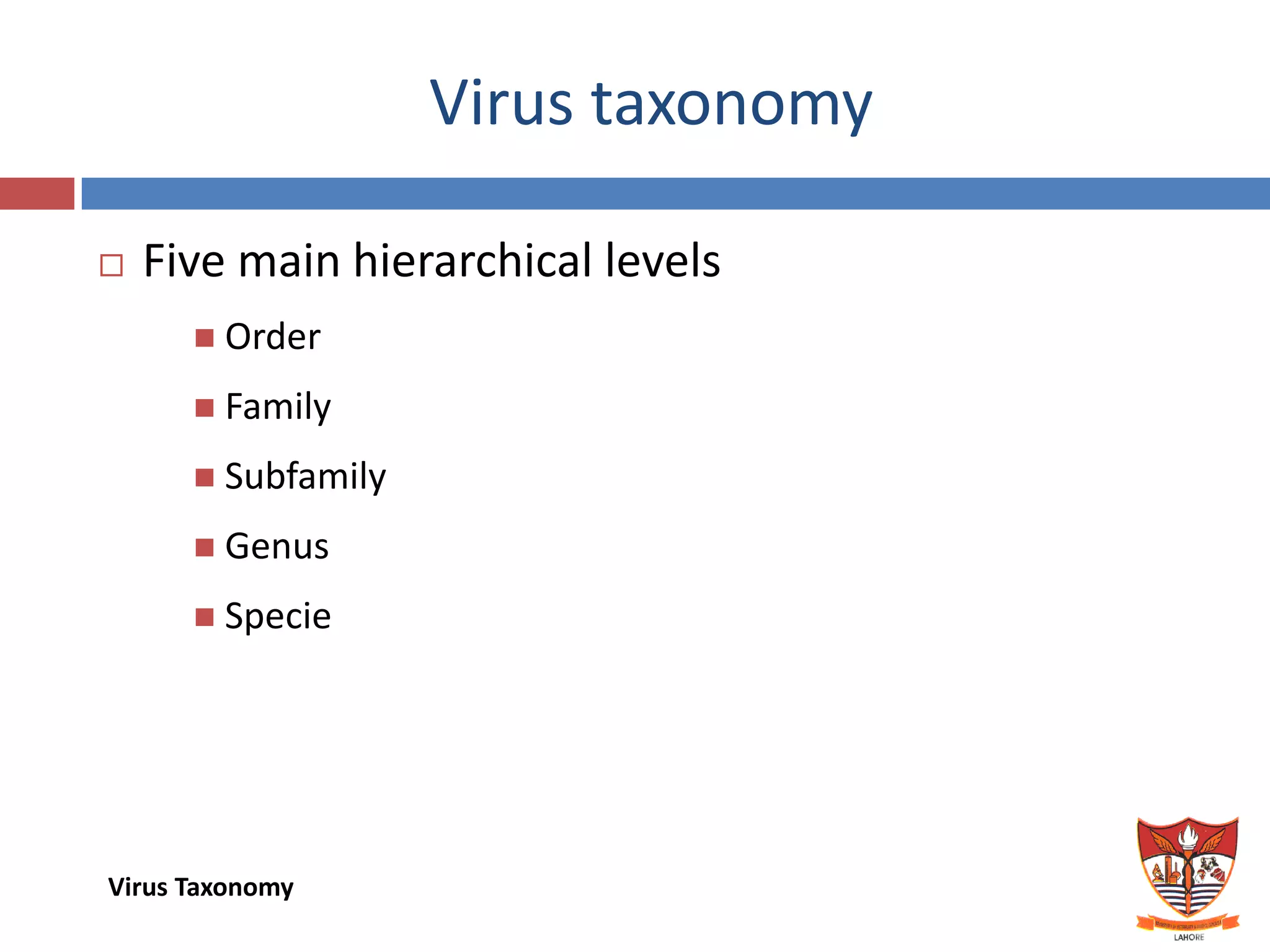
 Five main hierarchical levels
 Order
 Family
 Subfamily
 Genus
 Specie
Virus Taxonomy
Virus taxonomy
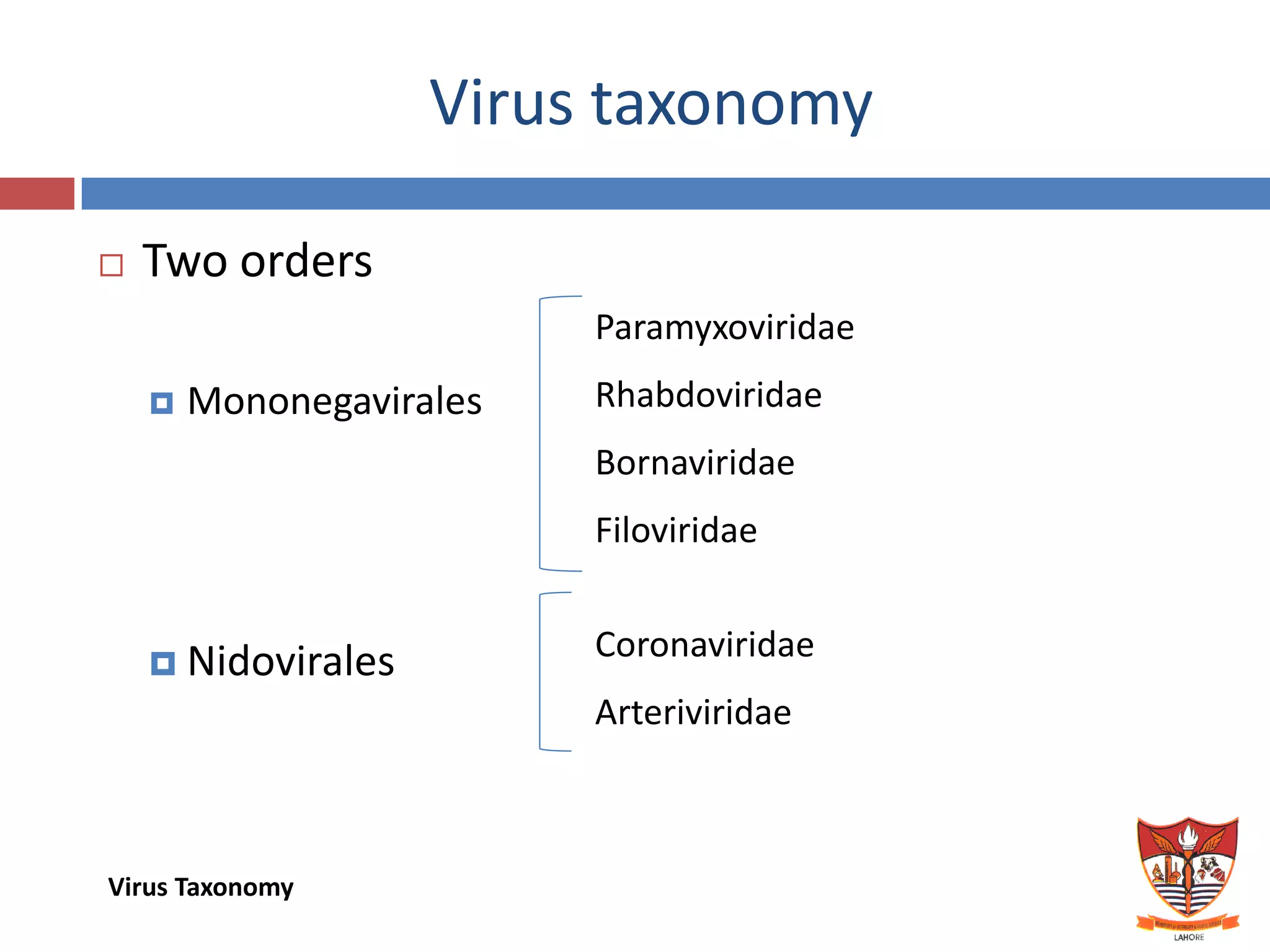
 Two orders
 Mononegavirales
 Nidovirales
Paramyxoviridae
Rhabdoviridae
Bornaviridae
Filoviridae
Coronaviridae
Arteriviridae
Virus Taxonomy
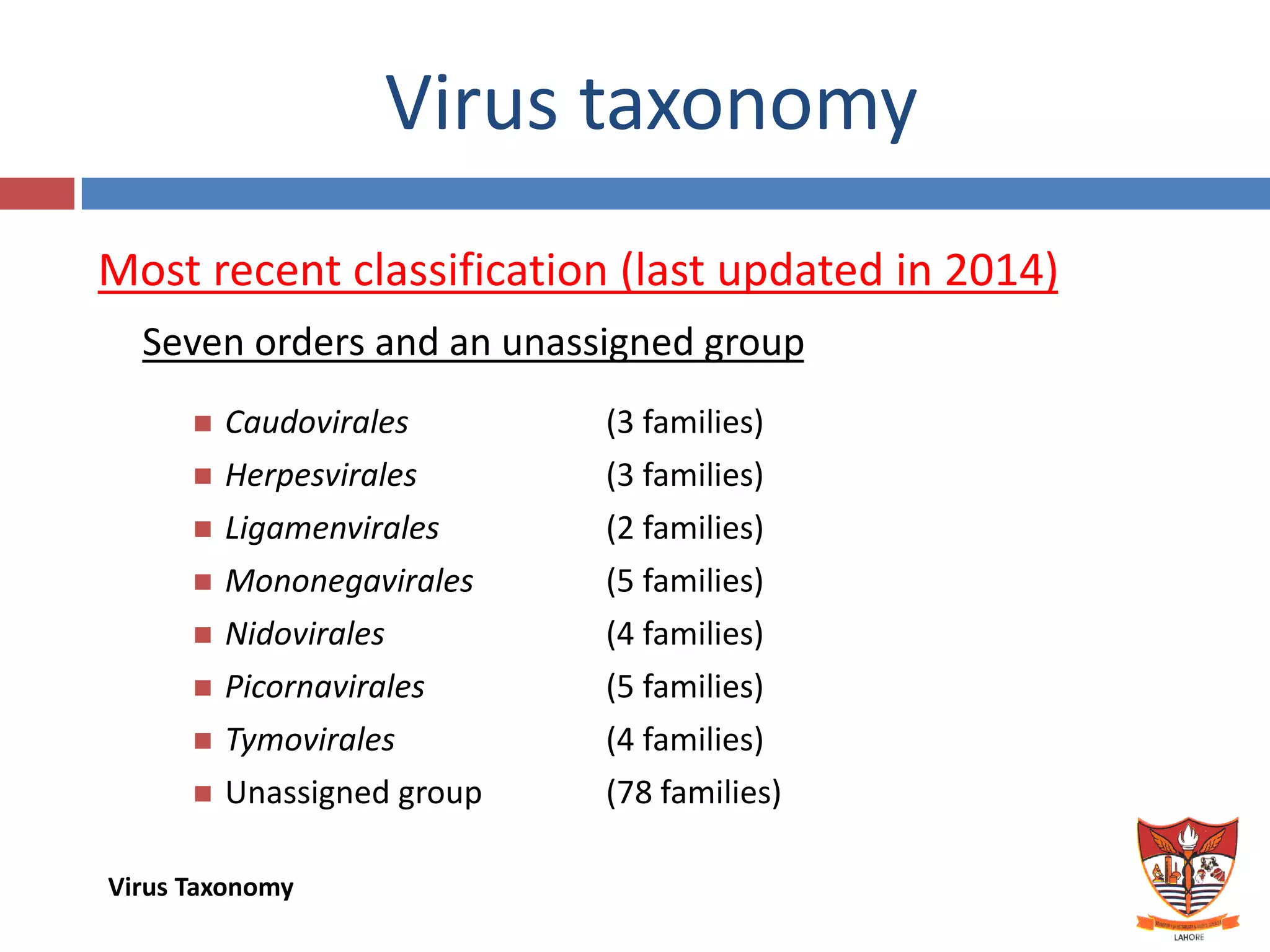
Most recent classification (last updated in 2014)
Seven orders and an unassigned group
 Caudovirales (3 families)
 Herpesvirales (3 families)
 Ligamenvirales (2 families)
 Mononegavirales (5 families)
 Nidovirales (4 families)
 Picornavirales (5 families)
 Tymovirales (4 families)
 Unassigned group (78 families)
Virus taxonomy
Virus Taxonomy
 More than 50 families and 22 are of veterinary
importance
 230 genera
 More than 1500 species
 More than 30,000 different strains
Virus taxonomy
Virus Taxonomy
Most recent classification (last updated in 2014)
 07 orders
 104 Families
 23 Subfamilies
 505 Genera
 3186 Species
Virus taxonomy
Virus Taxonomy
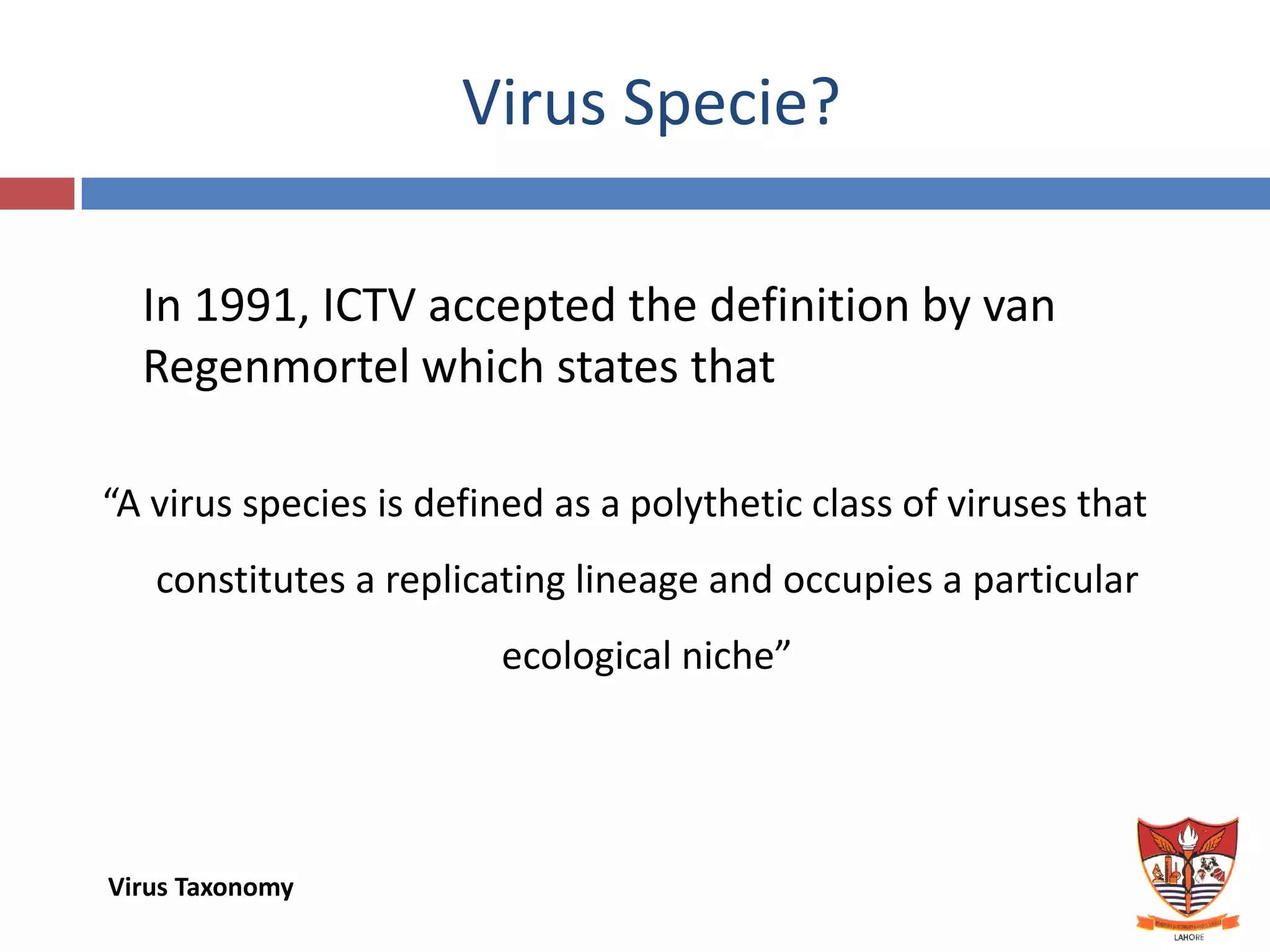
Virus Specie?
In 1991, ICTV accepted the definition by van
Regenmortel which states that
“A virus species is defined as a polythetic class of viruses that
constitutes a replicating lineage and occupies a particular
ecological niche”
Virus Taxonomy
Nomenclature
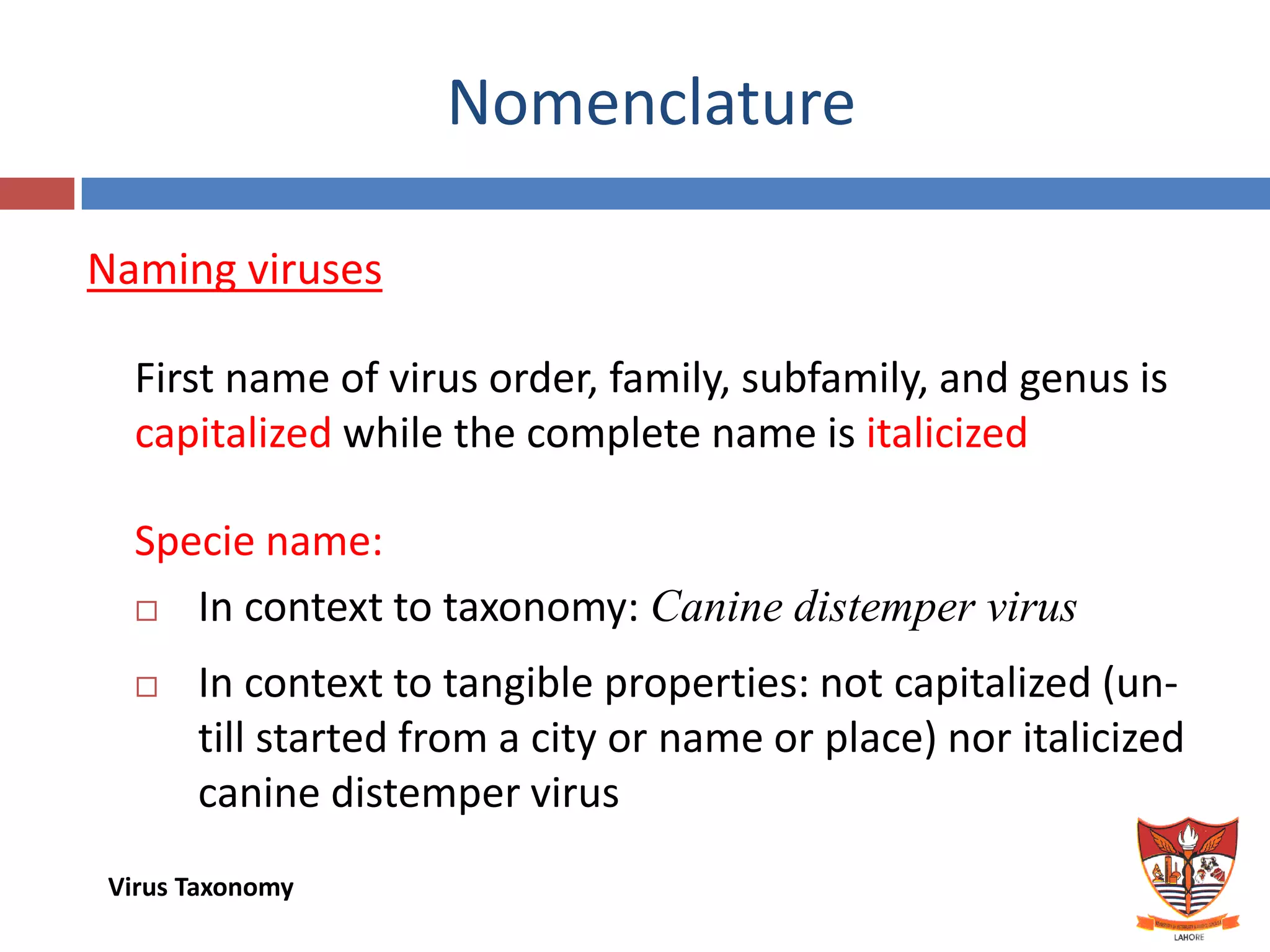
Naming viruses
First name of virus order, family, subfamily, and genus is
capitalized while the complete name is italicized
Specie name:
 In context to taxonomy: Canine distemper virus
 In context to tangible properties: not capitalized (un-
till started from a city or name or place) nor italicized
canine distemper virus
Virus Taxonomy
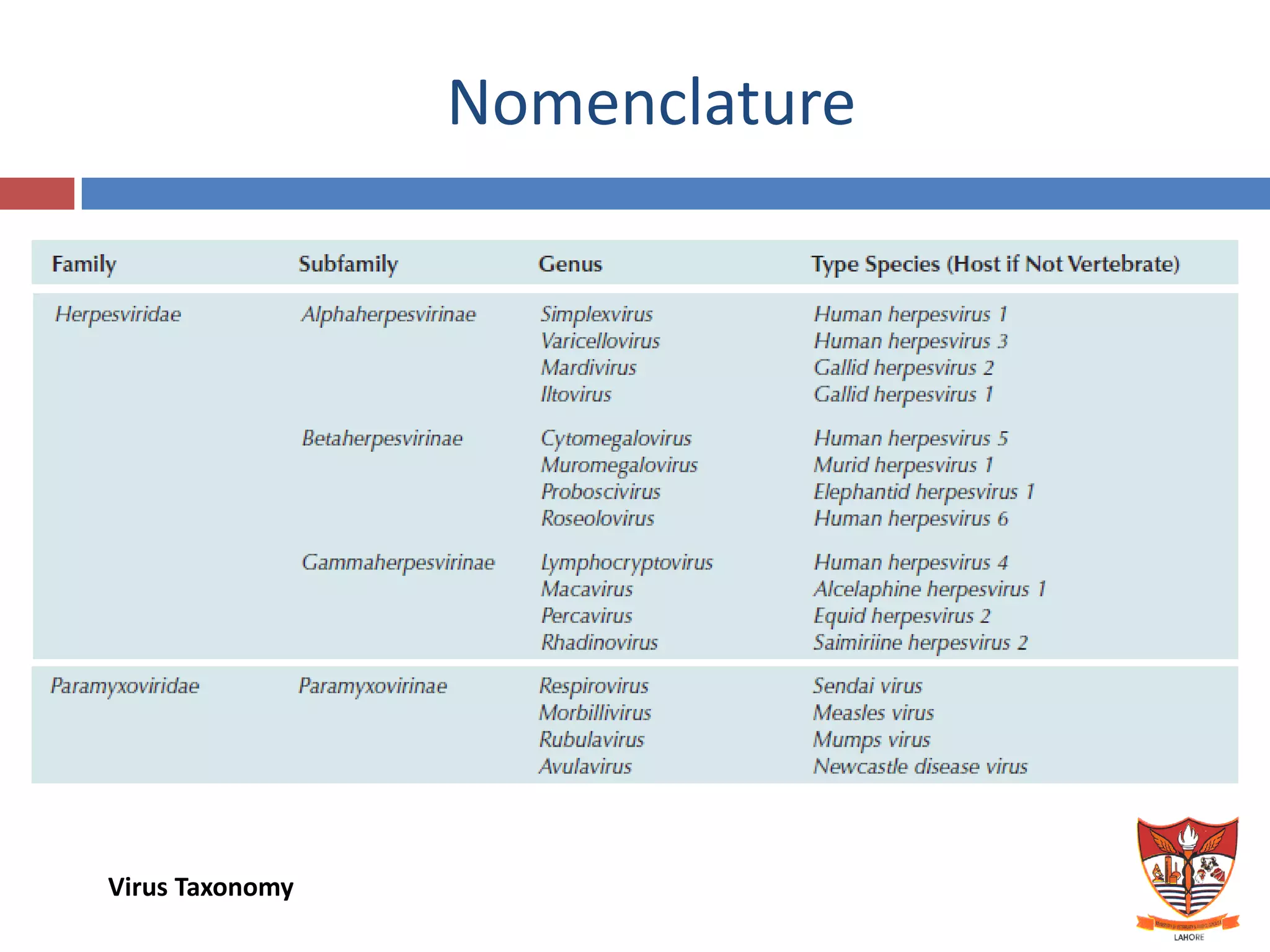
Nomenclature
Designation Suffix
Order (-virales)
Family (-viridae)
Subfamily (-virinae)
Genus (-virus)
Virus Taxonomy
Nomenclature
Virus Taxonomy
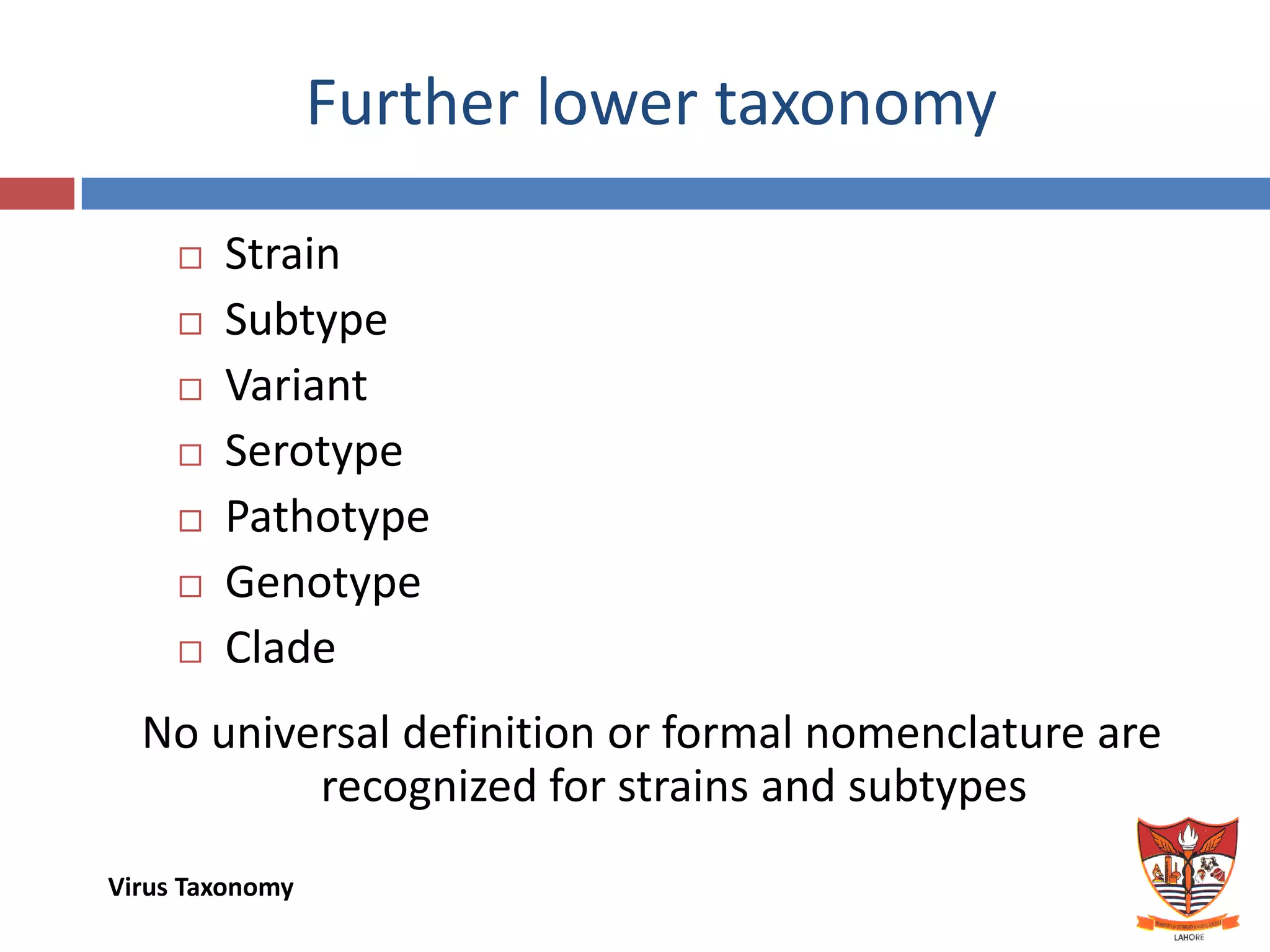
Further lower taxonomy
 Strain
 Subtype
 Variant
 Serotype
 Pathotype
 Genotype
 Clade
No universal definition or formal nomenclature are
recognized for strains and subtypes
Virus Taxonomy
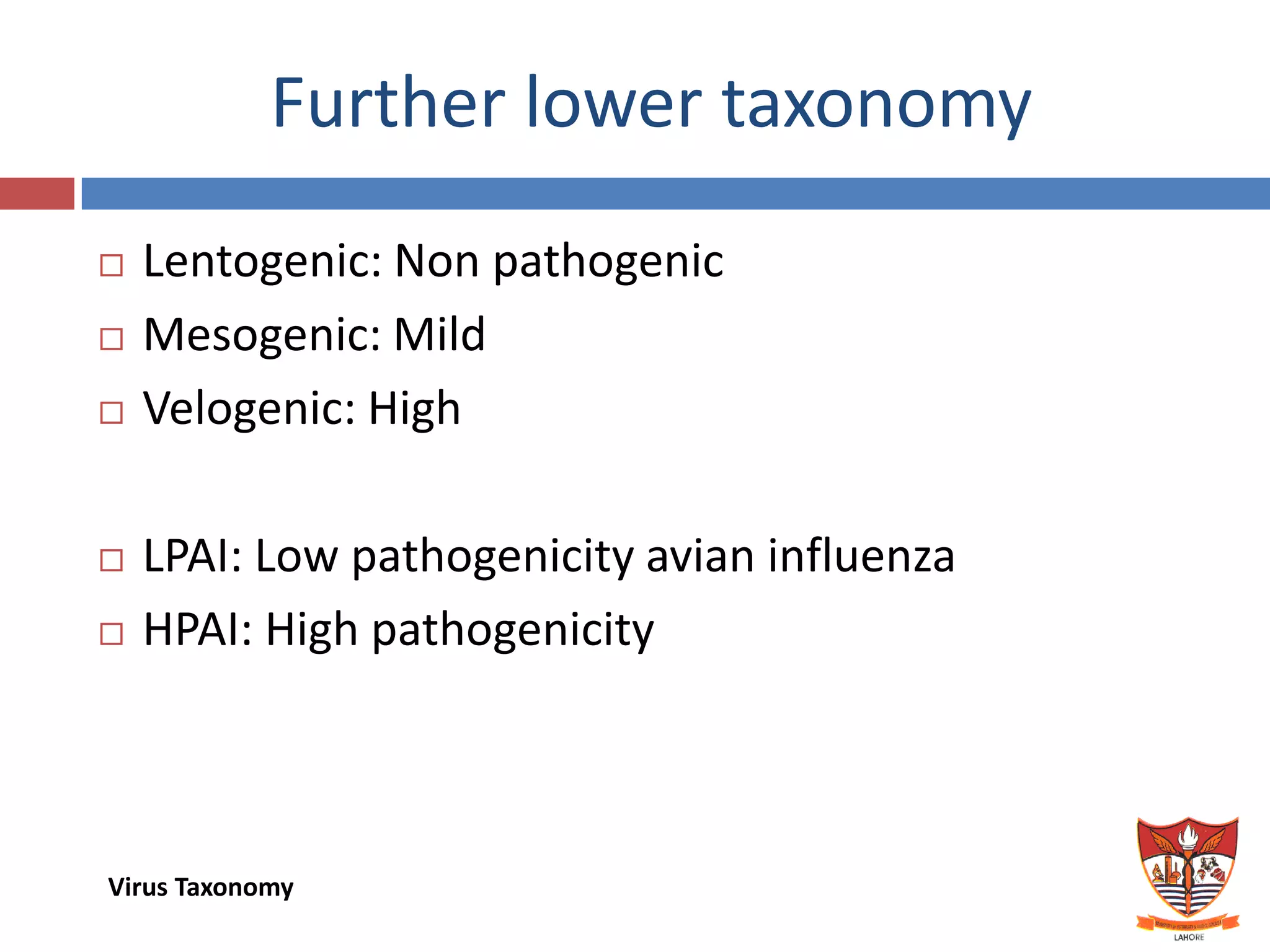
Further lower taxonomy
 Lentogenic: Non pathogenic
 Mesogenic: Mild
 Velogenic: High
 LPAI: Low pathogenicity avian influenza
 HPAI: High pathogenicity
Virus Taxonomy
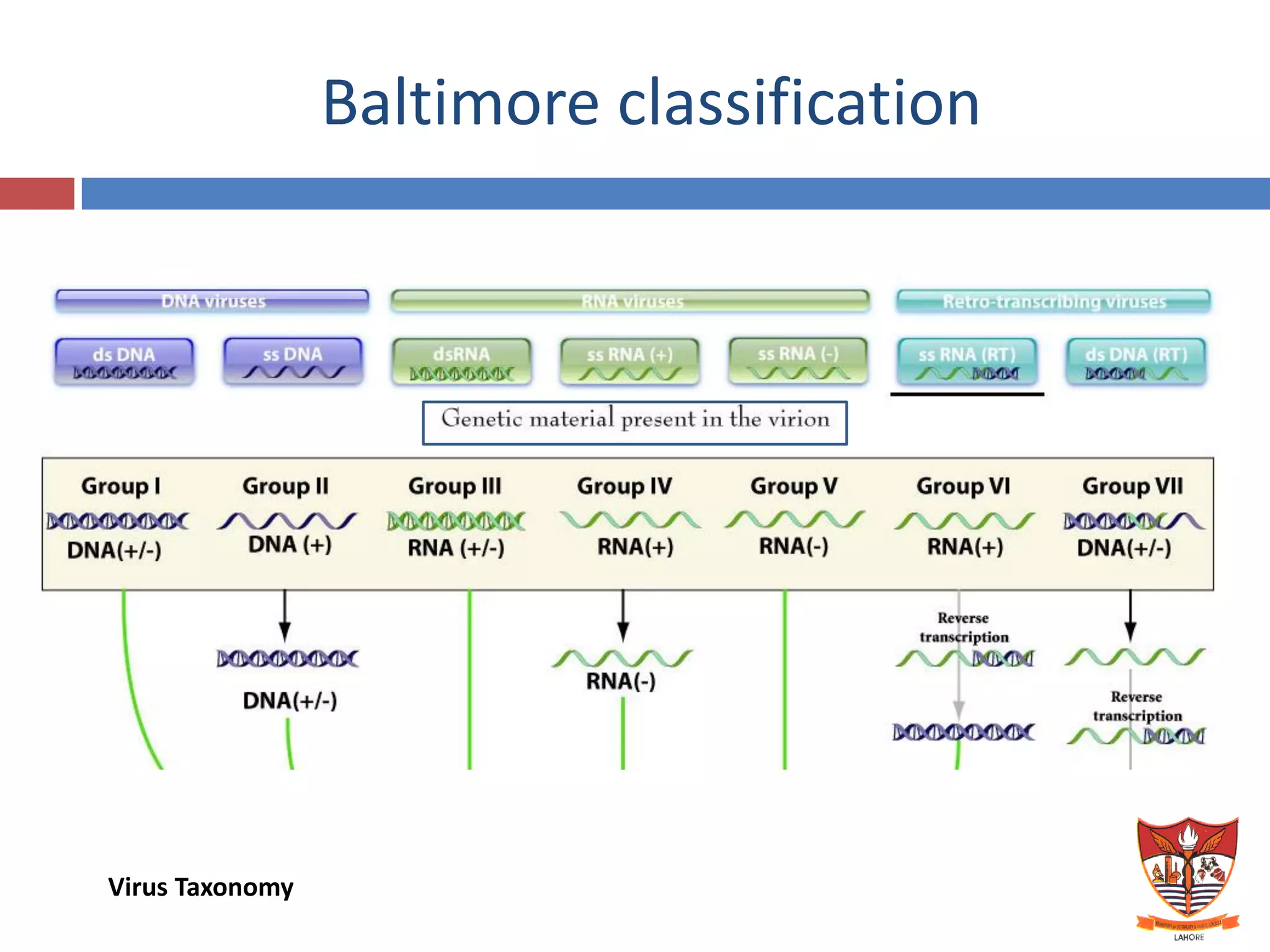
Baltimore classification
Virus Taxonomy
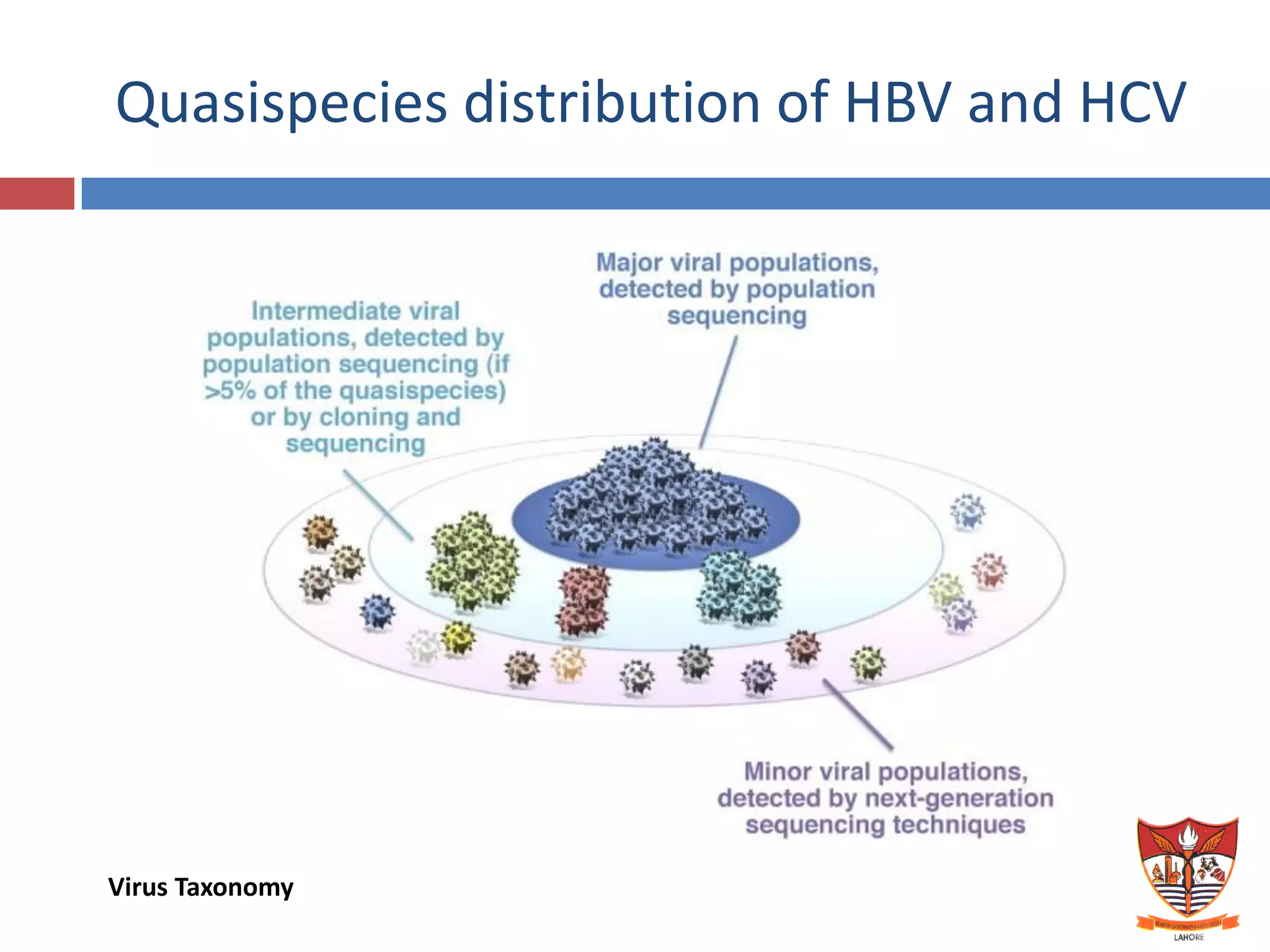
Virus Quasispecies
Each virus exist as a genetically diverse, rapidly
evolving population of virions with non-identical
but closely related mutant and recombinant viral
genomes based on a consensus sequence.
Virus Taxonomy
Quasispecies distribution of HBV and HCV
Virus Taxonomy
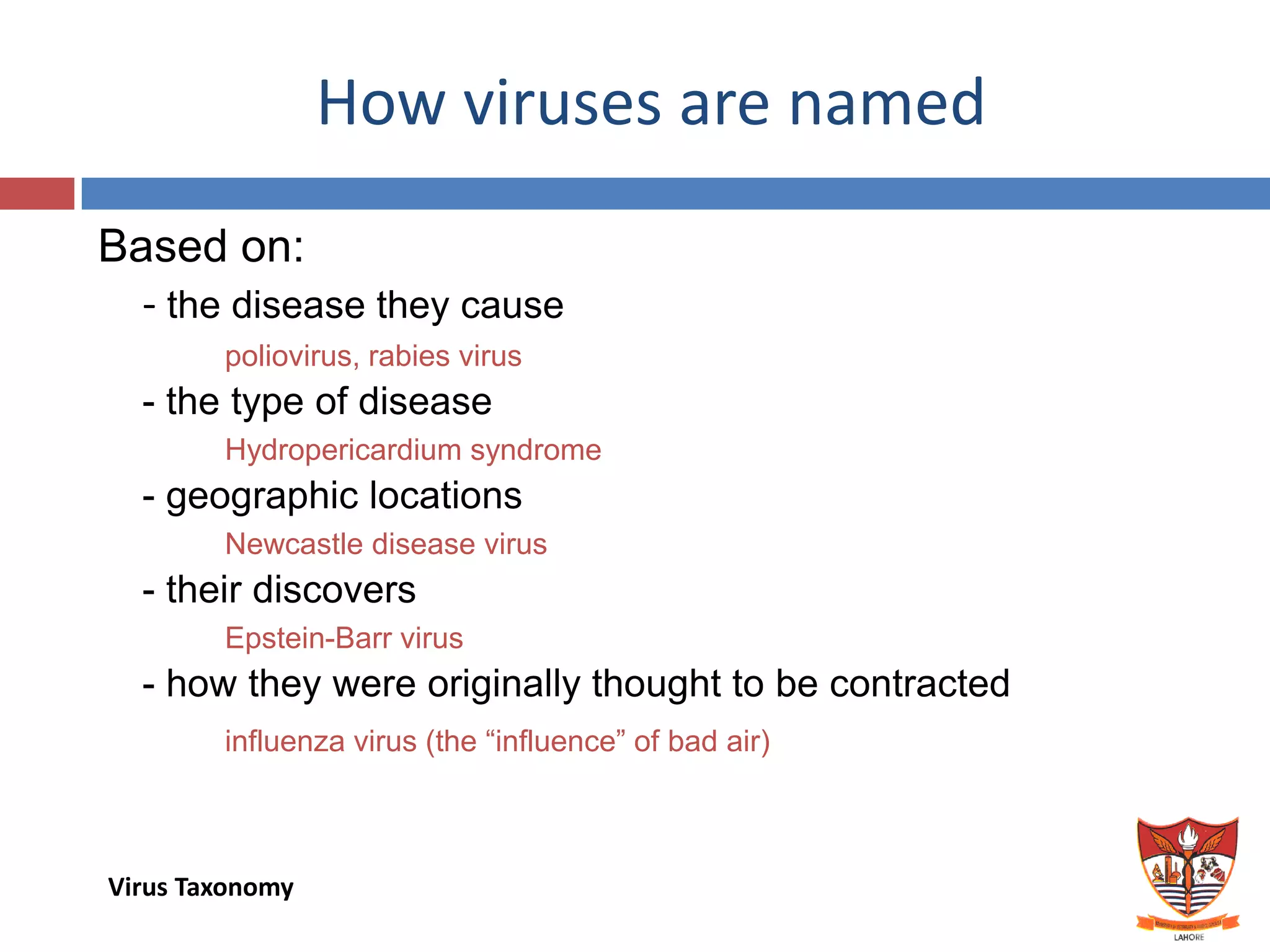
How viruses are named
Based on:
- the disease they cause
poliovirus, rabies virus
- the type of disease
Hydropericardium syndrome
- geographic locations
Newcastle disease virus
- their discovers
Epstein-Barr virus
- how they were originally thought to be contracted
influenza virus (the “influence” of bad air)
Virus Taxonomy
Grouping of viruses on the basis of
epidemiological criteria
 Enteric viruses
 Respiratory viruses
 Arboviruses (arthropod borne viruses)
 Oncogenic viruses
THANK YOU

virus taxonomy and classification

  • 1.
    VIRUS TAXONOMY AND CLASSIFICATION BY DRJAWAD NAZIR ASSISTANT PROFESSOR DEPARTMENT OF MICROBIOLOGY UNIVERSITY OF VETERINARY AND ANIMAL SCIENCES, LAHORE
  • 2.
    Virus Taxonomy Taxonomy andclassification  Science of grouping and naming of living organisms  Universally accepted identical system  Shows relationships among organisms  Is a way to provide identification of an organism  Phylogeny: The study of the evolutionary history of organisms.
  • 3.
    Virus Taxonomy Linnean Taxonomy Carl linnaeus (1707-1778)  Systema Naturae  Father of modern taxonomy  Grouping of all of the organisms on the earth  Binomial nomenclature Genus-specie
  • 4.
    Virus Taxonomy Virus taxonomy Early virus classification was based upon the pathogenic effects and transmission patterns  Hepatitis viruses  Hepatitis A: Picornavirus  Hepatitis B: Hepadnavirus  Hepatitis C: Flavivirus  In 1930 , virus structure and composition details start to emerge that made possible to group viruses on the basis of shared features of viruses
  • 5.
    Virus Taxonomy Virus taxonomy In 1966, International committee for nomenclature of viruses (ICNV) was developed  In 1973, International committee for taxonomy of viruses (ICTV) was established  ICTV governed by the virology division of the International union of Microbiological societies  Experts meet time to time to reconsider and revise the virus taxonomy and nomenclature  Most recent report was published in 2011 “9th report”  Available online http://www.ictvonline.org/
  • 6.
    Virus Taxonomy Recent criteriafor classification  Type and character of viral genome  Strategy of viral replication  Structure of virus Additional information by sequencing or partial sequencing of viral genome
  • 7.
    Virus Taxonomy Virus taxonomy Five main hierarchical levels  Order  Family  Subfamily  Genus  Specie
  • 8.
    Virus Taxonomy Virus taxonomy Two orders  Mononegavirales  Nidovirales Paramyxoviridae Rhabdoviridae Bornaviridae Filoviridae Coronaviridae Arteriviridae
  • 9.
    Virus Taxonomy Most recentclassification (last updated in 2014) Seven orders and an unassigned group  Caudovirales (3 families)  Herpesvirales (3 families)  Ligamenvirales (2 families)  Mononegavirales (5 families)  Nidovirales (4 families)  Picornavirales (5 families)  Tymovirales (4 families)  Unassigned group (78 families) Virus taxonomy
  • 10.
    Virus Taxonomy  Morethan 50 families and 22 are of veterinary importance  230 genera  More than 1500 species  More than 30,000 different strains Virus taxonomy
  • 11.
    Virus Taxonomy Most recentclassification (last updated in 2014)  07 orders  104 Families  23 Subfamilies  505 Genera  3186 Species Virus taxonomy
  • 12.
    Virus Taxonomy Virus Specie? In1991, ICTV accepted the definition by van Regenmortel which states that “A virus species is defined as a polythetic class of viruses that constitutes a replicating lineage and occupies a particular ecological niche”
  • 13.
    Virus Taxonomy Nomenclature Naming viruses Firstname of virus order, family, subfamily, and genus is capitalized while the complete name is italicized Specie name:  In context to taxonomy: Canine distemper virus  In context to tangible properties: not capitalized (un- till started from a city or name or place) nor italicized canine distemper virus
  • 14.
    Virus Taxonomy Nomenclature Designation Suffix Order(-virales) Family (-viridae) Subfamily (-virinae) Genus (-virus)
  • 15.
  • 16.
    Virus Taxonomy Further lowertaxonomy  Strain  Subtype  Variant  Serotype  Pathotype  Genotype  Clade No universal definition or formal nomenclature are recognized for strains and subtypes
  • 17.
    Virus Taxonomy Further lowertaxonomy  Lentogenic: Non pathogenic  Mesogenic: Mild  Velogenic: High  LPAI: Low pathogenicity avian influenza  HPAI: High pathogenicity
  • 18.
  • 19.
    Virus Taxonomy Virus Quasispecies Eachvirus exist as a genetically diverse, rapidly evolving population of virions with non-identical but closely related mutant and recombinant viral genomes based on a consensus sequence.
  • 20.
  • 21.
    Virus Taxonomy How virusesare named Based on: - the disease they cause poliovirus, rabies virus - the type of disease Hydropericardium syndrome - geographic locations Newcastle disease virus - their discovers Epstein-Barr virus - how they were originally thought to be contracted influenza virus (the “influence” of bad air)
  • 22.
    Virus Taxonomy Grouping ofviruses on the basis of epidemiological criteria  Enteric viruses  Respiratory viruses  Arboviruses (arthropod borne viruses)  Oncogenic viruses
  • 23.