Viruses and
Bacteria
Summit Virtual Academy
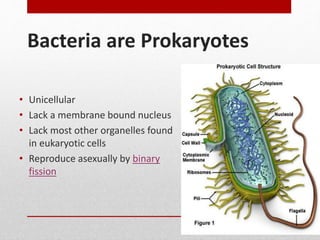
Bacteria are Prokaryotes
• Unicellular
• Lack a membrane bound nucleus
• Lack most other organelles found
in eukaryotic cells
• Reproduce asexually by binary
fission
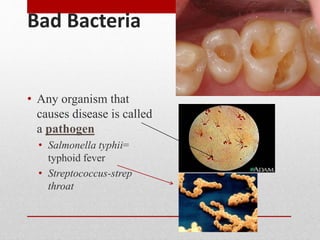
Bad Bacteria
• Any organism that
causes disease is called
a pathogen
• Salmonella typhii=
typhoid fever
• Streptococcus-strep
throat
What is a virus?
• Nonliving particle that causes disease
• Ex: Influenza, HIV, smallpox
• Need a host to reproduce
• Smaller than bacteria
• Bacteriophage- virus that infects bacteria
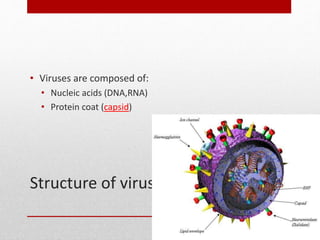
Structure of viruses.
• Viruses are composed of:
• Nucleic acids (DNA,RNA)
• Protein coat (capsid)
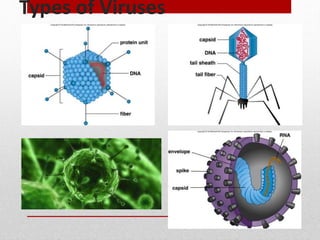
Types of Viruses
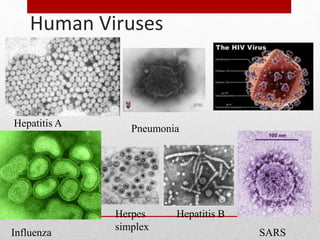
Human Viruses
Hepatitis A
Pneumonia
Influenza
Herpes
simplex
Hepatitis B
SARS
Viral Infections
• EX: herpes viruses, hepatitis viruses, AIDS is caused by a
retrovirus (HIV)- a virus that invades DNA.
• Antibiotics do not work on viruses, and their use for a
viral infection merely leads to antibiotic resistance!
HIV
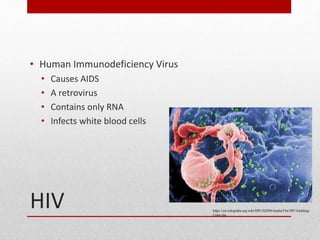
• Human Immunodeficiency Virus
• Causes AIDS
• A retrovirus
• Contains only RNA
• Infects white blood cells
https://en.wikipedia.org/wiki/HIV/AIDS#/media/File:HIV-budding-
Color.jpg
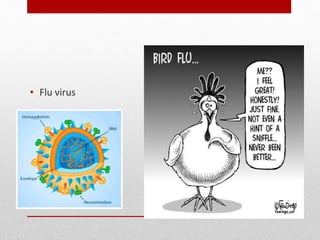
Influenza
• Flu virus
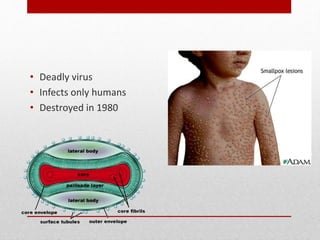
Smallpox
• Deadly virus
• Infects only humans
• Destroyed in 1980
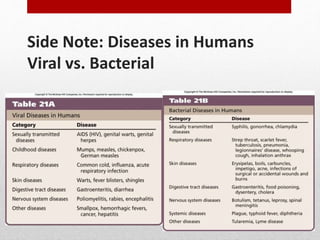
Side Note: Diseases in Humans
Viral vs. Bacterial
Why are viruses so
difficult to kill???
How does our body fight
Diseases?
• Pathogen enters body
• Immune cells fight it
• If they fail T cells become involved
• Two types:
• Helper T cells – interacts with B cells – B cells make
antibodies
• Some B cells don’t fight but remember the pathogen
(memory cells)- the next time the pathogen invades the cells
respond immediately – no symptoms result
• Killer T cells – release enzymes into the pathogen –
kills it
Immunity
• Passive- transferring antibodies from mother to baby
• Injecting antibodies – snake anti-venom
• Active- vaccines
• When the body builds immunity naturally – chicken pox
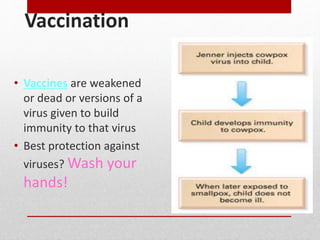
Vaccination
• Vaccines are weakened
or dead or versions of a
virus given to build
immunity to that virus
• Best protection against
viruses? Wash your
hands!

Virus and bacteria

  • 1.
  • 2.
    Bacteria are Prokaryotes •Unicellular • Lack a membrane bound nucleus • Lack most other organelles found in eukaryotic cells • Reproduce asexually by binary fission
  • 3.
    Bad Bacteria • Anyorganism that causes disease is called a pathogen • Salmonella typhii= typhoid fever • Streptococcus-strep throat
  • 4.
    What is avirus? • Nonliving particle that causes disease • Ex: Influenza, HIV, smallpox • Need a host to reproduce • Smaller than bacteria • Bacteriophage- virus that infects bacteria
  • 5.
    Structure of viruses. •Viruses are composed of: • Nucleic acids (DNA,RNA) • Protein coat (capsid)
  • 6.
  • 7.
  • 8.
    Viral Infections • EX:herpes viruses, hepatitis viruses, AIDS is caused by a retrovirus (HIV)- a virus that invades DNA. • Antibiotics do not work on viruses, and their use for a viral infection merely leads to antibiotic resistance!
  • 9.
    HIV • Human ImmunodeficiencyVirus • Causes AIDS • A retrovirus • Contains only RNA • Infects white blood cells https://en.wikipedia.org/wiki/HIV/AIDS#/media/File:HIV-budding- Color.jpg
  • 10.
  • 11.
    Smallpox • Deadly virus •Infects only humans • Destroyed in 1980
  • 12.
    Side Note: Diseasesin Humans Viral vs. Bacterial
  • 13.
    Why are virusesso difficult to kill???
  • 14.
    How does ourbody fight Diseases? • Pathogen enters body • Immune cells fight it • If they fail T cells become involved • Two types: • Helper T cells – interacts with B cells – B cells make antibodies • Some B cells don’t fight but remember the pathogen (memory cells)- the next time the pathogen invades the cells respond immediately – no symptoms result • Killer T cells – release enzymes into the pathogen – kills it
  • 15.
    Immunity • Passive- transferringantibodies from mother to baby • Injecting antibodies – snake anti-venom • Active- vaccines • When the body builds immunity naturally – chicken pox
  • 16.
    Vaccination • Vaccines areweakened or dead or versions of a virus given to build immunity to that virus • Best protection against viruses? Wash your hands!