
SOUND
For: CLASS 8th
Prepared by:
BHAVYA VASHISHT
INTRODUCTION
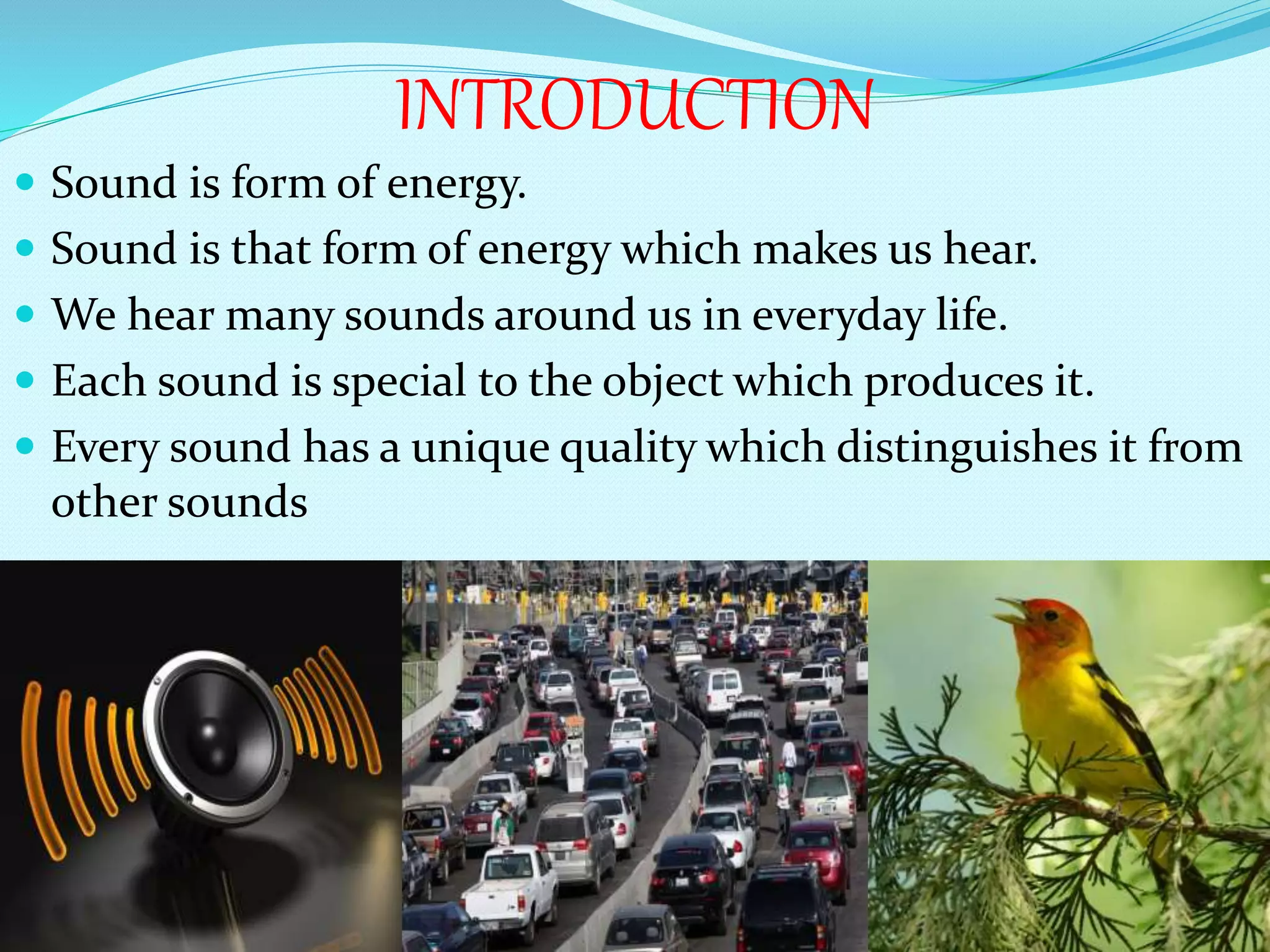
 Sound is form of energy.
 Sound is that form of energy which makes us hear.
 We hear many sounds around us in everyday life.
 Each sound is special to the object which produces it.
 Every sound has a unique quality which distinguishes it from
other sounds
SOUND PRODUCTION
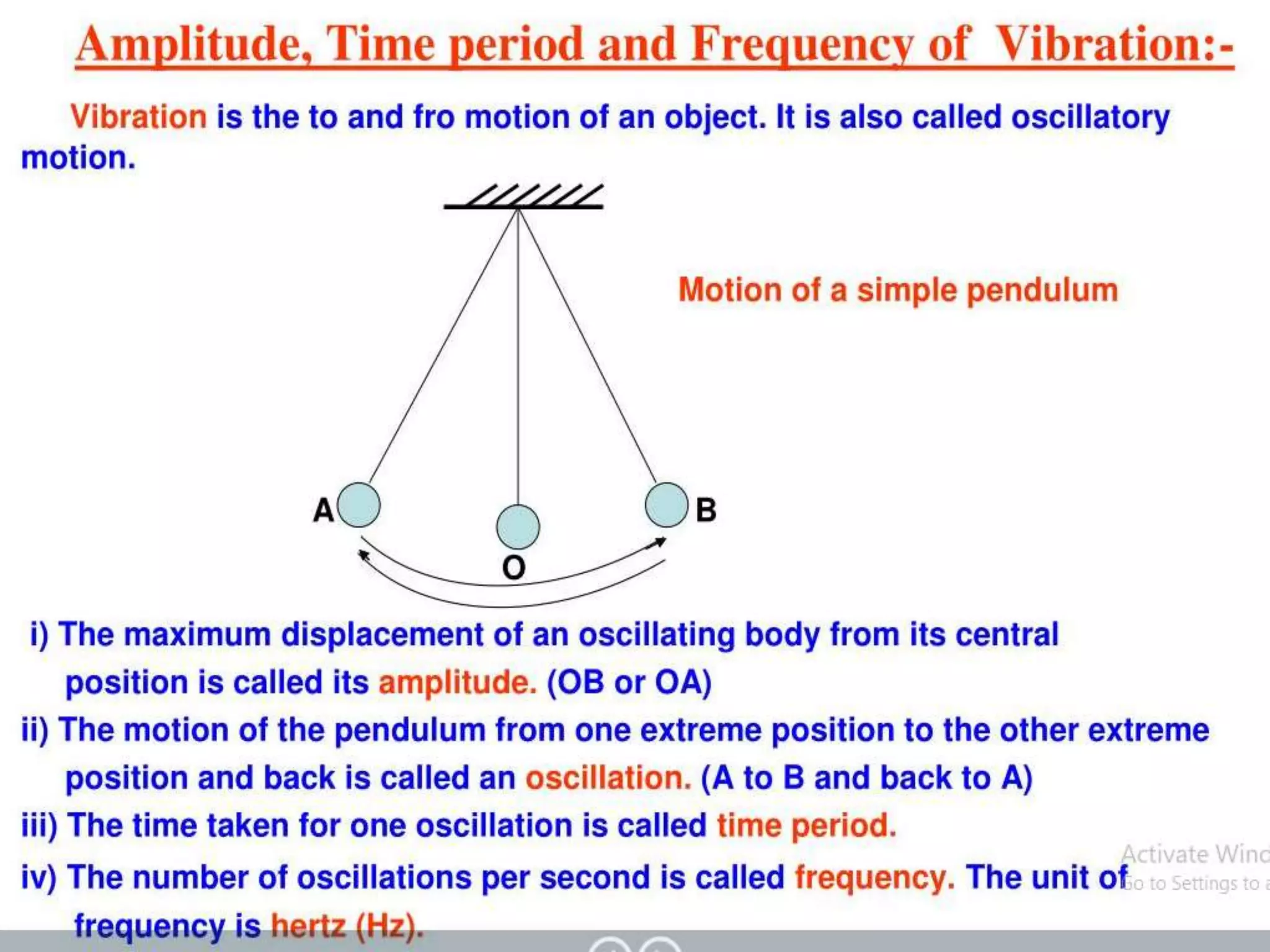
 Sound is produced when an object vibrates (moves to and fro
rapidly)
 Sound is produced by vibrating objects.
 Energy required to make an object vibrate and produce
sound is provided by outside source.
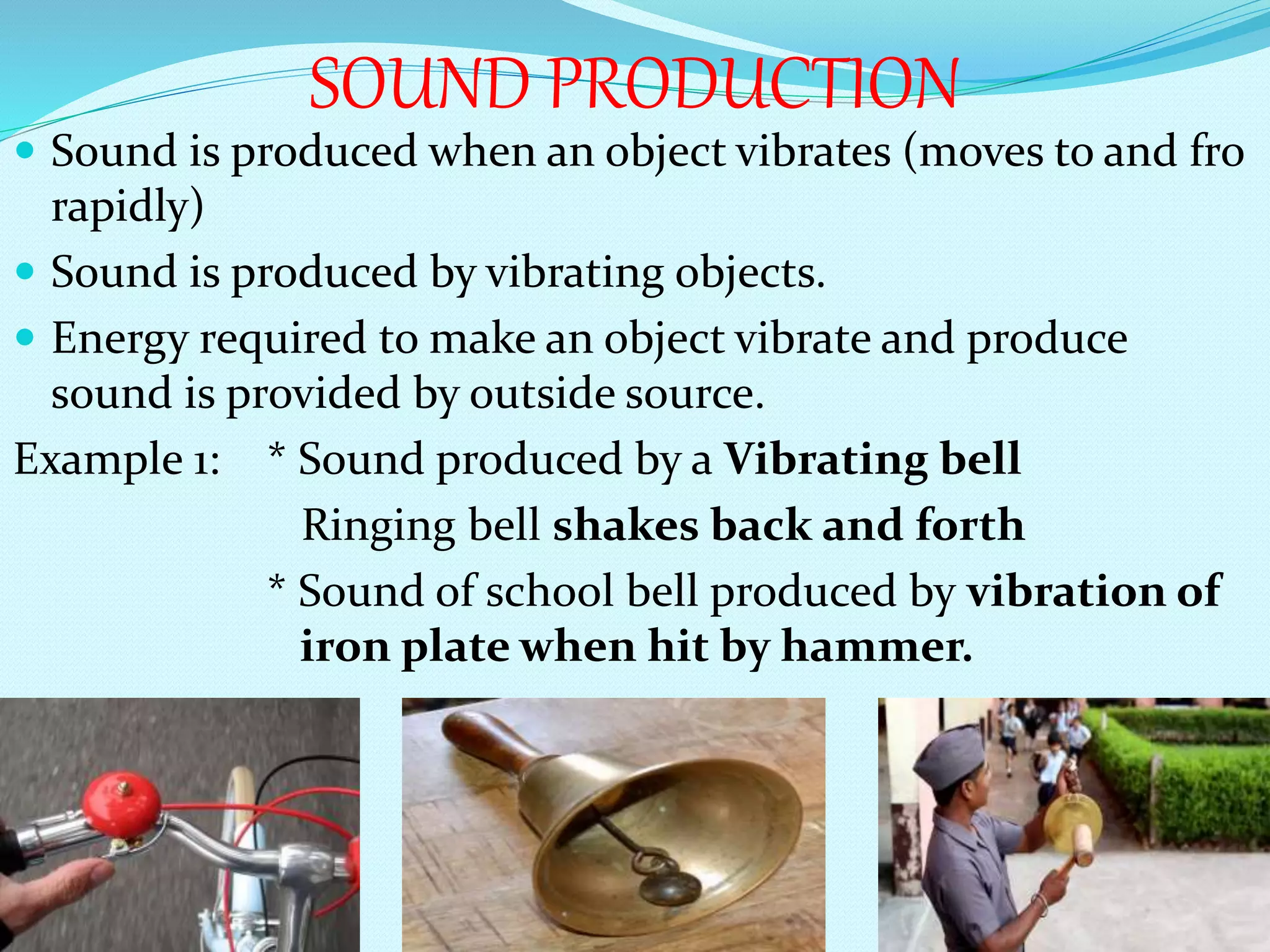
Example 1: * Sound produced by a Vibrating bell
Ringing bell shakes back and forth
* Sound of school bell produced by vibration of
iron plate when hit by hammer.
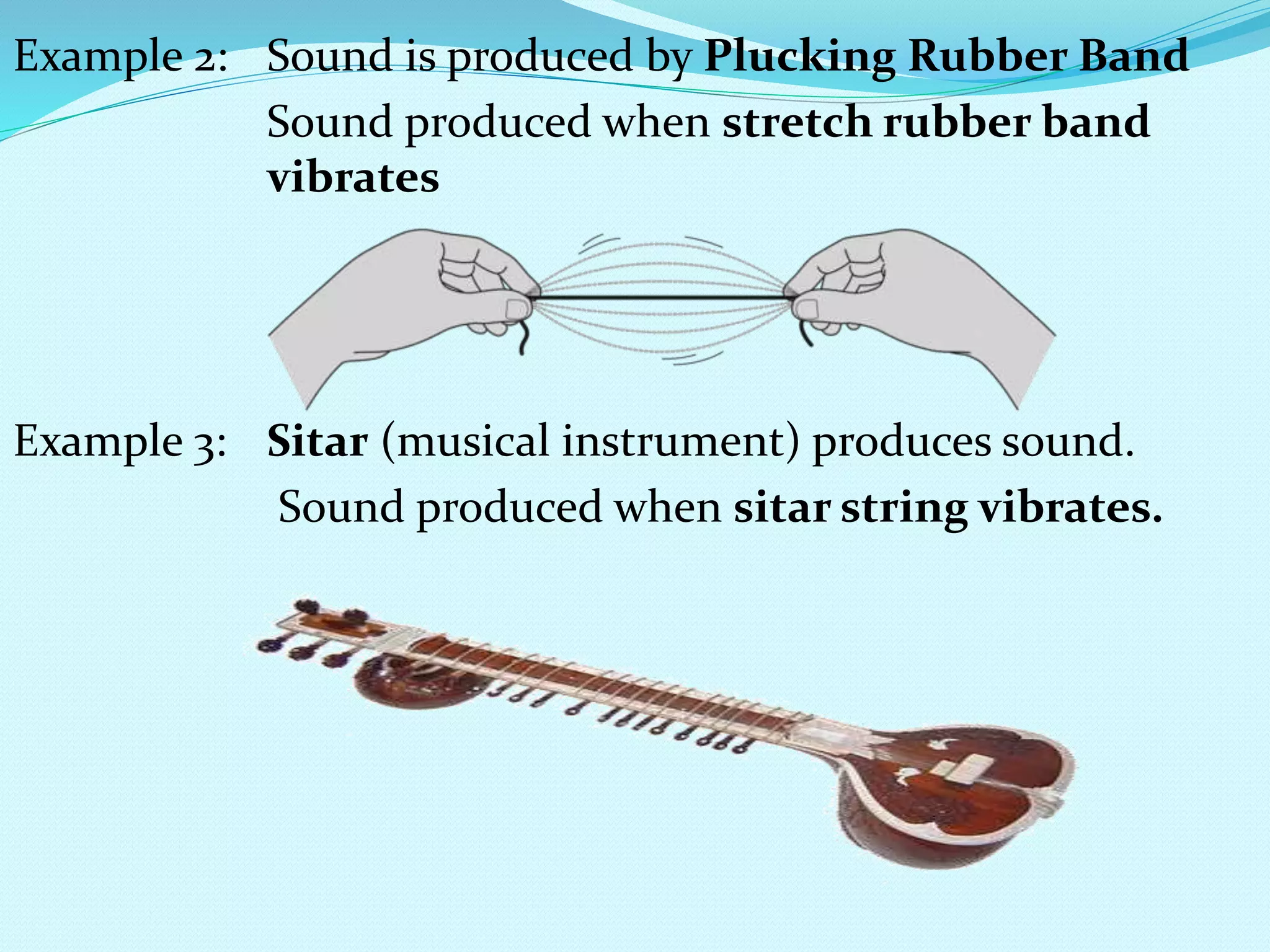
Example 2: Sound is produced by Plucking Rubber Band
Sound produced when stretch rubber band
vibrates
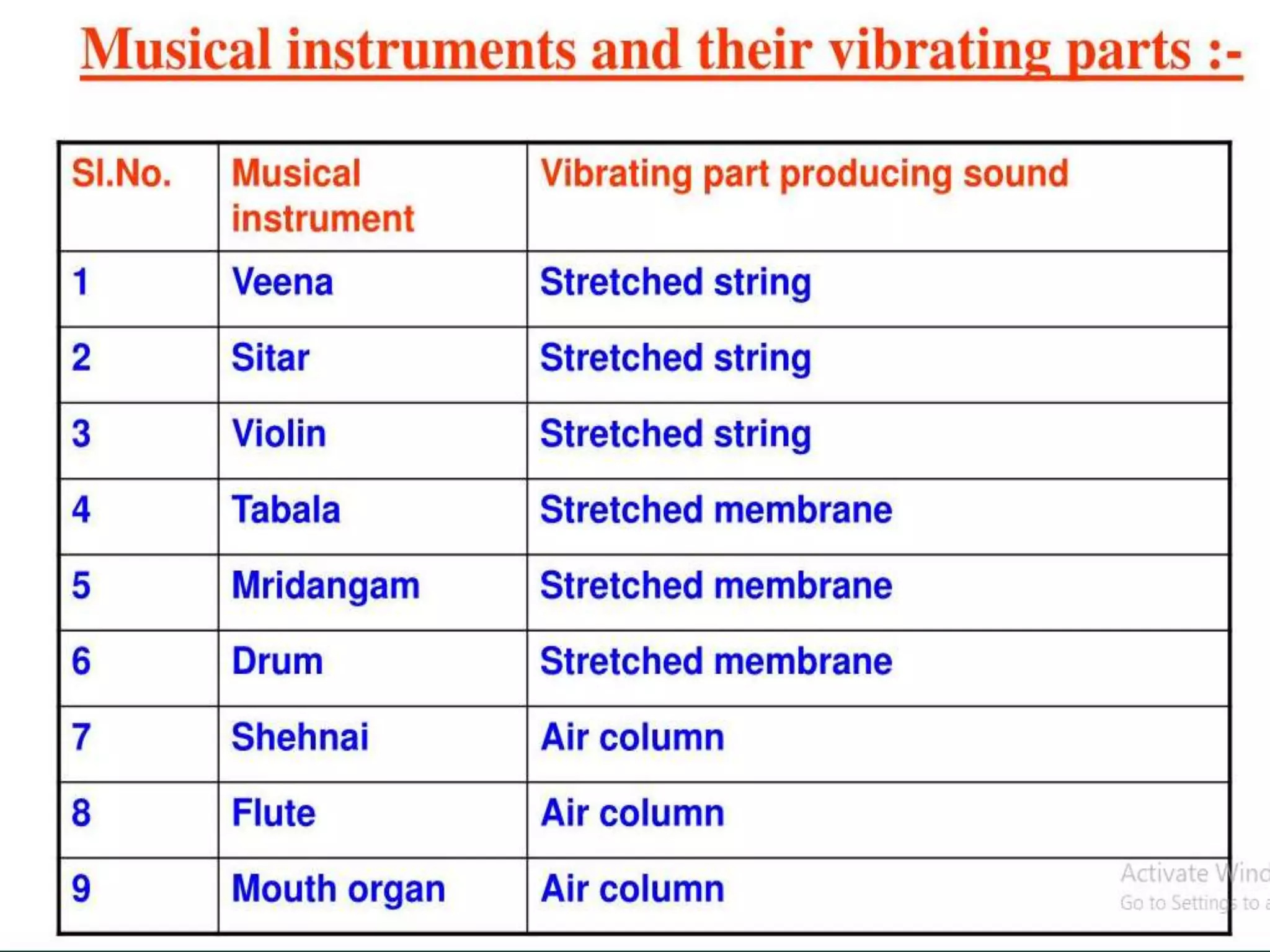
Example 3: Sitar (musical instrument) produces sound.
Sound produced when sitar string vibrates.
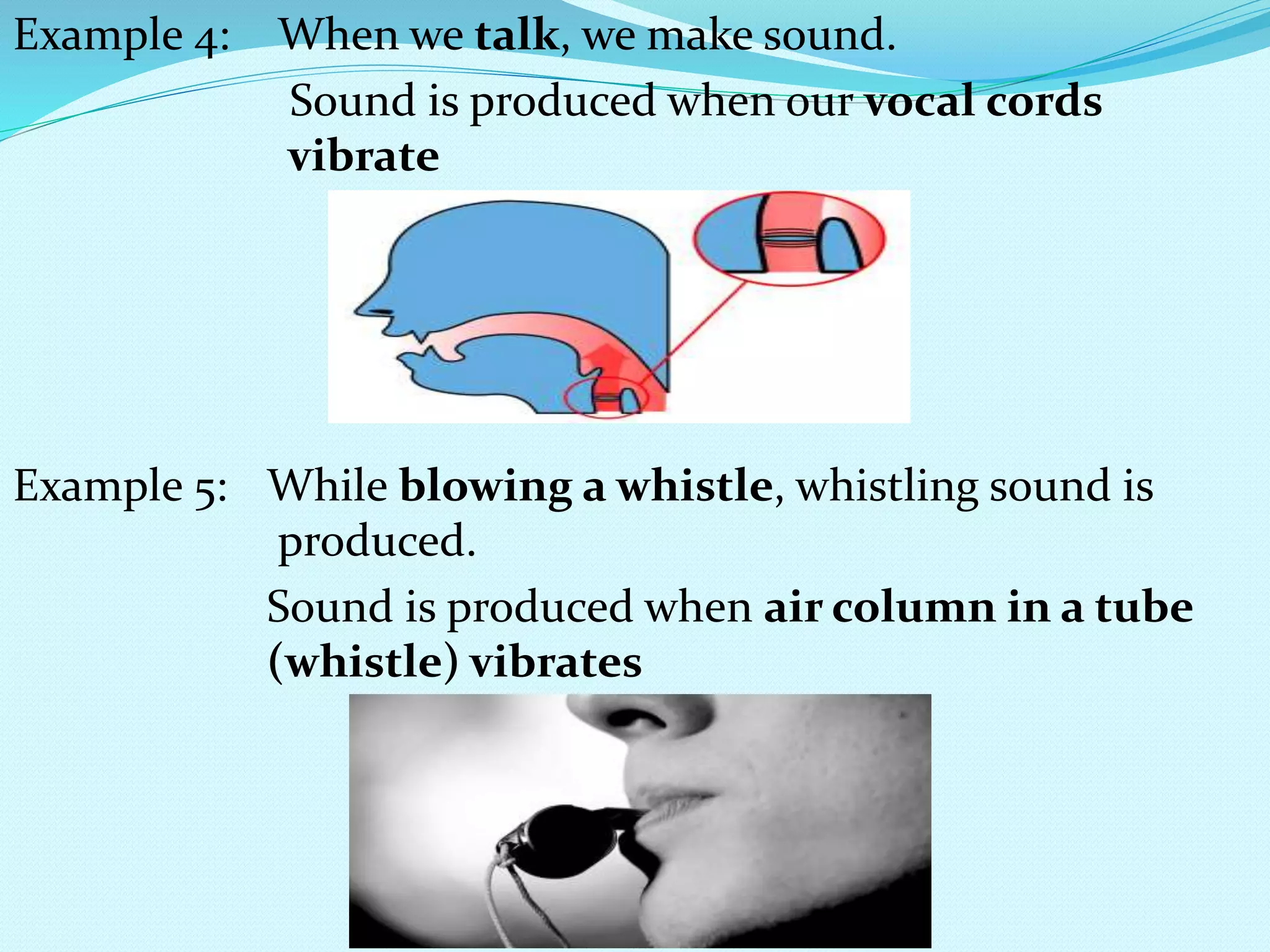
Example 4: When we talk, we make sound.
Sound is produced when our vocal cords
vibrate
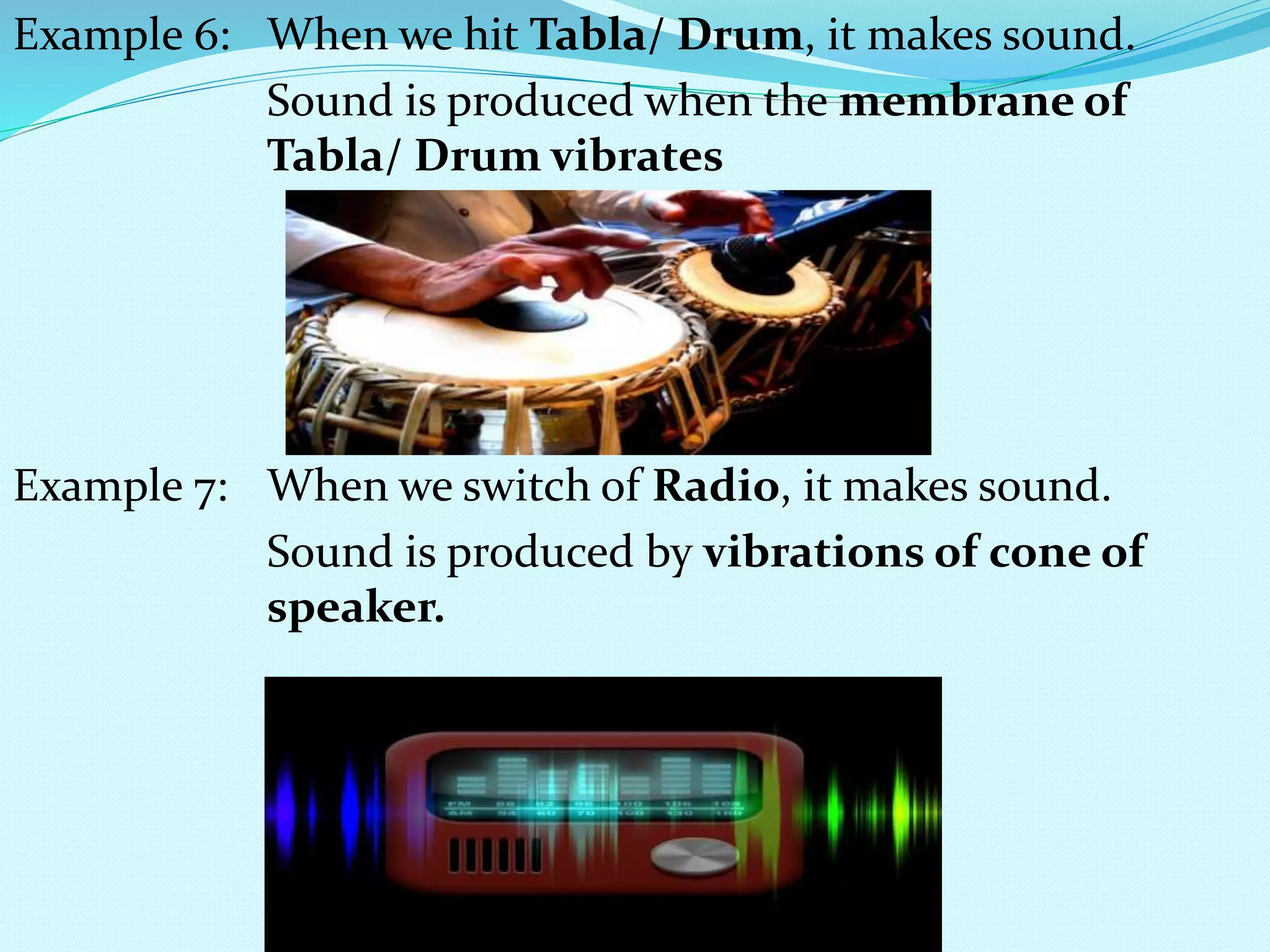
Example 5: While blowing a whistle, whistling sound is
produced.
Sound is produced when air column in a tube
(whistle) vibrates
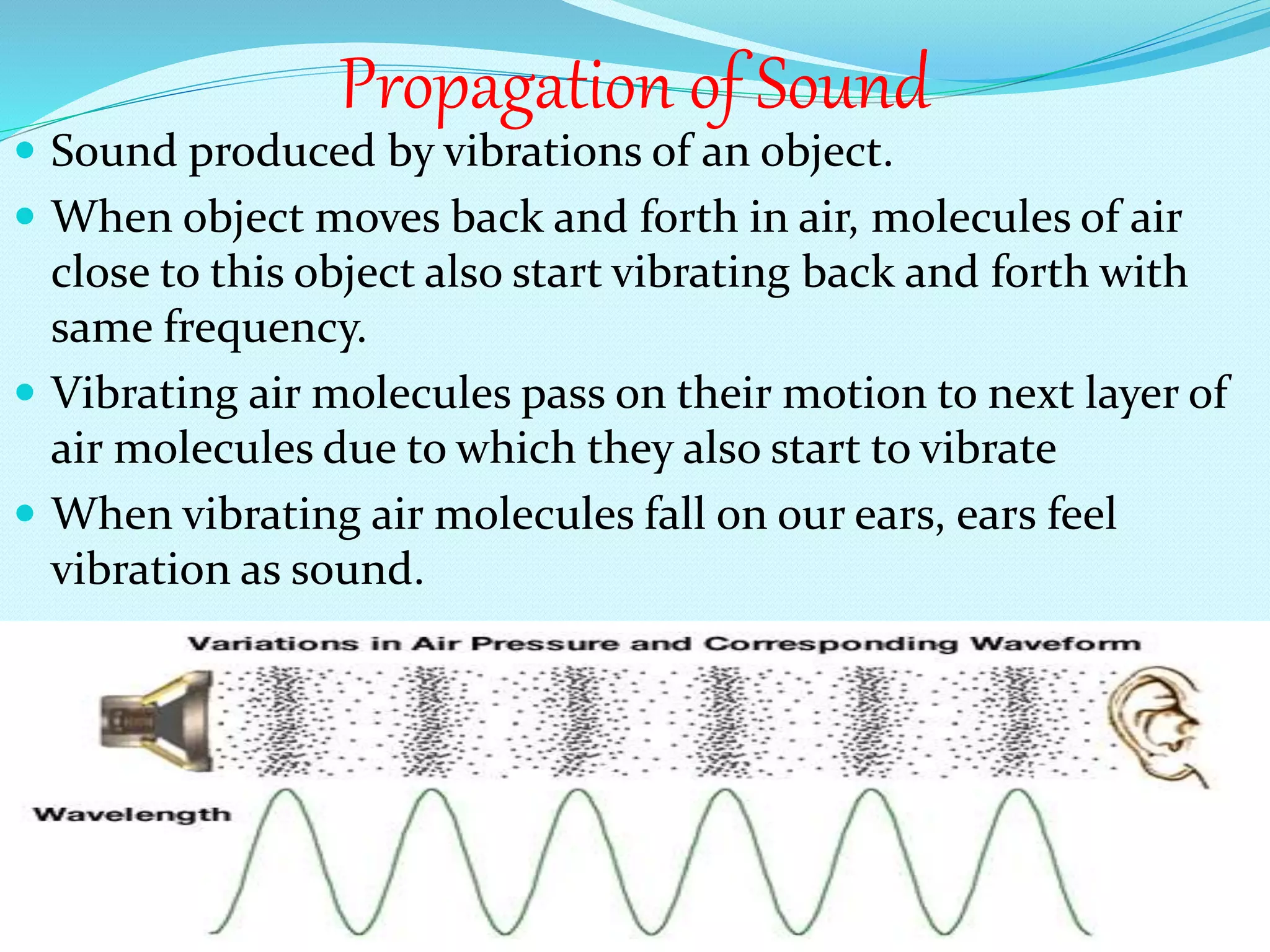
Example 6: When we hit Tabla/ Drum, it makes sound.
Sound is produced when the membrane of
Tabla/ Drum vibrates
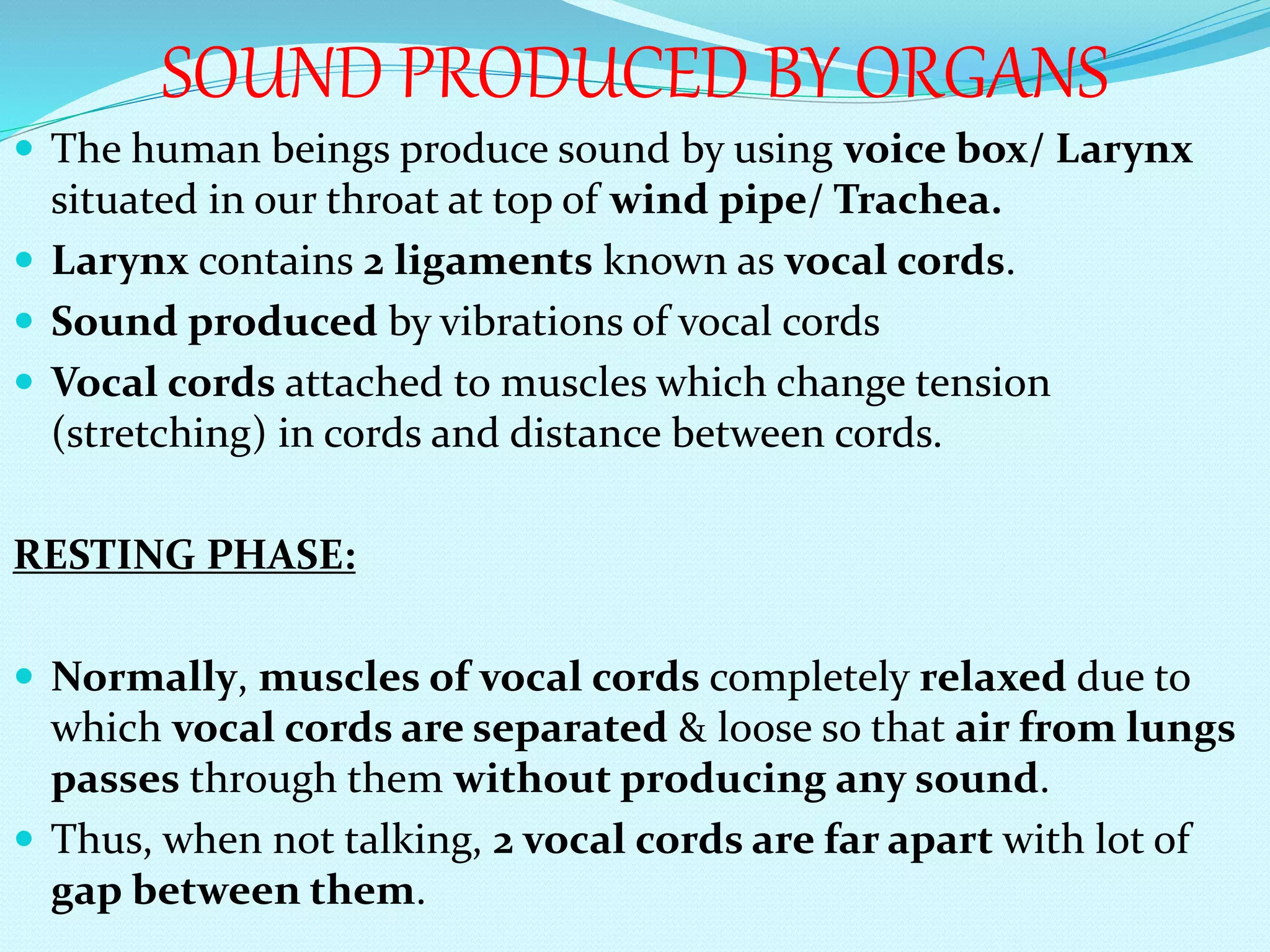
Example 7: When we switch of Radio, it makes sound.
Sound is produced by vibrations of cone of
speaker.
Propagation of Sound
 Sound produced by vibrations of an object.
 When object moves back and forth in air, molecules of air
close to this object also start vibrating back and forth with
same frequency.
 Vibrating air molecules pass on their motion to next layer of
air molecules due to which they also start to vibrate
 When vibrating air molecules fall on our ears, ears feel
vibration as sound.
SOUND PRODUCED BY ORGANS
 The human beings produce sound by using voice box/ Larynx
situated in our throat at top of wind pipe/ Trachea.
 Larynx contains 2 ligaments known as vocal cords.
 Sound produced by vibrations of vocal cords
 Vocal cords attached to muscles which change tension
(stretching) in cords and distance between cords.
RESTING PHASE:
 Normally, muscles of vocal cords completely relaxed due to
which vocal cords are separated & loose so that air from lungs
passes through them without producing any sound.
 Thus, when not talking, 2 vocal cords are far apart with lot of
gap between them.
WHILE SPEAKING:
 When we want to speak, muscles of vocal cords contract due
to which 2 vocal cords become stretched & close together
leaving only narrow slit between them.
 Lungs pass current of air between 2 vocal cords
 Air makes vocal cords vibrate
 Vibrating vocal cords produce sound.
 When muscles attached to vocal cords contract and stretch, vocal cords
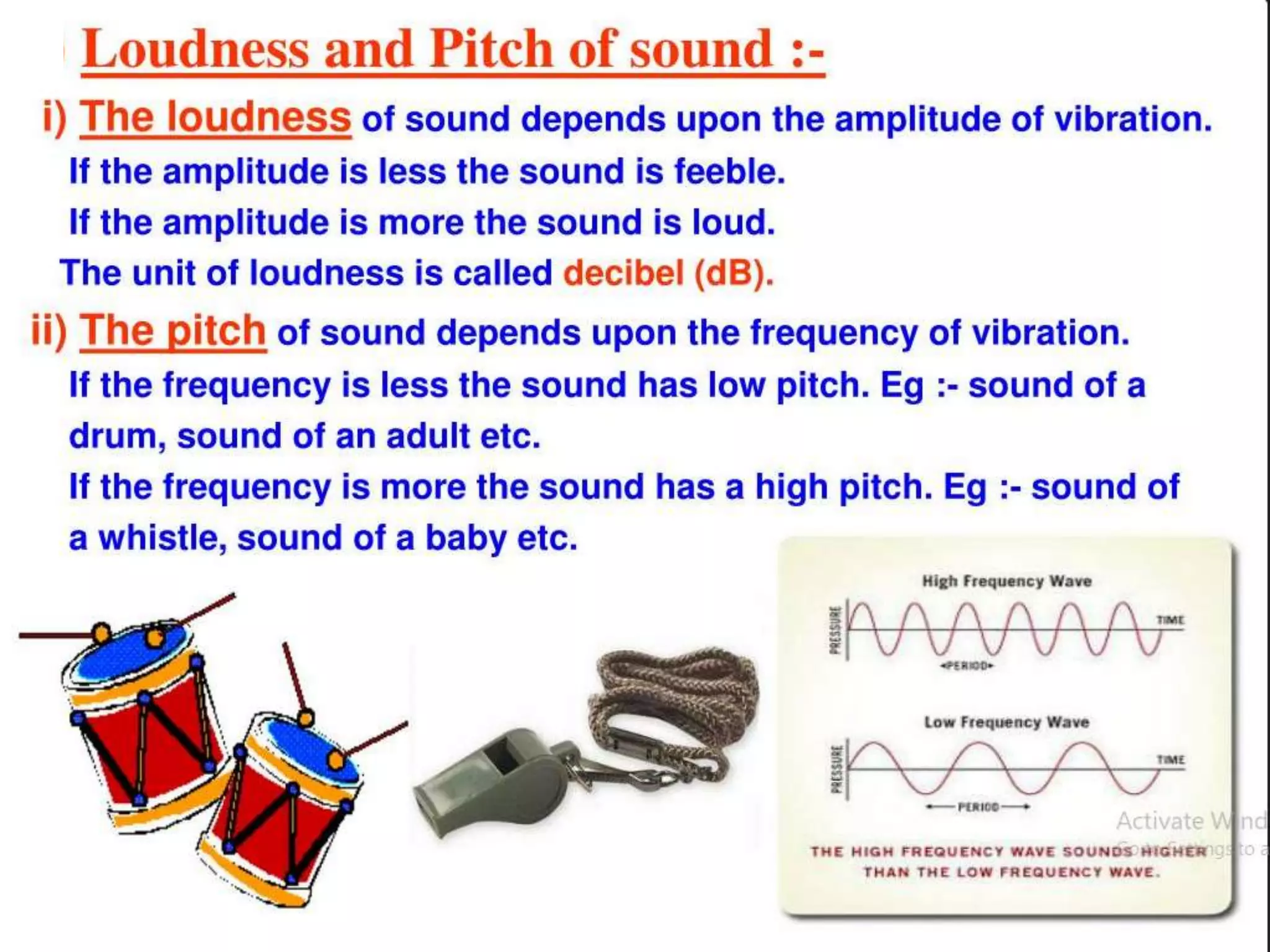
become tight and thin, sound of high frequency is produced.
 When muscles relax, vocal cords become loose and thick, sound of low
frequency is produced.
 Vocal cord of Man is approximately 20 mm long
 Vocal cords of Woman is approximately 15 mm long
 Due to shorter vocal cords, frequency (pitch) of woman’s voice is higher
than man.
 Small children have very short vocal cords, so, frequency (pitch) of their
voice is very high. This is why their voice is called as shrill.
Pitch of voice
SOUND NEEDS MEDIUM FOR PROPAGATION
 Sound needs a medium (Solid, Liquid or Gas) for transmission.
 Sound can’t travel through vacuum because vacuum has no
molecules which can vibrate and carry sound waves.
 Through solid: Through beating a bench
 Through liquid: Dolphins and whales
 Through Gas: Human speaking
 Sound can’t be heard on surface of moon because there is no air
on moon to carry sound waves
 The astronauts who land on moon or space talk to each other
through wireless sets using radio waves.
 This is because radio waves don’t require medium to travel.
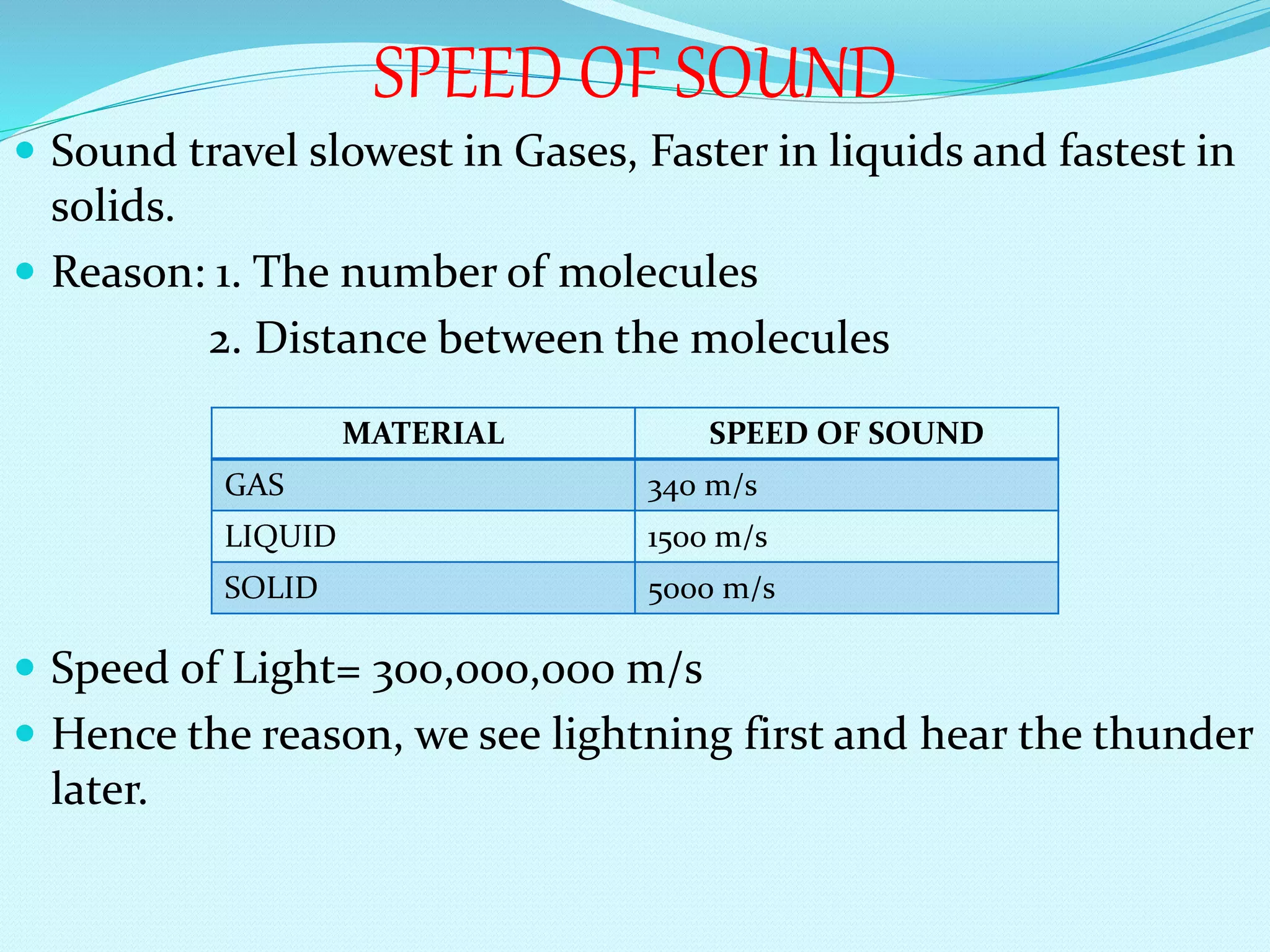
SPEED OF SOUND
 Sound travel slowest in Gases, Faster in liquids and fastest in
solids.
 Reason: 1. The number of molecules
2. Distance between the molecules
 Speed of Light= 300,000,000 m/s
 Hence the reason, we see lightning first and hear the thunder
later.
MATERIAL SPEED OF SOUND
GAS 340 m/s
LIQUID 1500 m/s
SOLID 5000 m/s
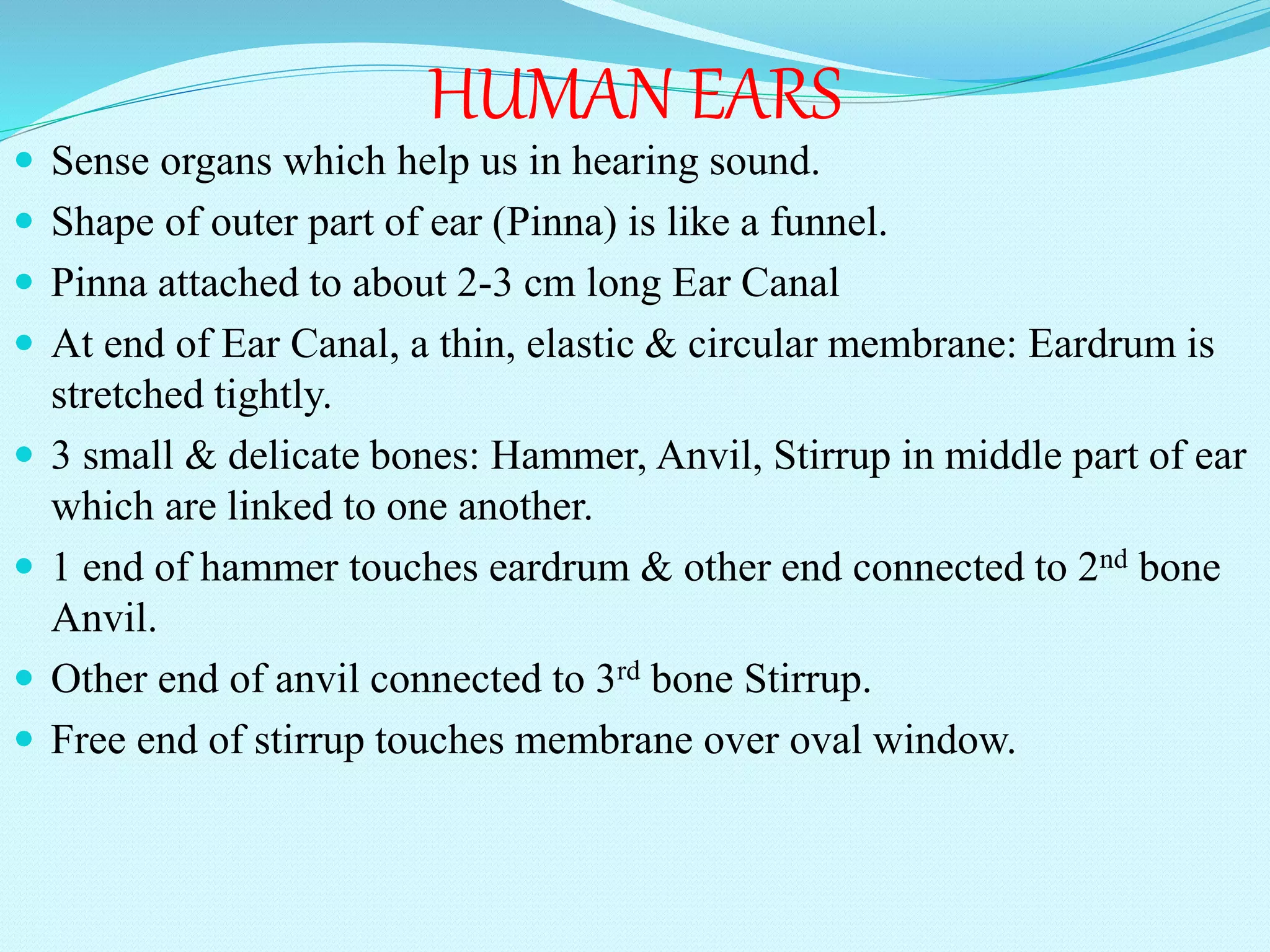
HUMAN EARS
 Sense organs which help us in hearing sound.
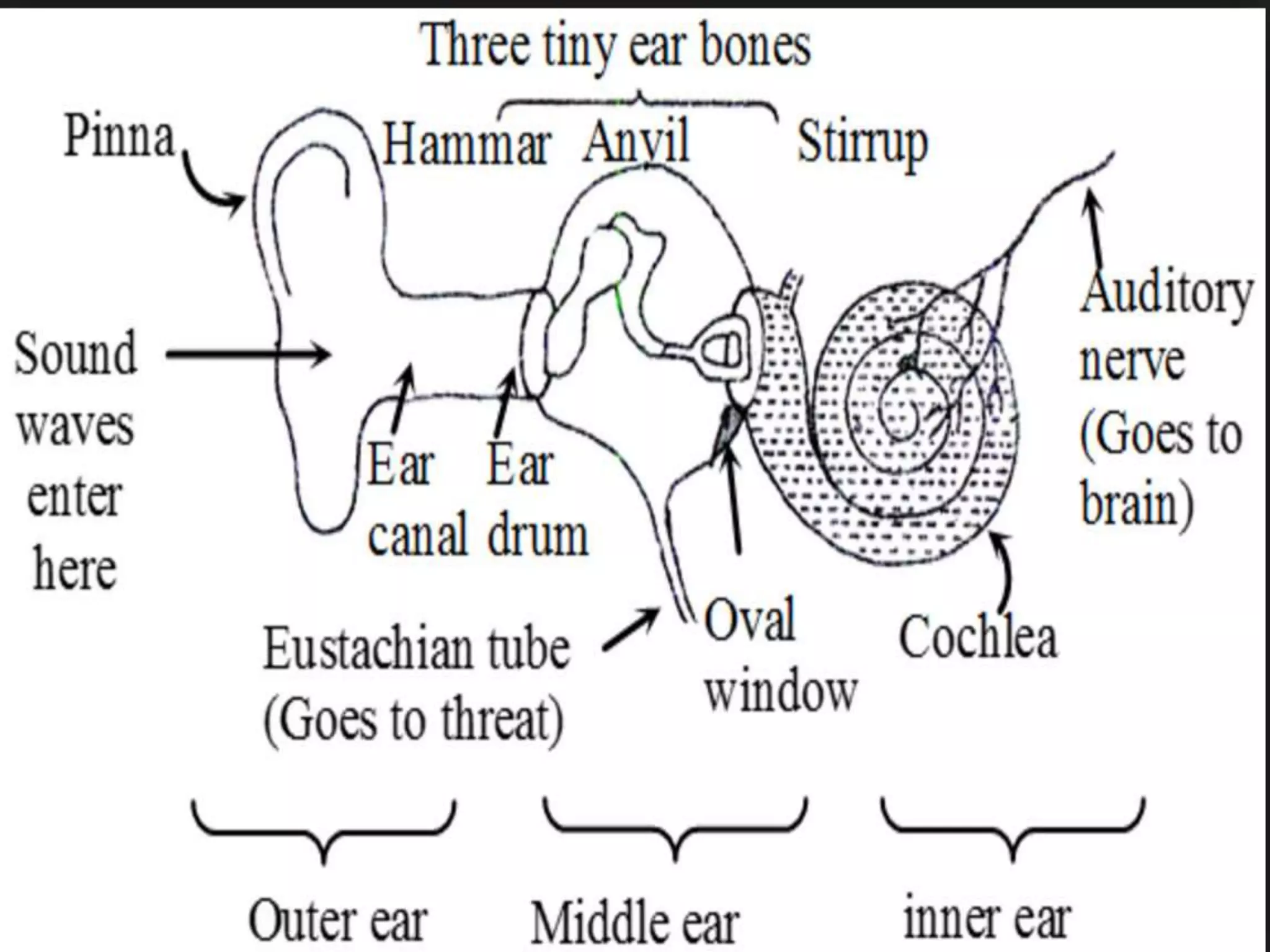
 Shape of outer part of ear (Pinna) is like a funnel.
 Pinna attached to about 2-3 cm long Ear Canal
 At end of Ear Canal, a thin, elastic & circular membrane: Eardrum is
stretched tightly.
 3 small & delicate bones: Hammer, Anvil, Stirrup in middle part of ear
which are linked to one another.
 1 end of hammer touches eardrum & other end connected to 2nd bone
Anvil.
 Other end of anvil connected to 3rd bone Stirrup.
 Free end of stirrup touches membrane over oval window.
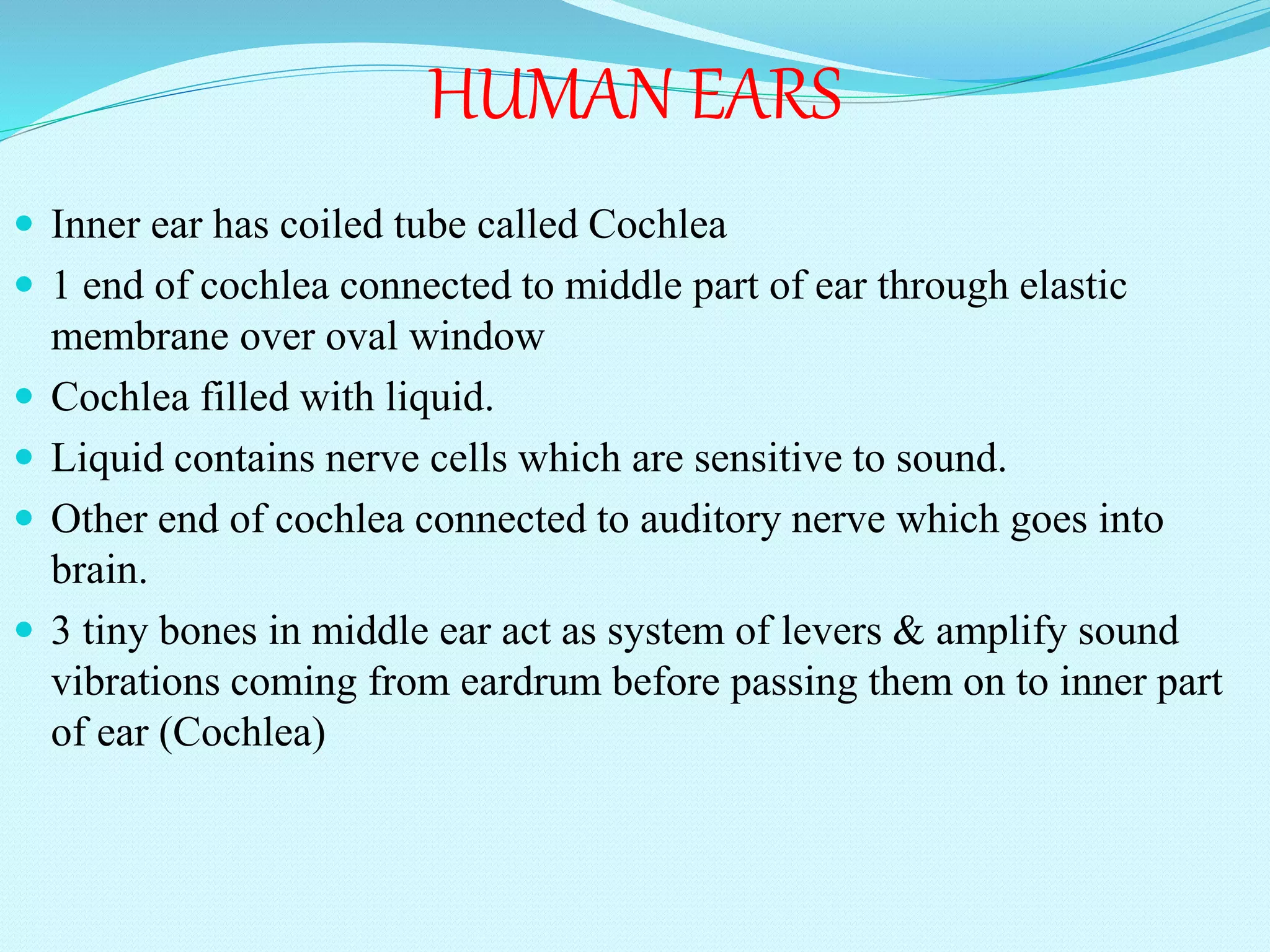
 Inner ear has coiled tube called Cochlea
 1 end of cochlea connected to middle part of ear through elastic
membrane over oval window
 Cochlea filled with liquid.
 Liquid contains nerve cells which are sensitive to sound.
 Other end of cochlea connected to auditory nerve which goes into
brain.
 3 tiny bones in middle ear act as system of levers & amplify sound
vibrations coming from eardrum before passing them on to inner part
of ear (Cochlea)
HUMAN EARS
Working of Ear
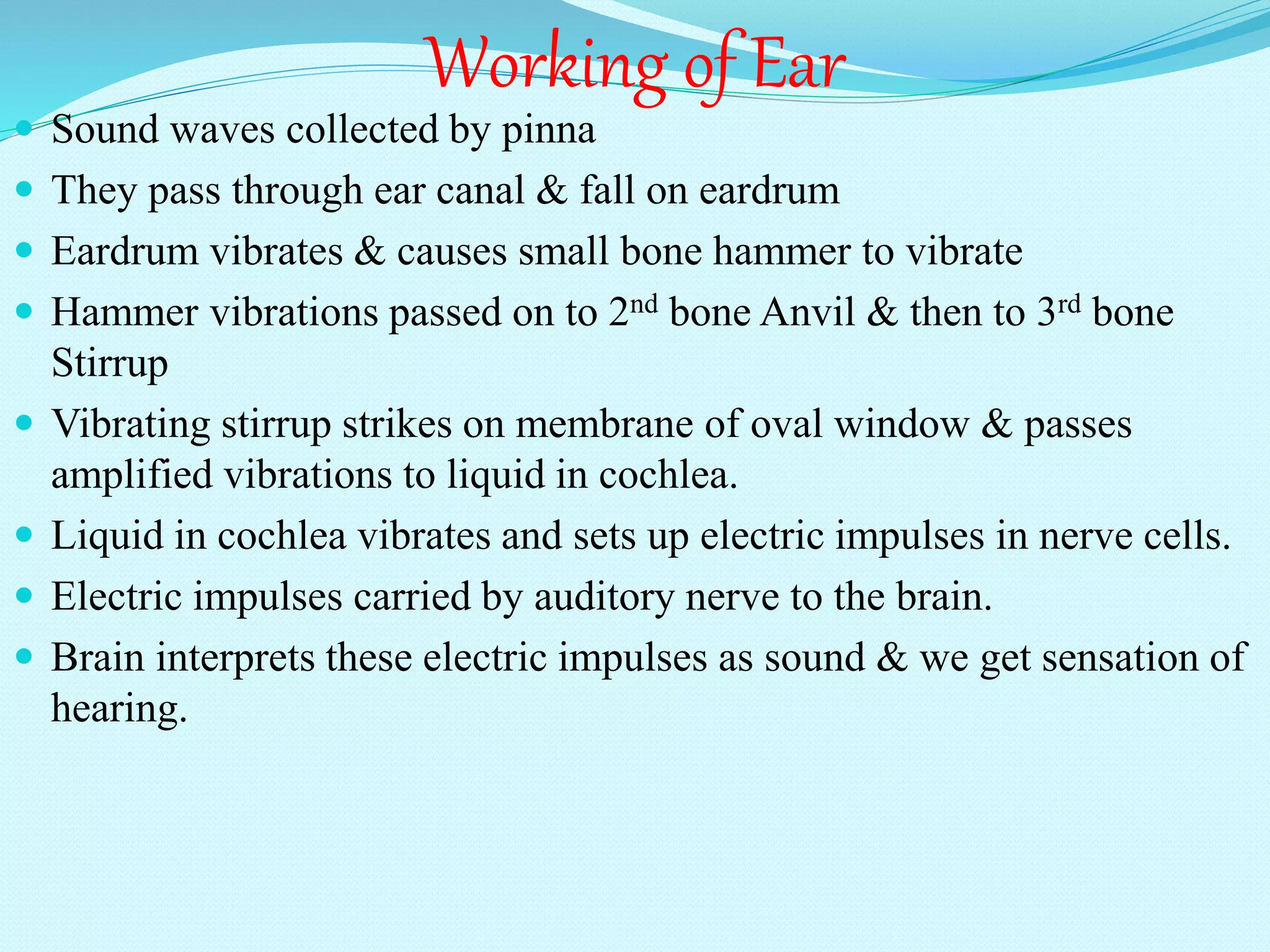
 Sound waves collected by pinna
 They pass through ear canal & fall on eardrum
 Eardrum vibrates & causes small bone hammer to vibrate
 Hammer vibrations passed on to 2nd bone Anvil & then to 3rd bone
Stirrup
 Vibrating stirrup strikes on membrane of oval window & passes
amplified vibrations to liquid in cochlea.
 Liquid in cochlea vibrates and sets up electric impulses in nerve cells.
 Electric impulses carried by auditory nerve to the brain.
 Brain interprets these electric impulses as sound & we get sensation of
hearing.
THANK YOU

Sound :How its produced and propagated

  • 1.
    SOUND For: CLASS 8th Preparedby: BHAVYA VASHISHT
  • 2.
    INTRODUCTION  Sound isform of energy.  Sound is that form of energy which makes us hear.  We hear many sounds around us in everyday life.  Each sound is special to the object which produces it.  Every sound has a unique quality which distinguishes it from other sounds
  • 3.
    SOUND PRODUCTION  Soundis produced when an object vibrates (moves to and fro rapidly)  Sound is produced by vibrating objects.  Energy required to make an object vibrate and produce sound is provided by outside source. Example 1: * Sound produced by a Vibrating bell Ringing bell shakes back and forth * Sound of school bell produced by vibration of iron plate when hit by hammer.
  • 4.
    Example 2: Soundis produced by Plucking Rubber Band Sound produced when stretch rubber band vibrates Example 3: Sitar (musical instrument) produces sound. Sound produced when sitar string vibrates.
  • 5.
    Example 4: Whenwe talk, we make sound. Sound is produced when our vocal cords vibrate Example 5: While blowing a whistle, whistling sound is produced. Sound is produced when air column in a tube (whistle) vibrates
  • 6.
    Example 6: Whenwe hit Tabla/ Drum, it makes sound. Sound is produced when the membrane of Tabla/ Drum vibrates Example 7: When we switch of Radio, it makes sound. Sound is produced by vibrations of cone of speaker.
  • 7.
    Propagation of Sound Sound produced by vibrations of an object.  When object moves back and forth in air, molecules of air close to this object also start vibrating back and forth with same frequency.  Vibrating air molecules pass on their motion to next layer of air molecules due to which they also start to vibrate  When vibrating air molecules fall on our ears, ears feel vibration as sound.
  • 8.
    SOUND PRODUCED BYORGANS  The human beings produce sound by using voice box/ Larynx situated in our throat at top of wind pipe/ Trachea.  Larynx contains 2 ligaments known as vocal cords.  Sound produced by vibrations of vocal cords  Vocal cords attached to muscles which change tension (stretching) in cords and distance between cords. RESTING PHASE:  Normally, muscles of vocal cords completely relaxed due to which vocal cords are separated & loose so that air from lungs passes through them without producing any sound.  Thus, when not talking, 2 vocal cords are far apart with lot of gap between them.
  • 9.
    WHILE SPEAKING:  Whenwe want to speak, muscles of vocal cords contract due to which 2 vocal cords become stretched & close together leaving only narrow slit between them.  Lungs pass current of air between 2 vocal cords  Air makes vocal cords vibrate  Vibrating vocal cords produce sound.
  • 10.
     When musclesattached to vocal cords contract and stretch, vocal cords become tight and thin, sound of high frequency is produced.  When muscles relax, vocal cords become loose and thick, sound of low frequency is produced.  Vocal cord of Man is approximately 20 mm long  Vocal cords of Woman is approximately 15 mm long  Due to shorter vocal cords, frequency (pitch) of woman’s voice is higher than man.  Small children have very short vocal cords, so, frequency (pitch) of their voice is very high. This is why their voice is called as shrill. Pitch of voice
  • 11.
    SOUND NEEDS MEDIUMFOR PROPAGATION  Sound needs a medium (Solid, Liquid or Gas) for transmission.  Sound can’t travel through vacuum because vacuum has no molecules which can vibrate and carry sound waves.  Through solid: Through beating a bench  Through liquid: Dolphins and whales  Through Gas: Human speaking  Sound can’t be heard on surface of moon because there is no air on moon to carry sound waves  The astronauts who land on moon or space talk to each other through wireless sets using radio waves.  This is because radio waves don’t require medium to travel.
  • 12.
    SPEED OF SOUND Sound travel slowest in Gases, Faster in liquids and fastest in solids.  Reason: 1. The number of molecules 2. Distance between the molecules  Speed of Light= 300,000,000 m/s  Hence the reason, we see lightning first and hear the thunder later. MATERIAL SPEED OF SOUND GAS 340 m/s LIQUID 1500 m/s SOLID 5000 m/s
  • 13.
    HUMAN EARS  Senseorgans which help us in hearing sound.  Shape of outer part of ear (Pinna) is like a funnel.  Pinna attached to about 2-3 cm long Ear Canal  At end of Ear Canal, a thin, elastic & circular membrane: Eardrum is stretched tightly.  3 small & delicate bones: Hammer, Anvil, Stirrup in middle part of ear which are linked to one another.  1 end of hammer touches eardrum & other end connected to 2nd bone Anvil.  Other end of anvil connected to 3rd bone Stirrup.  Free end of stirrup touches membrane over oval window.
  • 14.
     Inner earhas coiled tube called Cochlea  1 end of cochlea connected to middle part of ear through elastic membrane over oval window  Cochlea filled with liquid.  Liquid contains nerve cells which are sensitive to sound.  Other end of cochlea connected to auditory nerve which goes into brain.  3 tiny bones in middle ear act as system of levers & amplify sound vibrations coming from eardrum before passing them on to inner part of ear (Cochlea) HUMAN EARS
  • 16.
    Working of Ear Sound waves collected by pinna  They pass through ear canal & fall on eardrum  Eardrum vibrates & causes small bone hammer to vibrate  Hammer vibrations passed on to 2nd bone Anvil & then to 3rd bone Stirrup  Vibrating stirrup strikes on membrane of oval window & passes amplified vibrations to liquid in cochlea.  Liquid in cochlea vibrates and sets up electric impulses in nerve cells.  Electric impulses carried by auditory nerve to the brain.  Brain interprets these electric impulses as sound & we get sensation of hearing.
  • 23.