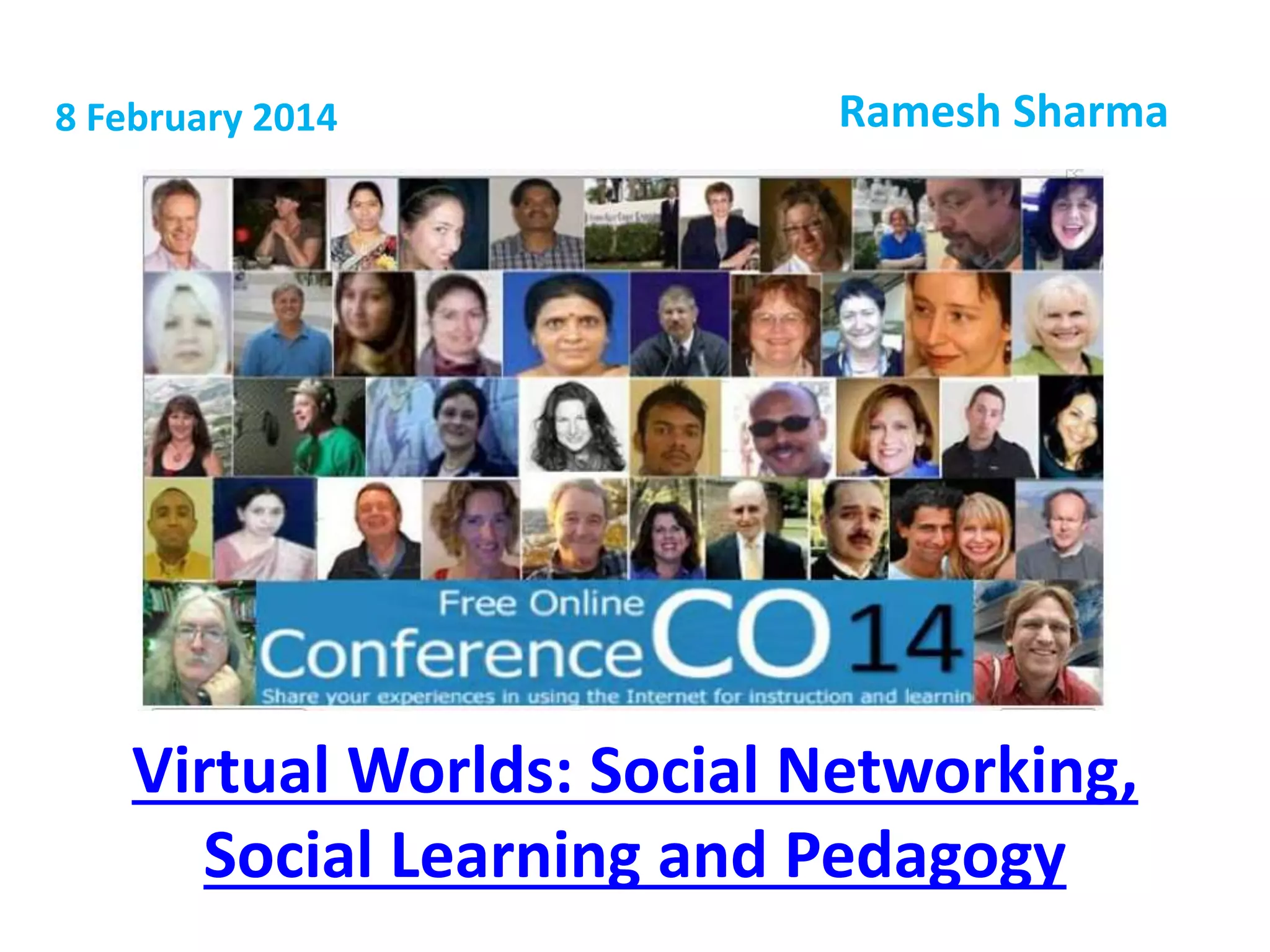
8 February 2014

Ramesh Sharma

Virtual Worlds: Social Networking,
Social Learning and Pedagogy
Virtual Worlds: Social Networking,
Social Learning and Pedagogy

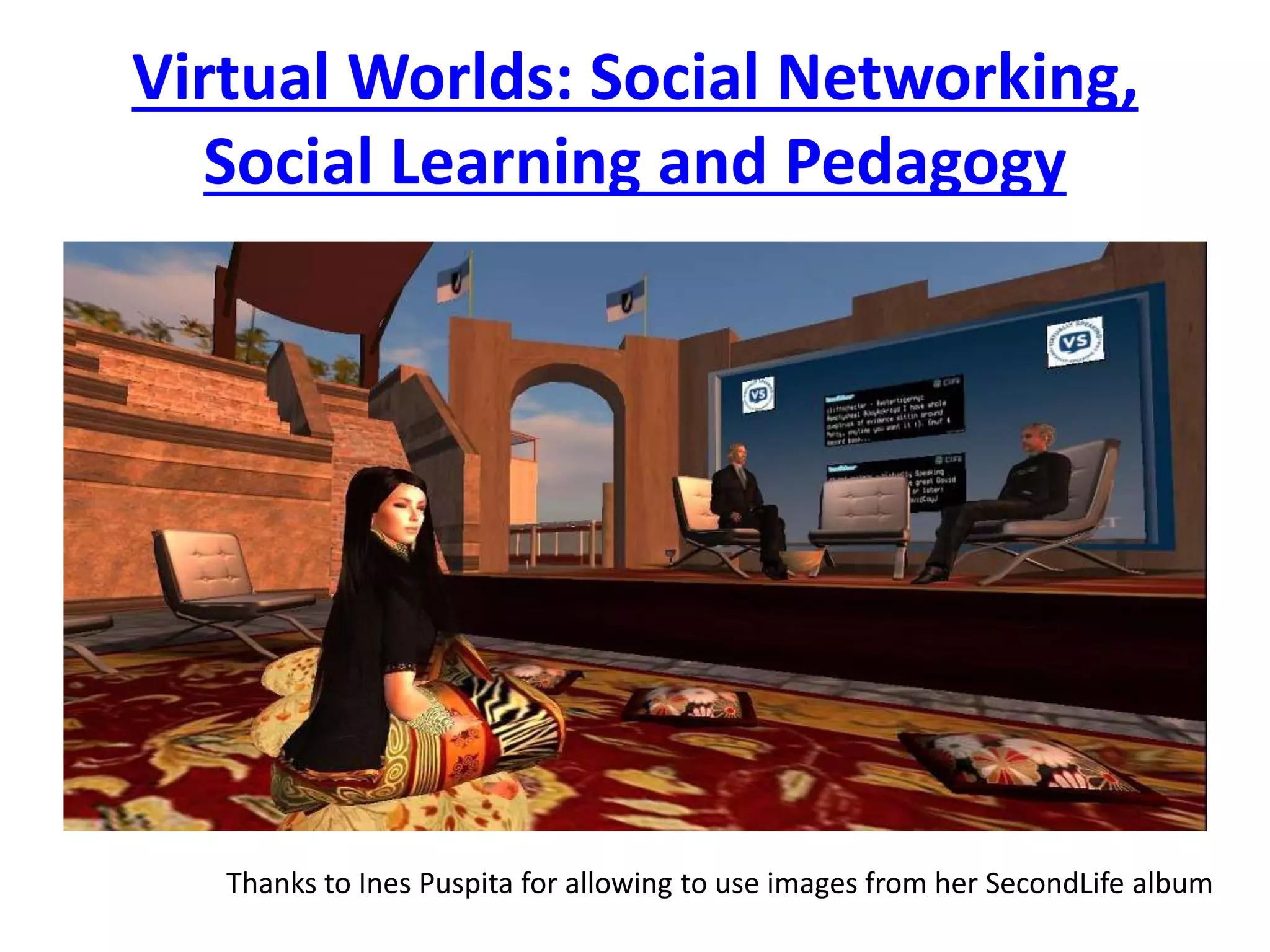
Thanks to Ines Puspita for allowing to use images from her SecondLife album
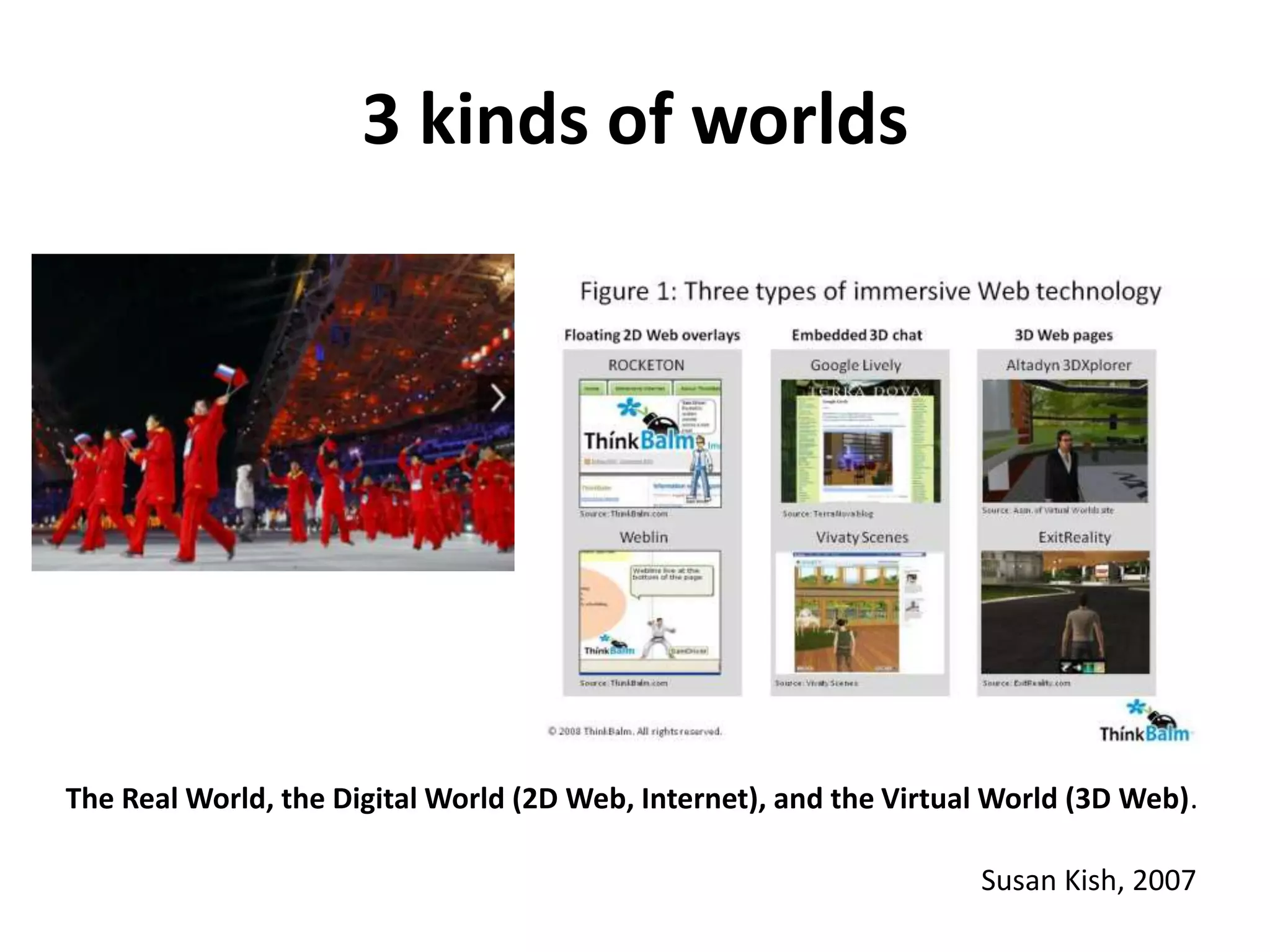
3 kinds of worlds

The Real World, the Digital World (2D Web, Internet), and the Virtual World (3D Web).
Susan Kish, 2007
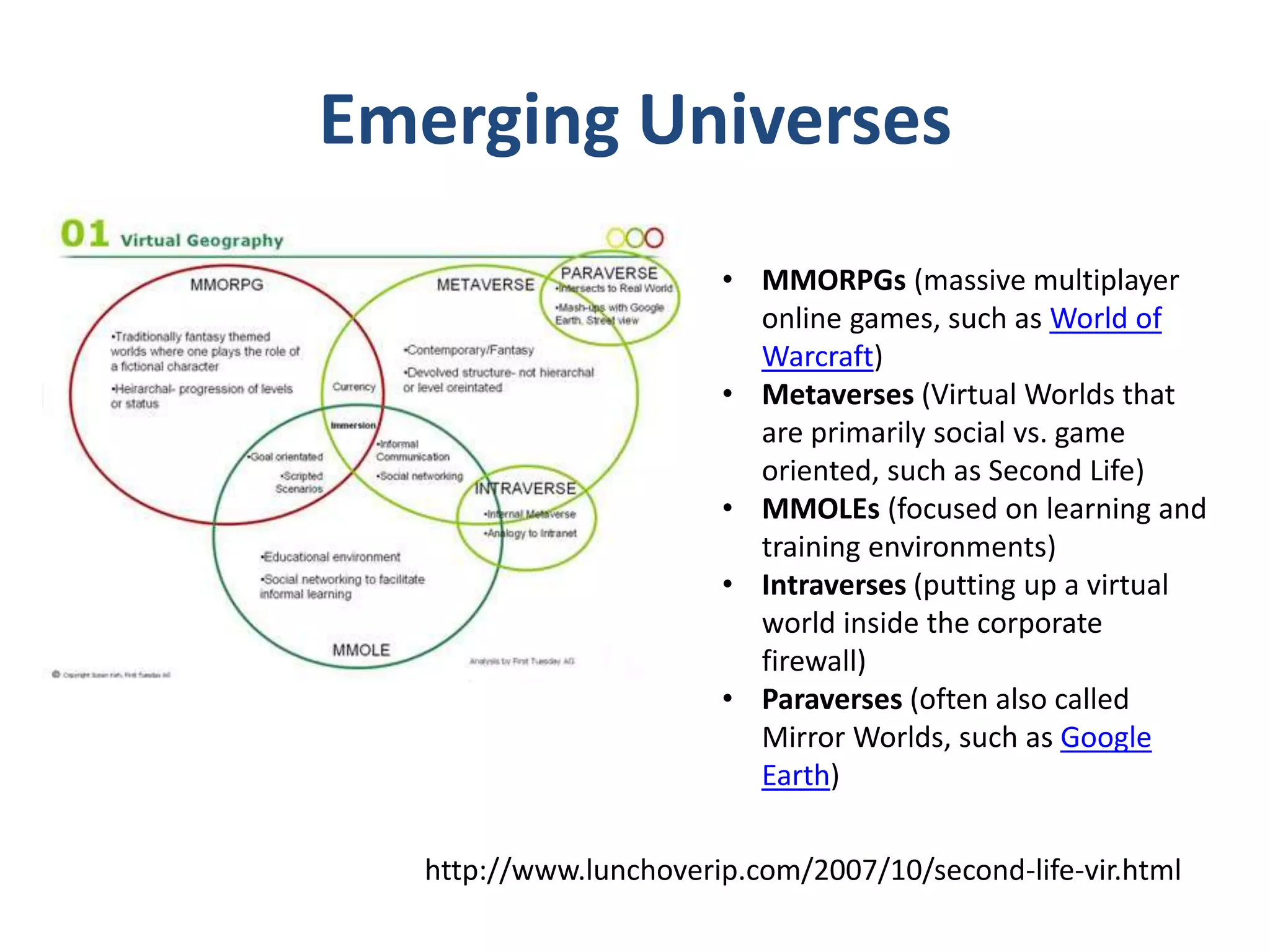
Emerging Universes
• MMORPGs (massive multiplayer
online games, such as World of
Warcraft)
• Metaverses (Virtual Worlds that
are primarily social vs. game
oriented, such as Second Life)
• MMOLEs (focused on learning and
training environments)
• Intraverses (putting up a virtual
world inside the corporate
firewall)
• Paraverses (often also called
Mirror Worlds, such as Google
Earth)
http://www.lunchoverip.com/2007/10/second-life-vir.html
What is a virtual world?
• A virtual world or massively multiplayer online world
(MMOW) is a computer-based simulated environment.
• The term has become largely synonymous with
interactive 3D virtual environments, where the users
take the form of avatars visible to others.
• These avatars usually appear textual, two-dimensional,
or three-dimensional representations, although other
forms, such as live video avatars, are possible, with
auditory and touch sensations.
• In general, virtual worlds allow for multiple users.
Source: http://en.wikipedia.org/wiki/Virtual_world
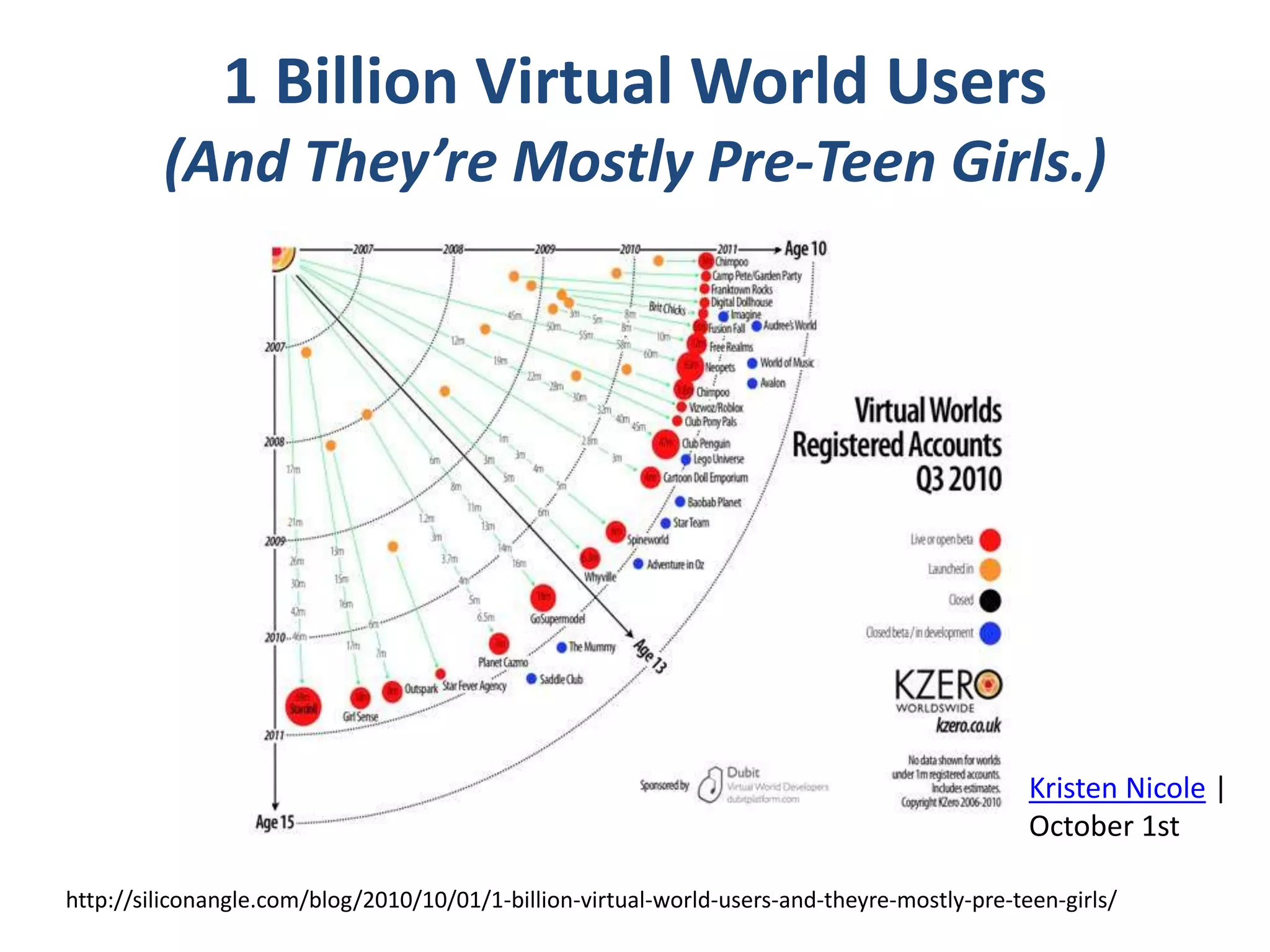
1 Billion Virtual World Users
(And They’re Mostly Pre-Teen Girls.)

Kristen Nicole |
October 1st
http://siliconangle.com/blog/2010/10/01/1-billion-virtual-world-users-and-theyre-mostly-pre-teen-girls/
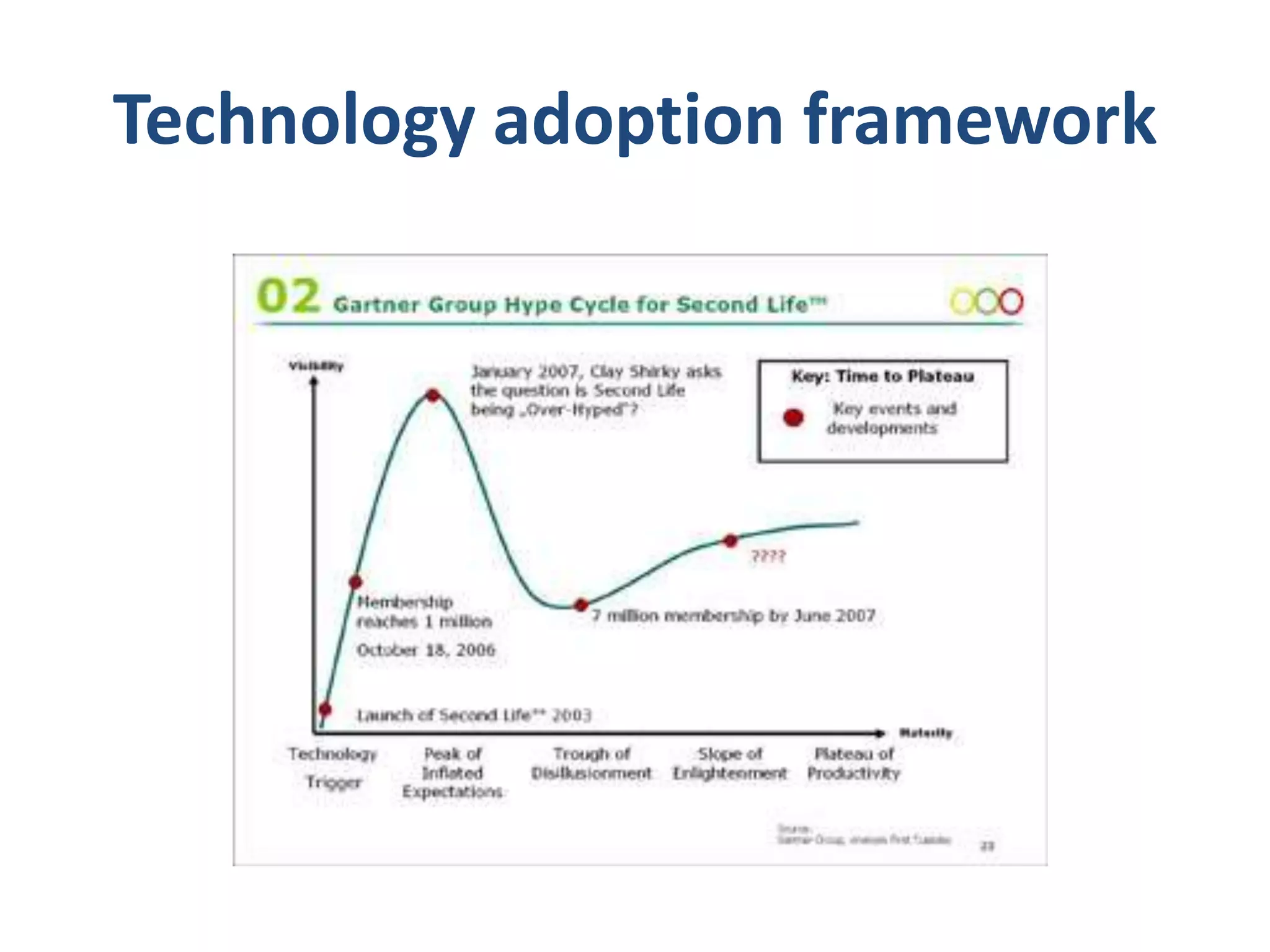
Technology adoption framework
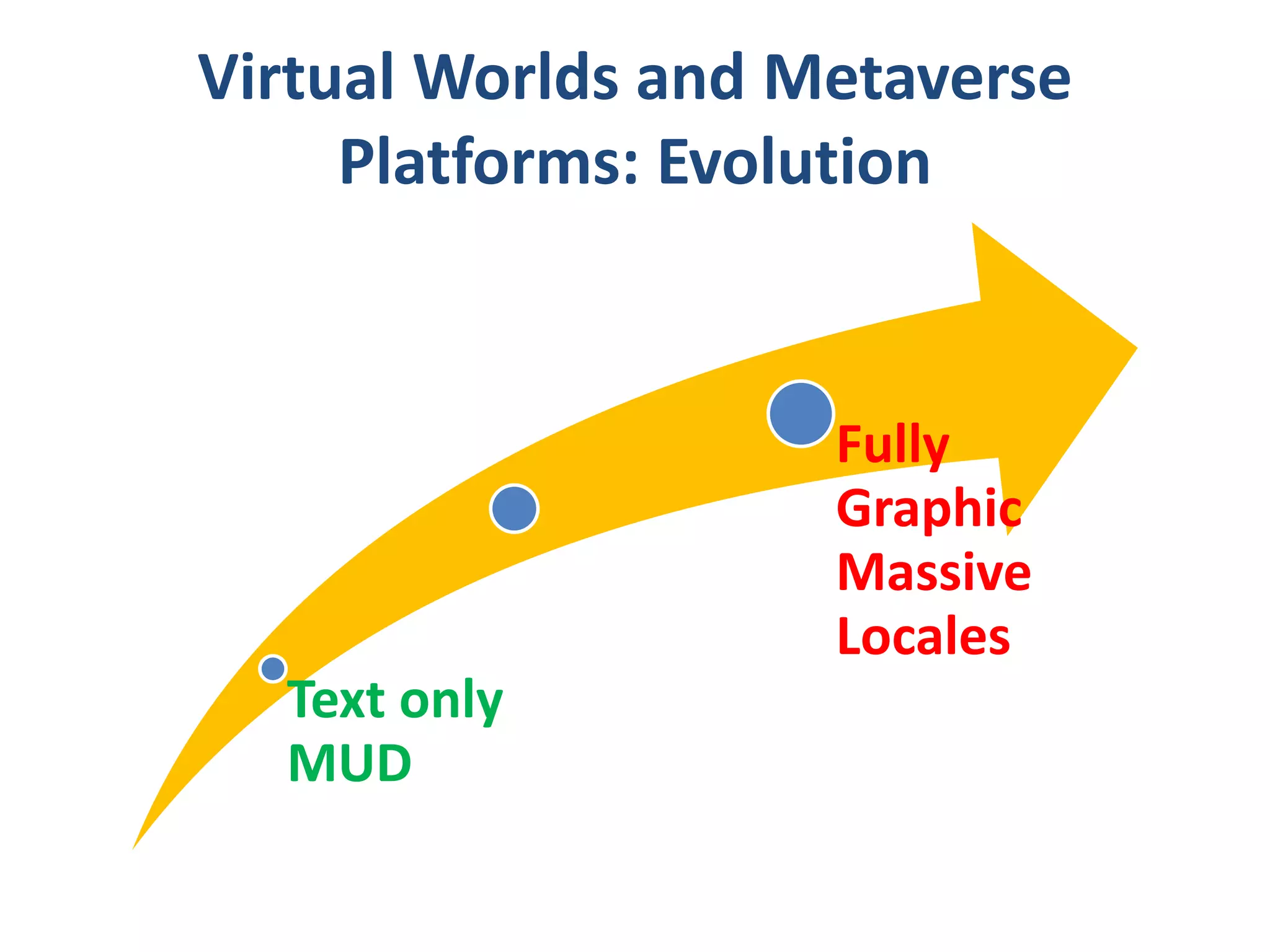
Virtual Worlds and Metaverse
Platforms: Evolution

Fully
Graphic
Massive
Locales
Text only
MUD
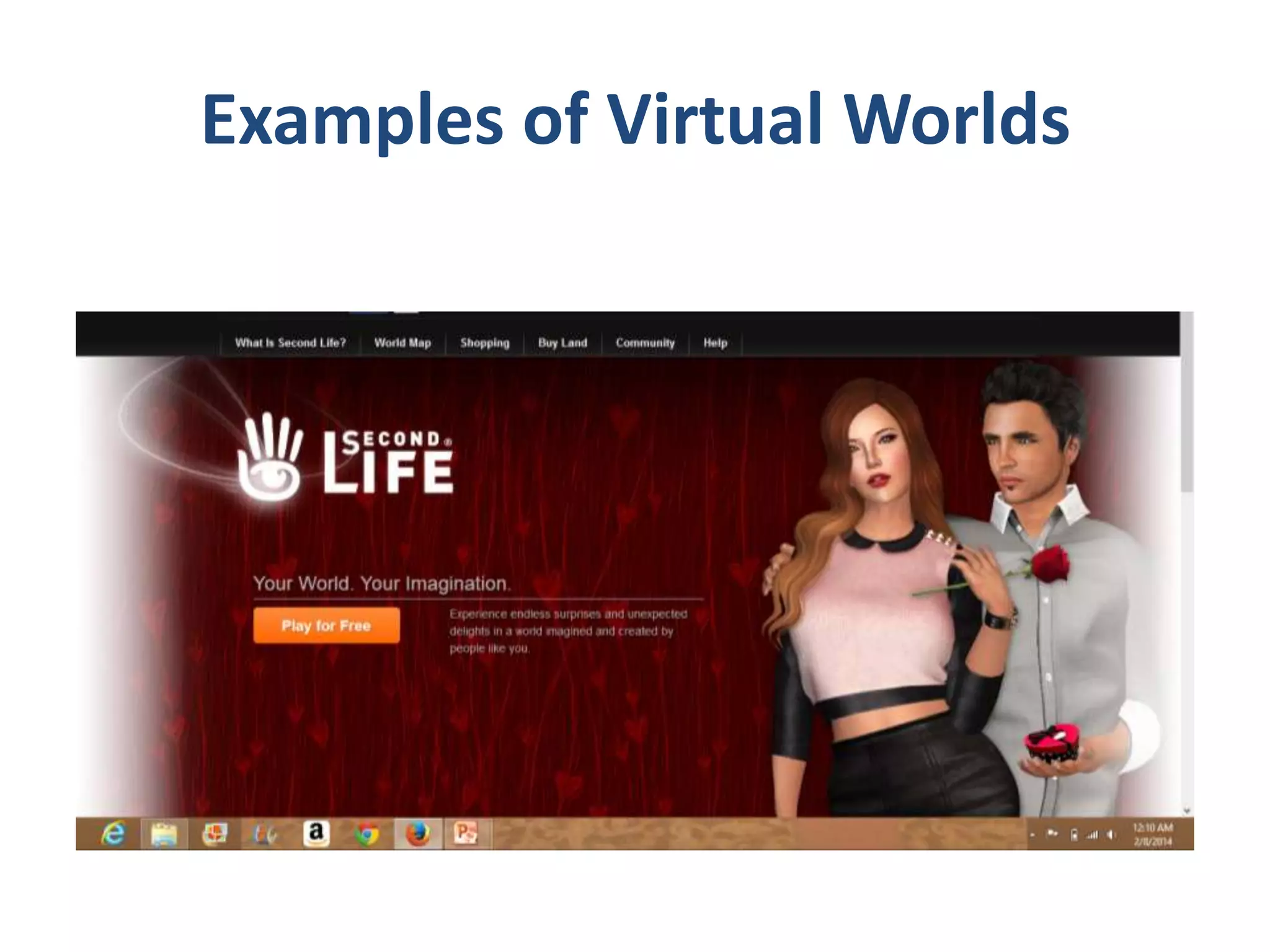
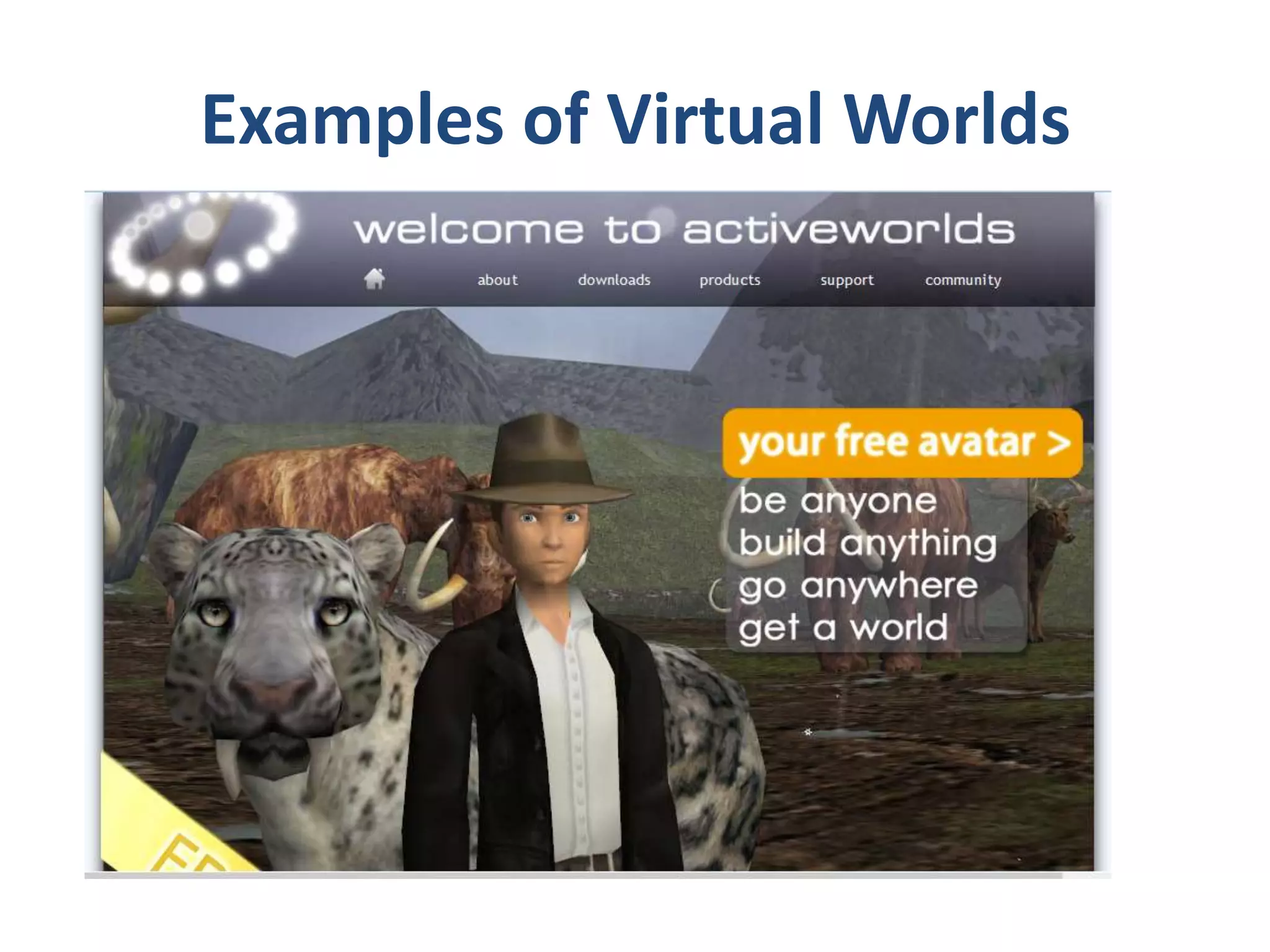
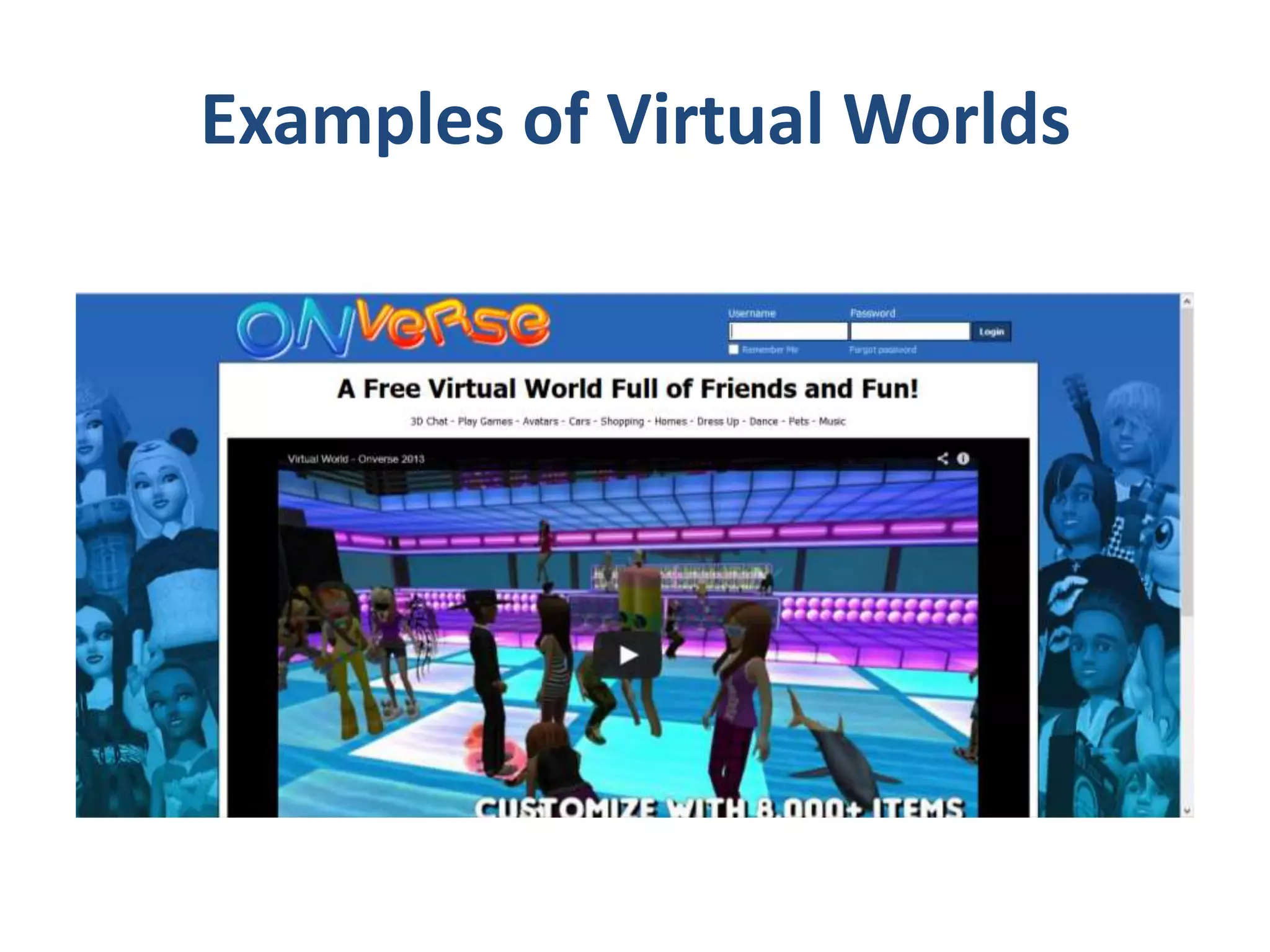
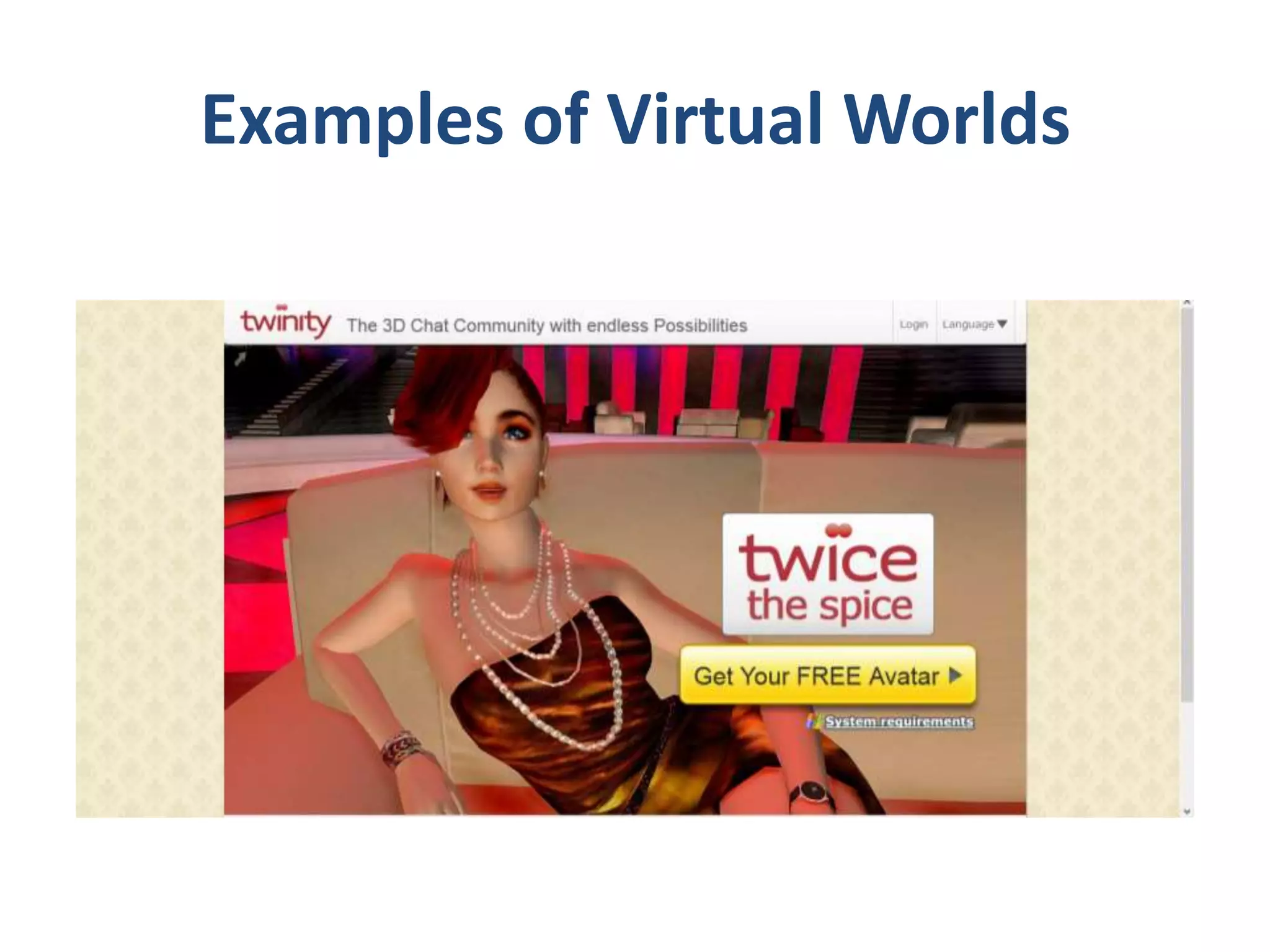
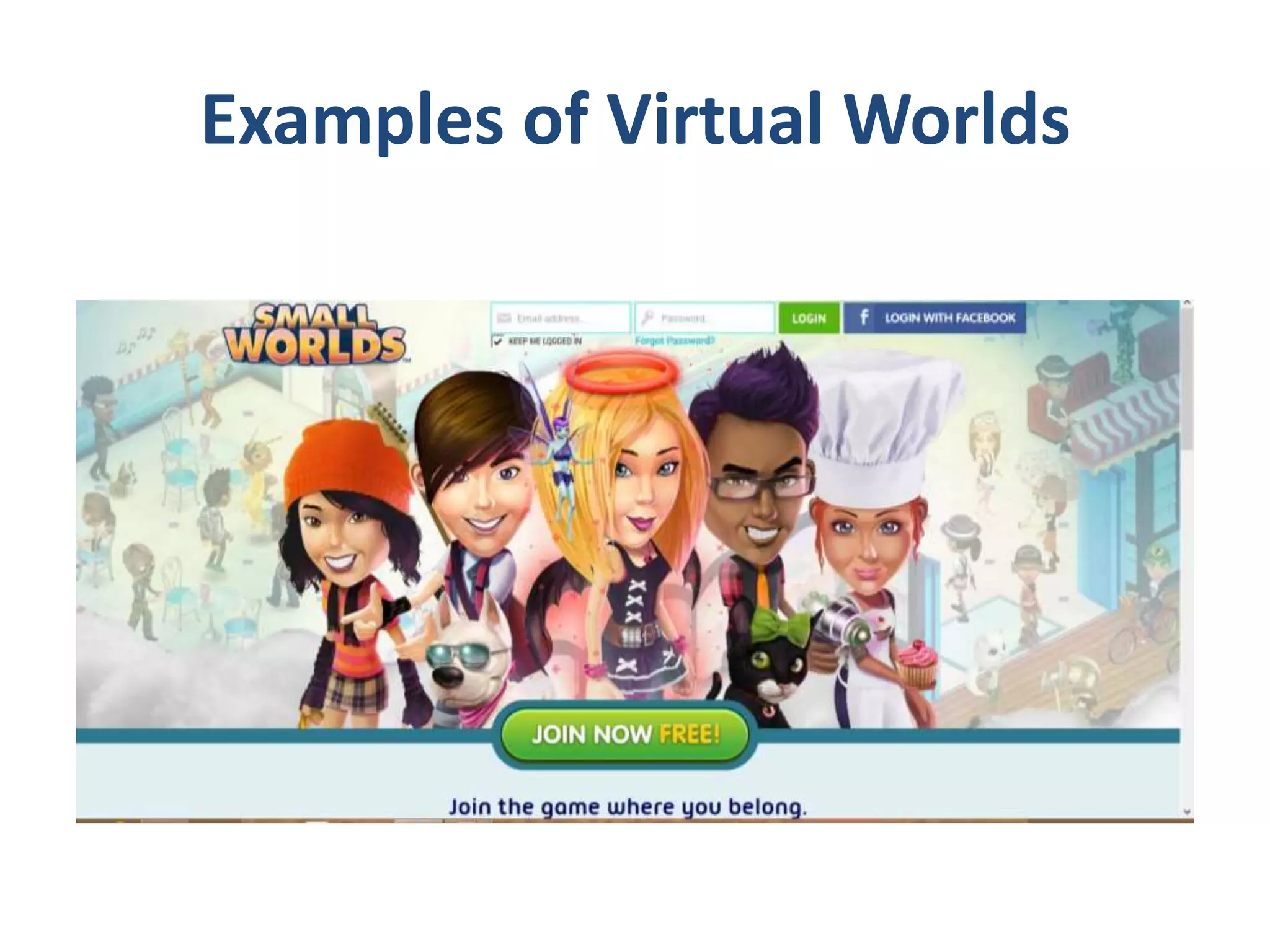
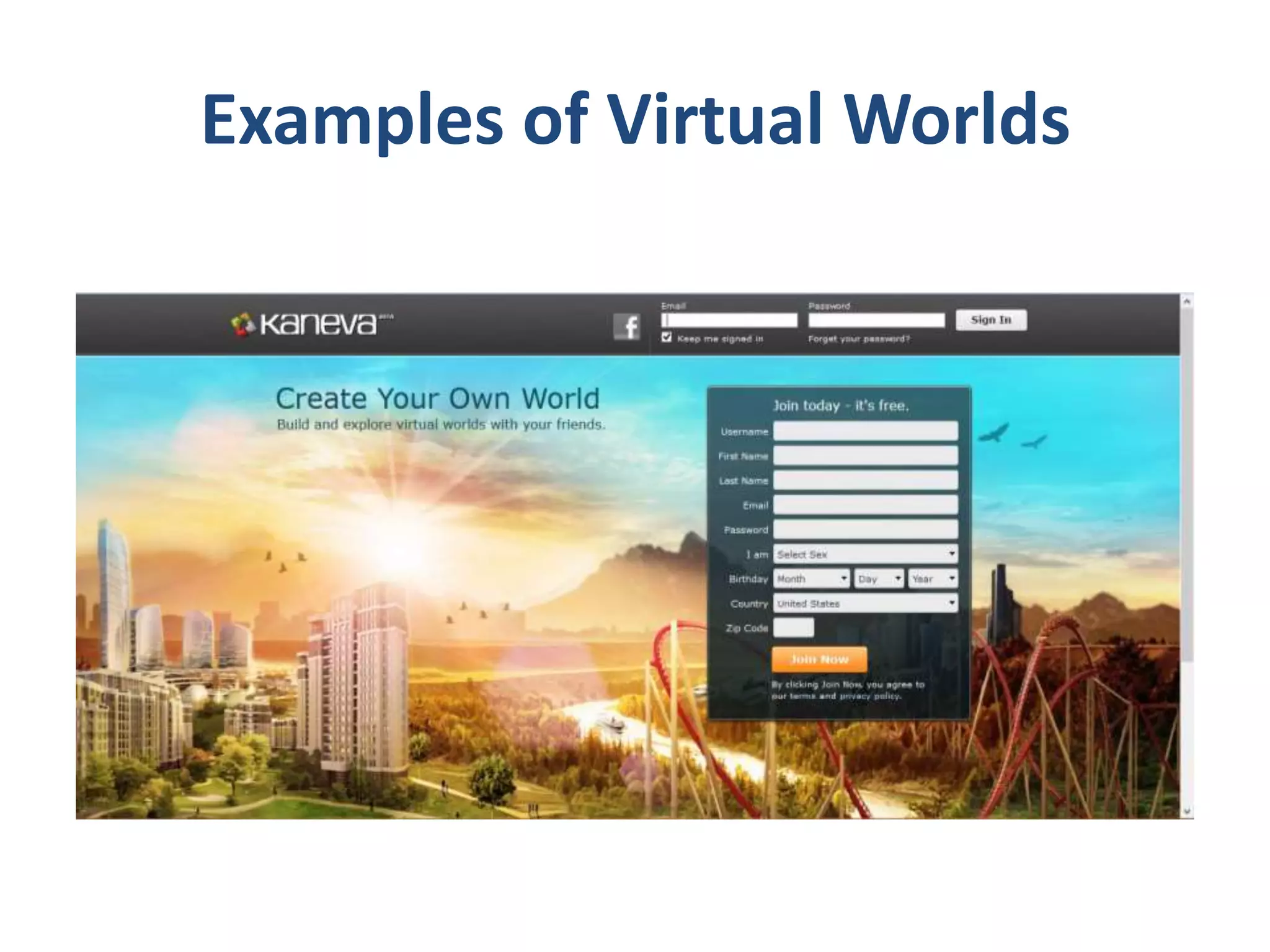
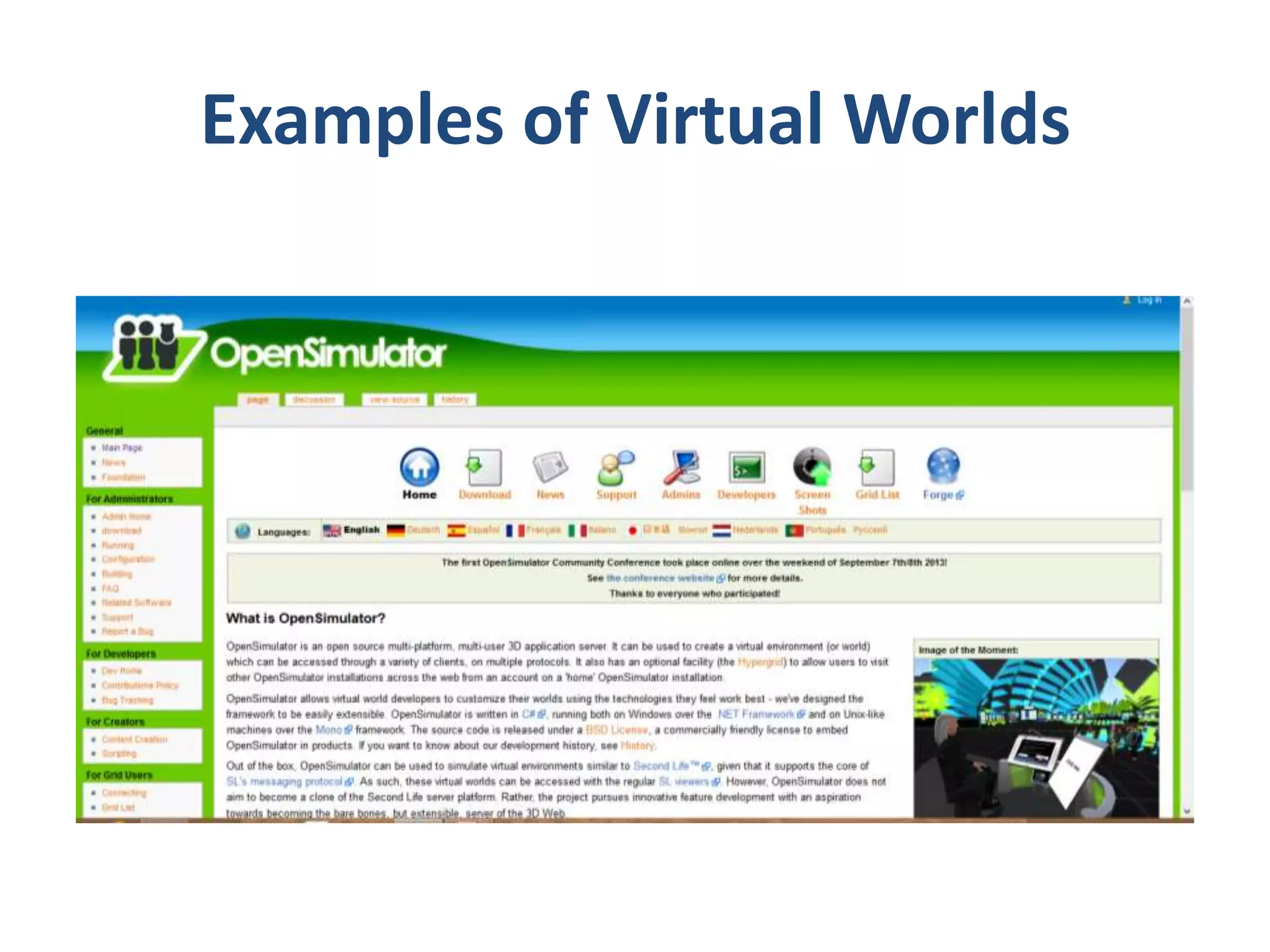
Examples of Virtual Worlds
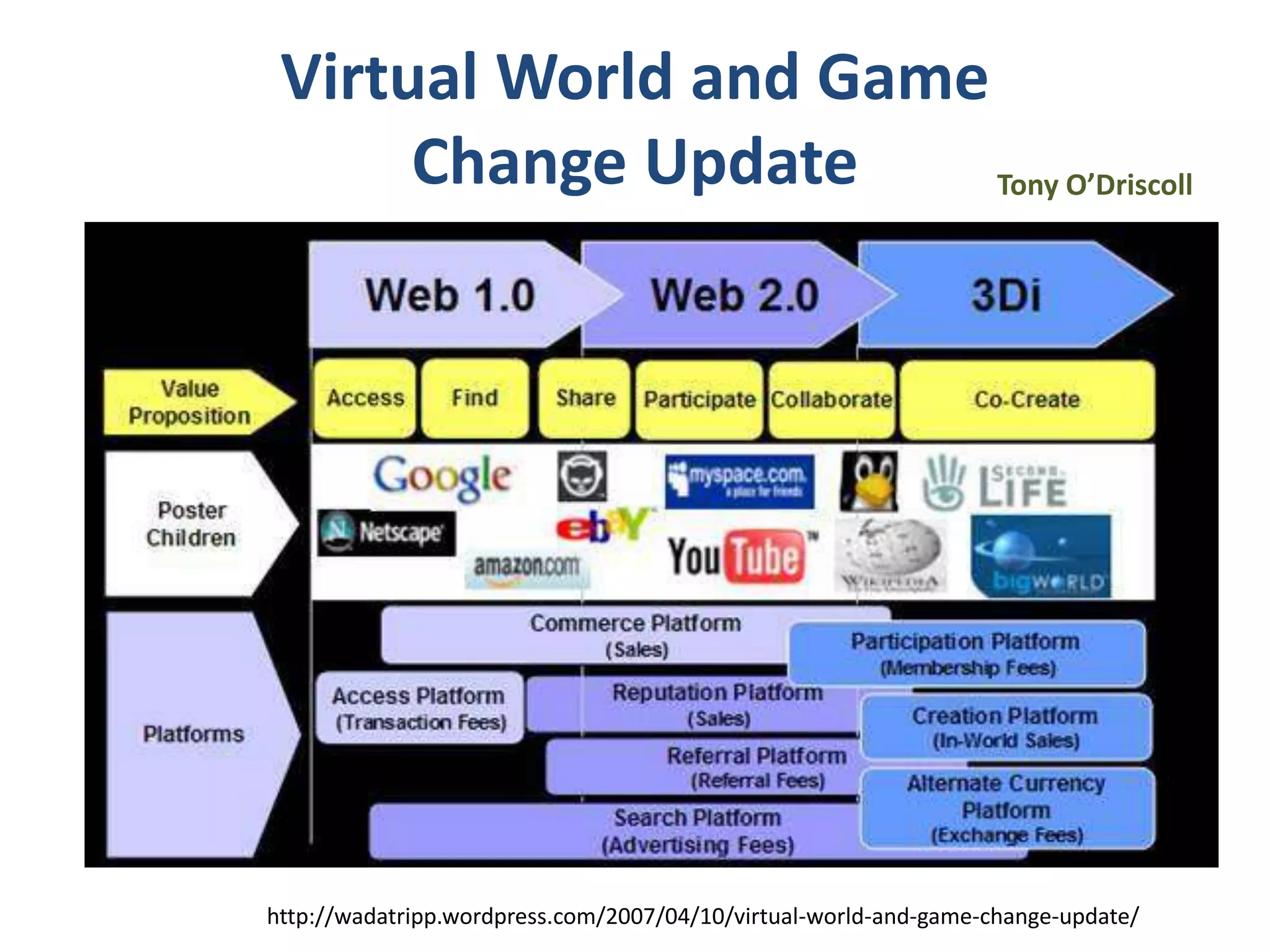
Virtual World and Game
Change Update
Tony O’Driscoll

http://wadatripp.wordpress.com/2007/04/10/virtual-world-and-game-change-update/
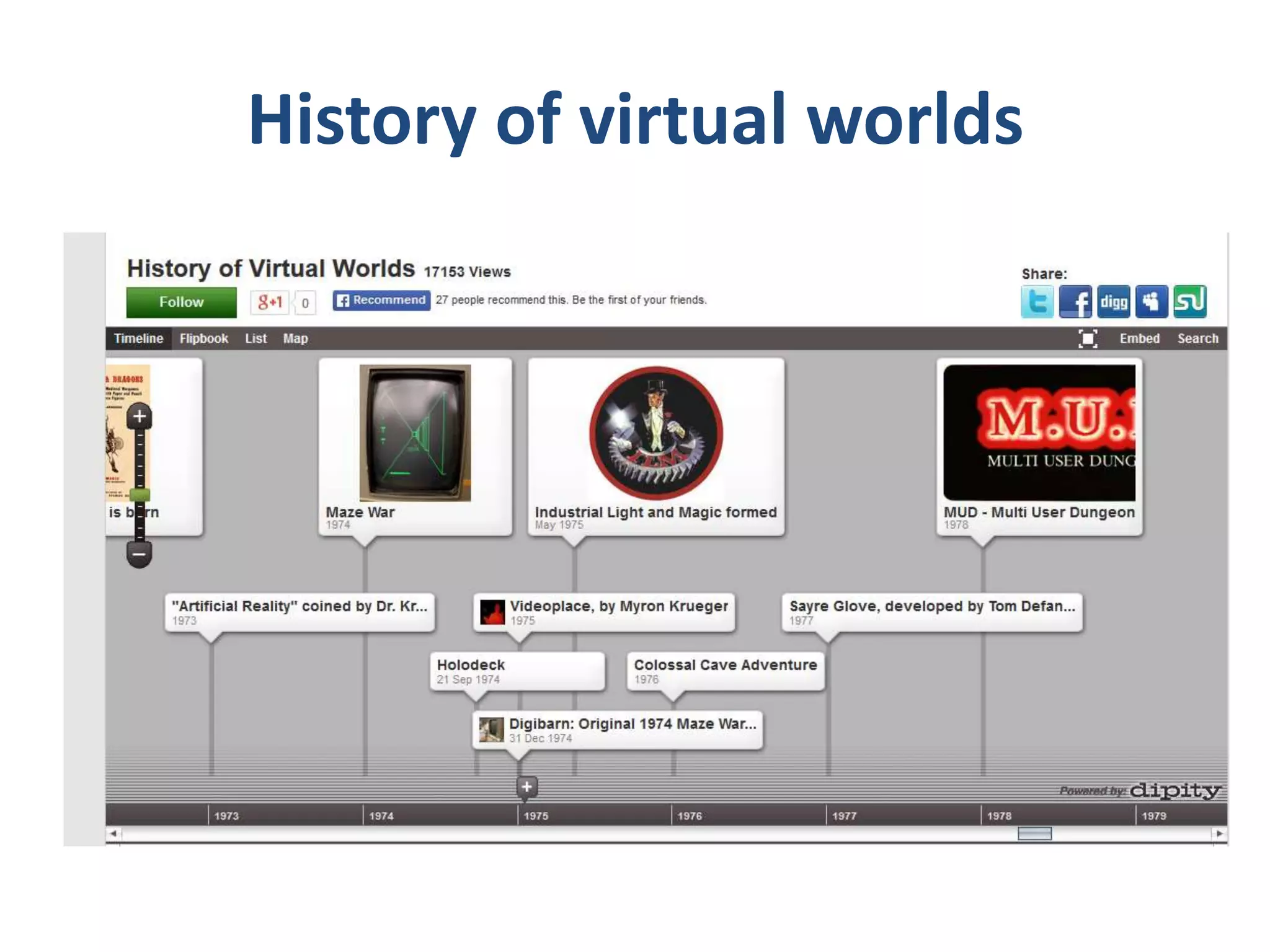
History of virtual worlds
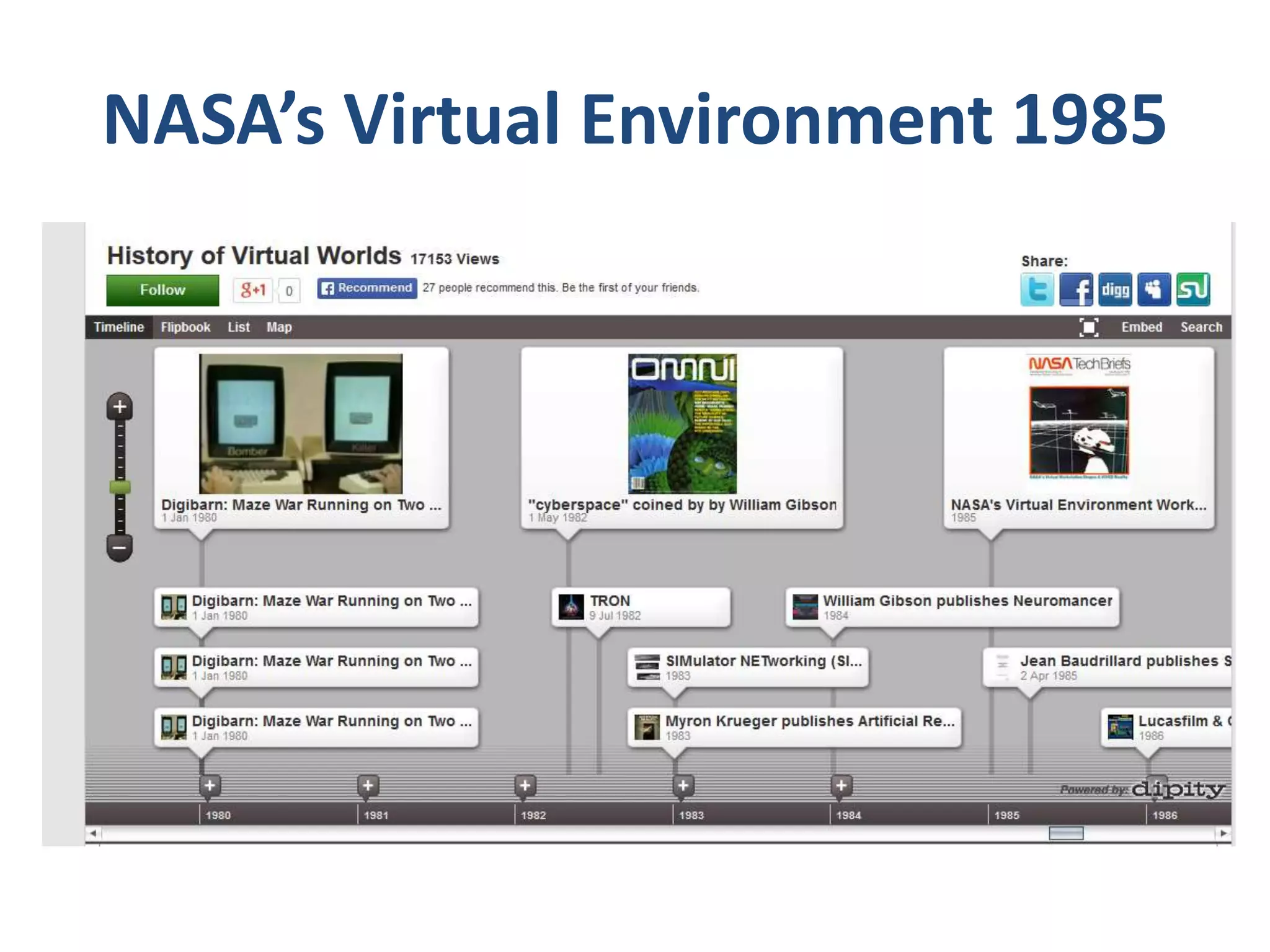
NASA’s Virtual Environment 1985
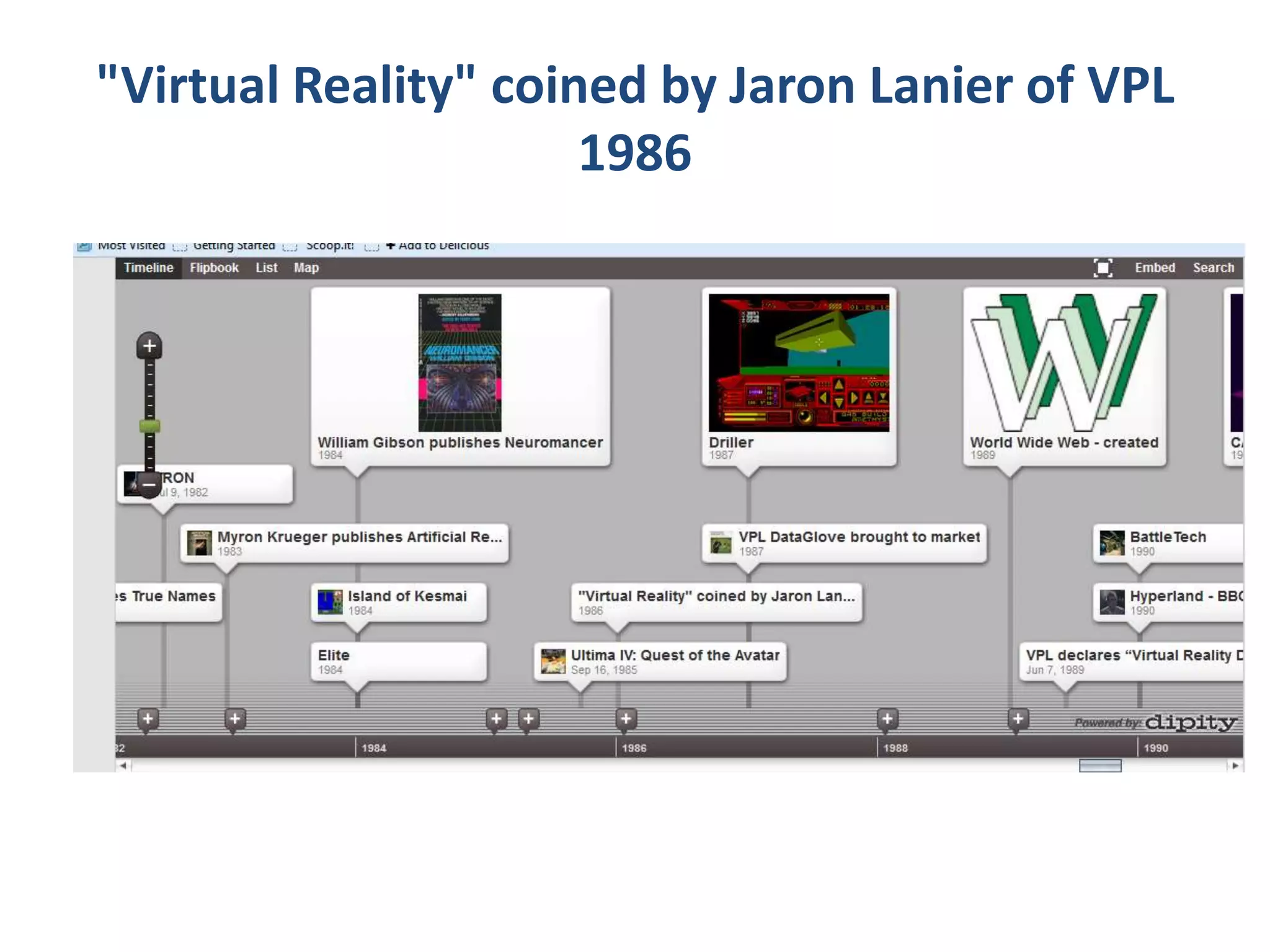
"Virtual Reality" coined by Jaron Lanier of VPL
1986
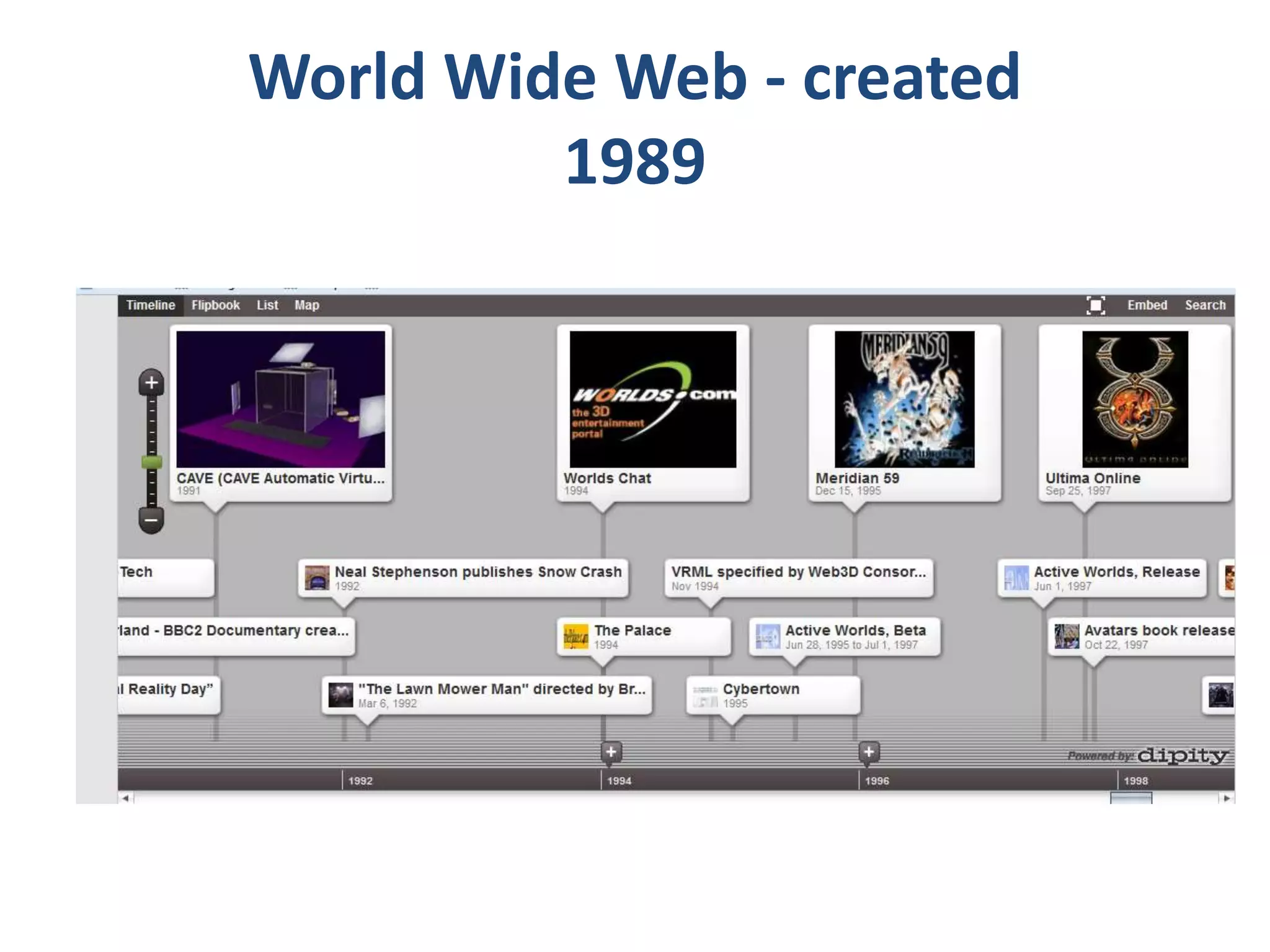
World Wide Web - created
1989
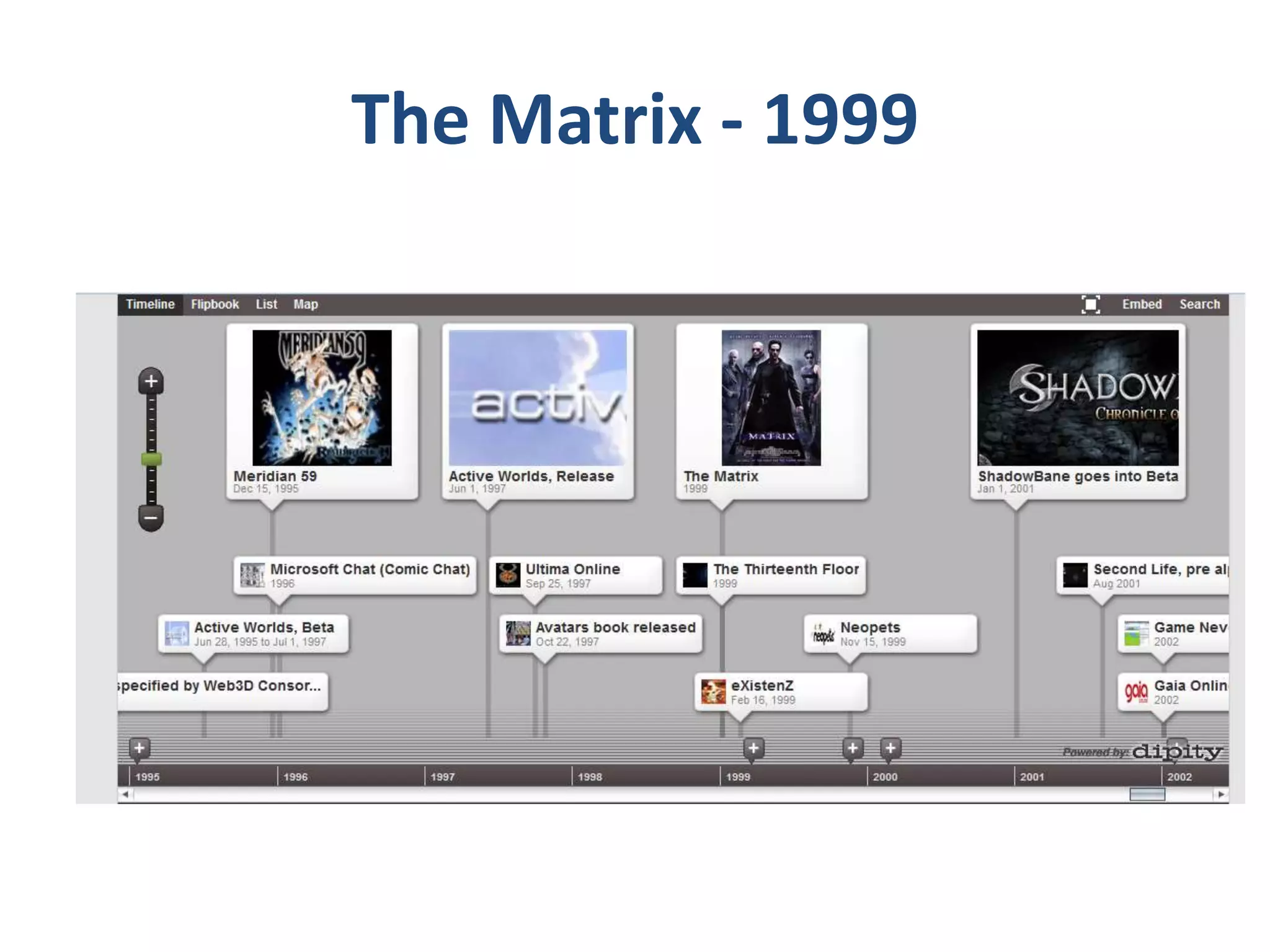
The Matrix - 1999
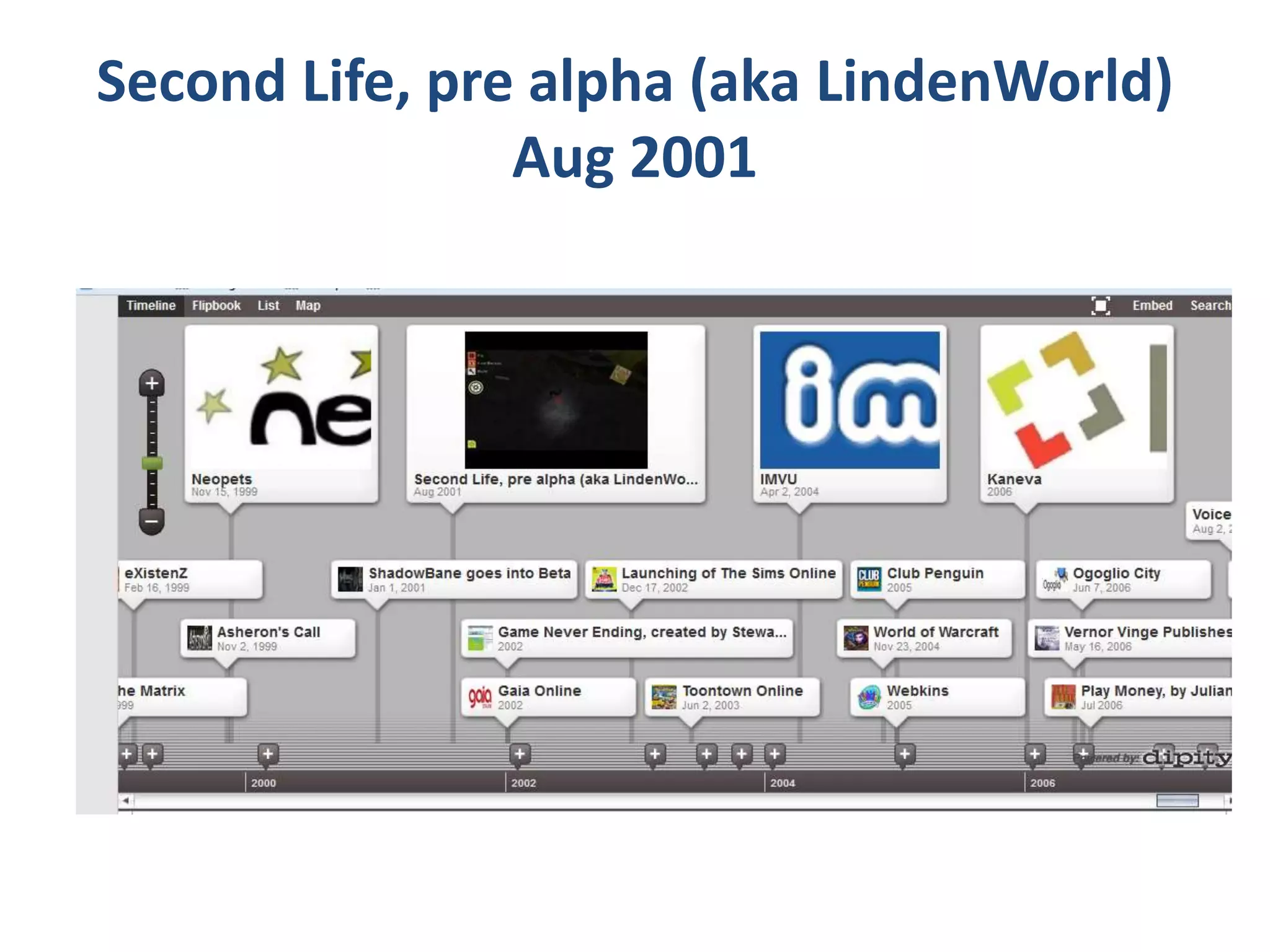
Second Life, pre alpha (aka LindenWorld)
Aug 2001
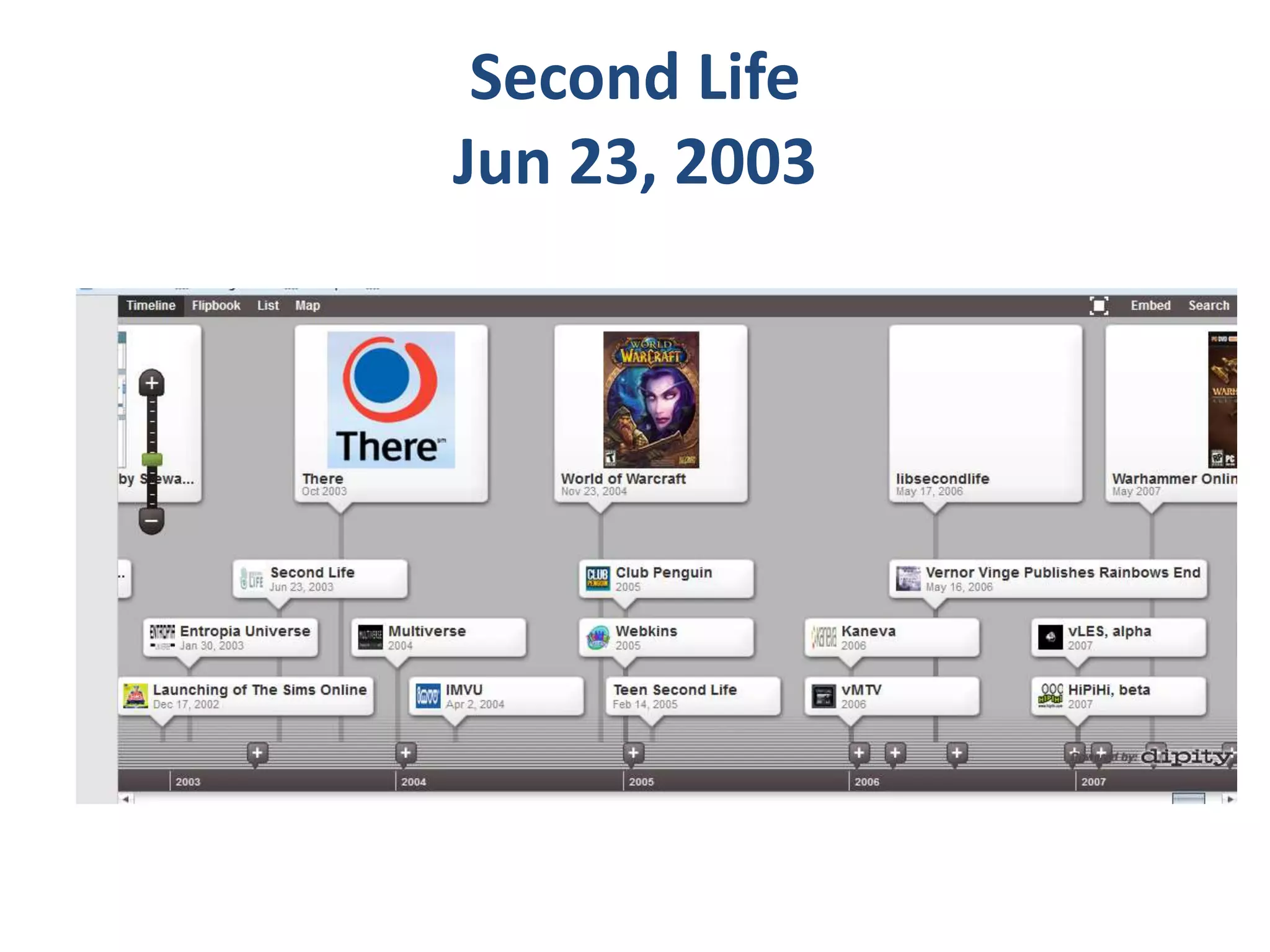
Second Life
Jun 23, 2003
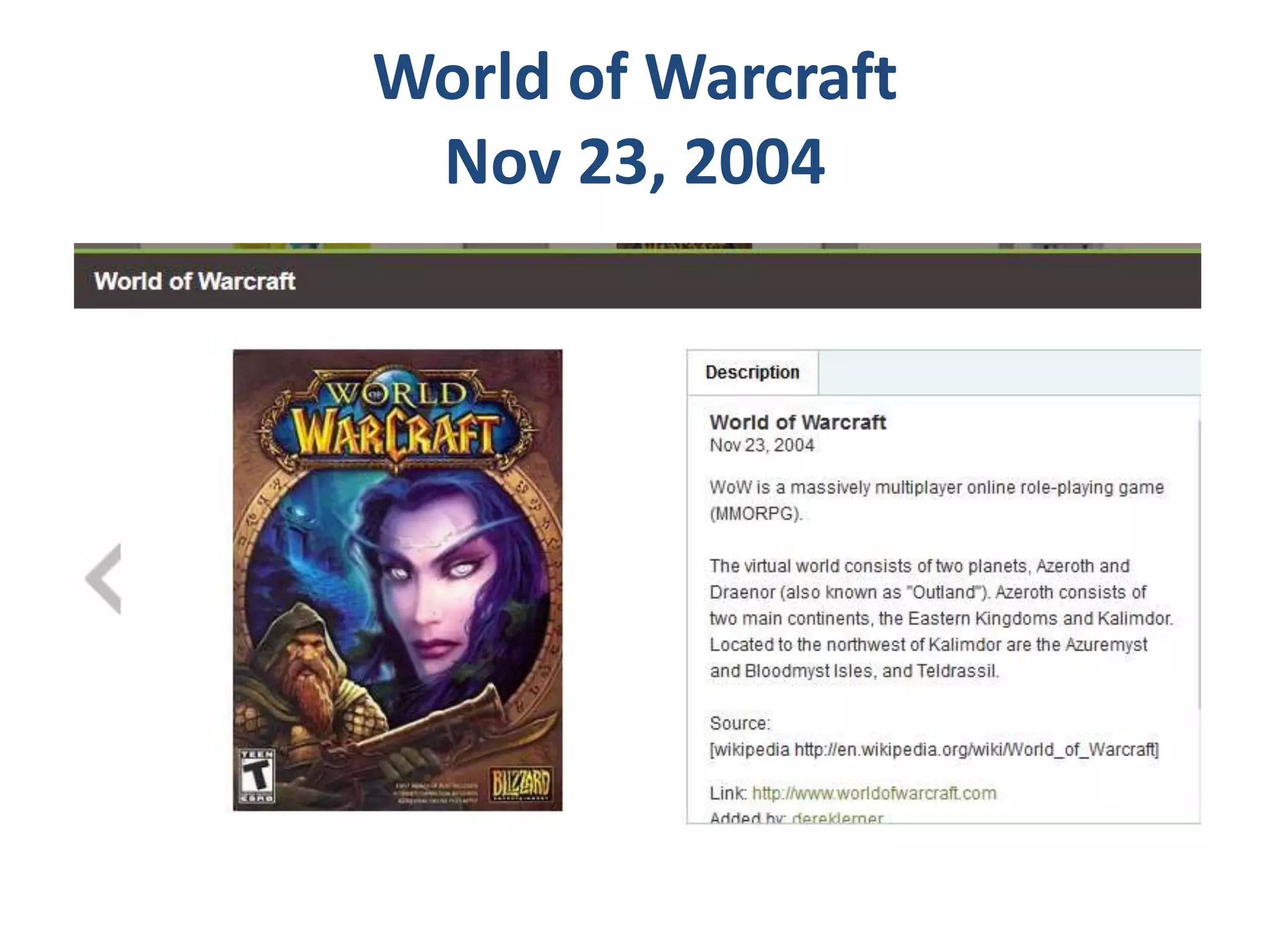
World of Warcraft
Nov 23, 2004
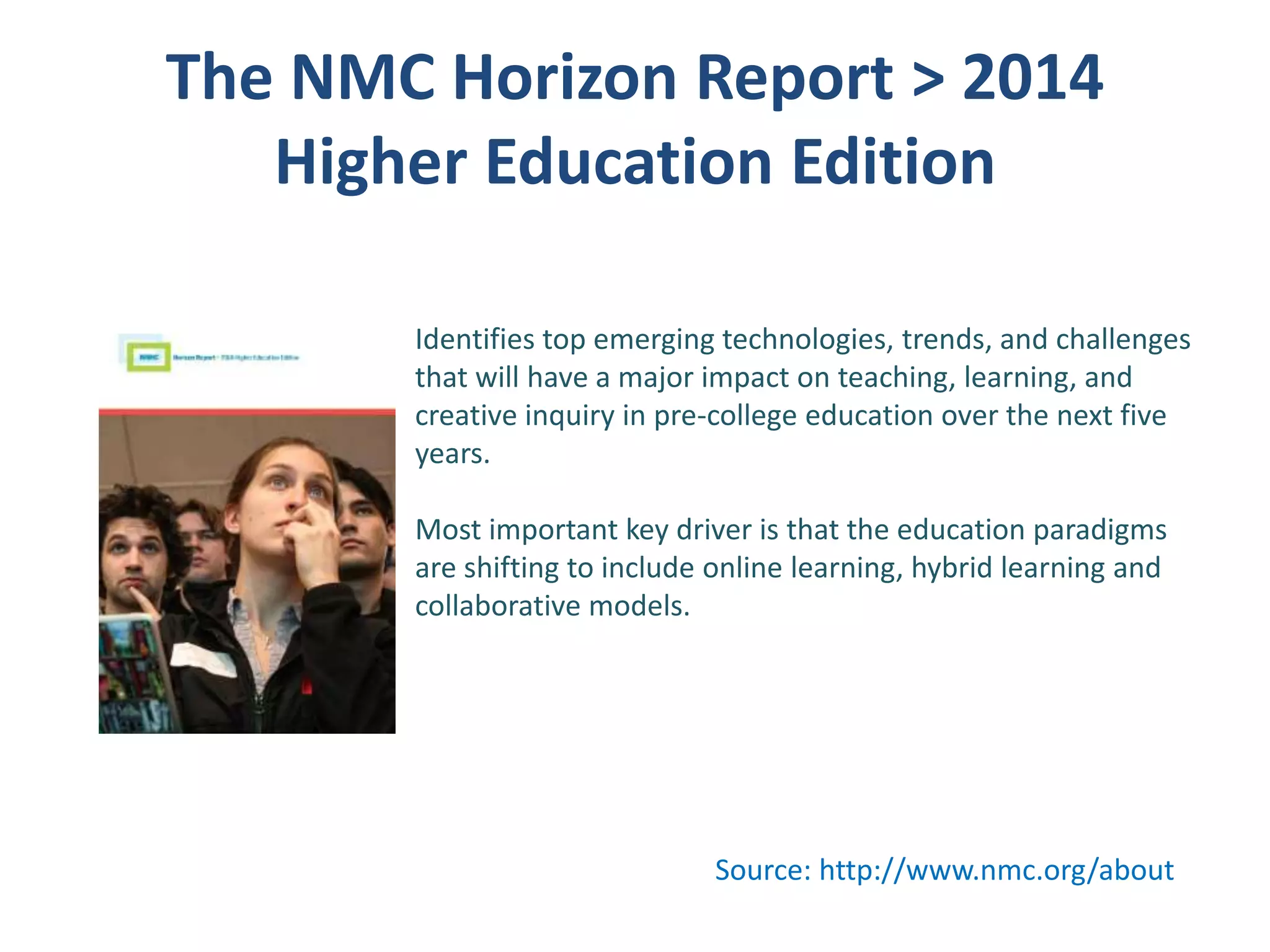
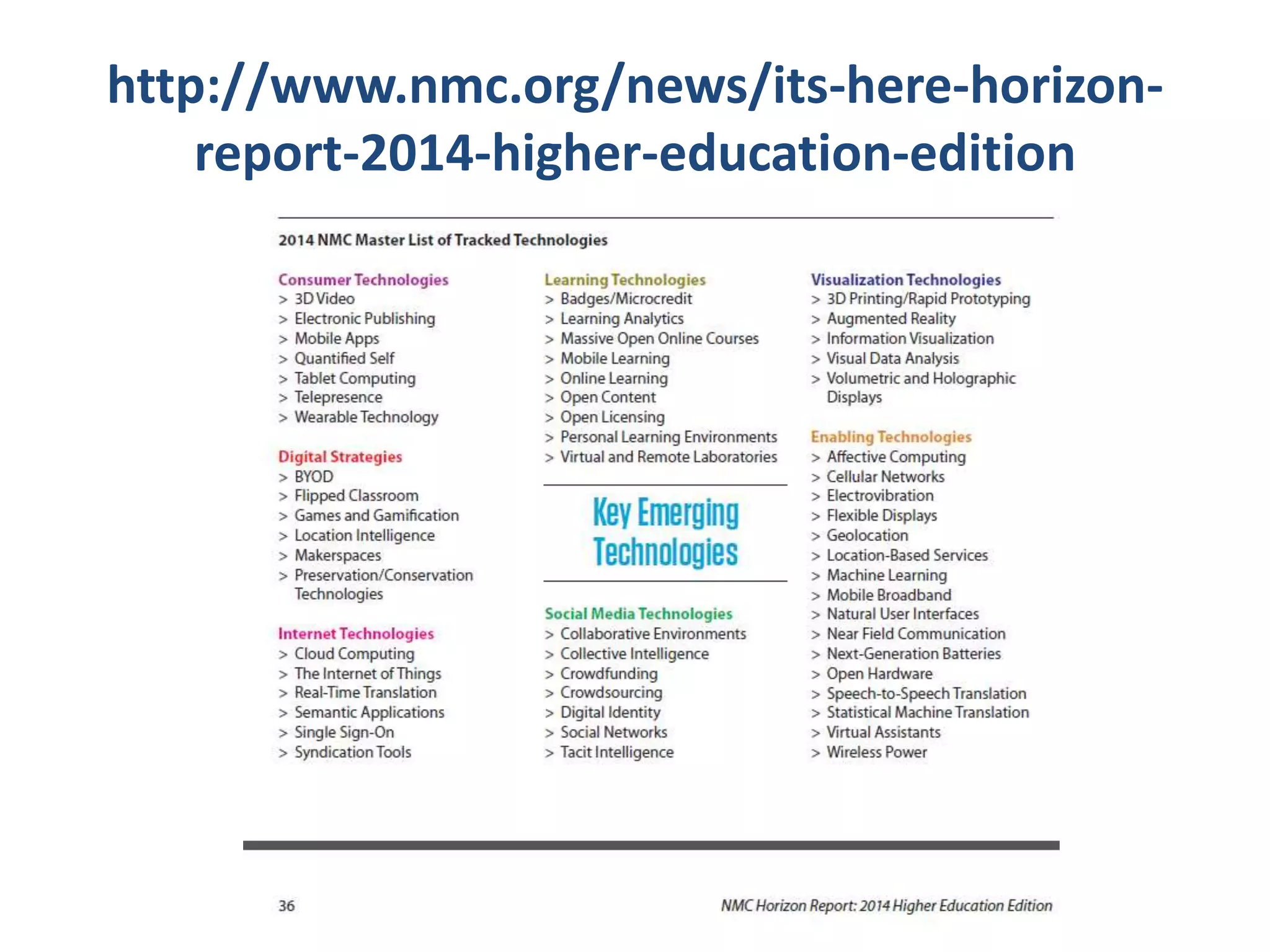
The NMC Horizon Report > 2014
Higher Education Edition
Identifies top emerging technologies, trends, and challenges
that will have a major impact on teaching, learning, and
creative inquiry in pre-college education over the next five
years.

Most important key driver is that the education paradigms
are shifting to include online learning, hybrid learning and
collaborative models.

Source: http://www.nmc.org/about
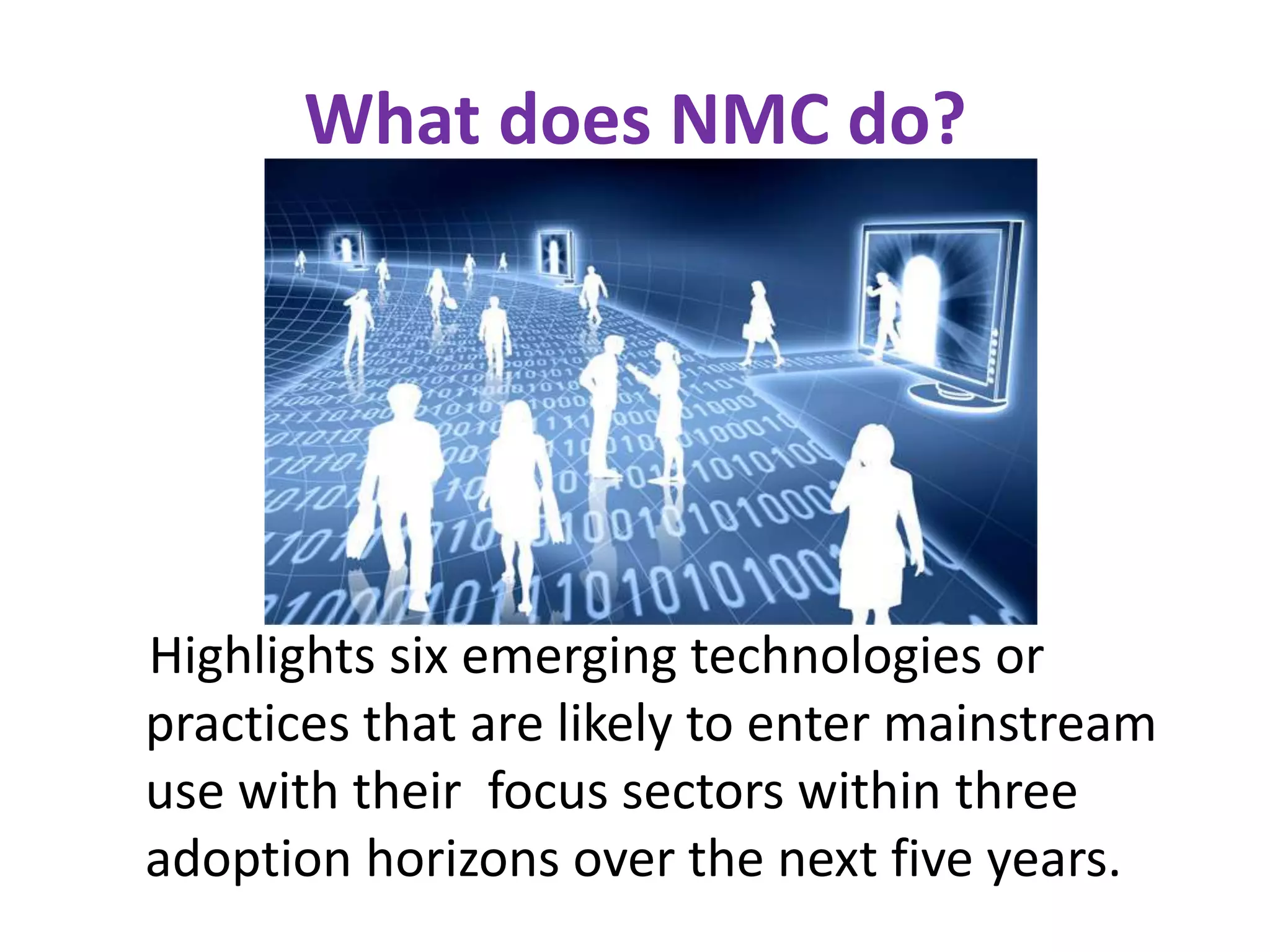
What does NMC do?

Highlights six emerging technologies or
practices that are likely to enter mainstream
use with their focus sectors within three
adoption horizons over the next five years.
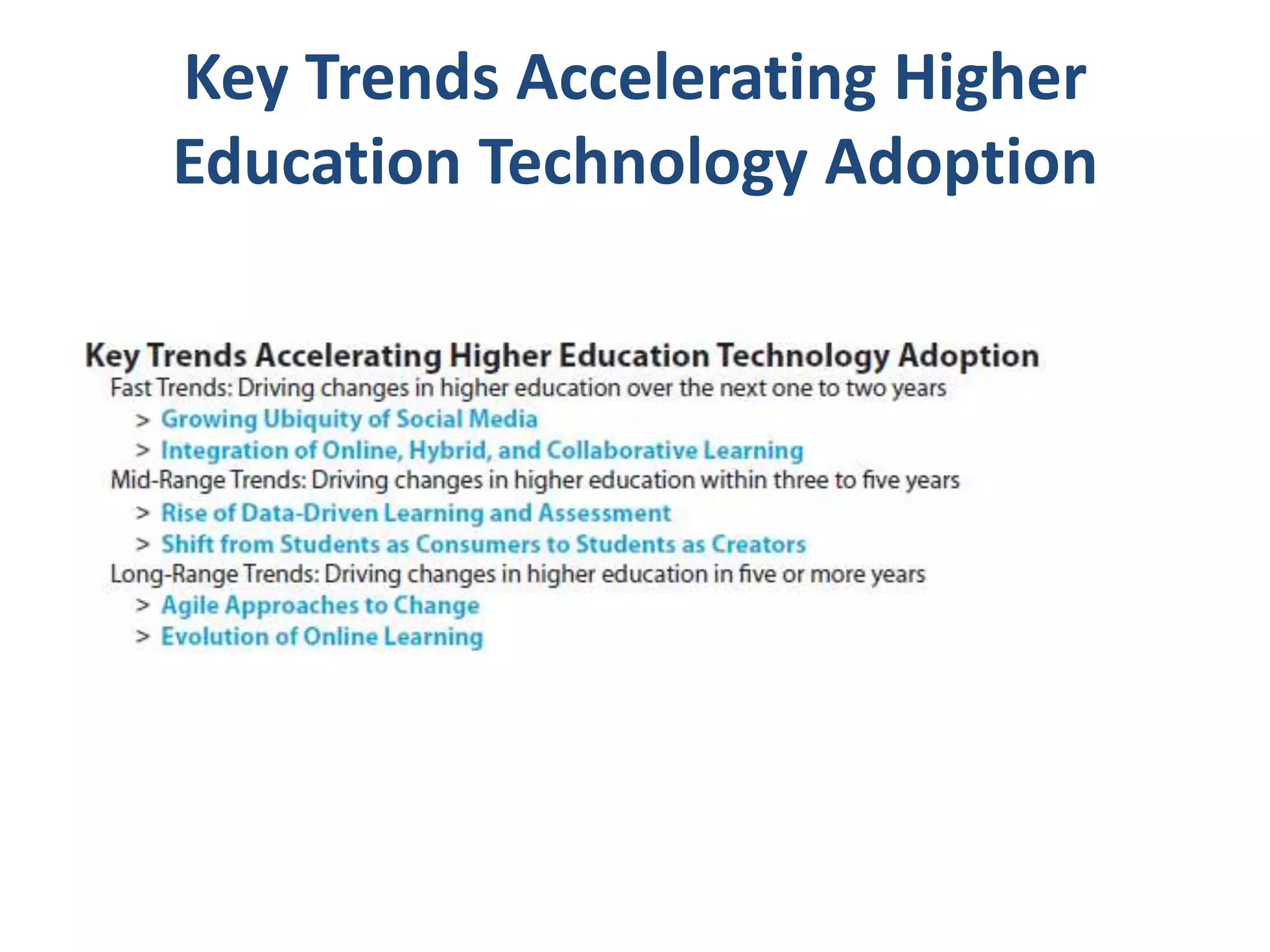
Key Trends Accelerating Higher
Education Technology Adoption
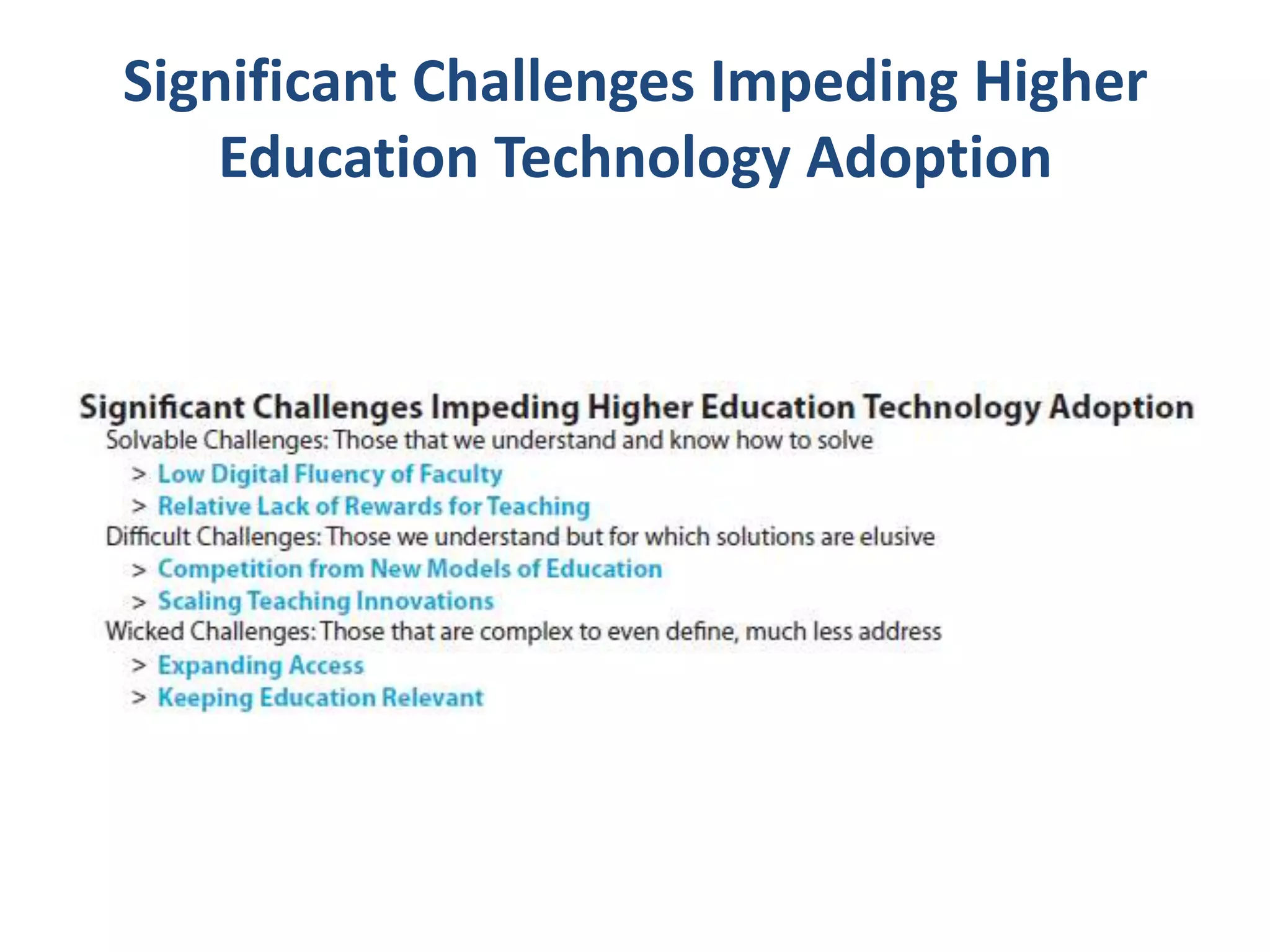
Significant Challenges Impeding Higher
Education Technology Adoption
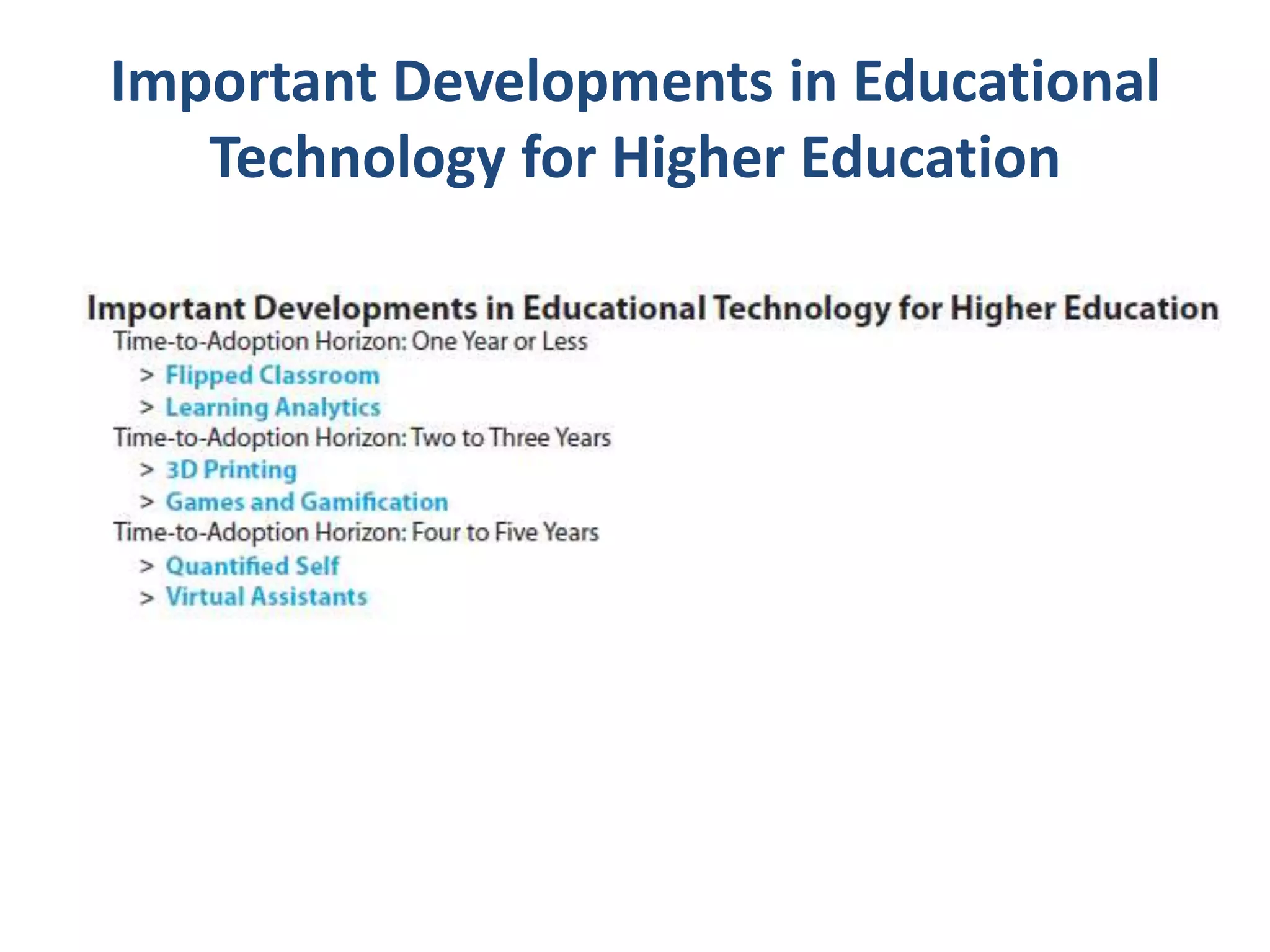
Important Developments in Educational
Technology for Higher Education
http://www.nmc.org/news/its-here-horizonreport-2014-higher-education-edition
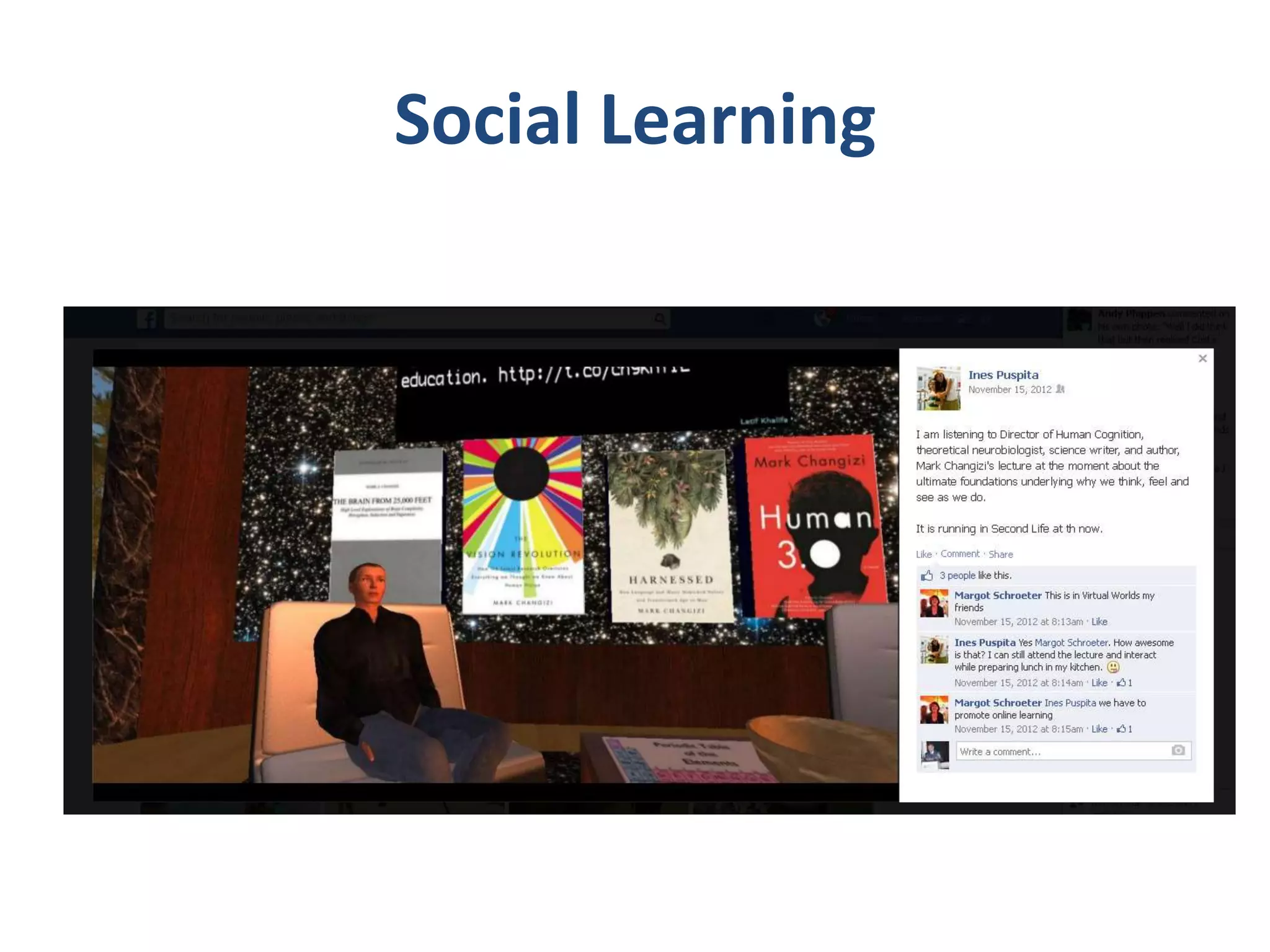
Social Learning
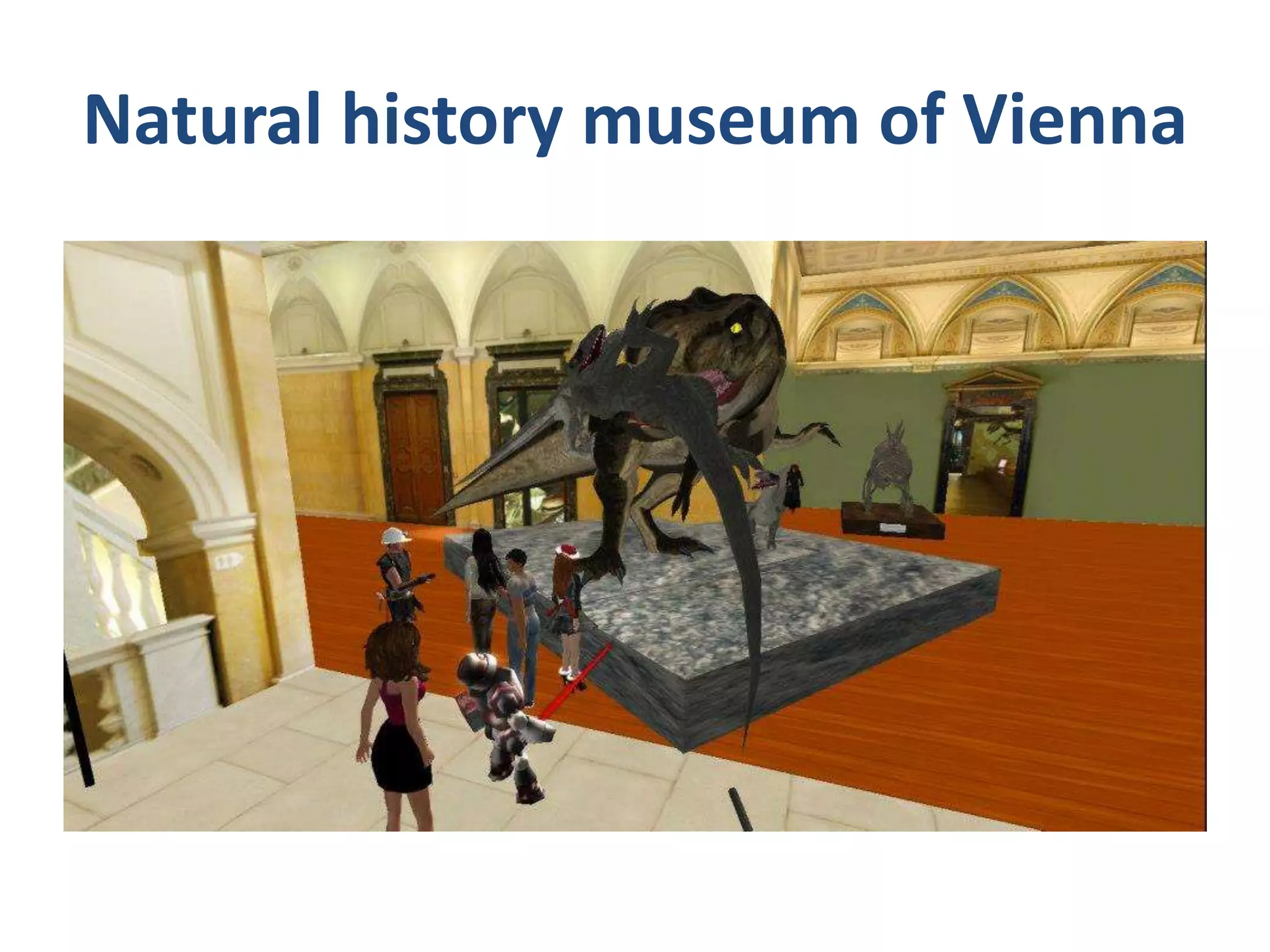
Natural history museum of Vienna
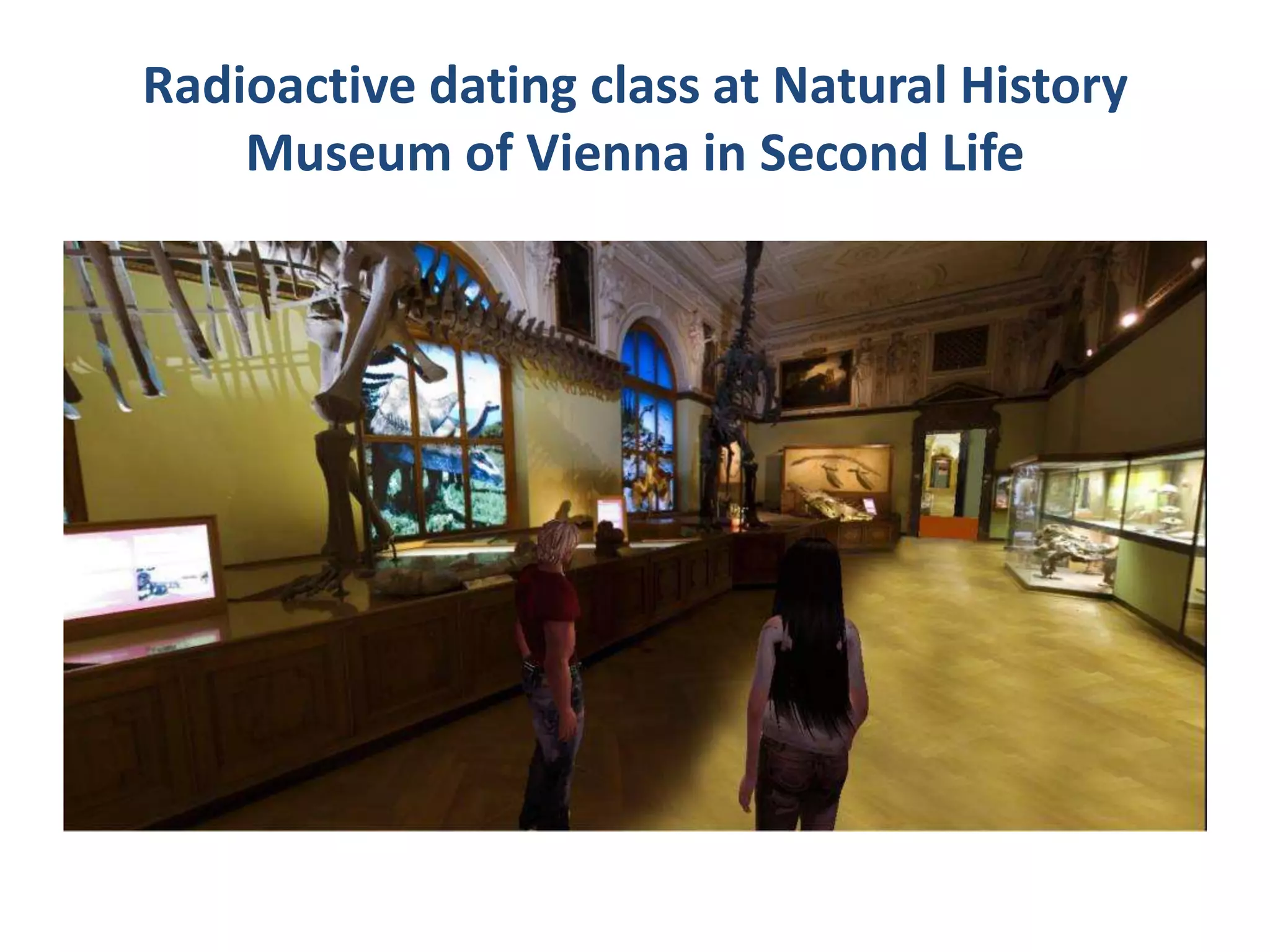
Radioactive dating class at Natural History
Museum of Vienna in Second Life
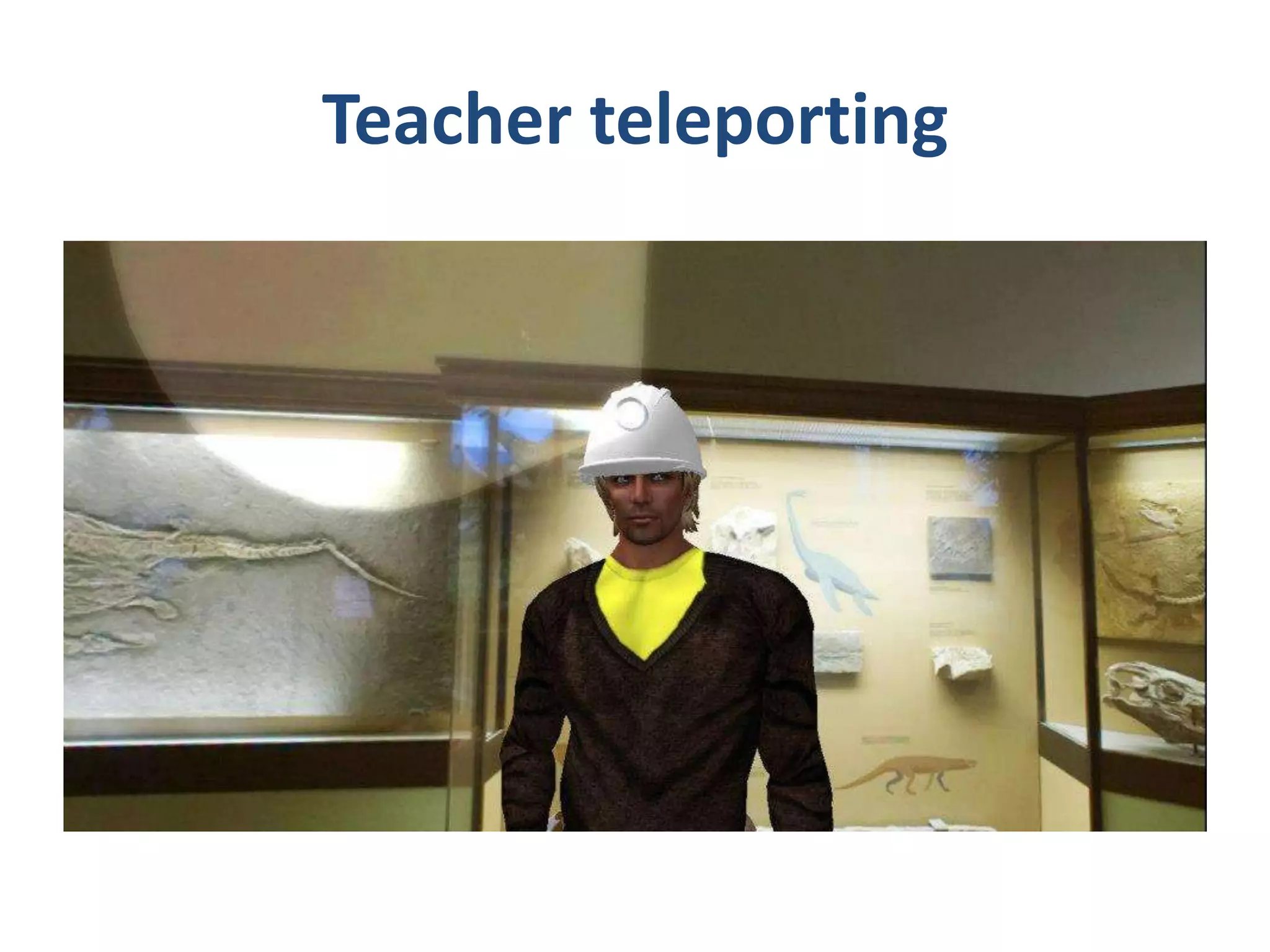
Teacher teleporting
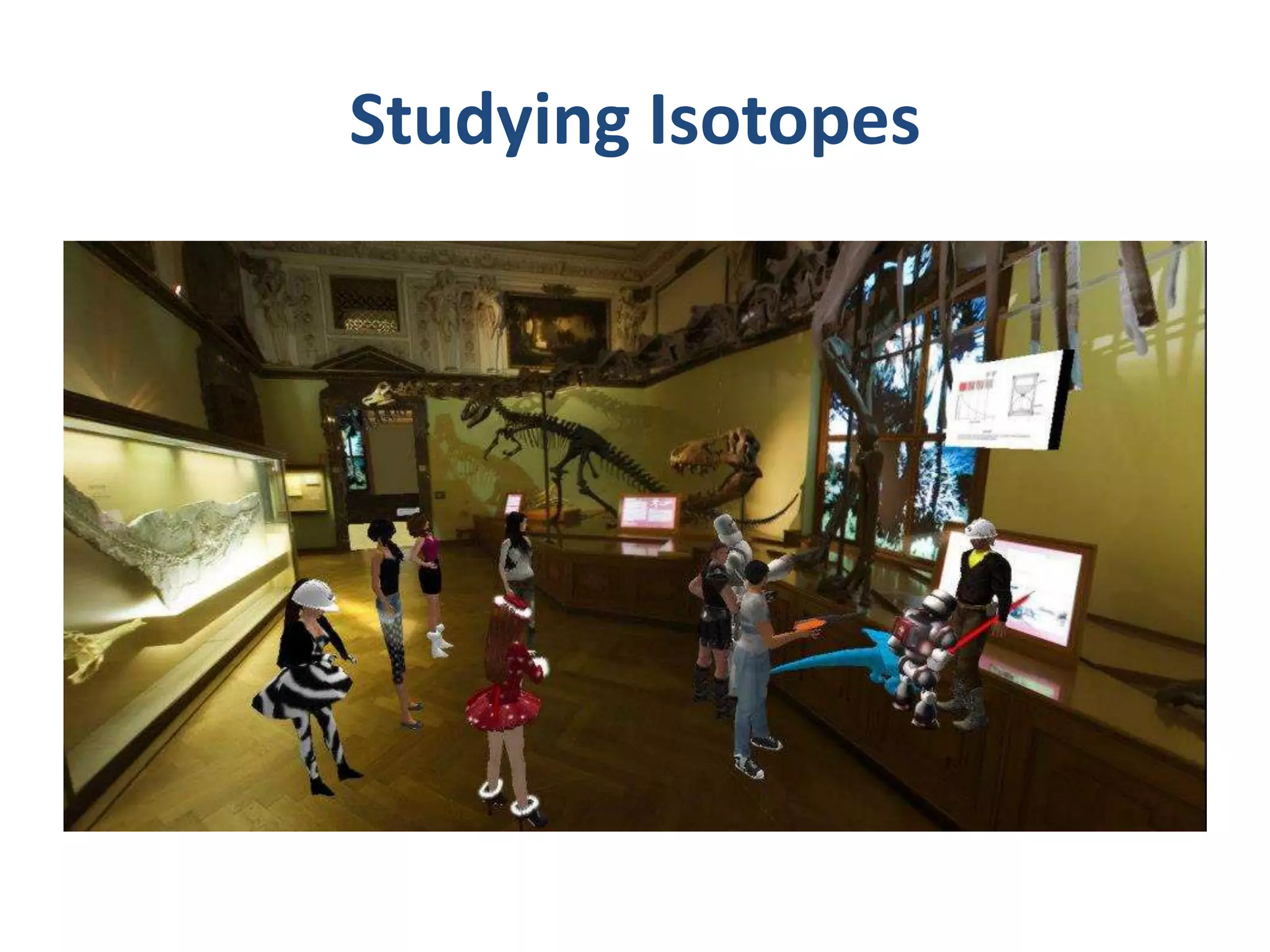
Studying Isotopes
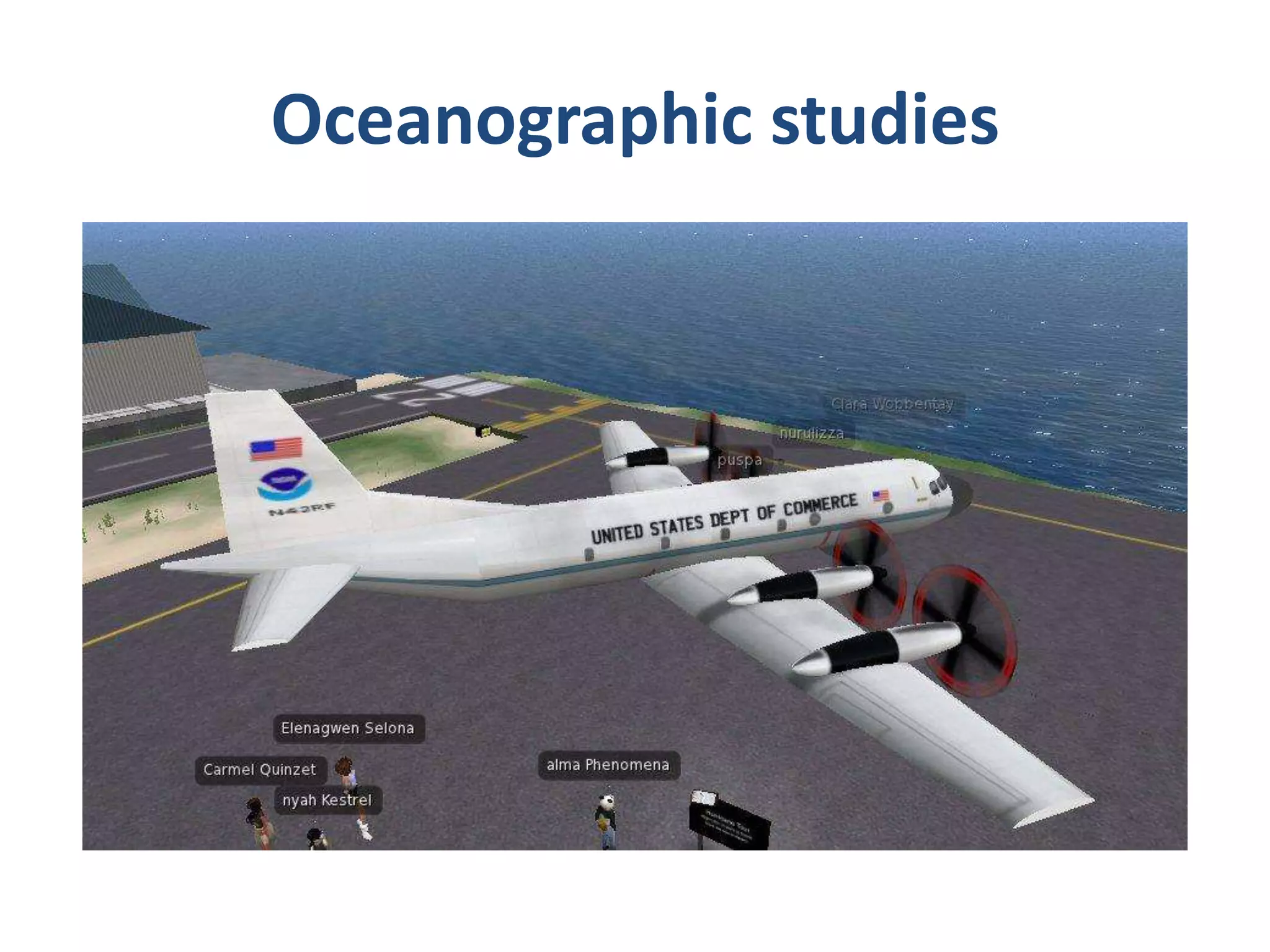
Oceanographic studies
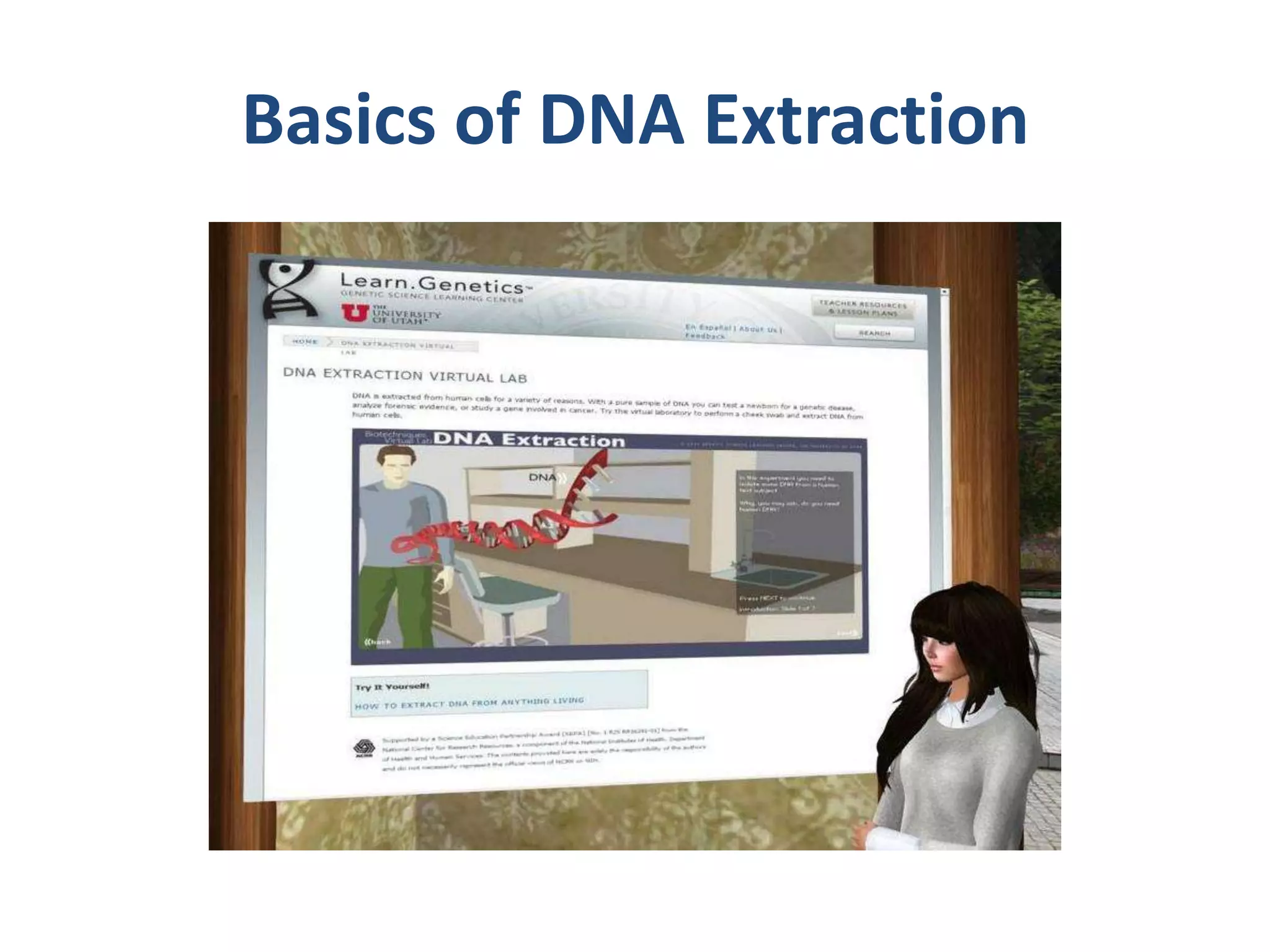
Basics of DNA Extraction
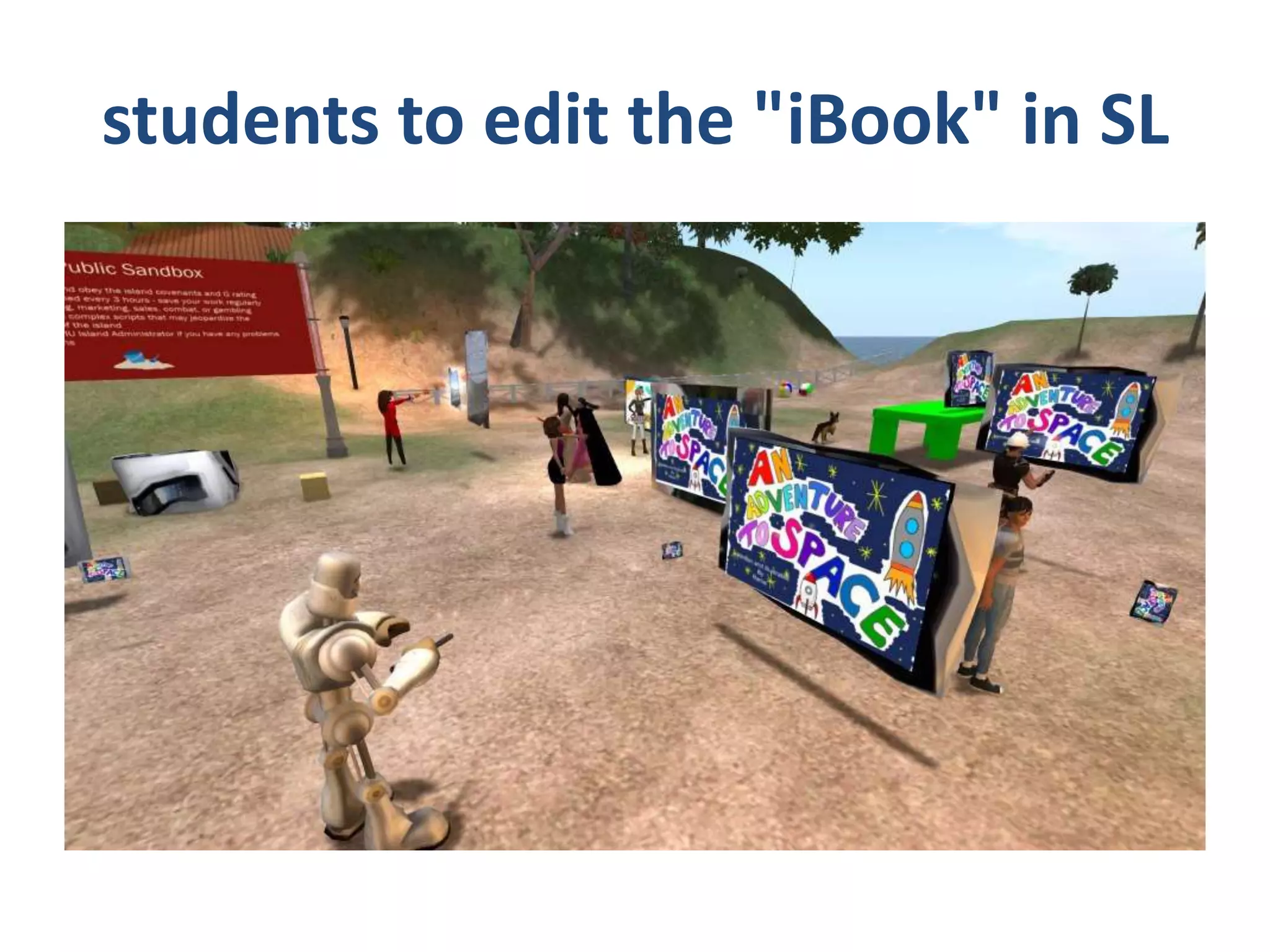
students to edit the "iBook" in SL
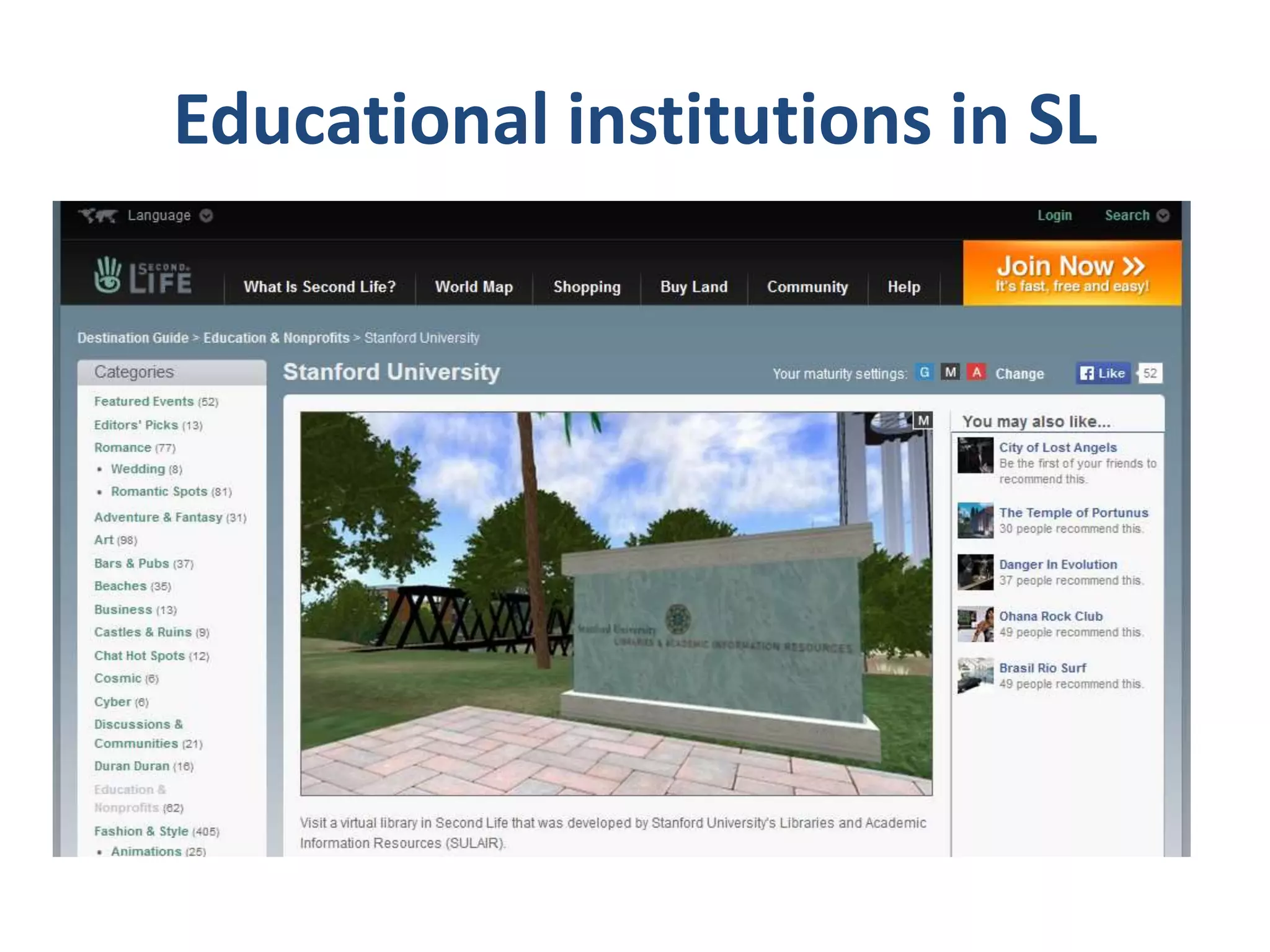
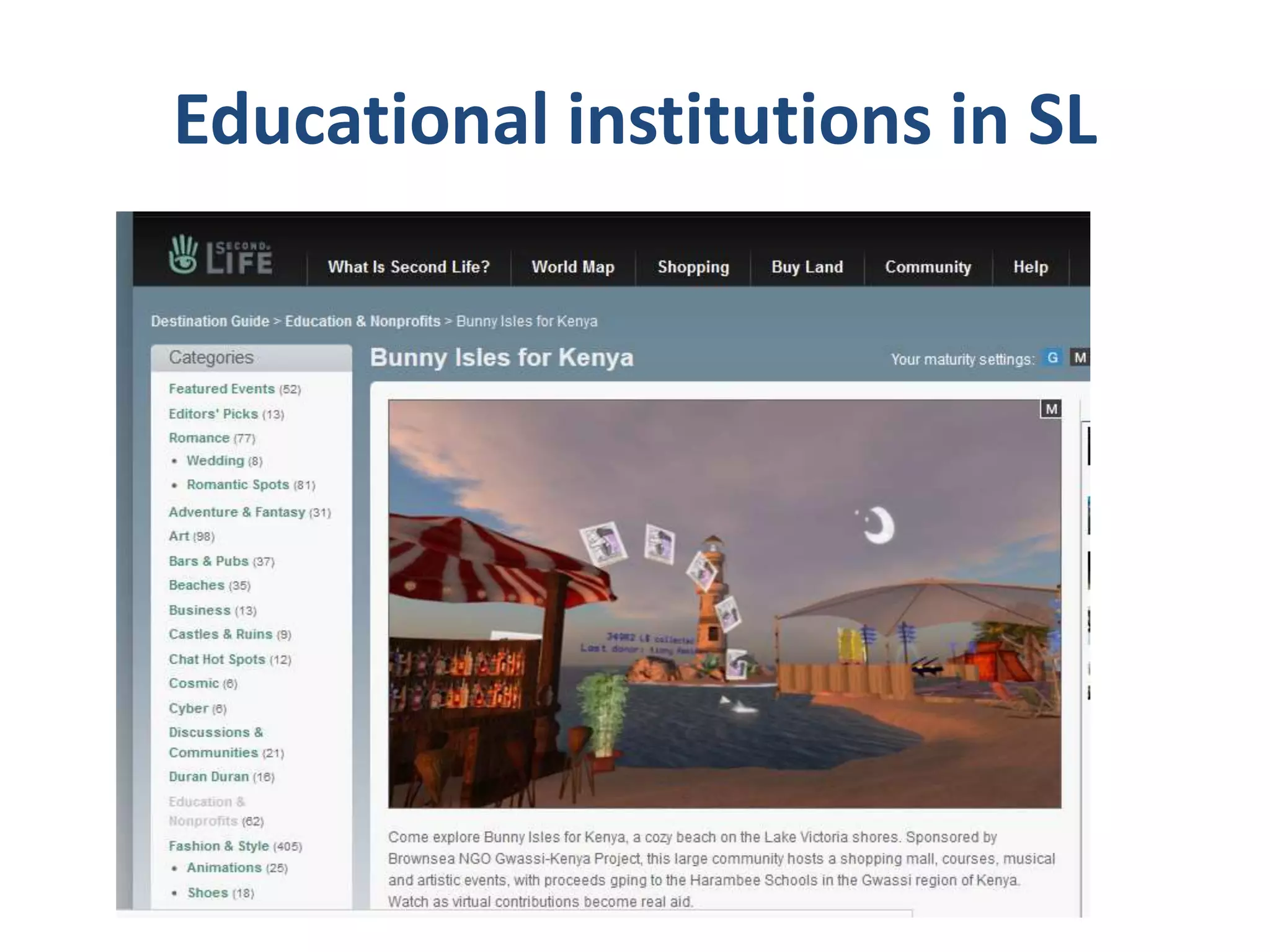
Educational institutions in SL
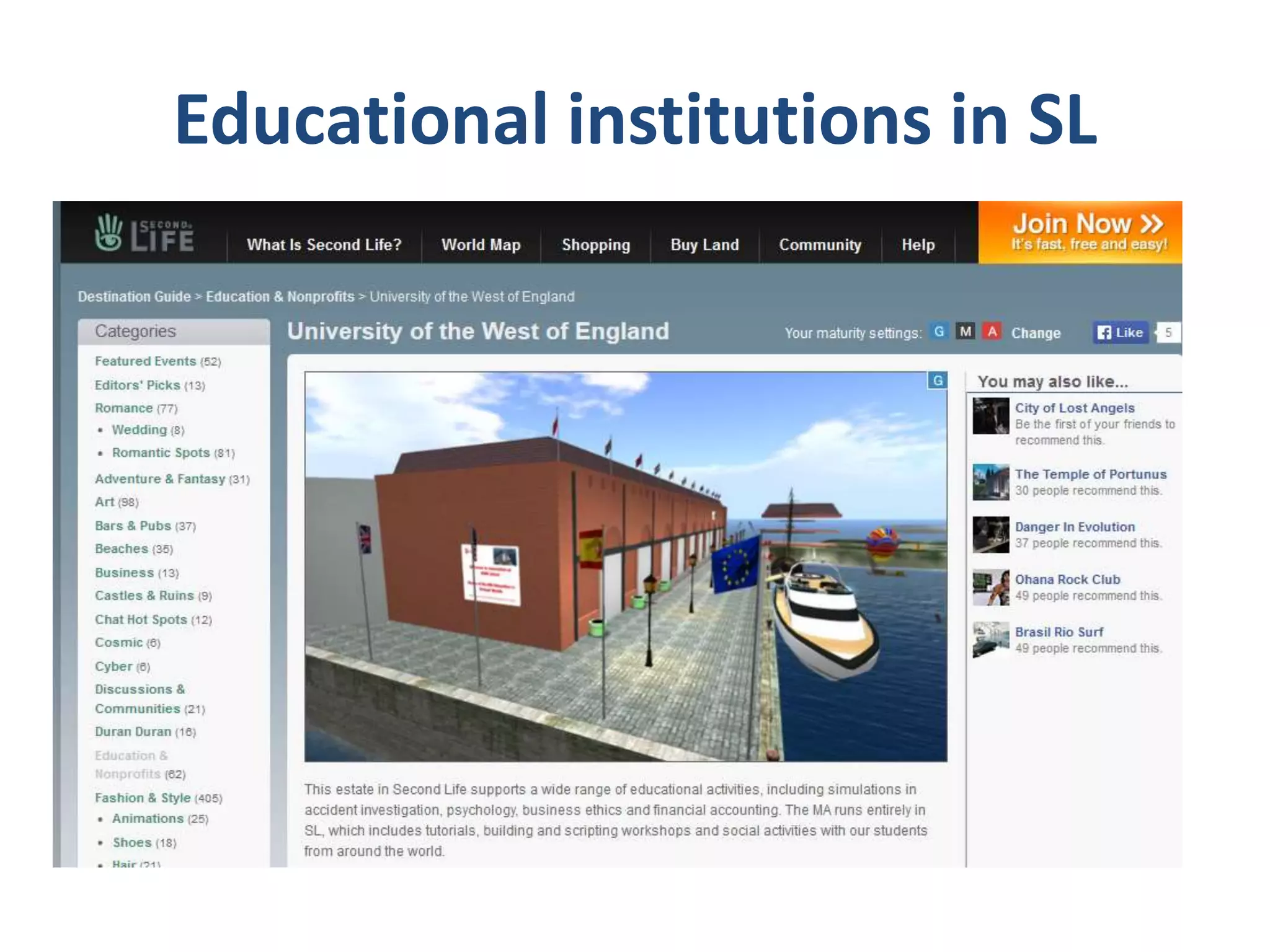
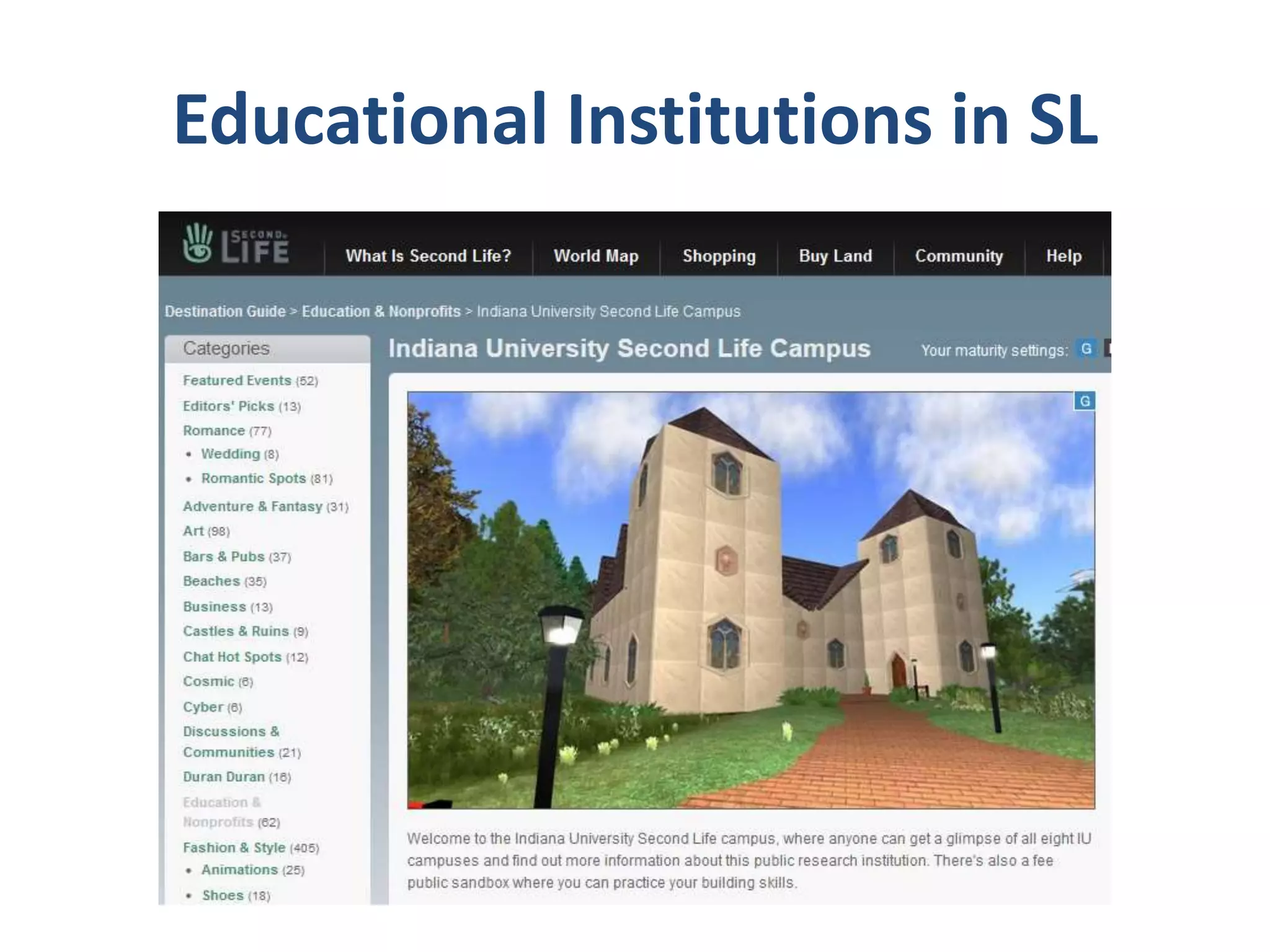
Educational Institutions in SL
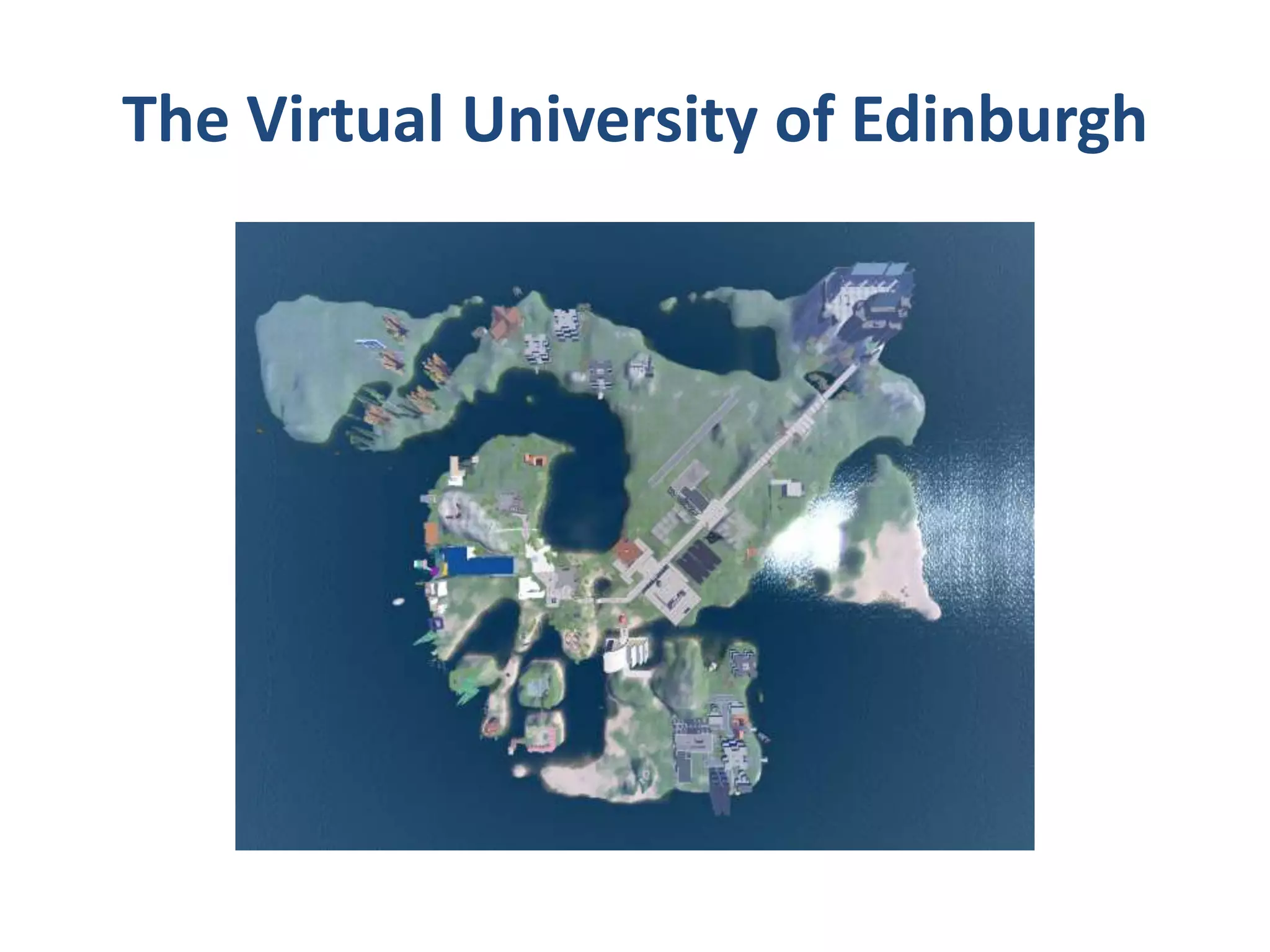
The Virtual University of Edinburgh
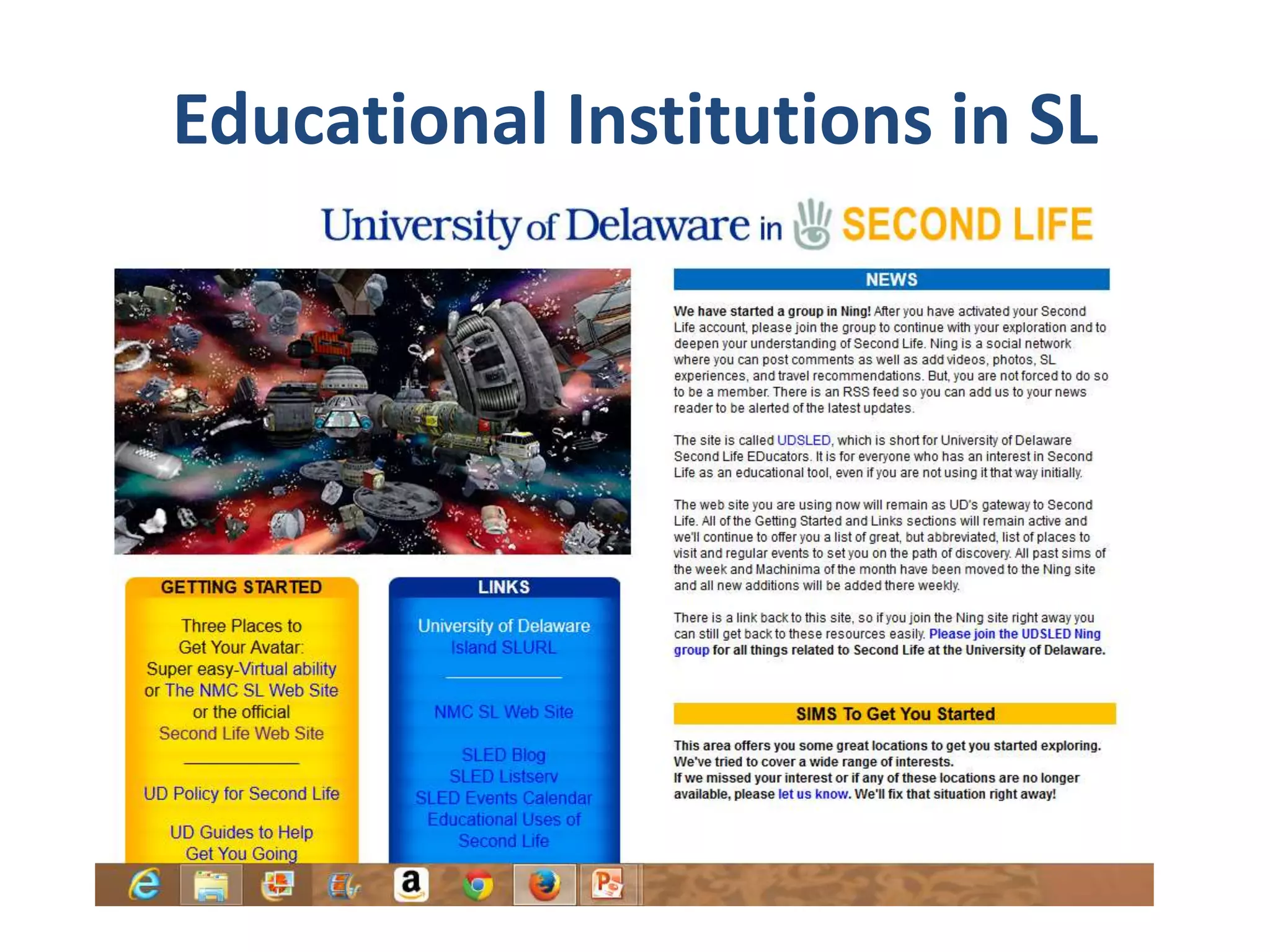
Educational Institutions in SL
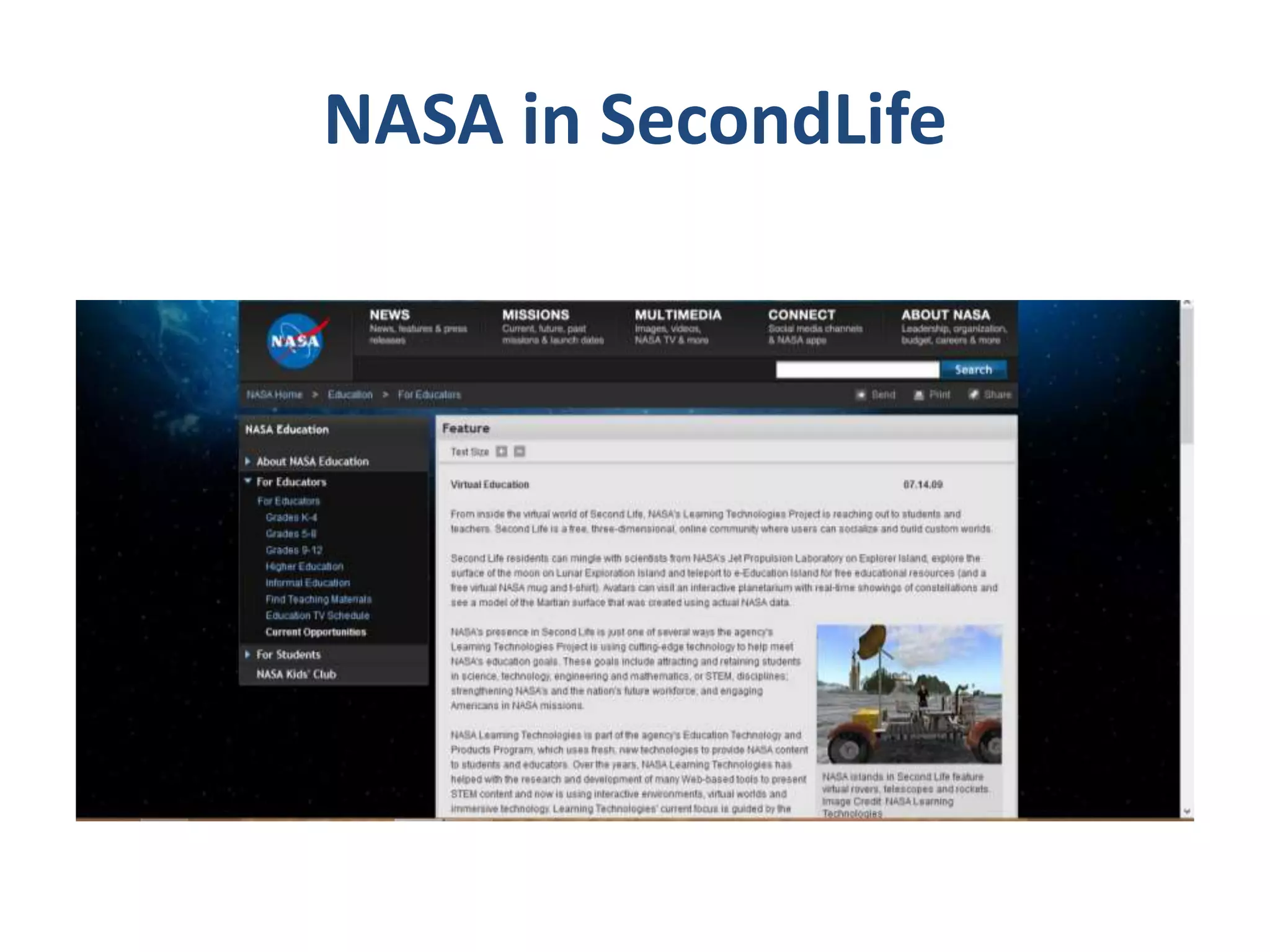
NASA in SecondLife
The Virtual University of Edinburgh:
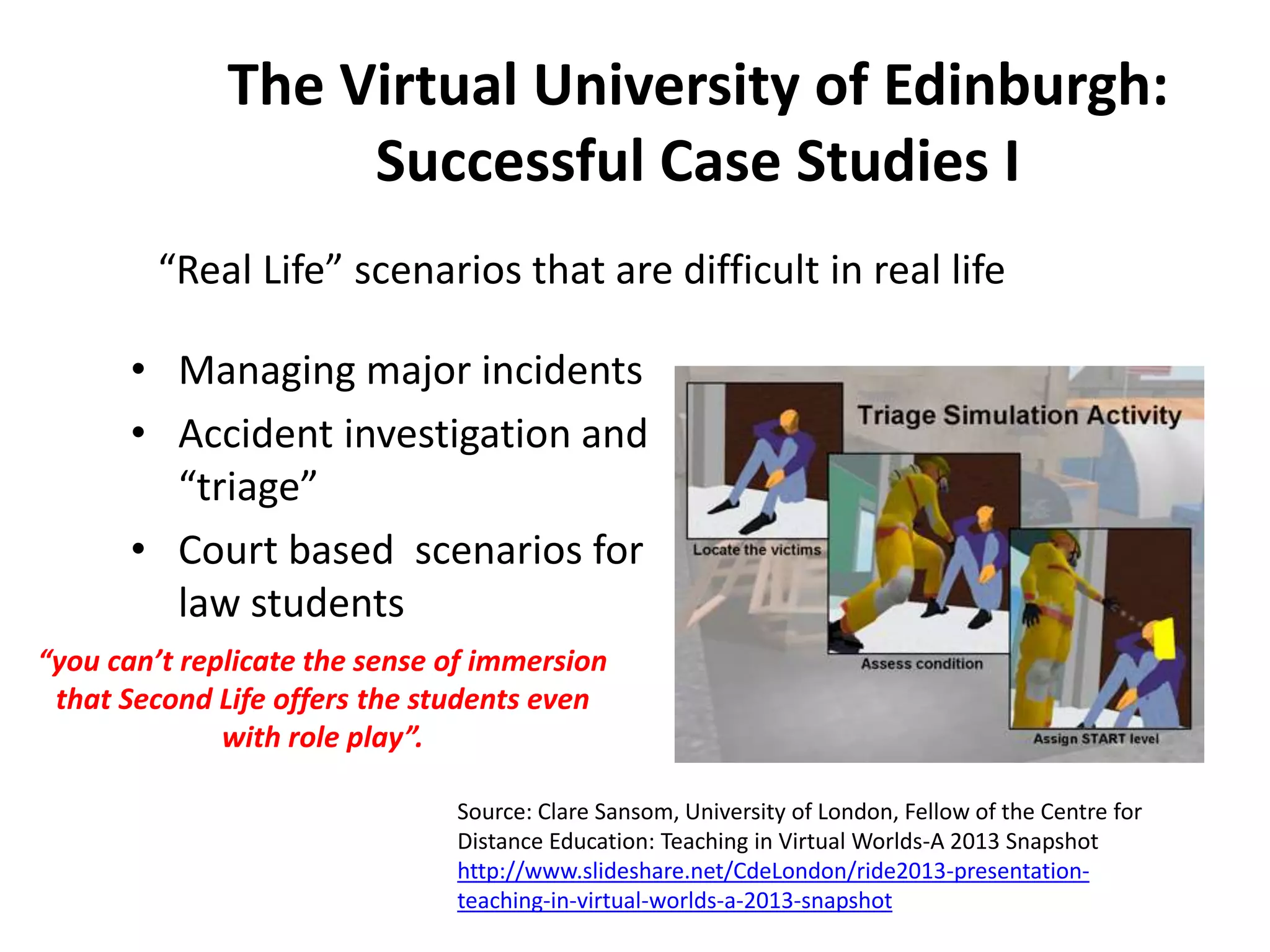
Successful Case Studies I
“Real Life” scenarios that are difficult in real life

• Managing major incidents
• Accident investigation and
“triage”
• Court based scenarios for
law students
“you can’t replicate the sense of immersion
that Second Life offers the students even
with role play”.
Source: Clare Sansom, University of London, Fellow of the Centre for
Distance Education: Teaching in Virtual Worlds-A 2013 Snapshot
http://www.slideshare.net/CdeLondon/ride2013-presentationteaching-in-virtual-worlds-a-2013-snapshot
The Virtual University of Edinburgh:
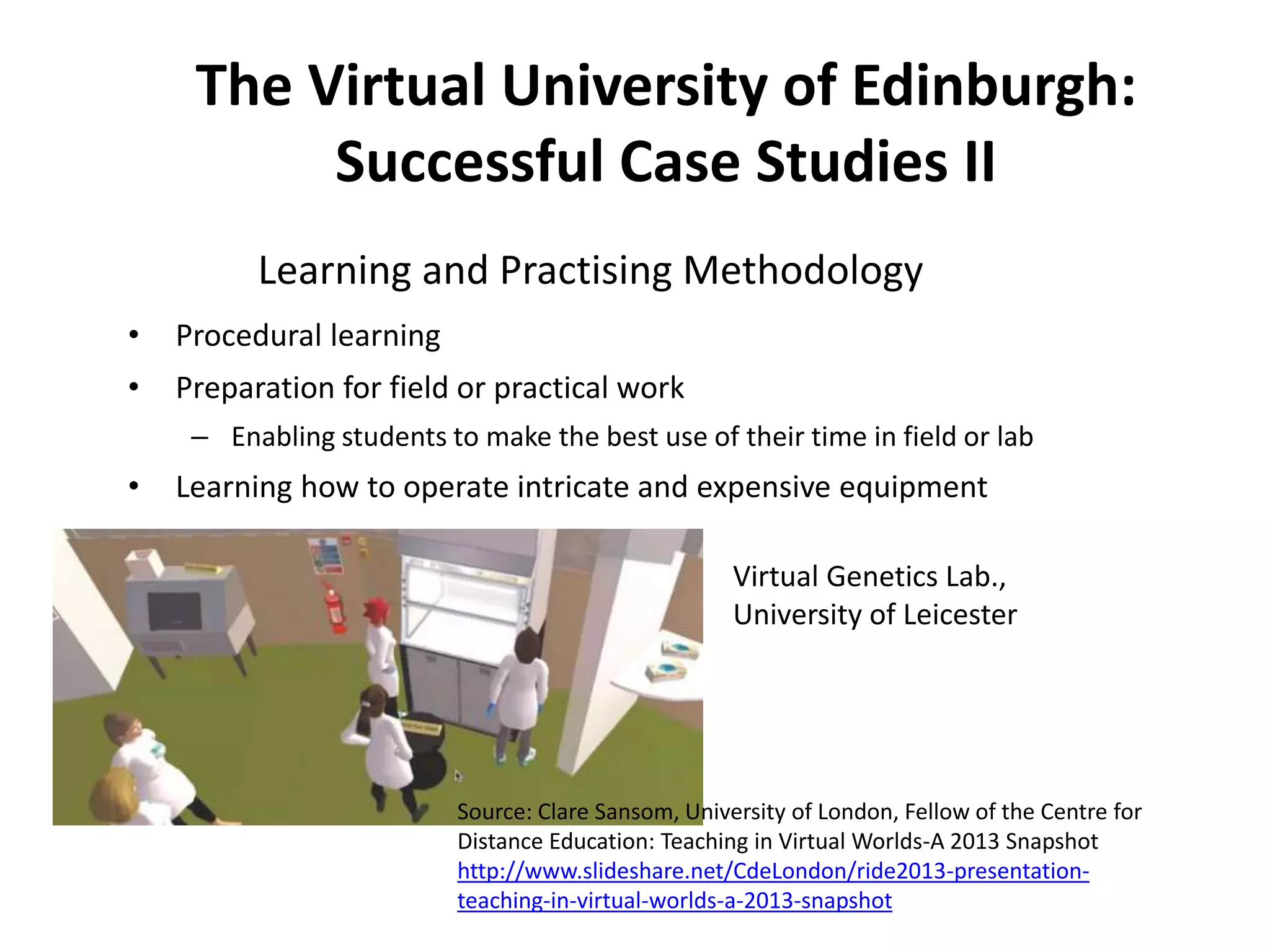
Successful Case Studies II
Learning and Practising Methodology
•

Procedural learning

•

Preparation for field or practical work
– Enabling students to make the best use of their time in field or lab

•

Learning how to operate intricate and expensive equipment
Virtual Genetics Lab.,
University of Leicester

Source: Clare Sansom, University of London, Fellow of the Centre for
Distance Education: Teaching in Virtual Worlds-A 2013 Snapshot
http://www.slideshare.net/CdeLondon/ride2013-presentationteaching-in-virtual-worlds-a-2013-snapshot
The Virtual University of
Edinburgh: Successful Case Studies
III
Exploring Digital Identity
• More “open ended” scenarios work well in psychology and
social science disciplines if the aim is to explore the students’
own perception of their in-world identity
• These rely on student understanding more than the other
case studies

Source: Clare Sansom, University of London, Fellow of the Centre for
Distance Education: Teaching in Virtual Worlds-A 2013 Snapshot
http://www.slideshare.net/CdeLondon/ride2013-presentationteaching-in-virtual-worlds-a-2013-snapshot
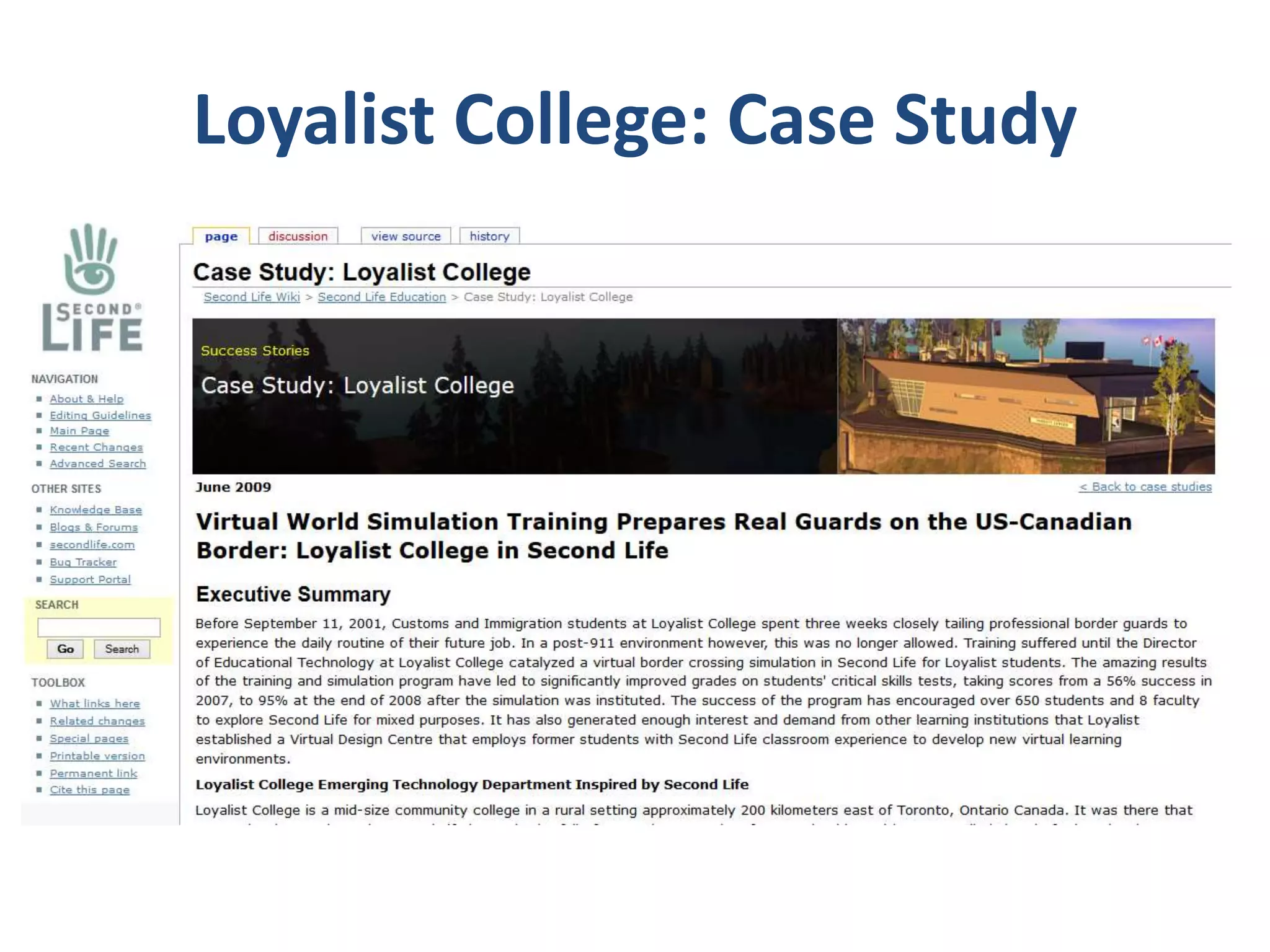
Loyalist College: Case Study
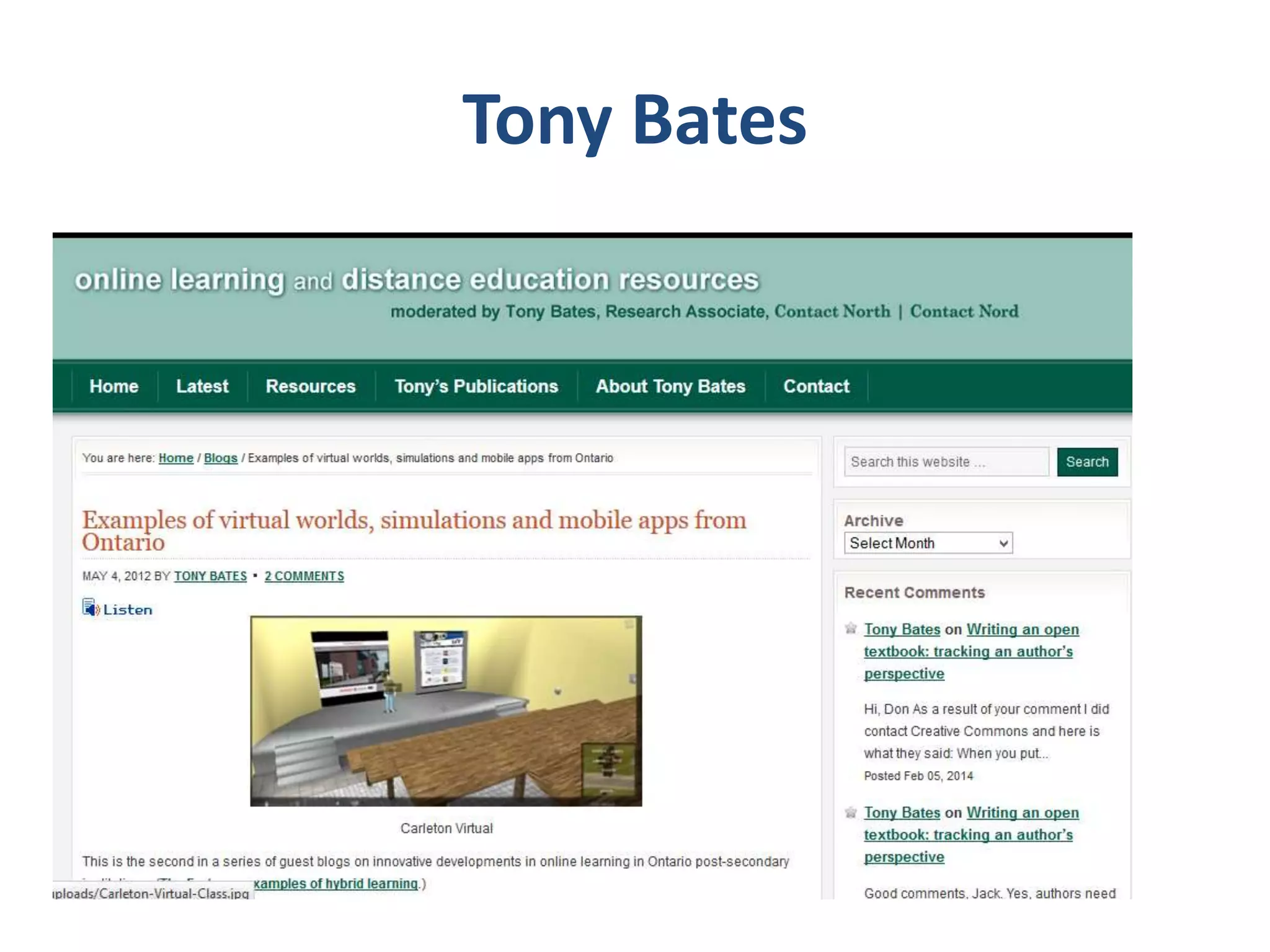
Tony Bates
Tony Bates
• Virtual worlds are successful in education because students identify
with the characters and the situations portrayed and so become
active participants in the events on screen. The learning from these
experiences carries over into real life applications. In an awardwinning and educationally successful project, the staff in the Virtual
World Design Centre created a virtual border crossing at which
students’ avatars take on the roles of border crossing guards,
interviewing travellers who present challenges of documentation,
prohibitions, smuggling, and difficult communication. The virtual
traveler interviews take place in class and each encounter is then
analyzed by the entire group so that best practices are
identified. Applications for completely online learning are being
investigated.
• - See more at: http://www.tonybates.ca/2012/05/04/examples-ofvirtual-worlds-simulations-and-mobile-apps-from-ontario
Personality Development…
• The students at Loyalist found the virtual
experience provided them with more than
enhanced content learning; they also developed
confidence, observational skills, and the capacity
to respond to developing situations.
• - See more at:
http://www.tonybates.ca/2012/05/04/examplesof-virtual-worlds-simulations-and-mobile-appsfrom-ontario
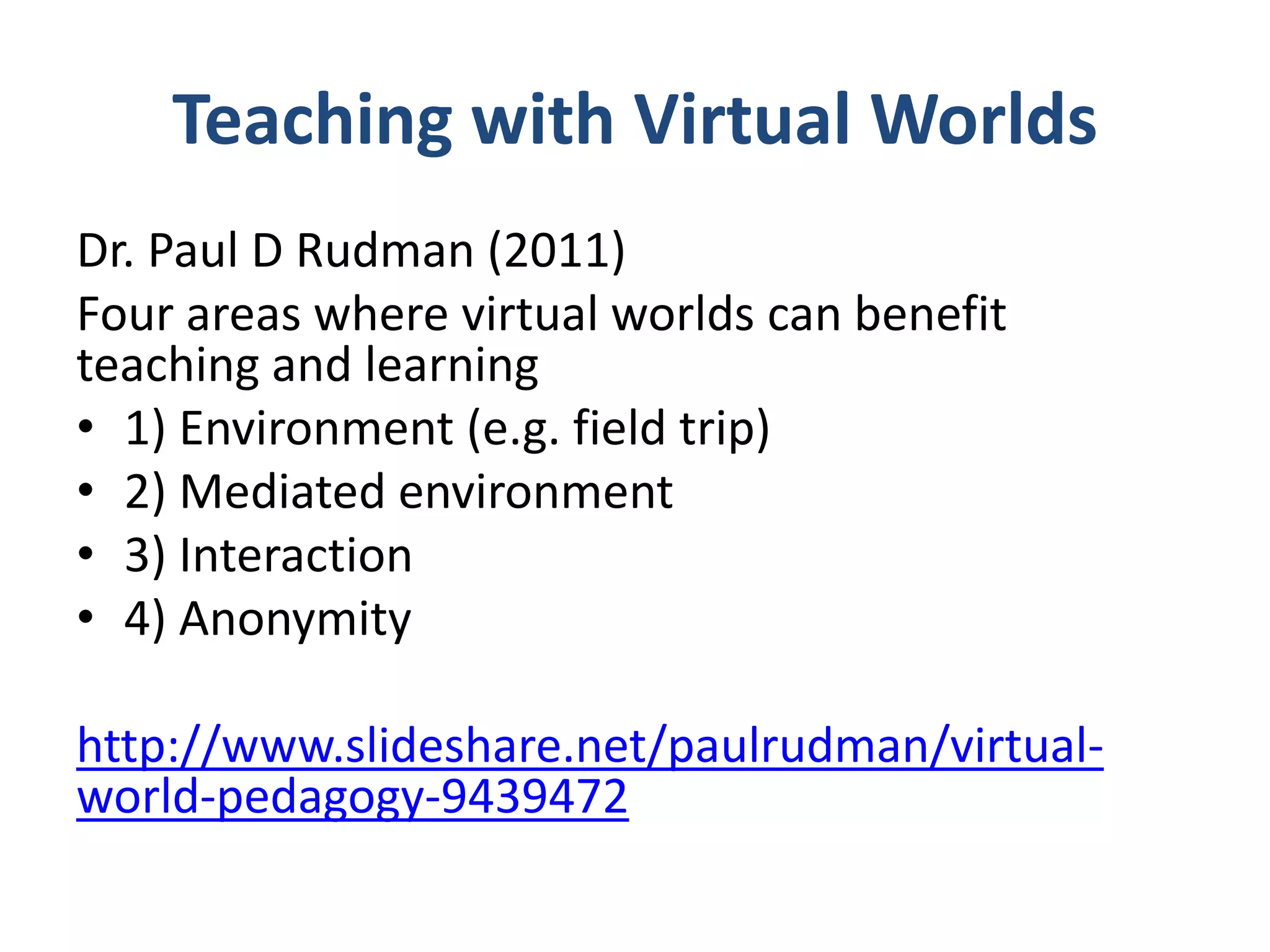
Teaching with Virtual Worlds
Dr. Paul D Rudman (2011)
Four areas where virtual worlds can benefit
teaching and learning
• 1) Environment (e.g. field trip)
• 2) Mediated environment
• 3) Interaction
• 4) Anonymity
http://www.slideshare.net/paulrudman/virtualworld-pedagogy-9439472
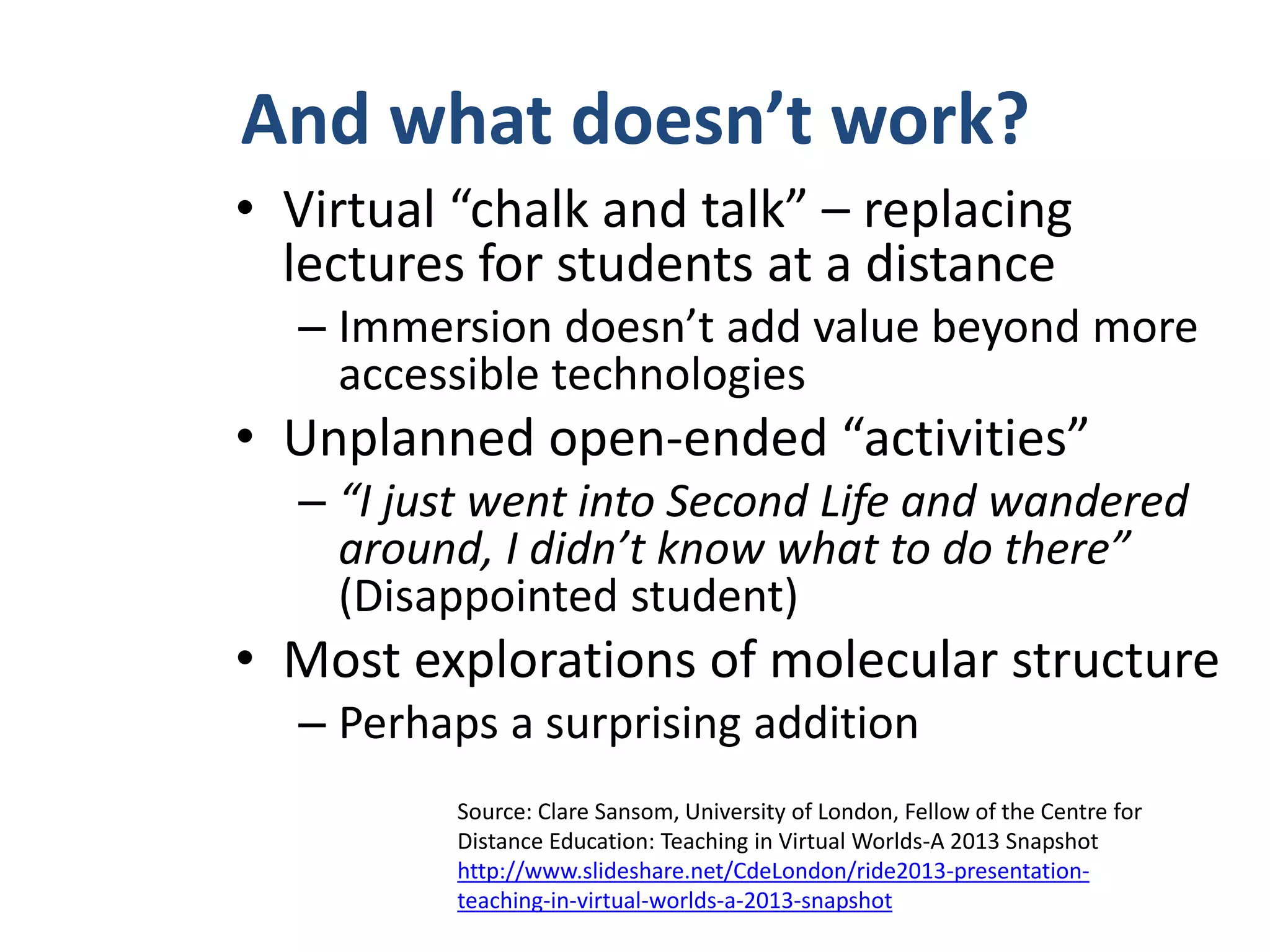
And what doesn’t work?
• Virtual “chalk and talk” – replacing
lectures for students at a distance
– Immersion doesn’t add value beyond more
accessible technologies

• Unplanned open-ended “activities”
– “I just went into Second Life and wandered
around, I didn’t know what to do there”
(Disappointed student)

• Most explorations of molecular structure
– Perhaps a surprising addition
Source: Clare Sansom, University of London, Fellow of the Centre for
Distance Education: Teaching in Virtual Worlds-A 2013 Snapshot
http://www.slideshare.net/CdeLondon/ride2013-presentationteaching-in-virtual-worlds-a-2013-snapshot
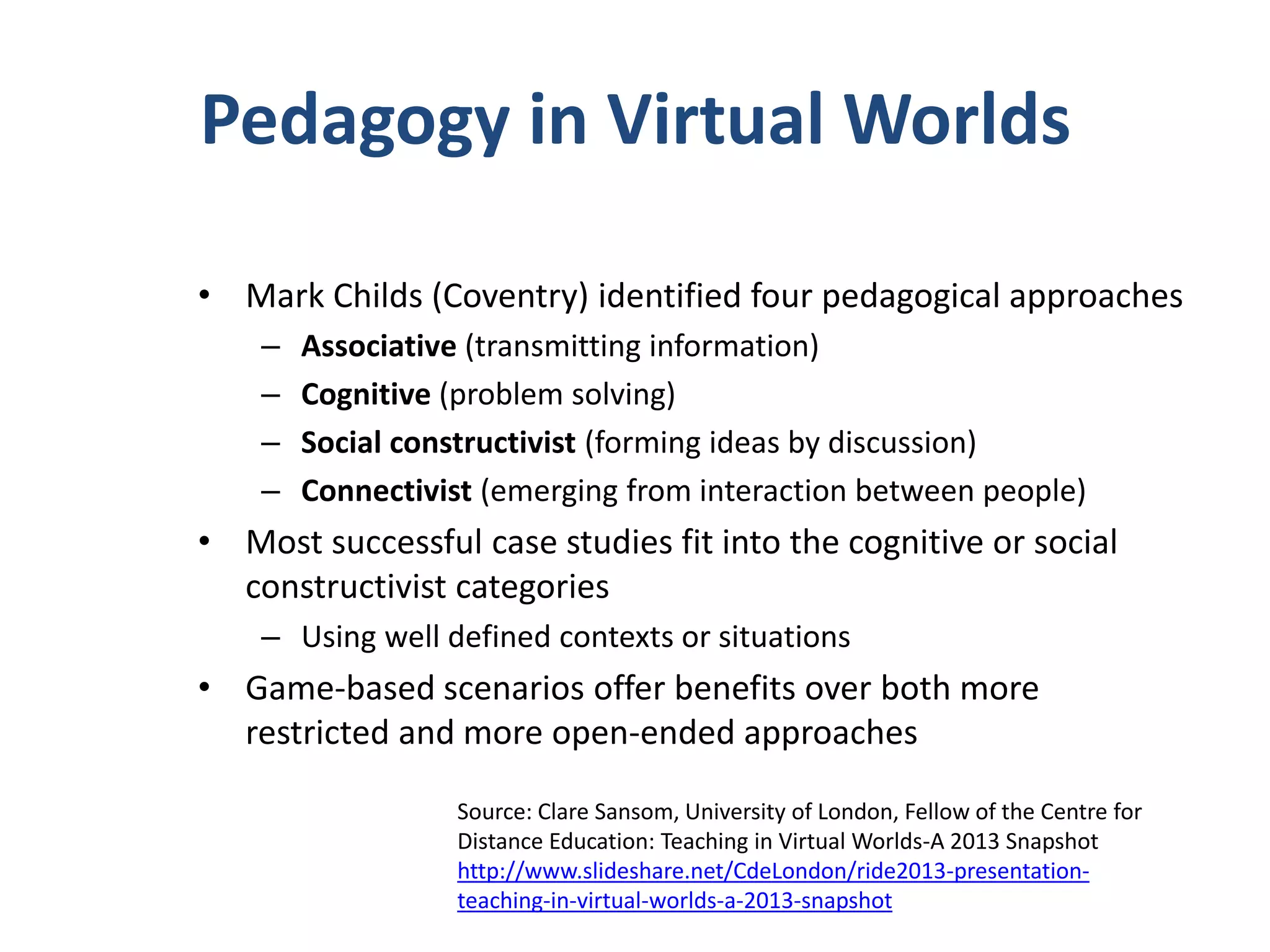
Pedagogy in Virtual Worlds
• Mark Childs (Coventry) identified four pedagogical approaches
–
–
–
–

Associative (transmitting information)
Cognitive (problem solving)
Social constructivist (forming ideas by discussion)
Connectivist (emerging from interaction between people)

• Most successful case studies fit into the cognitive or social
constructivist categories
– Using well defined contexts or situations

• Game-based scenarios offer benefits over both more
restricted and more open-ended approaches
Source: Clare Sansom, University of London, Fellow of the Centre for
Distance Education: Teaching in Virtual Worlds-A 2013 Snapshot
http://www.slideshare.net/CdeLondon/ride2013-presentationteaching-in-virtual-worlds-a-2013-snapshot
Thank you!

Virtual Worlds: Social Networking, Social Learning and Pedagogy

  • 1.
    8 February 2014 RameshSharma Virtual Worlds: Social Networking, Social Learning and Pedagogy
  • 2.
    Virtual Worlds: SocialNetworking, Social Learning and Pedagogy Thanks to Ines Puspita for allowing to use images from her SecondLife album
  • 3.
    3 kinds ofworlds The Real World, the Digital World (2D Web, Internet), and the Virtual World (3D Web). Susan Kish, 2007
  • 4.
    Emerging Universes • MMORPGs(massive multiplayer online games, such as World of Warcraft) • Metaverses (Virtual Worlds that are primarily social vs. game oriented, such as Second Life) • MMOLEs (focused on learning and training environments) • Intraverses (putting up a virtual world inside the corporate firewall) • Paraverses (often also called Mirror Worlds, such as Google Earth) http://www.lunchoverip.com/2007/10/second-life-vir.html
  • 5.
    What is avirtual world? • A virtual world or massively multiplayer online world (MMOW) is a computer-based simulated environment. • The term has become largely synonymous with interactive 3D virtual environments, where the users take the form of avatars visible to others. • These avatars usually appear textual, two-dimensional, or three-dimensional representations, although other forms, such as live video avatars, are possible, with auditory and touch sensations. • In general, virtual worlds allow for multiple users. Source: http://en.wikipedia.org/wiki/Virtual_world
  • 6.
    1 Billion VirtualWorld Users (And They’re Mostly Pre-Teen Girls.) Kristen Nicole | October 1st http://siliconangle.com/blog/2010/10/01/1-billion-virtual-world-users-and-theyre-mostly-pre-teen-girls/
  • 7.
  • 8.
    Virtual Worlds andMetaverse Platforms: Evolution Fully Graphic Massive Locales Text only MUD
  • 9.
  • 10.
  • 11.
  • 12.
  • 13.
  • 14.
  • 15.
  • 16.
    Virtual World andGame Change Update Tony O’Driscoll http://wadatripp.wordpress.com/2007/04/10/virtual-world-and-game-change-update/
  • 17.
  • 18.
  • 19.
    "Virtual Reality" coinedby Jaron Lanier of VPL 1986
  • 20.
    World Wide Web- created 1989
  • 21.
  • 22.
    Second Life, prealpha (aka LindenWorld) Aug 2001
  • 23.
  • 24.
  • 25.
    The NMC HorizonReport > 2014 Higher Education Edition Identifies top emerging technologies, trends, and challenges that will have a major impact on teaching, learning, and creative inquiry in pre-college education over the next five years. Most important key driver is that the education paradigms are shifting to include online learning, hybrid learning and collaborative models. Source: http://www.nmc.org/about
  • 26.
    What does NMCdo? Highlights six emerging technologies or practices that are likely to enter mainstream use with their focus sectors within three adoption horizons over the next five years.
  • 27.
    Key Trends AcceleratingHigher Education Technology Adoption
  • 28.
    Significant Challenges ImpedingHigher Education Technology Adoption
  • 29.
    Important Developments inEducational Technology for Higher Education
  • 30.
  • 31.
  • 32.
  • 33.
    Radioactive dating classat Natural History Museum of Vienna in Second Life
  • 34.
  • 35.
  • 36.
  • 37.
    Basics of DNAExtraction
  • 38.
    students to editthe "iBook" in SL
  • 39.
  • 40.
  • 41.
  • 42.
  • 43.
  • 44.
  • 45.
  • 46.
    The Virtual Universityof Edinburgh: Successful Case Studies I “Real Life” scenarios that are difficult in real life • Managing major incidents • Accident investigation and “triage” • Court based scenarios for law students “you can’t replicate the sense of immersion that Second Life offers the students even with role play”. Source: Clare Sansom, University of London, Fellow of the Centre for Distance Education: Teaching in Virtual Worlds-A 2013 Snapshot http://www.slideshare.net/CdeLondon/ride2013-presentationteaching-in-virtual-worlds-a-2013-snapshot
  • 47.
    The Virtual Universityof Edinburgh: Successful Case Studies II Learning and Practising Methodology • Procedural learning • Preparation for field or practical work – Enabling students to make the best use of their time in field or lab • Learning how to operate intricate and expensive equipment Virtual Genetics Lab., University of Leicester Source: Clare Sansom, University of London, Fellow of the Centre for Distance Education: Teaching in Virtual Worlds-A 2013 Snapshot http://www.slideshare.net/CdeLondon/ride2013-presentationteaching-in-virtual-worlds-a-2013-snapshot
  • 48.
    The Virtual Universityof Edinburgh: Successful Case Studies III Exploring Digital Identity • More “open ended” scenarios work well in psychology and social science disciplines if the aim is to explore the students’ own perception of their in-world identity • These rely on student understanding more than the other case studies Source: Clare Sansom, University of London, Fellow of the Centre for Distance Education: Teaching in Virtual Worlds-A 2013 Snapshot http://www.slideshare.net/CdeLondon/ride2013-presentationteaching-in-virtual-worlds-a-2013-snapshot
  • 49.
  • 50.
  • 51.
    Tony Bates • Virtualworlds are successful in education because students identify with the characters and the situations portrayed and so become active participants in the events on screen. The learning from these experiences carries over into real life applications. In an awardwinning and educationally successful project, the staff in the Virtual World Design Centre created a virtual border crossing at which students’ avatars take on the roles of border crossing guards, interviewing travellers who present challenges of documentation, prohibitions, smuggling, and difficult communication. The virtual traveler interviews take place in class and each encounter is then analyzed by the entire group so that best practices are identified. Applications for completely online learning are being investigated. • - See more at: http://www.tonybates.ca/2012/05/04/examples-ofvirtual-worlds-simulations-and-mobile-apps-from-ontario
  • 52.
    Personality Development… • Thestudents at Loyalist found the virtual experience provided them with more than enhanced content learning; they also developed confidence, observational skills, and the capacity to respond to developing situations. • - See more at: http://www.tonybates.ca/2012/05/04/examplesof-virtual-worlds-simulations-and-mobile-appsfrom-ontario
  • 53.
    Teaching with VirtualWorlds Dr. Paul D Rudman (2011) Four areas where virtual worlds can benefit teaching and learning • 1) Environment (e.g. field trip) • 2) Mediated environment • 3) Interaction • 4) Anonymity http://www.slideshare.net/paulrudman/virtualworld-pedagogy-9439472
  • 54.
    And what doesn’twork? • Virtual “chalk and talk” – replacing lectures for students at a distance – Immersion doesn’t add value beyond more accessible technologies • Unplanned open-ended “activities” – “I just went into Second Life and wandered around, I didn’t know what to do there” (Disappointed student) • Most explorations of molecular structure – Perhaps a surprising addition Source: Clare Sansom, University of London, Fellow of the Centre for Distance Education: Teaching in Virtual Worlds-A 2013 Snapshot http://www.slideshare.net/CdeLondon/ride2013-presentationteaching-in-virtual-worlds-a-2013-snapshot
  • 55.
    Pedagogy in VirtualWorlds • Mark Childs (Coventry) identified four pedagogical approaches – – – – Associative (transmitting information) Cognitive (problem solving) Social constructivist (forming ideas by discussion) Connectivist (emerging from interaction between people) • Most successful case studies fit into the cognitive or social constructivist categories – Using well defined contexts or situations • Game-based scenarios offer benefits over both more restricted and more open-ended approaches Source: Clare Sansom, University of London, Fellow of the Centre for Distance Education: Teaching in Virtual Worlds-A 2013 Snapshot http://www.slideshare.net/CdeLondon/ride2013-presentationteaching-in-virtual-worlds-a-2013-snapshot
  • 56.