WCETR-2012
                          Near East University


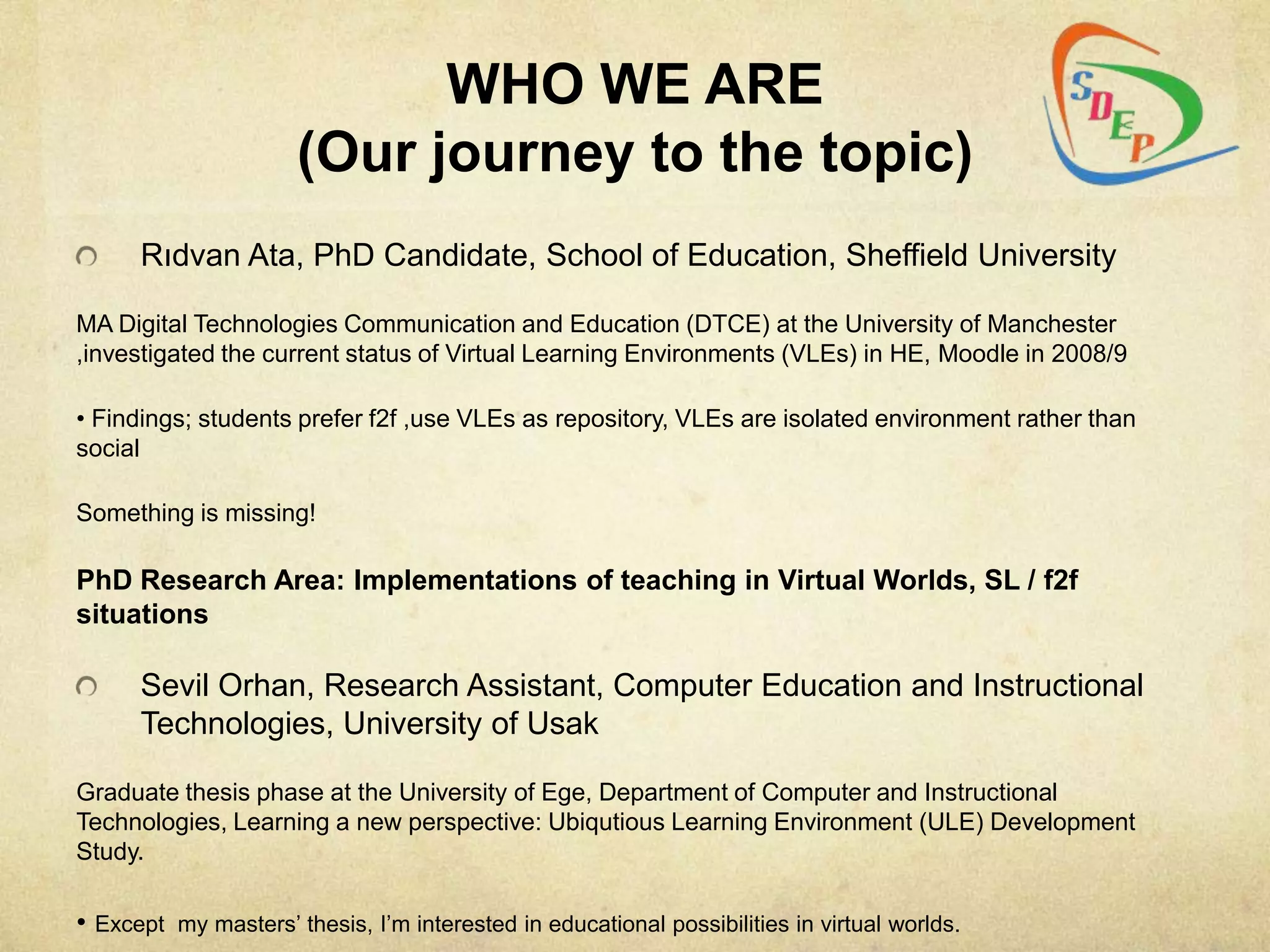
 An Implementation of Virtual Worlds
Platform for Educators in Second Life


                                                                   Rıdvan Ata
                                                            School of Education,
                                                       University of Sheffield, UK


                                                                  Sevil Orhan
                                                         Computer Education and
                                                       Instructional Technologies,
                                                        University of Usak, Turkey


         Slides copyright Ridvan Ata and Sevil Orhan
OUTLINE
 Who we are
 Virtual Worlds and Education
 Second Life (SL)
 Teaching and Learning Theories for Virtual Worlds
 Educational Possibilities of SL
 Infolit Ischool
 Virtual Worlds Platform For Educators (VWPfE)
 Reflections and Future Works
WHO WE ARE
                      (Our journey to the topic)
      Rıdvan Ata, PhD Candidate, School of Education, Sheffield University

MA Digital Technologies Communication and Education (DTCE) at the University of Manchester
,investigated the current status of Virtual Learning Environments (VLEs) in HE, Moodle in 2008/9

• Findings; students prefer f2f ,use VLEs as repository, VLEs are isolated environment rather than
social

Something is missing!

PhD Research Area: Implementations of teaching in Virtual Worlds, SL / f2f
situations

      Sevil Orhan, Research Assistant, Computer Education and Instructional
      Technologies, University of Usak

Graduate thesis phase at the University of Ege, Department of Computer and Instructional
Technologies, Learning a new perspective: Ubiqutious Learning Environment (ULE) Development
Study.

• Except my masters‟ thesis, I‟m interested in educational possibilities in virtual worlds.
Virtual Worlds,
Multi-User Virtual Environments
(MUVEs)
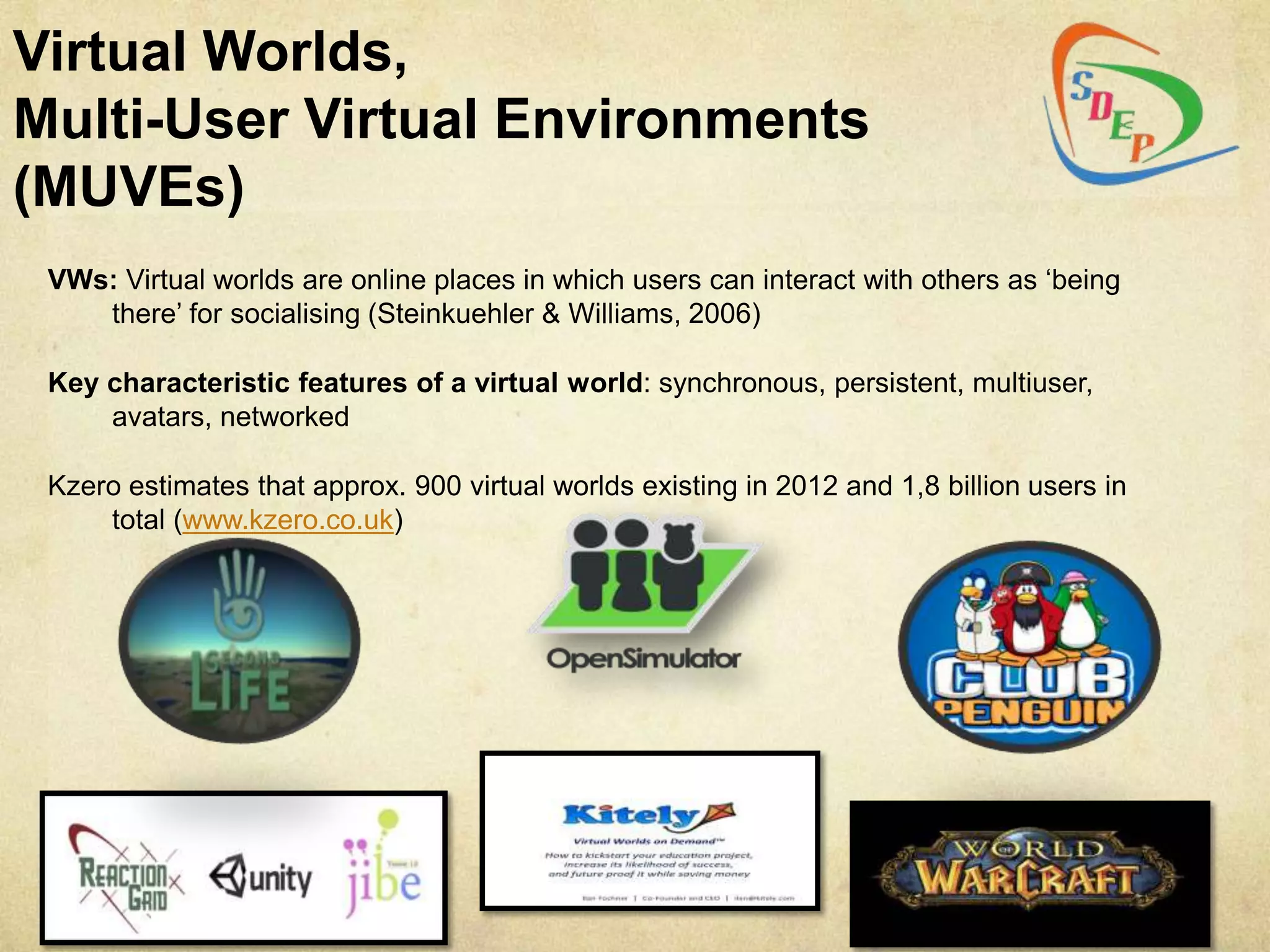
 VWs: Virtual worlds are online places in which users can interact with others as „being
    there‟ for socialising (Steinkuehler & Williams, 2006)

 Key characteristic features of a virtual world: synchronous, persistent, multiuser,
     avatars, networked

 Kzero estimates that approx. 900 virtual worlds existing in 2012 and 1,8 billion users in
     total (www.kzero.co.uk)
Second Life
     SL was publicly released by Linden Lab in San Francisco in 2003

     SL is described in its website as it is “a place to connect people, a place to shop, a
     place to work, a place to love, a place to explore, a place to be different, to be
     yourself” (http://secondlife.com)

     Users, called “Residents”, Total Residents: approx. 30 million | Residents
     online:46,041      at a time (http://gridsurvey.com, June 2012)

The prominent characteristic features of SL are:

     a user-generated environment, residents can develop shared content collaboratively
     upon common interest

     has economic transaction possibilities built in, for marketing based on Linden
     Dollars that leads to real world income ( 1$=approx. 300 L$)

     hosts many educational events including in-world classes, academic
     conferences, seminars, demonstrations, exhibitions and a great number of
     educational institutions from around the world have islands in SL
Education in Second Life

 Linden Lab (2010) has announced that about 800 educational institutions
     including Harvard, Oxford, Imperial College, which 60 of those are in top
     100 universities, and best           companies such as IBM, US Air Force are
     actively using SL.

 Main Subject Areas
                                              o     Art and Fashion.

 o   Health and Medicine.                     o     Legal Training.
                                              o     Theatre and Drama.
 o   Nursing Training.
                                              o     Computer                Science
 o   Midwifery.                                     Programming.
                                              o     Crime Scene Training.
 o   Health and Safety Training.
                                              o       Languages, esp. Spanish
                                             Slide from presentation by John Kirriemuir, April 2010
 o   Physics Simulations e.g. wind turbines. Virtual Worlds in Education: Why?
                                             http://www.slideshare.net/VirtualWorldWatch/sheffield-april-2010
 o   Information Science Theory.
Teaching and Learning Theories

   A review of current literature indicates that Community of Practice (CoP)
   (Lave    and    Wenger     1998),    connectivism      (Siemens,   2004),   social
   constructivism (Bronack et al. 2006, Dede 1995, Garrison et al. 2000, Salt
   et al. 2008) situated cognition, Heidegger (1962), Brown et al. (1989) are
   the emerging theories for MUVEs.

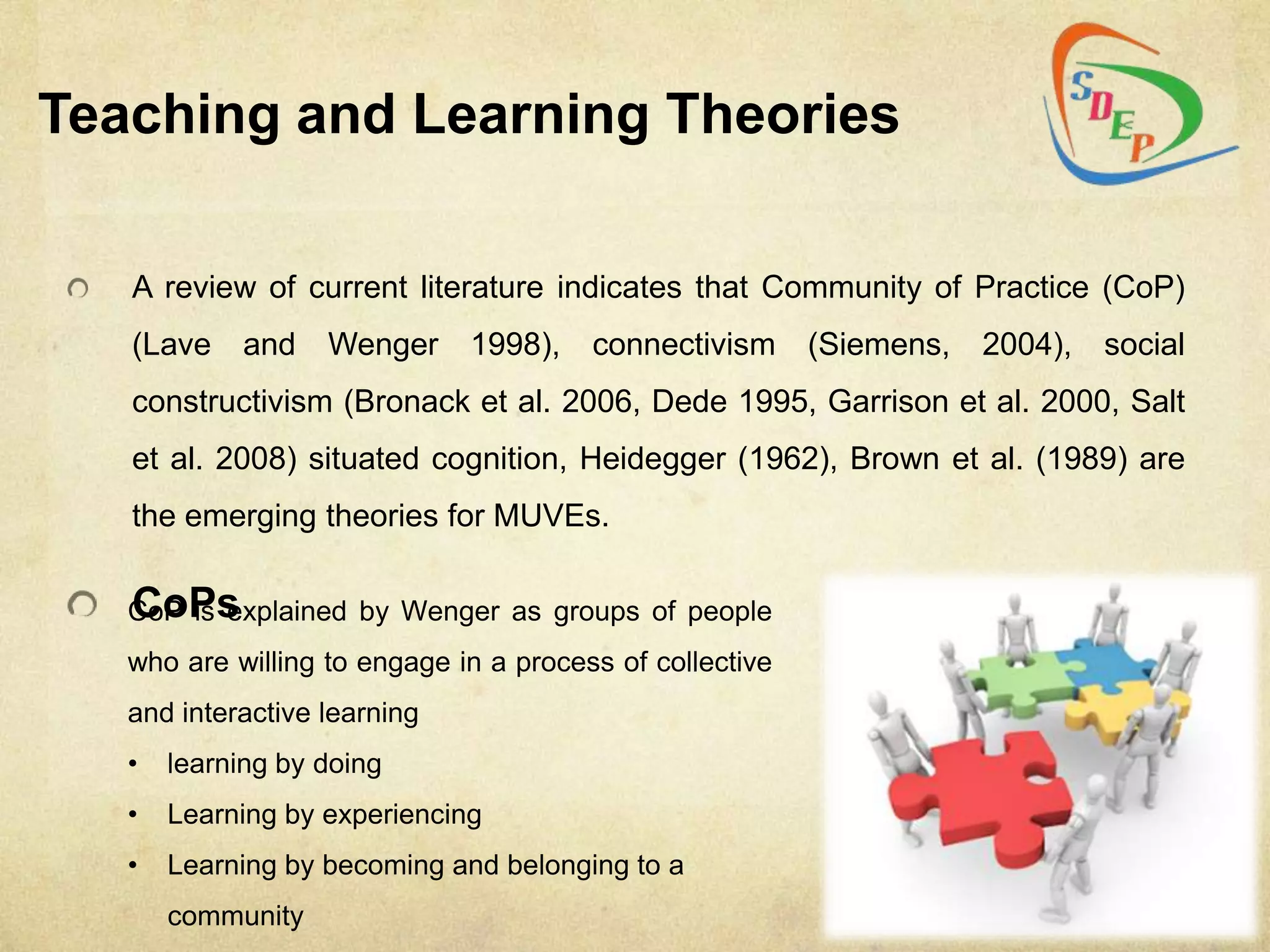
   CoPs
   CoP is explained by Wenger as groups of people
   who are willing to engage in a process of collective
   and interactive learning
   •   learning by doing
   •   Learning by experiencing
   •   Learning by becoming and belonging to a
       community
Connectivism
Siemens offers the idea of connectivism that characterizes learning as a process of
connecting information sources and specialized nodes, i.e., the right people in the
right context.

 •   Learning is no longer about content transfer, teaching takes place in an
     authentic environment, learning consists of engagement, experimentation and
     communication

 •   Users of SL are interconnected


Social Constructivism

Social constructivism refers to social interaction, collaboration and thinking. It
means that knowledge is built through joint interactions and learning processes
could be more productive through social settings by negotiation and sharing as
Situated Cognition


Collins   et   al.   (1989)   suggests   that   learning   is   inseparable   from
activity, context, culture and language. In this approach, knowledge is
developed as a social activity but also through interactions with others, tools
and materials.

•   Learning through experiences.

•   Practicing which may be impossible or tremendously costly to simulate in
    real life.
Example Learning Methods
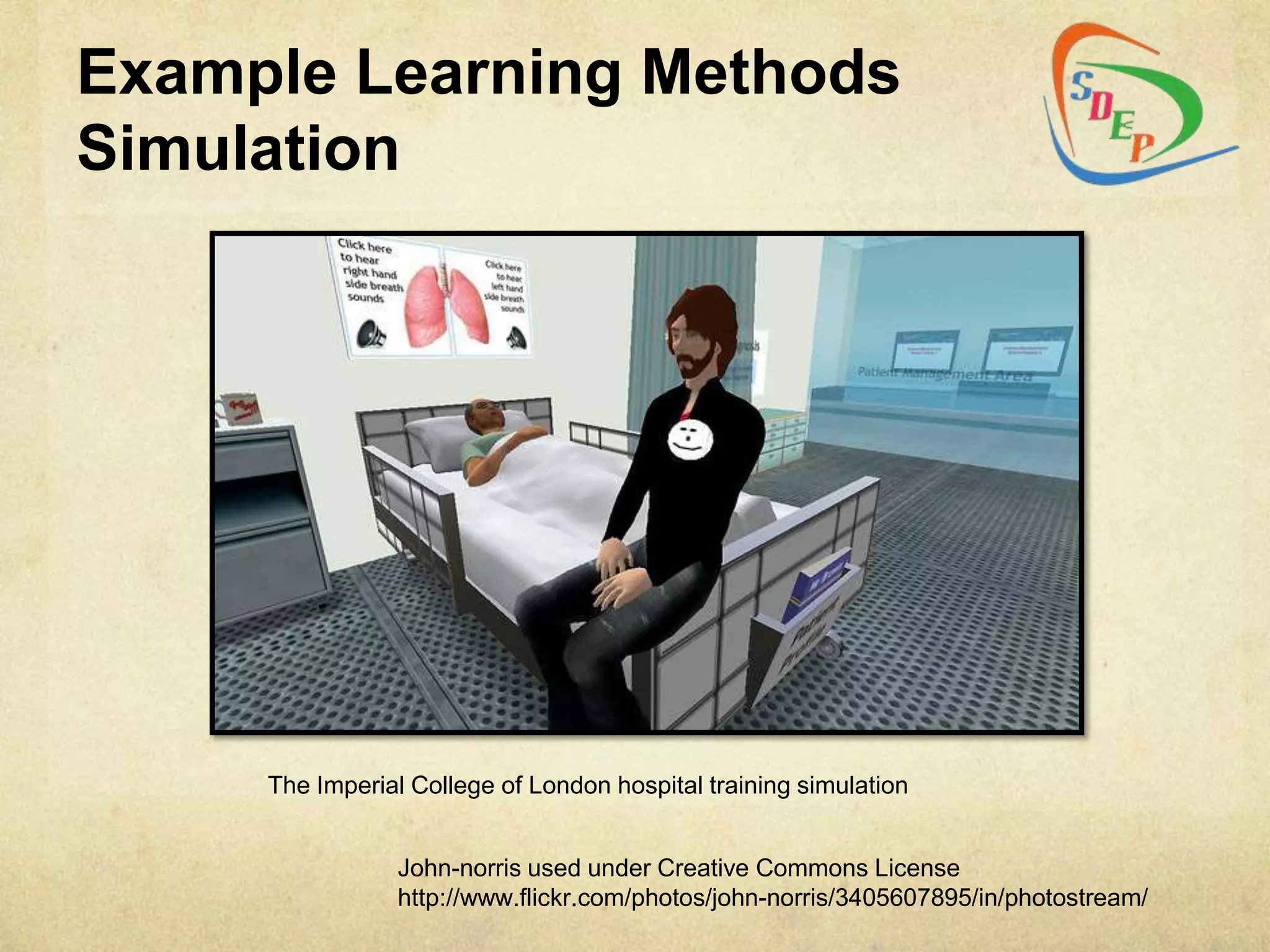
Simulation


     The Imperial College of London hospital training simulation


                John-norris used under Creative Commons License
                http://www.flickr.com/photos/john-norris/3405607895/in/photostream/
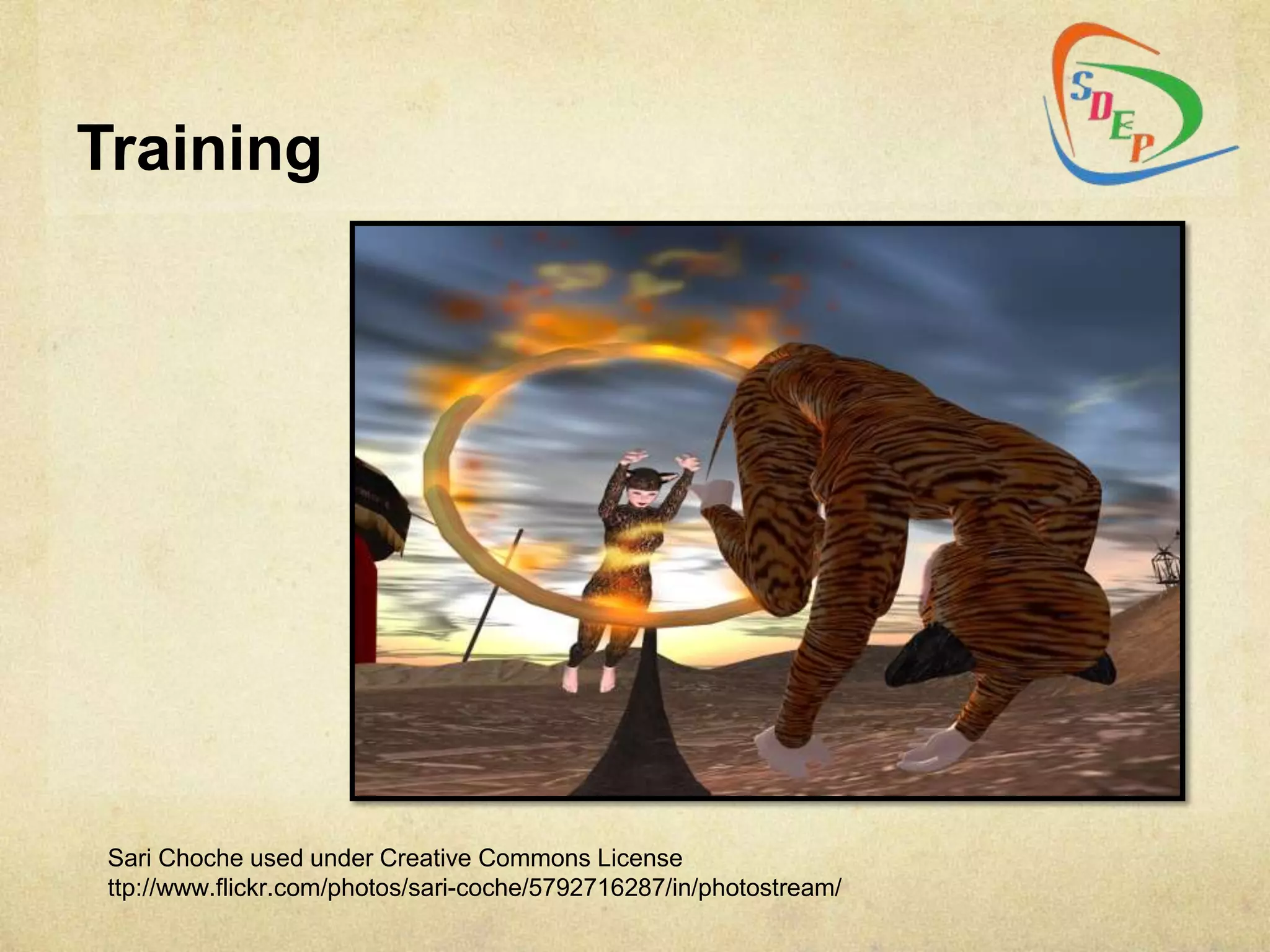
Training


 Sari Choche used under Creative Commons License
 ttp://www.flickr.com/photos/sari-coche/5792716287/in/photostream/
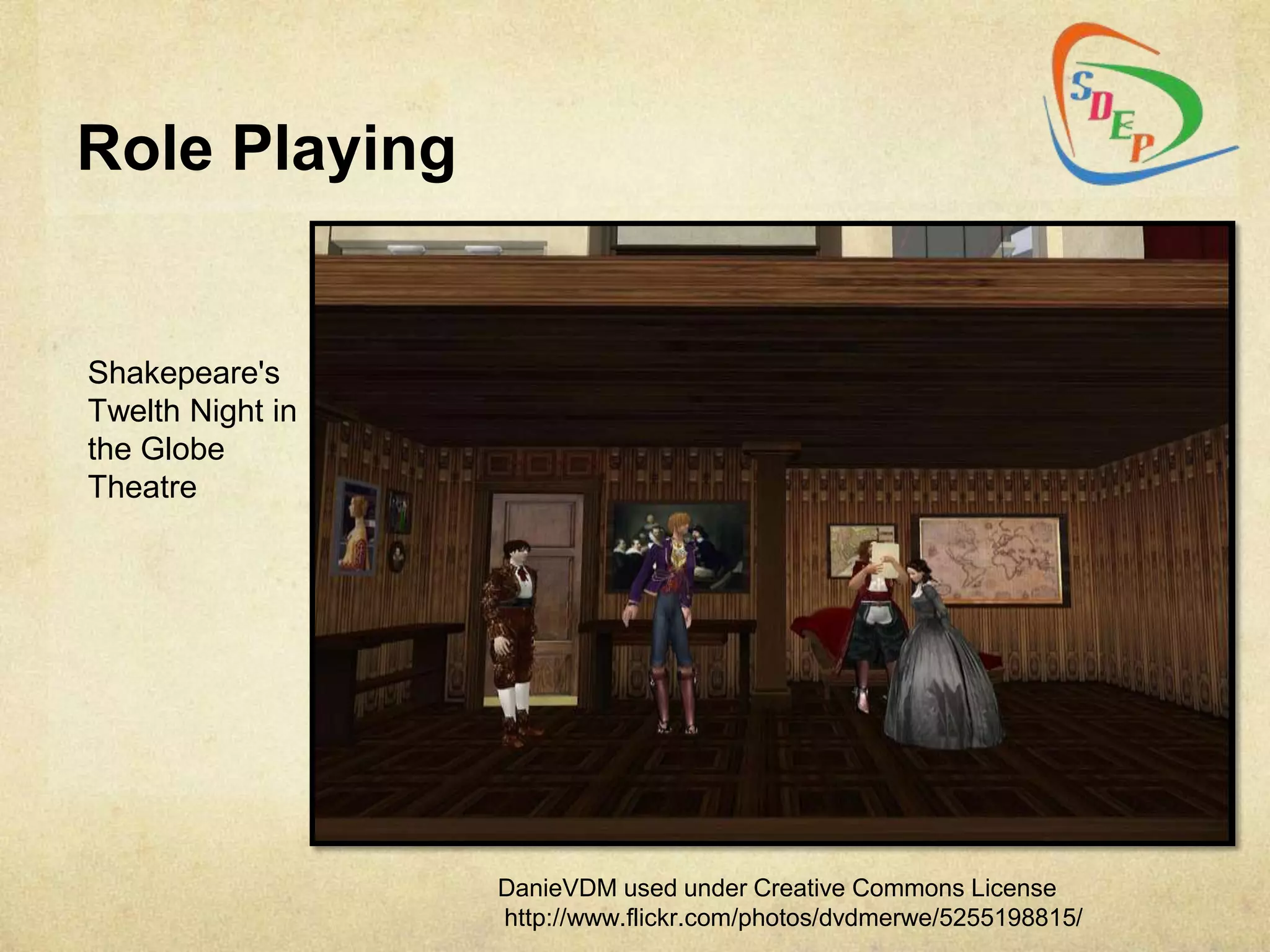
Role Playing


Shakepeare's
Twelth Night in
the Globe
Theatre


                  DanieVDM used under Creative Commons License
                  http://www.flickr.com/photos/dvdmerwe/5255198815/
Virtual Worlds Platform For
Educators (VWPfE)


•   We aim to bring together educators who have similar interest from the
    different universities in Turkey to share information, experiences and their
    studies and to improve their skills and knowledge regarding pedagogy and
    virtual worlds.

•   For this purpose, we formed “Virtual Worlds Platform for Educators
    (VWPfE)” in Second Life (SL).

•   Educators who have similar interests from the different universities in
    Turkey come together on a regular basis through weekly themes for the
    academic meetings at Infolit iSchool island in SL, since March 2012.
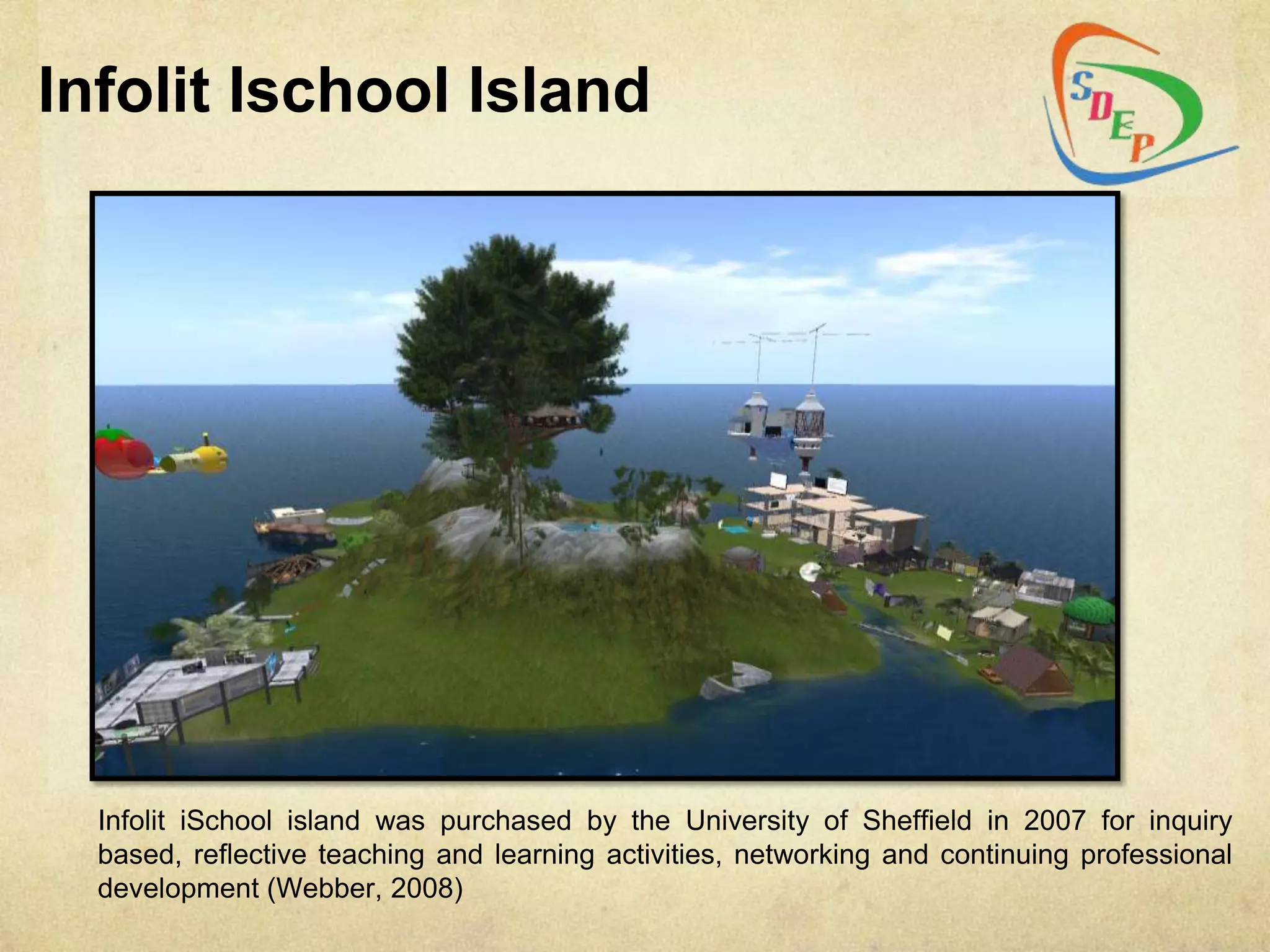
Infolit Ischool Island


  Infolit iSchool island was purchased by the University of Sheffield in 2007 for inquiry
  based, reflective teaching and learning activities, networking and continuing professional
  development (Webber, 2008)
Virtual Worlds Platform
For Educators (VWPfE)


 We first created,


 •   Facebook group page in order to announce the weekly events and provide
     interaction between educators, then,

 •   a logo to represent the platform with a symbol. Finally,

 •   a blog to publish the entries of the meetings.
Virtual Worlds Platform For
Educators (VWPfE)

•   In determining the time of the events, due to technical and institutional
    issues such as permits cannot be obtained, the most convenient date and
    time zone for the participation were determined with a survey on the
    Facebook group page. Eventually, educators come together on a regular
    basis on Wednesdays between 22.00 and 23.00.

•   The number of the participants was imperfect in the early beginning of the
    weeks but gradually increased and reached around 12 participants from
    different institutions such as Anatolian University, Middle East Technical
    University (METU), Ege University, Usak University, Bahcesehir University
    and Sheffield University.
Event Schedule and Content


We shaped a event schedule with brainstorming, presentation and open
   forums.

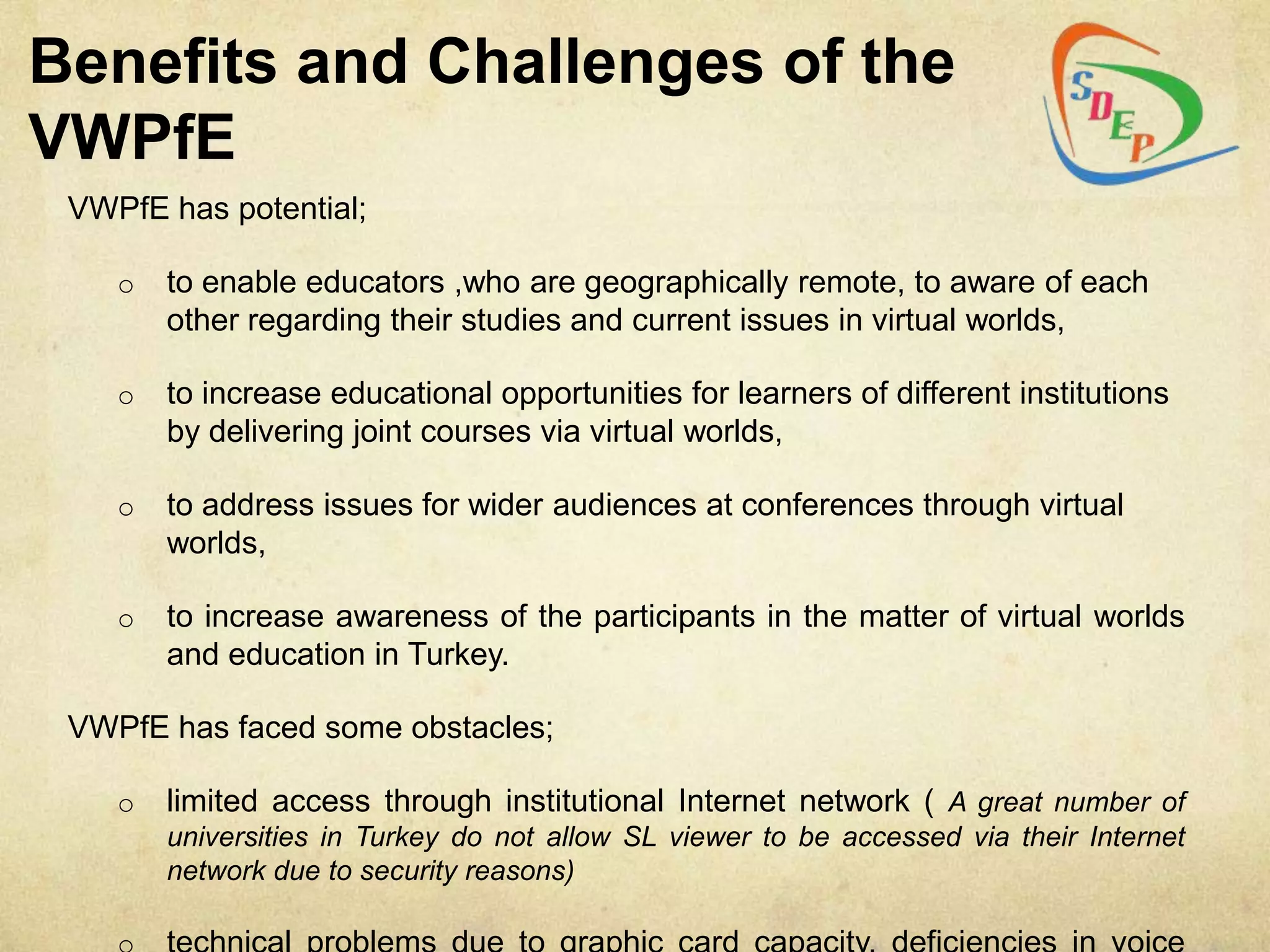
Presentations: VWPfE holds monthly presentations that are given by the
    specialized speaker in voice on the topic of the week. Once the speakers
    have finished their presentation in voice, they respond the participants‟
    questions in text-chat. In addition, the presentations is enriched by the
    materials such as PowerPoint files, videos and pictures in SL.
Event Schedule and Content


Open Forums: VWPfE holds bimonthly open forms in order to enable
    participants to discuss and share any ideas regarding education and virtual
    worlds. Open forums are essential for the platform since participants share
    their experiences in virtual worlds and have flexibility to discuss any
    subjects, which were not talked in the previous weeks.

Brainstorming: Brainstorming is the main part of the events since participants
    share and discusses their ideas on the announced topic with each other in
    a text-chat to find solutions for their problems experienced in virtual worlds.
    They also share any materials related to the topic.
Event Schedule
 Virtual Worlds Education Roundtable (VWER), which is held in SL
 every Thursday evenings at 21.30 (TSI), was an essential resource
 for determination of the discussion topics in VWPfE. Also, topics
 were shaped from general issues to specific issues regarding
 education and virtual worlds.

 Table 1: The weekly scheduleNewbies, and Second Life for 15 weeks.
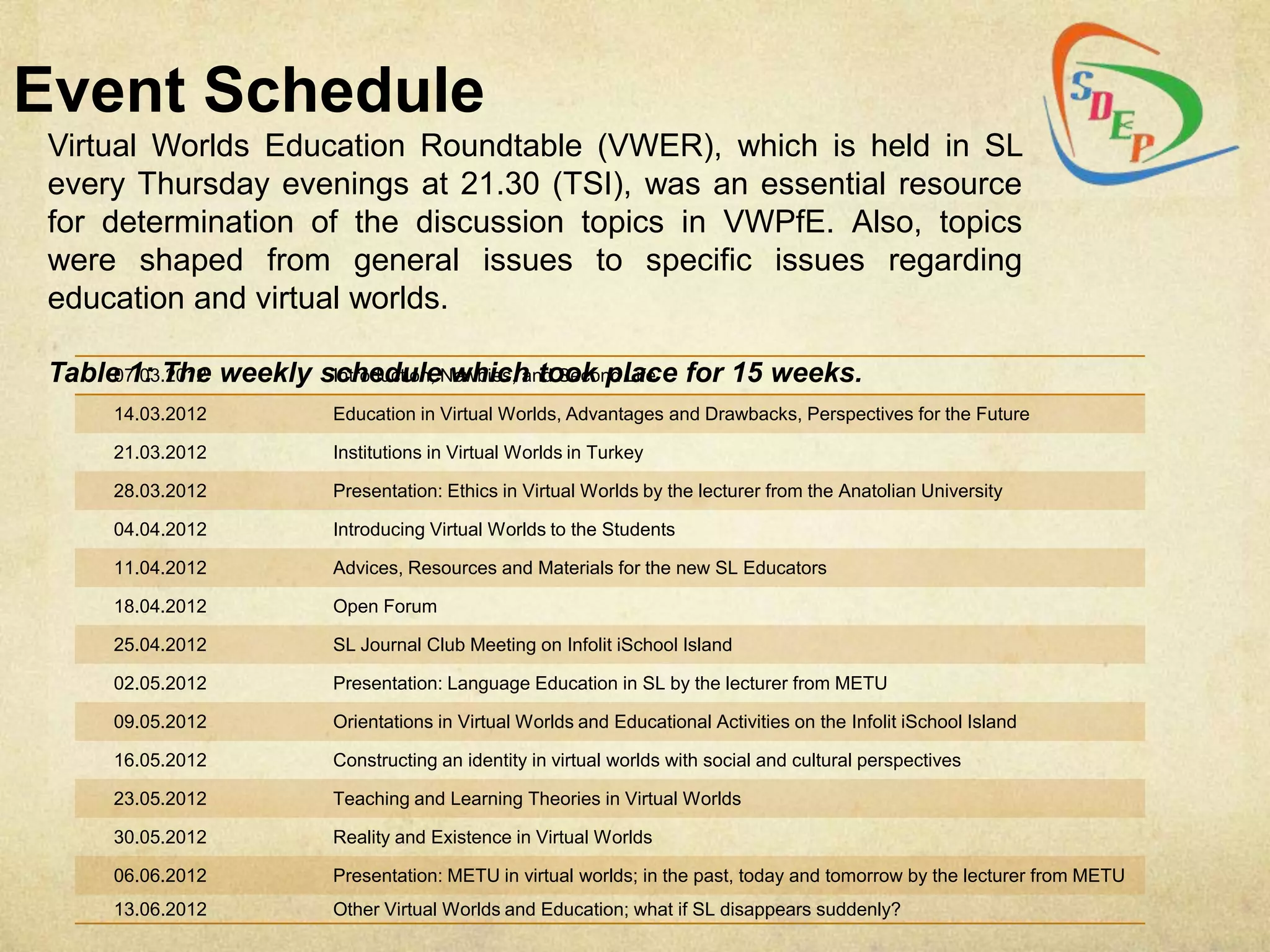
      07.03.2012      Introduction, which took place

      14.03.2012        Education in Virtual Worlds, Advantages and Drawbacks, Perspectives for the Future

      21.03.2012        Institutions in Virtual Worlds in Turkey

      28.03.2012        Presentation: Ethics in Virtual Worlds by the lecturer from the Anatolian University

      04.04.2012        Introducing Virtual Worlds to the Students

      11.04.2012        Advices, Resources and Materials for the new SL Educators

      18.04.2012        Open Forum

      25.04.2012        SL Journal Club Meeting on Infolit iSchool Island

      02.05.2012        Presentation: Language Education in SL by the lecturer from METU

      09.05.2012        Orientations in Virtual Worlds and Educational Activities on the Infolit iSchool Island

      16.05.2012        Constructing an identity in virtual worlds with social and cultural perspectives

      23.05.2012        Teaching and Learning Theories in Virtual Worlds

      30.05.2012        Reality and Existence in Virtual Worlds

      06.06.2012        Presentation: METU in virtual worlds; in the past, today and tomorrow by the lecturer from METU
      13.06.2012        Other Virtual Worlds and Education; what if SL disappears suddenly?
Some Photos of the
Events


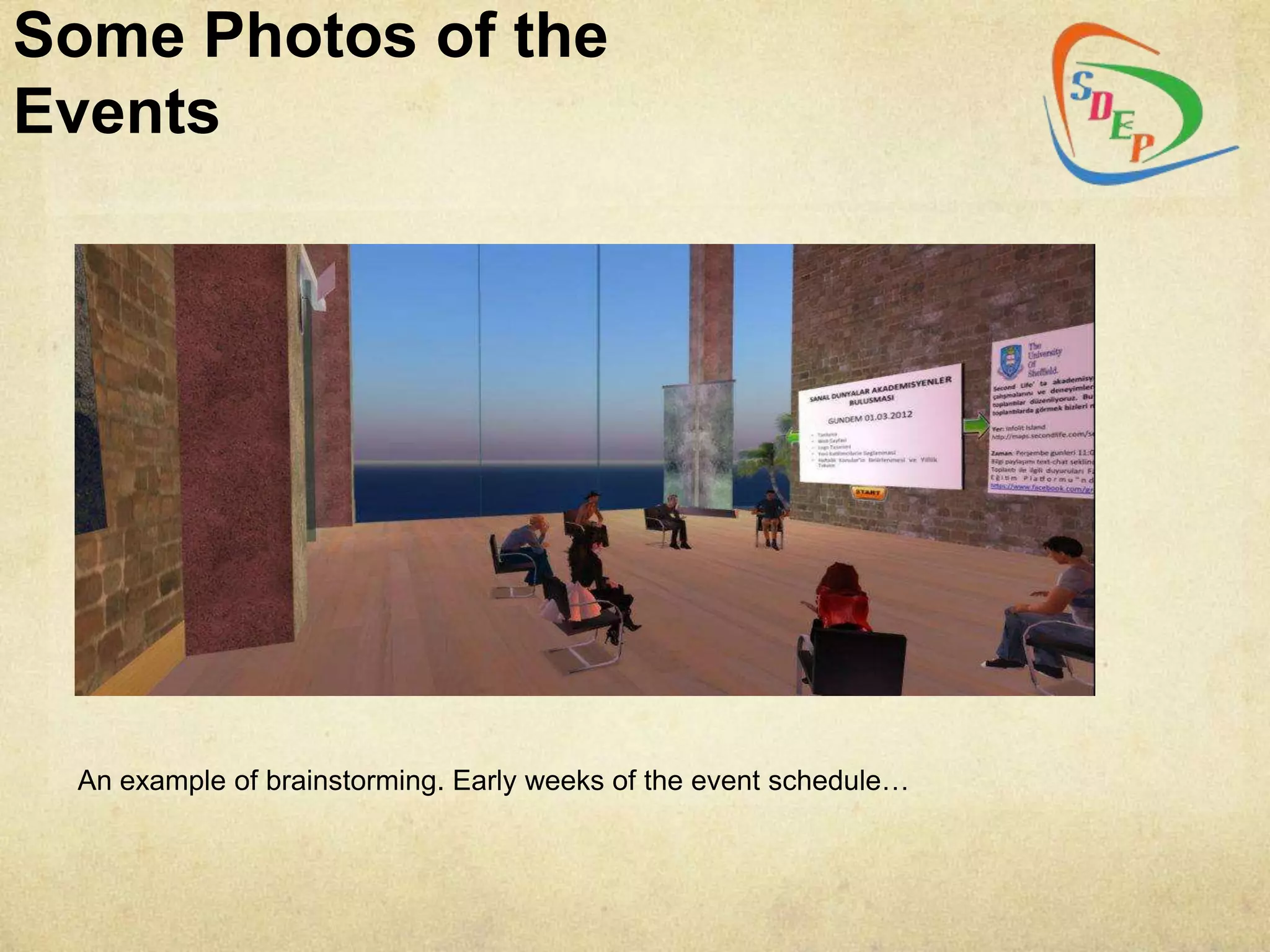
 An example of brainstorming. Early weeks of the event schedule…
Some Photos of Events


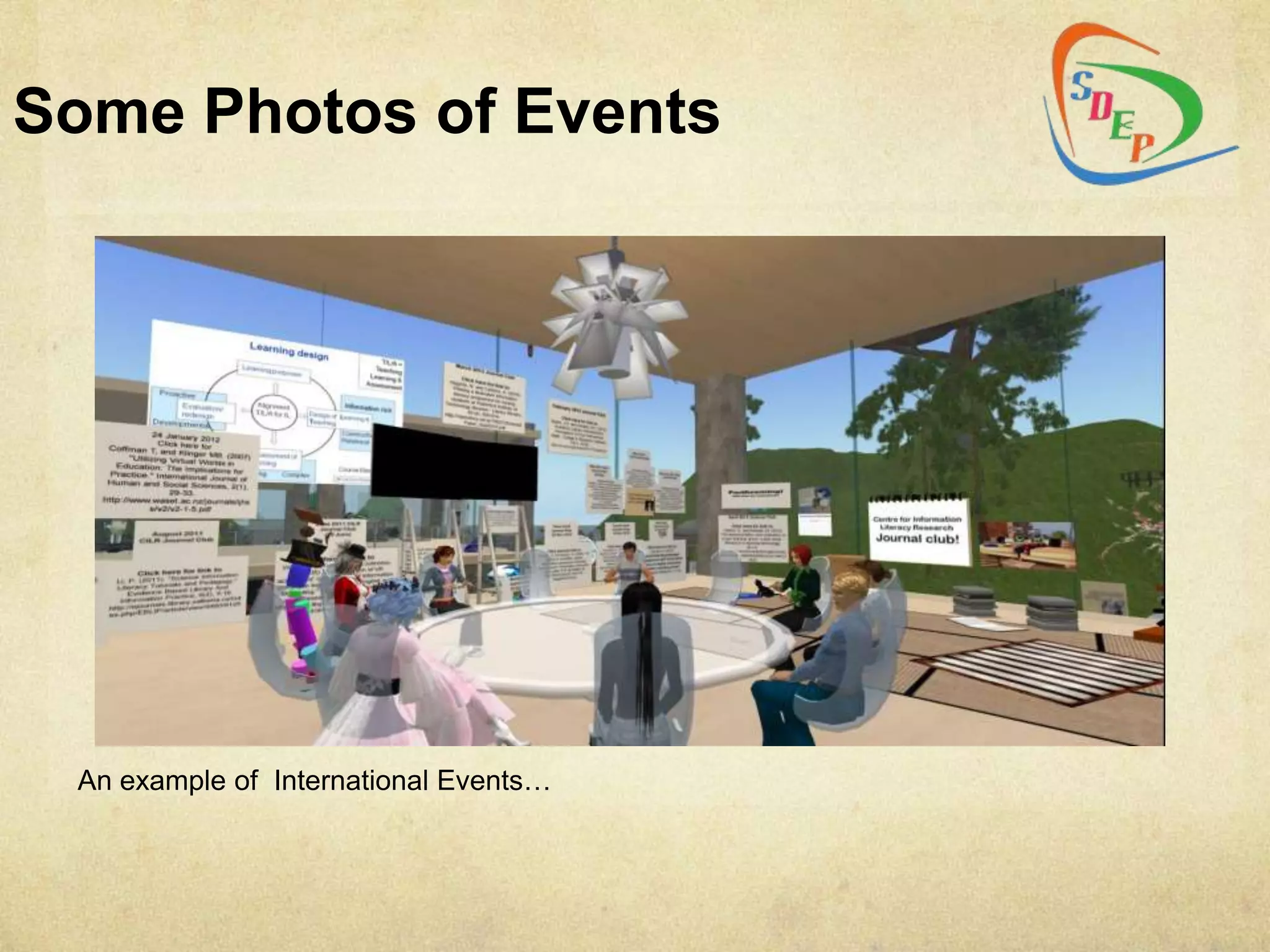
 An example of Open Forums…
Some Photos of Events


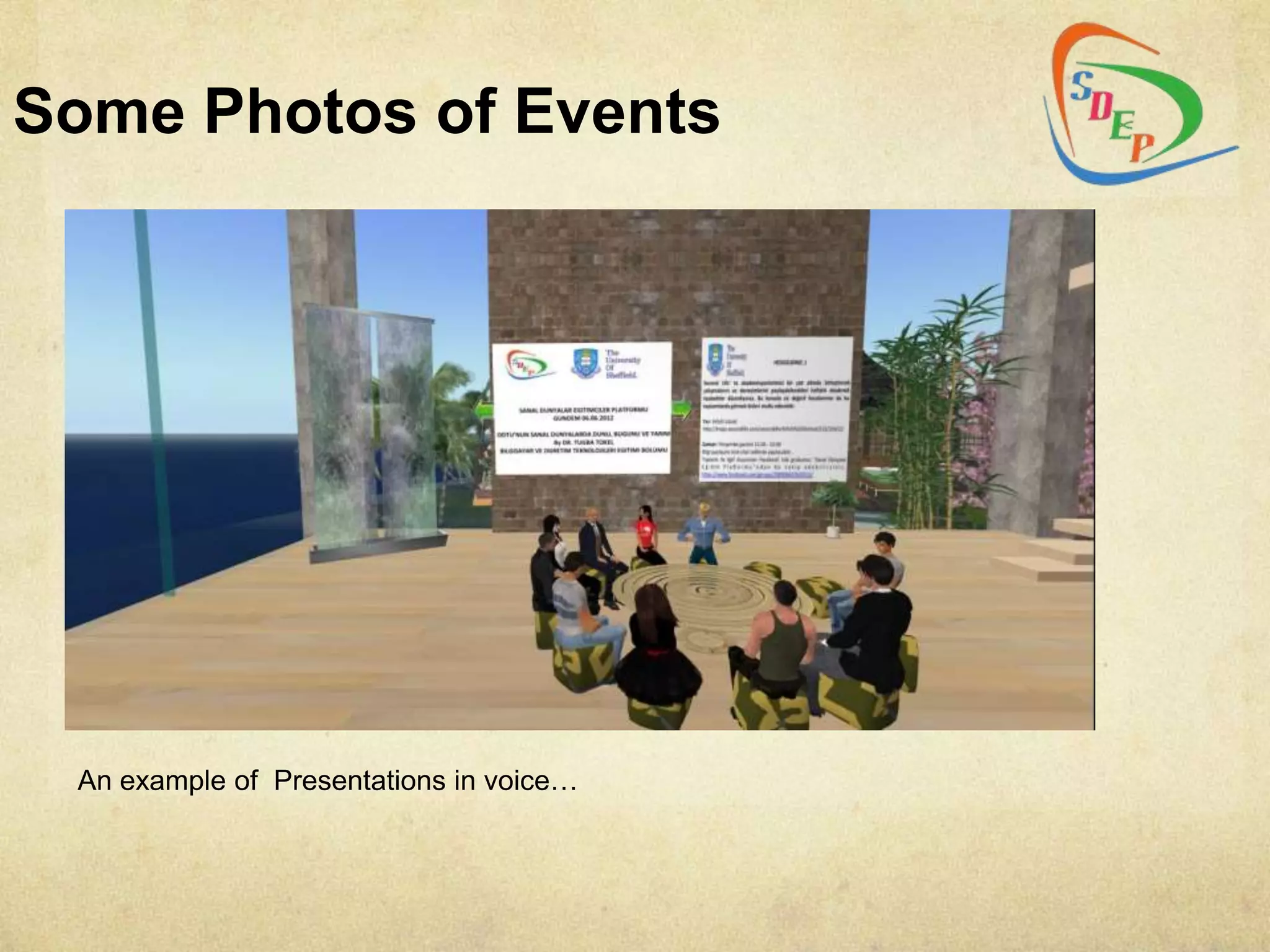
 An example of International Events…
Some Photos of Events


 An example of Presentations in voice…
Benefits and Challenges of the
VWPfE
 VWPfE has potential;

    o   to enable educators ,who are geographically remote, to aware of each
        other regarding their studies and current issues in virtual worlds,

    o   to increase educational opportunities for learners of different institutions
        by delivering joint courses via virtual worlds,

    o   to address issues for wider audiences at conferences through virtual
        worlds,

    o   to increase awareness of the participants in the matter of virtual worlds
        and education in Turkey.

 VWPfE has faced some obstacles;

    o   limited access through institutional Internet network ( A great number of
        universities in Turkey do not allow SL viewer to be accessed via their Internet
        network due to security reasons)
Reflections and Future Works


o   We aim to improve VWPfE to deliver some joint course in SL in the near
    future.

o   We also believe that VWPfE can be a place to hold conferences for wider
    audiences to address issues.


•   To sum up, VWPfE could be a common bridge between institutions in
    Turkey in the near future to make a supportive community for educators to
    network and work toward their goal.
Mail and addresses
o   Place of the VWPfE:
    http://maps.secondlife.com/secondlife/Infolit%20iSchool/152/234/22

o   Date/Time: Every Wednesday of the week/22.00-23.00

o   Facebook group: https://www.facebook.com/groups/290906427620313/

o   VWPfE blog: sdepturkiye.wordpress.com

o   e-mail: sdepturkiye@yandex.com

o   Infolit School island: http://maps.secondlife.com/secondlife/Infolit
    iSchool/116/192/22/
Thank you!


             Questions!

WCETR 2012 VWPfE presentation

  • 1.
    WCETR-2012 Near East University An Implementation of Virtual Worlds Platform for Educators in Second Life Rıdvan Ata School of Education, University of Sheffield, UK Sevil Orhan Computer Education and Instructional Technologies, University of Usak, Turkey Slides copyright Ridvan Ata and Sevil Orhan
  • 2.
    OUTLINE Who weare Virtual Worlds and Education Second Life (SL) Teaching and Learning Theories for Virtual Worlds Educational Possibilities of SL Infolit Ischool Virtual Worlds Platform For Educators (VWPfE) Reflections and Future Works
  • 3.
    WHO WE ARE (Our journey to the topic) Rıdvan Ata, PhD Candidate, School of Education, Sheffield University MA Digital Technologies Communication and Education (DTCE) at the University of Manchester ,investigated the current status of Virtual Learning Environments (VLEs) in HE, Moodle in 2008/9 • Findings; students prefer f2f ,use VLEs as repository, VLEs are isolated environment rather than social Something is missing! PhD Research Area: Implementations of teaching in Virtual Worlds, SL / f2f situations Sevil Orhan, Research Assistant, Computer Education and Instructional Technologies, University of Usak Graduate thesis phase at the University of Ege, Department of Computer and Instructional Technologies, Learning a new perspective: Ubiqutious Learning Environment (ULE) Development Study. • Except my masters‟ thesis, I‟m interested in educational possibilities in virtual worlds.
  • 4.
    Virtual Worlds, Multi-User VirtualEnvironments (MUVEs) VWs: Virtual worlds are online places in which users can interact with others as „being there‟ for socialising (Steinkuehler & Williams, 2006) Key characteristic features of a virtual world: synchronous, persistent, multiuser, avatars, networked Kzero estimates that approx. 900 virtual worlds existing in 2012 and 1,8 billion users in total (www.kzero.co.uk)
  • 5.
    Second Life SL was publicly released by Linden Lab in San Francisco in 2003 SL is described in its website as it is “a place to connect people, a place to shop, a place to work, a place to love, a place to explore, a place to be different, to be yourself” (http://secondlife.com) Users, called “Residents”, Total Residents: approx. 30 million | Residents online:46,041 at a time (http://gridsurvey.com, June 2012) The prominent characteristic features of SL are: a user-generated environment, residents can develop shared content collaboratively upon common interest has economic transaction possibilities built in, for marketing based on Linden Dollars that leads to real world income ( 1$=approx. 300 L$) hosts many educational events including in-world classes, academic conferences, seminars, demonstrations, exhibitions and a great number of educational institutions from around the world have islands in SL
  • 6.
    Education in SecondLife Linden Lab (2010) has announced that about 800 educational institutions including Harvard, Oxford, Imperial College, which 60 of those are in top 100 universities, and best companies such as IBM, US Air Force are actively using SL. Main Subject Areas o Art and Fashion. o Health and Medicine. o Legal Training. o Theatre and Drama. o Nursing Training. o Computer Science o Midwifery. Programming. o Crime Scene Training. o Health and Safety Training. o Languages, esp. Spanish Slide from presentation by John Kirriemuir, April 2010 o Physics Simulations e.g. wind turbines. Virtual Worlds in Education: Why? http://www.slideshare.net/VirtualWorldWatch/sheffield-april-2010 o Information Science Theory.
  • 7.
    Teaching and LearningTheories A review of current literature indicates that Community of Practice (CoP) (Lave and Wenger 1998), connectivism (Siemens, 2004), social constructivism (Bronack et al. 2006, Dede 1995, Garrison et al. 2000, Salt et al. 2008) situated cognition, Heidegger (1962), Brown et al. (1989) are the emerging theories for MUVEs. CoPs CoP is explained by Wenger as groups of people who are willing to engage in a process of collective and interactive learning • learning by doing • Learning by experiencing • Learning by becoming and belonging to a community
  • 8.
    Connectivism Siemens offers theidea of connectivism that characterizes learning as a process of connecting information sources and specialized nodes, i.e., the right people in the right context. • Learning is no longer about content transfer, teaching takes place in an authentic environment, learning consists of engagement, experimentation and communication • Users of SL are interconnected Social Constructivism Social constructivism refers to social interaction, collaboration and thinking. It means that knowledge is built through joint interactions and learning processes could be more productive through social settings by negotiation and sharing as
  • 9.
    Situated Cognition Collins et al. (1989) suggests that learning is inseparable from activity, context, culture and language. In this approach, knowledge is developed as a social activity but also through interactions with others, tools and materials. • Learning through experiences. • Practicing which may be impossible or tremendously costly to simulate in real life.
  • 10.
    Example Learning Methods Simulation The Imperial College of London hospital training simulation John-norris used under Creative Commons License http://www.flickr.com/photos/john-norris/3405607895/in/photostream/
  • 11.
    Training Sari Chocheused under Creative Commons License ttp://www.flickr.com/photos/sari-coche/5792716287/in/photostream/
  • 12.
    Role Playing Shakepeare's Twelth Nightin the Globe Theatre DanieVDM used under Creative Commons License http://www.flickr.com/photos/dvdmerwe/5255198815/
  • 13.
    Virtual Worlds PlatformFor Educators (VWPfE) • We aim to bring together educators who have similar interest from the different universities in Turkey to share information, experiences and their studies and to improve their skills and knowledge regarding pedagogy and virtual worlds. • For this purpose, we formed “Virtual Worlds Platform for Educators (VWPfE)” in Second Life (SL). • Educators who have similar interests from the different universities in Turkey come together on a regular basis through weekly themes for the academic meetings at Infolit iSchool island in SL, since March 2012.
  • 14.
    Infolit Ischool Island Infolit iSchool island was purchased by the University of Sheffield in 2007 for inquiry based, reflective teaching and learning activities, networking and continuing professional development (Webber, 2008)
  • 15.
    Virtual Worlds Platform ForEducators (VWPfE) We first created, • Facebook group page in order to announce the weekly events and provide interaction between educators, then, • a logo to represent the platform with a symbol. Finally, • a blog to publish the entries of the meetings.
  • 16.
    Virtual Worlds PlatformFor Educators (VWPfE) • In determining the time of the events, due to technical and institutional issues such as permits cannot be obtained, the most convenient date and time zone for the participation were determined with a survey on the Facebook group page. Eventually, educators come together on a regular basis on Wednesdays between 22.00 and 23.00. • The number of the participants was imperfect in the early beginning of the weeks but gradually increased and reached around 12 participants from different institutions such as Anatolian University, Middle East Technical University (METU), Ege University, Usak University, Bahcesehir University and Sheffield University.
  • 17.
    Event Schedule andContent We shaped a event schedule with brainstorming, presentation and open forums. Presentations: VWPfE holds monthly presentations that are given by the specialized speaker in voice on the topic of the week. Once the speakers have finished their presentation in voice, they respond the participants‟ questions in text-chat. In addition, the presentations is enriched by the materials such as PowerPoint files, videos and pictures in SL.
  • 18.
    Event Schedule andContent Open Forums: VWPfE holds bimonthly open forms in order to enable participants to discuss and share any ideas regarding education and virtual worlds. Open forums are essential for the platform since participants share their experiences in virtual worlds and have flexibility to discuss any subjects, which were not talked in the previous weeks. Brainstorming: Brainstorming is the main part of the events since participants share and discusses their ideas on the announced topic with each other in a text-chat to find solutions for their problems experienced in virtual worlds. They also share any materials related to the topic.
  • 19.
    Event Schedule VirtualWorlds Education Roundtable (VWER), which is held in SL every Thursday evenings at 21.30 (TSI), was an essential resource for determination of the discussion topics in VWPfE. Also, topics were shaped from general issues to specific issues regarding education and virtual worlds. Table 1: The weekly scheduleNewbies, and Second Life for 15 weeks. 07.03.2012 Introduction, which took place 14.03.2012 Education in Virtual Worlds, Advantages and Drawbacks, Perspectives for the Future 21.03.2012 Institutions in Virtual Worlds in Turkey 28.03.2012 Presentation: Ethics in Virtual Worlds by the lecturer from the Anatolian University 04.04.2012 Introducing Virtual Worlds to the Students 11.04.2012 Advices, Resources and Materials for the new SL Educators 18.04.2012 Open Forum 25.04.2012 SL Journal Club Meeting on Infolit iSchool Island 02.05.2012 Presentation: Language Education in SL by the lecturer from METU 09.05.2012 Orientations in Virtual Worlds and Educational Activities on the Infolit iSchool Island 16.05.2012 Constructing an identity in virtual worlds with social and cultural perspectives 23.05.2012 Teaching and Learning Theories in Virtual Worlds 30.05.2012 Reality and Existence in Virtual Worlds 06.06.2012 Presentation: METU in virtual worlds; in the past, today and tomorrow by the lecturer from METU 13.06.2012 Other Virtual Worlds and Education; what if SL disappears suddenly?
  • 20.
    Some Photos ofthe Events An example of brainstorming. Early weeks of the event schedule…
  • 21.
    Some Photos ofEvents An example of Open Forums…
  • 22.
    Some Photos ofEvents An example of International Events…
  • 23.
    Some Photos ofEvents An example of Presentations in voice…
  • 24.
    Benefits and Challengesof the VWPfE VWPfE has potential; o to enable educators ,who are geographically remote, to aware of each other regarding their studies and current issues in virtual worlds, o to increase educational opportunities for learners of different institutions by delivering joint courses via virtual worlds, o to address issues for wider audiences at conferences through virtual worlds, o to increase awareness of the participants in the matter of virtual worlds and education in Turkey. VWPfE has faced some obstacles; o limited access through institutional Internet network ( A great number of universities in Turkey do not allow SL viewer to be accessed via their Internet network due to security reasons)
  • 25.
    Reflections and FutureWorks o We aim to improve VWPfE to deliver some joint course in SL in the near future. o We also believe that VWPfE can be a place to hold conferences for wider audiences to address issues. • To sum up, VWPfE could be a common bridge between institutions in Turkey in the near future to make a supportive community for educators to network and work toward their goal.
  • 26.
    Mail and addresses o Place of the VWPfE: http://maps.secondlife.com/secondlife/Infolit%20iSchool/152/234/22 o Date/Time: Every Wednesday of the week/22.00-23.00 o Facebook group: https://www.facebook.com/groups/290906427620313/ o VWPfE blog: sdepturkiye.wordpress.com o e-mail: sdepturkiye@yandex.com o Infolit School island: http://maps.secondlife.com/secondlife/Infolit iSchool/116/192/22/
  • 27.
    Thank you! Questions!

Editor's Notes

  • #7 Connectivism:. This idea can be implemented for SL as all users of SL are interconnected in a way and they all influence each other. From Siemens perspective, SL enables users to connect with people who have diverse opinions and different links that may ultimately enhance the learning process of user and facilitate learning. Thus, learning may be constructed in SL in which participants represent their online identity in safer ways, communicate and interact, and also practice, explore and create. Social Constructivism: In this sense, SL may be seen as a milieu where participants spend considerable time that could be a prerequisite motivator for constructivist learning as mentioned in Vygotsky’s zone of proximal development. In this regard, SL may be seen as one of the new instrumental ways that aims to revitalise the concept of social constructivism and to construct knowledge using virtual artefacts since as Bronack et al. (2006, p.220) indicate, based on their experience, “Virtual worlds offer participants a sense of presence, immediacy, movement, artefacts, and communications unavailable within traditional Internet-based learning environments.”
  • #8 From the situated cognition perspective, individuals learn through experiences. Participants can practice and interact with others and objects into SL which may be impossible or tremendously costly to simulate in real life. In this regard, SL may offer a social model of learning, including the ability for learners to repeat activities in a simulated and safe environment.