VERBAL COMMUNICATION 
( WITH EXAMPLES) 
NAME:- DILIP KUMAR CHAUDHARY 
BRANCH:- ECE-A 
ROLL:- 100103103 
ENROLLMRNT NO.:- 10SETECE401
MAJOR--- 
1. COMMUNICATION 
2. COMMUNICATION SKILL 
3. T YPES OF COMMUNICATION 
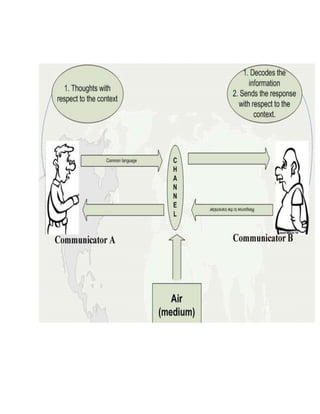
4. VERBAL Vs NONVERBAL 
5. VERBAL COMMUNICATION 
6. T YPES OF VRBAL COMMUNICATION 
7. VERBAL COMMUNICATION STYLE 
8. EXAMLES OF VERBAL COMMUNICATION 
9. SUMMRY
COMMUNICATION--- 
• Communicating means interacting with 
people, talking, making friends, having 
relationships either work related or private life 
relationships. Communicating with others is 
essential in leading a normal life.
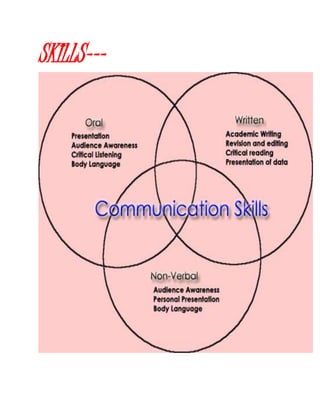
SKILLS---
TYPES OF COMMUNICATION--- 
• We all communicate in our own way but we 
need to learn how to do it effectively. 
Communication has two base types : verbal 
communication and non verbal 
communication. 
• The verbal one includes oral communication, 
through words and writing. The second one, 
non verbal communication includes body 
language and expressive behaviors.
VERBAL…… NONVERBAL……
VERBAL COMMUNICATION 
• Verbal communication is one way for 
people to communicate face-to-face. 
Some of the key components of verbal 
communication are sound, words, 
speaKing, and language. 
• Verbal communication is generally 
thought as spoken language. We 
express ourselves through words. 
TYPES OF VERBAL COMMUNICATION 
• HERE ARE SOME TYPES OF VERBAL COMMUNICATION:- 
1. face to face discussions, speeches, 
television, radio, telephone 
conversations, seminars, videos etc. 
Our tone of voice, pronunciation, word
choice are all things we choose in 
order to talk. These things make a 
conversation have it`s personality. 
When we are angry we talk in a 
certain way, when we are happy we 
choose other words to express 
ourselves. 
2. Verbal communication also includes 
the written word. Written includes 
emails, books, letters, magazines, 
newspapers, notes, faxes, 
announcements, commercials etc. 
Anything that is written is also verbal 
communication. Oral communication 
has also besides real words, mere 
grunts, cries, whimpers that people 
make. Each sound we make can be 
interpreted and seen as a certain 
language. Communicating with others 
is done more easy and it`s more easy
also to understand if the two people 
speak the same language. 
VERBAL COMMUNICATION STYLE:- 
1. Context is information that 
surrounds a communication and helps 
convey the message. 
2. Messages are often highly coded 
and implicit in high-context societies, 
such as Japan and many Arab 
countries. 
3. The message is explicit and the 
speaker says precisely what he or she 
means in low-context societies such 
as the United States and Canada.
EXAMPLES OF VERBAL COMMUNICATION:- 
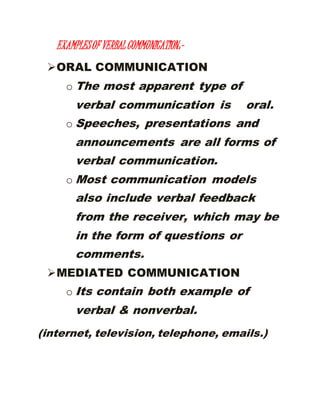
 ORAL COMMUNICATION 
o The most apparent type of 
verbal communication is oral. 
o Speeches, presentations and 
announcements are all forms of 
verbal communication. 
o Most communication models 
also include verbal feedback 
from the receiver, which may be 
in the form of questions or 
comments. 
 MEDIATED COMMUNICATION 
o Its contain both example of 
verbal & nonverbal. 
(internet, television, telephone, emails.)
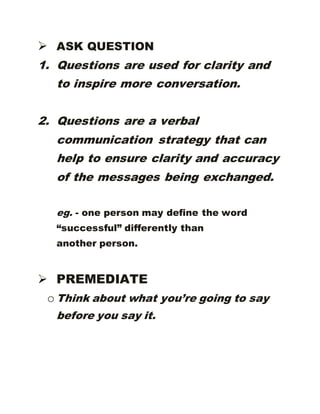
 ASK QUESTION 
1. Questions are used for clarity and 
to inspire more conversation. 
2. Questions are a verbal 
communication strategy that can 
help to ensure clarity and accuracy 
of the messages being exchanged. 
eg. - one person may define the word 
“successful” differently than 
another person. 
 PREMEDIATE 
o Think about what you’re going to say 
before you say it.
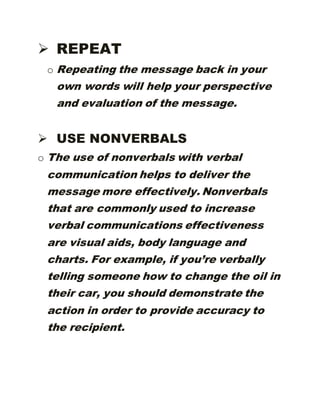
 REPEAT 
o Repeating the message back in your 
own words will help your perspective 
and evaluation of the message. 
 USE NONVERBALS 
o The use of nonverbals with verbal 
communication helps to deliver the 
message more effectively. Nonverbals 
that are commonly used to increase 
verbal communications effectiveness 
are visual aids, body language and 
charts. For example, if you’re verbally 
telling someone how to change the oil in 
their car, you should demonstrate the 
action in order to provide accuracy to 
the recipient.
SUMMRY 
o Language permits us to remember the 
past, deal with the present, and 
anticipate and plan for the future. 
o Language serves as a guide to how a 
culture perceives reality. 
o Each of us learns and uses language as 
we do because of our cultural 
background. 
o Communication style varies from culture 
to culture, but one’s communicative 
style is adaptive and can be developed.
Verbal communication..

Verbal communication..

  • 1.
    VERBAL COMMUNICATION (WITH EXAMPLES) NAME:- DILIP KUMAR CHAUDHARY BRANCH:- ECE-A ROLL:- 100103103 ENROLLMRNT NO.:- 10SETECE401
  • 2.
    MAJOR--- 1. COMMUNICATION 2. COMMUNICATION SKILL 3. T YPES OF COMMUNICATION 4. VERBAL Vs NONVERBAL 5. VERBAL COMMUNICATION 6. T YPES OF VRBAL COMMUNICATION 7. VERBAL COMMUNICATION STYLE 8. EXAMLES OF VERBAL COMMUNICATION 9. SUMMRY
  • 3.
    COMMUNICATION--- • Communicatingmeans interacting with people, talking, making friends, having relationships either work related or private life relationships. Communicating with others is essential in leading a normal life.
  • 4.
  • 6.
    TYPES OF COMMUNICATION--- • We all communicate in our own way but we need to learn how to do it effectively. Communication has two base types : verbal communication and non verbal communication. • The verbal one includes oral communication, through words and writing. The second one, non verbal communication includes body language and expressive behaviors.
  • 7.
  • 8.
    VERBAL COMMUNICATION •Verbal communication is one way for people to communicate face-to-face. Some of the key components of verbal communication are sound, words, speaKing, and language. • Verbal communication is generally thought as spoken language. We express ourselves through words. TYPES OF VERBAL COMMUNICATION • HERE ARE SOME TYPES OF VERBAL COMMUNICATION:- 1. face to face discussions, speeches, television, radio, telephone conversations, seminars, videos etc. Our tone of voice, pronunciation, word
  • 9.
    choice are allthings we choose in order to talk. These things make a conversation have it`s personality. When we are angry we talk in a certain way, when we are happy we choose other words to express ourselves. 2. Verbal communication also includes the written word. Written includes emails, books, letters, magazines, newspapers, notes, faxes, announcements, commercials etc. Anything that is written is also verbal communication. Oral communication has also besides real words, mere grunts, cries, whimpers that people make. Each sound we make can be interpreted and seen as a certain language. Communicating with others is done more easy and it`s more easy
  • 10.
    also to understandif the two people speak the same language. VERBAL COMMUNICATION STYLE:- 1. Context is information that surrounds a communication and helps convey the message. 2. Messages are often highly coded and implicit in high-context societies, such as Japan and many Arab countries. 3. The message is explicit and the speaker says precisely what he or she means in low-context societies such as the United States and Canada.
  • 12.
    EXAMPLES OF VERBALCOMMUNICATION:-  ORAL COMMUNICATION o The most apparent type of verbal communication is oral. o Speeches, presentations and announcements are all forms of verbal communication. o Most communication models also include verbal feedback from the receiver, which may be in the form of questions or comments.  MEDIATED COMMUNICATION o Its contain both example of verbal & nonverbal. (internet, television, telephone, emails.)
  • 13.
     ASK QUESTION 1. Questions are used for clarity and to inspire more conversation. 2. Questions are a verbal communication strategy that can help to ensure clarity and accuracy of the messages being exchanged. eg. - one person may define the word “successful” differently than another person.  PREMEDIATE o Think about what you’re going to say before you say it.
  • 14.
     REPEAT oRepeating the message back in your own words will help your perspective and evaluation of the message.  USE NONVERBALS o The use of nonverbals with verbal communication helps to deliver the message more effectively. Nonverbals that are commonly used to increase verbal communications effectiveness are visual aids, body language and charts. For example, if you’re verbally telling someone how to change the oil in their car, you should demonstrate the action in order to provide accuracy to the recipient.
  • 15.
    SUMMRY o Languagepermits us to remember the past, deal with the present, and anticipate and plan for the future. o Language serves as a guide to how a culture perceives reality. o Each of us learns and uses language as we do because of our cultural background. o Communication style varies from culture to culture, but one’s communicative style is adaptive and can be developed.