
VENOM DEMO & FAQ
Akash Mahajan
VENOM is an acronym for
V IRTUALIZE D
ENVIRONMENT
NEGLEC TE D
O PE RATIONS
M ANIPULATION
What is VENOM?
It is a security vulnerability in the
virtual floppy drive code used by
many computer virtualization
platforms.
What does it do?
This vulnerability may allow an
attacker to escape from the confines
of an affected virtual machine (VM)
guest and potentially obtain code-
execution access to the host.
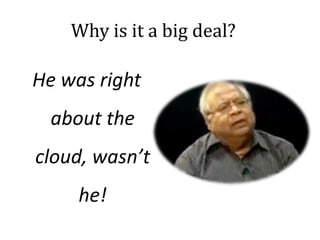
Why is it a big deal?
He was right
about the
cloud, wasn’t
he!
Seriously why is this a big deal?
• Consider that all the cloud vendors in the
world use OS level virtualization
• Now all of those who use Xen, Qemu, KVM
and Virtualbox were vulnerable to this
• It doesn’t matter if the virtual machine is a
linux box or a windows box
All of these use Xen/Qemu/KVM
How does it work?
• So a VM (guest) gets access to virtual
hardware of a physical machine (host)
• Quick EMUlator (QEMU) is an open source
hypervisor that performs hardware
virtualization
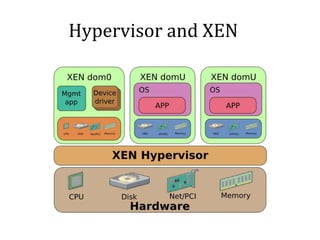
Exploiting the QEMU Hypervisor
• The hypervisor code sits between the guest and the
host, operating as the ‘bridge’ and abstraction layer
relied upon by either side to communicate with the
other.
• Incorporating all of the memory mapping and device
drivers required to trick the guest into believing it is
operating on real hardware.
Hypervisor and XEN
QEMU Floppy Disk Controller
• The QEMU FDC is enabled by default in Xen
and KVM platforms.
• The problem exists in the Floppy Disk
Controller, which is initialized for every x86 and
x86_64 guest regardless of the configuration
and cannot be removed or disabled.
QEMU Floppy Disk Controller
• The QEMU FDC is enabled by default in Xen
and KVM platforms.
• The problem exists in the Floppy Disk
Controller, which is initialized for every x86 and
x86_64 guest regardless of the configuration
and cannot be removed or disabled.
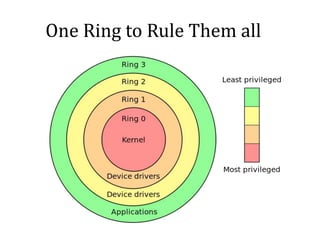
One Ring to Rule Them all
The Devil is in the C Code
• FDC uses a buffer of 512 bytes to store the I/O
command and its parameters
• It has an index variable to access the buffer
area
• After every command the index variable is set
to 0
Still the Devil is in the C Code
The FDC’s data_pos and data_len fields above are
initialized to 0 upon FDC reset.
• For two of the command handler functions, the
data_pos reset is delayed or circumvented.
– FDC_CMD_READ_ID
– FDC_CMD_DRIVE_SPECIFICATION_COMMAND
Buffer Overflow of FIFO buffer
• The VENOM advisory talks about overflow
of the *fifo buffer due to this particular
reason
BARELY WORKING DEMO
Deja VM Bugs
• BlackHat/DEFCON 2011 Talk: Breaking Out of KVM
• CVE-2007-1744 – Directory traversal vulnerability in
shared folders feature
• CVE-2008-0923 – Path traversal vulnerability in
VMware’s shared folders implementation
• CVE-2009-1244 – Cloudburst (VMware virtual video
adapter vulnerability)
• CVE-2011-1751 – Missing hotplug check during device
removal
• CVE-2012-0217 – 64-bit PV guest privilege escalation
vulnerability
• CVE-2014-0983 – Oracle VirtualBox 3D acceleration
multiple memory corruption vulnerabilities
Questions?
• Ask Datta!
@makash | aka@null.co.in | theappseclab.com
Attributions and References
• Starting point for understanding http://venom.crowdstrike.com/
• http://cve.mitre.org/cgi-bin/cvename.cgi?name=CVE-2015-3456
• https://access.redhat.com/articles/1444903
• CC BY-SA 3.0 File:Priv rings.svg Uploaded by OgreBot
• https://en.wikipedia.org/wiki/Protection_ring#Hypervisor_mode
• https://blog.nelhage.com/2011/08/breaking-out-of-kvm/
• https://github.com/nelhage/virtunoid
• http://www.dedoimedo.com/computers/kvm-intro.html
• http://blog.crowdstrike.com/venom-vulnerability-details/
• http://www.dedoimedo.com/computers/kvm-intro.html

Venom vulnerability Overview and a basic demo

  • 1.
    VENOM DEMO &FAQ Akash Mahajan
  • 2.
    VENOM is anacronym for V IRTUALIZE D ENVIRONMENT NEGLEC TE D O PE RATIONS M ANIPULATION
  • 3.
    What is VENOM? Itis a security vulnerability in the virtual floppy drive code used by many computer virtualization platforms.
  • 4.
    What does itdo? This vulnerability may allow an attacker to escape from the confines of an affected virtual machine (VM) guest and potentially obtain code- execution access to the host.
  • 5.
    Why is ita big deal? He was right about the cloud, wasn’t he!
  • 6.
    Seriously why isthis a big deal? • Consider that all the cloud vendors in the world use OS level virtualization • Now all of those who use Xen, Qemu, KVM and Virtualbox were vulnerable to this • It doesn’t matter if the virtual machine is a linux box or a windows box
  • 7.
    All of theseuse Xen/Qemu/KVM
  • 8.
    How does itwork? • So a VM (guest) gets access to virtual hardware of a physical machine (host) • Quick EMUlator (QEMU) is an open source hypervisor that performs hardware virtualization
  • 9.
    Exploiting the QEMUHypervisor • The hypervisor code sits between the guest and the host, operating as the ‘bridge’ and abstraction layer relied upon by either side to communicate with the other. • Incorporating all of the memory mapping and device drivers required to trick the guest into believing it is operating on real hardware.
  • 10.
  • 11.
    QEMU Floppy DiskController • The QEMU FDC is enabled by default in Xen and KVM platforms. • The problem exists in the Floppy Disk Controller, which is initialized for every x86 and x86_64 guest regardless of the configuration and cannot be removed or disabled.
  • 12.
    QEMU Floppy DiskController • The QEMU FDC is enabled by default in Xen and KVM platforms. • The problem exists in the Floppy Disk Controller, which is initialized for every x86 and x86_64 guest regardless of the configuration and cannot be removed or disabled.
  • 13.
    One Ring toRule Them all
  • 14.
    The Devil isin the C Code • FDC uses a buffer of 512 bytes to store the I/O command and its parameters • It has an index variable to access the buffer area • After every command the index variable is set to 0
  • 15.
    Still the Devilis in the C Code The FDC’s data_pos and data_len fields above are initialized to 0 upon FDC reset. • For two of the command handler functions, the data_pos reset is delayed or circumvented. – FDC_CMD_READ_ID – FDC_CMD_DRIVE_SPECIFICATION_COMMAND
  • 16.
    Buffer Overflow ofFIFO buffer • The VENOM advisory talks about overflow of the *fifo buffer due to this particular reason
  • 17.
  • 18.
    Deja VM Bugs •BlackHat/DEFCON 2011 Talk: Breaking Out of KVM • CVE-2007-1744 – Directory traversal vulnerability in shared folders feature • CVE-2008-0923 – Path traversal vulnerability in VMware’s shared folders implementation • CVE-2009-1244 – Cloudburst (VMware virtual video adapter vulnerability) • CVE-2011-1751 – Missing hotplug check during device removal • CVE-2012-0217 – 64-bit PV guest privilege escalation vulnerability • CVE-2014-0983 – Oracle VirtualBox 3D acceleration multiple memory corruption vulnerabilities
  • 19.
    Questions? • Ask Datta! @makash| aka@null.co.in | theappseclab.com
  • 20.
    Attributions and References •Starting point for understanding http://venom.crowdstrike.com/ • http://cve.mitre.org/cgi-bin/cvename.cgi?name=CVE-2015-3456 • https://access.redhat.com/articles/1444903 • CC BY-SA 3.0 File:Priv rings.svg Uploaded by OgreBot • https://en.wikipedia.org/wiki/Protection_ring#Hypervisor_mode • https://blog.nelhage.com/2011/08/breaking-out-of-kvm/ • https://github.com/nelhage/virtunoid • http://www.dedoimedo.com/computers/kvm-intro.html • http://blog.crowdstrike.com/venom-vulnerability-details/ • http://www.dedoimedo.com/computers/kvm-intro.html

Editor's Notes

  • #6 Free sticker to the first person who knows his full name Vishwa Bandhu Gupta
  • #7 Hyper-V wasn’t vulnerable to this. So Yay Microsoft
  • #10 http://blogs.it.ox.ac.uk/oxcert/2015/05/13/cve-2015-3456-venom/
  • #14 Privilege rings for the x86 available in protected mode