MEANING :
• Vendor Is Person Or Organsiation That Sells Contingent Labour.
• Vendor Can Be An Independent,consultant, A Consulating
Company, Staffing Company
• Who Can Be Also Be Called A Supplier.
• Vendor Rating Is Result Of Formal Vendor Evaluation
System.
• A Firm Should Review The Performance Of Its Vendors To
Find Out How Its Existing Suppliers Are;
• The Measurement System Used Is Called “Vendor Rating” Or
“Performance Rating”
Competitive Pricing: The Price Paid Should Be Comparable
To Those Of Vendors Providing Similar Product & Services
Price Stabilty: Price Should Be Reasonably Stable Over Time
Price Accuracy: There Should Be A Low Number Of Variances
From Purchase – Order Price On Invoiced.
Advance Notice Of Price Changes: Vendor Should Provide
Adequate Notice Of Price Changes
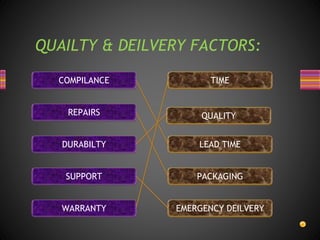
QUAILTY & DEILVERY FACTORS:
COMPILANCE
REPAIRS
DURABILTY
SUPPORT
WARRANTY
TIME
QUALITY
LEAD TIME
PACKAGING
EMERGENCY DEILVERY
• Categorical Plan:
The Members Of The Buying Staff Related With The Suppliers Like Are Required To
Assess The Performance Of Each Suppliers The Members Are Required To Assign The Plus
And Minus Against Each Factor. Rating Is Done On The Basis Of Memory And Thus
Becomes Only A Routine Exercise Without Any Critical Analysis.
• weighted Point Method:
Attributes For Price And Delivery Are Separately Identified. The Weightage Of
Attributes Are Assigned By The Process Of “Grading”
Quality, Price, Delivery Time, Delivery Are Factors Of This Method.
TECHNIQUES :
• Cost Ratio Method: It Is The Cost Of Item, Inspection Cost, cost Of Rejection And
Replacement Etc. All The Cost Are Estimated And Added Item Wise. Weightage Are Given
For Attended Services And Compared For Ranking
• Critical Incidents Method : Evaluating Vendor By This Method Requires A Record Of
Events And Occurrences Related To Buyer –Vendor Relationship. This Can Be Used As A
Basis For Discussing Improving Performance, Over Coming Difficulties , Business
Relationship And Competence Of Vendor.
• Check List System : It Is Designed To Facilitate Vendor Rating From Stand-point Of
Financial Strength, Size, Service, Price, Quality.
I. Providing Feed Back From All Areas In One Package.
II. Facilitating Better Communication With Vendors.
III. Providing Overall Control Of The Vendor Base.
IV. Requiring Specific Action To Correct Identified Performance Weaknesses.
V. Building Vendor Partnerships, especially With Suppliers Having Strategic Links.
VI. Developing A Performance –Based Culture.
ADVANTAGES OF VENDOR RATING
• Defintion :
“ Value Analysis Is An Organized Procedure For Efficient Identification Of
Unnecessary Cost”
• Meaning: Value Analysis Is An Organized Approach Which Emphasizes Efficient
Identification Of Unnecessary Cost,i.E., Cost That Provides Neither
Quality,use,life,appearance,customers Satisfaction.It Is A Systematic Inter-disciplinary
Examination Of Factor Affecting The Cost Of A Product Or Service For Achieving The
Specified Purpose Most Economically.
VALUE ANALYSIS
• To Maintain The Functional Objectives:
i. Primary Function ( Protect From Dirt And Damage)
ii. Secondary Function (Recognizable To Customers)
iii. Tertiary Function ( Good Appearance To Customers)
• Save Money Or Increase Profit : The Main Objective Of Value Analysis Is Cost
Reduction. However Profit Consideration Not Only Aims At Benefits To An
Organization But Also To A Community Or Country.
OBJECTIVES OF VALUE ANALYSIS:
• Time Consideration: Value Analysis Is Also Considers The Time Element Of Value.
“Value” Only If It Is Available At A Certain Time. Value Analysis Tries To Find
Cheaper Alternative Material.
• Quality Promotions: It Aims At Solving Quality Problems Repeated Failure Or
Rejection Of A Part Or A Component Necessitates The Analysis To Be Done It Also
Helps In Export Promotion
• Standardization: Standardization Can Only Be Achieved By Work Simplification,
Process Improvements,techonology Upgradation, Creating Quality Awareness Etc.
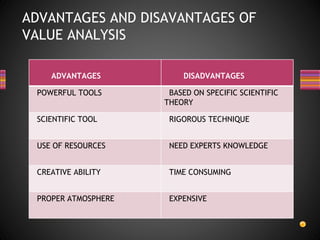
ADVANTAGES AND DISAVANTAGES OF
VALUE ANALYSIS
ADVANTAGES DISADVANTAGES
POWERFUL TOOLS BASED ON SPECIFIC SCIENTIFIC
THEORY
SCIENTIFIC TOOL RIGOROUS TECHNIQUE
USE OF RESOURCES NEED EXPERTS KNOWLEDGE
CREATIVE ABILITY TIME CONSUMING
PROPER ATMOSPHERE EXPENSIVE

vendor rating

  • 2.
    MEANING : • VendorIs Person Or Organsiation That Sells Contingent Labour. • Vendor Can Be An Independent,consultant, A Consulating Company, Staffing Company • Who Can Be Also Be Called A Supplier.
  • 3.
    • Vendor RatingIs Result Of Formal Vendor Evaluation System. • A Firm Should Review The Performance Of Its Vendors To Find Out How Its Existing Suppliers Are; • The Measurement System Used Is Called “Vendor Rating” Or “Performance Rating”
  • 4.
    Competitive Pricing: ThePrice Paid Should Be Comparable To Those Of Vendors Providing Similar Product & Services Price Stabilty: Price Should Be Reasonably Stable Over Time
  • 5.
    Price Accuracy: ThereShould Be A Low Number Of Variances From Purchase – Order Price On Invoiced. Advance Notice Of Price Changes: Vendor Should Provide Adequate Notice Of Price Changes
  • 6.
    QUAILTY & DEILVERYFACTORS: COMPILANCE REPAIRS DURABILTY SUPPORT WARRANTY TIME QUALITY LEAD TIME PACKAGING EMERGENCY DEILVERY
  • 7.
    • Categorical Plan: TheMembers Of The Buying Staff Related With The Suppliers Like Are Required To Assess The Performance Of Each Suppliers The Members Are Required To Assign The Plus And Minus Against Each Factor. Rating Is Done On The Basis Of Memory And Thus Becomes Only A Routine Exercise Without Any Critical Analysis. • weighted Point Method: Attributes For Price And Delivery Are Separately Identified. The Weightage Of Attributes Are Assigned By The Process Of “Grading” Quality, Price, Delivery Time, Delivery Are Factors Of This Method. TECHNIQUES :
  • 8.
    • Cost RatioMethod: It Is The Cost Of Item, Inspection Cost, cost Of Rejection And Replacement Etc. All The Cost Are Estimated And Added Item Wise. Weightage Are Given For Attended Services And Compared For Ranking • Critical Incidents Method : Evaluating Vendor By This Method Requires A Record Of Events And Occurrences Related To Buyer –Vendor Relationship. This Can Be Used As A Basis For Discussing Improving Performance, Over Coming Difficulties , Business Relationship And Competence Of Vendor. • Check List System : It Is Designed To Facilitate Vendor Rating From Stand-point Of Financial Strength, Size, Service, Price, Quality.
  • 9.
    I. Providing FeedBack From All Areas In One Package. II. Facilitating Better Communication With Vendors. III. Providing Overall Control Of The Vendor Base. IV. Requiring Specific Action To Correct Identified Performance Weaknesses. V. Building Vendor Partnerships, especially With Suppliers Having Strategic Links. VI. Developing A Performance –Based Culture. ADVANTAGES OF VENDOR RATING
  • 10.
    • Defintion : “Value Analysis Is An Organized Procedure For Efficient Identification Of Unnecessary Cost” • Meaning: Value Analysis Is An Organized Approach Which Emphasizes Efficient Identification Of Unnecessary Cost,i.E., Cost That Provides Neither Quality,use,life,appearance,customers Satisfaction.It Is A Systematic Inter-disciplinary Examination Of Factor Affecting The Cost Of A Product Or Service For Achieving The Specified Purpose Most Economically. VALUE ANALYSIS
  • 11.
    • To MaintainThe Functional Objectives: i. Primary Function ( Protect From Dirt And Damage) ii. Secondary Function (Recognizable To Customers) iii. Tertiary Function ( Good Appearance To Customers) • Save Money Or Increase Profit : The Main Objective Of Value Analysis Is Cost Reduction. However Profit Consideration Not Only Aims At Benefits To An Organization But Also To A Community Or Country. OBJECTIVES OF VALUE ANALYSIS:
  • 12.
    • Time Consideration:Value Analysis Is Also Considers The Time Element Of Value. “Value” Only If It Is Available At A Certain Time. Value Analysis Tries To Find Cheaper Alternative Material. • Quality Promotions: It Aims At Solving Quality Problems Repeated Failure Or Rejection Of A Part Or A Component Necessitates The Analysis To Be Done It Also Helps In Export Promotion • Standardization: Standardization Can Only Be Achieved By Work Simplification, Process Improvements,techonology Upgradation, Creating Quality Awareness Etc.
  • 13.
    ADVANTAGES AND DISAVANTAGESOF VALUE ANALYSIS ADVANTAGES DISADVANTAGES POWERFUL TOOLS BASED ON SPECIFIC SCIENTIFIC THEORY SCIENTIFIC TOOL RIGOROUS TECHNIQUE USE OF RESOURCES NEED EXPERTS KNOWLEDGE CREATIVE ABILITY TIME CONSUMING PROPER ATMOSPHERE EXPENSIVE