GENERIC BUILDING BLOCK OF
COMPETITIVE ADVANTAGE
WHAT IS COMPETITIVE ADVANTAGE ?
★ Competitive advantage refers to
factors that allow a company to
produce goods and services better or
more cheaply than its rivals.
★ Comparative advantage is a
company’s ability to produce
something more efficiently than a
rival,which leads to greater profile
margins
GENERIC BUILDING BLOCKS OF COMPETITIVE
ADVANTAGE:
★ In the modem business scenario, it is highly important for
an organisation to outperform the competitors and for this
the organisation needs to achieve competitive advantage
through efficient utilization of available resources.
★ This will allow the organisation to produce the results
greater than the competitors which in turn will lead to
success.
COMPETITIVE
ADVANTAGE
VALUE CREATION
LOW COST
DIFFERENTIATION
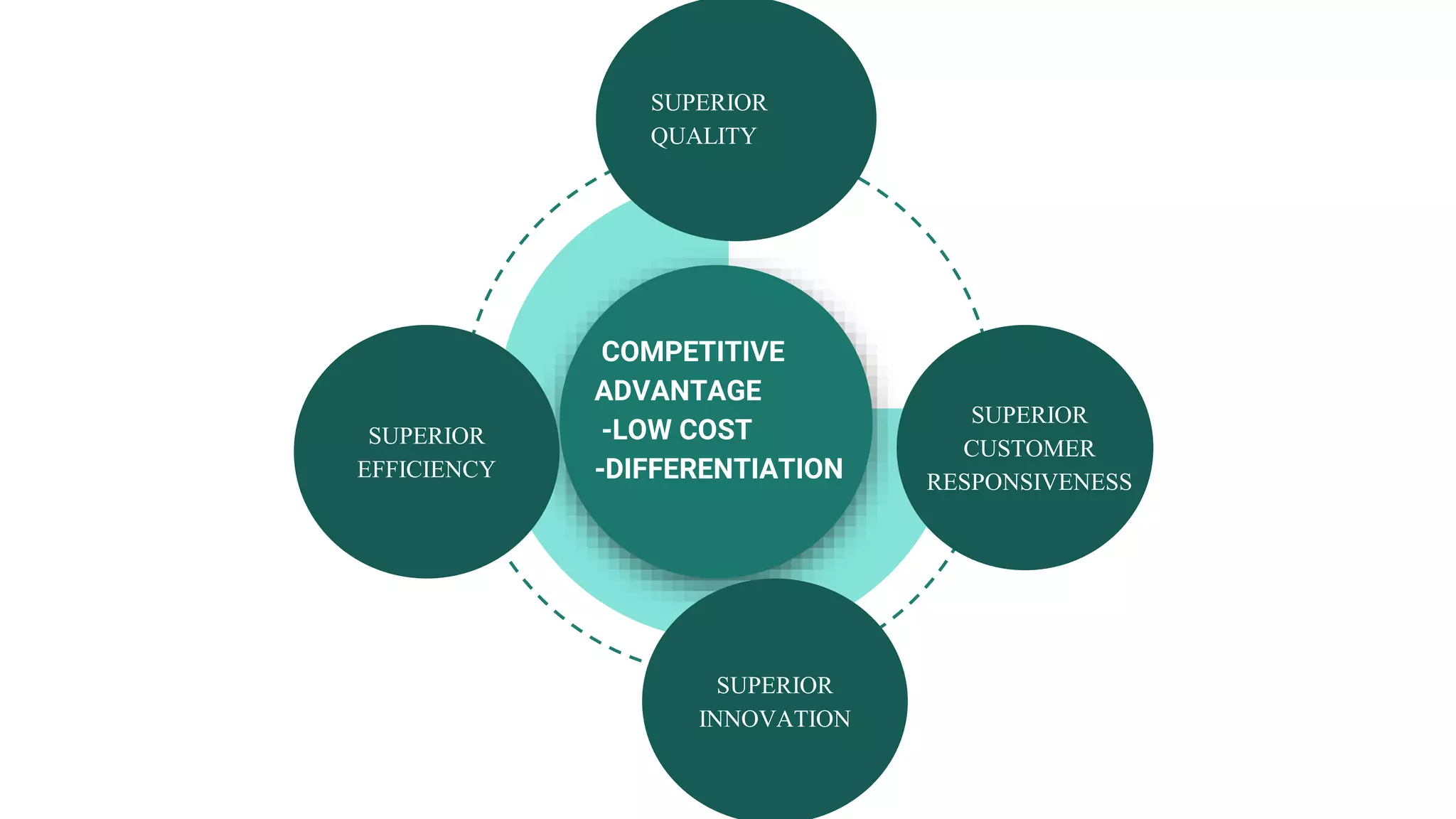
COMPETITIVE
ADVANTAGE
-LOW COST
-DIFFERENTIATION
SUPERIOR
QUALITY
SUPERIOR
INNOVATION
SUPERIOR
EFFICIENCY
SUPERIOR
CUSTOMER
RESPONSIVENESS
SUPERIOR QUALITY:
A Product can be throught of as a
bundle of attributes.the attributes of
many physical products include their
form,features,performance,durability,r
eliability,style and design.
SUPERIOR CUSTOMER RESPONSIVENESS:
★ To achieve superior responsiveness
to customers a company must be
able to do a better job than
competitors of identifying and
satisfying its customer needs.
★ Customers will then attribute more
utility to its products and creating a
differentiation based on competitive
advantage.
SUPERIOR INNOVATION:
★ Innovation refers to the act of
creating new products or
processes.
★ Product innovation is the
development of products that are
new to the world or have superior
attributes to existing products
★ Process innovation is the
development of the new process
for producing products and
delivering them to customers.
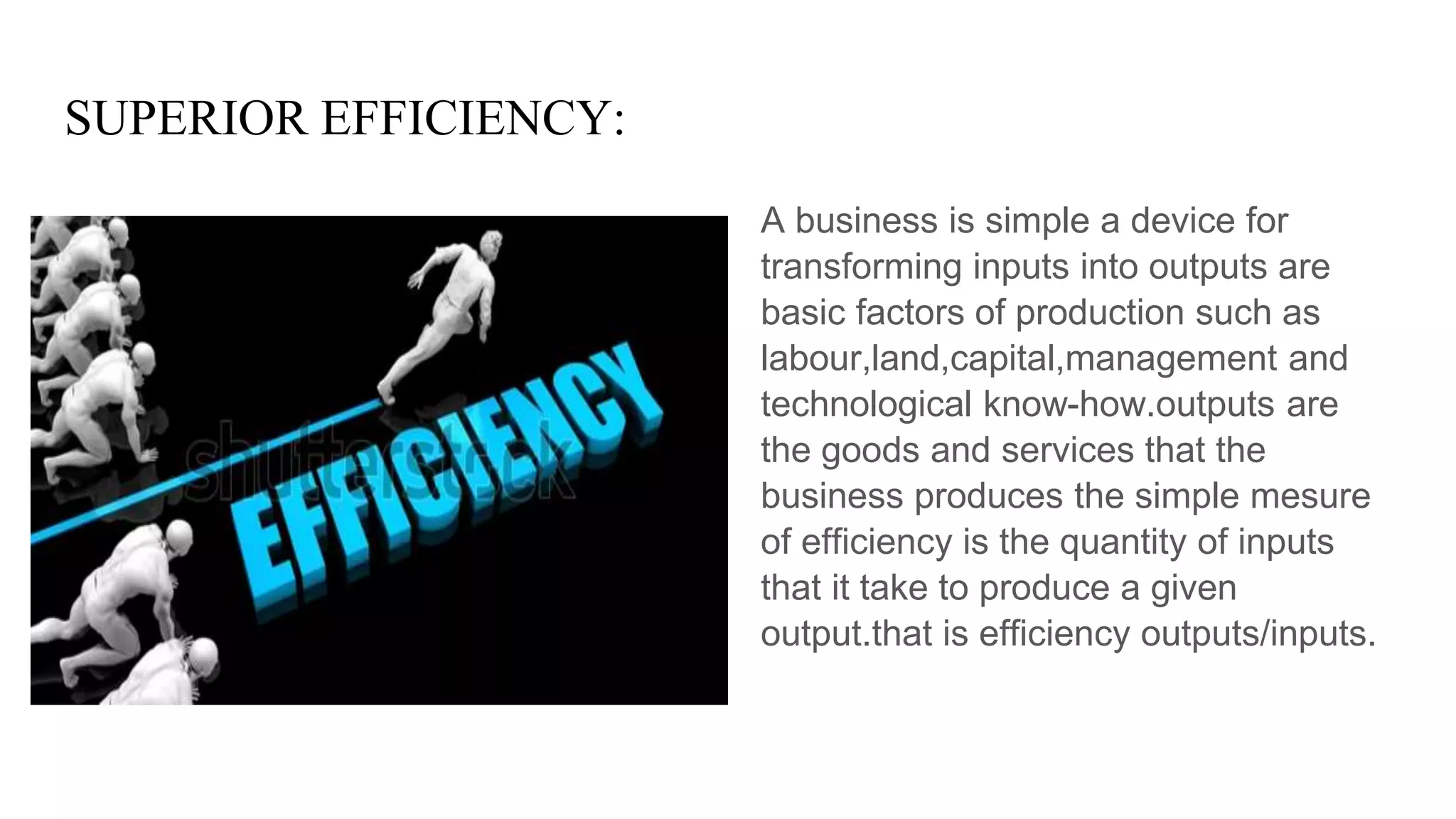
SUPERIOR EFFICIENCY:
A business is simple a device for
transforming inputs into outputs are
basic factors of production such as
labour,land,capital,management and
technological know-how.outputs are
the goods and services that the
business produces the simple mesure
of efficiency is the quantity of inputs
that it take to produce a given
output.that is efficiency outputs/inputs.
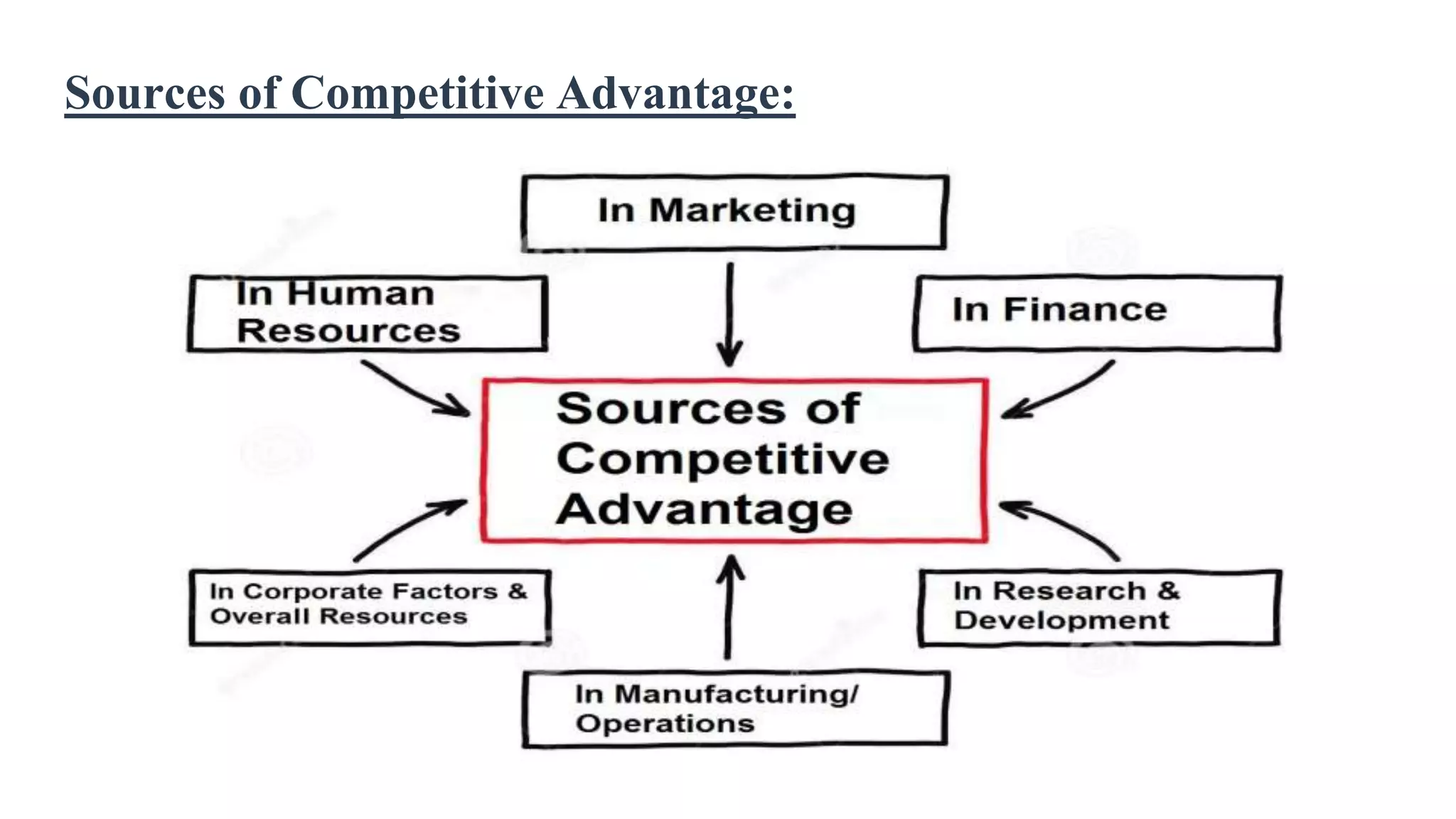
Sources of Competitive Advantage:
1) In Marketing :
● Launching new product,
● Offering low price,
● Larger market share,
● Applying creativity and innovation in
marketing activities,
● Increasing the level of customer
satisfaction,
● More prompt customer service,
● Improving marketing channel,
● Innovative promotional strategies,
2) In Finance :
● Liquidity,
● Assets,
● Gearing,
● Leverage,
● Costs,
● Cash flow,
● Profitability,
● Cost of capital,
● Efficient tax planning,
● Quality of financial
management.
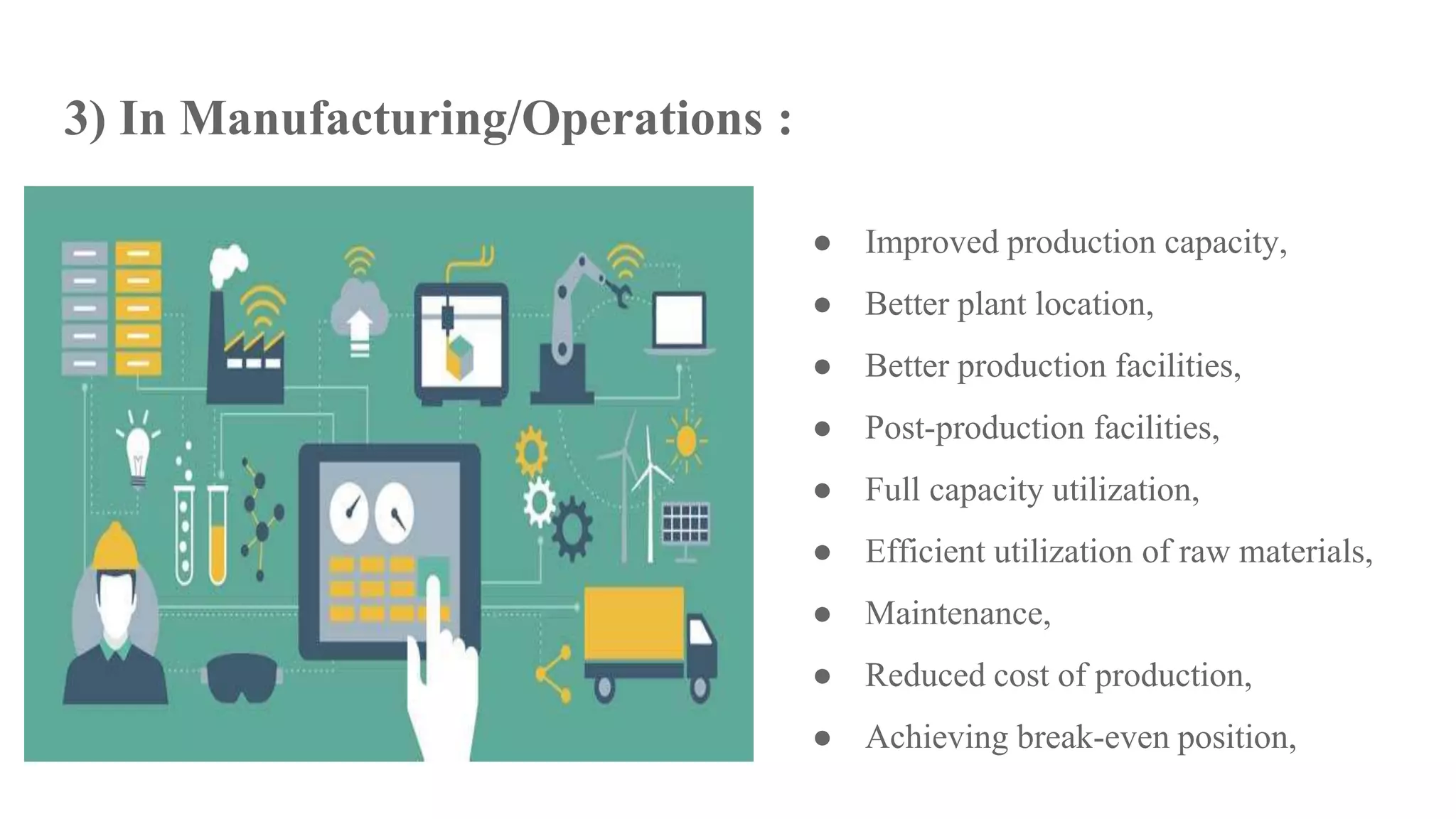
3) In Manufacturing/Operations :
● Improved production capacity,
● Better plant location,
● Better production facilities,
● Post-production facilities,
● Full capacity utilization,
● Efficient utilization of raw materials,
● Maintenance,
● Reduced cost of production,
● Achieving break-even position,
4) In Research & Development :
● Features, quality and depth of research
facilities,
● Proper allocation of financial and other
resources for R&D activities,
● Skills, knowledge and experience of
researchers,
● Promptness in research activities,
● Technical skills and abilities for carrying-out
research and development,
5) In Human Resources :
● Skills, knowledge and
experience of employees,
● Dedication and motivation in
employees,
● Low personnel turnover,
● Minimal labour costs,
● Improved industrial relations.
6) In Corporate Factors and Overall Resources :
● Size of the company,
● Corporate image,
● Capability of management,
● Capable and experienced top level
management,
● Effective strategic planning,
● Productive organisational culture,
● Flexible and adaptable organisational
structure,
● Implementation of latest technology.

GENERIC BUILDING BLOCK OF COMPETITIVE ADVANTAGE.pptx

  • 1.
    GENERIC BUILDING BLOCKOF COMPETITIVE ADVANTAGE
  • 2.
    WHAT IS COMPETITIVEADVANTAGE ? ★ Competitive advantage refers to factors that allow a company to produce goods and services better or more cheaply than its rivals. ★ Comparative advantage is a company’s ability to produce something more efficiently than a rival,which leads to greater profile margins
  • 3.
    GENERIC BUILDING BLOCKSOF COMPETITIVE ADVANTAGE: ★ In the modem business scenario, it is highly important for an organisation to outperform the competitors and for this the organisation needs to achieve competitive advantage through efficient utilization of available resources. ★ This will allow the organisation to produce the results greater than the competitors which in turn will lead to success.
  • 4.
  • 5.
  • 6.
    SUPERIOR QUALITY: A Productcan be throught of as a bundle of attributes.the attributes of many physical products include their form,features,performance,durability,r eliability,style and design.
  • 7.
    SUPERIOR CUSTOMER RESPONSIVENESS: ★To achieve superior responsiveness to customers a company must be able to do a better job than competitors of identifying and satisfying its customer needs. ★ Customers will then attribute more utility to its products and creating a differentiation based on competitive advantage.
  • 8.
    SUPERIOR INNOVATION: ★ Innovationrefers to the act of creating new products or processes. ★ Product innovation is the development of products that are new to the world or have superior attributes to existing products ★ Process innovation is the development of the new process for producing products and delivering them to customers.
  • 9.
    SUPERIOR EFFICIENCY: A businessis simple a device for transforming inputs into outputs are basic factors of production such as labour,land,capital,management and technological know-how.outputs are the goods and services that the business produces the simple mesure of efficiency is the quantity of inputs that it take to produce a given output.that is efficiency outputs/inputs.
  • 10.
  • 11.
    1) In Marketing: ● Launching new product, ● Offering low price, ● Larger market share, ● Applying creativity and innovation in marketing activities, ● Increasing the level of customer satisfaction, ● More prompt customer service, ● Improving marketing channel, ● Innovative promotional strategies,
  • 12.
    2) In Finance: ● Liquidity, ● Assets, ● Gearing, ● Leverage, ● Costs, ● Cash flow, ● Profitability, ● Cost of capital, ● Efficient tax planning, ● Quality of financial management.
  • 13.
    3) In Manufacturing/Operations: ● Improved production capacity, ● Better plant location, ● Better production facilities, ● Post-production facilities, ● Full capacity utilization, ● Efficient utilization of raw materials, ● Maintenance, ● Reduced cost of production, ● Achieving break-even position,
  • 14.
    4) In Research& Development : ● Features, quality and depth of research facilities, ● Proper allocation of financial and other resources for R&D activities, ● Skills, knowledge and experience of researchers, ● Promptness in research activities, ● Technical skills and abilities for carrying-out research and development,
  • 15.
    5) In HumanResources : ● Skills, knowledge and experience of employees, ● Dedication and motivation in employees, ● Low personnel turnover, ● Minimal labour costs, ● Improved industrial relations.
  • 16.
    6) In CorporateFactors and Overall Resources : ● Size of the company, ● Corporate image, ● Capability of management, ● Capable and experienced top level management, ● Effective strategic planning, ● Productive organisational culture, ● Flexible and adaptable organisational structure, ● Implementation of latest technology.