 Vasculitis is defined as inflammation and
fibrinoid necrosis of the blood vessel wall
 It may present in a wide variety of clinical
manifestations depending on
Dr.GamalSultan
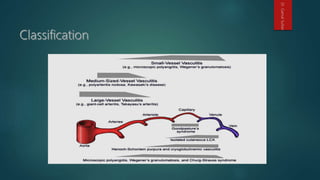
 Some classification systems have focused on
 Both types of classification scheme are imperfect, as
overlap of vessels of various sizes may occur, and the type
of inflammatory infiltrate may change over time
Dr.GamalSultan
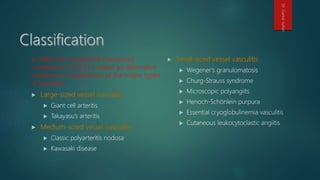
In 1994, the Chapel Hill Consensus
Conference (CHCC) created an alternative
schema for classification of the major types
of vasculitis
 Giant cell arteritis
 Takayasu's arteritis
 Classic polyarteritis nodosa
 Kawasaki disease
 Wegener's granulomatosis
 Churg-Strauss syndrome
 Microscopic polyangiits
 Henoch-Schönlein purpura
 Essential cryoglobulinemia vasculitis
 Cutaneous leukocytoclastic angiitis
Dr.GamalSultan
Dr.GamalSultan
 the estimated the annual incidence of cutaneous vasculitis is 38.6 cases
per million.
 the incidence is greater in women (50.4 cases per million) than in men
(26.0 cases per million).
 Cutaneous leukocytoclastic vasculitis, as defined by the CHCC, was
found to be 15.4 cases per million.
 A female predominance was observed with an estimated 24.2 cases
per million cases compared to males (6.0 cases per million).
Dr.GamalSultan
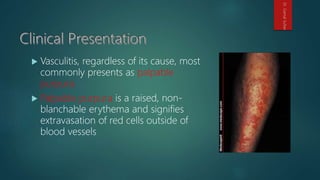
 Vasculitis, regardless of its cause, most
commonly presents as palpable
purpura.
 Palpable purpura is a raised, non-
blanchable erythema and signifies
extravasation of red cells outside of
blood vessels
Dr.GamalSultan
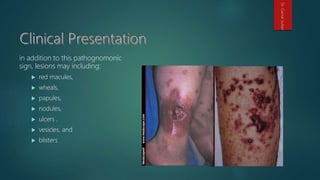
in addition to this pathognomonic
sign, lesions may including:
 red macules,
 wheals,
 papules,
 nodules,
 ulcers ,
 vesicles, and
 blisters
Dr.GamalSultan
 The clinical presentation may vary, depending on the size of the
vessel involved.
 Cutaneous small- and medium-sized vessel disease may present
with a reticulate pattern that outlines the cutaneous vasculature.
 Large vessels that supply a larger area of skin may present with
widespread purpura and necrosis.
 The lesions are distributed often symmetrically, most commonly on
the lower legs, but can occur anywhere in the body. Lesions typically
occur in areas of dependency but may occur in areas of trauma or
pressure
Dr.GamalSultan
 Mucosal involvement is rare, and if present, manifests itself in the
form of petechiae, hemorrhagic blisters, and ulcers.
 Usually, cutaneous lesions heal within one to four weeks if a single
initiating factor is the cause, for example, drug exposure. However, if
cutaneous ulcers occur, healing may be prolonged.
 There may also be residual scarring and hyperpigmentation.
 Vasculitis may, however, be recurrent and/or intermittent with new
crops of lesions appearing for months or years
Dr.GamalSultan
 In some cases, the episode of cutaneous vasculitic lesions may be
associated with .
 The skin is often the only organ involved, but in some cases, may be
part of a systemic vasculitis correlated to an underlying disease.
 Emboli leading to palpable lesions can occur in patients with
endocarditis, left atrial myxoma, or due to cholesterol emboli.
 Thrombocytopenia and disseminated intravascular coagulopathy
present as widespread purpura; however, the purpura is usually
in these cases
Dr.GamalSultan
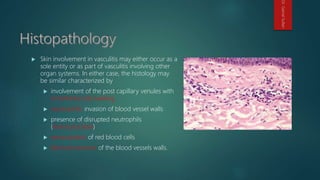
 Skin involvement in vasculitis may either occur as a
sole entity or as part of vasculitis involving other
organ systems. In either case, the histology may
be similar characterized by
 involvement of the post capillary venules with
endothelial cell swelling
 neutrophilic invasion of blood vessel walls
 presence of disrupted neutrophils
(leukocytoclasia)
 extravasation of red blood cells
 fibrinoid necrosis of the blood vessels walls.
Dr.GamalSultan
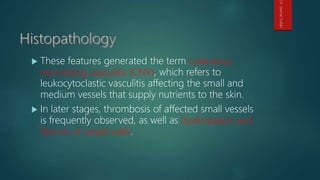
 These features generated the term cutaneous
necrotizing vasculitis (CNV), which refers to
leukocytoclastic vasculitis affecting the small and
medium vessels that supply nutrients to the skin.
 In later stages, thrombosis of affected small vessels
is frequently observed, as well as hyalinization and
fibrosis of vessel walls.
Dr.GamalSultan
 Based on histopathologic findings, CNV can be divided in two major
groups:
 leukocytoclastic form, due to deposition of immune complexes on
blood vessel wall (type III hypersensitivity reaction), and
 lymphomonocytic form, caused by immune-mediated vessel
injury.
 Some authors consider these two forms as different stages of the
same process. That is, over time a predominantly neutrophilic
infiltrate will be replaced by lymphocytes or monocytes
Dr.GamalSultan
 The etiology of a vasculitic syndrome is probably multifactorial with influences on
disease expression caused by ethnicity, genes (HLA and others), gender, and
environment (ultraviolet exposure, infections, drugs, smoking, and surgery).
 Frequent associations include infectious agents, medications, connective tissue
diseases, and malignancies among others.
 One half of all patients with cutaneous vasculitis, however, have no definite etiologic
agent or associated disease.
 Among the idiopathic vasculitides are Henoch-Schönlein purpura, urticarial
vasculitis, erythema elevatum diutinum, nodular vasculitis, and cutaneous
polyarteritis nodosa
Dr.GamalSultan
 Although often clinically apparent, excluding other conditions that may
present similarly is the initial step in evaluating a patient with an eruption
suggestive of vasculitis. Additionally, accurate diagnosis of the different
forms of vasculitis will depend on
 the integration of a complete medical history
 thorough physical exam
 laboratory data
 The aim of the investigations should be directed toward determining a
potential cause or associated disorder, as well as determining the
presence or absence of organ system involvement
Dr.GamalSultan
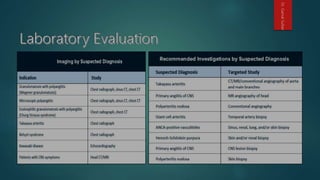
 The laboratory evaluation in these situations may include
 Radiographs, and if indicated, computerized topography and magnetic resonance
imaging may be useful in diagnosing occult respiratory tract or neurologic disease
Dr.GamalSultan
Dr.GamalSultan
 Histological evaluation of the skin lesions is paramount.
 A biopsy of the lesion may yield the typical features of cutaneous vasculitis.
 Additional findings on histopathology may aid in suggesting an underlying
systemic disease.
 Thrombosis of the small blood vessels can be a result of septic vasculitis,
Tissue biopsies sent for culture may detect an infectious cause.
 Immunofluorescence testing of skin to detect bound antibodies help in certain
diseases. deposits of IgA within the vessel wall is observed in
immunofluorescence studies of Henoch-Schönlein purpura.
Dr.GamalSultan
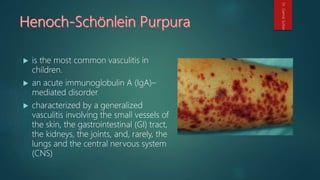
 is the most common vasculitis in
children.
 an acute immunoglobulin A (IgA)–
mediated disorder
 characterized by a generalized
vasculitis involving the small vessels of
the skin, the gastrointestinal (GI) tract,
the kidneys, the joints, and, rarely, the
lungs and the central nervous system
(CNS)
Dr.GamalSultan
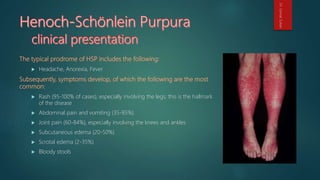
 Headache, Anorexia, Fever
 Rash (95-100% of cases), especially involving the legs; this is the hallmark
of the disease
 Abdominal pain and vomiting (35-85%)
 Joint pain (60-84%), especially involving the knees and ankles
 Subcutaneous edema (20-50%)
 Scrotal edema (2-35%)
 Bloody stools
Dr.GamalSultan
 (ANA), (RF) , Factors VIII and XIII
 Urinalysis, (CBC), Platelet count, (ESR)
 Stool guaiac test, Blood urea nitrogen (BUN) and creatinine
 Amylase and lipase, Electrolytes, Plasma D-dimer
 Plasma thrombin-antithrombin (TAT) complex, prothrombin fragment (PF)-1, and PF-2
 Prothrombin time (PT) and activated partial thromboplastin time (aPTT)
 Serum IgA, Immunocomplexes of IgG and IgA
 Antistreptolysin O (ASO), CH50, C3 and C4
Dr.GamalSultan
 Ultrasonography (abdominal, scrotal/testicular)
 Radiography (chest radiography; plain radiography of the abdomen; contrast
radiography of the small intestine; barium enema study)
 Magnetic resonance imaging (MRI; for assessing neurologic findings)
 Computed tomography (CT) of the head or abdomen
 Endoscopy
 Renal biopsy (particularly when nephrotic syndrome persists and when renal
function deteriorates)
Dr.GamalSultan
 Ensuring adequate hydration
 Monitoring for abdominal and renal complications
 Treating minor symptoms of arthritis, edema, fever, or malaise
 Eating a bland diet
 Discontinuance of any drugs suspected of playing a causative role
 Acetaminophen, Ibuprofen, Flurbiprofen, Ketoprofen, Naproxen
Dr.GamalSultan
 Persistent nephrotic syndrome
 Crescents in more than 50% of glomeruli
 Severe abdominal pain
 Substantial GI hemorrhage
 Severe soft tissue edema
 Severe scrotal edema
 Neurologic system involvement
 Intrapulmonary hemorrhage
Dr.GamalSultan
 Azathioprine
 Cyclophosphamide
 Cyclosporine
 Dipyridamole
 High-dose IV immunoglobulin G (IVIg)
 Danazol
 Fish oil
Dr.GamalSultan
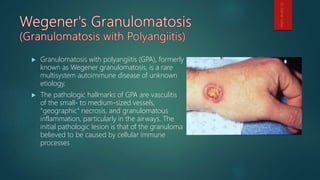
 Granulomatosis with polyangiitis (GPA), formerly
known as Wegener granulomatosis, is a rare
multisystem autoimmune disease of unknown
etiology.
 The pathologic hallmarks of GPA are vasculitis
of the small- to medium-sized vessels,
"geographic" necrosis, and granulomatous
inflammation, particularly in the airways. The
initial pathologic lesion is that of the granuloma
believed to be caused by cellular immune
processes
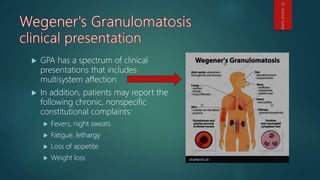
 GPA has a spectrum of clinical
presentations that includes
multisystem affection
 In addition, patients may report the
following chronic, nonspecific
constitutional complaints:
 Fevers, night sweats
 Fatigue, lethargy
 Loss of appetite
 Weight loss
Dr.GamalSultan
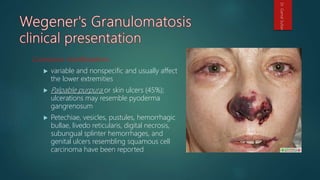
Cutaneous manifestations
 variable and nonspecific and usually affect
the lower extremities
 Palpable purpura or skin ulcers (45%);
ulcerations may resemble pyoderma
gangrenosum
 Petechiae, vesicles, pustules, hemorrhagic
bullae, livedo reticularis, digital necrosis,
subungual splinter hemorrhages, and
genital ulcers resembling squamous cell
carcinoma have been reported
Dr.GamalSultan
 Abnormal kidney function tests and urinalysis in patients with renal involvement
 Rheumatoid factor is positive in a low titer in two thirds of patients
 CBC: Mild normochromic normocytic anemia is present in 50% of patients; leukocytosis is
common, with a neutrophil predominance
 Elevated inflammatory markers (ESR, CRP)
 Cytoplasmic antineutrophil cytoplasmic antibody (c-ANCA) directed against PR3 is most
specific for GPA
 Some patients with GPA express perinuclear-staining ANCA (p-ANCA) specific for
myeloperoxidase (MPO)
 Combining immunofluorescence and ELISA enhances the sensitivity and specificity of a
diagnosis of an ANCA-associated vasculitis (AAV) to 96% and 98.5%, respectivel
Dr.GamalSultan
Induction of remission in GPA is approached as follows:
 Cyclophosphamide with high-dose glucocorticoids (criterion
standard)
 Rituximab with high-dose glucocorticoids
 Methotrexate (oral or subcutaneous) with high-dose
glucocorticoids, in non–organ-threatening or non–life-
threatening GPA
 Plasma exchange may be considered in patients with rapidly
progressive renal disease (serum creatinine level >5.65mg/dL)
in order to preserve renal function
Dr.GamalSultan
Maintenance of remission
 Once induction of remission has occurred, treatment for
maintenance of remission should be continued for at least 18
months, often longer
 Azathioprine (2 mg/kg/day) is safer than, and as effective as,
cyclophosphamide in maintaining remission [6]
 Methotrexate (20-25 mg weekly, oral or subcutaneous) has been
used for the maintenance of remission if the serum creatinine level
is less than 1.5 mg/dL
 Leflunomide (20-30 mg/day) is as effective as methotrexate, but it
is associated with more adverse effects
Dr.GamalSultan
 Is defined by the presence of asthma, allergic rhinitis, pulmonary and
systemic small-vessel vasculitis, extravascular granulomas, and blood
eosinophilia.
 The presence of autoantibodies directed against myeloperoxidase in
neutrophils (p-ANCA) implicated in the disease pathogenesis
 Allergic rhinitis and asthma are usually the first symptoms, followed by
blood and tissue eosinophilia and later by infiltration of the lung and/or
gastrointestinal tract.
 The vasculitic lesion typically occurs three years after the onset of the
allergic manifestations.
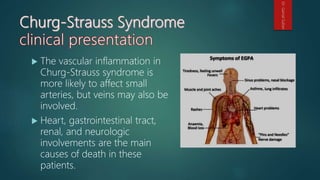
 The vascular inflammation in
Churg-Strauss syndrome is
more likely to affect small
arteries, but veins may also be
involved.
 Heart, gastrointestinal tract,
renal, and neurologic
involvements are the main
causes of death in these
patients.
Dr.GamalSultan
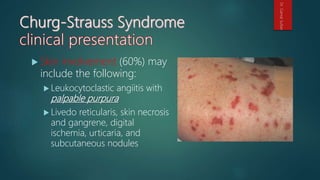
 Skin involvement (60%) may
include the following:
 Leukocytoclastic angiitis with
palpable purpura
 Livedo reticularis, skin necrosis
and gangrene, digital
ischemia, urticaria, and
subcutaneous nodules
Dr.GamalSultan
 Corticosteroids –form the backbone of treatment of people with EGPA.
 Nasal and inhaled steroids – As well as steroid tablets, people with EGPA often
need steroid sprays to treat their nose and sinus symptoms.
 Cyclophosphamide – In people with severe EGPA and those who do not
respond well to steroid treatment
 Azathioprine and Methotrexate –added to reduce level of steroids without
EGPA becoming more active.
 Rituximab –used in severe EGPA that has not responded well to other
treatment.
Dr.GamalSultan
 Classic polyarteritis nodosa (PAN or c-PAN) is a systemic vasculitis characterized
Vascular lesions in medium-sized muscular arteries occur mainly at bifurcations and
branch points.
 Inflammation may start in the vessel intima and progress to include the entire arterial
wall, destroying the internal and external elastic lamina, resulting in fibrinoid necrosis.
 Aneurysms develop in the weakened vessel, carrying a subsequent risk for rupture and
hemorrhage.
 Thrombi may develop at the site of the lesions. As lesions progress, proliferation of the
intima or media may result in obstruction and subsequent tissue ischemia or infarction.
 Polyarteritis nodosa (PAN) spares large vessels, the smallest vessels, and the venous
system
Dr.GamalSultan
 The pathogenesis of polyarteritis nodosa (PAN) is unknown.
 Hepatitis B virus (HBV) infection is strongly linked with PAN.
 Controversy surrounded the association of hepatitis C virus (HCV) with PAN.
 Loss-of-function mutations in CECR1, the gene that encodes adenosine deaminase 2
(ADA2), have been associated with polyarteritis nodosa
 other infectious organisms have been reported in association with PAN or PAN-like
diseases, but causal evidence is inconsistent. These organisms include varicella-zoster
virus, parvovirus B-19, cytomegalovirus, human T-cell leukemia virus, streptococcal
species, Klebsiella species
 Rheumatoid arthritis (RA) and Sjögren syndrome have been associated with PAN.
Dr.GamalSultan
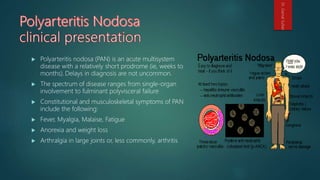
 Polyarteritis nodosa (PAN) is an acute multisystem
disease with a relatively short prodrome (ie, weeks to
months). Delays in diagnosis are not uncommon.
 The spectrum of disease ranges from single-organ
involvement to fulminant polyvisceral failure
 Constitutional and musculoskeletal symptoms of PAN
include the following:
 Fever, Myalgia, Malaise, Fatigue
 Anorexia and weight loss
 Arthralgia in large joints or, less commonly, arthritis
Dr.GamalSultan
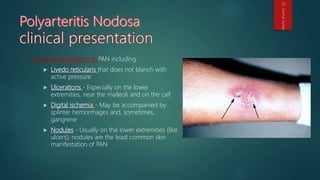
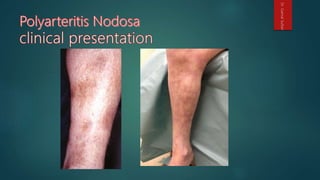
Cutaneous symptoms in PAN including:
 Livedo reticularis that does not blanch with
active pressure
 Ulcerations - Especially on the lower
extremities, near the malleoli and on the calf
 Digital ischemia - May be accompanied by
splinter hemorrhages and, sometimes,
gangrene
 Nodules - Usually on the lower extremities (like
ulcers); nodules are the least common skin
manifestation of PAN
Dr.GamalSultan
Dr.GamalSultan
Laboratory findings in PAN are nonspecific but can help to establish
the systemic nature of the disease. Findings include the following:
 Elevated (ESR) and/or CRP- useful in evaluating some active disease but do
not correlate with activity in all patients
 CBC_ Leukocytosis, normochromic anemia, or thrombocytosis
 Hepatitis B surface antigen and hepatitic C serologies
 Elevated creatinine level, Mild proteinuria, Elevated levels of liver enzymes
 Hypergammaglobulinemia - Found in 30% of patients with PAN
Dr.GamalSultan
 Cryoglobulins, circulating immune complexes, and decreased levels of
serum complement (i.e., C3, C4) observed in patients with HBV-
related PAN but are uncharacteristic of idiopathic PAN.
 CSF findings often are usually normal in PAN, but polymorpho-nuclear
pleocytosis can be seen when with meningeal signs.
 ANCA testing is rarely positive in PAN. If ANCA testing is positive, the
tests more commonly show a perinuclear (rather than cytoplasmic)
pattern and antibodies to proteinase-3 and myeloperoxidase will be
negative.
 ANA and RF are generally negative, but low positive titers may be
detected.
Dr.GamalSultan
 Like systemic PAN, the optimal management for cutaneous
PAN has not been established.
 Expert recommendations include agents such as NSAIDs,
colchicine, and dapsone.
 In more severe cases, steroids and immunosuppressive agents
such as cyclophosphamide may be used.
 Reports of success with other agents such as mizoribine,
mycophenolate, and pentoxifylline have been published.
Dr.GamalSultan
 Kawasaki disease (KD) is an acute febrile vasculitic syndrome of early
childhood.
 Kawasaki disease is best regarded as a generalized vasculitis that involves
small- to medium-sized arteries.
 Although the vasculitis is most pronounced in the coronary vessels, it can
also occur in veins, capillaries, small arterioles, and larger arteries
 The etiology of Kawasaki disease remains unknown. At present, most
evidence indicates that the causative agent is probably infectious.
However, autoimmune reactions and genetic predisposition have been
suggested
Dr.GamalSultan
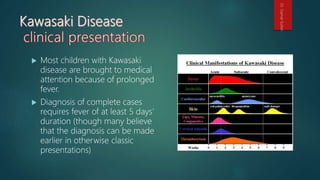
 Most children with Kawasaki
disease are brought to medical
attention because of prolonged
fever.
 Diagnosis of complete cases
requires fever of at least 5 days’
duration (though many believe
that the diagnosis can be made
earlier in otherwise classic
presentations)
Dr.GamalSultan
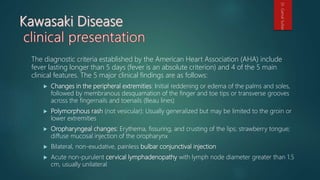
The diagnostic criteria established by the American Heart Association (AHA) include
fever lasting longer than 5 days (fever is an absolute criterion) and 4 of the 5 main
clinical features. The 5 major clinical findings are as follows:
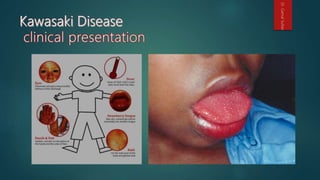
 Changes in the peripheral extremities: Initial reddening or edema of the palms and soles,
followed by membranous desquamation of the finger and toe tips or transverse grooves
across the fingernails and toenails (Beau lines)
 Polymorphous rash (not vesicular): Usually generalized but may be limited to the groin or
lower extremities
 Oropharyngeal changes: Erythema, fissuring, and crusting of the lips; strawberry tongue;
diffuse mucosal injection of the oropharynx
 Bilateral, non-exudative, painless bulbar conjunctival injection
 Acute non-purulent cervical lymphadenopathy with lymph node diameter greater than 1.5
cm, usually unilateral
Dr.GamalSultan
Dr.GamalSultan
 No specific laboratory test is used to diagnose Kawasaki disease (i.e., [ESR], [CRP]
and alpha1-antitrypsin levels) are elevated at first; then return to baseline 6-10
weeks after the onset of the illness.
 More recently, 2 urine proteins hold as biomarkers of Kawasaki disease: meprin A
or filamin C.
 Elevated macrophage migration factor (MIF) and (IL-6) may be useful markers in
the acute stages of Kawasaki disease.
 (CBCs) normochromic anemia, (WBC) is moderate to high (50% of patients have a
WBC greater than 15,000/µL), with a left shift
 Thrombocytopenia is associated with severe coronary artery disease and
myocardial infarction. rarely, it may be associated with disseminated intravascular
coagulation.
 Serum cholesterol, high-density lipoprotein, and apolipoprotein A levels are
decreased;
Dr.GamalSultan
The principal goal of treatment is to prevent coronary artery disease and to relieve symptoms.
 Full doses of intravenous immunoglobulin (IVIG) are the mainstay of treatment.
 Aspirin (high-dose, followed by low-dose) has traditionally been standard.
 Other medications include the following:
 Corticosteroids: Typically in patients unresponsive to standard therapies
 Methotrexate or cyclophosphamide: In IVIG-resistant cases
 Infliximab: In refractory cases with coronary aneurysms [10]
 Antiplatelet medications (eg, clopidogrel, dipyridamole
 Anticoagulants (eg, warfarin, low-molecular-weight heparin
 A new treatment ulinastatin (UTI), a neutrophil elastase inhibitor used to treat patients with
circulatory shock or pancreatitis.
Dr.GamalSultan
 Giant cell arteritis (GCA), or temporal arteritis, is a systemic
inflammatory vasculitis of unknown etiology that occurs in older
persons and can result in a wide variety of systemic, neurologic, and
ophthalmologic complications.
 GCA is the most common form of systemic vasculitis in adults.
 GCA typically affects the superficial temporal arteries—hence the
term temporal arteritis. In addition, GCA most commonly affects the
ophthalmic, occipital, vertebral, posterior ciliary, and proximal
vertebral arteries.
 It has also been involved medium- and large-sized vessels, including
the aorta and the carotid, subclavian, and iliac arteries
Dr.GamalSultan
 The most commonly reported symptoms:
 Headache (initial in 33%, present in 72%)
 Neck, torso, shoulder, and pelvic girdle
pain that is consistent with polymyalgia
rheumatica (PMR; initial in 25%, present
in 58%)
 Fatigue and malaise (initial in 20%,
present in 56%)
 Jaw claudication (initial in 4%, present in
40%)
 Fever (initial in 11%, present in 35%)
 Less common symptoms:
 Limb claudication (8%)
 Transient ischemic attacks (TIAs) or stroke
(4-7%) Scintillating scotoma (5%)
 Carpal tunnel syndrome (5%) or other
peripheral neuropathies
 Tongue or throat claudication (4%)
 Diplopia or ptosis (2%), Tongue
numbness (2%)
 Myelopathic symptoms (< 1%)
 Affective or psychotic symptoms
 Facial pain (rare), Scalp necrosis (rare),
Tongue necrosis (rare)
Dr.GamalSultan
 The diagnostic criteria for GCA issued by the American College of
Rheumatology (the presence of 3 or more yields a diagnostic sensitivity
of 93.5% and specificity of 91.2%):
 Age 50 years or older
 New-onset localized headache or localized head pain
 Temporal artery tenderness to palpation or decreased pulsation
 ESR of 50 mm/h or higher
 Positive arterial biopsy results (vasculitis characterized by mononuclear
infiltration or granulomatous inflammation, usually with multinucleated giant
cells)
Dr.GamalSultan
 The universally accepted treatment of (GCA) is high-dose corticosteroid
therapy
 The dose of prednisone should be initiated at approximately 1 mg/kg
body weight for 1 month. The response to therapy should be rapid and
dramatic, once the ESR has normalized.The dose of prednisone should
be tapered slowly 1-2 years of therapy.
 steroid-sparing immunosuppressive therapy such as methotrexate has
been modest, but may be considered in patients with relative
contraindications to steroids, such as brittle diabetics.
 low-dose acetylsalicylic acid (ASA) has been shown to decrease the
incidence of cerebrovascular accidents and visual loss
Dr.GamalSultan
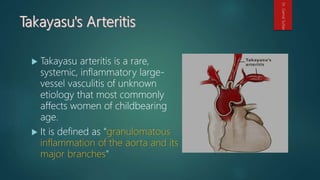
 Takayasu arteritis is a rare,
systemic, inflammatory large-
vessel vasculitis of unknown
etiology that most commonly
affects women of childbearing
age.
 It is defined as "granulomatous
inflammation of the aorta and its
major branches"
Dr.GamalSultan
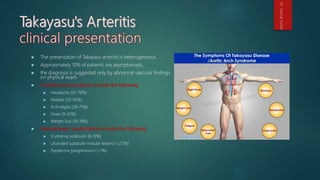
 The presentation of Takayasu arteritis is heterogeneous.
 Approximately 10% of patients are asymptomatic,
 the diagnosis is suggested only by abnormal vascular findings
on physical exam.
 Constitutional symptoms include the following:
 Headache (50-70%)
 Malaise (35-65%)
 Arthralgias (28-75%)
 Fever (9-35%)
 Weight loss (10-18%)
 Dermatologic manifestations include the following:
 Erythema nodosum (6-19%)
 Ulcerated subacute nodular lesions (<2.5%)
 Pyoderma gangrenosum (<1%)
Dr.GamalSultan
 Medical management of Takayasu arteritis depends on the disease activity and the
complications that develop
 The two most important aspects of treatment are controlling the inflammatory
process and controlling hypertension
 Corticosteroids are the mainstay of therapy for active Takayasu arteritis
 IL-6 receptor inhibitor
 Rituximab, a chimeric IgG1 antibody that binds to CD20 expressed on the surface
of B cells, has been shown to improve clinical signs and symptoms of Takayasu
arteritis
 Cytotoxic agents are used for steroid resistant or relapsing.
Dr.GamalSultan
 Erythema elevatum diutinum (EED) is a rare type of leukocytoclastic
vasculitis
 The pathophysiology of erythema elevatum diutinum is not well
understood.
 the lesions are thought to be caused by the deposition of immune
complexes in small blood vessels.
 It can occur at any age. However, it is mostly an adult disease that
occurs from the third to sixth decade of life.
Dr.GamalSultan
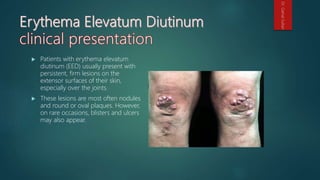
 Patients with erythema elevatum
diutinum (EED) usually present with
persistent, firm lesions on the
extensor surfaces of their skin,
especially over the joints.
 These lesions are most often nodules
and round or oval plaques. However,
on rare occasions, blisters and ulcers
may also appear.
Dr.GamalSultan
 Upon physical examination,
erythema elevatum diutinum lesions
are generally found symmetrically
on the extensor surfaces of the skin,
especially over the joints.
 Clinical studies show a preference
for the extensor surfaces of the
hands, wrists, elbows, ankles,
Achilles tendons, fingers, and toes.
Dr.GamalSultan
 Electron microscopy show changes consistent with leukocytoclastic vasculitis.
 Direct immunofluorescence show deposits of complement, immunoglobulins (IgG,
IgA, IgM), and fibrin intravascularly and perivascularly.
 Immunoelectrophoresis (IEP) used to identify possible gammopathies.
 A positive reaction to skin testing with streptokinase and streptodornase at 4 and 24
hours help determine a causative association with bacterial infection.
 ESR is often elevated.
 Antineutrophil cytoplasmic antibodies of IgA class become a helpful paraclinical
marker of disease
Dr.GamalSultan
 Dapsone (diaminodiphenylsulfone) revolutionized the treatment of patients with
(EED). Several studies have shown a good response to dapsone, therefore making
it the treatment of choice.
 Systemic steroids generally have not been found to be effective.
 Sulfapyridine has had similar effects as dapsone.
 Niacinamide was found (in one study) to be helpful in suppressing EED.
 Intermittent plasma exchange (PLEX) was shown to control IgA paraproteinemia
associated with EED. The IgA levels responded to PLEX treatment, followed by
consolidative doses of cyclophosphamide. This treatment might be promising for
the control of severe EED that is not controlled by dapsone.
Dr.GamalSultan
 an eruption of erythematous wheals that clinically resemble urticaria but
histologically show changes of leukocytoclastic vasculitis.
 Urticarial vasculitis may be divided into normocomplementemic and
hypocomplementemic variants.
 Both subsets can be associated with systemic symptoms (eg,angioedema,
arthralgias, abdominal or chest pain, fever, pulmonary disease, renal disease,
episcleritis, uveitis, and Raynaud phenomenon).
 The hypocomplementemic form more often is associated with systemic symptoms
and has been linked to connective-tissue disease (ie, [SLE]).
Dr.GamalSultan
 The pathophysiology of urticarial vasculitis is similar to other forms of
cutaneous small vessel leukocytoclastic vasculitis.
 Urticarial vasculitis is a type III hypersensitivity reaction
 Patients with hypocomplementemic urticarial vasculitis are more likely to
show autoantibodies to C1q and vascular endothelial cells.
 The presence of antineutrophilic cytoplasmic antibodies is rare.
 Many patients ultimately prove to have SLE.
 Other etiologies include drug reactions and parasitic infections
Dr.GamalSultan
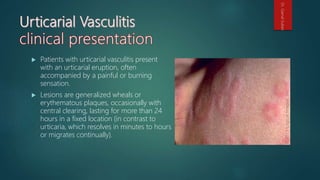
 Patients with urticarial vasculitis present
with an urticarial eruption, often
accompanied by a painful or burning
sensation.
 Lesions are generalized wheals or
erythematous plaques, occasionally with
central clearing, lasting for more than 24
hours in a fixed location (in contrast to
urticaria, which resolves in minutes to hours
or migrates continually).
Dr.GamalSultan
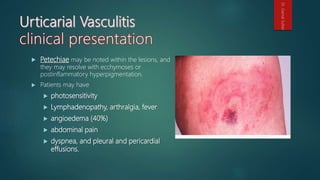
 Petechiae may be noted within the lesions, and
they may resolve with ecchymoses or
postinflammatory hyperpigmentation.
 Patients may have
 photosensitivity
 Lymphadenopathy, arthralgia, fever
 angioedema (40%)
 abdominal pain
 dyspnea, and pleural and pericardial
effusions.
Dr.GamalSultan
 Check CH50, C3, C4, Clq, and antibodies to Clq in urticarial vasculitis patients. If these
test results are positive, evaluate renal function and urinalysis to check for the effects
of vasculitis on the kidneys.
 If the history suggests viral infections, obtain hepatitis B, hepatitis C
 Direct immunofluorescence may show deposition of vascular C3, fibrin, and
immunoglobulins.
 A lupus band may be detected in patients with underlying lupus erythematosus.
 ANA and lupus serologies. Anti-SSA and anti-SSB may be seen in patients with
Sjögren syndrome.
 antineutrophilic cytoplasmic antibodies are generally negative, and, if they are positive,
the possibility of Wegener granulomatosis or microscopic polyangiitis should be
considered.
Dr.GamalSultan
 Treatment is based on
 systemic effects of the disease,
 extent of cutaneous involvement, and
 previous response to treatment.
 Antihistamines or nonsteroidal anti-inflammatory drugs (NSAIDs) For patients with
cutaneous involvement may provide symptomatic relief.
 Colchicine, hydroxychloroquine, or dapsone , If these agents fail may be effective.
 glucocorticoids If all other treatment modalities have failed or if the patient has
systemic involvement
 Rituximab-based treatment can provide higher response rates compared with
corticosteroids and conventional immunosuppressive agents
Dr.GamalSultan
are single or mixed immunoglobulins that undergo reversible
precipitation at low temperatures. the potential clinical manifestations vary by
cryoglobulin type.
is characterized by the presence of cryoglobulins in the serum. This
may result in a clinical syndrome of systemic inflammation (most commonly affecting
the kidneys and skin) caused by cryoglobulin-containing immune complexes.
, is the result of a monoclonal immunoglobulin, usually (IgM) or, less
frequently,(IgG), (IgA), or light chains.
) contain rheumatoid factors
(RFs), which are usually IgM and, rarely, IgG or IgA. The actual RF may be monoclonal (in type
II cryoglobulinemia) or polyclonal (in type III cryoglobulinemia).
Types II and III cryoglobulinemia represent 80% of all cryoglobulins.
Dr.GamalSultan
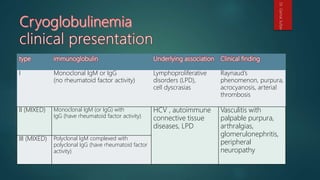
type immunoglobulin Underlying association Clinical finding
I Monoclonal IgM or IgG
(no rheumatoid factor activity)
Lymphoproliferative
disorders (LPD),
cell dyscrasias
Raynaud’s
phenomenon, purpura,
acrocyanosis, arterial
thrombosis
II (MIXED) Monoclonal IgM (or IgG) with
IgG (have rheumatoid factor activity)
HCV , autoimmune
connective tissue
diseases, LPD
Vasculitis with
palpable purpura,
arthralgias,
glomerulonephritis,
peripheral
neuropathy
III (MIXED) Polyclonal IgM complexed with
polyclonal IgG (have rheumatoid factor
activity)
Dr.GamalSultan
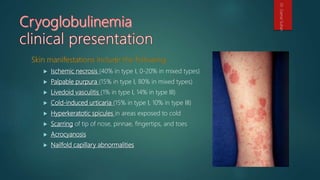
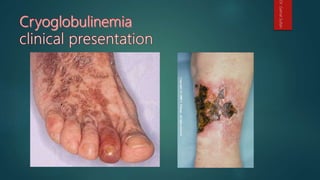
 Ischemic necrosis (40% in type I, 0-20% in mixed types)
 Palpable purpura (15% in type I, 80% in mixed types)
 Livedoid vasculitis (1% in type I, 14% in type III)
 Cold-induced urticaria (15% in type I, 10% in type III)
 Hyperkeratotic spicules in areas exposed to cold
 Scarring of tip of nose, pinnae, fingertips, and toes
 Acrocyanosis
 Nailfold capillary abnormalities
Dr.GamalSultan
Dr.GamalSultan
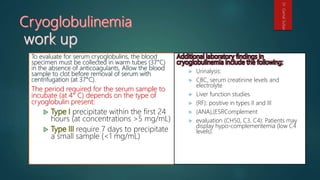
To evaluate for serum cryoglobulins, the blood
specimen must be collected in warm tubes (37°C)
in the absence of anticoagulants. Allow the blood
sample to clot before removal of serum with
centrifugation (at 37°C).
The period required for the serum sample to
incubate (at 4° C) depends on the type of
cryoglobulin present:
precipitate within the first 24
hours (at concentrations >5 mg/mL)
require 7 days to precipitate
a small sample (<1 mg/mL)
 Urinalysis:
 CBC, serum creatinine levels and
electrolyte
 Liver function studies
 (RF): positive in types II and III
 (ANA),(ESRComplement
 evaluation (CH50, C3, C4): Patients may
display hypo-complementemia (low C4
levels).
Dr.GamalSultan
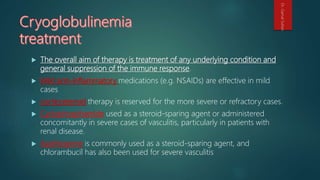
 The overall aim of therapy is treatment of any underlying condition and
general suppression of the immune response.
 Mild anti-inflammatory medications (e.g. NSAIDs) are effective in mild
cases
 corticosteroid therapy is reserved for the more severe or refractory cases.
 Cyclophosphamide used as a steroid-sparing agent or administered
concomitantly in severe cases of vasculitis, particularly in patients with
renal disease.
 Azathioprine is commonly used as a steroid-sparing agent, and
chlorambucil has also been used for severe vasculitis
Dr.GamalSultan
Vasculitis

Vasculitis

  • 2.
     Vasculitis isdefined as inflammation and fibrinoid necrosis of the blood vessel wall  It may present in a wide variety of clinical manifestations depending on Dr.GamalSultan
  • 3.
     Some classificationsystems have focused on  Both types of classification scheme are imperfect, as overlap of vessels of various sizes may occur, and the type of inflammatory infiltrate may change over time Dr.GamalSultan
  • 4.
    In 1994, theChapel Hill Consensus Conference (CHCC) created an alternative schema for classification of the major types of vasculitis  Giant cell arteritis  Takayasu's arteritis  Classic polyarteritis nodosa  Kawasaki disease  Wegener's granulomatosis  Churg-Strauss syndrome  Microscopic polyangiits  Henoch-Schönlein purpura  Essential cryoglobulinemia vasculitis  Cutaneous leukocytoclastic angiitis Dr.GamalSultan
  • 5.
  • 6.
     the estimatedthe annual incidence of cutaneous vasculitis is 38.6 cases per million.  the incidence is greater in women (50.4 cases per million) than in men (26.0 cases per million).  Cutaneous leukocytoclastic vasculitis, as defined by the CHCC, was found to be 15.4 cases per million.  A female predominance was observed with an estimated 24.2 cases per million cases compared to males (6.0 cases per million). Dr.GamalSultan
  • 7.
     Vasculitis, regardlessof its cause, most commonly presents as palpable purpura.  Palpable purpura is a raised, non- blanchable erythema and signifies extravasation of red cells outside of blood vessels Dr.GamalSultan
  • 8.
    in addition tothis pathognomonic sign, lesions may including:  red macules,  wheals,  papules,  nodules,  ulcers ,  vesicles, and  blisters Dr.GamalSultan
  • 9.
     The clinicalpresentation may vary, depending on the size of the vessel involved.  Cutaneous small- and medium-sized vessel disease may present with a reticulate pattern that outlines the cutaneous vasculature.  Large vessels that supply a larger area of skin may present with widespread purpura and necrosis.  The lesions are distributed often symmetrically, most commonly on the lower legs, but can occur anywhere in the body. Lesions typically occur in areas of dependency but may occur in areas of trauma or pressure Dr.GamalSultan
  • 10.
     Mucosal involvementis rare, and if present, manifests itself in the form of petechiae, hemorrhagic blisters, and ulcers.  Usually, cutaneous lesions heal within one to four weeks if a single initiating factor is the cause, for example, drug exposure. However, if cutaneous ulcers occur, healing may be prolonged.  There may also be residual scarring and hyperpigmentation.  Vasculitis may, however, be recurrent and/or intermittent with new crops of lesions appearing for months or years Dr.GamalSultan
  • 11.
     In somecases, the episode of cutaneous vasculitic lesions may be associated with .  The skin is often the only organ involved, but in some cases, may be part of a systemic vasculitis correlated to an underlying disease.  Emboli leading to palpable lesions can occur in patients with endocarditis, left atrial myxoma, or due to cholesterol emboli.  Thrombocytopenia and disseminated intravascular coagulopathy present as widespread purpura; however, the purpura is usually in these cases Dr.GamalSultan
  • 12.
     Skin involvementin vasculitis may either occur as a sole entity or as part of vasculitis involving other organ systems. In either case, the histology may be similar characterized by  involvement of the post capillary venules with endothelial cell swelling  neutrophilic invasion of blood vessel walls  presence of disrupted neutrophils (leukocytoclasia)  extravasation of red blood cells  fibrinoid necrosis of the blood vessels walls. Dr.GamalSultan
  • 13.
     These featuresgenerated the term cutaneous necrotizing vasculitis (CNV), which refers to leukocytoclastic vasculitis affecting the small and medium vessels that supply nutrients to the skin.  In later stages, thrombosis of affected small vessels is frequently observed, as well as hyalinization and fibrosis of vessel walls. Dr.GamalSultan
  • 14.
     Based onhistopathologic findings, CNV can be divided in two major groups:  leukocytoclastic form, due to deposition of immune complexes on blood vessel wall (type III hypersensitivity reaction), and  lymphomonocytic form, caused by immune-mediated vessel injury.  Some authors consider these two forms as different stages of the same process. That is, over time a predominantly neutrophilic infiltrate will be replaced by lymphocytes or monocytes Dr.GamalSultan
  • 15.
     The etiologyof a vasculitic syndrome is probably multifactorial with influences on disease expression caused by ethnicity, genes (HLA and others), gender, and environment (ultraviolet exposure, infections, drugs, smoking, and surgery).  Frequent associations include infectious agents, medications, connective tissue diseases, and malignancies among others.  One half of all patients with cutaneous vasculitis, however, have no definite etiologic agent or associated disease.  Among the idiopathic vasculitides are Henoch-Schönlein purpura, urticarial vasculitis, erythema elevatum diutinum, nodular vasculitis, and cutaneous polyarteritis nodosa Dr.GamalSultan
  • 16.
     Although oftenclinically apparent, excluding other conditions that may present similarly is the initial step in evaluating a patient with an eruption suggestive of vasculitis. Additionally, accurate diagnosis of the different forms of vasculitis will depend on  the integration of a complete medical history  thorough physical exam  laboratory data  The aim of the investigations should be directed toward determining a potential cause or associated disorder, as well as determining the presence or absence of organ system involvement Dr.GamalSultan
  • 17.
     The laboratoryevaluation in these situations may include  Radiographs, and if indicated, computerized topography and magnetic resonance imaging may be useful in diagnosing occult respiratory tract or neurologic disease Dr.GamalSultan
  • 18.
  • 19.
     Histological evaluationof the skin lesions is paramount.  A biopsy of the lesion may yield the typical features of cutaneous vasculitis.  Additional findings on histopathology may aid in suggesting an underlying systemic disease.  Thrombosis of the small blood vessels can be a result of septic vasculitis, Tissue biopsies sent for culture may detect an infectious cause.  Immunofluorescence testing of skin to detect bound antibodies help in certain diseases. deposits of IgA within the vessel wall is observed in immunofluorescence studies of Henoch-Schönlein purpura. Dr.GamalSultan
  • 21.
     is themost common vasculitis in children.  an acute immunoglobulin A (IgA)– mediated disorder  characterized by a generalized vasculitis involving the small vessels of the skin, the gastrointestinal (GI) tract, the kidneys, the joints, and, rarely, the lungs and the central nervous system (CNS) Dr.GamalSultan
  • 22.
     Headache, Anorexia,Fever  Rash (95-100% of cases), especially involving the legs; this is the hallmark of the disease  Abdominal pain and vomiting (35-85%)  Joint pain (60-84%), especially involving the knees and ankles  Subcutaneous edema (20-50%)  Scrotal edema (2-35%)  Bloody stools Dr.GamalSultan
  • 23.
     (ANA), (RF), Factors VIII and XIII  Urinalysis, (CBC), Platelet count, (ESR)  Stool guaiac test, Blood urea nitrogen (BUN) and creatinine  Amylase and lipase, Electrolytes, Plasma D-dimer  Plasma thrombin-antithrombin (TAT) complex, prothrombin fragment (PF)-1, and PF-2  Prothrombin time (PT) and activated partial thromboplastin time (aPTT)  Serum IgA, Immunocomplexes of IgG and IgA  Antistreptolysin O (ASO), CH50, C3 and C4 Dr.GamalSultan
  • 24.
     Ultrasonography (abdominal,scrotal/testicular)  Radiography (chest radiography; plain radiography of the abdomen; contrast radiography of the small intestine; barium enema study)  Magnetic resonance imaging (MRI; for assessing neurologic findings)  Computed tomography (CT) of the head or abdomen  Endoscopy  Renal biopsy (particularly when nephrotic syndrome persists and when renal function deteriorates) Dr.GamalSultan
  • 25.
     Ensuring adequatehydration  Monitoring for abdominal and renal complications  Treating minor symptoms of arthritis, edema, fever, or malaise  Eating a bland diet  Discontinuance of any drugs suspected of playing a causative role  Acetaminophen, Ibuprofen, Flurbiprofen, Ketoprofen, Naproxen Dr.GamalSultan
  • 26.
     Persistent nephroticsyndrome  Crescents in more than 50% of glomeruli  Severe abdominal pain  Substantial GI hemorrhage  Severe soft tissue edema  Severe scrotal edema  Neurologic system involvement  Intrapulmonary hemorrhage Dr.GamalSultan
  • 27.
     Azathioprine  Cyclophosphamide Cyclosporine  Dipyridamole  High-dose IV immunoglobulin G (IVIg)  Danazol  Fish oil Dr.GamalSultan
  • 28.
     Granulomatosis withpolyangiitis (GPA), formerly known as Wegener granulomatosis, is a rare multisystem autoimmune disease of unknown etiology.  The pathologic hallmarks of GPA are vasculitis of the small- to medium-sized vessels, "geographic" necrosis, and granulomatous inflammation, particularly in the airways. The initial pathologic lesion is that of the granuloma believed to be caused by cellular immune processes
  • 29.
     GPA hasa spectrum of clinical presentations that includes multisystem affection  In addition, patients may report the following chronic, nonspecific constitutional complaints:  Fevers, night sweats  Fatigue, lethargy  Loss of appetite  Weight loss Dr.GamalSultan
  • 30.
    Cutaneous manifestations  variableand nonspecific and usually affect the lower extremities  Palpable purpura or skin ulcers (45%); ulcerations may resemble pyoderma gangrenosum  Petechiae, vesicles, pustules, hemorrhagic bullae, livedo reticularis, digital necrosis, subungual splinter hemorrhages, and genital ulcers resembling squamous cell carcinoma have been reported Dr.GamalSultan
  • 31.
     Abnormal kidneyfunction tests and urinalysis in patients with renal involvement  Rheumatoid factor is positive in a low titer in two thirds of patients  CBC: Mild normochromic normocytic anemia is present in 50% of patients; leukocytosis is common, with a neutrophil predominance  Elevated inflammatory markers (ESR, CRP)  Cytoplasmic antineutrophil cytoplasmic antibody (c-ANCA) directed against PR3 is most specific for GPA  Some patients with GPA express perinuclear-staining ANCA (p-ANCA) specific for myeloperoxidase (MPO)  Combining immunofluorescence and ELISA enhances the sensitivity and specificity of a diagnosis of an ANCA-associated vasculitis (AAV) to 96% and 98.5%, respectivel Dr.GamalSultan
  • 32.
    Induction of remissionin GPA is approached as follows:  Cyclophosphamide with high-dose glucocorticoids (criterion standard)  Rituximab with high-dose glucocorticoids  Methotrexate (oral or subcutaneous) with high-dose glucocorticoids, in non–organ-threatening or non–life- threatening GPA  Plasma exchange may be considered in patients with rapidly progressive renal disease (serum creatinine level >5.65mg/dL) in order to preserve renal function Dr.GamalSultan
  • 33.
    Maintenance of remission Once induction of remission has occurred, treatment for maintenance of remission should be continued for at least 18 months, often longer  Azathioprine (2 mg/kg/day) is safer than, and as effective as, cyclophosphamide in maintaining remission [6]  Methotrexate (20-25 mg weekly, oral or subcutaneous) has been used for the maintenance of remission if the serum creatinine level is less than 1.5 mg/dL  Leflunomide (20-30 mg/day) is as effective as methotrexate, but it is associated with more adverse effects Dr.GamalSultan
  • 34.
     Is definedby the presence of asthma, allergic rhinitis, pulmonary and systemic small-vessel vasculitis, extravascular granulomas, and blood eosinophilia.  The presence of autoantibodies directed against myeloperoxidase in neutrophils (p-ANCA) implicated in the disease pathogenesis  Allergic rhinitis and asthma are usually the first symptoms, followed by blood and tissue eosinophilia and later by infiltration of the lung and/or gastrointestinal tract.  The vasculitic lesion typically occurs three years after the onset of the allergic manifestations.
  • 35.
     The vascularinflammation in Churg-Strauss syndrome is more likely to affect small arteries, but veins may also be involved.  Heart, gastrointestinal tract, renal, and neurologic involvements are the main causes of death in these patients. Dr.GamalSultan
  • 36.
     Skin involvement(60%) may include the following:  Leukocytoclastic angiitis with palpable purpura  Livedo reticularis, skin necrosis and gangrene, digital ischemia, urticaria, and subcutaneous nodules Dr.GamalSultan
  • 37.
     Corticosteroids –formthe backbone of treatment of people with EGPA.  Nasal and inhaled steroids – As well as steroid tablets, people with EGPA often need steroid sprays to treat their nose and sinus symptoms.  Cyclophosphamide – In people with severe EGPA and those who do not respond well to steroid treatment  Azathioprine and Methotrexate –added to reduce level of steroids without EGPA becoming more active.  Rituximab –used in severe EGPA that has not responded well to other treatment. Dr.GamalSultan
  • 38.
     Classic polyarteritisnodosa (PAN or c-PAN) is a systemic vasculitis characterized Vascular lesions in medium-sized muscular arteries occur mainly at bifurcations and branch points.  Inflammation may start in the vessel intima and progress to include the entire arterial wall, destroying the internal and external elastic lamina, resulting in fibrinoid necrosis.  Aneurysms develop in the weakened vessel, carrying a subsequent risk for rupture and hemorrhage.  Thrombi may develop at the site of the lesions. As lesions progress, proliferation of the intima or media may result in obstruction and subsequent tissue ischemia or infarction.  Polyarteritis nodosa (PAN) spares large vessels, the smallest vessels, and the venous system Dr.GamalSultan
  • 39.
     The pathogenesisof polyarteritis nodosa (PAN) is unknown.  Hepatitis B virus (HBV) infection is strongly linked with PAN.  Controversy surrounded the association of hepatitis C virus (HCV) with PAN.  Loss-of-function mutations in CECR1, the gene that encodes adenosine deaminase 2 (ADA2), have been associated with polyarteritis nodosa  other infectious organisms have been reported in association with PAN or PAN-like diseases, but causal evidence is inconsistent. These organisms include varicella-zoster virus, parvovirus B-19, cytomegalovirus, human T-cell leukemia virus, streptococcal species, Klebsiella species  Rheumatoid arthritis (RA) and Sjögren syndrome have been associated with PAN. Dr.GamalSultan
  • 40.
     Polyarteritis nodosa(PAN) is an acute multisystem disease with a relatively short prodrome (ie, weeks to months). Delays in diagnosis are not uncommon.  The spectrum of disease ranges from single-organ involvement to fulminant polyvisceral failure  Constitutional and musculoskeletal symptoms of PAN include the following:  Fever, Myalgia, Malaise, Fatigue  Anorexia and weight loss  Arthralgia in large joints or, less commonly, arthritis Dr.GamalSultan
  • 41.
    Cutaneous symptoms inPAN including:  Livedo reticularis that does not blanch with active pressure  Ulcerations - Especially on the lower extremities, near the malleoli and on the calf  Digital ischemia - May be accompanied by splinter hemorrhages and, sometimes, gangrene  Nodules - Usually on the lower extremities (like ulcers); nodules are the least common skin manifestation of PAN Dr.GamalSultan
  • 42.
  • 43.
    Laboratory findings inPAN are nonspecific but can help to establish the systemic nature of the disease. Findings include the following:  Elevated (ESR) and/or CRP- useful in evaluating some active disease but do not correlate with activity in all patients  CBC_ Leukocytosis, normochromic anemia, or thrombocytosis  Hepatitis B surface antigen and hepatitic C serologies  Elevated creatinine level, Mild proteinuria, Elevated levels of liver enzymes  Hypergammaglobulinemia - Found in 30% of patients with PAN Dr.GamalSultan
  • 44.
     Cryoglobulins, circulatingimmune complexes, and decreased levels of serum complement (i.e., C3, C4) observed in patients with HBV- related PAN but are uncharacteristic of idiopathic PAN.  CSF findings often are usually normal in PAN, but polymorpho-nuclear pleocytosis can be seen when with meningeal signs.  ANCA testing is rarely positive in PAN. If ANCA testing is positive, the tests more commonly show a perinuclear (rather than cytoplasmic) pattern and antibodies to proteinase-3 and myeloperoxidase will be negative.  ANA and RF are generally negative, but low positive titers may be detected. Dr.GamalSultan
  • 45.
     Like systemicPAN, the optimal management for cutaneous PAN has not been established.  Expert recommendations include agents such as NSAIDs, colchicine, and dapsone.  In more severe cases, steroids and immunosuppressive agents such as cyclophosphamide may be used.  Reports of success with other agents such as mizoribine, mycophenolate, and pentoxifylline have been published. Dr.GamalSultan
  • 46.
     Kawasaki disease(KD) is an acute febrile vasculitic syndrome of early childhood.  Kawasaki disease is best regarded as a generalized vasculitis that involves small- to medium-sized arteries.  Although the vasculitis is most pronounced in the coronary vessels, it can also occur in veins, capillaries, small arterioles, and larger arteries  The etiology of Kawasaki disease remains unknown. At present, most evidence indicates that the causative agent is probably infectious. However, autoimmune reactions and genetic predisposition have been suggested Dr.GamalSultan
  • 47.
     Most childrenwith Kawasaki disease are brought to medical attention because of prolonged fever.  Diagnosis of complete cases requires fever of at least 5 days’ duration (though many believe that the diagnosis can be made earlier in otherwise classic presentations) Dr.GamalSultan
  • 48.
    The diagnostic criteriaestablished by the American Heart Association (AHA) include fever lasting longer than 5 days (fever is an absolute criterion) and 4 of the 5 main clinical features. The 5 major clinical findings are as follows:  Changes in the peripheral extremities: Initial reddening or edema of the palms and soles, followed by membranous desquamation of the finger and toe tips or transverse grooves across the fingernails and toenails (Beau lines)  Polymorphous rash (not vesicular): Usually generalized but may be limited to the groin or lower extremities  Oropharyngeal changes: Erythema, fissuring, and crusting of the lips; strawberry tongue; diffuse mucosal injection of the oropharynx  Bilateral, non-exudative, painless bulbar conjunctival injection  Acute non-purulent cervical lymphadenopathy with lymph node diameter greater than 1.5 cm, usually unilateral Dr.GamalSultan
  • 49.
  • 50.
     No specificlaboratory test is used to diagnose Kawasaki disease (i.e., [ESR], [CRP] and alpha1-antitrypsin levels) are elevated at first; then return to baseline 6-10 weeks after the onset of the illness.  More recently, 2 urine proteins hold as biomarkers of Kawasaki disease: meprin A or filamin C.  Elevated macrophage migration factor (MIF) and (IL-6) may be useful markers in the acute stages of Kawasaki disease.  (CBCs) normochromic anemia, (WBC) is moderate to high (50% of patients have a WBC greater than 15,000/µL), with a left shift  Thrombocytopenia is associated with severe coronary artery disease and myocardial infarction. rarely, it may be associated with disseminated intravascular coagulation.  Serum cholesterol, high-density lipoprotein, and apolipoprotein A levels are decreased; Dr.GamalSultan
  • 51.
    The principal goalof treatment is to prevent coronary artery disease and to relieve symptoms.  Full doses of intravenous immunoglobulin (IVIG) are the mainstay of treatment.  Aspirin (high-dose, followed by low-dose) has traditionally been standard.  Other medications include the following:  Corticosteroids: Typically in patients unresponsive to standard therapies  Methotrexate or cyclophosphamide: In IVIG-resistant cases  Infliximab: In refractory cases with coronary aneurysms [10]  Antiplatelet medications (eg, clopidogrel, dipyridamole  Anticoagulants (eg, warfarin, low-molecular-weight heparin  A new treatment ulinastatin (UTI), a neutrophil elastase inhibitor used to treat patients with circulatory shock or pancreatitis. Dr.GamalSultan
  • 52.
     Giant cellarteritis (GCA), or temporal arteritis, is a systemic inflammatory vasculitis of unknown etiology that occurs in older persons and can result in a wide variety of systemic, neurologic, and ophthalmologic complications.  GCA is the most common form of systemic vasculitis in adults.  GCA typically affects the superficial temporal arteries—hence the term temporal arteritis. In addition, GCA most commonly affects the ophthalmic, occipital, vertebral, posterior ciliary, and proximal vertebral arteries.  It has also been involved medium- and large-sized vessels, including the aorta and the carotid, subclavian, and iliac arteries Dr.GamalSultan
  • 53.
     The mostcommonly reported symptoms:  Headache (initial in 33%, present in 72%)  Neck, torso, shoulder, and pelvic girdle pain that is consistent with polymyalgia rheumatica (PMR; initial in 25%, present in 58%)  Fatigue and malaise (initial in 20%, present in 56%)  Jaw claudication (initial in 4%, present in 40%)  Fever (initial in 11%, present in 35%)  Less common symptoms:  Limb claudication (8%)  Transient ischemic attacks (TIAs) or stroke (4-7%) Scintillating scotoma (5%)  Carpal tunnel syndrome (5%) or other peripheral neuropathies  Tongue or throat claudication (4%)  Diplopia or ptosis (2%), Tongue numbness (2%)  Myelopathic symptoms (< 1%)  Affective or psychotic symptoms  Facial pain (rare), Scalp necrosis (rare), Tongue necrosis (rare) Dr.GamalSultan
  • 54.
     The diagnosticcriteria for GCA issued by the American College of Rheumatology (the presence of 3 or more yields a diagnostic sensitivity of 93.5% and specificity of 91.2%):  Age 50 years or older  New-onset localized headache or localized head pain  Temporal artery tenderness to palpation or decreased pulsation  ESR of 50 mm/h or higher  Positive arterial biopsy results (vasculitis characterized by mononuclear infiltration or granulomatous inflammation, usually with multinucleated giant cells) Dr.GamalSultan
  • 55.
     The universallyaccepted treatment of (GCA) is high-dose corticosteroid therapy  The dose of prednisone should be initiated at approximately 1 mg/kg body weight for 1 month. The response to therapy should be rapid and dramatic, once the ESR has normalized.The dose of prednisone should be tapered slowly 1-2 years of therapy.  steroid-sparing immunosuppressive therapy such as methotrexate has been modest, but may be considered in patients with relative contraindications to steroids, such as brittle diabetics.  low-dose acetylsalicylic acid (ASA) has been shown to decrease the incidence of cerebrovascular accidents and visual loss Dr.GamalSultan
  • 56.
     Takayasu arteritisis a rare, systemic, inflammatory large- vessel vasculitis of unknown etiology that most commonly affects women of childbearing age.  It is defined as "granulomatous inflammation of the aorta and its major branches" Dr.GamalSultan
  • 57.
     The presentationof Takayasu arteritis is heterogeneous.  Approximately 10% of patients are asymptomatic,  the diagnosis is suggested only by abnormal vascular findings on physical exam.  Constitutional symptoms include the following:  Headache (50-70%)  Malaise (35-65%)  Arthralgias (28-75%)  Fever (9-35%)  Weight loss (10-18%)  Dermatologic manifestations include the following:  Erythema nodosum (6-19%)  Ulcerated subacute nodular lesions (<2.5%)  Pyoderma gangrenosum (<1%) Dr.GamalSultan
  • 58.
     Medical managementof Takayasu arteritis depends on the disease activity and the complications that develop  The two most important aspects of treatment are controlling the inflammatory process and controlling hypertension  Corticosteroids are the mainstay of therapy for active Takayasu arteritis  IL-6 receptor inhibitor  Rituximab, a chimeric IgG1 antibody that binds to CD20 expressed on the surface of B cells, has been shown to improve clinical signs and symptoms of Takayasu arteritis  Cytotoxic agents are used for steroid resistant or relapsing. Dr.GamalSultan
  • 59.
     Erythema elevatumdiutinum (EED) is a rare type of leukocytoclastic vasculitis  The pathophysiology of erythema elevatum diutinum is not well understood.  the lesions are thought to be caused by the deposition of immune complexes in small blood vessels.  It can occur at any age. However, it is mostly an adult disease that occurs from the third to sixth decade of life. Dr.GamalSultan
  • 60.
     Patients witherythema elevatum diutinum (EED) usually present with persistent, firm lesions on the extensor surfaces of their skin, especially over the joints.  These lesions are most often nodules and round or oval plaques. However, on rare occasions, blisters and ulcers may also appear. Dr.GamalSultan
  • 61.
     Upon physicalexamination, erythema elevatum diutinum lesions are generally found symmetrically on the extensor surfaces of the skin, especially over the joints.  Clinical studies show a preference for the extensor surfaces of the hands, wrists, elbows, ankles, Achilles tendons, fingers, and toes. Dr.GamalSultan
  • 62.
     Electron microscopyshow changes consistent with leukocytoclastic vasculitis.  Direct immunofluorescence show deposits of complement, immunoglobulins (IgG, IgA, IgM), and fibrin intravascularly and perivascularly.  Immunoelectrophoresis (IEP) used to identify possible gammopathies.  A positive reaction to skin testing with streptokinase and streptodornase at 4 and 24 hours help determine a causative association with bacterial infection.  ESR is often elevated.  Antineutrophil cytoplasmic antibodies of IgA class become a helpful paraclinical marker of disease Dr.GamalSultan
  • 63.
     Dapsone (diaminodiphenylsulfone)revolutionized the treatment of patients with (EED). Several studies have shown a good response to dapsone, therefore making it the treatment of choice.  Systemic steroids generally have not been found to be effective.  Sulfapyridine has had similar effects as dapsone.  Niacinamide was found (in one study) to be helpful in suppressing EED.  Intermittent plasma exchange (PLEX) was shown to control IgA paraproteinemia associated with EED. The IgA levels responded to PLEX treatment, followed by consolidative doses of cyclophosphamide. This treatment might be promising for the control of severe EED that is not controlled by dapsone. Dr.GamalSultan
  • 64.
     an eruptionof erythematous wheals that clinically resemble urticaria but histologically show changes of leukocytoclastic vasculitis.  Urticarial vasculitis may be divided into normocomplementemic and hypocomplementemic variants.  Both subsets can be associated with systemic symptoms (eg,angioedema, arthralgias, abdominal or chest pain, fever, pulmonary disease, renal disease, episcleritis, uveitis, and Raynaud phenomenon).  The hypocomplementemic form more often is associated with systemic symptoms and has been linked to connective-tissue disease (ie, [SLE]). Dr.GamalSultan
  • 65.
     The pathophysiologyof urticarial vasculitis is similar to other forms of cutaneous small vessel leukocytoclastic vasculitis.  Urticarial vasculitis is a type III hypersensitivity reaction  Patients with hypocomplementemic urticarial vasculitis are more likely to show autoantibodies to C1q and vascular endothelial cells.  The presence of antineutrophilic cytoplasmic antibodies is rare.  Many patients ultimately prove to have SLE.  Other etiologies include drug reactions and parasitic infections Dr.GamalSultan
  • 66.
     Patients withurticarial vasculitis present with an urticarial eruption, often accompanied by a painful or burning sensation.  Lesions are generalized wheals or erythematous plaques, occasionally with central clearing, lasting for more than 24 hours in a fixed location (in contrast to urticaria, which resolves in minutes to hours or migrates continually). Dr.GamalSultan
  • 67.
     Petechiae maybe noted within the lesions, and they may resolve with ecchymoses or postinflammatory hyperpigmentation.  Patients may have  photosensitivity  Lymphadenopathy, arthralgia, fever  angioedema (40%)  abdominal pain  dyspnea, and pleural and pericardial effusions. Dr.GamalSultan
  • 68.
     Check CH50,C3, C4, Clq, and antibodies to Clq in urticarial vasculitis patients. If these test results are positive, evaluate renal function and urinalysis to check for the effects of vasculitis on the kidneys.  If the history suggests viral infections, obtain hepatitis B, hepatitis C  Direct immunofluorescence may show deposition of vascular C3, fibrin, and immunoglobulins.  A lupus band may be detected in patients with underlying lupus erythematosus.  ANA and lupus serologies. Anti-SSA and anti-SSB may be seen in patients with Sjögren syndrome.  antineutrophilic cytoplasmic antibodies are generally negative, and, if they are positive, the possibility of Wegener granulomatosis or microscopic polyangiitis should be considered. Dr.GamalSultan
  • 69.
     Treatment isbased on  systemic effects of the disease,  extent of cutaneous involvement, and  previous response to treatment.  Antihistamines or nonsteroidal anti-inflammatory drugs (NSAIDs) For patients with cutaneous involvement may provide symptomatic relief.  Colchicine, hydroxychloroquine, or dapsone , If these agents fail may be effective.  glucocorticoids If all other treatment modalities have failed or if the patient has systemic involvement  Rituximab-based treatment can provide higher response rates compared with corticosteroids and conventional immunosuppressive agents Dr.GamalSultan
  • 70.
    are single ormixed immunoglobulins that undergo reversible precipitation at low temperatures. the potential clinical manifestations vary by cryoglobulin type. is characterized by the presence of cryoglobulins in the serum. This may result in a clinical syndrome of systemic inflammation (most commonly affecting the kidneys and skin) caused by cryoglobulin-containing immune complexes. , is the result of a monoclonal immunoglobulin, usually (IgM) or, less frequently,(IgG), (IgA), or light chains. ) contain rheumatoid factors (RFs), which are usually IgM and, rarely, IgG or IgA. The actual RF may be monoclonal (in type II cryoglobulinemia) or polyclonal (in type III cryoglobulinemia). Types II and III cryoglobulinemia represent 80% of all cryoglobulins. Dr.GamalSultan
  • 71.
    type immunoglobulin Underlyingassociation Clinical finding I Monoclonal IgM or IgG (no rheumatoid factor activity) Lymphoproliferative disorders (LPD), cell dyscrasias Raynaud’s phenomenon, purpura, acrocyanosis, arterial thrombosis II (MIXED) Monoclonal IgM (or IgG) with IgG (have rheumatoid factor activity) HCV , autoimmune connective tissue diseases, LPD Vasculitis with palpable purpura, arthralgias, glomerulonephritis, peripheral neuropathy III (MIXED) Polyclonal IgM complexed with polyclonal IgG (have rheumatoid factor activity) Dr.GamalSultan
  • 72.
     Ischemic necrosis(40% in type I, 0-20% in mixed types)  Palpable purpura (15% in type I, 80% in mixed types)  Livedoid vasculitis (1% in type I, 14% in type III)  Cold-induced urticaria (15% in type I, 10% in type III)  Hyperkeratotic spicules in areas exposed to cold  Scarring of tip of nose, pinnae, fingertips, and toes  Acrocyanosis  Nailfold capillary abnormalities Dr.GamalSultan
  • 73.
  • 74.
    To evaluate forserum cryoglobulins, the blood specimen must be collected in warm tubes (37°C) in the absence of anticoagulants. Allow the blood sample to clot before removal of serum with centrifugation (at 37°C). The period required for the serum sample to incubate (at 4° C) depends on the type of cryoglobulin present: precipitate within the first 24 hours (at concentrations >5 mg/mL) require 7 days to precipitate a small sample (<1 mg/mL)  Urinalysis:  CBC, serum creatinine levels and electrolyte  Liver function studies  (RF): positive in types II and III  (ANA),(ESRComplement  evaluation (CH50, C3, C4): Patients may display hypo-complementemia (low C4 levels). Dr.GamalSultan
  • 75.
     The overallaim of therapy is treatment of any underlying condition and general suppression of the immune response.  Mild anti-inflammatory medications (e.g. NSAIDs) are effective in mild cases  corticosteroid therapy is reserved for the more severe or refractory cases.  Cyclophosphamide used as a steroid-sparing agent or administered concomitantly in severe cases of vasculitis, particularly in patients with renal disease.  Azathioprine is commonly used as a steroid-sparing agent, and chlorambucil has also been used for severe vasculitis Dr.GamalSultan