P R E S E N T E D B Y : -
A K S H A Y P A T E L - I U 1 6 4 1 0 4 0 0 2 1
Y A S H P A T E L - I U 1 6 4 1 0 4 0 0 2 2
M A L H A R P A T E L - I U 1 6 4 1 0 4 0 0 4 2
Value Engineering
Significance
OVERVIEW
DEFINATION
IMPLEMENTATION
BENEFITS
PHASES
PRINCIPLES
ADVANTAGES
What is Value Engineering?
Value Engineering is a function oriented, systematic
team approach and study to provide value in a
product, system or service. Often, this improvement
is focused on cost reduction; however other
important areas such as customer perceived quality
and performance are also of paramount importance
in the value equation.
IMPLEMENTATION OF VAUE ENGINEERING
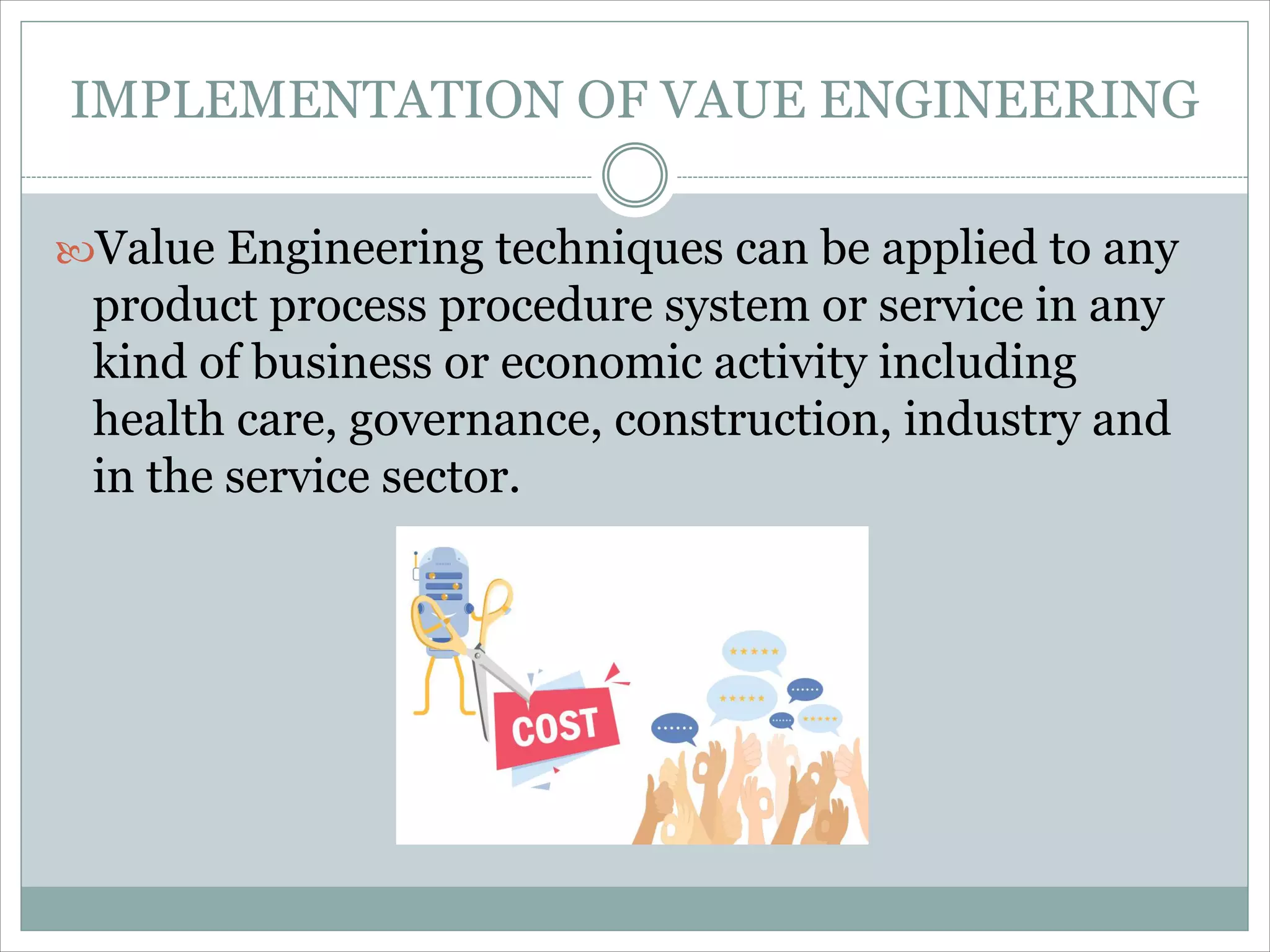
Value Engineering techniques can be applied to any
product process procedure system or service in any
kind of business or economic activity including
health care, governance, construction, industry and
in the service sector.
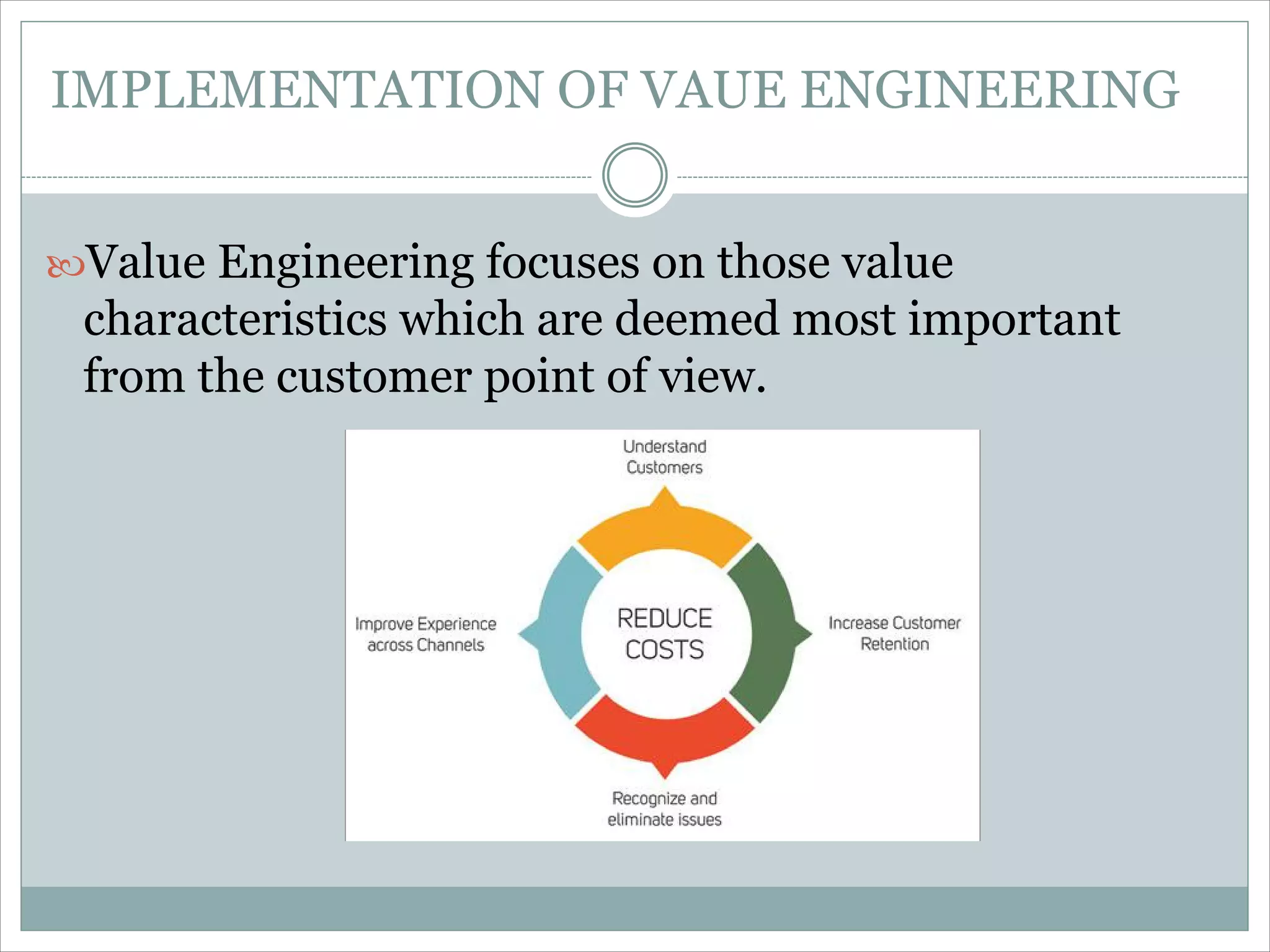
Value Engineering focuses on those value
characteristics which are deemed most important
from the customer point of view.
IMPLEMENTATION OF VAUE ENGINEERING
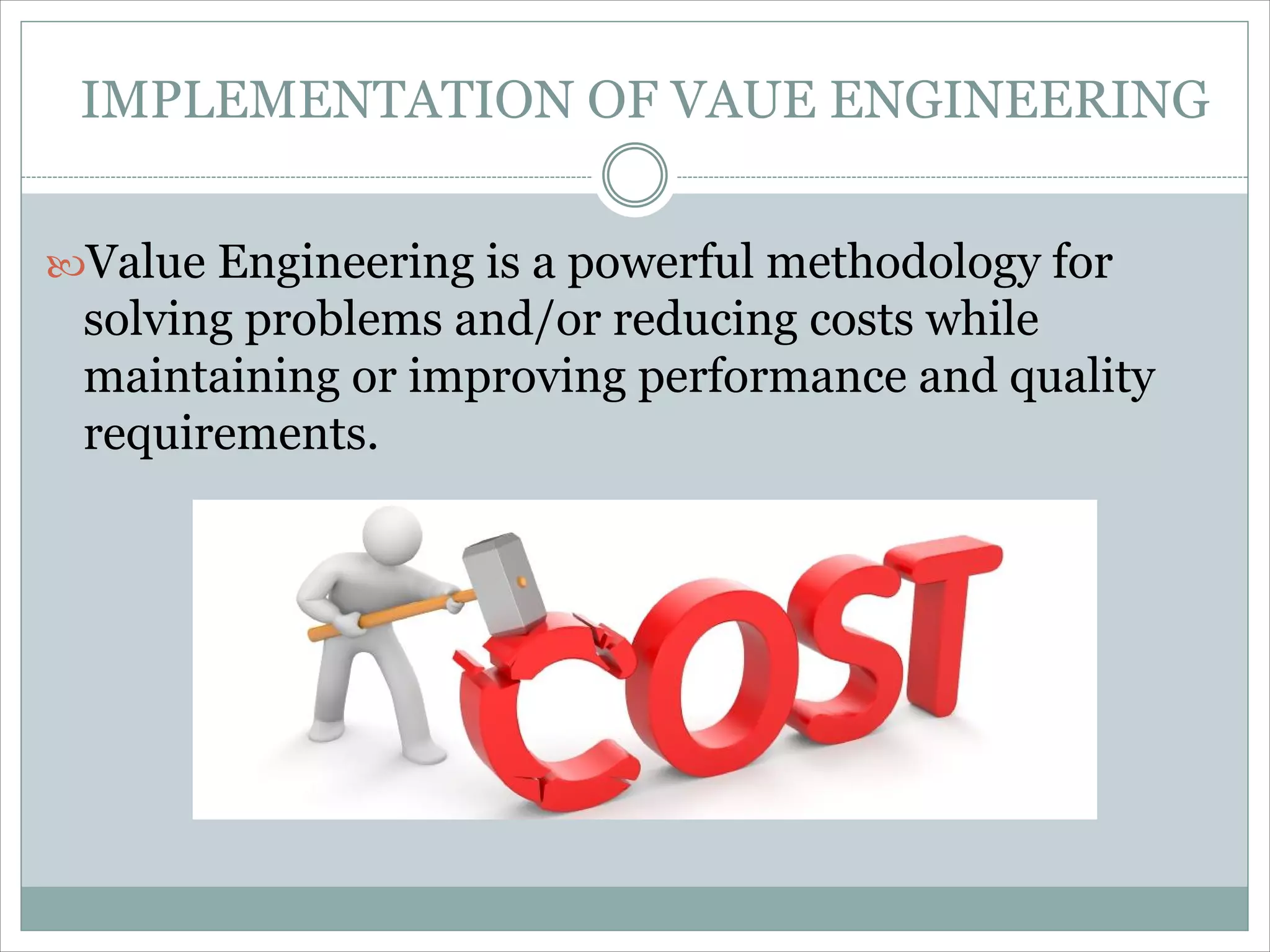
Value Engineering is a powerful methodology for
solving problems and/or reducing costs while
maintaining or improving performance and quality
requirements.
What are the benefits of Value Engineering ?
Value Engineering helps your organization in :
Lowering O & M costs
Improving quality management
Improving resource efficiency
Simplifying procedures
Minimizing paperwork
Lowering staff costs
Increasing procedural efficiency
Optimizing construction expenditures
Developing value attitudes in staff
Competing more successfully in marketplace
What are the benefits of Value Engineering ?
How is Value Engineering Applied ?
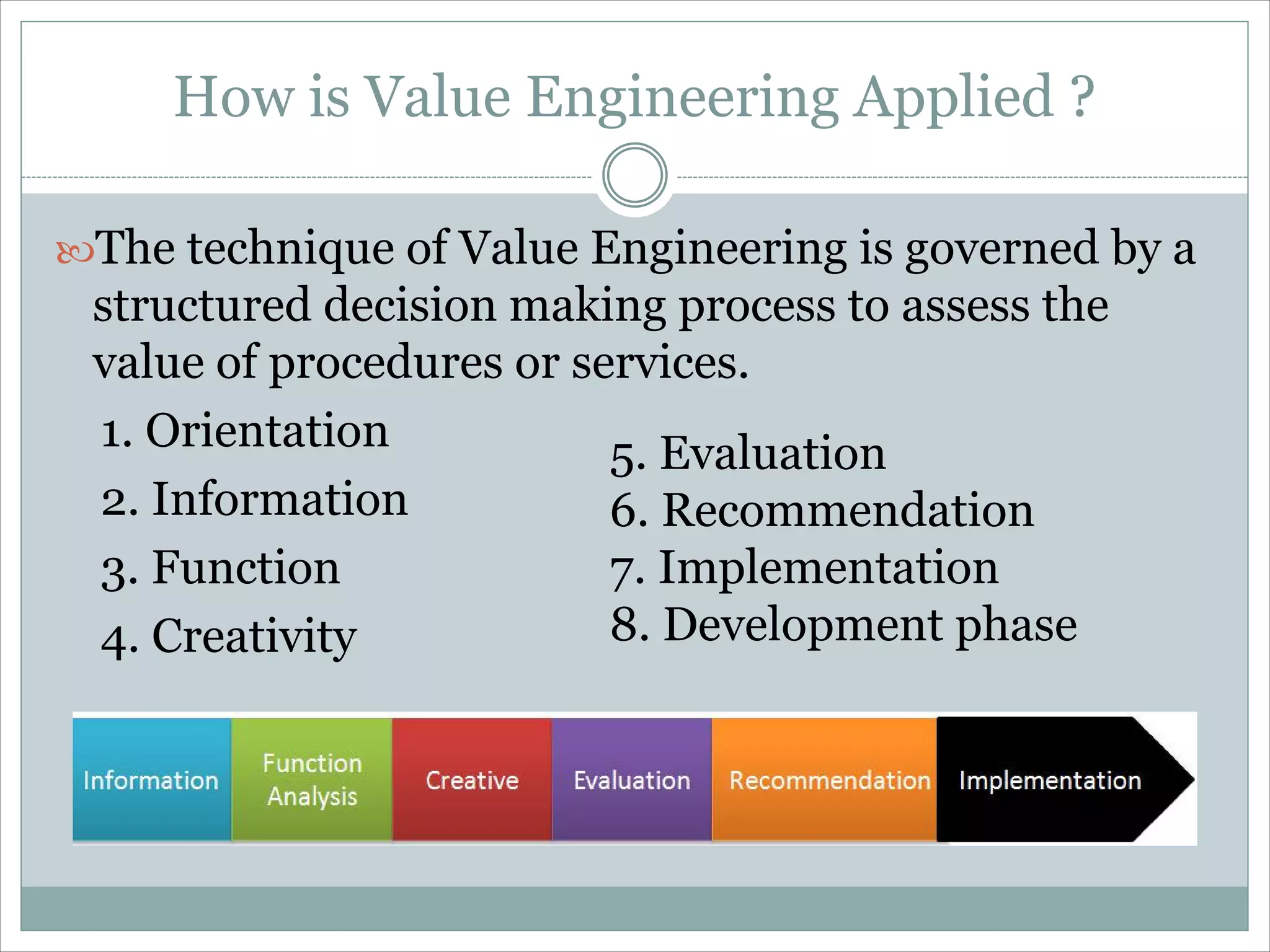
The technique of Value Engineering is governed by a
structured decision making process to assess the
value of procedures or services.
1. Orientation
2. Information
3. Function
4. Creativity
5. Evaluation
6. Recommendation
7. Implementation
8. Development phase
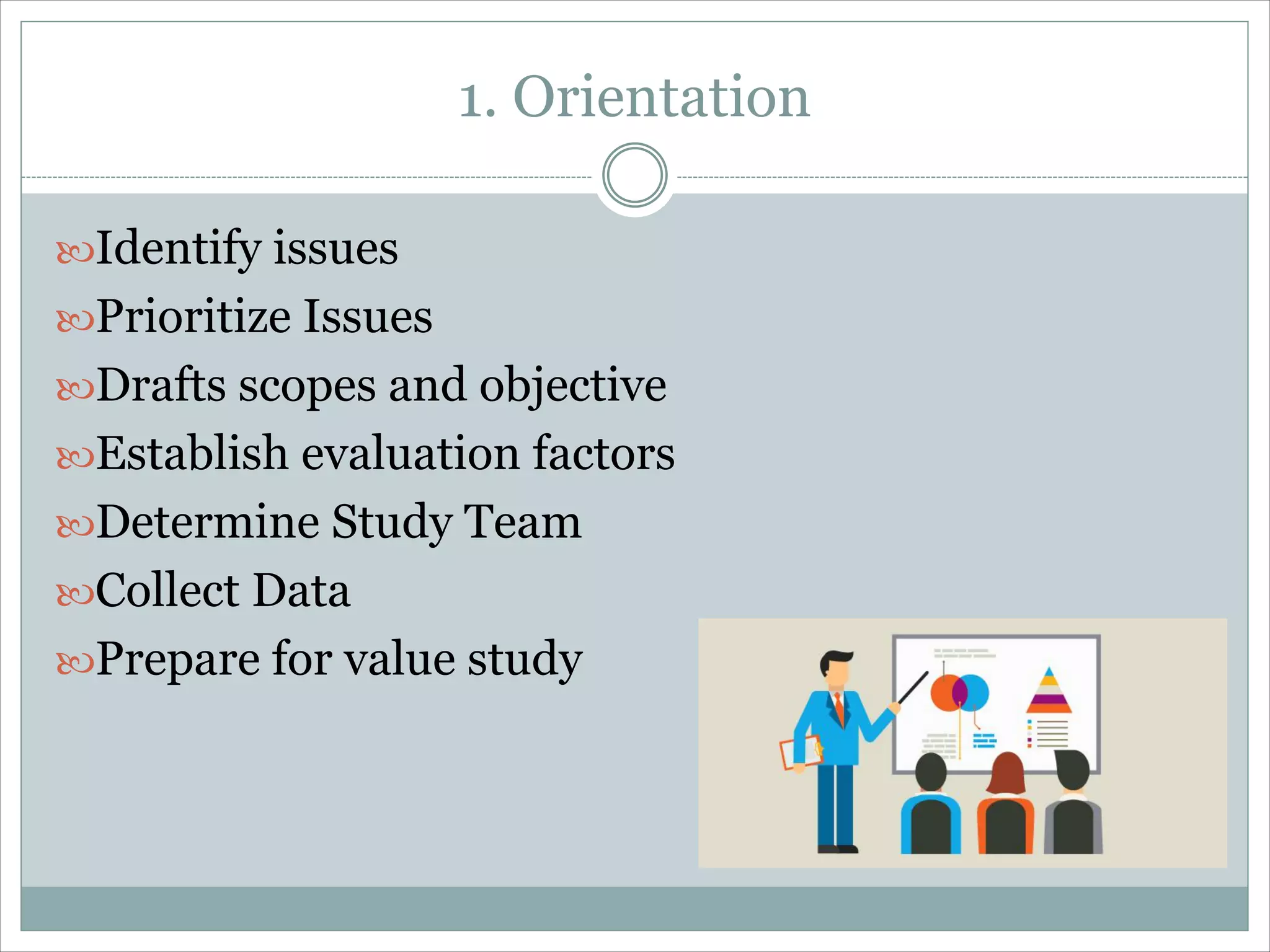
1. Orientation
Identify issues
Prioritize Issues
Drafts scopes and objective
Establish evaluation factors
Determine Study Team
Collect Data
Prepare for value study
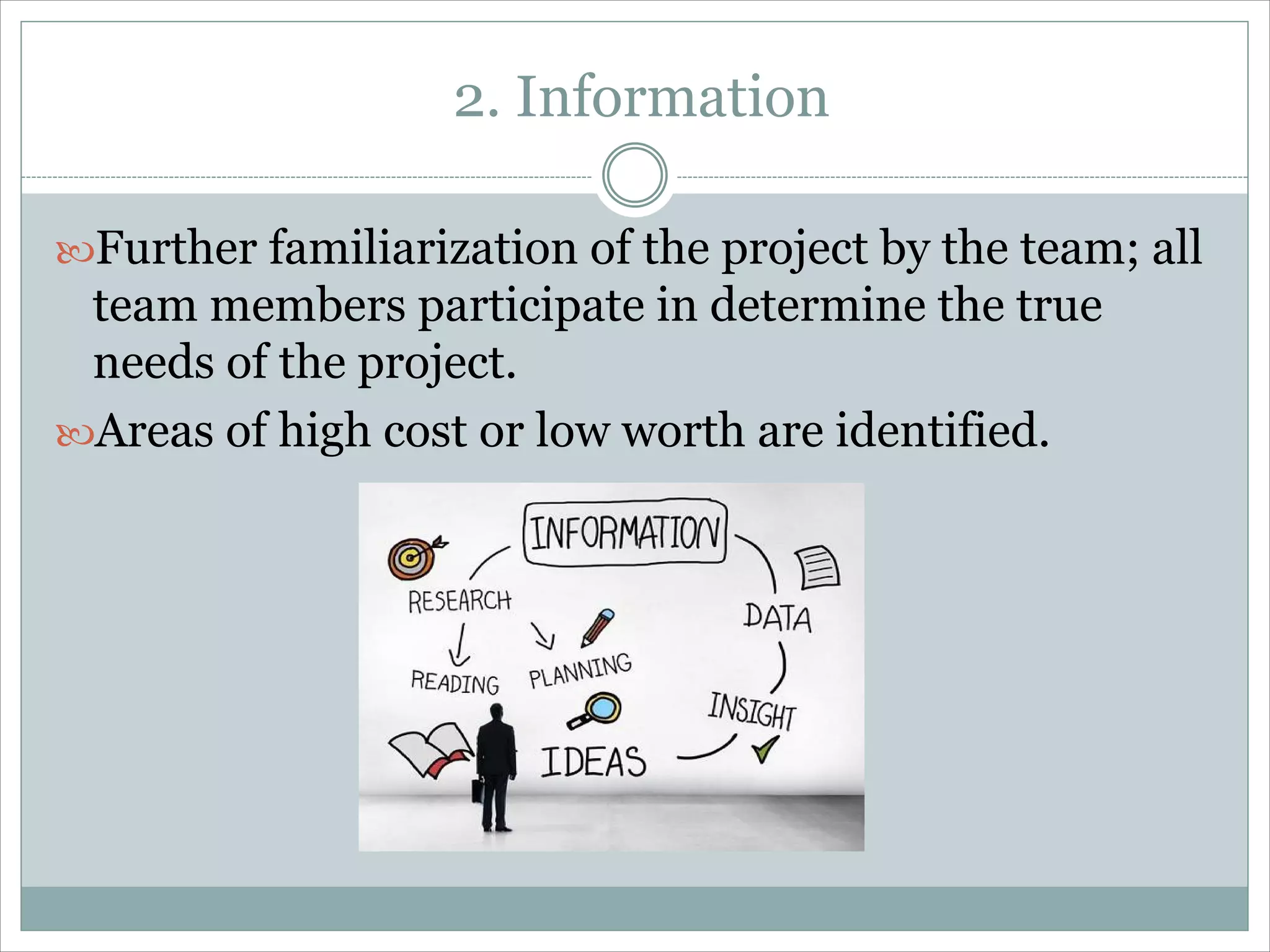
2. Information
Further familiarization of the project by the team; all
team members participate in determine the true
needs of the project.
Areas of high cost or low worth are identified.
3. Function
 Functional analysis outlines the basic function of a
product using a verb and a noun such as ‘boil water’
as in the case of our kettle.
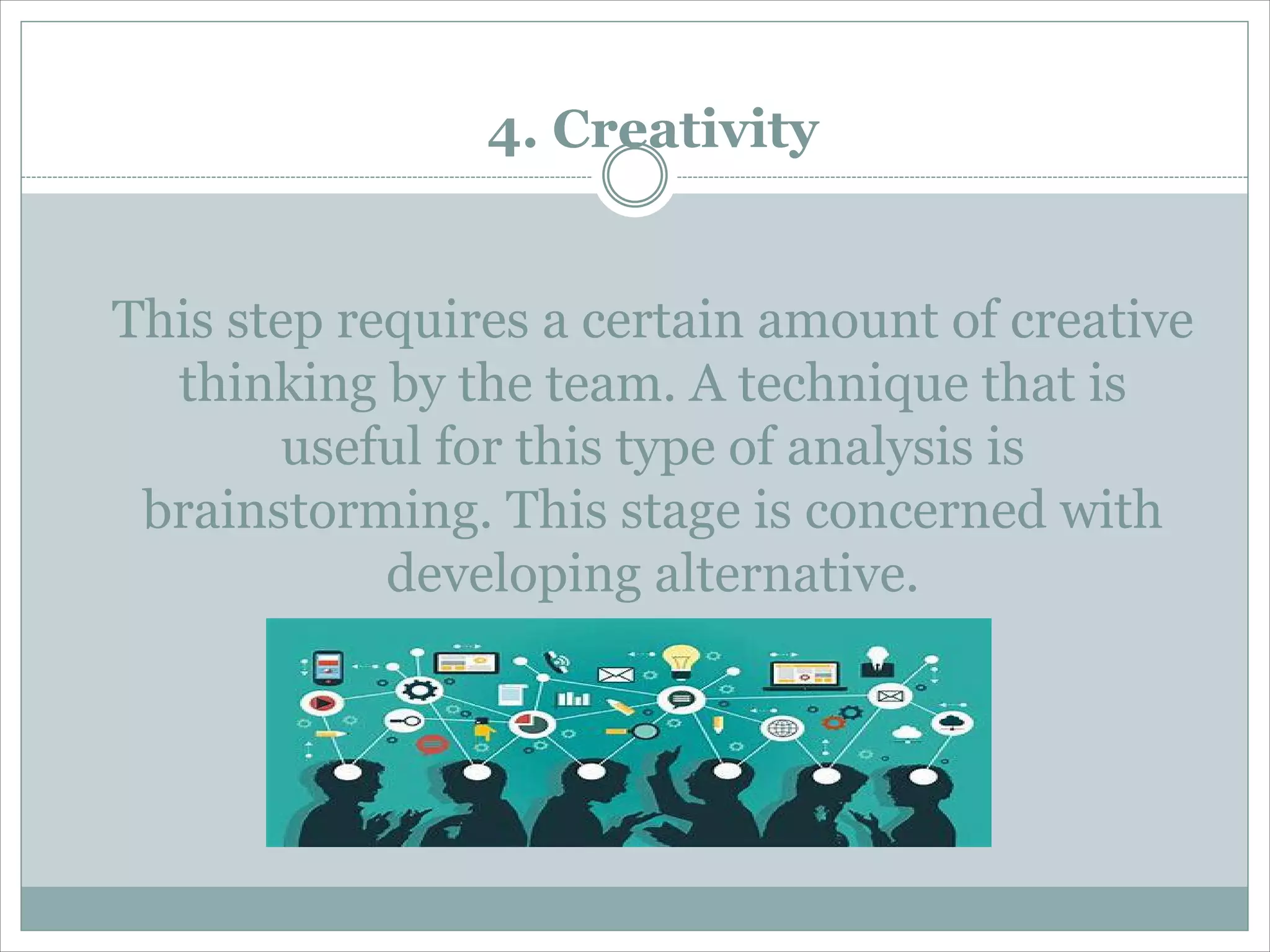
4. Creativity
This step requires a certain amount of creative
thinking by the team. A technique that is
useful for this type of analysis is
brainstorming. This stage is concerned with
developing alternative.
5. Evaluation
In this phase of the workshop, the VA team judges
the ideas developed during the creative phase.
The VA team ranks the ideas.
Ideas found to be irrelevant or not worthy of
additional study are disregarded.
Those ideas that represent the greatest potential for
cost savings and improvements are selected for
development.
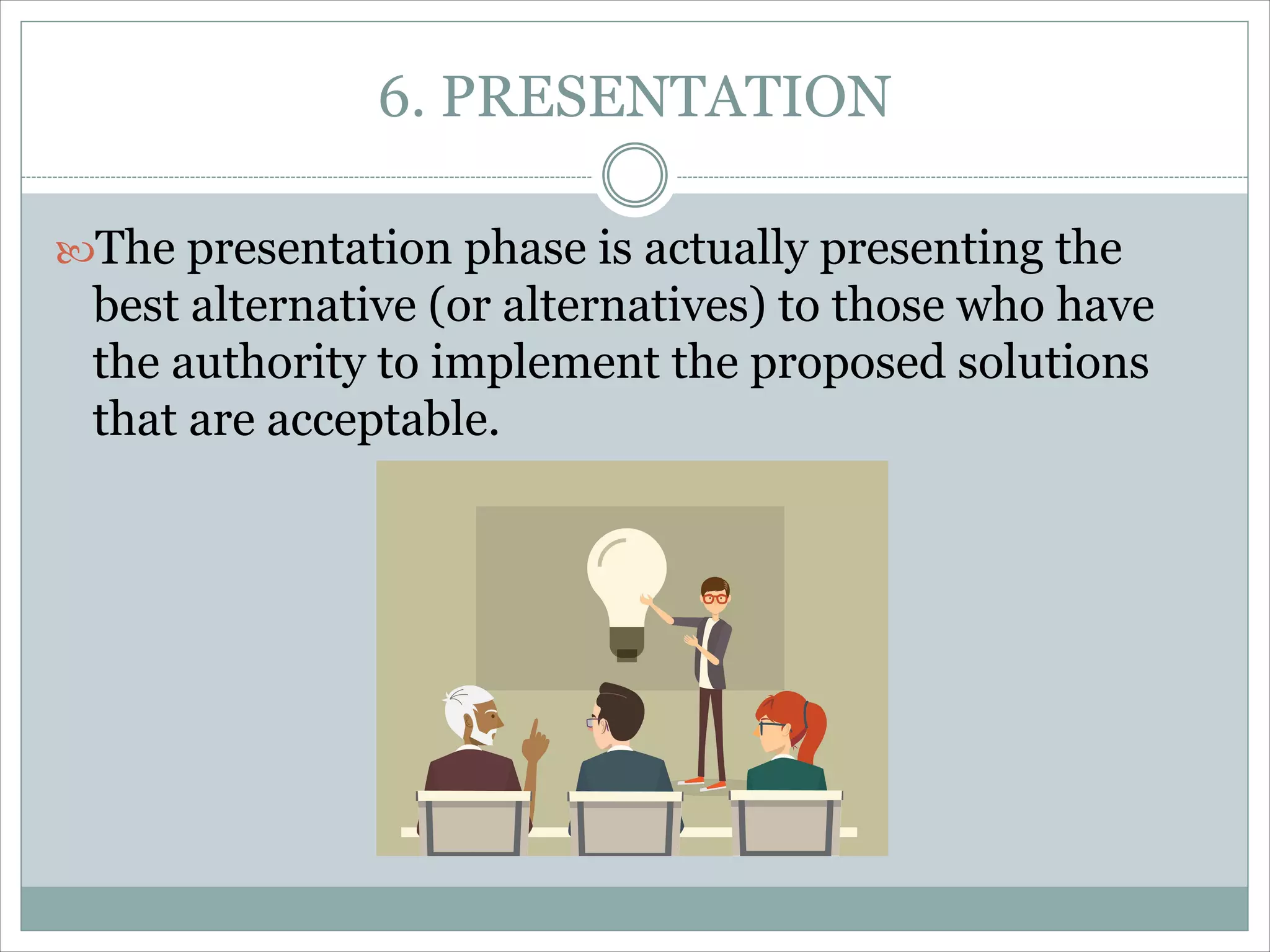
6. PRESENTATION
The presentation phase is actually presenting the
best alternative (or alternatives) to those who have
the authority to implement the proposed solutions
that are acceptable.
7. Implementation
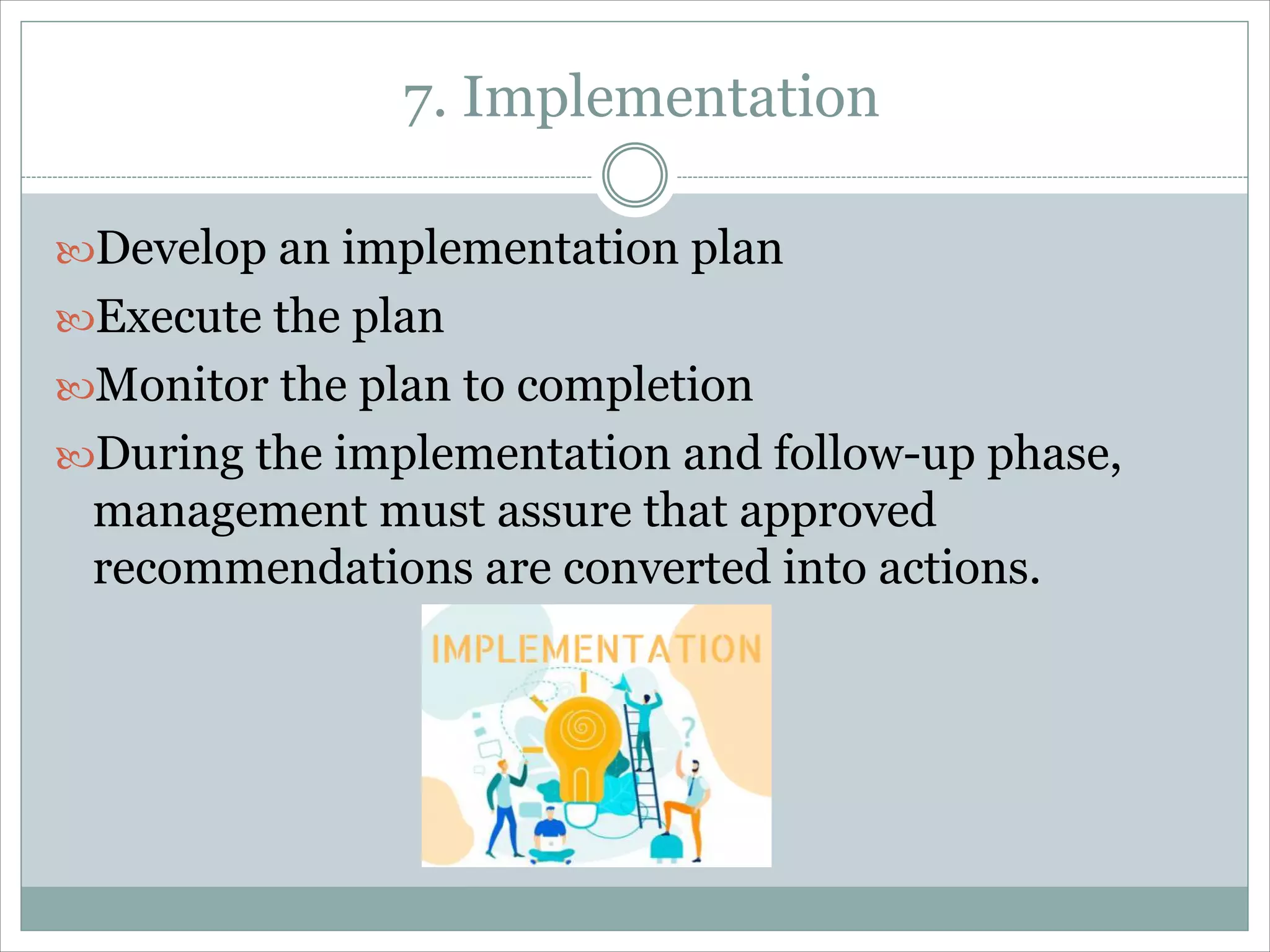
Develop an implementation plan
Execute the plan
Monitor the plan to completion
During the implementation and follow-up phase,
management must assure that approved
recommendations are converted into actions.
8. DEVELOPMENT PHASE
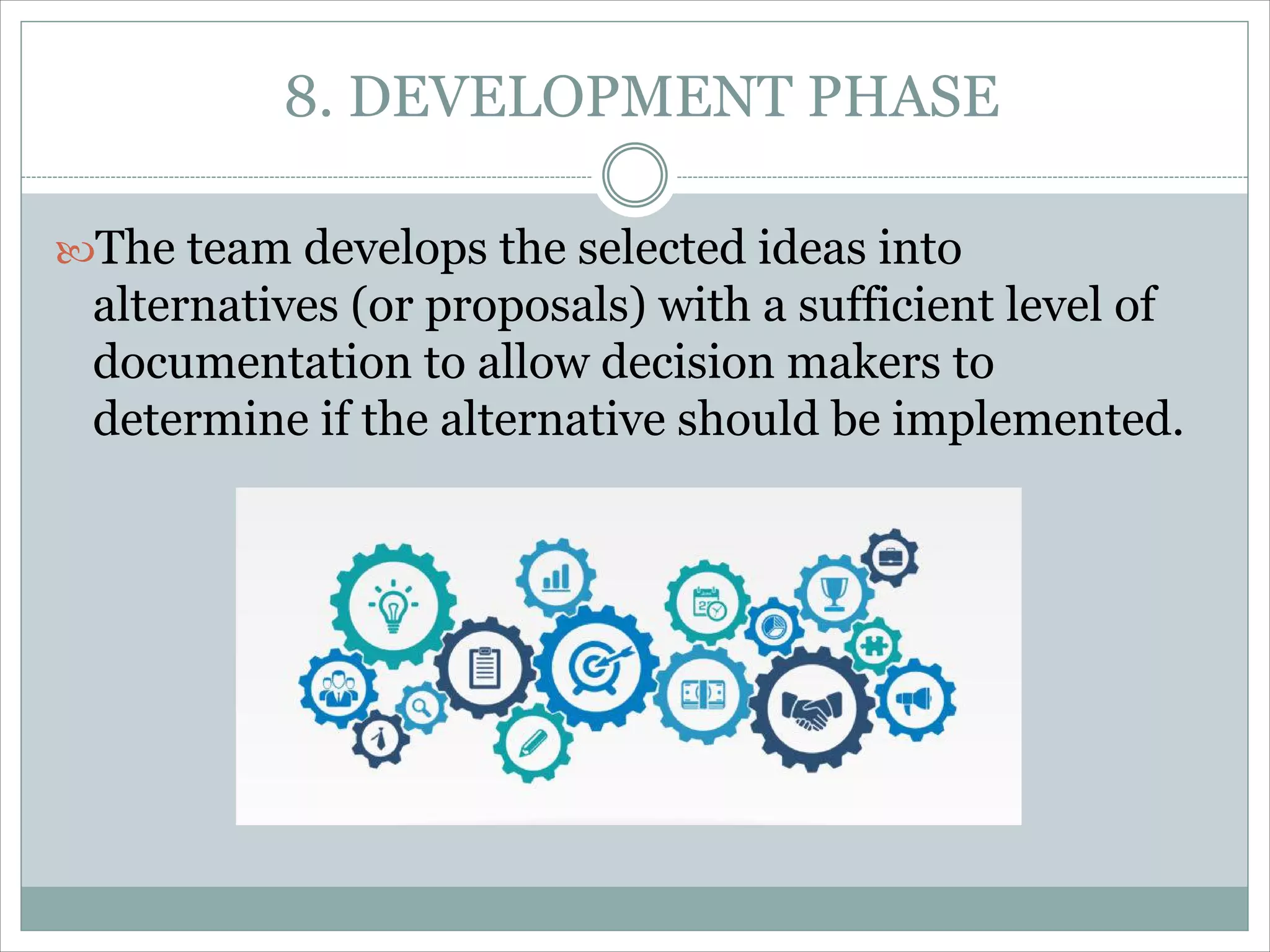
The team develops the selected ideas into
alternatives (or proposals) with a sufficient level of
documentation to allow decision makers to
determine if the alternative should be implemented.
Principles Value Engineering principles:
Systematic method for evaluating product
performance and value
The use of multi-functional teams
Focus on a simplified product
Advantages Of Value Engineering
Value engineering helps achieve an improved
product design and quality.
Value engineering suggests eliminating the
unnecessary functions in the organization that
increase costs and have complex ties.
Value engineering emphasizes on seeking the
alternatives for achieving the function and on
applying the best alternative among the various
courses of actions available.
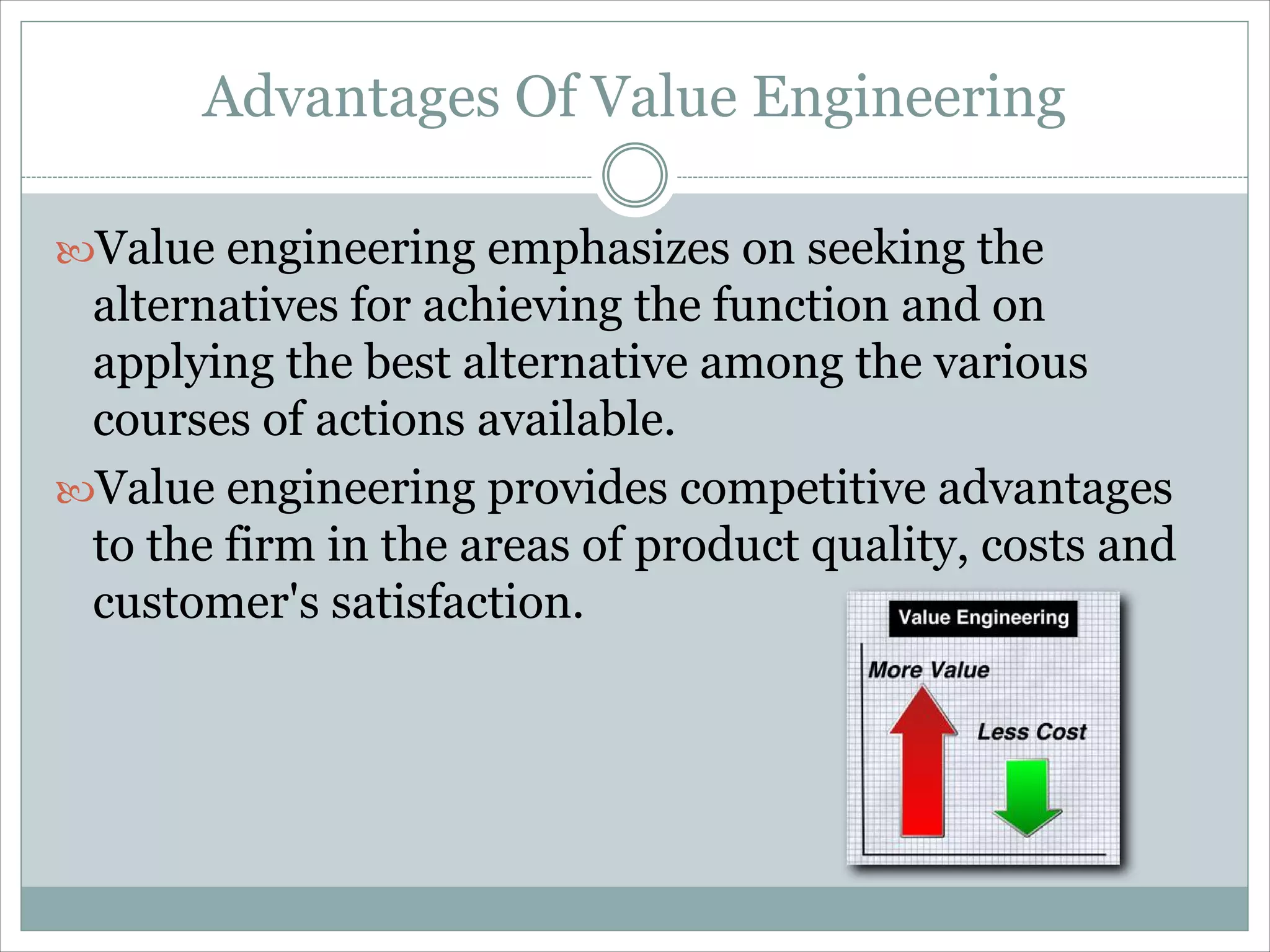
Value engineering provides competitive advantages
to the firm in the areas of product quality, costs and
customer's satisfaction.
Advantages Of Value Engineering
Value engineering enhances the customers'
satisfaction and sales by determining the exact need
and expectation of customers.
Value engineering focuses on standardization of the
parts and components by identifying the possibility
of using the same component or function in different
products of the company. This brings economy in the
cost of manufacturing the parts and components
Advantages Of Value Engineering
References
https://www.fhwa.dot.gov/ve/veproc.cfm
https://www.invest-in.org/invest/ve/index.php
THANK YOU

Value engineering significance

  • 1.
    P R ES E N T E D B Y : - A K S H A Y P A T E L - I U 1 6 4 1 0 4 0 0 2 1 Y A S H P A T E L - I U 1 6 4 1 0 4 0 0 2 2 M A L H A R P A T E L - I U 1 6 4 1 0 4 0 0 4 2 Value Engineering Significance
  • 2.
  • 3.
    What is ValueEngineering? Value Engineering is a function oriented, systematic team approach and study to provide value in a product, system or service. Often, this improvement is focused on cost reduction; however other important areas such as customer perceived quality and performance are also of paramount importance in the value equation.
  • 4.
    IMPLEMENTATION OF VAUEENGINEERING Value Engineering techniques can be applied to any product process procedure system or service in any kind of business or economic activity including health care, governance, construction, industry and in the service sector.
  • 5.
    Value Engineering focuseson those value characteristics which are deemed most important from the customer point of view. IMPLEMENTATION OF VAUE ENGINEERING
  • 6.
    IMPLEMENTATION OF VAUEENGINEERING Value Engineering is a powerful methodology for solving problems and/or reducing costs while maintaining or improving performance and quality requirements.
  • 7.
    What are thebenefits of Value Engineering ? Value Engineering helps your organization in : Lowering O & M costs Improving quality management Improving resource efficiency Simplifying procedures
  • 8.
    Minimizing paperwork Lowering staffcosts Increasing procedural efficiency Optimizing construction expenditures Developing value attitudes in staff Competing more successfully in marketplace What are the benefits of Value Engineering ?
  • 9.
    How is ValueEngineering Applied ? The technique of Value Engineering is governed by a structured decision making process to assess the value of procedures or services. 1. Orientation 2. Information 3. Function 4. Creativity 5. Evaluation 6. Recommendation 7. Implementation 8. Development phase
  • 10.
    1. Orientation Identify issues PrioritizeIssues Drafts scopes and objective Establish evaluation factors Determine Study Team Collect Data Prepare for value study
  • 11.
    2. Information Further familiarizationof the project by the team; all team members participate in determine the true needs of the project. Areas of high cost or low worth are identified.
  • 12.
    3. Function  Functionalanalysis outlines the basic function of a product using a verb and a noun such as ‘boil water’ as in the case of our kettle.
  • 13.
    4. Creativity This steprequires a certain amount of creative thinking by the team. A technique that is useful for this type of analysis is brainstorming. This stage is concerned with developing alternative.
  • 14.
    5. Evaluation In thisphase of the workshop, the VA team judges the ideas developed during the creative phase. The VA team ranks the ideas. Ideas found to be irrelevant or not worthy of additional study are disregarded. Those ideas that represent the greatest potential for cost savings and improvements are selected for development.
  • 15.
    6. PRESENTATION The presentationphase is actually presenting the best alternative (or alternatives) to those who have the authority to implement the proposed solutions that are acceptable.
  • 16.
    7. Implementation Develop animplementation plan Execute the plan Monitor the plan to completion During the implementation and follow-up phase, management must assure that approved recommendations are converted into actions.
  • 17.
    8. DEVELOPMENT PHASE Theteam develops the selected ideas into alternatives (or proposals) with a sufficient level of documentation to allow decision makers to determine if the alternative should be implemented.
  • 18.
    Principles Value Engineeringprinciples: Systematic method for evaluating product performance and value The use of multi-functional teams Focus on a simplified product
  • 19.
    Advantages Of ValueEngineering Value engineering helps achieve an improved product design and quality. Value engineering suggests eliminating the unnecessary functions in the organization that increase costs and have complex ties.
  • 20.
    Value engineering emphasizeson seeking the alternatives for achieving the function and on applying the best alternative among the various courses of actions available. Value engineering provides competitive advantages to the firm in the areas of product quality, costs and customer's satisfaction. Advantages Of Value Engineering
  • 21.
    Value engineering enhancesthe customers' satisfaction and sales by determining the exact need and expectation of customers. Value engineering focuses on standardization of the parts and components by identifying the possibility of using the same component or function in different products of the company. This brings economy in the cost of manufacturing the parts and components Advantages Of Value Engineering
  • 22.
  • 23.