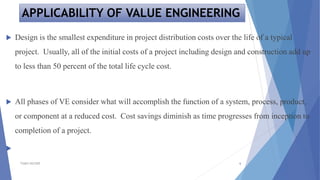
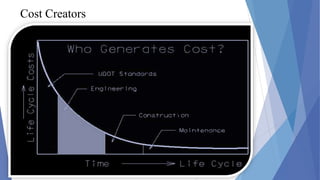
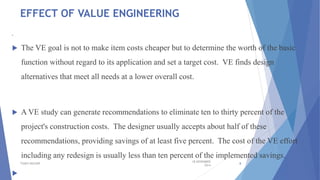
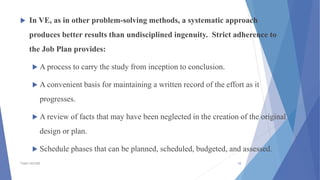
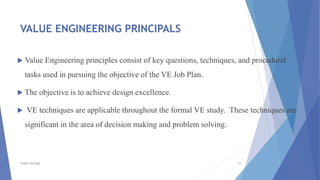
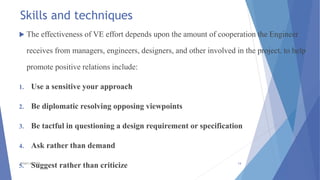
Value engineering is a systematic approach to identifying unnecessary costs in construction projects. It was developed in the 1940s by Lawrence Miles at General Electric to address costs during wartime shortages. The value engineering process involves multi-disciplinary teams analyzing the functions of a project and finding alternative ways to achieve those functions at a lower overall cost. Value engineering studies typically identify ways to save 5-10% of total project costs through eliminating unnecessary expenses without compromising quality, utility or lifespan. The goal is not just reducing item costs but determining the worth of basic functions and setting target costs to find more cost-effective design alternatives.