Downloaded 40 times





The document discusses value engineering and value analysis. It provides an overview of value as a combination of quality, efficiency, price and service. It defines value engineering as an organized procedure to efficiently identify unnecessary costs. The origins and objectives of value analysis are described, including techniques like the matrix and MISS methods. The value engineering process involves collecting information, defining functions, creating alternatives, evaluating alternatives, developing the best alternative, and implementing the alternative. Both disadvantages like being time consuming and expensive, and advantages like being a powerful scientific tool are covered.
Introduction of Team 12 members: Veeranna, Vinutha, Vishal, Prashant.
Value consists of Quality, Efficiency, Price, and Service, ensuring economy and satisfaction for purchasers.
Value expressed as a function of Utility over Cost, providing a mathematical perspective of value.
Overview of four types: Cost Value, Use Value, Esteem Value, and Exchange Value.
An organized procedure aimed at efficiently identifying unnecessary costs.
Value Analysis originated at General Electric during WWII due to labor and material shortages.
Key objectives include saving costs, promoting quality, import substitution, and new product design.
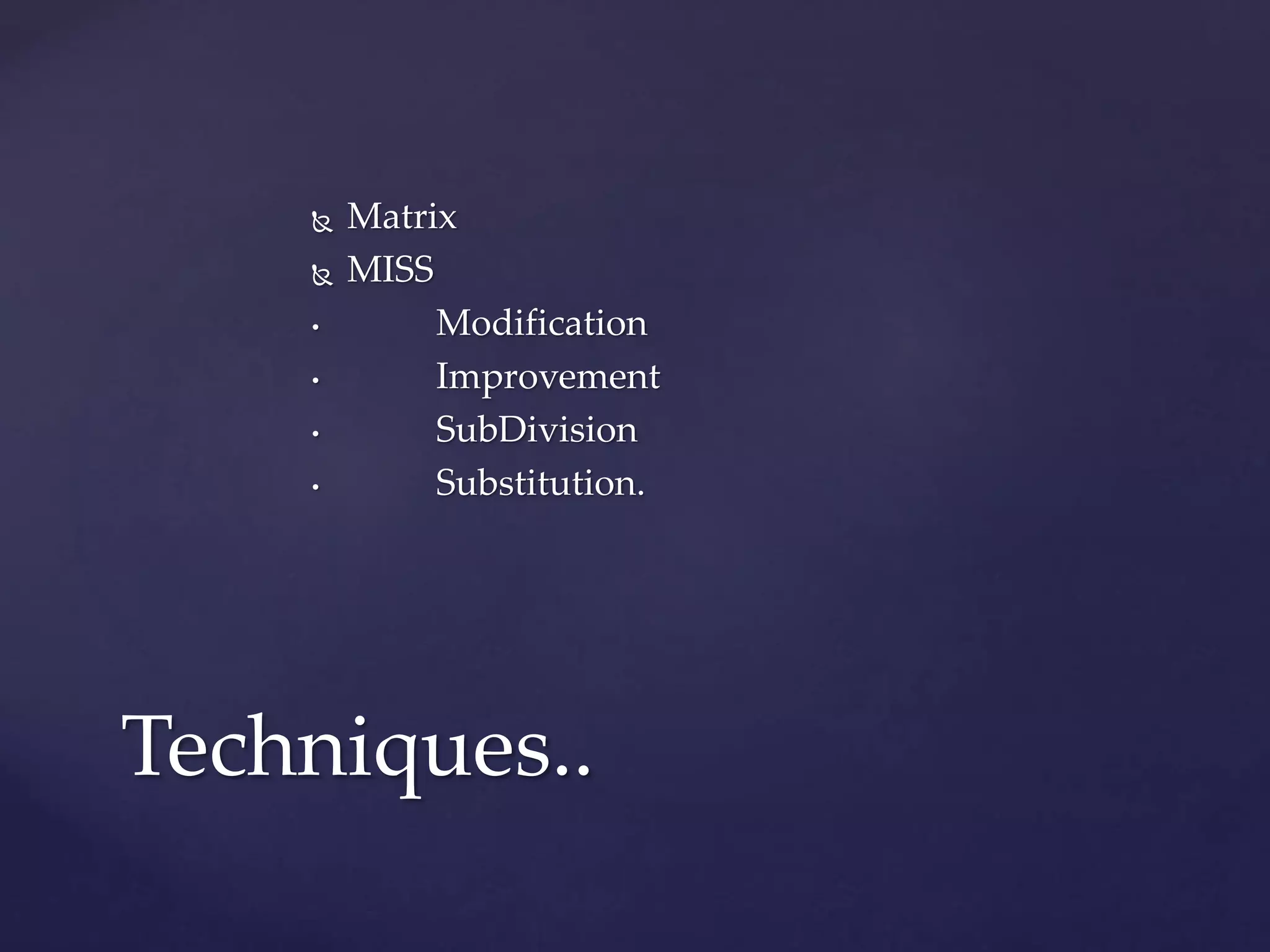
Techniques include Modification, Improvement, Subdivision, and Substitution.
Procedure involves collecting info, defining functions, creating alternatives, evaluating, and implementation.
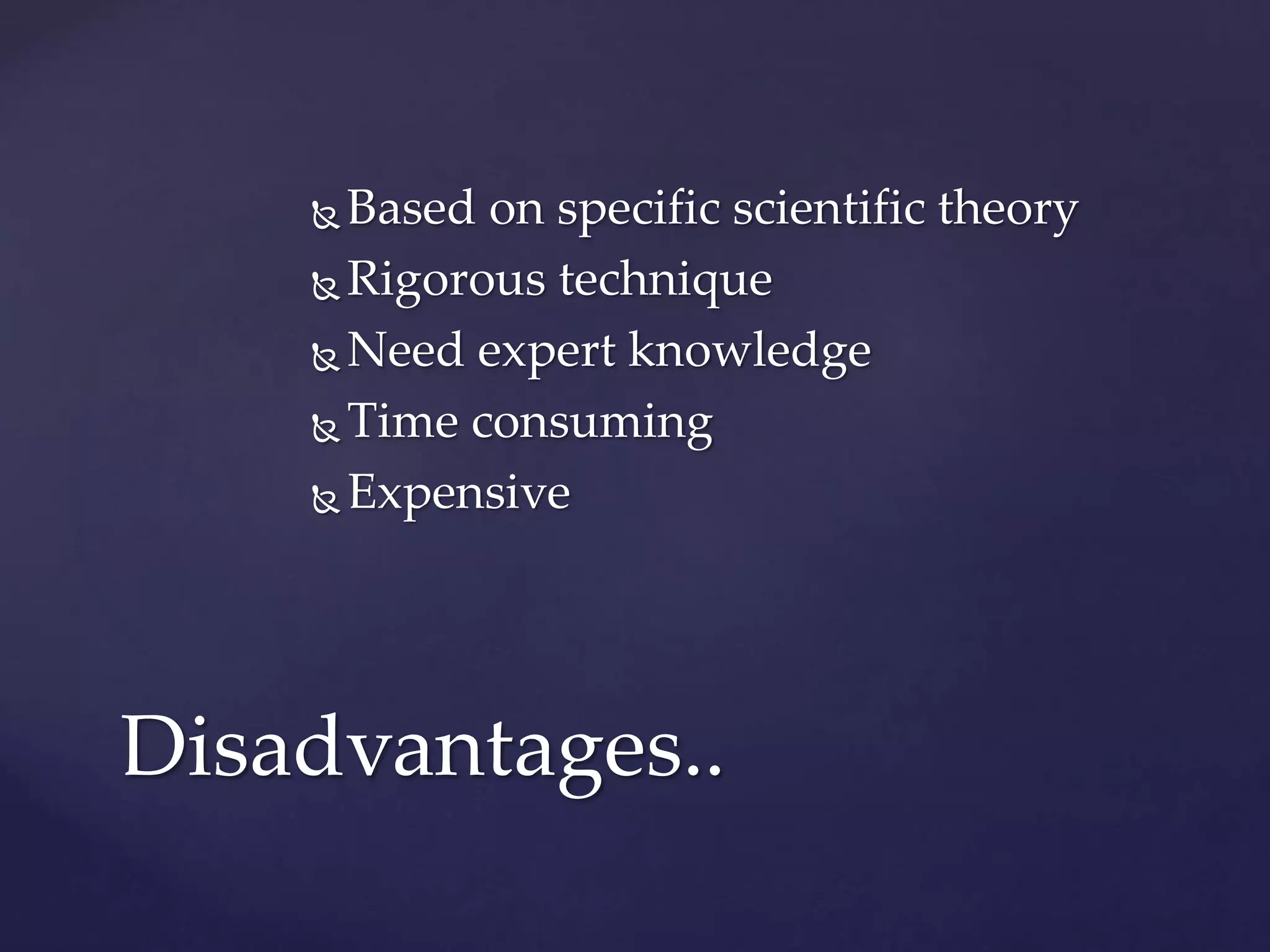
Challenges include being time-consuming, costly, requiring expert knowledge, and based on a scientific theory.
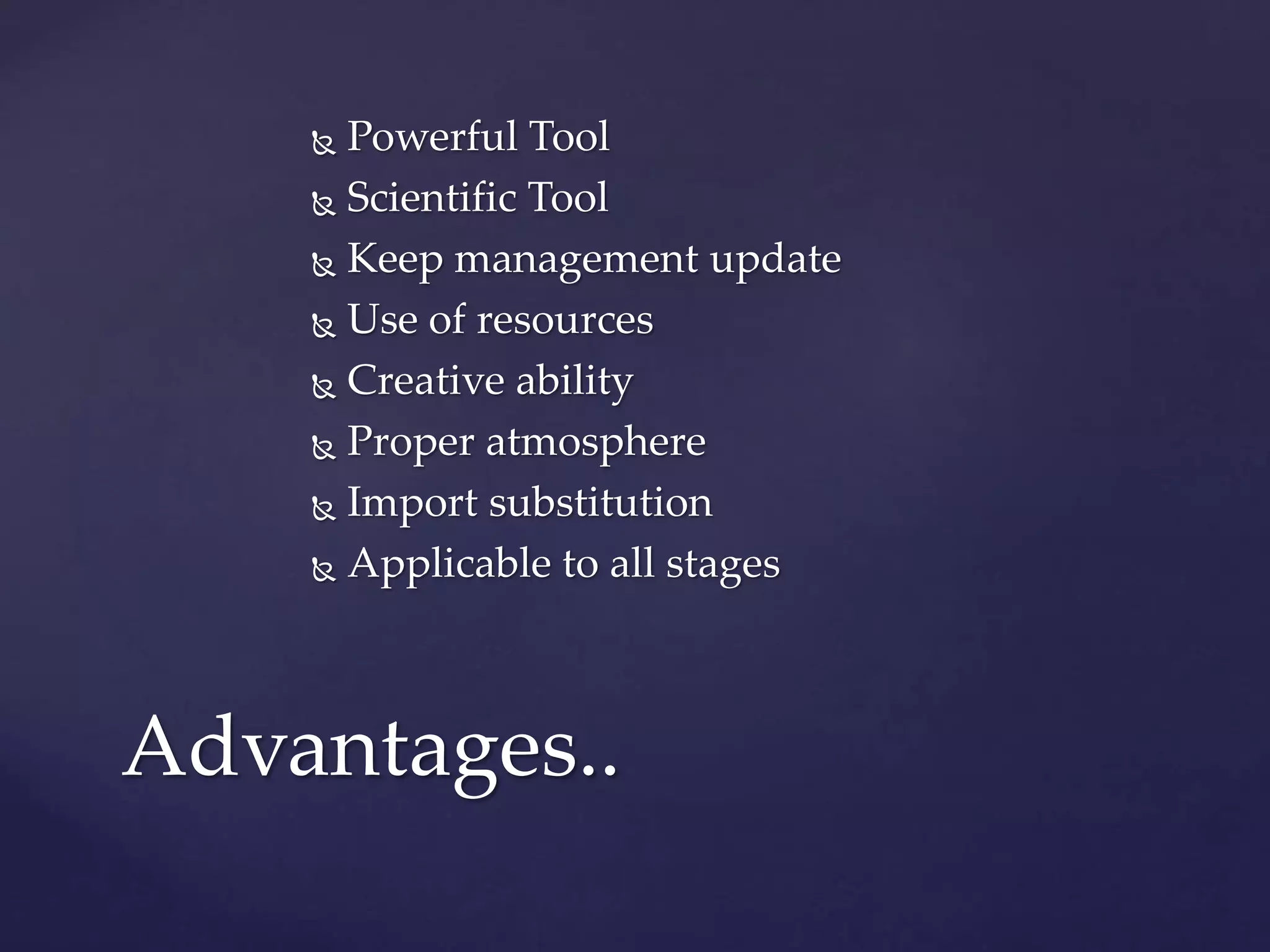
Advantages include being a powerful tool, promoting scientific approach, resource efficiency, and applicability in all stages.


