
CASE ANALYSIS
using the SPADER Model


    Conceptualized by
  Prof. Francisco M. Roa
SPADER= simple, orderly,
complete approach
 Situation
 Problem
 Alternatives
 Decision
 Execution
 Review
          Conceptualized by
          Prof. Francisco M. Roa
SITUATION is fact based

   Most relevant
   Stated or implied
   When presenting, stick to top 5 or 7
   Related to problem & alternatives
   Summarizes key issues
PROBLEM is the major
one!

A general question that:
 covers major issues

 combines several questions
  or issues
 Provides most important
  perspective for
  understanding the case
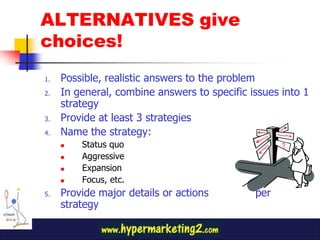
ALTERNATIVES give
choices!
1.   Possible, realistic answers to the problem
2.   In general, combine answers to specific issues into 1
     strategy
3.   Provide at least 3 strategies
4.   Name the strategy:
        Status quo
        Aggressive
        Expansion
        Focus, etc.
5.   Provide major details or actions         per
     strategy
DECISION means choosing
the best!

Justify your choice of strategy by:
 Increasing value of your choice

 Decreasing value of others

     When useful, give “What if…” scenarios
Provide rationale or basis
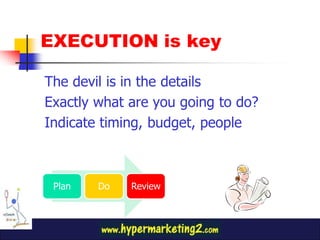
EXECUTION is key

The devil is in the details
Exactly what are you going to do?
Indicate timing, budget, people


 Plan   Do   Review
REVIEW means putting
checkpoints for choice!

Specify:
 Performance milestones

 Time checkpoints

 Budget controls

 Feedback mechanism

 Plan B (what to do when checkpoints

  and milestones are not met)
SPADER= simple, complete
approach for success
   Situation
   Problem
   Alternatives
   Decision
   Execution
   Review
       Conceptualized by
       Prof. Francisco M. Roa
CASE ANALYSIS
using the SPADER Model


    Conceptualized by
  Prof. Francisco M. Roa

Marketing Case Analysis using SPADER approach

  • 1.
    CASE ANALYSIS using theSPADER Model Conceptualized by Prof. Francisco M. Roa
  • 2.
    SPADER= simple, orderly, completeapproach Situation Problem Alternatives Decision Execution Review Conceptualized by Prof. Francisco M. Roa
  • 3.
    SITUATION is factbased  Most relevant  Stated or implied  When presenting, stick to top 5 or 7  Related to problem & alternatives  Summarizes key issues
  • 4.
    PROBLEM is themajor one! A general question that:  covers major issues  combines several questions or issues  Provides most important perspective for understanding the case
  • 5.
    ALTERNATIVES give choices! 1. Possible, realistic answers to the problem 2. In general, combine answers to specific issues into 1 strategy 3. Provide at least 3 strategies 4. Name the strategy:  Status quo  Aggressive  Expansion  Focus, etc. 5. Provide major details or actions per strategy
  • 6.
    DECISION means choosing thebest! Justify your choice of strategy by:  Increasing value of your choice  Decreasing value of others  When useful, give “What if…” scenarios Provide rationale or basis
  • 7.
    EXECUTION is key Thedevil is in the details Exactly what are you going to do? Indicate timing, budget, people Plan Do Review
  • 8.
    REVIEW means putting checkpointsfor choice! Specify:  Performance milestones  Time checkpoints  Budget controls  Feedback mechanism  Plan B (what to do when checkpoints and milestones are not met)
  • 9.
    SPADER= simple, complete approachfor success Situation Problem Alternatives Decision Execution Review Conceptualized by Prof. Francisco M. Roa
  • 10.
    CASE ANALYSIS using theSPADER Model Conceptualized by Prof. Francisco M. Roa