V and
Inverted
V Curves
Toshali Mohapatra
BT18EE004
Contents
Introduction
What?
V-Curve
No Load and
Loaded
Condition
Summarized
V-Curve
Inverted V-
Curve
Summarized
Inverted V-
Curve
Conclusion
Introduction
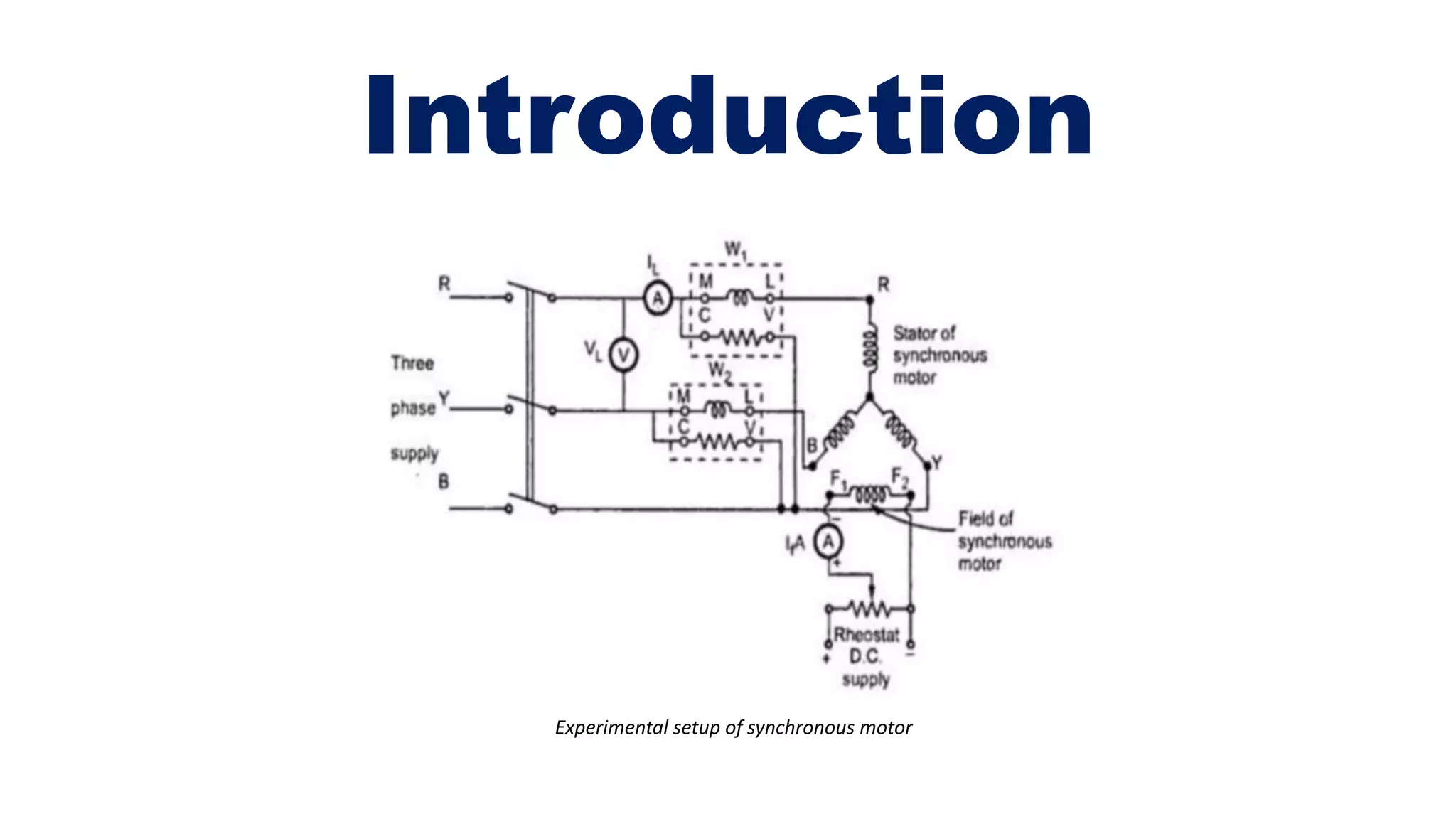
Experimental setup of synchronous motor
The performance
characteristics of a
synchronous motor are
obtained by v-curves and
inverted v-curves.
Synchronous machines
have parabolic type
characteristics
If the excitation is varied
from low ( under-
excitation ) to high ( over-
excitation ) value, then the
current Ia also changes i.e.,
becomes minimum at
unity p.f. and then again
increases.
But at starting lagging
current becomes unity and
then becomes leading in
nature.
V-curves and inverted V-
curves of a synchronous
motor are used to analyze
efficiency on no-load and
on-load conditions.
1. What?
The graphical representation of armature current
Ia vs field current If is called V-curve.
At the same time the power factor vs field current
is called inverted V-curve of a synchronous motor.
V curve
No Load and Loaded Condition
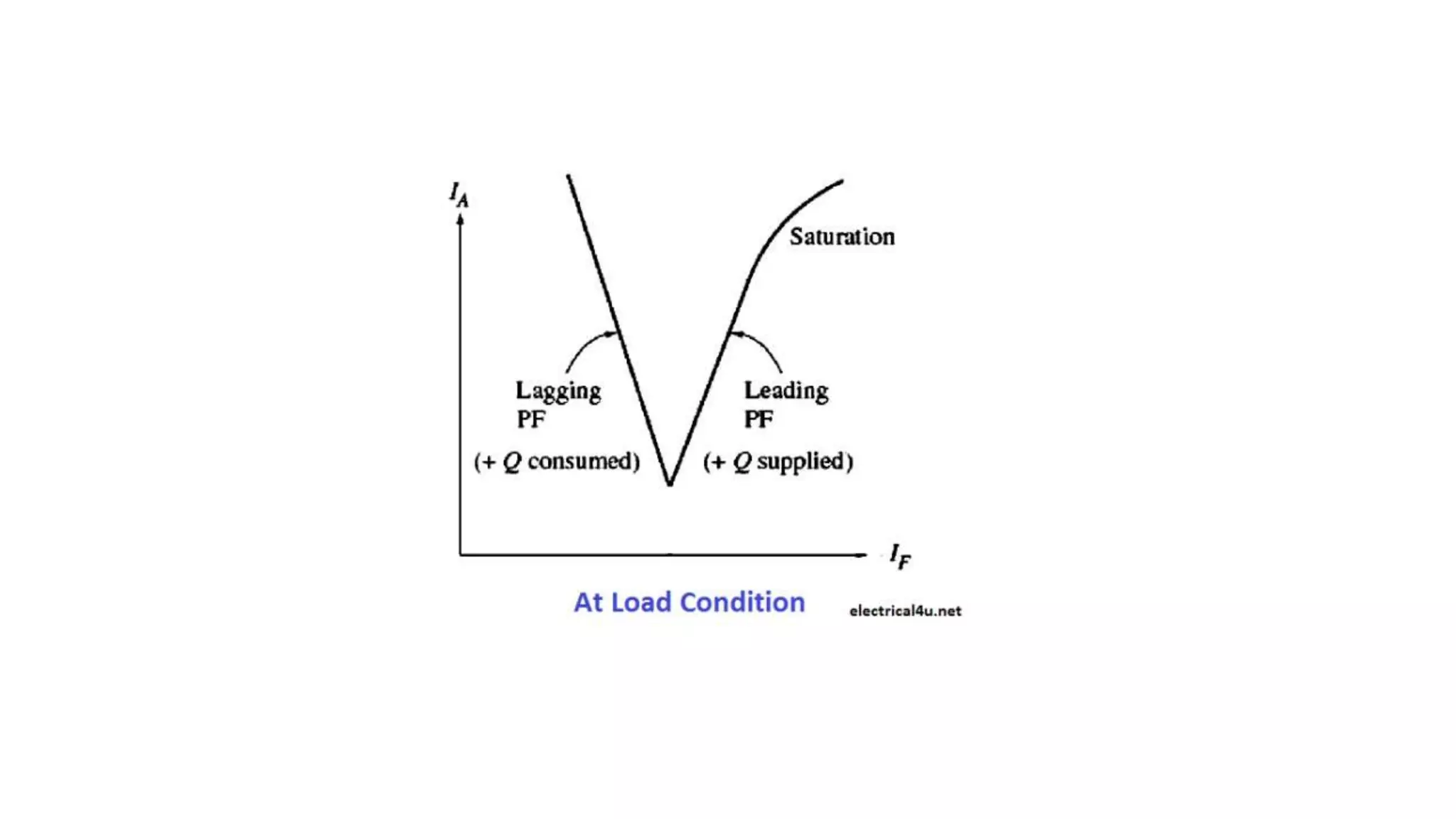
At no-load condition, the real power
supplied to the machine is zero since
Ia=0, at unity power factor. When you
increase the field current above that
point, the line current increases with
respect to applied field current. (Here
the reactive current flows from the
motor to source)
At load condition, the motor draws a
small amount of real current at unity
power factor. After plotting the graph,
the same V shape is still maintained.
Summarized V-Curve
Inverted V-Curve
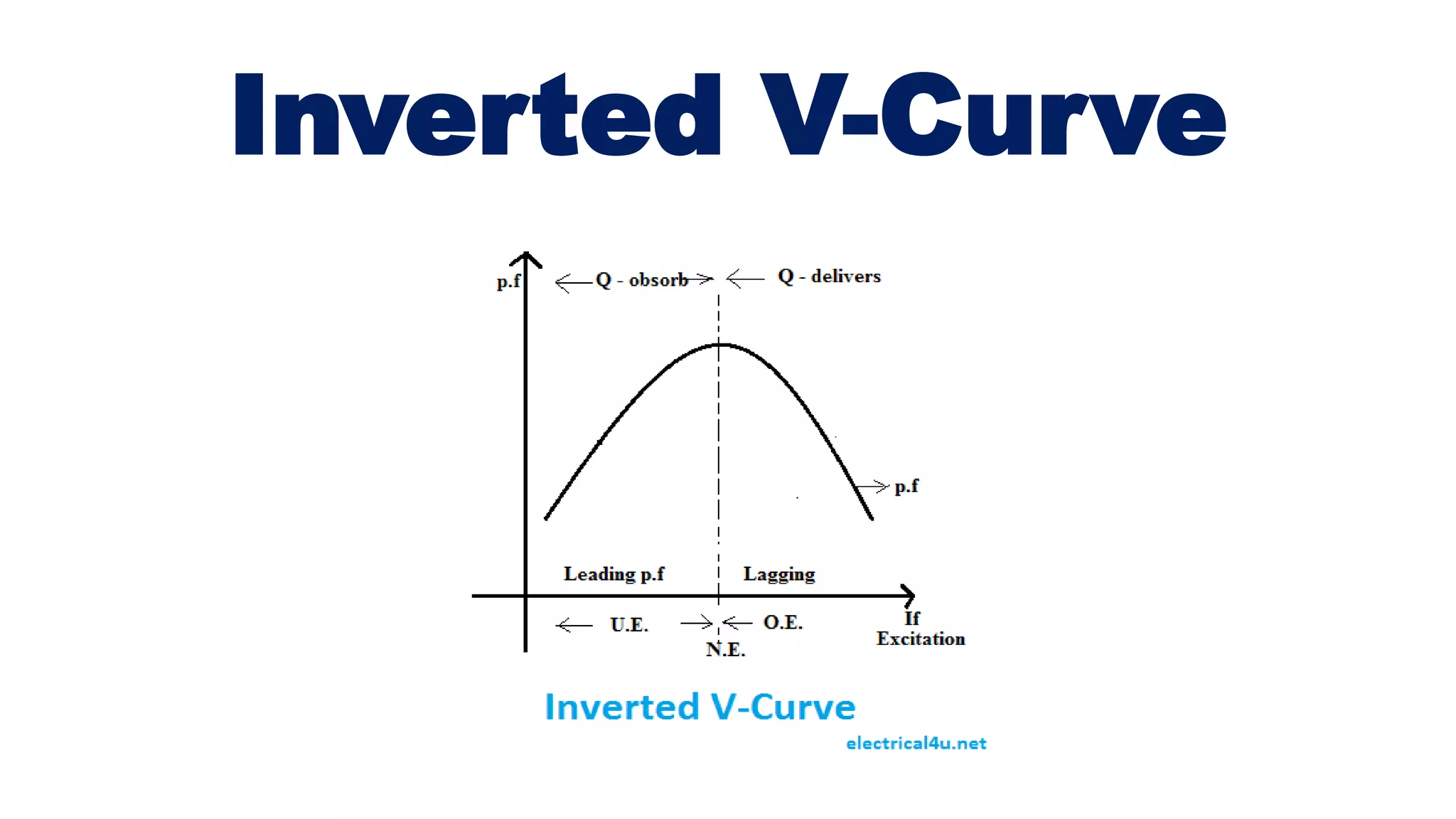
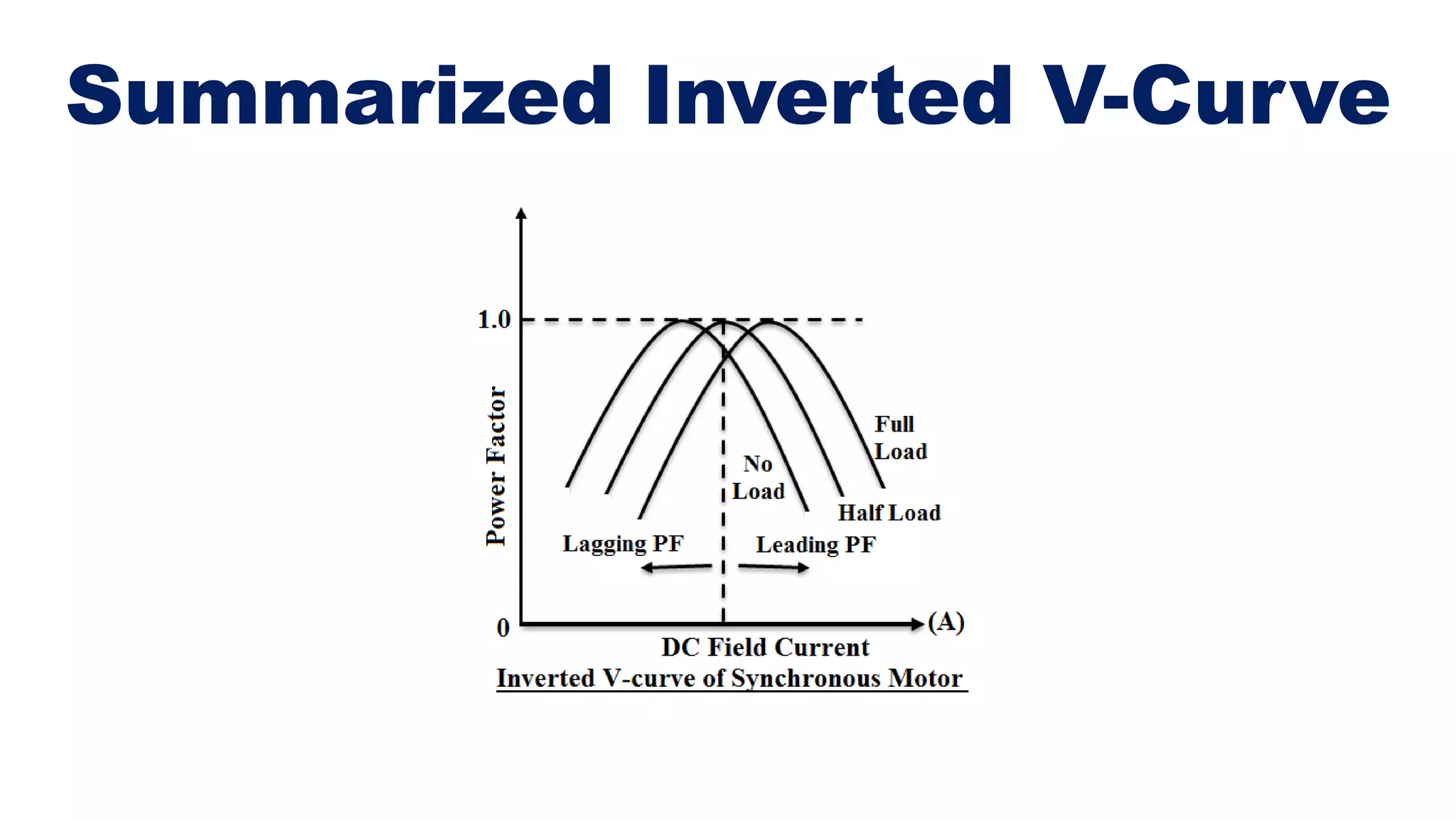
If the power factor is plotted against
excitation for various load conditions,
we obtain a set of curves known as
'Inverted V-Curves’.
The inverted V-Curves of synchronous
motor shows how the power factor
varies with excitation. From inverted
V-curves, it is observed that the
power factor is lagging when the
motor is under excited and leading
when it is over-excited. In between,
the power factor is unity.
Summarized Inverted V-Curve
Conclusion
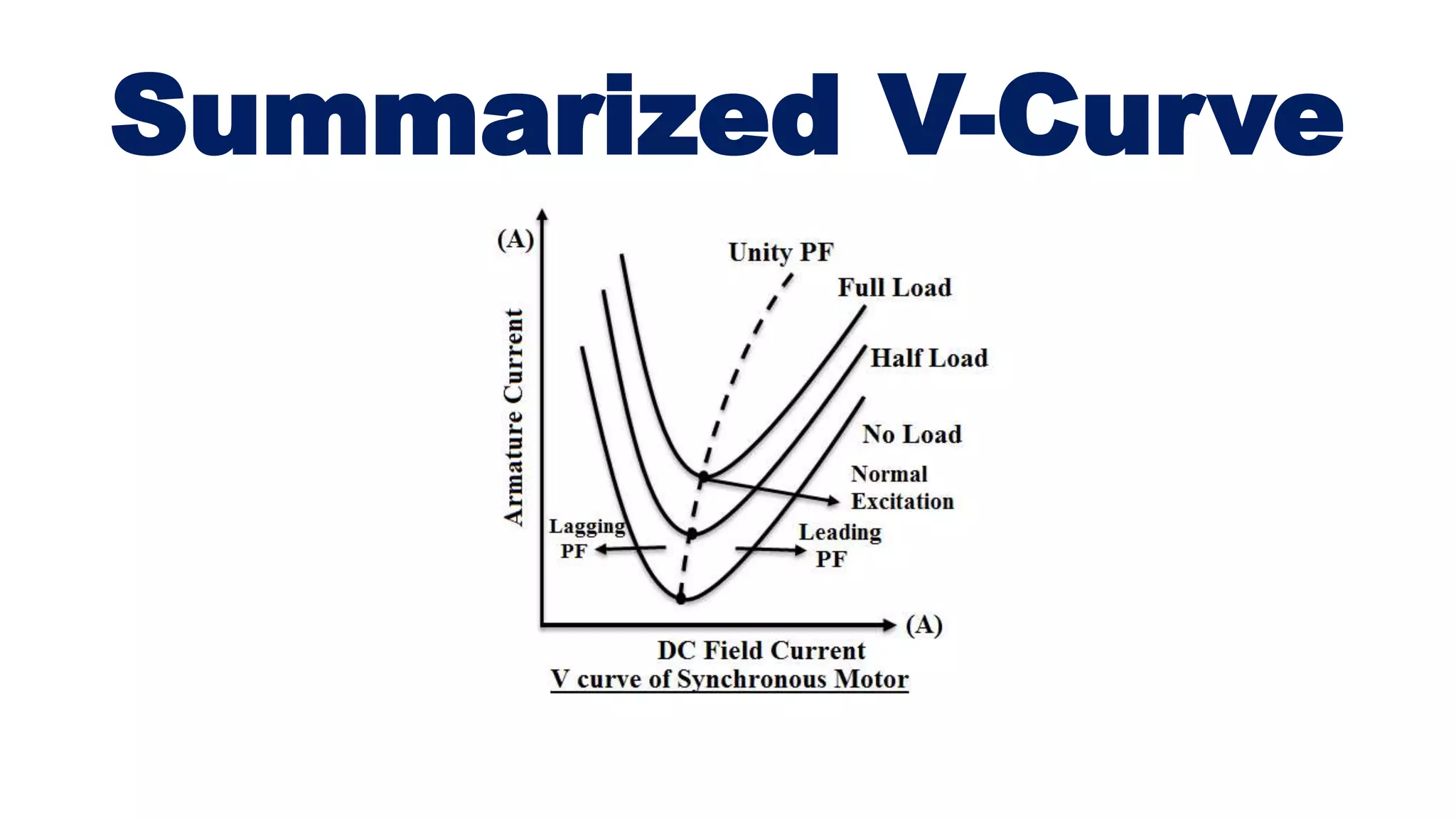
From V-Curves it is observed that the armature current has large values both for
low and high values of excitation ( though it is lagging for low excitation and leading
for higher excitation ). In between, it has a minimum value corresponding to the
unity power factor ( normal excitation ).
The inverted V-Curves of synchronous motor shows how the power factor varies
with excitation. From inverted V-curves, it is observed that the power factor is
lagging when the motor is under excited and leading when it is over-excited. In
between, the power factor is unity.
References
• Electrical4u.net
• Electrical Deck

V Curve and Inverted V Curves

  • 1.
  • 2.
  • 3.
  • 4.
    The performance characteristics ofa synchronous motor are obtained by v-curves and inverted v-curves. Synchronous machines have parabolic type characteristics If the excitation is varied from low ( under- excitation ) to high ( over- excitation ) value, then the current Ia also changes i.e., becomes minimum at unity p.f. and then again increases. But at starting lagging current becomes unity and then becomes leading in nature. V-curves and inverted V- curves of a synchronous motor are used to analyze efficiency on no-load and on-load conditions.
  • 5.
    1. What? The graphicalrepresentation of armature current Ia vs field current If is called V-curve. At the same time the power factor vs field current is called inverted V-curve of a synchronous motor.
  • 6.
  • 7.
    No Load andLoaded Condition At no-load condition, the real power supplied to the machine is zero since Ia=0, at unity power factor. When you increase the field current above that point, the line current increases with respect to applied field current. (Here the reactive current flows from the motor to source) At load condition, the motor draws a small amount of real current at unity power factor. After plotting the graph, the same V shape is still maintained.
  • 9.
  • 10.
  • 11.
    If the powerfactor is plotted against excitation for various load conditions, we obtain a set of curves known as 'Inverted V-Curves’. The inverted V-Curves of synchronous motor shows how the power factor varies with excitation. From inverted V-curves, it is observed that the power factor is lagging when the motor is under excited and leading when it is over-excited. In between, the power factor is unity.
  • 12.
  • 13.
    Conclusion From V-Curves itis observed that the armature current has large values both for low and high values of excitation ( though it is lagging for low excitation and leading for higher excitation ). In between, it has a minimum value corresponding to the unity power factor ( normal excitation ). The inverted V-Curves of synchronous motor shows how the power factor varies with excitation. From inverted V-curves, it is observed that the power factor is lagging when the motor is under excited and leading when it is over-excited. In between, the power factor is unity.
  • 14.