Using Mass Media in the
      Classroom
             Spring School
   English Teaching Resource Center
               Chisinau
             March 5, 2012


                  1
Newspapers &
  Mass Media
For Text Analysis and Language
           Learning


              2
Why use mass media
messages?
  Current information

  Cultural information

  New vocabulary

  New stylistics

  Satisfaction as a language learner


                         3
Connecting with
            Students
•   Wide range of material for students’ wide
    range of interests
•   Chance to understand students
•   Increased participation
•   Relatable material
•   Discussion/debate opportunities


                         4
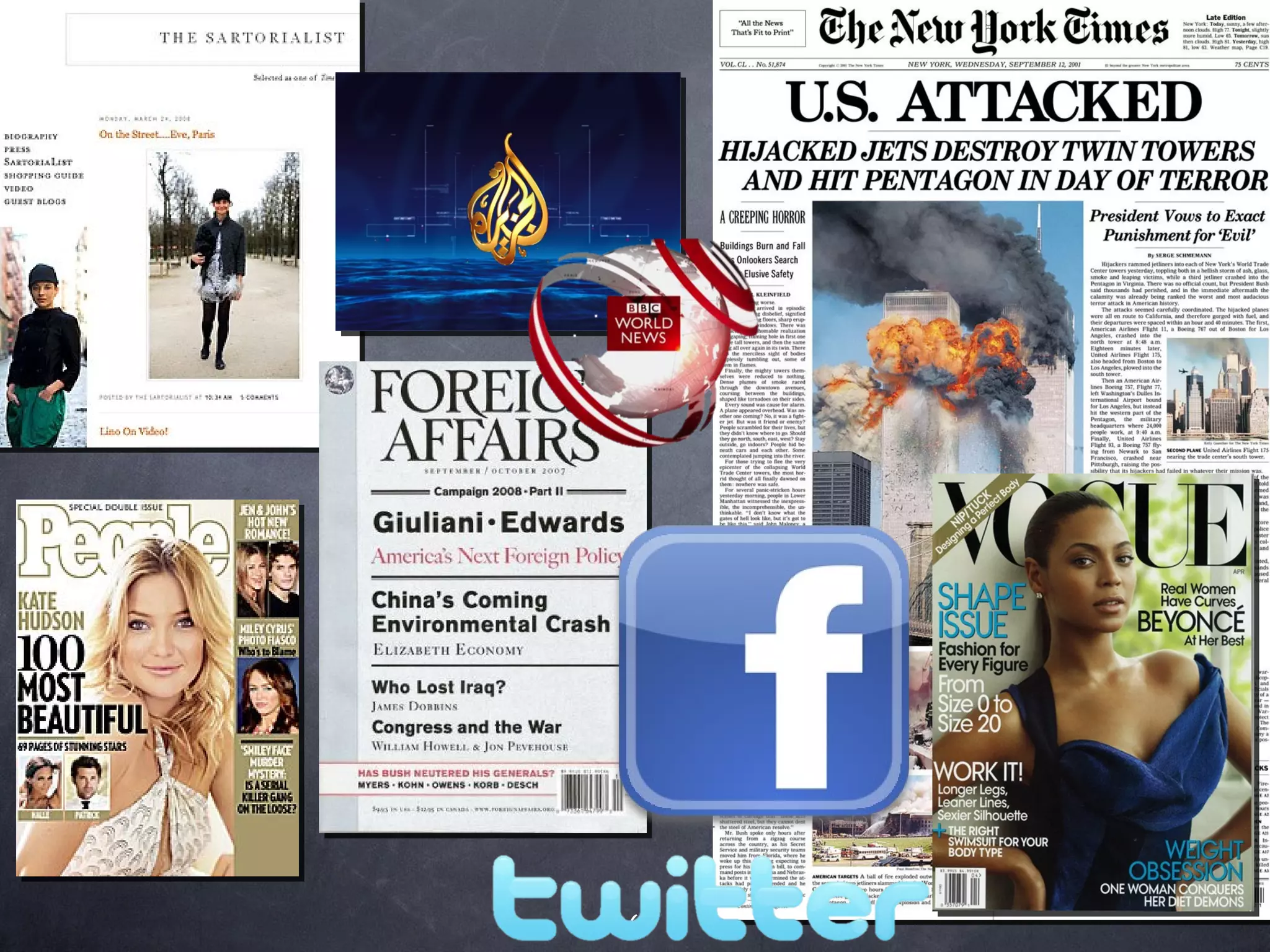
What is mass media?


         5
6
Mass Media=Connection


•   Young Moldovans interested in global
    engagement
•   Opportunity to connect with people across
    the world
•   Various fora for discussion, debate and
    sharing


                        7
Where to begin?
•   Introduce students to standard differences
•   Solicit topics of interest
•   Don’t underestimate the value of certain
    themes
•   Plan an introductory lesson to acquaint
    students with ideas of mass media


                          8
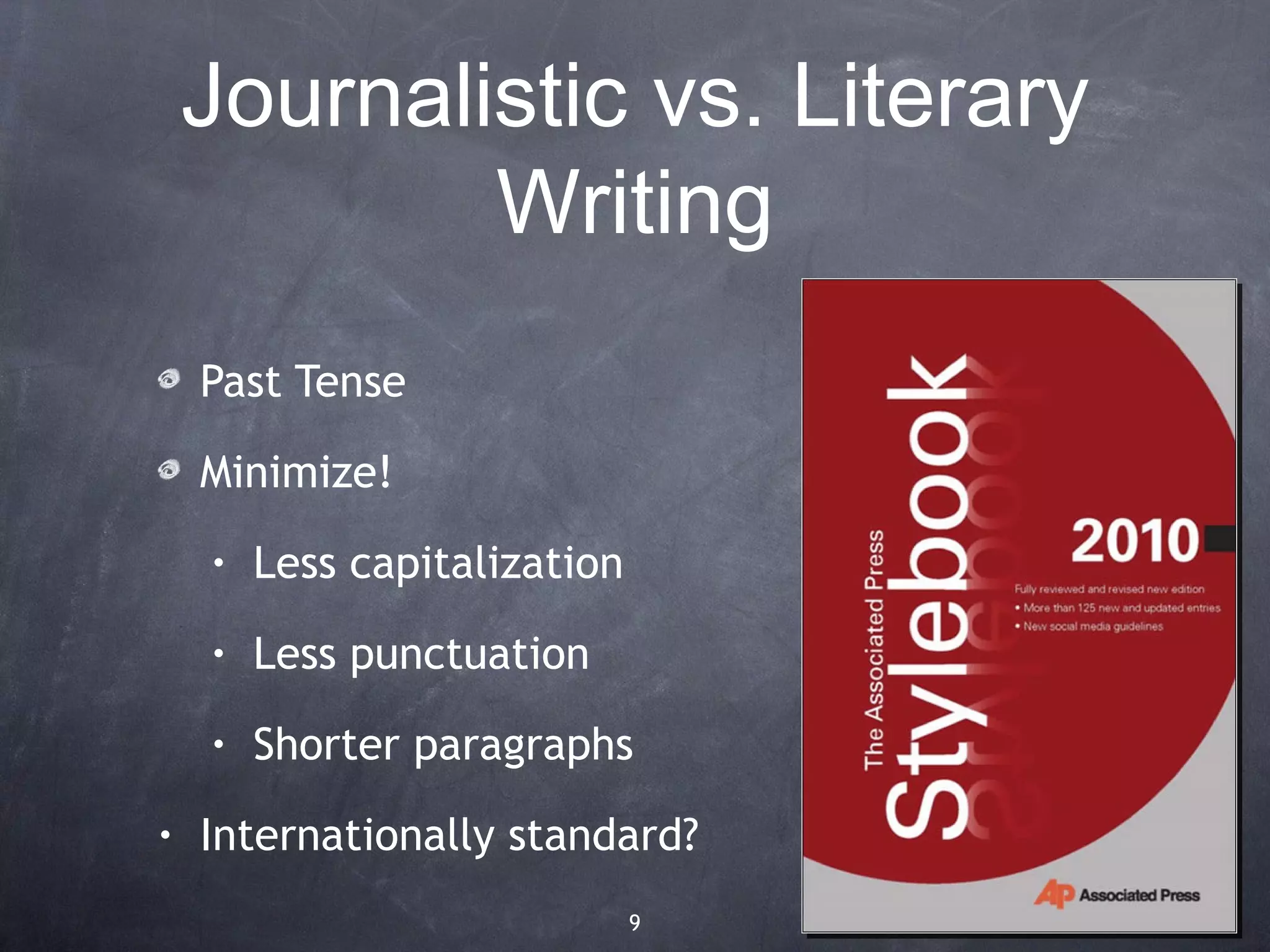
Journalistic vs. Literary
            Writing
    Past Tense

    Minimize!
    •   Less capitalization
    •   Less punctuation
    •   Shorter paragraphs
•   Internationally standard?
                              9
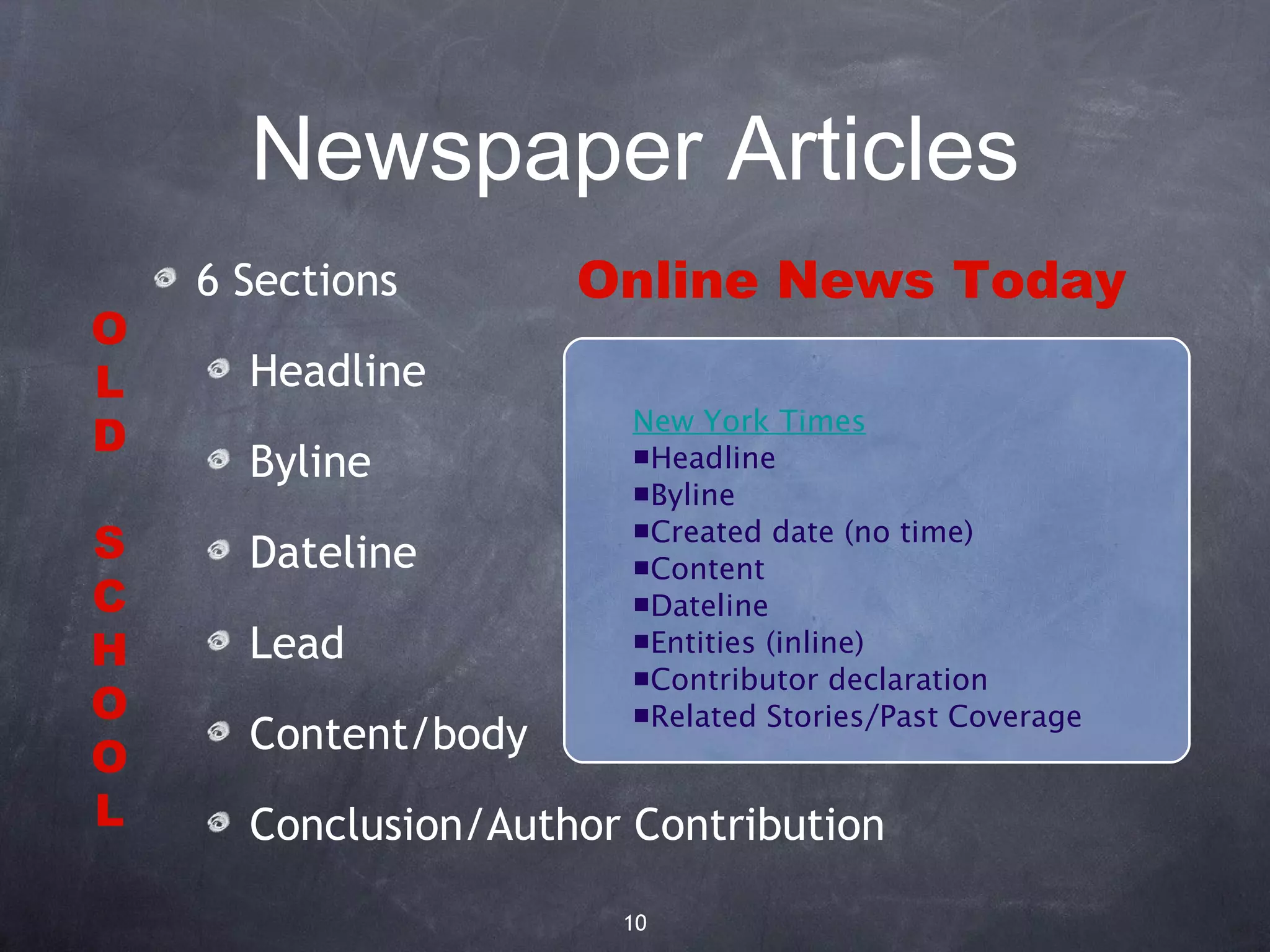
Newspaper Articles
    6 Sections       Online News Today
O
L     Headline
D                       New York Times
      Byline            ■Headline
                        ■Byline
S     Dateline
                        ■Created date (no time)
                        ■Content
C                       ■Dateline
H     Lead              ■Entities (inline)
                        ■Contributor declaration
O                       ■Related Stories/Past Coverage
      Content/body
O
L     Conclusion/Author Contribution

                       10
Inverted Pyramid
  Most Important

    Somewhat
    Important


      Fluff


        11
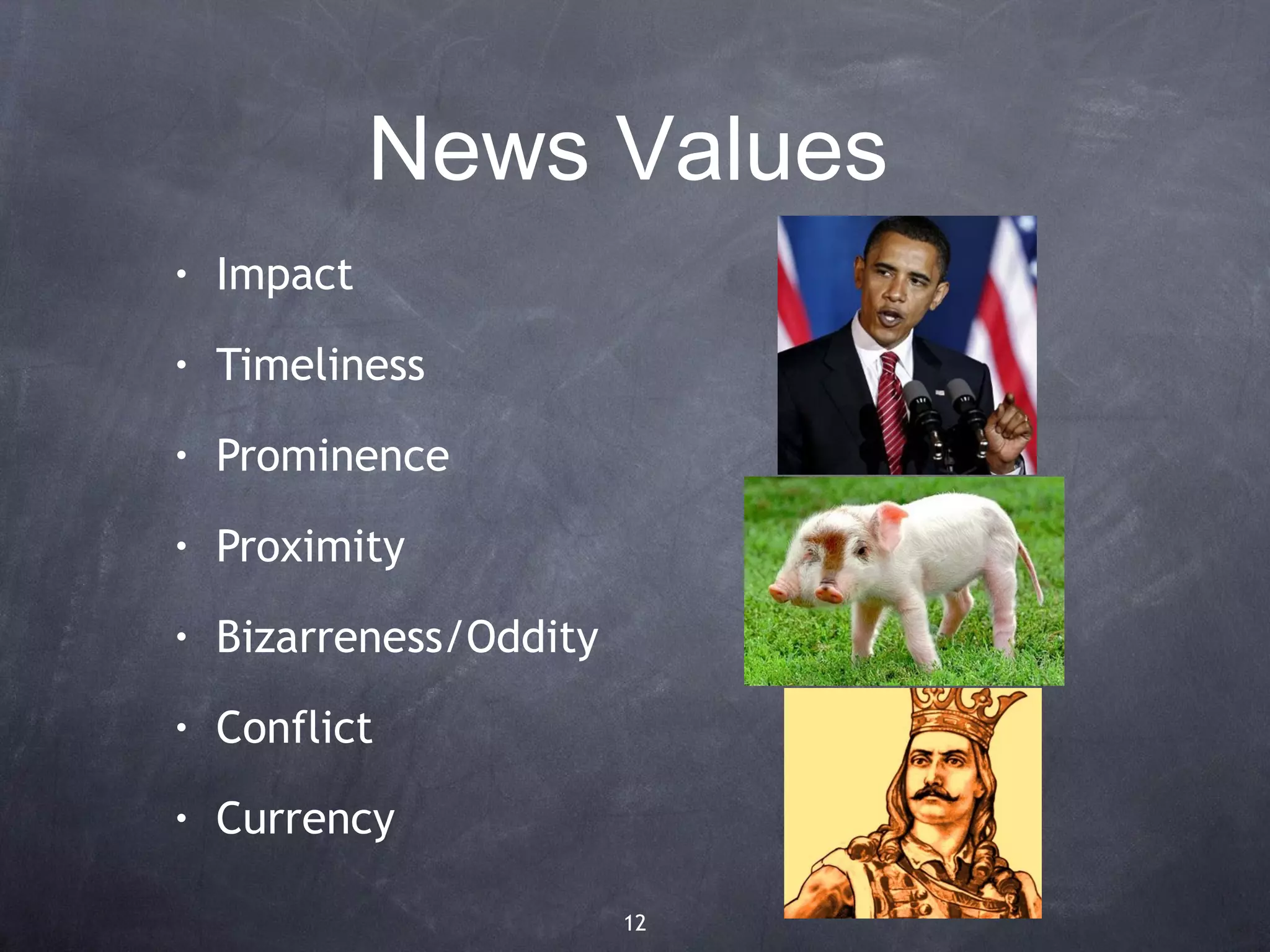
News Values
•   Impact
•   Timeliness
•   Prominence
•   Proximity
•   Bizarreness/Oddity
•   Conflict
•   Currency

                         12
Types of News Articles

Hard News

Feature Stories

Opinion Pieces

  Columns

  Editorials


                  13
Where does the news
       come from?
•   Naturally occurring events, like disasters and
    accidents
•   Planned activities, like meetings and news
    conferences
•   Reporter’s enterprise


                        14
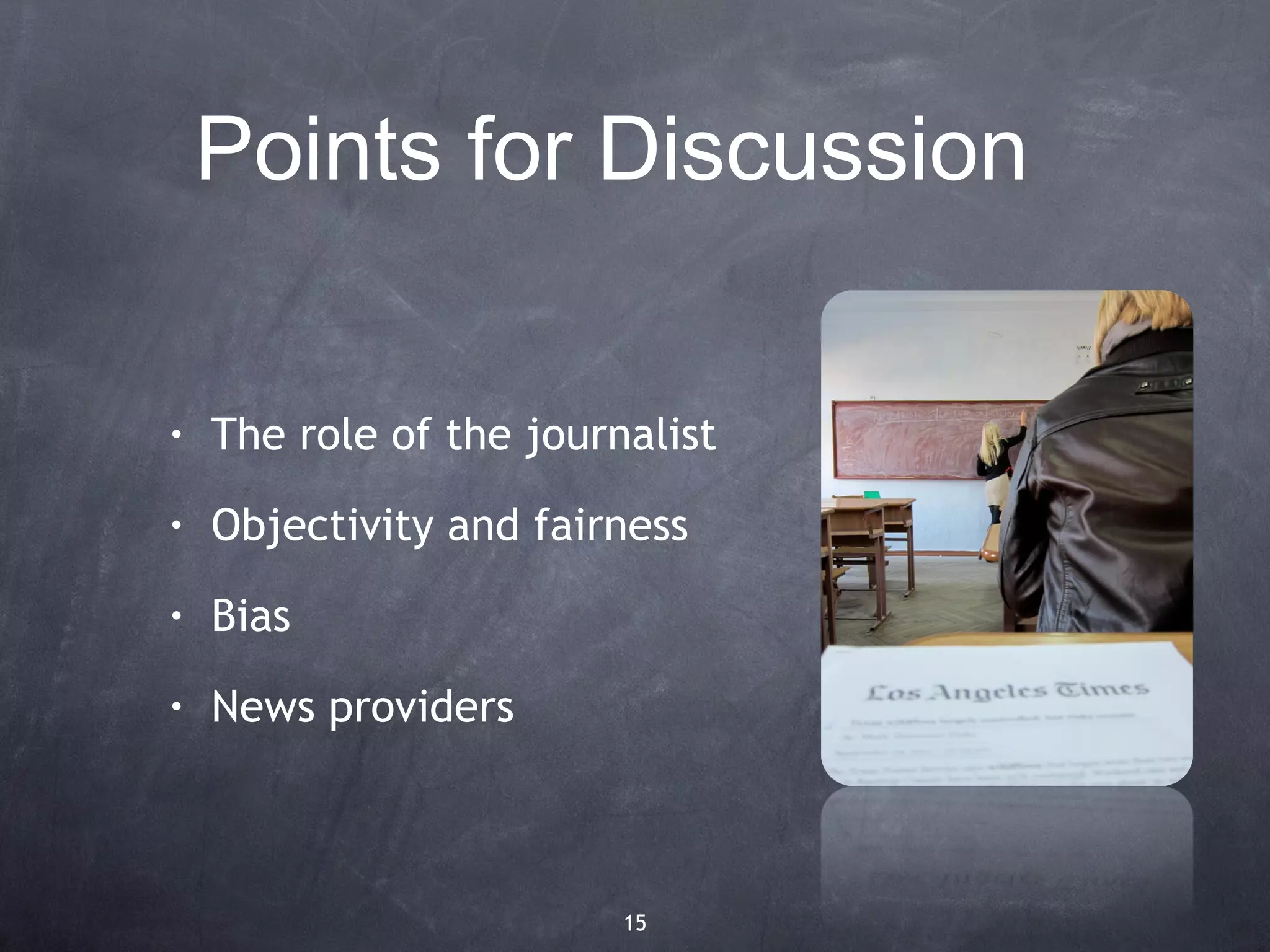
Points for Discussion

•   The role of the journalist
•   Objectivity and fairness
•   Bias
•   News providers


                         15
Suggested Activities


         16
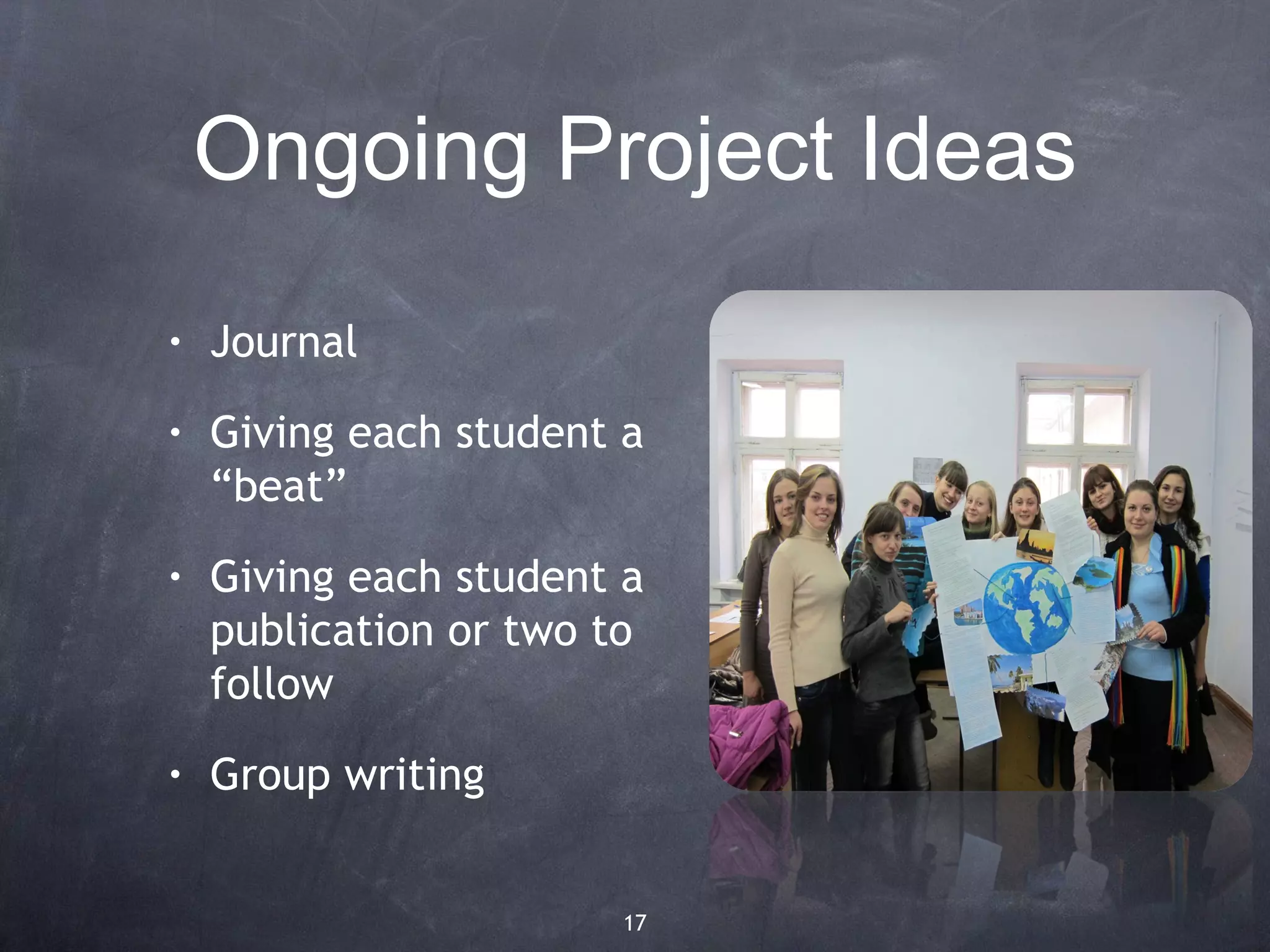
Ongoing Project Ideas
•   Journal
•   Giving each student a
    “beat”
•   Giving each student a
    publication or two to
    follow
•   Group writing


                       17
Analysis Activities
•   Practice answering the 5 W’s and H questions
    •   Provide an article
    •   Provide students with the Ws and H, along with several
        variations of these questions
•   Bias identification
    •   Provide two articles from different sources discussing
        the same issue
    •   How do they differ? Can students identify forms of bias?

                                18
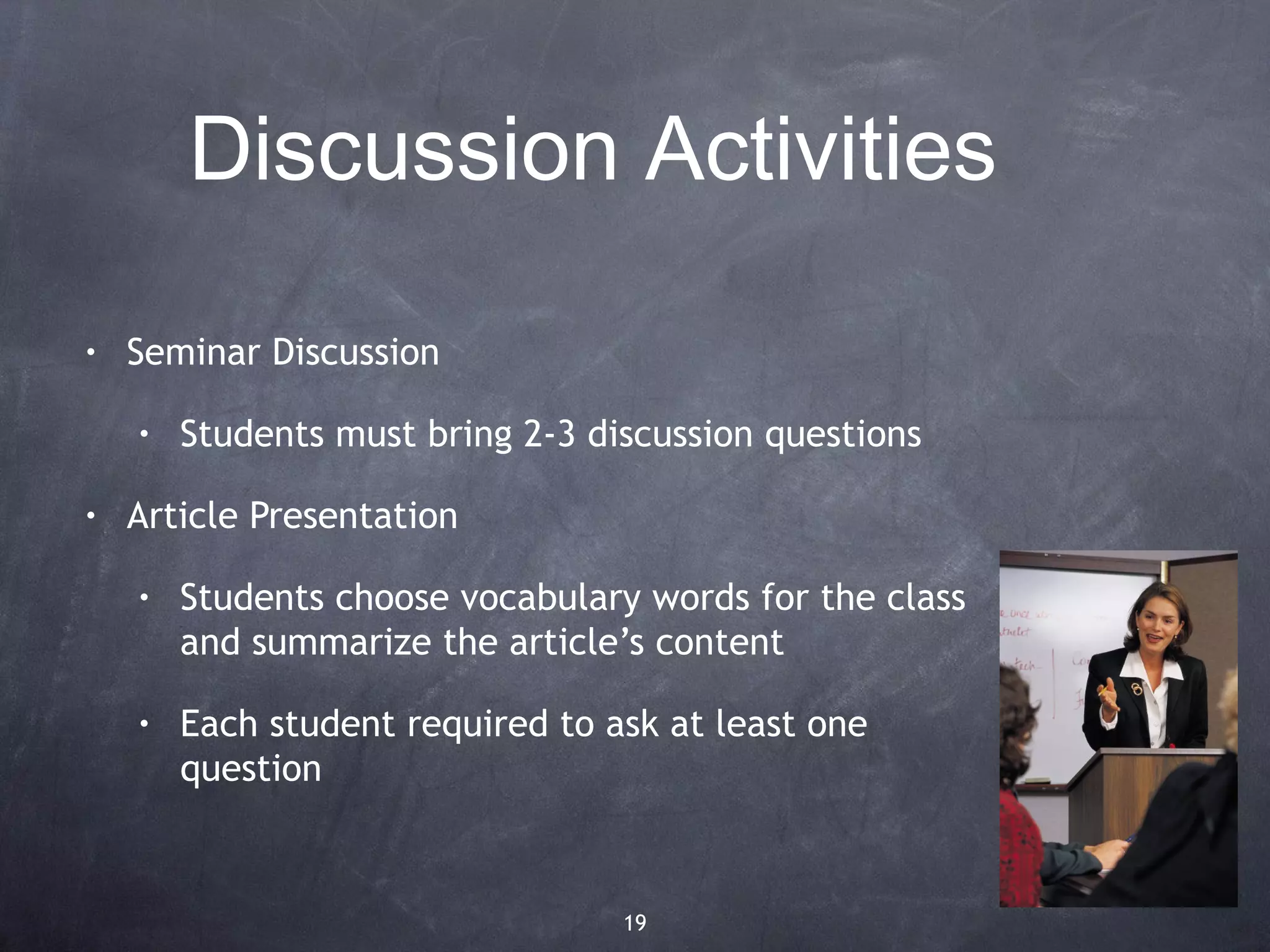
Discussion Activities

•   Seminar Discussion

    •   Students must bring 2-3 discussion questions

•   Article Presentation

    •   Students choose vocabulary words for the class
        and summarize the article’s content

    •   Each student required to ask at least one
        question


                                  19
Writing Activities
•   Summarizing-essential for succinct writing
•   Article writing
    •   Begin with leads, then gradually work to
        full articles
    •   Work through the writing process
        •   Observation, research, sources,
            interviews, fact-checking

                          20
Identifying News Values
•   In your group, go down the list of news values
    and see if the article contains one or more of
    these values. State why or why not.


                        21
Ws and H
•   Who is involved in this story? Who is affected by it? Who is the best
    person to tell the story?

•   What happened? What is the point of this story? What is the writer
    trying to say?

•   Where did this happen? Where else could I go to get the full story?

•   When did this happen? When did the turning points occur in the story?

•   Why is this happening? Is it an isolated case or part of a trend? Why
    are people behaving the way they are?

•   How did this happen? How will things be different because of what
    happened?

                                    22
Summarize!

•   Work in groups to summarize your stories.
    What are the most crucial elements?


                        23
Advantages                   Disadvantages
•   Exposure to                  •   Difficult to entertain
    otherwise potentially            all students’
    ignored topics                   interests
•   Accessibility                •   Frustration with
                                     vocabulary and style
•   Linguistic exercise
                                 •   Intimidating material
•   Group or individual
    opportunities
•   Real world practice

                            24
Thank you!


Questions/Comments?


        25

Using mass media in English classroom

  • 1.
    Using Mass Mediain the Classroom Spring School English Teaching Resource Center Chisinau March 5, 2012 1
  • 2.
    Newspapers & Mass Media For Text Analysis and Language Learning 2
  • 3.
    Why use massmedia messages? Current information Cultural information New vocabulary New stylistics Satisfaction as a language learner 3
  • 4.
    Connecting with Students • Wide range of material for students’ wide range of interests • Chance to understand students • Increased participation • Relatable material • Discussion/debate opportunities 4
  • 5.
    What is massmedia? 5
  • 6.
  • 7.
    Mass Media=Connection • Young Moldovans interested in global engagement • Opportunity to connect with people across the world • Various fora for discussion, debate and sharing 7
  • 8.
    Where to begin? • Introduce students to standard differences • Solicit topics of interest • Don’t underestimate the value of certain themes • Plan an introductory lesson to acquaint students with ideas of mass media 8
  • 9.
    Journalistic vs. Literary Writing Past Tense Minimize! • Less capitalization • Less punctuation • Shorter paragraphs • Internationally standard? 9
  • 10.
    Newspaper Articles 6 Sections Online News Today O L Headline D New York Times Byline ■Headline ■Byline S Dateline ■Created date (no time) ■Content C ■Dateline H Lead ■Entities (inline) ■Contributor declaration O ■Related Stories/Past Coverage Content/body O L Conclusion/Author Contribution 10
  • 11.
    Inverted Pyramid Most Important Somewhat Important Fluff 11
  • 12.
    News Values • Impact • Timeliness • Prominence • Proximity • Bizarreness/Oddity • Conflict • Currency 12
  • 13.
    Types of NewsArticles Hard News Feature Stories Opinion Pieces Columns Editorials 13
  • 14.
    Where does thenews come from? • Naturally occurring events, like disasters and accidents • Planned activities, like meetings and news conferences • Reporter’s enterprise 14
  • 15.
    Points for Discussion • The role of the journalist • Objectivity and fairness • Bias • News providers 15
  • 16.
  • 17.
    Ongoing Project Ideas • Journal • Giving each student a “beat” • Giving each student a publication or two to follow • Group writing 17
  • 18.
    Analysis Activities • Practice answering the 5 W’s and H questions • Provide an article • Provide students with the Ws and H, along with several variations of these questions • Bias identification • Provide two articles from different sources discussing the same issue • How do they differ? Can students identify forms of bias? 18
  • 19.
    Discussion Activities • Seminar Discussion • Students must bring 2-3 discussion questions • Article Presentation • Students choose vocabulary words for the class and summarize the article’s content • Each student required to ask at least one question 19
  • 20.
    Writing Activities • Summarizing-essential for succinct writing • Article writing • Begin with leads, then gradually work to full articles • Work through the writing process • Observation, research, sources, interviews, fact-checking 20
  • 21.
    Identifying News Values • In your group, go down the list of news values and see if the article contains one or more of these values. State why or why not. 21
  • 22.
    Ws and H • Who is involved in this story? Who is affected by it? Who is the best person to tell the story? • What happened? What is the point of this story? What is the writer trying to say? • Where did this happen? Where else could I go to get the full story? • When did this happen? When did the turning points occur in the story? • Why is this happening? Is it an isolated case or part of a trend? Why are people behaving the way they are? • How did this happen? How will things be different because of what happened? 22
  • 23.
    Summarize! • Work in groups to summarize your stories. What are the most crucial elements? 23
  • 24.
    Advantages Disadvantages • Exposure to • Difficult to entertain otherwise potentially all students’ ignored topics interests • Accessibility • Frustration with vocabulary and style • Linguistic exercise • Intimidating material • Group or individual opportunities • Real world practice 24
  • 25.

Editor's Notes

  • #19 Analyzing for news values
  • #21 Articles can be both made up completely or real Example of the travel articles Covering a town event Media-worthy topics