THE ROLES OF

EDUCATIONAL
TECHNOLOGY
IN LEARNING
TECHNOLOGY
Traditional Way
i.e. as delivery vehicles
for instructional lessons.
Constructivist way
i.e. as partner in the
learning process.
TRADITIONAL WAY
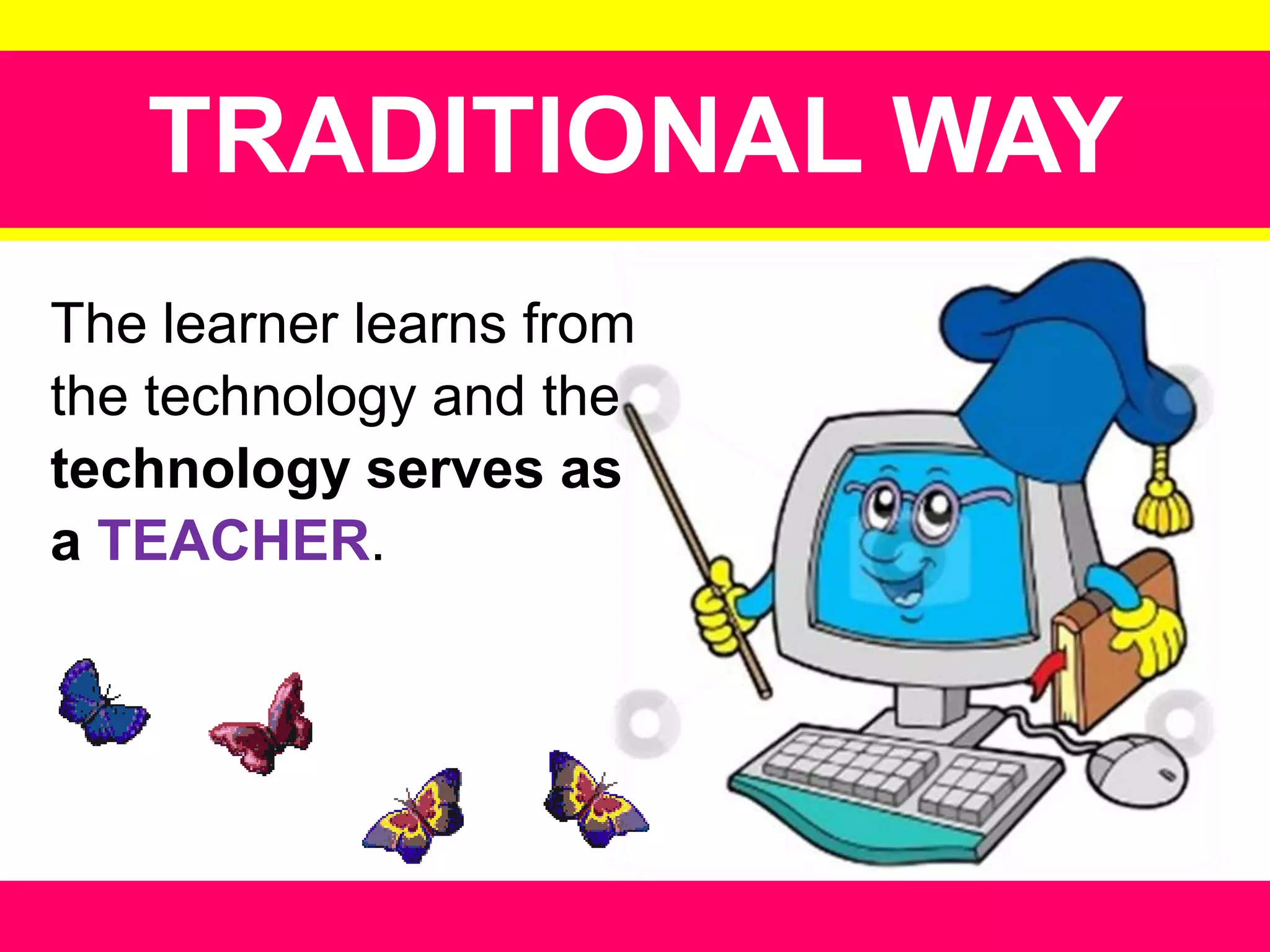
The learner learns from
the technology and the
technology serves as
a TEACHER.
CONSTRUCTIVIST WAY
analyze

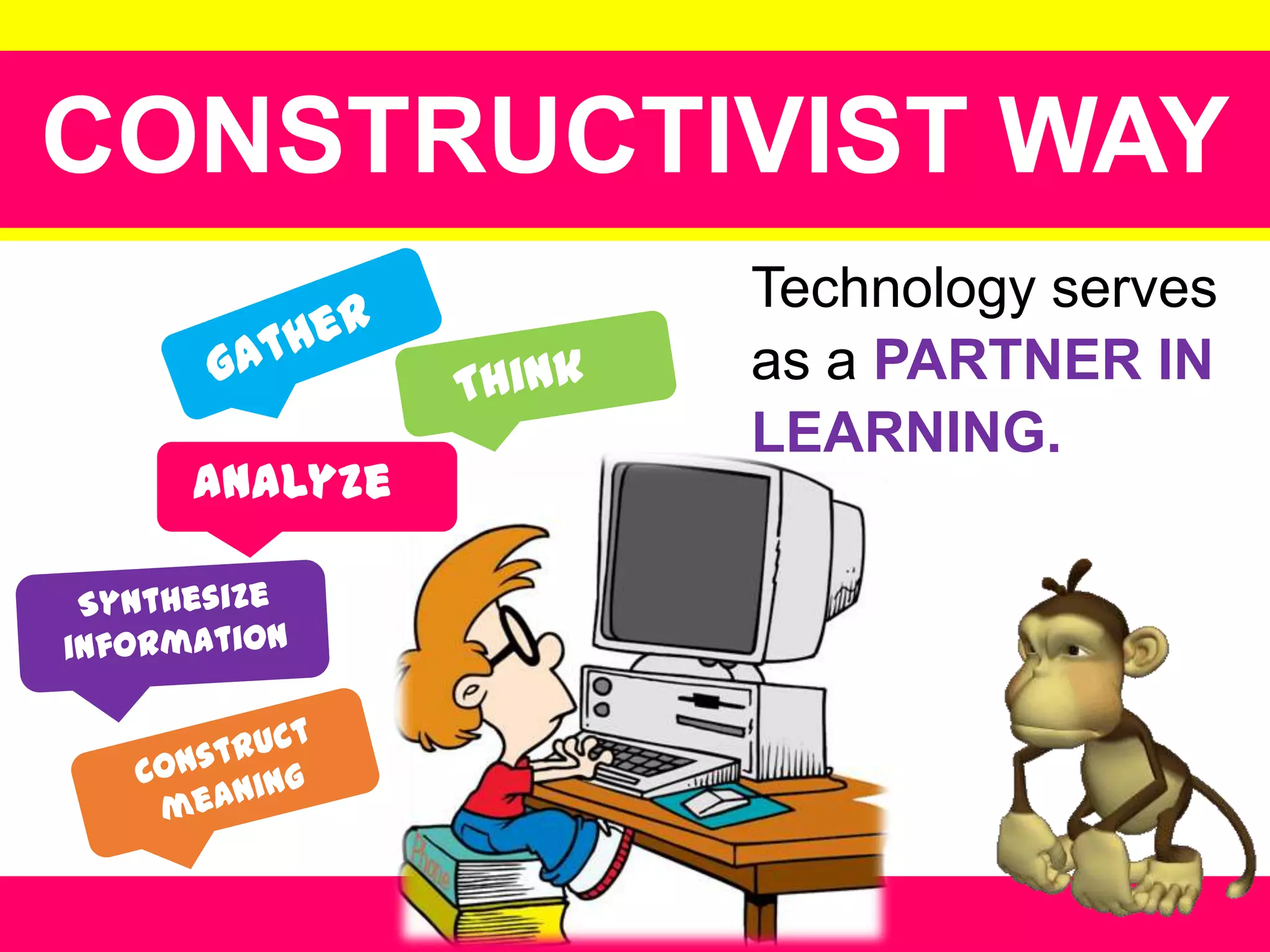
Technology serves
as a PARTNER IN
LEARNING.
Traditi
Point of View
onal

• Technology serves as source and
presenter of knowledge.
• It is assumed that “knowledge is
embedded in the technology and the
technology presents that knowledge to a
student.”
• Technology like computers is seen as
productivity tool.
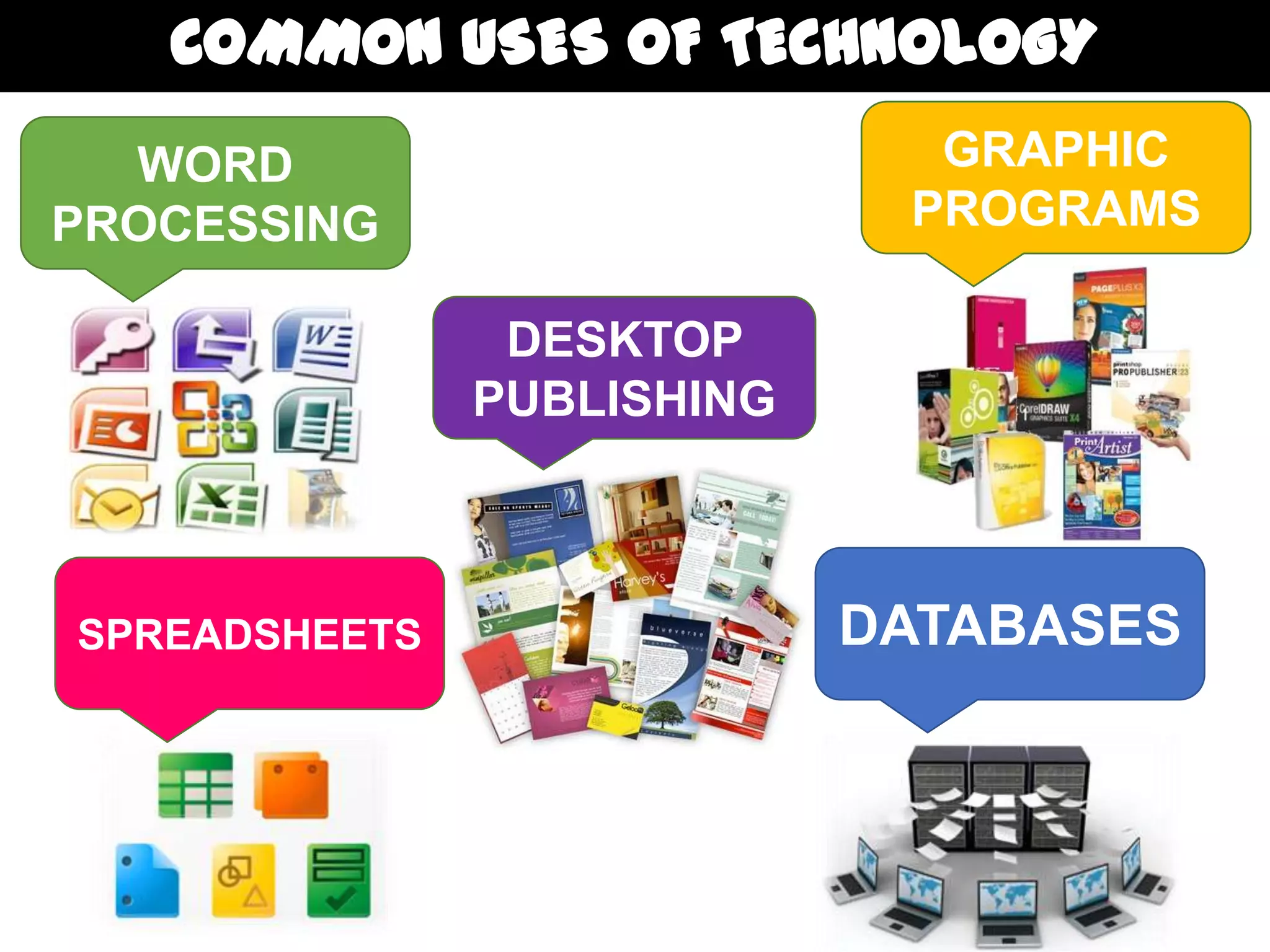
COMMON USES OF TECHNOLOGY
GRAPHIC
PROGRAMS

WORD
PROCESSING

DESKTOP
PUBLISHING

SPREADSHEETS

DATABASES
Construc
Point of View
tivist

• Educational technology serves as learning
tools to learn with.
• It engages learners in active,
constructive, intentional, authentic and
cooperative learning.
• It provides opportunities for technology
and learner interaction for meaningful
learning.
ROLES OF TECHNOLOGY

IN LEARNING
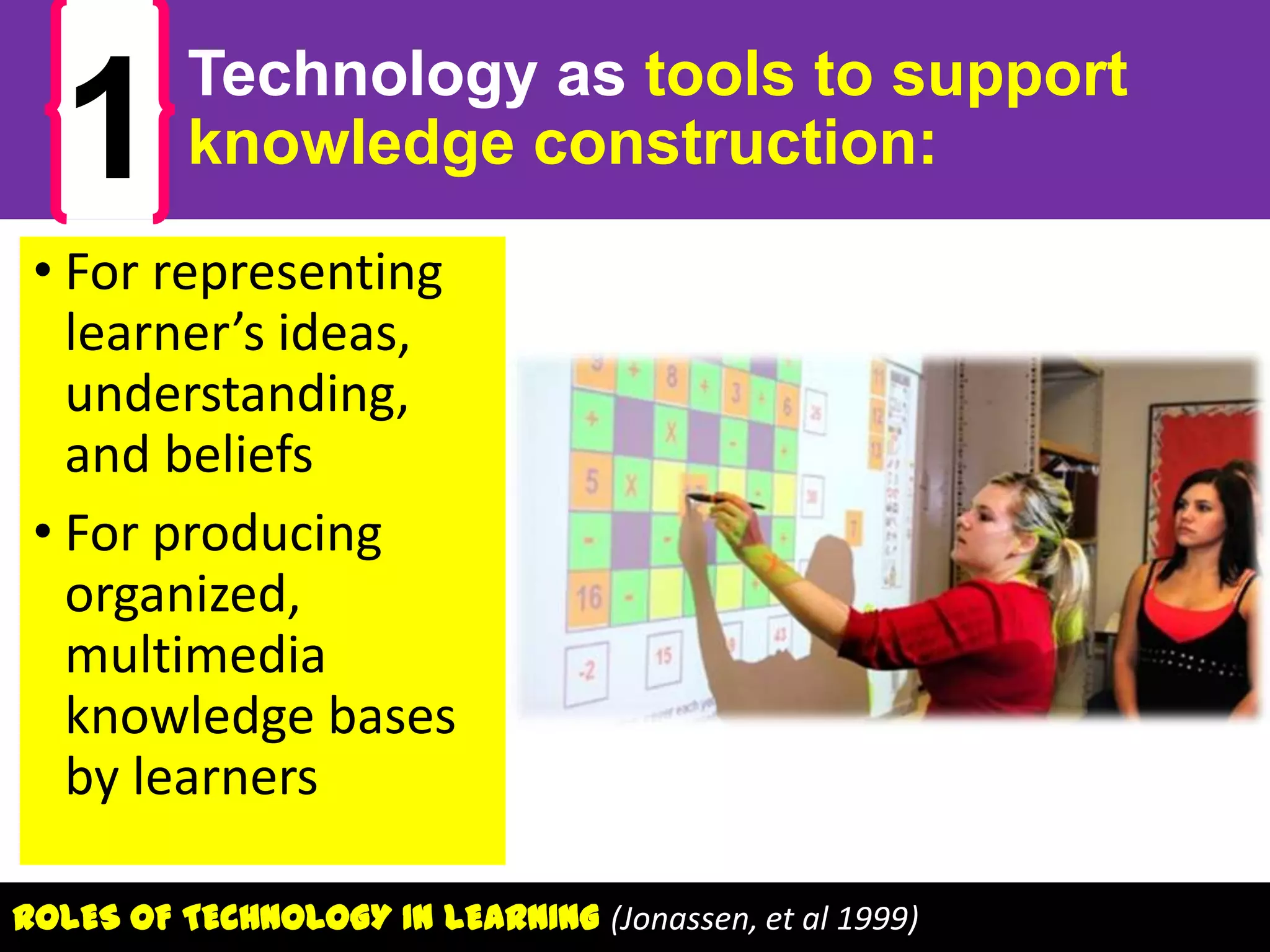
1

Technology as tools to support
knowledge construction:

• For representing
learner’s ideas,
understanding,
and beliefs
• For producing
organized,
multimedia
knowledge bases
by learners
ROLES OF TECHNOLOGY IN LEARNING (Jonassen, et al 1999)
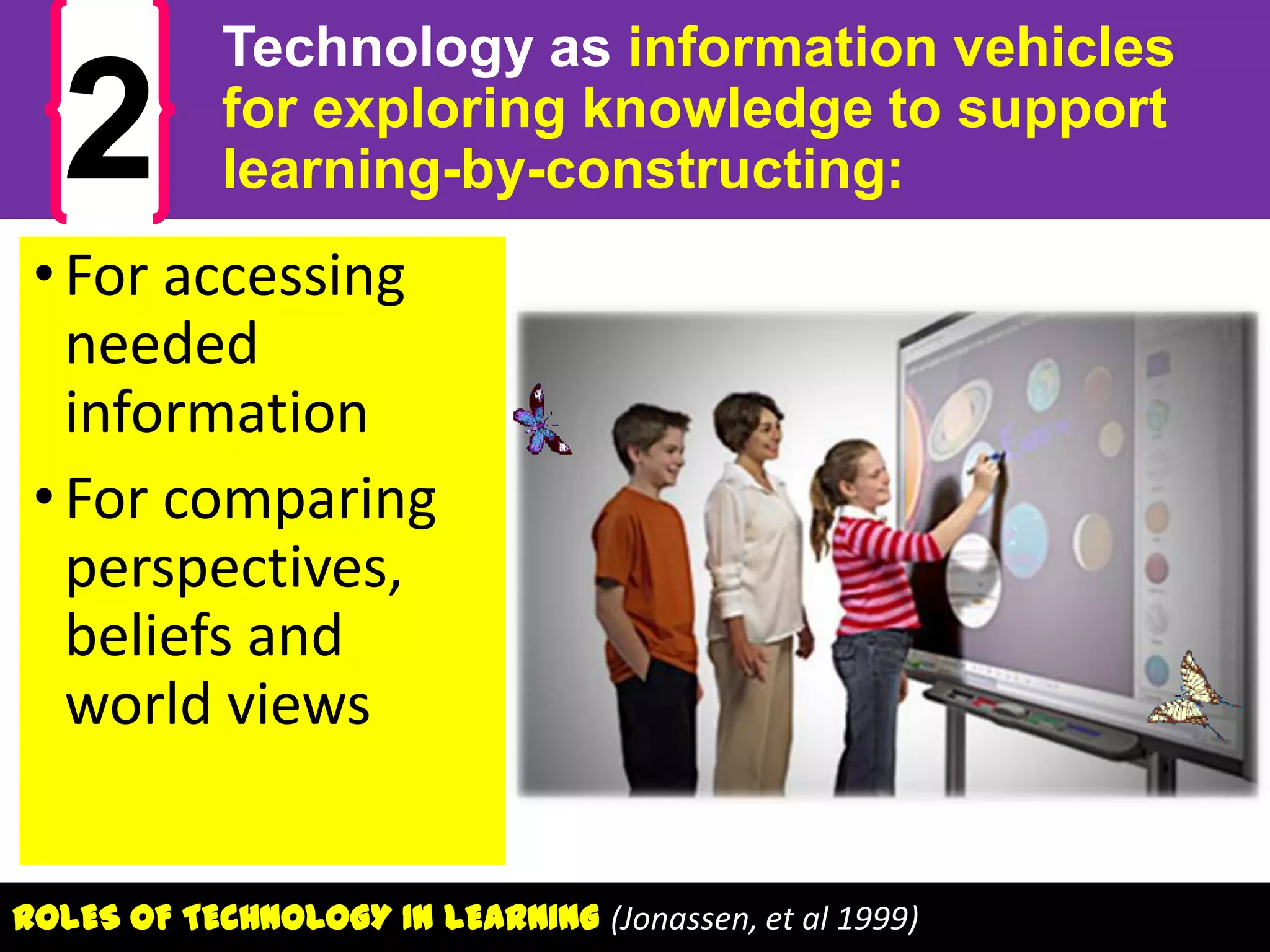
2

Technology as information vehicles
for exploring knowledge to support
learning-by-constructing:

• For accessing
needed
information
• For comparing
perspectives,
beliefs and
world views
ROLES OF TECHNOLOGY IN LEARNING (Jonassen, et al 1999)
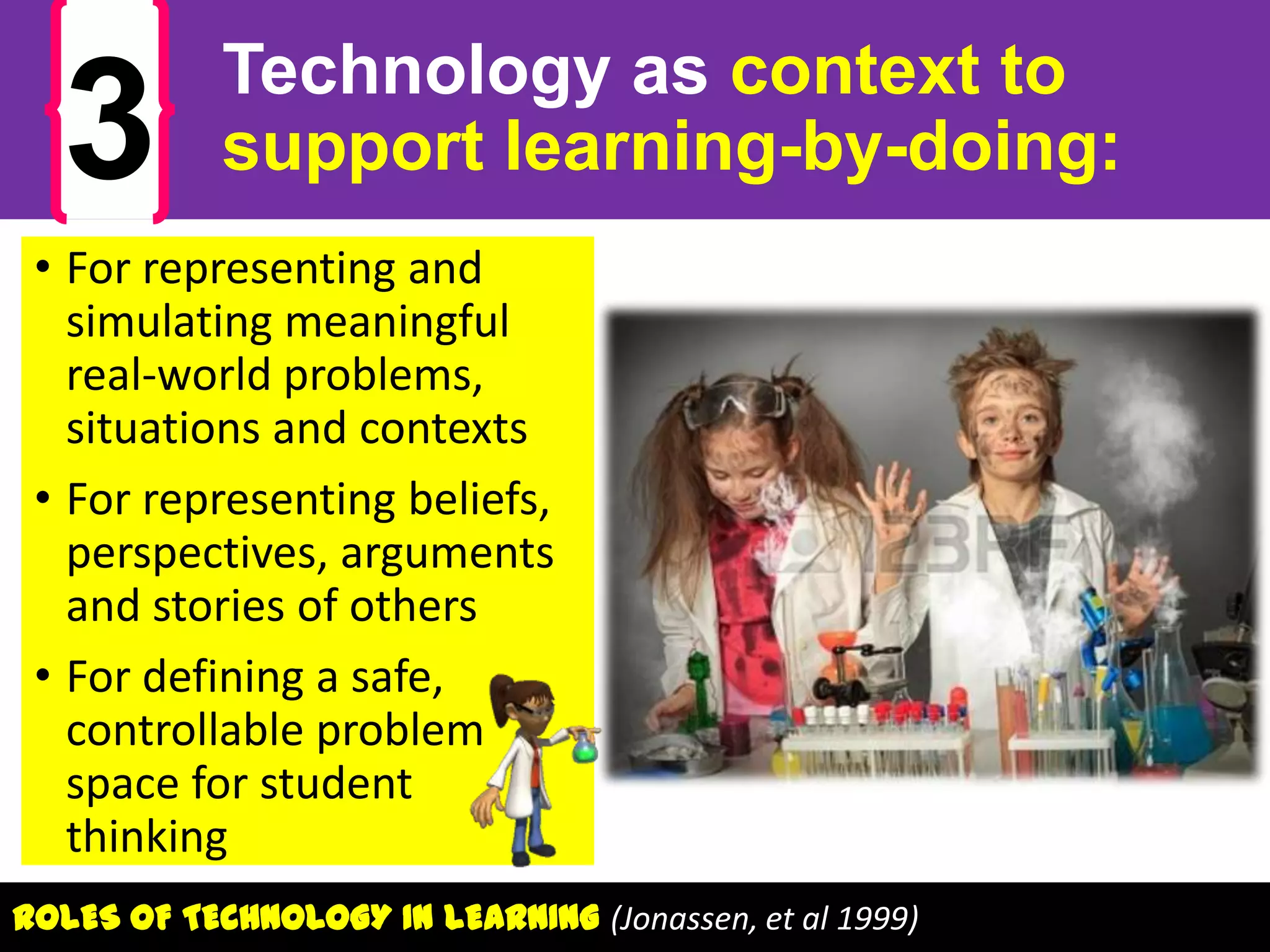
3

Technology as context to
support learning-by-doing:

• For representing and
simulating meaningful
real-world problems,
situations and contexts
• For representing beliefs,
perspectives, arguments
and stories of others
• For defining a safe,
controllable problem
space for student
thinking
ROLES OF TECHNOLOGY IN LEARNING (Jonassen, et al 1999)
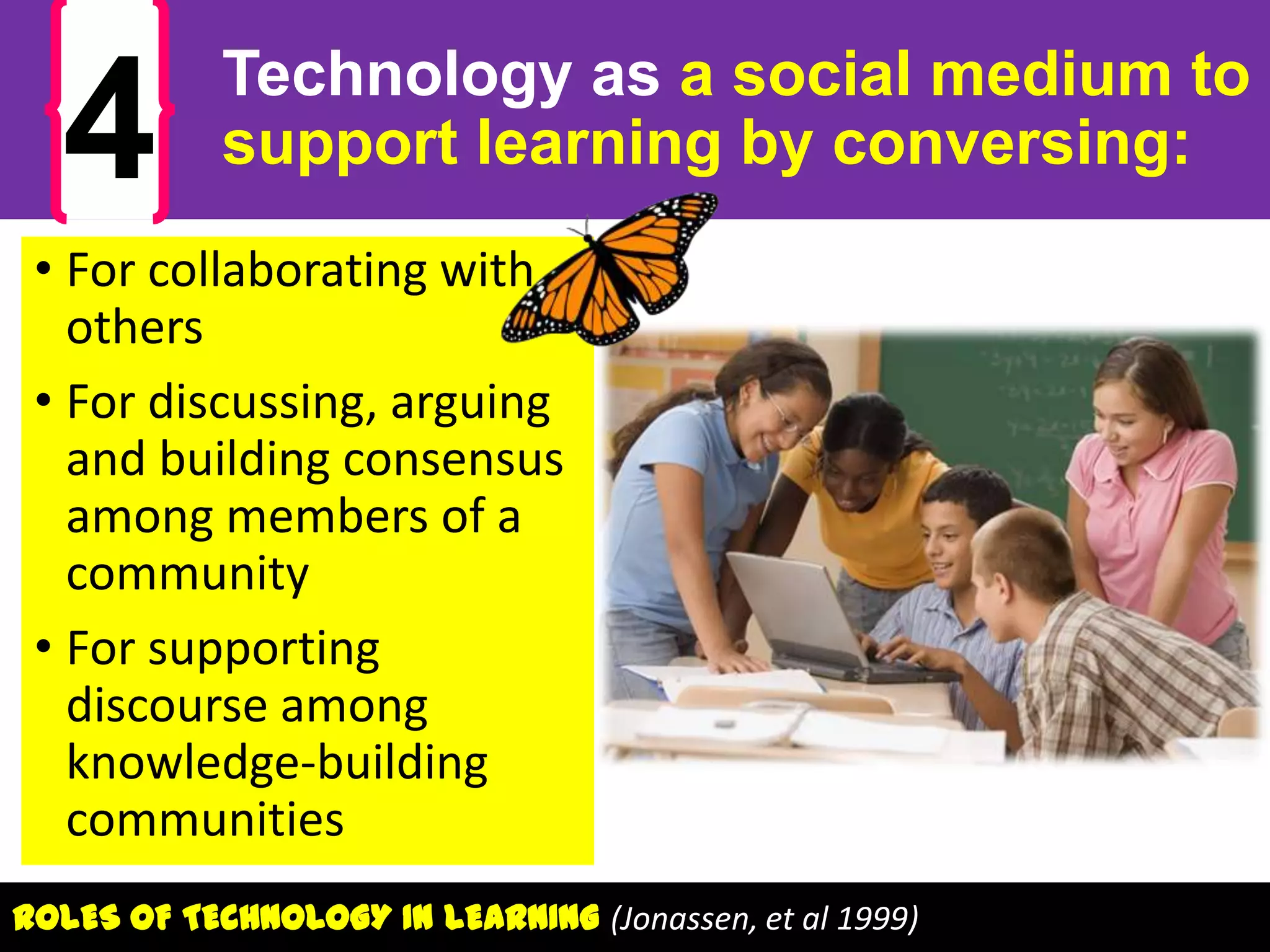
4

Technology as a social medium to
support learning by conversing:

• For collaborating with
others
• For discussing, arguing
and building consensus
among members of a
community
• For supporting
discourse among
knowledge-building
communities
ROLES OF TECHNOLOGY IN LEARNING (Jonassen, et al 1999)
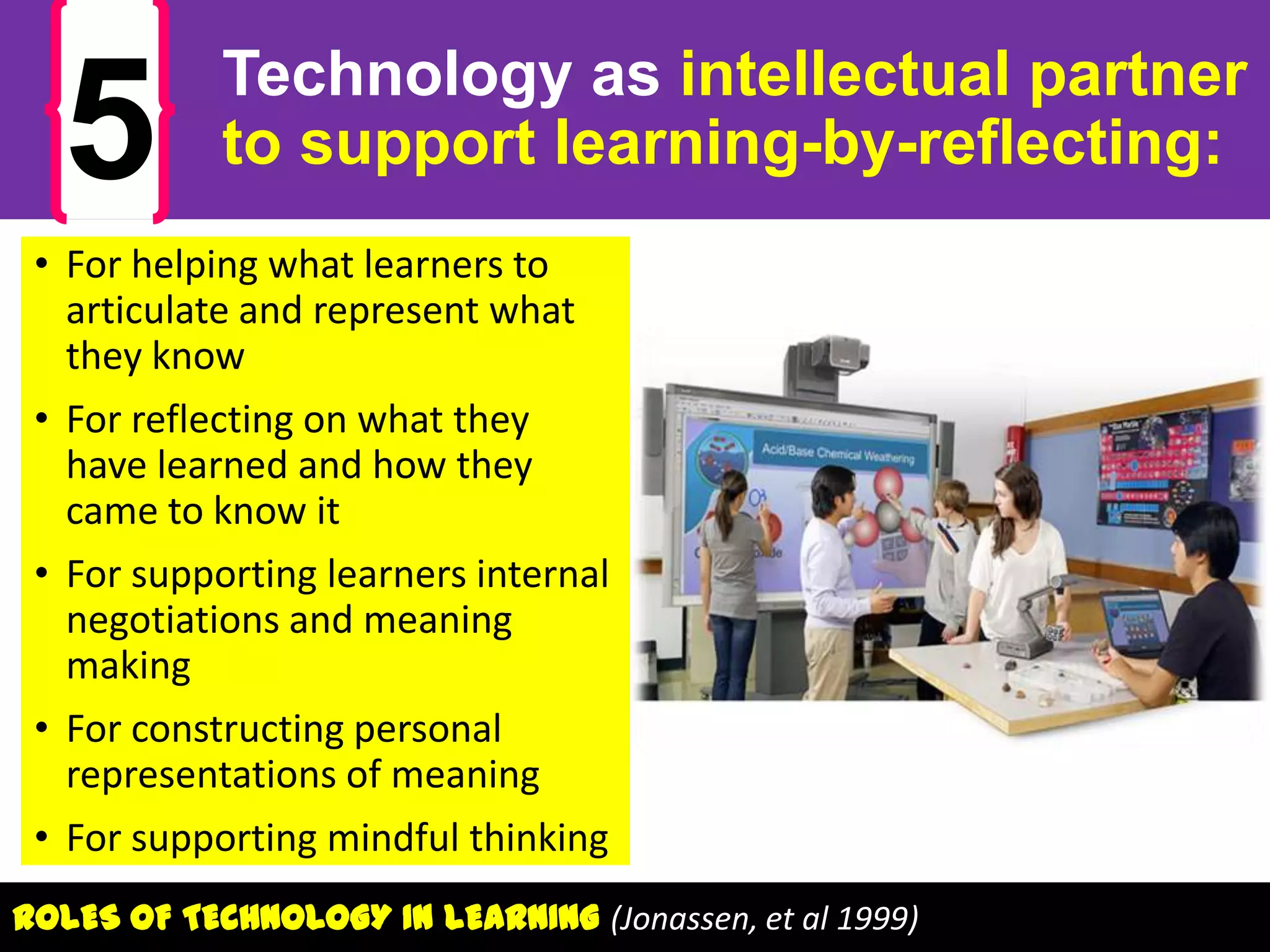
5

Technology as intellectual partner
to support learning-by-reflecting:

• For helping what learners to
articulate and represent what
they know
• For reflecting on what they
have learned and how they
came to know it
• For supporting learners internal
negotiations and meaning
making
• For constructing personal
representations of meaning
• For supporting mindful thinking
ROLES OF TECHNOLOGY IN LEARNING (Jonassen, et al 1999)
When used effectively, research
indicates that technology:
1. augments motivation to learn;
2. encourages collaborative
learning;
3. supports the development of
critical thinking skills; and
4. supports the development of
problem solving skills
Educational Technology

Educational Technology

  • 2.
  • 3.
    TECHNOLOGY Traditional Way i.e. asdelivery vehicles for instructional lessons. Constructivist way i.e. as partner in the learning process.
  • 4.
    TRADITIONAL WAY The learnerlearns from the technology and the technology serves as a TEACHER.
  • 5.
  • 6.
    Traditi Point of View onal •Technology serves as source and presenter of knowledge. • It is assumed that “knowledge is embedded in the technology and the technology presents that knowledge to a student.” • Technology like computers is seen as productivity tool.
  • 7.
    COMMON USES OFTECHNOLOGY GRAPHIC PROGRAMS WORD PROCESSING DESKTOP PUBLISHING SPREADSHEETS DATABASES
  • 8.
    Construc Point of View tivist •Educational technology serves as learning tools to learn with. • It engages learners in active, constructive, intentional, authentic and cooperative learning. • It provides opportunities for technology and learner interaction for meaningful learning.
  • 9.
  • 10.
    1 Technology as toolsto support knowledge construction: • For representing learner’s ideas, understanding, and beliefs • For producing organized, multimedia knowledge bases by learners ROLES OF TECHNOLOGY IN LEARNING (Jonassen, et al 1999)
  • 11.
    2 Technology as informationvehicles for exploring knowledge to support learning-by-constructing: • For accessing needed information • For comparing perspectives, beliefs and world views ROLES OF TECHNOLOGY IN LEARNING (Jonassen, et al 1999)
  • 12.
    3 Technology as contextto support learning-by-doing: • For representing and simulating meaningful real-world problems, situations and contexts • For representing beliefs, perspectives, arguments and stories of others • For defining a safe, controllable problem space for student thinking ROLES OF TECHNOLOGY IN LEARNING (Jonassen, et al 1999)
  • 13.
    4 Technology as asocial medium to support learning by conversing: • For collaborating with others • For discussing, arguing and building consensus among members of a community • For supporting discourse among knowledge-building communities ROLES OF TECHNOLOGY IN LEARNING (Jonassen, et al 1999)
  • 14.
    5 Technology as intellectualpartner to support learning-by-reflecting: • For helping what learners to articulate and represent what they know • For reflecting on what they have learned and how they came to know it • For supporting learners internal negotiations and meaning making • For constructing personal representations of meaning • For supporting mindful thinking ROLES OF TECHNOLOGY IN LEARNING (Jonassen, et al 1999)
  • 15.
    When used effectively,research indicates that technology: 1. augments motivation to learn; 2. encourages collaborative learning; 3. supports the development of critical thinking skills; and 4. supports the development of problem solving skills