Chapter 25 Section 1 
The Cold TWraanr sBfoegrminisng the West 
Section 3 
Objectives 
• Analyze the impact of mining and railroads 
on the settlement of the West. 
• Explain how ranching affected western 
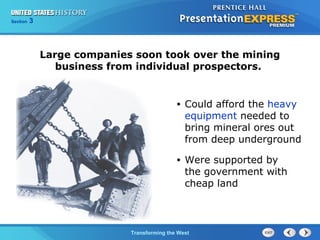
development. 
• Discuss the ways various peoples lived in the 
West and their impact on the environment.
Chapter 25 Section 1 
The Cold TWraanr sBfoegrminisng the West 
Section 3 
Terms and People 
• vigilante – self-appointed law enforcer 
• transcontinental railroad – rail link between 
the eastern and western United States 
• land grant – land given by the federal 
government for building railroads 
• open-range system – system in which 
ranchers did not fence in their property, allowing 
cattle to roam and graze freely
Chapter 25 Section 1 
The Cold TWraanr sBfoegrminisng the West 
Section 3 
Terms and People (continued) 
• Homestead Act – 1862 law in which the 
government offered farm plots of 160 acres to 
anyone willing to live on the land for five years, 
dig a well, and build a road 
• Exodusters –African Americans who migrated 
from the South to the West after the Civil War
Chapter 25 Section 1 
The Cold TWraanr sBfoegrminisng the West 
Section 3 
What economic and social factors 
changed the West after the Civil War? 
1. In the late 1800s, miners, rail workers, 
ranchers, and farmers moved to the frontier in 
hopes of building better lives. The industrial and 
agricultural booms they created helped transform 
the West.
Chapter 25 Section 1 
The Cold TWraanr sBfoegrminisng the West 
Section 3 
The discovery of gold and silver created 
the first great boom in the West—mining. 
• With each new find, 
prospectors rushed to 
the site, hoping to 
strike it rich. 
• Others followed, bringing 
food and supplies. 
Mining camps 
quickly 
sprang up. 
Many camps 
grew into 
thriving 
communities.
Chapter 25 Section 1 
The Cold TWraanr sBfoegrminisng the West 
Section 3 
• In the early days, 
vigilantes took the 
law into their own 
hands. 
• As towns grew, they 
hired marshals and 
sheriffs. 
Because they 
had no judges 
or jails, miners 
often set their 
own rules for 
administering 
justice. 
2. Some towns, however, disappeared as quickly 
as they appeared. Boomtowns turned to ghost 
towns when the gold and silver ran out.
Chapter 25 Section 1 
Large companies soon took over the mining 
business from individual prospectors. 
The Cold TWraanr sBfoegrminisng the West 
Section 3 
• Could afford the heavy 
equipment needed to 
bring mineral ores out 
from deep underground 
• Were supported by 
the government with 
cheap land
Chapter 25 Section 1 
The Cold TWraanr sBfoegrminisng the West 
Section 3 
The railroads soon 
began work to 
fulfill a longtime 
goal—to build a 
transcontinental 
railroad linking the 
East and the West. 
As industries 
grew in the West, 
so did the need 
for railroads to 
transport goods 
and people. 
The government supported this goal through: 
• loans • land grants
Chapter 25 Section 1 
The Cold TWraanr sBfoegrminisng the West 
Section 3 
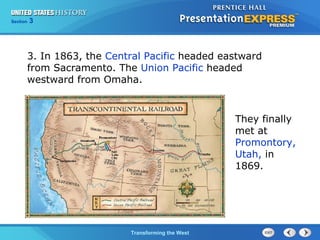
3. In 1863, the Central Pacific headed eastward 
from Sacramento. The Union Pacific headed 
westward from Omaha. 
They finally 
met at 
Promontory, 
Utah, in 
1869.
Chapter 25 Section 1 
Work on the railroad had been difficult and 
dangerous. But it brought tremendous changes 
to the country. 
The Cold TWraanr sBfoegrminisng the West 
Section 3 
• Tied the nation together 
• Moved products and people 
• Spurred industrial development 
• Stimulated the growth of towns and cities 
• Encouraged settlers to continue to move west
Chapter 25 Section 1 
The Cold TWraanr sBfoegrminisng the West 
Section 3 
The railroad boom encouraged another 
western boom—the cattle boom. 
For years, ranchers 
had used an open-range 
system for 
raising livestock. 
• Property not fenced in 
• Cattle were branded, 
then grazed freely 
• Cowboys rounded up 
the cattle each spring
Chapter 25 Section 1 
The Cold TWraanr sBfoegrminisng the West 
Section 3 
Cowboys then drove cattle north to the rail lines, 
so they could be transported to market. 
The long, hard 
cattle drives 
could last for 
months. 
They ended at 
railroad towns, 
called cow 
towns.
Chapter 25 Section 1 
By the mid-1880s, however, the cattle boom 
was coming to an end. 
The Cold TWraanr sBfoegrminisng the West 
Section 3 
Reasons 
the open-range 
system 
ended 
The invention of barbed wire made 
fencing cheap. 
The supply of beef exceeded demand 
and prices dropped. 
Extreme weather led to the death 
of herds.
Chapter 25 Section 1 
The Cold TWraanr sBfoegrminisng the West 
Section 3 
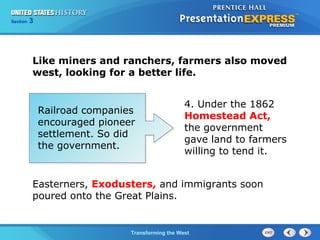
Like miners and ranchers, farmers also moved 
west, looking for a better life. 
Railroad companies 
encouraged pioneer 
settlement. So did 
the government. 
4. Under the 1862 
Homestead Act, 
the government 
gave land to farmers 
willing to tend it. 
Easterners, Exodusters, and immigrants soon 
poured onto the Great Plains.
Chapter 25 Section 1 
The Cold TWraanr sBfoegrminisng the West 
Section 3 
Life on the Plains was difficult and lonely. 
With little wood 
available, homesteaders 
made houses from sod. 
Storms, droughts, and 
locusts ruined crops.
Chapter 25 Section 1 
The Cold TWraanr sBfoegrminisng the West 
Section 3 
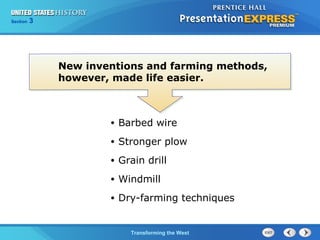
New inventions and farming methods, 
however, made life easier. 
• Barbed wire 
• Stronger plow 
• Grain drill 
• Windmill 
• Dry-farming techniques
Chapter 25 Section 1 
The Cold TWraanr sBfoegrminisng the West 
Section 3 
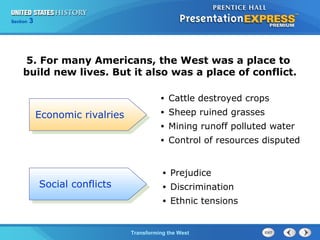
5. For many Americans, the West was a place to 
build new lives. But it also was a place of conflict. 
• Cattle destroyed crops 
• Sheep ruined grasses 
• Mining runoff polluted water 
• Control of resources disputed 
Economic rivalries 
Social conflicts 
• Prejudice 
• Discrimination 
• Ethnic tensions
Chapter 25 Section 1 
The Cold TWraanr sBfoegrminisng the West 
Section 3 
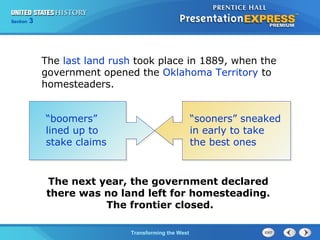
The last land rush took place in 1889, when the 
government opened the Oklahoma Territory to 
homesteaders. 
“boomers” 
lined up to 
stake claims 
“sooners” sneaked 
in early to take 
the best ones 
The next year, the government declared 
there was no land left for homesteading. 
The frontier closed.
Chapter 25 Section 1 
The Cold TWraanr sBfoegrminisng the West 
Section 3 
Section Review 
QuickTake Quiz Know It, Show It Quiz

US History Ch. 6 Section 3 Notes

  • 1.
    Chapter 25 Section1 The Cold TWraanr sBfoegrminisng the West Section 3 Objectives • Analyze the impact of mining and railroads on the settlement of the West. • Explain how ranching affected western development. • Discuss the ways various peoples lived in the West and their impact on the environment.
  • 2.
    Chapter 25 Section1 The Cold TWraanr sBfoegrminisng the West Section 3 Terms and People • vigilante – self-appointed law enforcer • transcontinental railroad – rail link between the eastern and western United States • land grant – land given by the federal government for building railroads • open-range system – system in which ranchers did not fence in their property, allowing cattle to roam and graze freely
  • 3.
    Chapter 25 Section1 The Cold TWraanr sBfoegrminisng the West Section 3 Terms and People (continued) • Homestead Act – 1862 law in which the government offered farm plots of 160 acres to anyone willing to live on the land for five years, dig a well, and build a road • Exodusters –African Americans who migrated from the South to the West after the Civil War
  • 4.
    Chapter 25 Section1 The Cold TWraanr sBfoegrminisng the West Section 3 What economic and social factors changed the West after the Civil War? 1. In the late 1800s, miners, rail workers, ranchers, and farmers moved to the frontier in hopes of building better lives. The industrial and agricultural booms they created helped transform the West.
  • 5.
    Chapter 25 Section1 The Cold TWraanr sBfoegrminisng the West Section 3 The discovery of gold and silver created the first great boom in the West—mining. • With each new find, prospectors rushed to the site, hoping to strike it rich. • Others followed, bringing food and supplies. Mining camps quickly sprang up. Many camps grew into thriving communities.
  • 6.
    Chapter 25 Section1 The Cold TWraanr sBfoegrminisng the West Section 3 • In the early days, vigilantes took the law into their own hands. • As towns grew, they hired marshals and sheriffs. Because they had no judges or jails, miners often set their own rules for administering justice. 2. Some towns, however, disappeared as quickly as they appeared. Boomtowns turned to ghost towns when the gold and silver ran out.
  • 7.
    Chapter 25 Section1 Large companies soon took over the mining business from individual prospectors. The Cold TWraanr sBfoegrminisng the West Section 3 • Could afford the heavy equipment needed to bring mineral ores out from deep underground • Were supported by the government with cheap land
  • 8.
    Chapter 25 Section1 The Cold TWraanr sBfoegrminisng the West Section 3 The railroads soon began work to fulfill a longtime goal—to build a transcontinental railroad linking the East and the West. As industries grew in the West, so did the need for railroads to transport goods and people. The government supported this goal through: • loans • land grants
  • 9.
    Chapter 25 Section1 The Cold TWraanr sBfoegrminisng the West Section 3 3. In 1863, the Central Pacific headed eastward from Sacramento. The Union Pacific headed westward from Omaha. They finally met at Promontory, Utah, in 1869.
  • 10.
    Chapter 25 Section1 Work on the railroad had been difficult and dangerous. But it brought tremendous changes to the country. The Cold TWraanr sBfoegrminisng the West Section 3 • Tied the nation together • Moved products and people • Spurred industrial development • Stimulated the growth of towns and cities • Encouraged settlers to continue to move west
  • 11.
    Chapter 25 Section1 The Cold TWraanr sBfoegrminisng the West Section 3 The railroad boom encouraged another western boom—the cattle boom. For years, ranchers had used an open-range system for raising livestock. • Property not fenced in • Cattle were branded, then grazed freely • Cowboys rounded up the cattle each spring
  • 12.
    Chapter 25 Section1 The Cold TWraanr sBfoegrminisng the West Section 3 Cowboys then drove cattle north to the rail lines, so they could be transported to market. The long, hard cattle drives could last for months. They ended at railroad towns, called cow towns.
  • 13.
    Chapter 25 Section1 By the mid-1880s, however, the cattle boom was coming to an end. The Cold TWraanr sBfoegrminisng the West Section 3 Reasons the open-range system ended The invention of barbed wire made fencing cheap. The supply of beef exceeded demand and prices dropped. Extreme weather led to the death of herds.
  • 14.
    Chapter 25 Section1 The Cold TWraanr sBfoegrminisng the West Section 3 Like miners and ranchers, farmers also moved west, looking for a better life. Railroad companies encouraged pioneer settlement. So did the government. 4. Under the 1862 Homestead Act, the government gave land to farmers willing to tend it. Easterners, Exodusters, and immigrants soon poured onto the Great Plains.
  • 15.
    Chapter 25 Section1 The Cold TWraanr sBfoegrminisng the West Section 3 Life on the Plains was difficult and lonely. With little wood available, homesteaders made houses from sod. Storms, droughts, and locusts ruined crops.
  • 16.
    Chapter 25 Section1 The Cold TWraanr sBfoegrminisng the West Section 3 New inventions and farming methods, however, made life easier. • Barbed wire • Stronger plow • Grain drill • Windmill • Dry-farming techniques
  • 17.
    Chapter 25 Section1 The Cold TWraanr sBfoegrminisng the West Section 3 5. For many Americans, the West was a place to build new lives. But it also was a place of conflict. • Cattle destroyed crops • Sheep ruined grasses • Mining runoff polluted water • Control of resources disputed Economic rivalries Social conflicts • Prejudice • Discrimination • Ethnic tensions
  • 18.
    Chapter 25 Section1 The Cold TWraanr sBfoegrminisng the West Section 3 The last land rush took place in 1889, when the government opened the Oklahoma Territory to homesteaders. “boomers” lined up to stake claims “sooners” sneaked in early to take the best ones The next year, the government declared there was no land left for homesteading. The frontier closed.
  • 19.
    Chapter 25 Section1 The Cold TWraanr sBfoegrminisng the West Section 3 Section Review QuickTake Quiz Know It, Show It Quiz