A Growing America 
Unit 6
America Moves West 
Chapter 18
Miners, Ranchers, and Railroads 
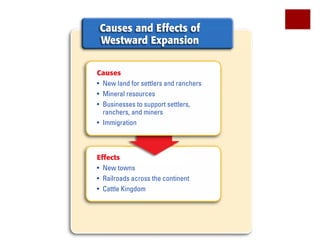
The Big Idea 
As more settlers moved 
West, mining, ranching, 
and railroads soon 
transformed the western 
landscape 
Key Terms 
 frontier 
 Comstock Lode 
 Boomtowns 
 Cattle Kingdom 
 Cattle drive 
 Chisholm Trail 
 Pony Express 
 Transcontinental railroad 
Section 1
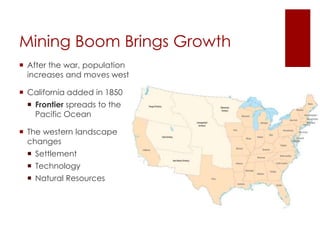
Mining Boom Brings Growth 
 After the war, population 
increases and moves west 
 California added in 1850 
 Frontier spreads to the 
Pacific Ocean 
 The western landscape 
changes 
 Settlement 
 Technology 
 Natural Resources
Mining: Big Business 
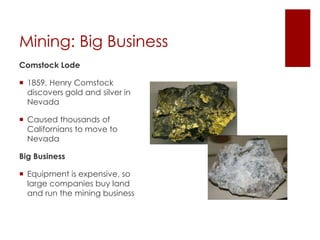
Comstock Lode 
 1859, Henry Comstock 
discovers gold and silver in 
Nevada 
 Caused thousands of 
Californians to move to 
Nevada 
Big Business 
 Equipment is expensive, so 
large companies buy land 
and run the mining business
Mining: Danger! 
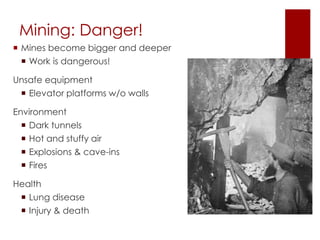
 Mines become bigger and deeper 
 Work is dangerous! 
Unsafe equipment 
 Elevator platforms w/o walls 
Environment 
 Dark tunnels 
 Hot and stuffy air 
 Explosions & cave-ins 
 Fires 
Health 
 Lung disease 
 Injury & death
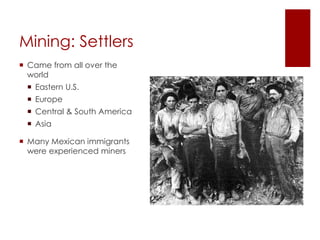
Mining: Settlers 
 Came from all over the 
world 
 Eastern U.S. 
 Europe 
 Central & South America 
 Asia 
 Many Mexican immigrants 
were experienced miners
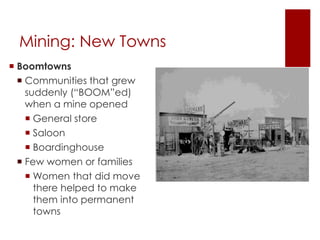
Mining: New Towns 
 Boomtowns 
 Communities that grew 
suddenly (“BOOM”ed) 
when a mine opened 
 General store 
 Saloon 
 Boardinghouse 
 Few women or families 
 Women that did move 
there helped to make 
them into permanent 
towns
The Cattle Kingdom 
 Growing economy + 
population = give us the 
beef! 
 Texas  $3-6 
 Kansas  $38 
 New York  $80 
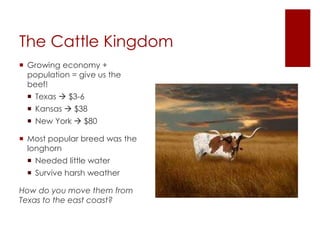
 Most popular breed was the 
longhorn 
 Needed little water 
 Survive harsh weather 
How do you move them from 
Texas to the east coast?
The Cattle Kingdom 
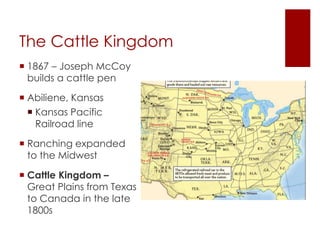
 1867 – Joseph McCoy 
builds a cattle pen 
 Abiliene, Kansas 
 Kansas Pacific 
Railroad line 
 Ranching expanded 
to the Midwest 
 Cattle Kingdom – 
Great Plains from Texas 
to Canada in the late 
1800s
The Cattle Kingdom – 
Importance of Cowboys 
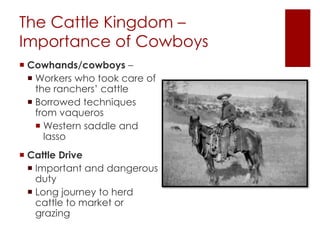
 Cowhands/cowboys – 
 Workers who took care of 
the ranchers’ cattle 
 Borrowed techniques 
from vaqueros 
 Western saddle and 
lasso 
 Cattle Drive 
 Important and dangerous 
duty 
 Long journey to herd 
cattle to market or 
grazing
The Cattle Kingdom – 
Importance of Cowboys 
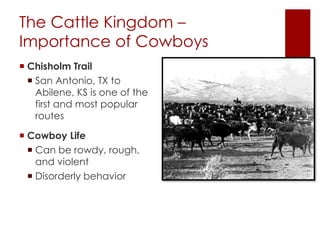
 Chisholm Trail 
 San Antonio, TX to 
Abilene, KS is one of the 
first and most popular 
routes 
 Cowboy Life 
 Can be rowdy, rough, 
and violent 
 Disorderly behavior
The Cattle Kingdom – 
End of the Open Range 
 Competition lead to a 
battle for “open range” 
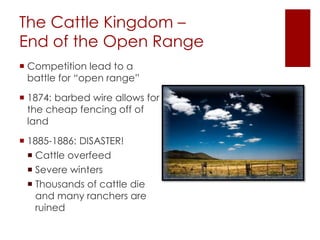
 1874: barbed wire allows for 
the cheap fencing off of 
land 
 1885-1886: DISASTER! 
 Cattle overfeed 
 Severe winters 
 Thousands of cattle die 
and many ranchers are 
ruined
Transportation 
 Moving west = greater 
need for transportation 
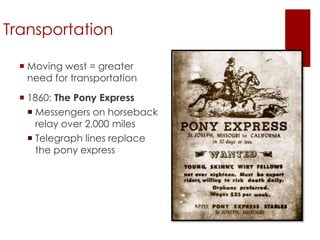
 1860: The Pony Express 
 Messengers on horseback 
relay over 2,000 miles 
 Telegraph lines replace 
the pony express
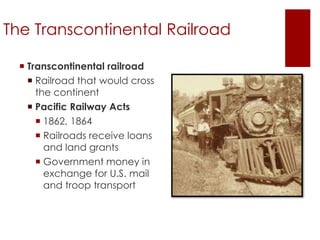
The Transcontinental Railroad 
 Transcontinental railroad 
 Railroad that would cross 
the continent 
 Pacific Railway Acts 
 1862, 1864 
 Railroads receive loans 
and land grants 
 Government money in 
exchange for U.S. mail 
and troop transport
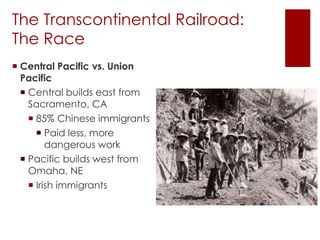
The Transcontinental Railroad: 
The Race 
 Central Pacific vs. Union 
Pacific 
 Central builds east from 
Sacramento, CA 
 85% Chinese immigrants 
 Paid less, more 
dangerous work 
 Pacific builds west from 
Omaha, NE 
 Irish immigrants
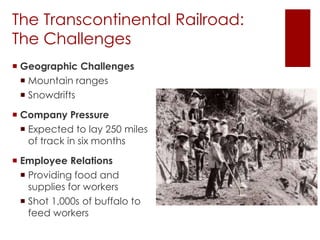
The Transcontinental Railroad: 
The Challenges 
 Geographic Challenges 
 Mountain ranges 
 Snowdrifts 
 Company Pressure 
 Expected to lay 250 miles 
of track in six months 
 Employee Relations 
 Providing food and 
supplies for workers 
 Shot 1,000s of buffalo to 
feed workers
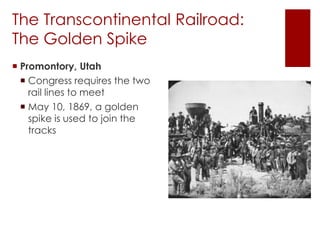
The Transcontinental Railroad: 
The Golden Spike 
 Promontory, Utah 
 Congress requires the two 
rail lines to meet 
 May 10, 1869, a golden 
spike is used to join the 
tracks
The Transcontinental Railroad: 
The Results 
 Increased economic 
growth and migration to 
the West 
 Transportation for people 
and goods 
 Created a more inter-dependent 
U.S. economy 
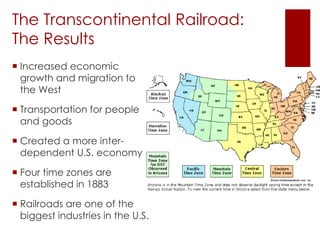
 Four time zones are 
established in 1883 
 Railroads are one of the 
biggest industries in the U.S.
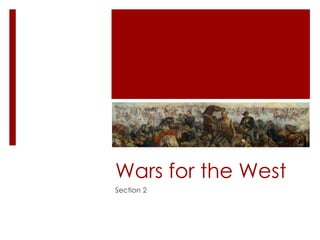
Wars for the West 
Section 2
IF you were there… 
In your notes, answer the following journal prompt… 
 You are a member of the Sioux nation, living in Dakota 
Territory in 1875. These lands are sacred to your people, 
and the U.S. government has promised them to you. But 
now gold has been found here, and the government has 
ordered you to give up you land. Some Sioux leaders 
want to fight. Others say that it is of no use, that the 
soldiers will win. 
Would you fight to keep your lands? Why?
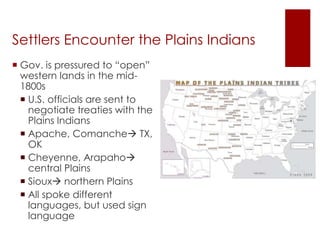
Settlers Encounter the Plains Indians 
 Gov. is pressured to “open” 
western lands in the mid- 
1800s 
 U.S. officials are sent to 
negotiate treaties with the 
Plains Indians 
 Apache, Comanche TX, 
OK 
 Cheyenne, Arapaho 
central Plains 
 Sioux northern Plains 
 All spoke different 
languages, but used sign 
language
Settlers Encounter the Plains Indians 
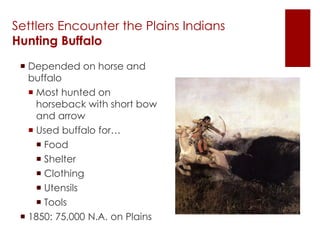
Hunting Buffalo 
 Depended on horse and 
buffalo 
 Most hunted on 
horseback with short bow 
and arrow 
 Used buffalo for… 
 Food 
 Shelter 
 Clothing 
 Utensils 
 Tools 
 1850: 75,000 N.A. on Plains
Settlers Encounter the Plains Indians 
Struggle to Keep Land 
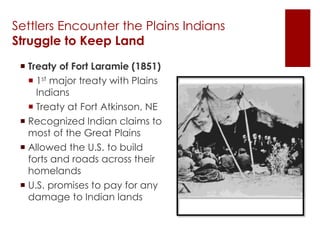
 Treaty of Fort Laramie (1851) 
 1st major treaty with Plains 
Indians 
 Treaty at Fort Atkinson, NE 
 Recognized Indian claims to 
most of the Great Plains 
 Allowed the U.S. to build 
forts and roads across their 
homelands 
 U.S. promises to pay for any 
damage to Indian lands
Settlers Encounter the Plains Indians 
Struggle to Keep Land 
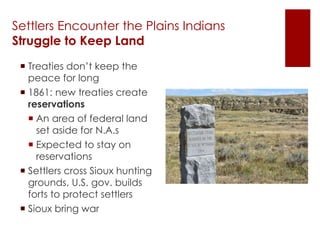
 Treaties don’t keep the 
peace for long 
 1861: new treaties create 
reservations 
 An area of federal land 
set aside for N.A.s 
 Expected to stay on 
reservations 
 Settlers cross Sioux hunting 
grounds, U.S. gov. builds 
forts to protect settlers 
 Sioux bring war
Settlers Encounter the Plains Indians 
Struggle to Keep Land 
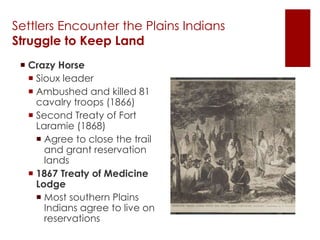
 Crazy Horse 
 Sioux leader 
 Ambushed and killed 81 
cavalry troops (1866) 
 Second Treaty of Fort 
Laramie (1868) 
 Agree to close the trail 
and grant reservation 
lands 
 1867 Treaty of Medicine 
Lodge 
 Most southern Plains 
Indians agree to live on 
reservations
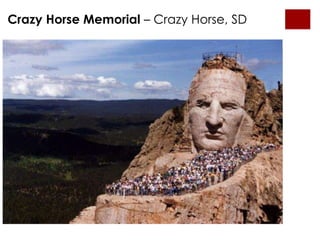
Crazy Horse Memorial – Crazy Horse, SD

Chapter 18: Americans Move West

  • 1.
  • 2.
    America Moves West Chapter 18
  • 3.
    Miners, Ranchers, andRailroads The Big Idea As more settlers moved West, mining, ranching, and railroads soon transformed the western landscape Key Terms  frontier  Comstock Lode  Boomtowns  Cattle Kingdom  Cattle drive  Chisholm Trail  Pony Express  Transcontinental railroad Section 1
  • 4.
    Mining Boom BringsGrowth  After the war, population increases and moves west  California added in 1850  Frontier spreads to the Pacific Ocean  The western landscape changes  Settlement  Technology  Natural Resources
  • 6.
    Mining: Big Business Comstock Lode  1859, Henry Comstock discovers gold and silver in Nevada  Caused thousands of Californians to move to Nevada Big Business  Equipment is expensive, so large companies buy land and run the mining business
  • 7.
    Mining: Danger! Mines become bigger and deeper  Work is dangerous! Unsafe equipment  Elevator platforms w/o walls Environment  Dark tunnels  Hot and stuffy air  Explosions & cave-ins  Fires Health  Lung disease  Injury & death
  • 8.
    Mining: Settlers Came from all over the world  Eastern U.S.  Europe  Central & South America  Asia  Many Mexican immigrants were experienced miners
  • 9.
    Mining: New Towns  Boomtowns  Communities that grew suddenly (“BOOM”ed) when a mine opened  General store  Saloon  Boardinghouse  Few women or families  Women that did move there helped to make them into permanent towns
  • 10.
    The Cattle Kingdom  Growing economy + population = give us the beef!  Texas  $3-6  Kansas  $38  New York  $80  Most popular breed was the longhorn  Needed little water  Survive harsh weather How do you move them from Texas to the east coast?
  • 11.
    The Cattle Kingdom  1867 – Joseph McCoy builds a cattle pen  Abiliene, Kansas  Kansas Pacific Railroad line  Ranching expanded to the Midwest  Cattle Kingdom – Great Plains from Texas to Canada in the late 1800s
  • 12.
    The Cattle Kingdom– Importance of Cowboys  Cowhands/cowboys –  Workers who took care of the ranchers’ cattle  Borrowed techniques from vaqueros  Western saddle and lasso  Cattle Drive  Important and dangerous duty  Long journey to herd cattle to market or grazing
  • 13.
    The Cattle Kingdom– Importance of Cowboys  Chisholm Trail  San Antonio, TX to Abilene, KS is one of the first and most popular routes  Cowboy Life  Can be rowdy, rough, and violent  Disorderly behavior
  • 14.
    The Cattle Kingdom– End of the Open Range  Competition lead to a battle for “open range”  1874: barbed wire allows for the cheap fencing off of land  1885-1886: DISASTER!  Cattle overfeed  Severe winters  Thousands of cattle die and many ranchers are ruined
  • 15.
    Transportation  Movingwest = greater need for transportation  1860: The Pony Express  Messengers on horseback relay over 2,000 miles  Telegraph lines replace the pony express
  • 16.
    The Transcontinental Railroad  Transcontinental railroad  Railroad that would cross the continent  Pacific Railway Acts  1862, 1864  Railroads receive loans and land grants  Government money in exchange for U.S. mail and troop transport
  • 17.
    The Transcontinental Railroad: The Race  Central Pacific vs. Union Pacific  Central builds east from Sacramento, CA  85% Chinese immigrants  Paid less, more dangerous work  Pacific builds west from Omaha, NE  Irish immigrants
  • 18.
    The Transcontinental Railroad: The Challenges  Geographic Challenges  Mountain ranges  Snowdrifts  Company Pressure  Expected to lay 250 miles of track in six months  Employee Relations  Providing food and supplies for workers  Shot 1,000s of buffalo to feed workers
  • 19.
    The Transcontinental Railroad: The Golden Spike  Promontory, Utah  Congress requires the two rail lines to meet  May 10, 1869, a golden spike is used to join the tracks
  • 20.
    The Transcontinental Railroad: The Results  Increased economic growth and migration to the West  Transportation for people and goods  Created a more inter-dependent U.S. economy  Four time zones are established in 1883  Railroads are one of the biggest industries in the U.S.
  • 21.
    Wars for theWest Section 2
  • 22.
    IF you werethere… In your notes, answer the following journal prompt…  You are a member of the Sioux nation, living in Dakota Territory in 1875. These lands are sacred to your people, and the U.S. government has promised them to you. But now gold has been found here, and the government has ordered you to give up you land. Some Sioux leaders want to fight. Others say that it is of no use, that the soldiers will win. Would you fight to keep your lands? Why?
  • 23.
    Settlers Encounter thePlains Indians  Gov. is pressured to “open” western lands in the mid- 1800s  U.S. officials are sent to negotiate treaties with the Plains Indians  Apache, Comanche TX, OK  Cheyenne, Arapaho central Plains  Sioux northern Plains  All spoke different languages, but used sign language
  • 24.
    Settlers Encounter thePlains Indians Hunting Buffalo  Depended on horse and buffalo  Most hunted on horseback with short bow and arrow  Used buffalo for…  Food  Shelter  Clothing  Utensils  Tools  1850: 75,000 N.A. on Plains
  • 25.
    Settlers Encounter thePlains Indians Struggle to Keep Land  Treaty of Fort Laramie (1851)  1st major treaty with Plains Indians  Treaty at Fort Atkinson, NE  Recognized Indian claims to most of the Great Plains  Allowed the U.S. to build forts and roads across their homelands  U.S. promises to pay for any damage to Indian lands
  • 26.
    Settlers Encounter thePlains Indians Struggle to Keep Land  Treaties don’t keep the peace for long  1861: new treaties create reservations  An area of federal land set aside for N.A.s  Expected to stay on reservations  Settlers cross Sioux hunting grounds, U.S. gov. builds forts to protect settlers  Sioux bring war
  • 27.
    Settlers Encounter thePlains Indians Struggle to Keep Land  Crazy Horse  Sioux leader  Ambushed and killed 81 cavalry troops (1866)  Second Treaty of Fort Laramie (1868)  Agree to close the trail and grant reservation lands  1867 Treaty of Medicine Lodge  Most southern Plains Indians agree to live on reservations
  • 28.
    Crazy Horse Memorial– Crazy Horse, SD

Editor's Notes

  • #14 https://www.youtube.com/watch?v=gWNn0QN03l0 Wyatt Earp Gun Fight! Pause 2:50-4