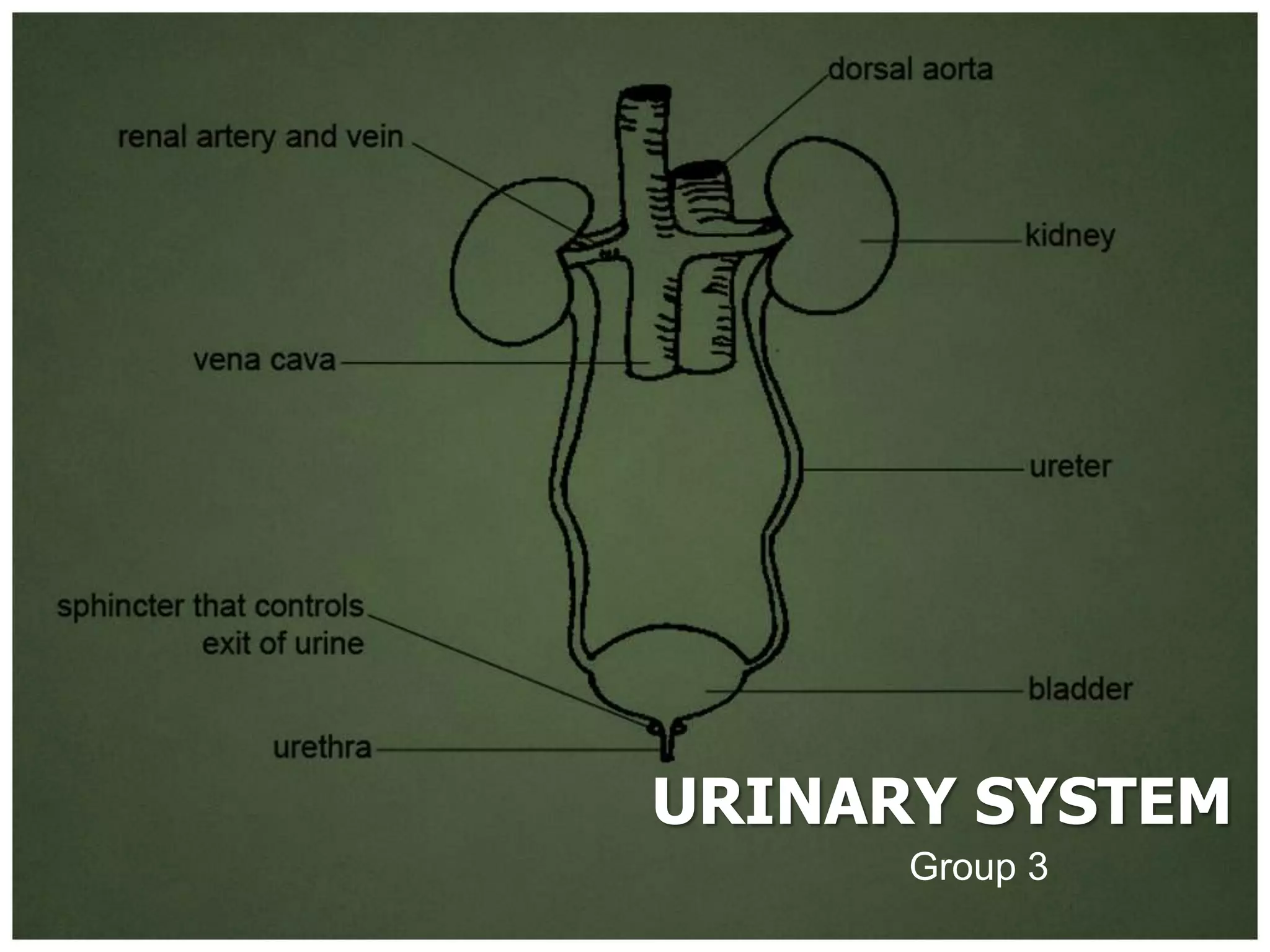
URINARY SYSTEM
      Group 3
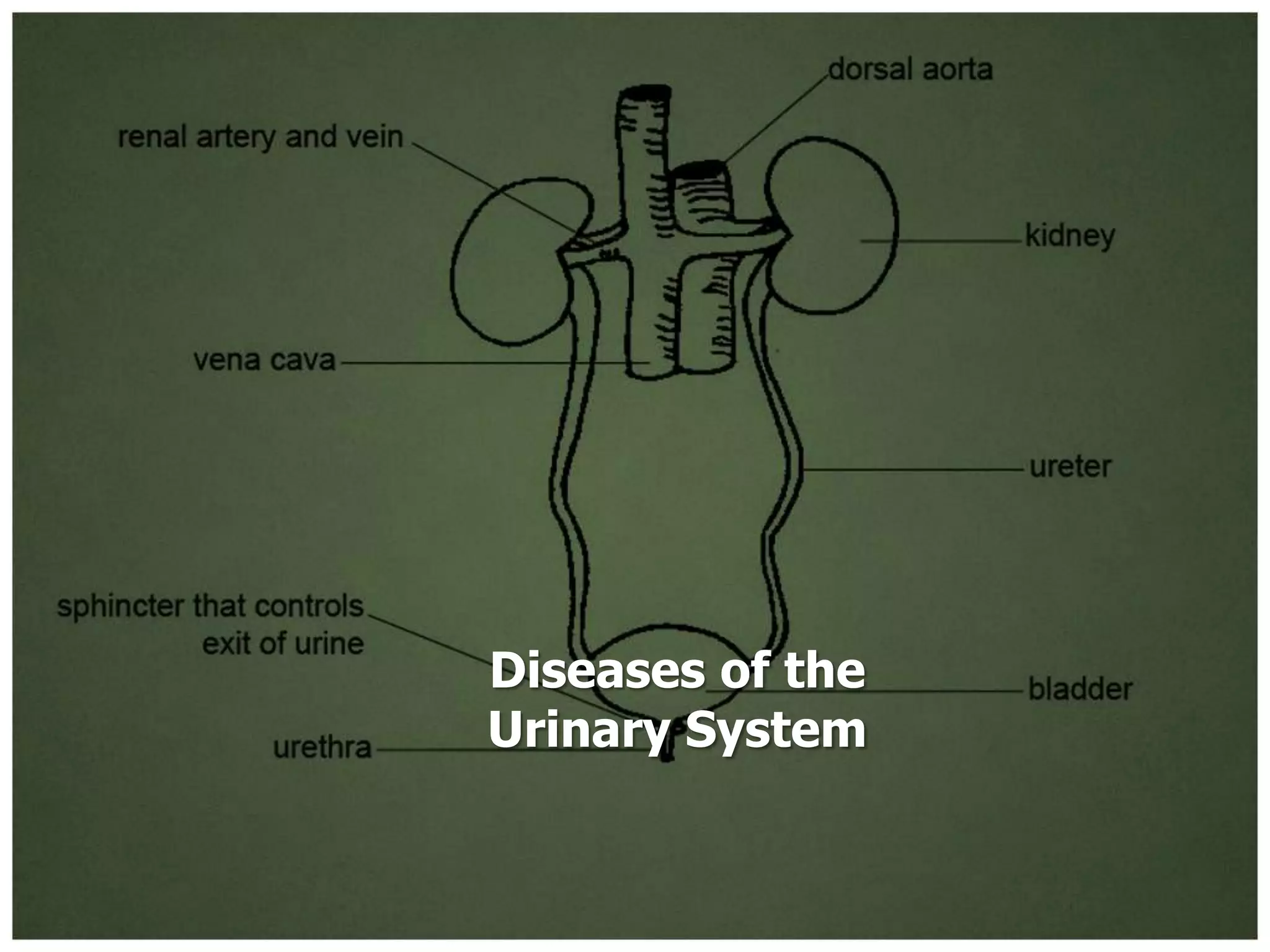
Urinary System
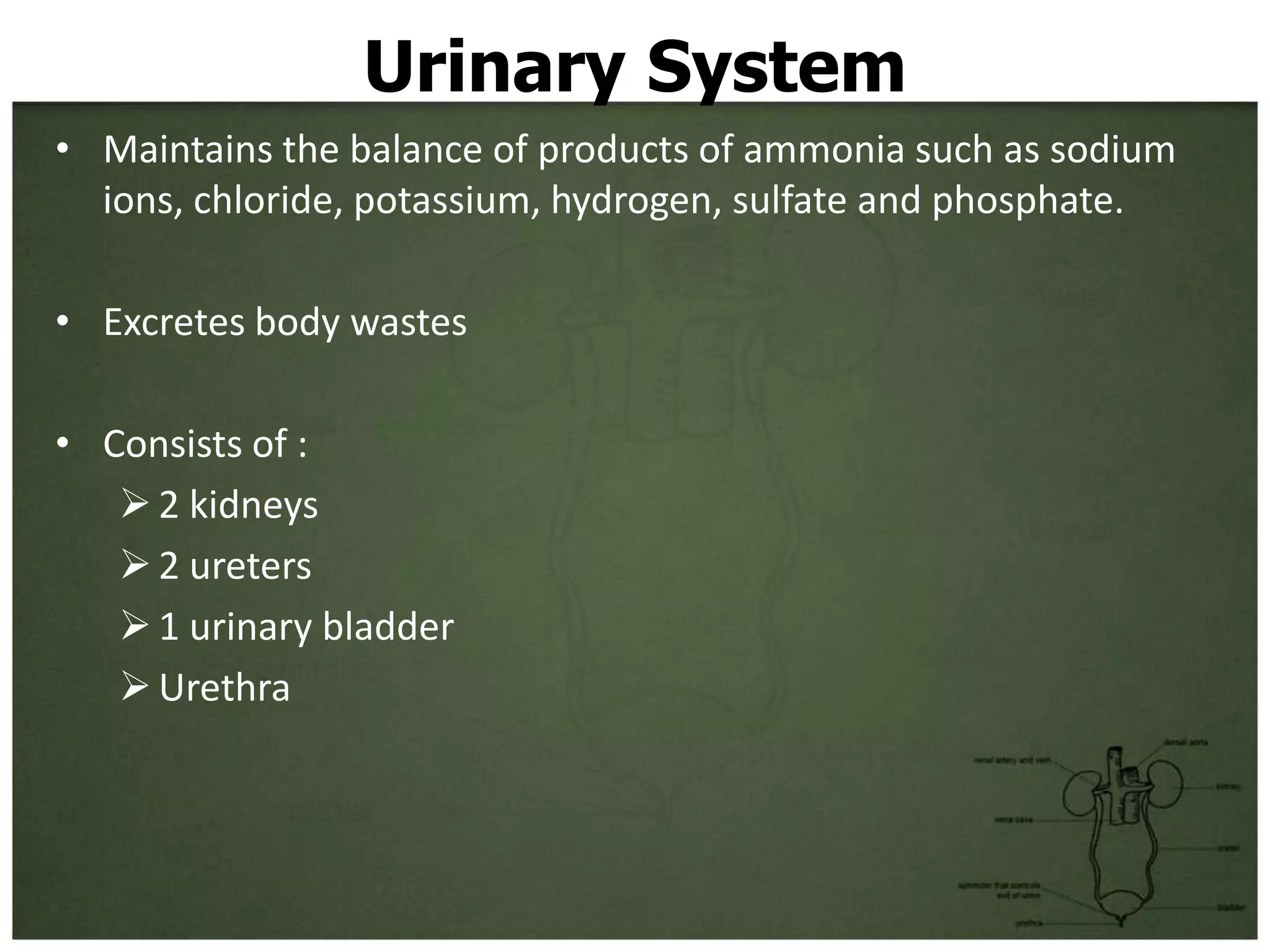
• Maintains the balance of products of ammonia such as sodium
  ions, chloride, potassium, hydrogen, sulfate and phosphate.

• Excretes body wastes

• Consists of :
    2 kidneys
    2 ureters
    1 urinary bladder
    Urethra
Functions
• Excretion: kidneys filter large amounts of fluid from the blood
  and eliminate nitrogenous waste, drugs and toxins

• Maintain blood volume and concentration: kidneys control
  blood volume by regulating the proper balance in the blood
  between salts and water
  - regulate the volume of urine produced
  - regulate the concentration of ions in body fluids and blood
  so the proper balance of sodium, chloride, potassium, calcium
  and phosphate ions is maintained.
Functions
• pH regulation: kidneys control the proper balance of hydrogen
  ions in the blood

• Blood pressure: kidneys produce a enzyme “RENIN” that helps
  adjust the filtration pressure

• Erythrocyte concentration: kidneys produce “ERYTHROPOIETIM” a
  hormone that stimulates red blood cell production
Functions
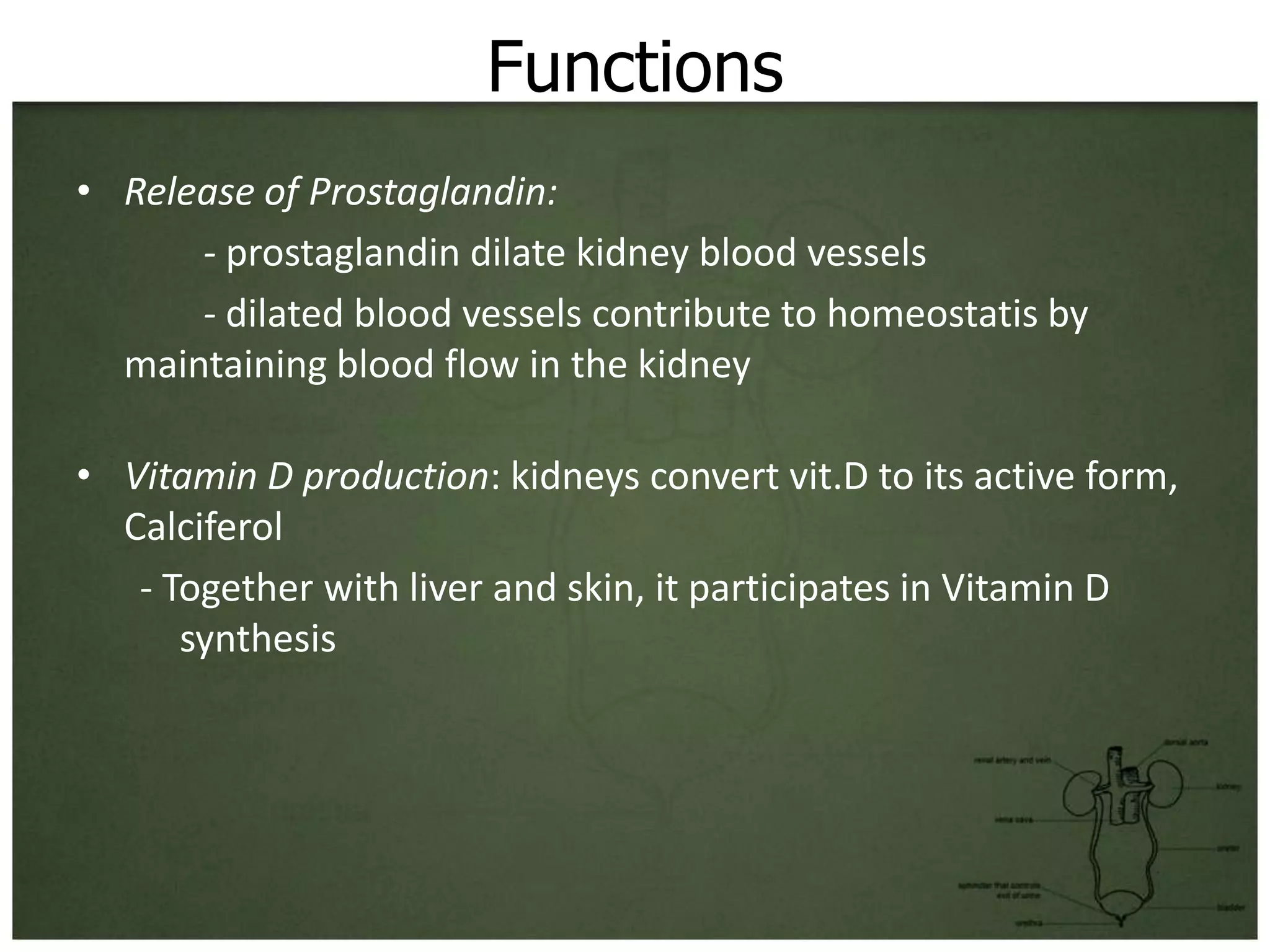
• Release of Prostaglandin:
      - prostaglandin dilate kidney blood vessels
      - dilated blood vessels contribute to homeostatis by
  maintaining blood flow in the kidney

• Vitamin D production: kidneys convert vit.D to its active form,
  Calciferol
   - Together with liver and skin, it participates in Vitamin D
      synthesis
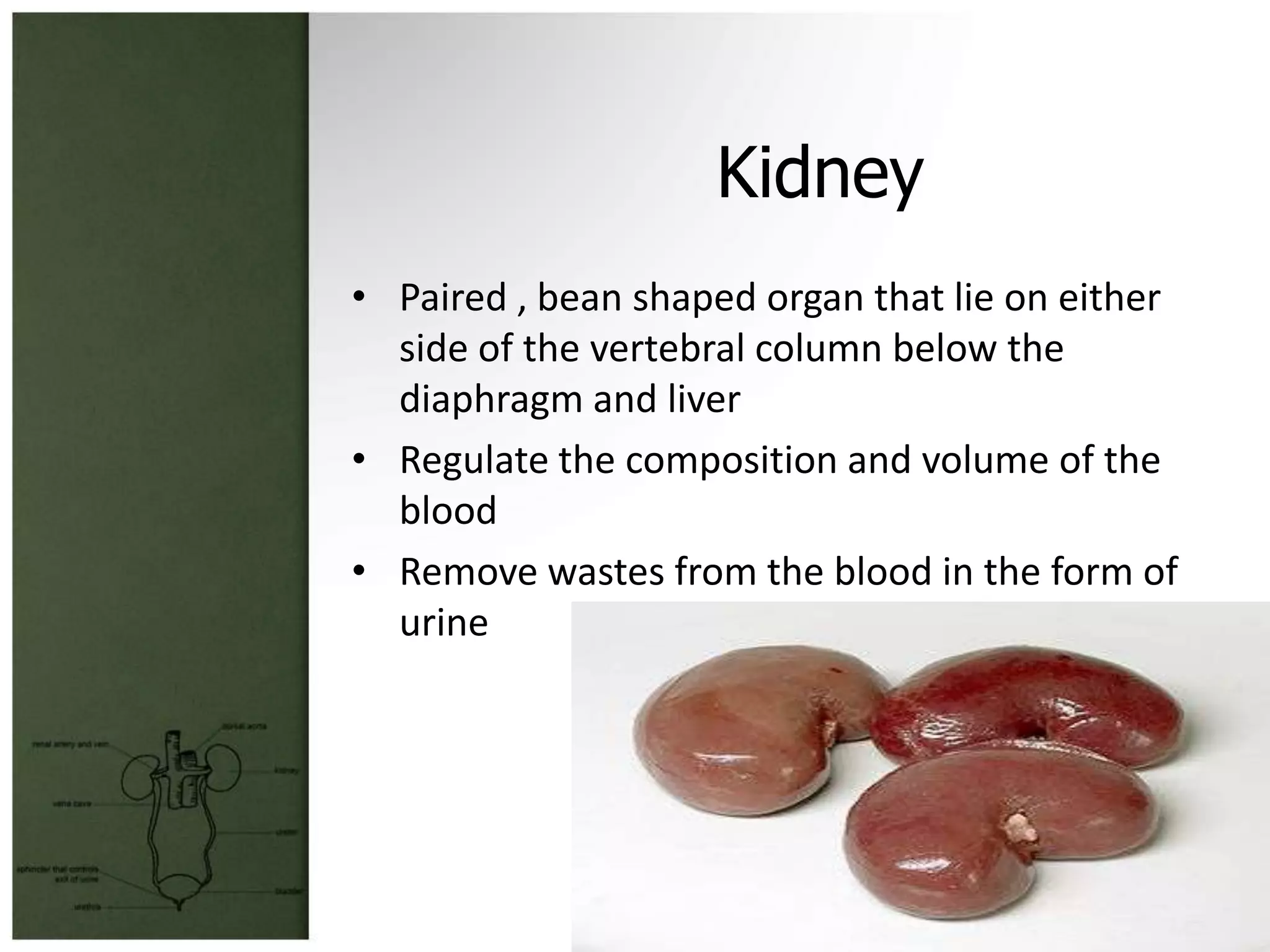
Kidney
• Paired , bean shaped organ that lie on either
  side of the vertebral column below the
  diaphragm and liver
• Regulate the composition and volume of the
  blood
• Remove wastes from the blood in the form of
  urine
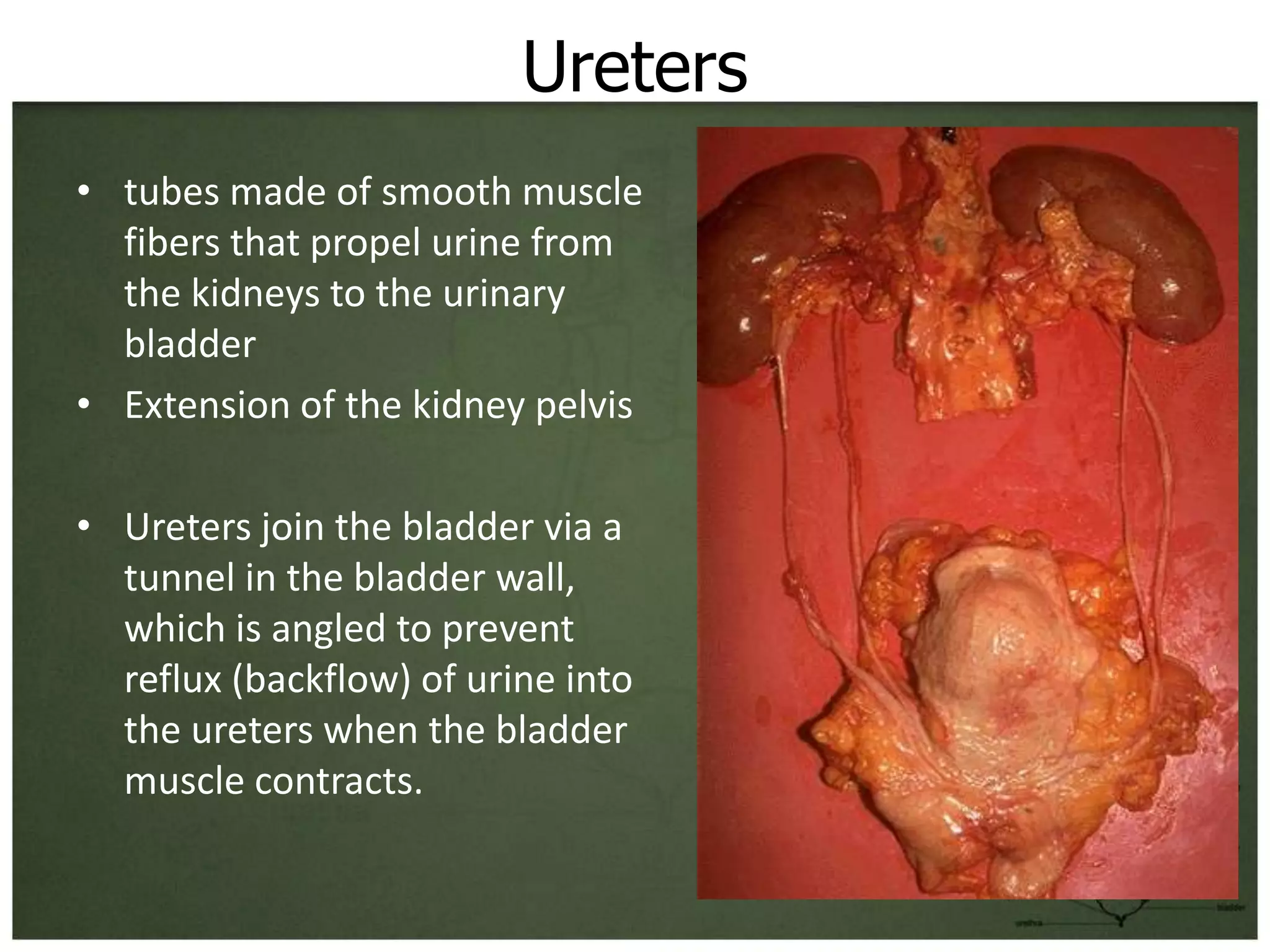
Ureters
• tubes made of smooth muscle
  fibers that propel urine from
  the kidneys to the urinary
  bladder
• Extension of the kidney pelvis

• Ureters join the bladder via a
  tunnel in the bladder wall,
  which is angled to prevent
  reflux (backflow) of urine into
  the ureters when the bladder
  muscle contracts.
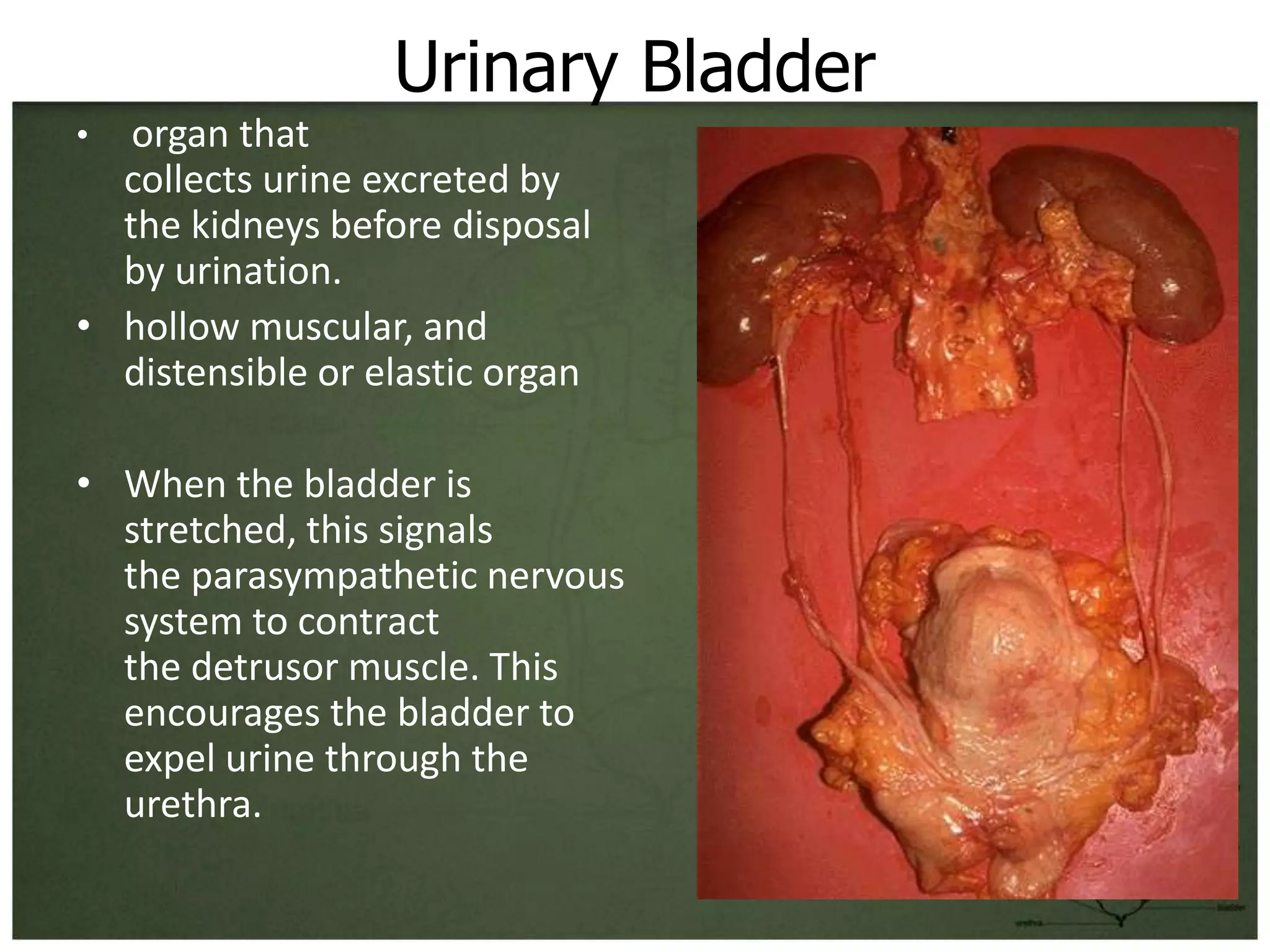
Urinary Bladder
•  organ that
  collects urine excreted by
  the kidneys before disposal
  by urination.
• hollow muscular, and
  distensible or elastic organ

• When the bladder is
  stretched, this signals
  the parasympathetic nervous
  system to contract
  the detrusor muscle. This
  encourages the bladder to
  expel urine through the
  urethra.
Urethra
• tube that connects the urinary bladder to the genitals for the
  removal of fluids out of the body

• In males, the urethra travels through the penis, and
  carries semen as well as urine.

• In females, the urethra is shorter and emerges above the vaginal
  opening.

• Women use their urethra only for urinating, but men use their
  urethra for both urinating and ejaculating.

• The external urethral sphincter is a striated muscle that allows
  voluntary control over urination.
Diseases of the
Urinary System
• Acute Renal Failure
  - decrease in the ability of the kidney to excrete wastes and regulate the
  homeostasis of blood volume, pH, etc.

• Glomerulonephritis
  - inflammation of the glumeroli
  - involvement of person’s own antibodies
• Kidney stones
  - also known as a renal calculus
  - solid concretion or crystal aggregation formed in the kidneys
  from dietary minerals in the urine
  -typically classified by their location:
 in the kidney - nephrolithiasis
 ureter- ureterolithiasis
 bladder- cystolithiasis
 by their chemical composition- calcium containing

Urinary system

  • 1.
  • 2.
    Urinary System • Maintainsthe balance of products of ammonia such as sodium ions, chloride, potassium, hydrogen, sulfate and phosphate. • Excretes body wastes • Consists of :  2 kidneys  2 ureters  1 urinary bladder  Urethra
  • 3.
    Functions • Excretion: kidneysfilter large amounts of fluid from the blood and eliminate nitrogenous waste, drugs and toxins • Maintain blood volume and concentration: kidneys control blood volume by regulating the proper balance in the blood between salts and water - regulate the volume of urine produced - regulate the concentration of ions in body fluids and blood so the proper balance of sodium, chloride, potassium, calcium and phosphate ions is maintained.
  • 4.
    Functions • pH regulation:kidneys control the proper balance of hydrogen ions in the blood • Blood pressure: kidneys produce a enzyme “RENIN” that helps adjust the filtration pressure • Erythrocyte concentration: kidneys produce “ERYTHROPOIETIM” a hormone that stimulates red blood cell production
  • 5.
    Functions • Release ofProstaglandin: - prostaglandin dilate kidney blood vessels - dilated blood vessels contribute to homeostatis by maintaining blood flow in the kidney • Vitamin D production: kidneys convert vit.D to its active form, Calciferol - Together with liver and skin, it participates in Vitamin D synthesis
  • 6.
    Kidney • Paired ,bean shaped organ that lie on either side of the vertebral column below the diaphragm and liver • Regulate the composition and volume of the blood • Remove wastes from the blood in the form of urine
  • 7.
    Ureters • tubes madeof smooth muscle fibers that propel urine from the kidneys to the urinary bladder • Extension of the kidney pelvis • Ureters join the bladder via a tunnel in the bladder wall, which is angled to prevent reflux (backflow) of urine into the ureters when the bladder muscle contracts.
  • 8.
    Urinary Bladder • organ that collects urine excreted by the kidneys before disposal by urination. • hollow muscular, and distensible or elastic organ • When the bladder is stretched, this signals the parasympathetic nervous system to contract the detrusor muscle. This encourages the bladder to expel urine through the urethra.
  • 9.
    Urethra • tube thatconnects the urinary bladder to the genitals for the removal of fluids out of the body • In males, the urethra travels through the penis, and carries semen as well as urine. • In females, the urethra is shorter and emerges above the vaginal opening. • Women use their urethra only for urinating, but men use their urethra for both urinating and ejaculating. • The external urethral sphincter is a striated muscle that allows voluntary control over urination.
  • 10.
  • 11.
    • Acute RenalFailure - decrease in the ability of the kidney to excrete wastes and regulate the homeostasis of blood volume, pH, etc. • Glomerulonephritis - inflammation of the glumeroli - involvement of person’s own antibodies
  • 12.
    • Kidney stones - also known as a renal calculus - solid concretion or crystal aggregation formed in the kidneys from dietary minerals in the urine -typically classified by their location:  in the kidney - nephrolithiasis  ureter- ureterolithiasis  bladder- cystolithiasis  by their chemical composition- calcium containing