By: Alan & Ethan
   The urinary system removes wastes products
    from our body.
   The body takes nutrients from food and
    makes it into energy. Then the body takes the
    food that it needs, and the waste goes into
    the blood.
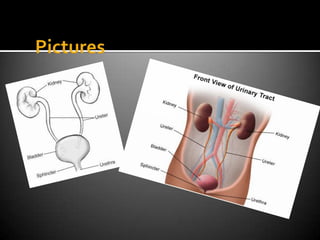
   Kidneys: organs that filter waste from the blood and produce
    urine.

   Ureters: thin tubes that take pee from the kidney into the bladder.

   Bladder: a sack that holds pee until you go to the bathroom.

   Urethra: a tube that carries urine from the bladder out the body
    when you pee.

   Sphincter Muscles: Sphincter muscles are two circular muscles
    around the opening of the bladder into the urethra. They help
    keep urine from leaking into the urethra.
   Endocrine system: A chemical substance that allows
    the kidneys to effectively regulate fluids in the body.

   Circulatory system: Processes of cleansing the blood
    of waste, removing excess fluids and generally
    keeping other fluids in balance.

   Nervous system: Bladder is a muscle that can expand
    and contract as necessary to accommodate or expel
    urine. When the bladder is full, the nervous system
    receives messages that it is time to go…
   Muscular and skeletal system: regulate the release of
    urine

   Digestive System: releases waste from the digestion.

   For next time http://www.ehow.com/how-
    does_5292418_body-systems-work-
    together.html

Urinary system project p.p.

  • 1.
  • 2.
    The urinary system removes wastes products from our body.  The body takes nutrients from food and makes it into energy. Then the body takes the food that it needs, and the waste goes into the blood.
  • 3.
    Kidneys: organs that filter waste from the blood and produce urine.   Ureters: thin tubes that take pee from the kidney into the bladder.   Bladder: a sack that holds pee until you go to the bathroom.   Urethra: a tube that carries urine from the bladder out the body when you pee.   Sphincter Muscles: Sphincter muscles are two circular muscles around the opening of the bladder into the urethra. They help keep urine from leaking into the urethra.
  • 5.
    Endocrine system: A chemical substance that allows the kidneys to effectively regulate fluids in the body.  Circulatory system: Processes of cleansing the blood of waste, removing excess fluids and generally keeping other fluids in balance.  Nervous system: Bladder is a muscle that can expand and contract as necessary to accommodate or expel urine. When the bladder is full, the nervous system receives messages that it is time to go…
  • 6.
    Muscular and skeletal system: regulate the release of urine  Digestive System: releases waste from the digestion.  For next time http://www.ehow.com/how- does_5292418_body-systems-work- together.html