

Urbanization,
Centripetal and
Centrifugal
Movements
IB Geography
PART 1: URBANIZATION
The Process of Urbanization
 Urbanization: the process by which an increasing percentage
of a country’s population comes to live in towns and cities. It
may involve both rural-urban migration and natural increase.
Causes of urbanization
Urbanization: the process by which an increasing percentage of a
country’s population comes to live in towns and cities. It may
involve both rural-urban migration and natural increase
Causes:
1.Rural to urban migration
2.Natural Increase
Rural – urban migration
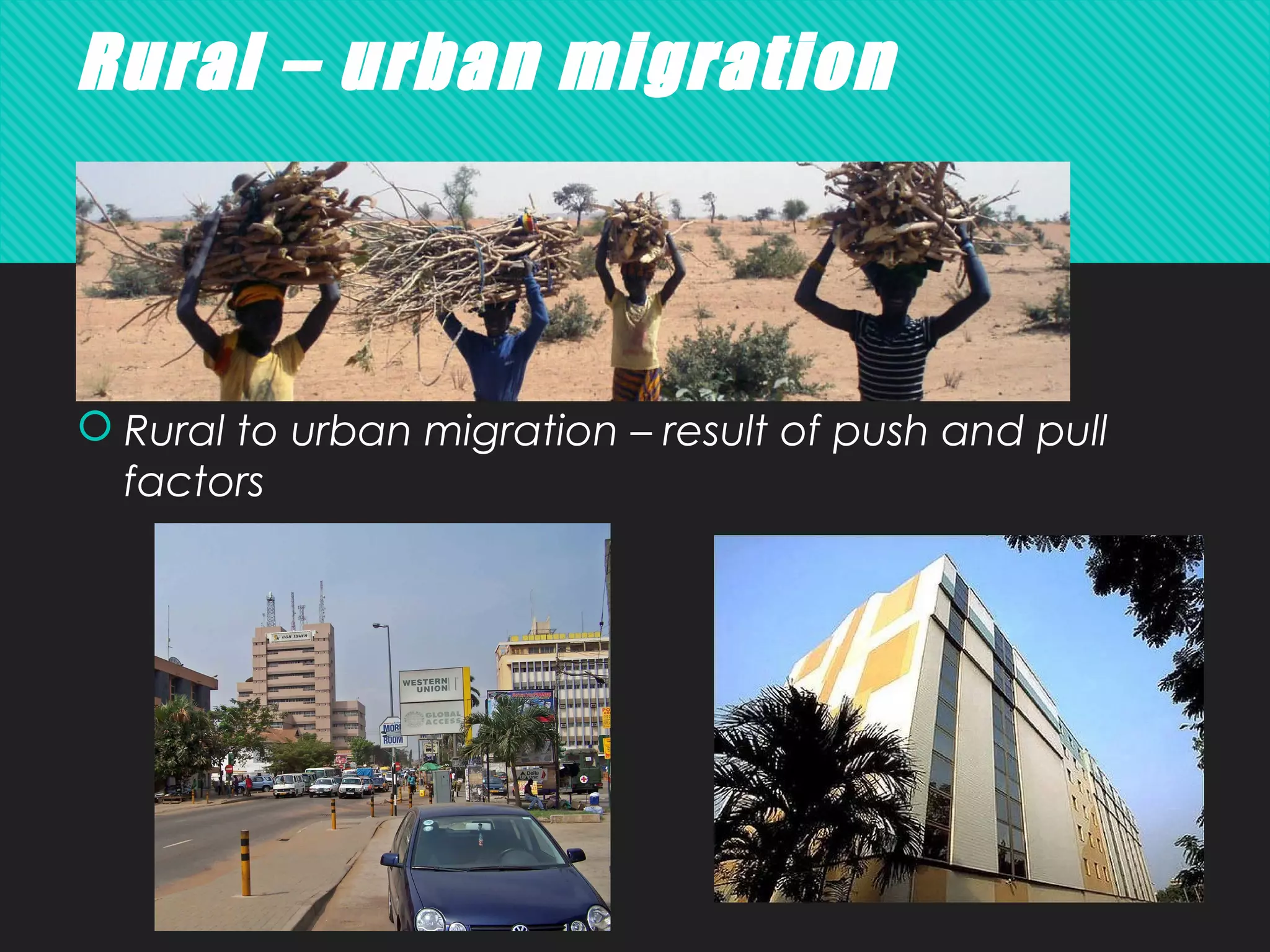
 Rural to urban migration – result of push and pull
factors
Push and pull factors
Push factors Pull factors
Difficult/harsh climate – eg. droughts Chance of a better life
Struggle to provide food for family Better housing and amenities
Very low income Chance of good jobs – higher wages, more
varied employment
High rates of population growth have put
pressure on natural resources such as
water/energy/land
Better medical/health care
Can’t afford to fertilizers to increase yields Children able to go to school
Mechanization of farming favors rich farmer
and leads to unemployment or
underemployment of poor farmer.
Natural increase
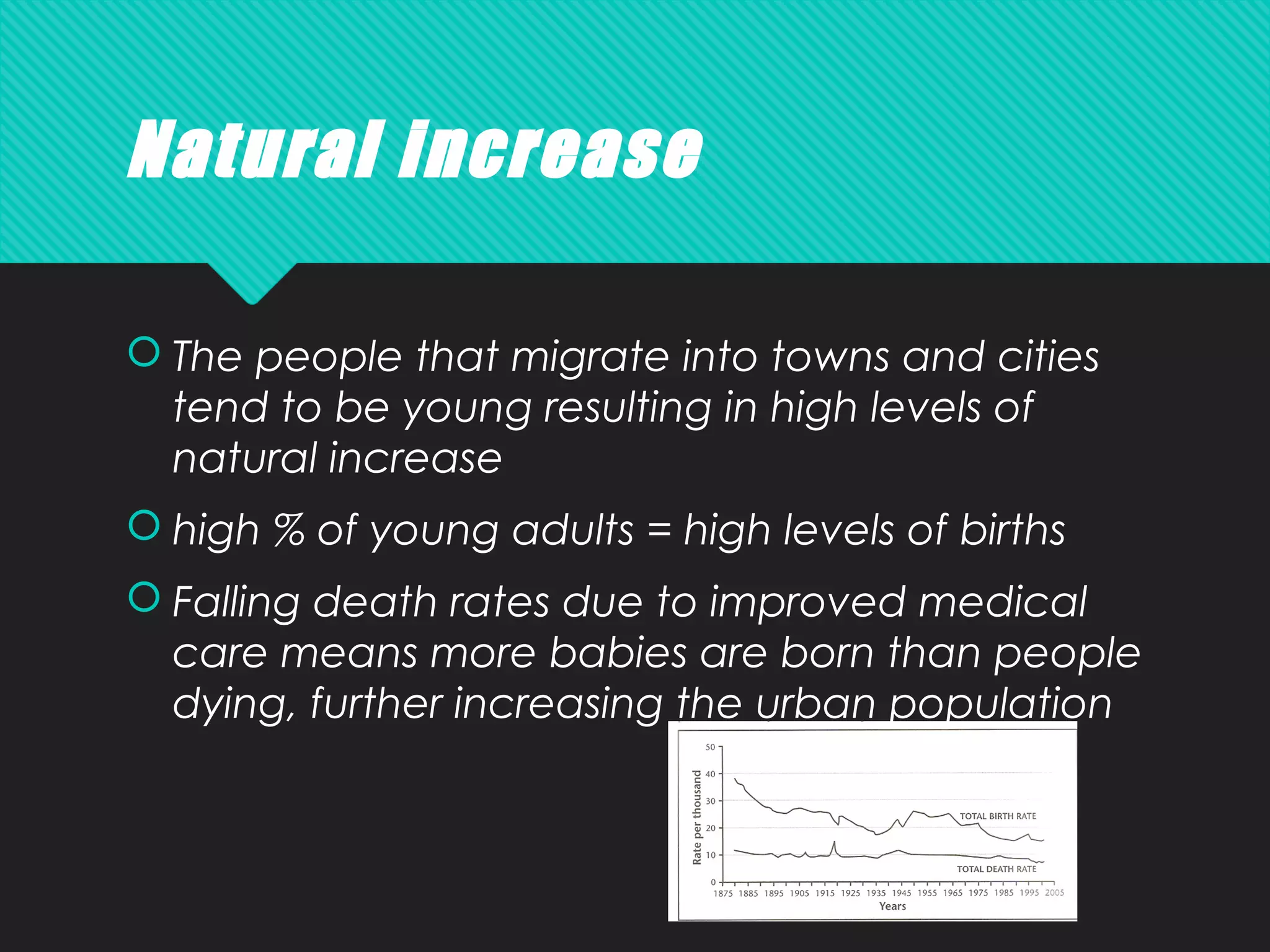
 The people that migrate into towns and cities
tend to be young resulting in high levels of
natural increase
 high % of young adults = high levels of births
 Falling death rates due to improved medical
care means more babies are born than people
dying, further increasing the urban population
Compare the
two graphs can
you see any
similarities?
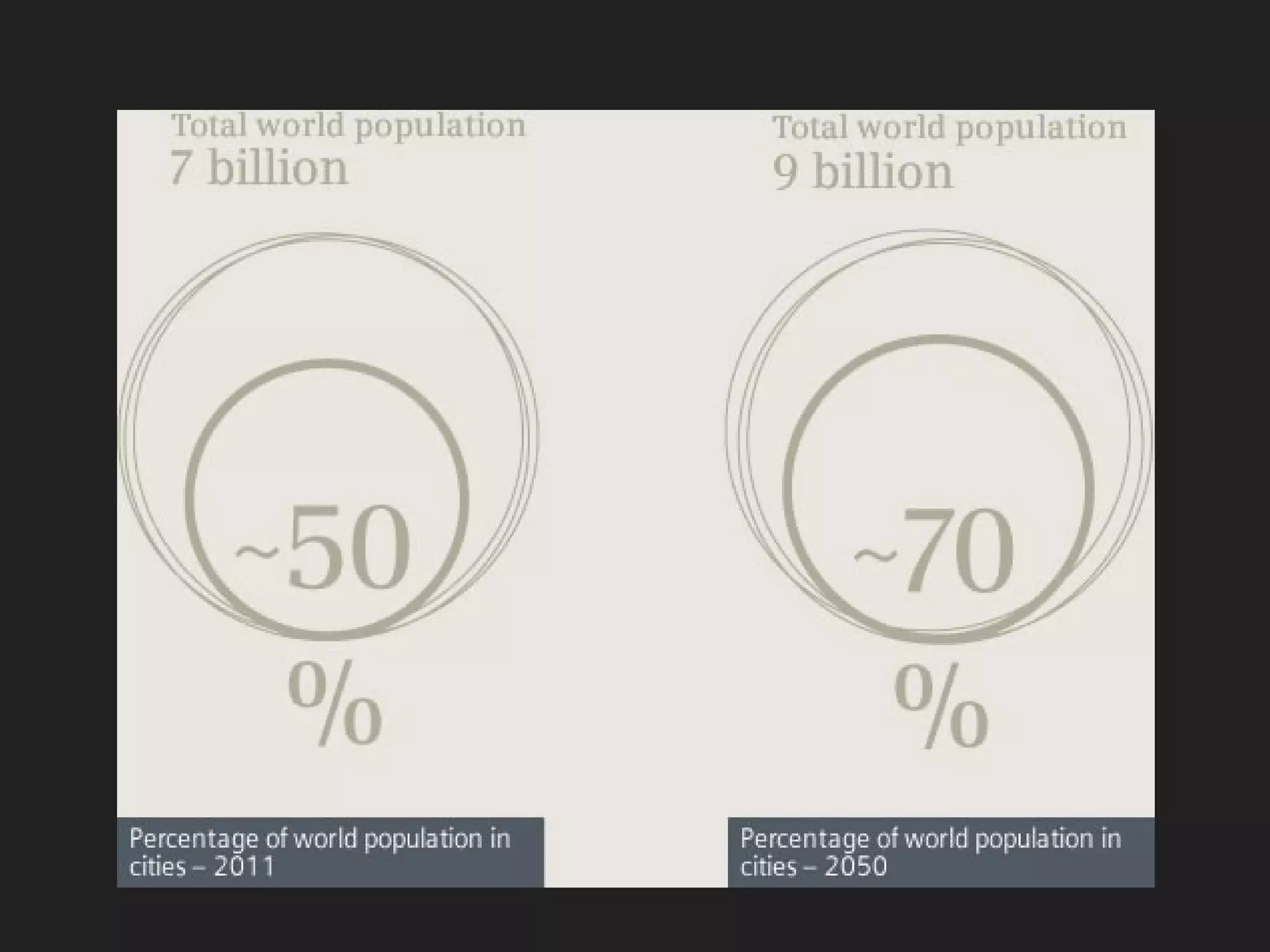
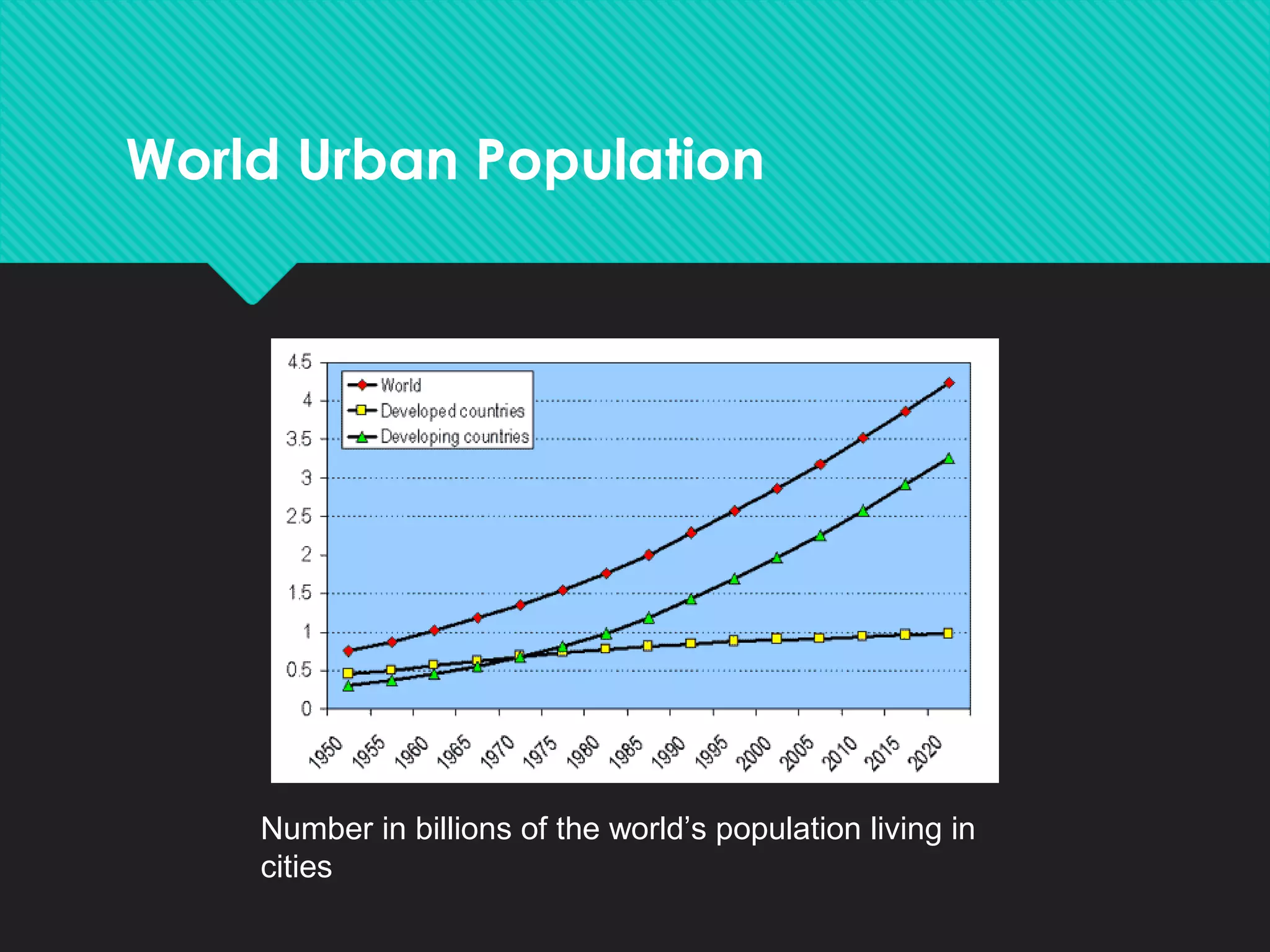
World Urban Population
Number in billions of the world’s population living in
cities
Elbow Partner Discussions
 Using the last two data slides, discuss this question:
 Why are there higher rates of urbanization in developing nations
compared to developed nations?
PART 2: CENTRIPETAL
MOVEMENTS
Centripetal Movements
involve the migration of
people into towns and cities
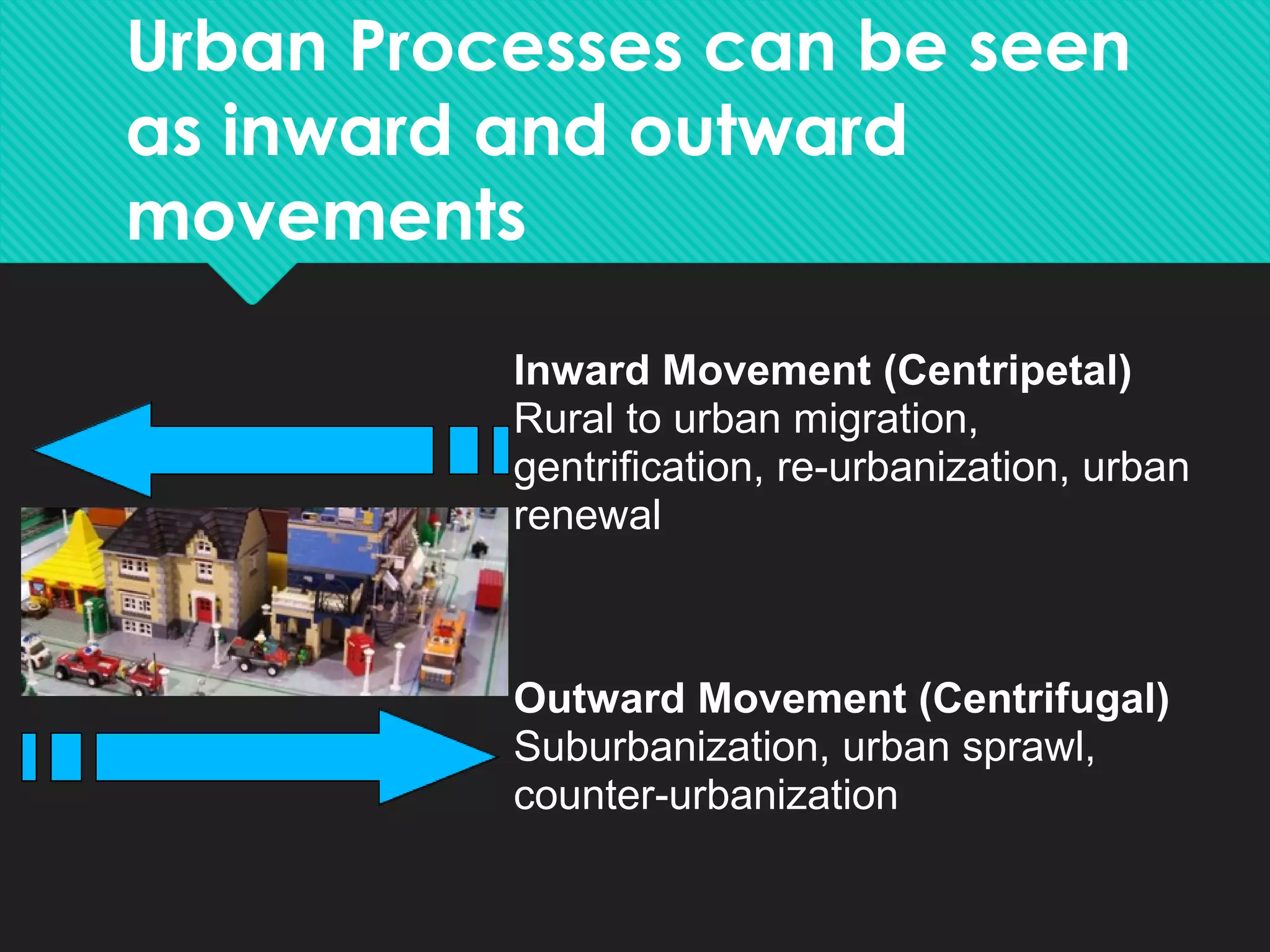
Inward Movement (Centripetal)
Rural to urban migration,
gentrification, re-urbanization, urban
renewal
Outward Movement (Centrifugal)
Suburbanization, urban sprawl,
counter-urbanization
Urban Processes can be seen
as inward and outward
movements
Rural Push Factors
 High rates of population growth have put pressure on natural
resource such as water and energy and reduced the size of
land holdings
 New farming technology favors the rich farmer, but for others it
leads to unemployment or underemployment
 Migration for work is often the only option
 (See complete list of rural push factors in yesterday’s notes)
Urban Pull Factors
 Higher wages
 More varied employment
 Educational opportunities
 (See complete list in earlier notes)
The Consequences of
Urbanization
Economic Growth:
Urban economies are
almost always more
productive than rural
ones
Industrial productivity
is higher in cities.
Cities are usually
responsible for a
greater percentage
of total GDP
The Consequences of
Urbanization
 Gentrification
 The Reinvestment of capital into inner-city areas.
 Improvement in residential areas
 It is a type of filtering that may lead to the social displacement of
poor people (as a place becomes gentrified, housing prices rise
and the poor are unable to afford it– often times minorities)
The Consequences of
Urbanization
– Re-urbanization: (urban renewal) the
development of activities to increase
residential population densities within the
existing built-up area of a city.
– This may include the redevelopment of
vacant land and the refurbishment of
housing and the development of new
businesses.
The Consequences of
Urbanization
– Brownfield Sites: abandoned or
underused industrial buildings
and land, which may be
contaminated but have
potential for redevelopment
Centrifugal
Movements
Centrifugal Movements
 Also known as Decentralization
 The outward movements of a population from the center of a
city towards its edge or periphery, resulting in the expansion of
a city.
Suburbanization
 Suburb: a residential area just outside the boundaries of a city.
 Suburbanization: the outward growth of towns and cities to
engulf surrounding villages and rural areas. This may result from
the out-migration of population from the inner urban areas to
the suburbs.
Urban Sprawl
 The unplanned and uncontrolled physical expansion of an
urban area into the surrounding countryside. It is closely linked
with the process of suburbanization.
 Good examples of Urban Sprawl include Mexico City
 http://www.dailymail.co.uk/news/article-2401975/Amazing-aerial-photo
Counter-Urbanization
 A process involving the movement of populations away from
inner urban areas to a new town, new estate, commuter town
or village on the edge or just beyond the city limits or rural-
urban fringe.
 Characteristic of wealthy cities in MEDCs
 It is a response to increasing stress of overcrowding,
congestion, pollution and crime.
Reasons for counter-urbanization
o Increased car ownership
o Increased wealth
o De-industrialization
o Relocation of industry/employment to rural urban fringe
o Desire for safe, pleasant environment, the rural
ideal/utopia
o Perception of urban areas as dangerous, high levels of
crime, racial/ethnic problems – ‘white flight’
o Change in tenure from public/renting to private
ownership. Sell property and move out.
The Consequences of
Centrifugal Movements
 Centrifugal movements involve a shift of population and
economic activity from the center of the urban area to its
periphery and beyond, which is detrimental to the center.
 Construction of roads and buildings destroy open space and
increases air pollution
Response to Consequences
 Urban Planners have focused on ways of reviving the urban
center(urban renewal/gentrification) and restricting new
construction in urban hinterlands
 Hinterlands: the zone surrounding a city
The Family Life Cycle
 Intra-urban population movement may involve shifts of
population during the family life cycle.
 A person is likely to move around different zones of city
depending on their age and their need for a house of a
certain size.

Urbanization Centripetal and Centrifugal Movements

  • 1.
  • 2.
  • 3.
    The Process ofUrbanization  Urbanization: the process by which an increasing percentage of a country’s population comes to live in towns and cities. It may involve both rural-urban migration and natural increase.
  • 4.
    Causes of urbanization Urbanization:the process by which an increasing percentage of a country’s population comes to live in towns and cities. It may involve both rural-urban migration and natural increase Causes: 1.Rural to urban migration 2.Natural Increase
  • 5.
    Rural – urbanmigration  Rural to urban migration – result of push and pull factors
  • 6.
    Push and pullfactors Push factors Pull factors Difficult/harsh climate – eg. droughts Chance of a better life Struggle to provide food for family Better housing and amenities Very low income Chance of good jobs – higher wages, more varied employment High rates of population growth have put pressure on natural resources such as water/energy/land Better medical/health care Can’t afford to fertilizers to increase yields Children able to go to school Mechanization of farming favors rich farmer and leads to unemployment or underemployment of poor farmer.
  • 7.
    Natural increase  Thepeople that migrate into towns and cities tend to be young resulting in high levels of natural increase  high % of young adults = high levels of births  Falling death rates due to improved medical care means more babies are born than people dying, further increasing the urban population
  • 8.
    Compare the two graphscan you see any similarities?
  • 10.
    World Urban Population Numberin billions of the world’s population living in cities
  • 11.
    Elbow Partner Discussions Using the last two data slides, discuss this question:  Why are there higher rates of urbanization in developing nations compared to developed nations?
  • 12.
  • 13.
    Centripetal Movements involve themigration of people into towns and cities
  • 14.
    Inward Movement (Centripetal) Ruralto urban migration, gentrification, re-urbanization, urban renewal Outward Movement (Centrifugal) Suburbanization, urban sprawl, counter-urbanization Urban Processes can be seen as inward and outward movements
  • 15.
    Rural Push Factors High rates of population growth have put pressure on natural resource such as water and energy and reduced the size of land holdings  New farming technology favors the rich farmer, but for others it leads to unemployment or underemployment  Migration for work is often the only option  (See complete list of rural push factors in yesterday’s notes)
  • 16.
    Urban Pull Factors Higher wages  More varied employment  Educational opportunities  (See complete list in earlier notes)
  • 17.
    The Consequences of Urbanization EconomicGrowth: Urban economies are almost always more productive than rural ones Industrial productivity is higher in cities. Cities are usually responsible for a greater percentage of total GDP
  • 18.
    The Consequences of Urbanization Gentrification  The Reinvestment of capital into inner-city areas.  Improvement in residential areas  It is a type of filtering that may lead to the social displacement of poor people (as a place becomes gentrified, housing prices rise and the poor are unable to afford it– often times minorities)
  • 19.
    The Consequences of Urbanization –Re-urbanization: (urban renewal) the development of activities to increase residential population densities within the existing built-up area of a city. – This may include the redevelopment of vacant land and the refurbishment of housing and the development of new businesses.
  • 20.
    The Consequences of Urbanization –Brownfield Sites: abandoned or underused industrial buildings and land, which may be contaminated but have potential for redevelopment
  • 21.
  • 22.
    Centrifugal Movements  Alsoknown as Decentralization  The outward movements of a population from the center of a city towards its edge or periphery, resulting in the expansion of a city.
  • 23.
    Suburbanization  Suburb: aresidential area just outside the boundaries of a city.  Suburbanization: the outward growth of towns and cities to engulf surrounding villages and rural areas. This may result from the out-migration of population from the inner urban areas to the suburbs.
  • 25.
    Urban Sprawl  Theunplanned and uncontrolled physical expansion of an urban area into the surrounding countryside. It is closely linked with the process of suburbanization.  Good examples of Urban Sprawl include Mexico City  http://www.dailymail.co.uk/news/article-2401975/Amazing-aerial-photo
  • 27.
    Counter-Urbanization  A processinvolving the movement of populations away from inner urban areas to a new town, new estate, commuter town or village on the edge or just beyond the city limits or rural- urban fringe.  Characteristic of wealthy cities in MEDCs  It is a response to increasing stress of overcrowding, congestion, pollution and crime.
  • 28.
    Reasons for counter-urbanization oIncreased car ownership o Increased wealth o De-industrialization o Relocation of industry/employment to rural urban fringe o Desire for safe, pleasant environment, the rural ideal/utopia o Perception of urban areas as dangerous, high levels of crime, racial/ethnic problems – ‘white flight’ o Change in tenure from public/renting to private ownership. Sell property and move out.
  • 29.
    The Consequences of CentrifugalMovements  Centrifugal movements involve a shift of population and economic activity from the center of the urban area to its periphery and beyond, which is detrimental to the center.  Construction of roads and buildings destroy open space and increases air pollution
  • 30.
    Response to Consequences Urban Planners have focused on ways of reviving the urban center(urban renewal/gentrification) and restricting new construction in urban hinterlands  Hinterlands: the zone surrounding a city
  • 31.
    The Family LifeCycle  Intra-urban population movement may involve shifts of population during the family life cycle.  A person is likely to move around different zones of city depending on their age and their need for a house of a certain size.