Downloaded 206 times



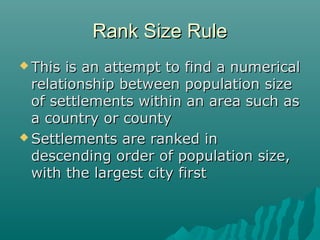
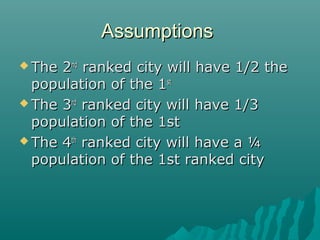
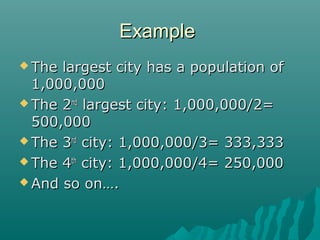
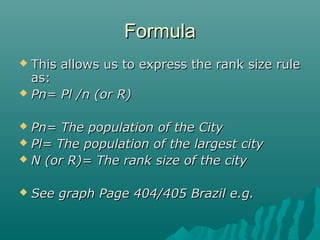

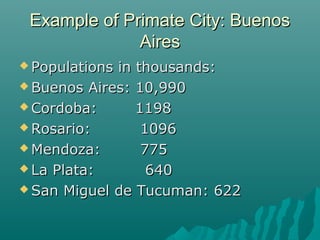
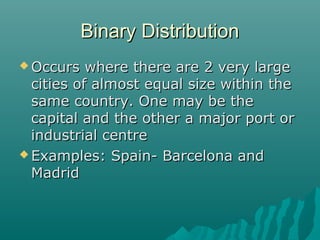
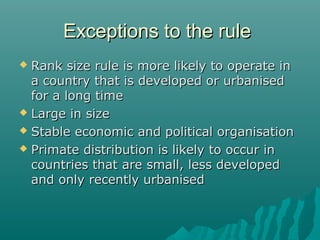


The rank size rule attempts to establish a numerical relationship between population sizes of settlements within a country or region. It ranks settlements by population size, with the largest first. It assumes the second largest settlement will be half the population of the largest, the third largest a third, and so on. While variations often occur, it provides a model for comparing city population distributions. Exceptions include primate cities, where one city dominates population size, and binary distributions, where two cities are of almost equal size.


