UPDATE IN ELECTRICAL BURN
MANAGEMENT
DR.ANGELINE SELVARAJ M.S, M.Ch
Professor( Retired)
Department Of Burns, Plastic & Reconstructive Surgery
Govt. Kilpauk Medical College, Chennai
ELECTRICAL BURN
WHY IS KNOWLEDGE OF ELECTRICAL BURNS
ESSENTIAL?
INTRODUCTION
• Electricity is an indispensable part of civilization
• Electrical burn is most devastating on a size to size
basis.
• Victims are mostly young healthy working males or
children.
• Most frequent cause of amputations.
• Not only electricians but also construction workers,
laborers, crane operators and children are at risk.
• Often associated with trauma to head, spine,
abdomen, chest and damages to viscera.
HOW IS ELECTRICAL BURN DIFFERENT FROM A
THERMAL BURN?
There are 3 different types of electrical burn
1. True electrical injury caused by flow of
current.
2. Arc injury resulting from the electrical arc
generated.
3. Flame injury caused due to spark, also
known as flash burns.
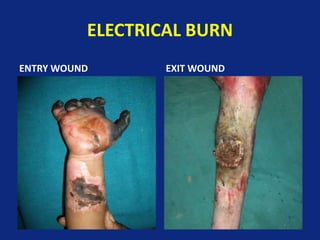
ELECTRICAL BURN
ENTRY WOUND EXIT WOUND
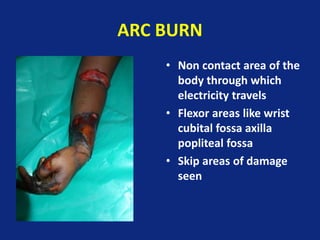
ARC BURN
• Non contact area of the
body through which
electricity travels
• Flexor areas like wrist
cubital fossa axilla
popliteal fossa
• Skip areas of damage
seen
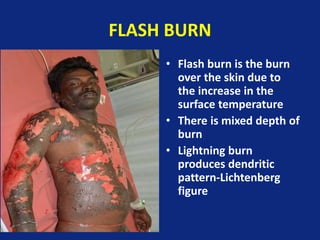
FLASH BURN
• Flash burn is the burn
over the skin due to
the increase in the
surface temperature
• There is mixed depth of
burn
• Lightning burn
produces dendritic
pattern-Lichtenberg
figure
• Heat generated depends on the voltage and
resistance.
• Low voltage is <440 v & >1000 v is considered
high voltage
• Alternating current causes tetanic muscle
contractions, drawing and pushing the victim
from the source.
• Resistance of the tissues in increasing order is
nerve, blood vessel, muscle, skin, tendon, fat,
bone. Hence peri-osseous heating is more,
and severe injury occurs.
• Skin damage is only the tip of the iceberg.
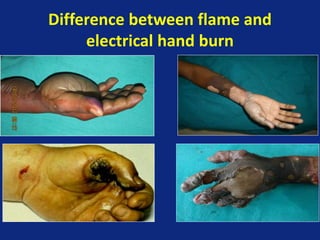
Difference between flame and
electrical hand burn
ELECTRICAL BURN MANAGEMENT
WHAT IS THE DIFFERENCE IN MANAGEMENT?
INVESTIGATIONS
• Complete hemogram
• Renal function test
• Blood sugar
• Blood grouping
• Liver function test
• ECG –in electrical and burns with co morbid
conditions
• Wound culture and sensitivity
• 4. Associated injuries to head, spine, chest.
abdomen, bones are to be evaluated and
managed.
• 5. Compartment syndrome:
Due to edema, distal blood supply is
blocked. This can be best assessed
clinically.
Xenon 133,Tc99 scan, MRI can be tried.
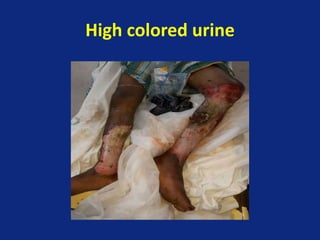
• 2.Myoglobinuria:
7 ml/kg/BSA burns ringer lactate fluid.
Check urine colour.
Push in 25g mannitol intravenously and
2 ampoules of soda bicarbonate
• 3.Renal failure:
Acute kidney damage can be prevented by
proper resuscitation.
Maintain 1.5 -2ml/kg/hour urine output
1.Cardiac arrhythmias:
ECG is mandatory.
MANAGEMENT
• IV line access
• Fluid management
• Wound management topical antibiotics –SSD
• Early Enteral feeding
• Nutrition
• GIT prophylaxis
• Pain management
• DVT prevention
• Infection control
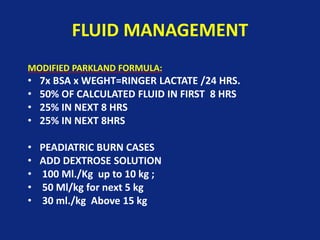
FLUID MANAGEMENT
MODIFIED PARKLAND FORMULA:
• 7x BSA x WEGHT=RINGER LACTATE /24 HRS.
• 50% OF CALCULATED FLUID IN FIRST 8 HRS
• 25% IN NEXT 8 HRS
• 25% IN NEXT 8HRS
• PEADIATRIC BURN CASES
• ADD DEXTROSE SOLUTION
• 100 Ml./Kg up to 10 kg ;
• 50 Ml/kg for next 5 kg
• 30 ml./kg Above 15 kg
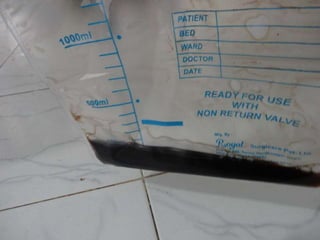
High colored urine
WHEN IS SURGICAL INTERVENTION DONE?
ELECTRICAL BURN-HAND
• Can have vascular compromise
• Emergency Fasciotomy –Proximal level
required
• All compartments need to be decompressed
• High rate of morbidity
• Amputation may be the only option
• When compartment syndrome is suspected
immediate fasciotomy is to be extended
proximal to the level of edema.
• Associated injuries should also be managed
immediately.
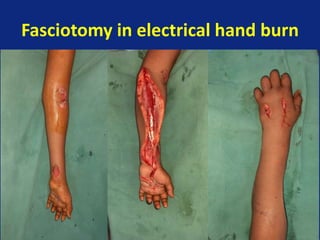
Fasciotomy in electrical hand burn
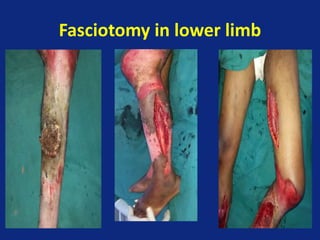
Fasciotomy in lower limb
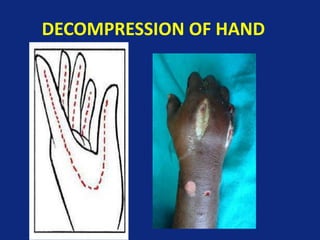
DECOMPRESSION OF HAND
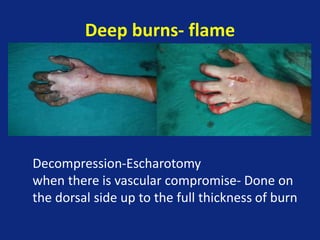
Deep burns- flame
Decompression-Escharotomy
when there is vascular compromise- Done on
the dorsal side up to the full thickness of burn
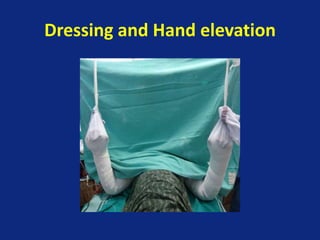
Dressing and Hand elevation
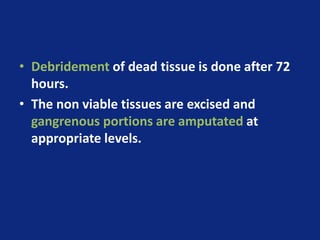
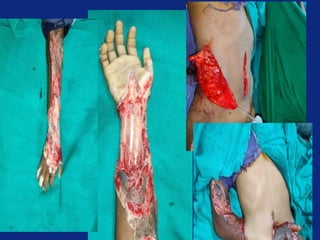
• Debridement of dead tissue is done after 72
hours.
• The non viable tissues are excised and
gangrenous portions are amputated at
appropriate levels.
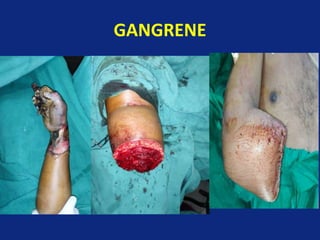
GANGRENE
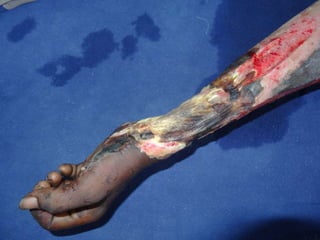
EXPOSED TENDONS
• When the limb is viable then cover
• SSG if the area is fit
• Flap cover when tendons vessels need cover
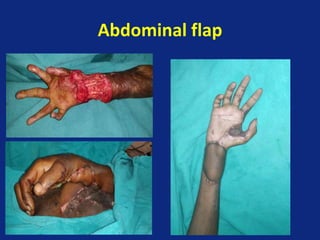
• May need a distant flap cover- abdomen or
groin
LIMB SALVAGE
IS LIMB SALVAGE POSSIBLE?
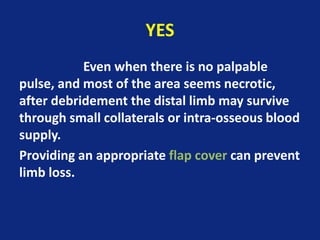
YES
Even when there is no palpable
pulse, and most of the area seems necrotic,
after debridement the distal limb may survive
through small collaterals or intra-osseous blood
supply.
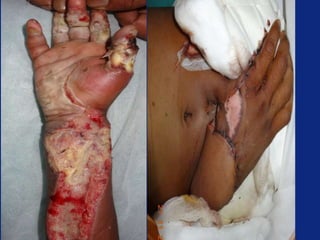
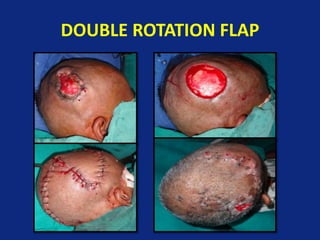
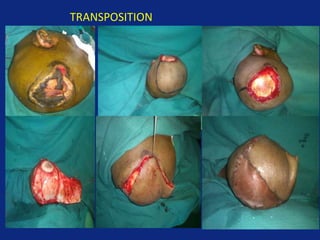
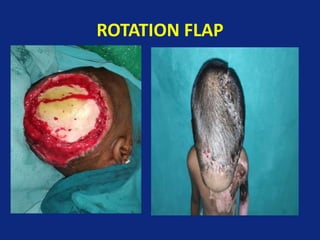
Providing an appropriate flap cover can prevent
limb loss.
Abdominal flap
ROTATION FLAP
DOUBLE ROTATION FLAP
TRANSPOSITION
COMPLICATIONS OF ELECTRICAL
BURN
WHAT ARE THE COMPLICATIONS OF
ELECTRICAL BURNS?
COMPLICATIONS
• Complications are due to wound sepsis.
• Renal failure, cardiac failure, neurological
problems, ocular problems like cataract,
secondary hemorrhage can occur.
• Delayed complications are progressive
demyelination and heterotrophic ossification.
CHALLENGES
ARE THERE CHALLENGES?
YES
Reconstructed limbs require restoration of
nerve and tendon functions. With limited
tissues available in the region and vascular
damages that have occurred, to restore full
function is a challenge.
Challenges
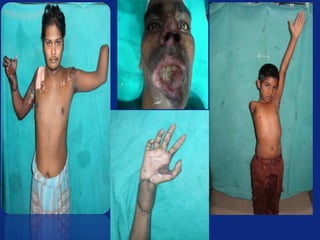
• May be due to loss of limb
• Reconstruction process required to make the
salvaged limb functional.
• Disfigurement following scarring
• Absence of tendons or nerves requiring
further procedures
• Return to work ??? Same or another
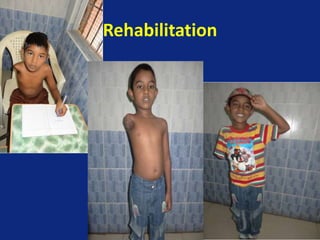
Rehabilitation
OUTCOME
Depends on
• Timely resuscitation
• Prevention of sepsis
• Nutrition
• Early skin cover
CONCLUSION
• Advances in medicine has helped in reducing
mortality in electrical burns
• morbidity can be reduced by proper timely
surgeries to salvage limb and by giving a stable
skin cover which can restore function.
THANK YOU

update in electrical burn management.pptx

  • 1.
    UPDATE IN ELECTRICALBURN MANAGEMENT DR.ANGELINE SELVARAJ M.S, M.Ch Professor( Retired) Department Of Burns, Plastic & Reconstructive Surgery Govt. Kilpauk Medical College, Chennai
  • 2.
    ELECTRICAL BURN WHY ISKNOWLEDGE OF ELECTRICAL BURNS ESSENTIAL?
  • 3.
    INTRODUCTION • Electricity isan indispensable part of civilization • Electrical burn is most devastating on a size to size basis. • Victims are mostly young healthy working males or children. • Most frequent cause of amputations. • Not only electricians but also construction workers, laborers, crane operators and children are at risk. • Often associated with trauma to head, spine, abdomen, chest and damages to viscera.
  • 4.
    HOW IS ELECTRICALBURN DIFFERENT FROM A THERMAL BURN?
  • 5.
    There are 3different types of electrical burn 1. True electrical injury caused by flow of current. 2. Arc injury resulting from the electrical arc generated. 3. Flame injury caused due to spark, also known as flash burns.
  • 6.
  • 7.
    ARC BURN • Noncontact area of the body through which electricity travels • Flexor areas like wrist cubital fossa axilla popliteal fossa • Skip areas of damage seen
  • 8.
    FLASH BURN • Flashburn is the burn over the skin due to the increase in the surface temperature • There is mixed depth of burn • Lightning burn produces dendritic pattern-Lichtenberg figure
  • 9.
    • Heat generateddepends on the voltage and resistance. • Low voltage is <440 v & >1000 v is considered high voltage
  • 10.
    • Alternating currentcauses tetanic muscle contractions, drawing and pushing the victim from the source. • Resistance of the tissues in increasing order is nerve, blood vessel, muscle, skin, tendon, fat, bone. Hence peri-osseous heating is more, and severe injury occurs. • Skin damage is only the tip of the iceberg.
  • 11.
    Difference between flameand electrical hand burn
  • 12.
    ELECTRICAL BURN MANAGEMENT WHATIS THE DIFFERENCE IN MANAGEMENT?
  • 13.
    INVESTIGATIONS • Complete hemogram •Renal function test • Blood sugar • Blood grouping • Liver function test • ECG –in electrical and burns with co morbid conditions • Wound culture and sensitivity
  • 14.
    • 4. Associatedinjuries to head, spine, chest. abdomen, bones are to be evaluated and managed. • 5. Compartment syndrome: Due to edema, distal blood supply is blocked. This can be best assessed clinically. Xenon 133,Tc99 scan, MRI can be tried.
  • 15.
    • 2.Myoglobinuria: 7 ml/kg/BSAburns ringer lactate fluid. Check urine colour. Push in 25g mannitol intravenously and 2 ampoules of soda bicarbonate • 3.Renal failure: Acute kidney damage can be prevented by proper resuscitation. Maintain 1.5 -2ml/kg/hour urine output
  • 16.
  • 17.
    MANAGEMENT • IV lineaccess • Fluid management • Wound management topical antibiotics –SSD • Early Enteral feeding • Nutrition • GIT prophylaxis • Pain management • DVT prevention • Infection control
  • 18.
    FLUID MANAGEMENT MODIFIED PARKLANDFORMULA: • 7x BSA x WEGHT=RINGER LACTATE /24 HRS. • 50% OF CALCULATED FLUID IN FIRST 8 HRS • 25% IN NEXT 8 HRS • 25% IN NEXT 8HRS • PEADIATRIC BURN CASES • ADD DEXTROSE SOLUTION • 100 Ml./Kg up to 10 kg ; • 50 Ml/kg for next 5 kg • 30 ml./kg Above 15 kg
  • 19.
  • 21.
    WHEN IS SURGICALINTERVENTION DONE?
  • 22.
    ELECTRICAL BURN-HAND • Canhave vascular compromise • Emergency Fasciotomy –Proximal level required • All compartments need to be decompressed • High rate of morbidity • Amputation may be the only option
  • 23.
    • When compartmentsyndrome is suspected immediate fasciotomy is to be extended proximal to the level of edema. • Associated injuries should also be managed immediately.
  • 24.
  • 25.
  • 26.
  • 27.
    Deep burns- flame Decompression-Escharotomy whenthere is vascular compromise- Done on the dorsal side up to the full thickness of burn
  • 28.
  • 29.
    • Debridement ofdead tissue is done after 72 hours. • The non viable tissues are excised and gangrenous portions are amputated at appropriate levels.
  • 30.
  • 32.
    EXPOSED TENDONS • Whenthe limb is viable then cover • SSG if the area is fit • Flap cover when tendons vessels need cover • May need a distant flap cover- abdomen or groin
  • 34.
    LIMB SALVAGE IS LIMBSALVAGE POSSIBLE?
  • 35.
    YES Even when thereis no palpable pulse, and most of the area seems necrotic, after debridement the distal limb may survive through small collaterals or intra-osseous blood supply. Providing an appropriate flap cover can prevent limb loss.
  • 37.
  • 38.
  • 39.
  • 40.
  • 41.
    COMPLICATIONS OF ELECTRICAL BURN WHATARE THE COMPLICATIONS OF ELECTRICAL BURNS?
  • 42.
    COMPLICATIONS • Complications aredue to wound sepsis. • Renal failure, cardiac failure, neurological problems, ocular problems like cataract, secondary hemorrhage can occur. • Delayed complications are progressive demyelination and heterotrophic ossification.
  • 43.
  • 44.
    YES Reconstructed limbs requirerestoration of nerve and tendon functions. With limited tissues available in the region and vascular damages that have occurred, to restore full function is a challenge.
  • 45.
    Challenges • May bedue to loss of limb • Reconstruction process required to make the salvaged limb functional. • Disfigurement following scarring • Absence of tendons or nerves requiring further procedures • Return to work ??? Same or another
  • 47.
  • 48.
    OUTCOME Depends on • Timelyresuscitation • Prevention of sepsis • Nutrition • Early skin cover
  • 49.
    CONCLUSION • Advances inmedicine has helped in reducing mortality in electrical burns • morbidity can be reduced by proper timely surgeries to salvage limb and by giving a stable skin cover which can restore function.
  • 50.