ELECTRICAL BURN
INTRODUCTION
• It is a serious life threatening injuries in children.
• It is due to thermal injury produced as an electrical current pass
through body.
• Amount of thermal injury produced is directly proportional to degree
of electric current.
• Children of age <6 yr are mostly injured due to low voltage outlet .
• Older children have an increased chance of injury by high voltage
current due to higher mobility and adventurousness.
IMPORTANCE
• It is a burn injury but it is dangerous because it leads to cardiac
arrythmia
• Late complication-High voltage injuries-
1-cataract development
2-Progressive nerve degeneration
3-cognitive /psychological impairement
PATHOPHYSIOLOGY
3Forms of electrical injury-
• Low voltage injuries(<440v),
• High voltage(>1000V),
• ultrahigh(lightning-300,000A)
3 mechanism-
• 1-precipitation of cytoplasmic Protein under the influence of electrical
charge
• 2-Tissue heat generated by passage of current
• 3-Collateral flame burn caused by ignited clothes or electrical flash
FACTORS RESPONSIBLE FOR SEVERITY OF
ELECTRICAL BURN
• 1-child susceptibility
• 2-contact point resistance
• 3-contact duration
• 4-current flow pathway
• 5-Current type
• 6-Ameprage
• 7-voltage
LOW VOLTAGE INJURIES-
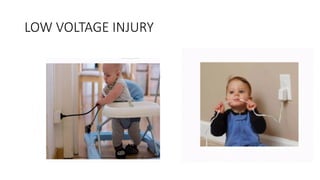
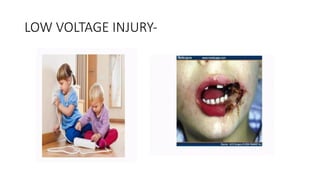
• 1-Usually d/t biting on an extension cord.
• 2-produce localized burn to the mouths
• 3-Mostly involve portion of upper lip and lower lip
• 4-nonconductive injury
• 5-not requiring hospital admission
• 6-Only topical antibiotics cream used for visible injury
LOW VOLTAGE INJURY
LOW VOLTAGE INJURY-
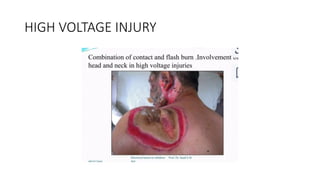
HIGH VOLTAGE INJURY
• 1-Mortality rate-3-15%
• 2-Survivors has higher rate of morbidity like major limb amputation.
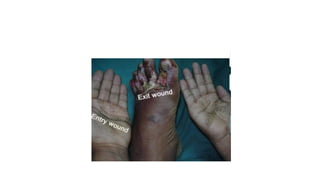
• Entry and exit site show characteristic features.
• Majority of entry wound in upper extremity with small exit wound in
lower extremity.
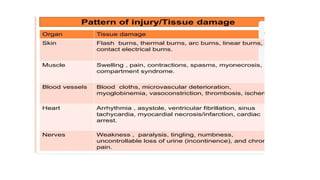
• It can cause damage to abdominal viscera , thoracic structures ,
nervous system
• It can manifest as cardiac abnormality , renal abnormality and
compartment syndrome.
HIGH VOLTAGE INJURY
LIGHTNING INJURY-
• 1-most dangerous form
• 2-OCCURS WHEN-
• 1)High voltage current directly strikes a person
• 2)CURRENT STRIKES THE GROUND OR ADJACENT OBJECT.
• Entry ,exit and path lesions are present.
• Internal organ injury along the path is common
• Feathering or arborescent pattern is characteristics
• Linear burns are in the location where sweat is present.
• It can manifest severe Cardiac ,severe CNS , Severe Renal
complications.
• Lightning burns depend on
• 1-The current path
• 2-The types of clothing worn
• 3-the presence of metal
• 4-cutaneous moisture
LIGHTNING-
CLASSIFICATION OF ELECTRICAL BURN-
• 1-True electrical burn-d/t flow of current
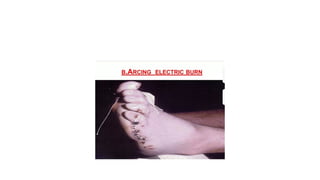
• 2- Arc burn-d/t electric arc generated as the current passes from the
source to object
• 3-Flame burn-d/t ignition of clothing and sorroundings
• 4-lightning strike-
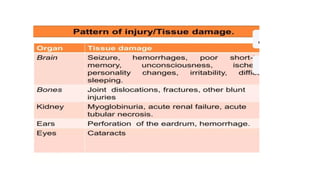
CLINICAL FEATURE-
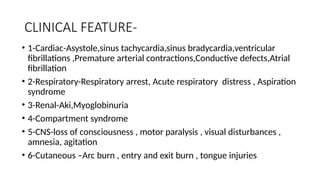
• 1-Cardiac-Asystole,sinus tachycardia,sinus bradycardia,ventricular
fibrillations ,Premature arterial contractions,Conductive defects,Atrial
fibrillation
• 2-Respiratory-Respiratory arrest, Acute respiratory distress , Aspiration
syndrome
• 3-Renal-Aki,Myoglobinuria
• 4-Compartment syndrome
• 5-CNS-loss of consciousness , motor paralysis , visual disturbances ,
amnesia, agitation
• 6-Cutaneous –Arc burn , entry and exit burn , tongue injuries
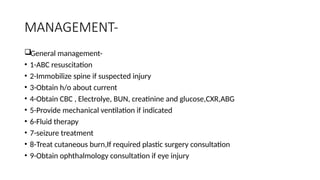
MANAGEMENT-
General management-
• 1-ABC resuscitation
• 2-Immobilize spine if suspected injury
• 3-Obtain h/o about current
• 4-Obtain CBC , Electrolye, BUN, creatinine and glucose,CXR,ABG
• 5-Provide mechanical ventilation if indicated
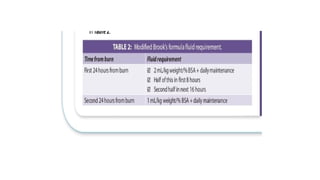
• 6-Fluid therapy
• 7-seizure treatment
• 8-Treat cutaneous burn,If required plastic surgery consultation
• 9-Obtain ophthalmology consultation if eye injury
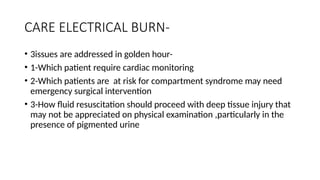
CARE ELECTRICAL BURN-
• 3issues are addressed in golden hour-
• 1-Which patient require cardiac monitoring
• 2-Which patients are at risk for compartment syndrome may need
emergency surgical intervention
• 3-How fluid resuscitation should proceed with deep tissue injury that
may not be appreciated on physical examination ,particularly in the
presence of pigmented urine
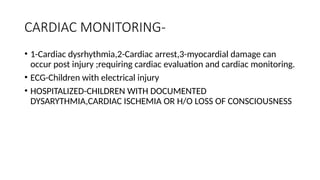
CARDIAC MONITORING-
• 1-Cardiac dysrhythmia,2-Cardiac arrest,3-myocardial damage can
occur post injury ;requiring cardiac evaluation and cardiac monitoring.
• ECG-Children with electrical injury
• HOSPITALIZED-CHILDREN WITH DOCUMENTED
DYSARYTHMIA,CARDIAC ISCHEMIA OR H/O LOSS OF CONSCIOUSNESS
SURGICAL INTERVENTIONS-
• Requiring emergency surgery-
• 1-Evidence of compartment syndrome
• 2-Evidence of nerve or vessel compression due to edematous
compartment
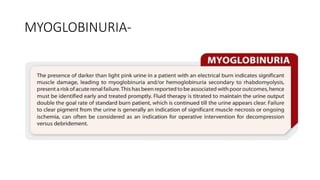
• 3-On going rhabdomyolysis with myoglobinuria that lead to kidney
failure.
• Escharotomy-for circumferential 3 rd degree burn injuries with tissue
compression and neurovascular compromise.
• Fasciotomies- patient with compartment syndrome and ongoing
myonecrosis or neurovascular compormise
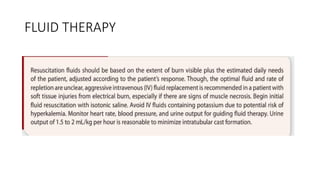
FLUID THERAPY
MYOGLOBINURIA-
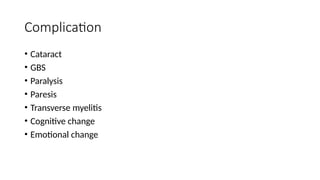
Complication
• Cataract
• GBS
• Paralysis
• Paresis
• Transverse myelitis
• Cognitive change
• Emotional change
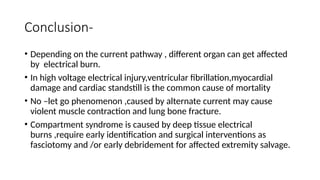
Conclusion-
• Depending on the current pathway , different organ can get affected
by electrical burn.
• In high voltage electrical injury,ventricular fibrillation,myocardial
damage and cardiac standstill is the common cause of mortality
• No –let go phenomenon ,caused by alternate current may cause
violent muscle contraction and lung bone fracture.
• Compartment syndrome is caused by deep tissue electrical
burns ,require early identification and surgical interventions as
fasciotomy and /or early debridement for affected extremity salvage.
PREVENTION-
• 1-Electrical outlet safety cover
• 2-Keeping the electrical appliances beyond the child :s reach.
• 3-Not using electrical gadgets in bath/Shower
ELECTRICAL BURN new guidelines 2024.pptx

ELECTRICAL BURN new guidelines 2024.pptx

  • 1.
  • 2.
    INTRODUCTION • It isa serious life threatening injuries in children. • It is due to thermal injury produced as an electrical current pass through body. • Amount of thermal injury produced is directly proportional to degree of electric current. • Children of age <6 yr are mostly injured due to low voltage outlet . • Older children have an increased chance of injury by high voltage current due to higher mobility and adventurousness.
  • 3.
    IMPORTANCE • It isa burn injury but it is dangerous because it leads to cardiac arrythmia • Late complication-High voltage injuries- 1-cataract development 2-Progressive nerve degeneration 3-cognitive /psychological impairement
  • 4.
    PATHOPHYSIOLOGY 3Forms of electricalinjury- • Low voltage injuries(<440v), • High voltage(>1000V), • ultrahigh(lightning-300,000A) 3 mechanism- • 1-precipitation of cytoplasmic Protein under the influence of electrical charge • 2-Tissue heat generated by passage of current • 3-Collateral flame burn caused by ignited clothes or electrical flash
  • 5.
    FACTORS RESPONSIBLE FORSEVERITY OF ELECTRICAL BURN • 1-child susceptibility • 2-contact point resistance • 3-contact duration • 4-current flow pathway • 5-Current type • 6-Ameprage • 7-voltage
  • 6.
    LOW VOLTAGE INJURIES- •1-Usually d/t biting on an extension cord. • 2-produce localized burn to the mouths • 3-Mostly involve portion of upper lip and lower lip • 4-nonconductive injury • 5-not requiring hospital admission • 6-Only topical antibiotics cream used for visible injury
  • 7.
  • 8.
  • 9.
    HIGH VOLTAGE INJURY •1-Mortality rate-3-15% • 2-Survivors has higher rate of morbidity like major limb amputation. • Entry and exit site show characteristic features. • Majority of entry wound in upper extremity with small exit wound in lower extremity. • It can cause damage to abdominal viscera , thoracic structures , nervous system • It can manifest as cardiac abnormality , renal abnormality and compartment syndrome.
  • 10.
  • 11.
    LIGHTNING INJURY- • 1-mostdangerous form • 2-OCCURS WHEN- • 1)High voltage current directly strikes a person • 2)CURRENT STRIKES THE GROUND OR ADJACENT OBJECT. • Entry ,exit and path lesions are present. • Internal organ injury along the path is common • Feathering or arborescent pattern is characteristics • Linear burns are in the location where sweat is present.
  • 12.
    • It canmanifest severe Cardiac ,severe CNS , Severe Renal complications. • Lightning burns depend on • 1-The current path • 2-The types of clothing worn • 3-the presence of metal • 4-cutaneous moisture
  • 13.
  • 14.
    CLASSIFICATION OF ELECTRICALBURN- • 1-True electrical burn-d/t flow of current • 2- Arc burn-d/t electric arc generated as the current passes from the source to object • 3-Flame burn-d/t ignition of clothing and sorroundings • 4-lightning strike-
  • 17.
    CLINICAL FEATURE- • 1-Cardiac-Asystole,sinustachycardia,sinus bradycardia,ventricular fibrillations ,Premature arterial contractions,Conductive defects,Atrial fibrillation • 2-Respiratory-Respiratory arrest, Acute respiratory distress , Aspiration syndrome • 3-Renal-Aki,Myoglobinuria • 4-Compartment syndrome • 5-CNS-loss of consciousness , motor paralysis , visual disturbances , amnesia, agitation • 6-Cutaneous –Arc burn , entry and exit burn , tongue injuries
  • 20.
    MANAGEMENT- General management- • 1-ABCresuscitation • 2-Immobilize spine if suspected injury • 3-Obtain h/o about current • 4-Obtain CBC , Electrolye, BUN, creatinine and glucose,CXR,ABG • 5-Provide mechanical ventilation if indicated • 6-Fluid therapy • 7-seizure treatment • 8-Treat cutaneous burn,If required plastic surgery consultation • 9-Obtain ophthalmology consultation if eye injury
  • 21.
    CARE ELECTRICAL BURN- •3issues are addressed in golden hour- • 1-Which patient require cardiac monitoring • 2-Which patients are at risk for compartment syndrome may need emergency surgical intervention • 3-How fluid resuscitation should proceed with deep tissue injury that may not be appreciated on physical examination ,particularly in the presence of pigmented urine
  • 22.
    CARDIAC MONITORING- • 1-Cardiacdysrhythmia,2-Cardiac arrest,3-myocardial damage can occur post injury ;requiring cardiac evaluation and cardiac monitoring. • ECG-Children with electrical injury • HOSPITALIZED-CHILDREN WITH DOCUMENTED DYSARYTHMIA,CARDIAC ISCHEMIA OR H/O LOSS OF CONSCIOUSNESS
  • 23.
    SURGICAL INTERVENTIONS- • Requiringemergency surgery- • 1-Evidence of compartment syndrome • 2-Evidence of nerve or vessel compression due to edematous compartment • 3-On going rhabdomyolysis with myoglobinuria that lead to kidney failure. • Escharotomy-for circumferential 3 rd degree burn injuries with tissue compression and neurovascular compromise. • Fasciotomies- patient with compartment syndrome and ongoing myonecrosis or neurovascular compormise
  • 24.
  • 28.
  • 29.
    Complication • Cataract • GBS •Paralysis • Paresis • Transverse myelitis • Cognitive change • Emotional change
  • 30.
    Conclusion- • Depending onthe current pathway , different organ can get affected by electrical burn. • In high voltage electrical injury,ventricular fibrillation,myocardial damage and cardiac standstill is the common cause of mortality • No –let go phenomenon ,caused by alternate current may cause violent muscle contraction and lung bone fracture. • Compartment syndrome is caused by deep tissue electrical burns ,require early identification and surgical interventions as fasciotomy and /or early debridement for affected extremity salvage.
  • 31.
    PREVENTION- • 1-Electrical outletsafety cover • 2-Keeping the electrical appliances beyond the child :s reach. • 3-Not using electrical gadgets in bath/Shower