HAEMOSTASIS
In Surgery
Dr. Alumona C.
OUTLIINE
• INTRODUCTION
– Definition
– Surgical Importance
– Brief History
– Epidemiology
• PHYSIOLOGY OF HAEMSOSTASIS
– Vasoconstriction
– Platelet plug formation
– Coagulation
– Fibrinolysis
Outline cont…
• HAEMOSTATIC DEFECTS
– Defective Vasoconstriction
– Defective Platelet Function
– Defective coagulation
• Management of haemostasis in a Surgical Patient
– Pre op Evaluation
• History
• Examination
• Investigations
Outline cont…
– Intra Op management
• Surgical technique
• Anesthetic Techniques
• Pharmacological Agents
• Mechanical Techniques
• Blood products
• Post Op Management
• Antibiotics
• Wound care
– Haemostasis in Trauma
• CONCLUSION
• REFRENCES
INTRODUCTION
• The process of preventing or terminating blood loss from an
injured vessel
• Delicate balance between Pro and Anti coagulants
• Congenital and acquired defects result in clinically important
derangements
• Derangements in this process could cause uncontrollable
hemorrhage both spontaneously and on table
• The surgeon has a great role to play
Surgical Importance
• Surgical haemostasis is one of the pillars of modern surgery
(others include anaesthesis, antibiotics)
• Adequate surgical haemostasis reduces
morbidity and mortality in post. op patients by
– minimizing blood loss and anemia,
– attenuates the metabolic response to trauma,
– reducing infection and
– improving wound healing.
History
• The evolution of modern surgery has followed closely behind
strides in surgical hemostasis
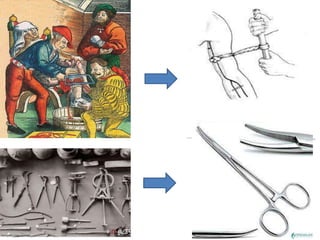
• Ancient medicine men and barber surgeons developed
maneuvers based on intuition to control bleeding in their
patients
• These intuitions informed scientific research and the
elucidation of the hemostatic process and modern
interventions to achieve hemostasis
Physiology of Hemostasis
• Involves three (3) interdependent mechanisms
– Initial Vasoconstriction
– Platelet plug formation
– Coagulation/Fibrin formation and Fibrinolysis
• They are interrelated and occur as a
continuum.
• Their products provide multiple
reinforcements.
Vaso-constriction
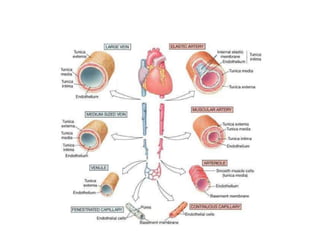
• The initial vascular response to injury.
• Dependent upon local contraction of smooth
muscles.
• Occurs before platelet adhesion to site of injury.
• Effectiveness is dependent on type of vessel, calibre,
perivascular pressure, pattern of injury
• Vasoconstrictors: 5-HT, TXA2, bradykinins,
fibrinopeptides, Perivascular pressure
Platelet Plug Formation
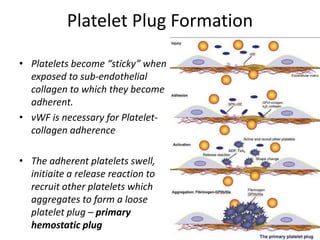
• Platelets become “sticky” when
exposed to sub-endothelial
collagen to which they become
adherent.
• vWF is necessary for Platelet-
collagen adherence
• The adherent platelets swell,
initiaite a release reaction to
recruit other platelets which
aggregates to form a loose
platelet plug – primary
hemostatic plug
Plat. Plug Formation Cont.
• Primary hemostasis
– Forms loose platelet plug
– Reversible and does not involve secretion
– ADP & 5-HT are principal mediators
– Heparin does not interfere with this process
– Aspirin & NSAIDS are both inhibitory
(Aspirin causes irreversible blockade)
Plat. Plug Formation Cont.
• Release reaction
– Platelets degranulates releasing powerful
mediators
– The Platelet plug becomes compacted to form an
irreversible amorphous plug.
– Mitigated by ADP, platelet factor 4, trace
thrombin, in the presence of Ca2+, Mg2+
– Products include: platelet factor 3 & 4,
thromboglobulin, PDGF, ADP, 5-HT, Ca2+
– Process is inhibited by cAMP
Coagulation/Fibrin Formation
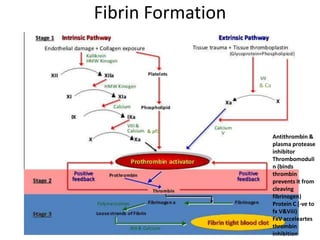
• Aims to convert prothrombin into the
proteolytic enzyme thrombin.
• Thrombin cleaves fibrinogen molecules to
insoluble fibrin
• fibrin provides stability to the platelet plug.
• Involves two pathways:
– Intrinsic Pathways (factors VII, X, II)
– Extrinsic Pathways (factors XII, XI, IX, X and II)
Fibrin Formation
& pf3
& Ca
Antithrombin &
plasma protease
inhibitor
Thrombomoduli
n (binds
thrombin
prevents it from
cleaving
fibrinogen)
Protein C (-ve to
fx V&Viii)
FxV acceleartes
thrombin
inhibition
Fibrinolysis
• Aim is to maintain patency of blood vessels by
lysis of fibrin deposits
• Initiated from start by circulating kinases, tissue
activators, and kallikrein.
• Dependent on Plasmin which lyses fibrin to
produce fibrin degradation end products
• Smaller products interfere with platelet
aggregation while the larger products
incorporates into the clot resulting in unstable
clots
Management of hemostasis In a
Surgical Patient
Pre Op Evaluation
• History
– Hx of abnormal bleeding, prolonged bleeding, easy bruising, mucosal
bleeds, menorrhagia
– Hx of coagulation disorder in relatives
– Hx of use of anticoagulant
– Hx of chronic diseases such as CKD, CVDs, CLD, HTN
– Hx of use of drugs eg cytotoxics, anticoagulants
• Examination
– General examination (anemia, jaundice, asterixis, anasarca)
– Skin: ecchymosis, stigmata of cld
– Abd: Hepatomegaly, splenomegaly, ballotable kidneys
– Bed side bleeding time (1-9min, up to 13min in children)
• Investigations
– General: CBC, LFT, EUCr, Abd USS
– Specific -tests of hemostasis
• CT (8-15min)
• PT (VII, X, II) (9.6-11.8sec)
• PTT (XII, XI, IX, X & II) (20-36sec)
• INR, Fx assays, fibrinogen level, Clot elastography and elastometry,
Hemostatic Defects
Defective Vasoconstriction
• Idiopathic Hemorrhagic Telengiectasia/ Osler
Weber Rendu syndrome
• low perivascular pressure in muscular
dystrophy, ehlers-Danlos syndrom, elderly,
prolonged steriod therapy
Defective Platelet Function
Congenital:
• Bernard Soulier syndrome (GP 1b/IX/V rcpt for
vWF),
• Glanzman Thrombastenia (GP IIb/IIIA)
• Storage pool disease: Dense and α granules
(occur with partial albinism in Hermansky-
Pudlak syndrome)
• Trx: DDAVP(desmopressin), platelet
concentrate
defective platelet function cont
Acquired platelet disorders.
A. Quantitative Disorders:
1. Failure of production: (related to impairment in
bone marrow functiona):
• Leukemia.
• Myeloproliferative disorders.
• B12 or folate deficiencies.
• Chemotherapy or radiation therapy.
• Acute alcohol intoxication
• Viral infections
defective platelet function cont
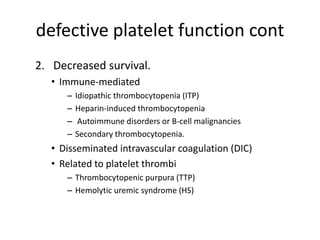
2. Decreased survival.
• Immune-mediated
– Idiopathic thrombocytopenia (ITP)
– Heparin-induced thrombocytopenia
– Autoimmune disorders or B-cell malignancies
– Secondary thrombocytopenia.
• Disseminated intravascular coagulation (DIC)
• Related to platelet thrombi
– Thrombocytopenic purpura (TTP)
– Hemolytic uremic syndrome (HS)
defective platelet function cont
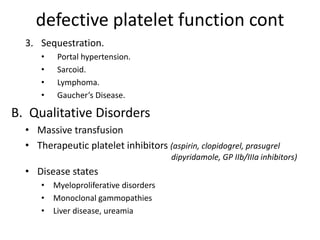
3. Sequestration.
• Portal hypertension.
• Sarcoid.
• Lymphoma.
• Gaucher’s Disease.
B. Qualitative Disorders
• Massive transfusion
• Therapeutic platelet inhibitors (aspirin, clopidogrel, prasugrel
dipyridamole, GP IIb/IIIa inhibitors)
• Disease states
• Myeloproliferative disorders
• Monoclonal gammopathies
• Liver disease, ureamia
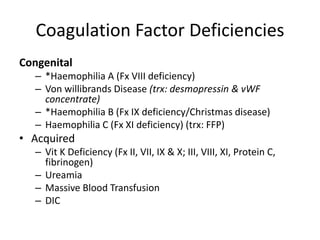
Coagulation Factor Deficiencies
Congenital
– *Haemophilia A (Fx VIII deficiency)
– Von willibrands Disease (trx: desmopressin & vWF
concentrate)
– *Haemophilia B (Fx IX deficiency/Christmas disease)
– Haemophilia C (Fx XI deficiency) (trx: FFP)
• Acquired
– Vit K Deficiency (Fx II, VII, IX & X; III, VIII, XI, Protein C,
fibrinogen)
– Ureamia
– Massive Blood Transfusion
– DIC
Intra operative Mgt
• Anesthetic Techniques
– Posture/Position
– Permissive hypotension
– Intermittent positive pressure ventilation
– Pneumoperitoneum
– Normothermia
– Anaesthetic agent: Regional anesthesia,
L/A+adrenaline, GA: propofol
• Pharmacologic methods
– Traxenamic acid
– ∑- Aminocaproic acid
– Aprotinin: serine protease inhibitor directly
inhibits free plasmin
– Recombinant factor VIIa (rFVIIa)
– Vit K
• Surgical techniques
– Appropriate dissection
– Compression/Pressure and maneuvers
– Vascular clamps and forceps
– Intraluminal balloons
– Arterial ligation
– Diathermy
– Minimal access surgery
• Topical agents
– Surgicel (oxidized cellulose)
– Gelfoam (gelatin foam)
– Avitene (microfibrillar collagens)
– Topical thrombin
– Fibrin sealant
– Platelet sealant
– Human recombinant thrombin derivatives
• Mechanical Factors
– Digital pressure
– Pringle maneuver
– Preassure packing
– Limb elevation
– Limb exsanguination
– Tourniquets
• Blood products
– FFP
– Platelet concentrates
– Factor concentrates
Post Op Managementt
– Antibiotics
– Wound care
– Elevation
Hemostasis in trauma
• Pre hospital use of traxenamic acid
• PCC
• Damage control resuscitation
– Prompt mechanical or surgical hemorrhage
control
– Permissive hypotension
– Minimalistic crystalloid/ synthetic colloid based
resuscitation
– Early use of blood products in the ration of 1:1:1
of PRBC:FFP:Platelets
Conclusion
• It is the responsibility of the surgeon to
preempt surgically important haemorrhage,
employ multiple modalities to prevent it, and
arrest it when it does occur.
REFRENCES
• Schwartz: Principles of Surgery, 7/e © 1999 by
The McGraw-Hill Companies, Inc.
• FARQUHARSON’S TEXTBOOK OF OPERATIVE
GENERAL SURGERY 10TH EDITION Margaret
Farquharson, James Hollingshead and Brendan
Moran {CRC Press Taylor & Francis Group 6000
Broken Sound Parkway NW, Suite 300 Boca
Raton, FL 33487-2742 © 2015 by Taylor & Francis
Group, LLC}
• Medscape

Haemostasis in surgery

  • 1.
  • 2.
    OUTLIINE • INTRODUCTION – Definition –Surgical Importance – Brief History – Epidemiology • PHYSIOLOGY OF HAEMSOSTASIS – Vasoconstriction – Platelet plug formation – Coagulation – Fibrinolysis
  • 3.
    Outline cont… • HAEMOSTATICDEFECTS – Defective Vasoconstriction – Defective Platelet Function – Defective coagulation • Management of haemostasis in a Surgical Patient – Pre op Evaluation • History • Examination • Investigations
  • 4.
    Outline cont… – IntraOp management • Surgical technique • Anesthetic Techniques • Pharmacological Agents • Mechanical Techniques • Blood products • Post Op Management • Antibiotics • Wound care – Haemostasis in Trauma • CONCLUSION • REFRENCES
  • 5.
    INTRODUCTION • The processof preventing or terminating blood loss from an injured vessel • Delicate balance between Pro and Anti coagulants • Congenital and acquired defects result in clinically important derangements • Derangements in this process could cause uncontrollable hemorrhage both spontaneously and on table • The surgeon has a great role to play
  • 6.
    Surgical Importance • Surgicalhaemostasis is one of the pillars of modern surgery (others include anaesthesis, antibiotics) • Adequate surgical haemostasis reduces morbidity and mortality in post. op patients by – minimizing blood loss and anemia, – attenuates the metabolic response to trauma, – reducing infection and – improving wound healing.
  • 7.
    History • The evolutionof modern surgery has followed closely behind strides in surgical hemostasis • Ancient medicine men and barber surgeons developed maneuvers based on intuition to control bleeding in their patients • These intuitions informed scientific research and the elucidation of the hemostatic process and modern interventions to achieve hemostasis
  • 9.
    Physiology of Hemostasis •Involves three (3) interdependent mechanisms – Initial Vasoconstriction – Platelet plug formation – Coagulation/Fibrin formation and Fibrinolysis • They are interrelated and occur as a continuum. • Their products provide multiple reinforcements.
  • 10.
    Vaso-constriction • The initialvascular response to injury. • Dependent upon local contraction of smooth muscles. • Occurs before platelet adhesion to site of injury. • Effectiveness is dependent on type of vessel, calibre, perivascular pressure, pattern of injury • Vasoconstrictors: 5-HT, TXA2, bradykinins, fibrinopeptides, Perivascular pressure
  • 12.
    Platelet Plug Formation •Platelets become “sticky” when exposed to sub-endothelial collagen to which they become adherent. • vWF is necessary for Platelet- collagen adherence • The adherent platelets swell, initiaite a release reaction to recruit other platelets which aggregates to form a loose platelet plug – primary hemostatic plug
  • 13.
    Plat. Plug FormationCont. • Primary hemostasis – Forms loose platelet plug – Reversible and does not involve secretion – ADP & 5-HT are principal mediators – Heparin does not interfere with this process – Aspirin & NSAIDS are both inhibitory (Aspirin causes irreversible blockade)
  • 14.
    Plat. Plug FormationCont. • Release reaction – Platelets degranulates releasing powerful mediators – The Platelet plug becomes compacted to form an irreversible amorphous plug. – Mitigated by ADP, platelet factor 4, trace thrombin, in the presence of Ca2+, Mg2+ – Products include: platelet factor 3 & 4, thromboglobulin, PDGF, ADP, 5-HT, Ca2+ – Process is inhibited by cAMP
  • 15.
    Coagulation/Fibrin Formation • Aimsto convert prothrombin into the proteolytic enzyme thrombin. • Thrombin cleaves fibrinogen molecules to insoluble fibrin • fibrin provides stability to the platelet plug. • Involves two pathways: – Intrinsic Pathways (factors VII, X, II) – Extrinsic Pathways (factors XII, XI, IX, X and II)
  • 16.
    Fibrin Formation & pf3 &Ca Antithrombin & plasma protease inhibitor Thrombomoduli n (binds thrombin prevents it from cleaving fibrinogen) Protein C (-ve to fx V&Viii) FxV acceleartes thrombin inhibition
  • 17.
    Fibrinolysis • Aim isto maintain patency of blood vessels by lysis of fibrin deposits • Initiated from start by circulating kinases, tissue activators, and kallikrein. • Dependent on Plasmin which lyses fibrin to produce fibrin degradation end products • Smaller products interfere with platelet aggregation while the larger products incorporates into the clot resulting in unstable clots
  • 18.
    Management of hemostasisIn a Surgical Patient
  • 19.
    Pre Op Evaluation •History – Hx of abnormal bleeding, prolonged bleeding, easy bruising, mucosal bleeds, menorrhagia – Hx of coagulation disorder in relatives – Hx of use of anticoagulant – Hx of chronic diseases such as CKD, CVDs, CLD, HTN – Hx of use of drugs eg cytotoxics, anticoagulants • Examination – General examination (anemia, jaundice, asterixis, anasarca) – Skin: ecchymosis, stigmata of cld – Abd: Hepatomegaly, splenomegaly, ballotable kidneys – Bed side bleeding time (1-9min, up to 13min in children)
  • 20.
    • Investigations – General:CBC, LFT, EUCr, Abd USS – Specific -tests of hemostasis • CT (8-15min) • PT (VII, X, II) (9.6-11.8sec) • PTT (XII, XI, IX, X & II) (20-36sec) • INR, Fx assays, fibrinogen level, Clot elastography and elastometry,
  • 21.
  • 22.
    Defective Vasoconstriction • IdiopathicHemorrhagic Telengiectasia/ Osler Weber Rendu syndrome • low perivascular pressure in muscular dystrophy, ehlers-Danlos syndrom, elderly, prolonged steriod therapy
  • 23.
    Defective Platelet Function Congenital: •Bernard Soulier syndrome (GP 1b/IX/V rcpt for vWF), • Glanzman Thrombastenia (GP IIb/IIIA) • Storage pool disease: Dense and α granules (occur with partial albinism in Hermansky- Pudlak syndrome) • Trx: DDAVP(desmopressin), platelet concentrate
  • 24.
    defective platelet functioncont Acquired platelet disorders. A. Quantitative Disorders: 1. Failure of production: (related to impairment in bone marrow functiona): • Leukemia. • Myeloproliferative disorders. • B12 or folate deficiencies. • Chemotherapy or radiation therapy. • Acute alcohol intoxication • Viral infections
  • 25.
    defective platelet functioncont 2. Decreased survival. • Immune-mediated – Idiopathic thrombocytopenia (ITP) – Heparin-induced thrombocytopenia – Autoimmune disorders or B-cell malignancies – Secondary thrombocytopenia. • Disseminated intravascular coagulation (DIC) • Related to platelet thrombi – Thrombocytopenic purpura (TTP) – Hemolytic uremic syndrome (HS)
  • 26.
    defective platelet functioncont 3. Sequestration. • Portal hypertension. • Sarcoid. • Lymphoma. • Gaucher’s Disease. B. Qualitative Disorders • Massive transfusion • Therapeutic platelet inhibitors (aspirin, clopidogrel, prasugrel dipyridamole, GP IIb/IIIa inhibitors) • Disease states • Myeloproliferative disorders • Monoclonal gammopathies • Liver disease, ureamia
  • 27.
    Coagulation Factor Deficiencies Congenital –*Haemophilia A (Fx VIII deficiency) – Von willibrands Disease (trx: desmopressin & vWF concentrate) – *Haemophilia B (Fx IX deficiency/Christmas disease) – Haemophilia C (Fx XI deficiency) (trx: FFP) • Acquired – Vit K Deficiency (Fx II, VII, IX & X; III, VIII, XI, Protein C, fibrinogen) – Ureamia – Massive Blood Transfusion – DIC
  • 28.
  • 29.
    • Anesthetic Techniques –Posture/Position – Permissive hypotension – Intermittent positive pressure ventilation – Pneumoperitoneum – Normothermia – Anaesthetic agent: Regional anesthesia, L/A+adrenaline, GA: propofol
  • 30.
    • Pharmacologic methods –Traxenamic acid – ∑- Aminocaproic acid – Aprotinin: serine protease inhibitor directly inhibits free plasmin – Recombinant factor VIIa (rFVIIa) – Vit K
  • 31.
    • Surgical techniques –Appropriate dissection – Compression/Pressure and maneuvers – Vascular clamps and forceps – Intraluminal balloons – Arterial ligation – Diathermy – Minimal access surgery
  • 32.
    • Topical agents –Surgicel (oxidized cellulose) – Gelfoam (gelatin foam) – Avitene (microfibrillar collagens) – Topical thrombin – Fibrin sealant – Platelet sealant – Human recombinant thrombin derivatives
  • 33.
    • Mechanical Factors –Digital pressure – Pringle maneuver – Preassure packing – Limb elevation – Limb exsanguination – Tourniquets
  • 34.
    • Blood products –FFP – Platelet concentrates – Factor concentrates
  • 35.
    Post Op Managementt –Antibiotics – Wound care – Elevation
  • 36.
    Hemostasis in trauma •Pre hospital use of traxenamic acid • PCC • Damage control resuscitation – Prompt mechanical or surgical hemorrhage control – Permissive hypotension – Minimalistic crystalloid/ synthetic colloid based resuscitation – Early use of blood products in the ration of 1:1:1 of PRBC:FFP:Platelets
  • 37.
    Conclusion • It isthe responsibility of the surgeon to preempt surgically important haemorrhage, employ multiple modalities to prevent it, and arrest it when it does occur.
  • 38.
    REFRENCES • Schwartz: Principlesof Surgery, 7/e © 1999 by The McGraw-Hill Companies, Inc. • FARQUHARSON’S TEXTBOOK OF OPERATIVE GENERAL SURGERY 10TH EDITION Margaret Farquharson, James Hollingshead and Brendan Moran {CRC Press Taylor & Francis Group 6000 Broken Sound Parkway NW, Suite 300 Boca Raton, FL 33487-2742 © 2015 by Taylor & Francis Group, LLC} • Medscape

Editor's Notes

  • #28 Haemophilia A&B: X linked recessive. Almost exclusively occurs in males vWF deficiency is atusomal dorminant Haemophilia C is autosomal recessive and common in Askenazi Jews