SHOCK
PATHOPHYSIOLOGY
CLINICAL FEATURES
MANAGEMENT
DR ANKIT SHARMA
DR ARUN KUMAR M
1
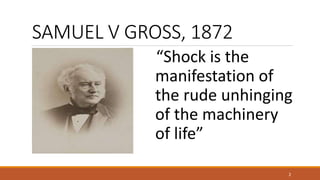
SAMUEL V GROSS, 1872
“Shock is the
manifestation of
the rude unhinging
of the machinery
of life”
2
HISTORICAL
PERSPECTIVE
• Ambroise Paré (1510) – Fluids to injured patients
• ‘Shock’ – 1743 – act of impact/ collision
• Guthrie (1815) – described physiological instability
• Crile (1899) – Importance of measuring BP
• Claude Bernard – Milieu intérieur
• Walter B. Cannon – Homeostasis
• WW I – Disturbance of nervous system
• Alfred Blalock (1934) – 4 categories of shock
• Carl John Wiggers (1950) – Wiggers prep
3
Definition
A systemic state of tissue hypo-perfusion, which is inadequate for
normal cellular respiration
 Systemic – global phenomenon
 Hypoperfusion (relative/ absolute)
 Inadequate cellular respiration
 Anaerobic, dysfunction
 Body responses thereof
4
Types
• Hypovolemic
• Cardiogenic
• Septic (vasogenic)
• Neurogenic
• Traumatic
• Obstructive
5
Hypovolemic shock
• Hemorrhagic
• Trauma
• Bleeding disorders
• GI/ GU bleed
• Non- hemorrhagic
• Dehydration
• “Inter compartmental fluid mal-adjustments”
• Third spacing
6
Cardiogenic Shock
• Pump failure
• Adequate but ineffective intravascular volume.
• Cardiac causes
• Pulmonary embolism
• High mortality rates
8
Cardiogenic shock
• Hemodynamic criteria:
1. Sustained Hypotension (i.e. SBP <90 mm Hg
for at least 30 minutes)
2. Reduced Cardiac Index (<2.2 L/min per
square meter) &
3. Elevated Pulmonary Artery Wedge Pressure
(>15 mm Hg)
9
SEPTIC SHOCK
• Four sepsis-related clinical syndromes = Four steps of

increasingly exaggerated systemic inflammatory responses
SIRS
Sepsis
Severe Sepsis (Sepsis Syndrome)
Septic Shock
11
DEFINITIONS DESCRIBING THE
CONDITION OF SEPTIC PATIENTS
Bacteremia: Bacteria in blood
Positive blood cultures
Septicemia: Microbes or their toxins in blood
12
DEFINITIONS DESCRIBING THE
CONDITION OF SEPTIC PATIENTS
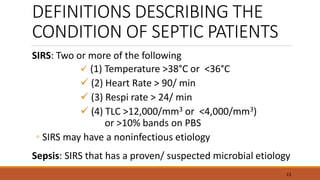
SIRS: Two or more of the following
 (1) Temperature >38°C or <36°C
 (2) Heart Rate > 90/ min
 (3) Respi rate > 24/ min
 (4) TLC >12,000/mm3 or <4,000/mm3)
or >10% bands on PBS
◦ SIRS may have a noninfectious etiology
Sepsis: SIRS that has a proven/ suspected microbial etiology
13
DEFINITIONS DESCRIBING THE
CONDITION OF SEPTIC PATIENTS
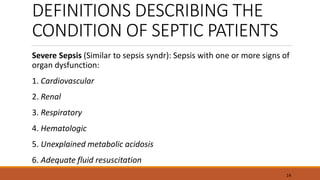
Severe Sepsis (Similar to sepsis syndr): Sepsis with one or more signs of
organ dysfunction:
1. Cardiovascular
2. Renal
3. Respiratory
4. Hematologic
5. Unexplained metabolic acidosis
6. Adequate fluid resuscitation
14
DEFINITIONS DESCRIBING THE
CONDITION OF SEPTIC PATIENTS
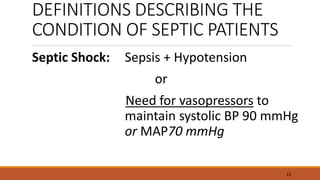
Septic Shock: Sepsis + Hypotension
or
Need for vasopressors to
maintain systolic BP 90 mmHg
or MAP70 mmHg
15
DEFINITIONS DESCRIBING THE
CONDITION OF SEPTIC PATIENTS
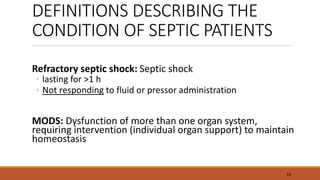
Refractory septic shock: Septic shock
◦ lasting for >1 h
◦ Not responding to fluid or pressor administration
MODS: Dysfunction of more than one organ system,
requiring intervention (individual organ support) to maintain
homeostasis
16
NEUROGENIC SHOCK
• Acute loss of sympathetic vascular tone
• Loss of vascular resistance
◦ Pooling in capacitance vessels
◦ Reduced preload
◦ Poor cardiac output
◦ Inadequate pressure in arterial system to
maintain capillary perfusion
17
NEUROGENIC SHOCK
Etiology:
◦ High cervical spinal cord injury (vertebral body #)
◦ inadvertent cephalad migration of spinal anaesthesia
◦ epidural hematoma or devastating head injury
Failure of fluid resuscitation to improve hemodynamics, where no source of blood
loss or sepsis can be identified
Vasopressors are necessary to treat this condition
18
TRAUMATIC SHOCK
• Hemorrhage overtly controlled, but
patients continues to lose plasma volume
into the interstitium
• Secondary microcirculatory injury
• Excessive pro-inflammatory response
• Third spacing
19
OBSTRUCTIVE SHOCK
• Reduction in preload due to mechanical
obstruction of cardiac filling
•Common causes: cardiac tamponade,
tension pneumothorax, massive pulmonary
embolus or air embolus
20
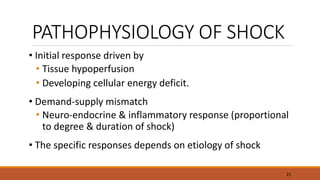
PATHOPHYSIOLOGY OF SHOCK
• Initial response driven by
• Tissue hypoperfusion
• Developing cellular energy deficit.
• Demand-supply mismatch
• Neuro-endocrine & inflammatory response (proportional
to degree & duration of shock)
• The specific responses depends on etiology of shock
21
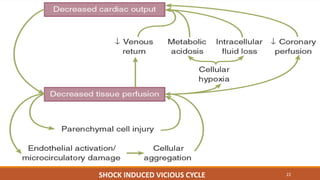
22SHOCK INDUCED VICIOUS CYCLE
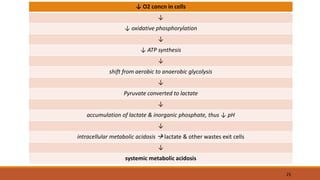
CELLULAR PATHOPHYSIOLOGY
• Compensation/ Dysfunction/ Death
23
↓ O2 concn in cells
↓
↓ oxidative phosphorylation
↓
↓ ATP synthesis
↓
shift from aerobic to anaerobic glycolysis
↓
Pyruvate converted to lactate
↓
accumulation of lactate & inorganic phosphate, thus ↓ pH
↓
intracellular metabolic acidosis  lactate & other wastes exit cells
↓
systemic metabolic acidosis
25
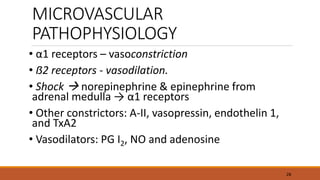
MICROVASCULAR
PATHOPHYSIOLOGY
• α1 receptors – vasoconstriction
• ẞ2 receptors - vasodilation.
• Shock  norepinephrine & epinephrine from
adrenal medulla → α1 receptors
• Other constrictors: A-II, vasopressin, endothelin 1,
and TxA2
• Vasodilators: PG I2, NO and adenosine
28
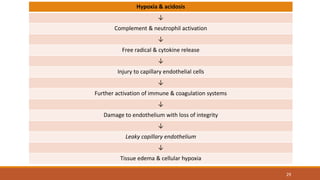
Hypoxia & acidosis
↓
Complement & neutrophil activation
↓
Free radical & cytokine release
↓
Injury to capillary endothelial cells
↓
Further activation of immune & coagulation systems
↓
Damage to endothelium with loss of integrity
↓
Leaky capillary endothelium
↓
Tissue edema & cellular hypoxia
29
CARDIOVASCULAR
PATHOPHYSIOLOGY
30
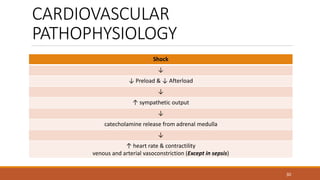
Shock
↓
↓ Preload & ↓ Afterload
↓
↑ sympathetic output
↓
catecholamine release from adrenal medulla
↓
↑ heart rate & contractility
venous and arterial vasoconstriction (Except in sepsis)
31
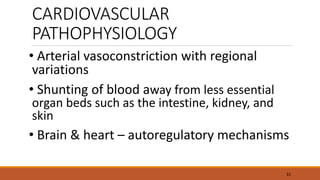
• Arterial vasoconstriction with regional
variations
• Shunting of blood away from less essential
organ beds such as the intestine, kidney, and
skin
• Brain & heart – autoregulatory mechanisms
CARDIOVASCULAR
PATHOPHYSIOLOGY
PULMONARY PATHOPHYSIOLOGY
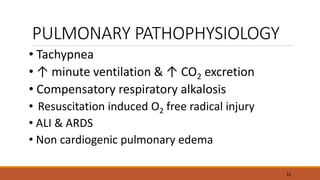
• Tachypnea
• ↑ minute ventilation & ↑ CO2 excretion
• Compensatory respiratory alkalosis
• Resuscitation induced O2 free radical injury
• ALI & ARDS
• Non cardiogenic pulmonary edema
32
RENAL PATHOPHYSIOLOGY
• Decreased renal blood flow
• RAS activation
• ↓ GFR + ↑ aldosterone & vasopressin → Oliguria
• Further vasoconstriction → ↑ sodium & water
retention → edema
• Toxic tubular injury & Tubular obstruction
33
ENDOCRINE PATHOPHYSIOLOGY
• Na+ & water retention  K+ & H+ lost
• Hypovolaemia  ADH
• Adrenergic drive  Norepinephrine release
•Vasoconstriction
•↑ glycogenolysis & ↑ gluconeogenesis
•↓ Insulin release
34
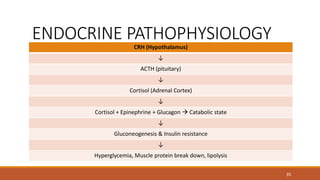
CRH (Hypothalamus)
↓
ACTH (pituitary)
↓
Cortisol (Adrenal Cortex)
↓
Cortisol + Epinephrine + Glucagon  Catabolic state
↓
Gluconeogenesis & Insulin resistance
↓
Hyperglycemia, Muscle protein break down, lipolysis
35
ENDOCRINE PATHOPHYSIOLOGY
METABOLIC
DERANGEMENTS
• Disruption of C-P-L metabolism
• Anaerobic metabolism  Lactate
• ↑ Hepatic gluconeogenesis
• Hepatic lipogenesis  ↑ TG
• Protein catabolism → muscle wasting
36
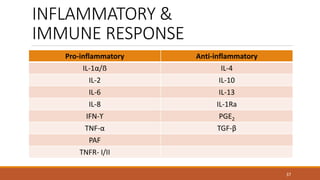
INFLAMMATORY &
IMMUNE RESPONSE
Pro-inflammatory Anti-inflammatory
IL-1α/ẞ IL-4
IL-2 IL-10
IL-6 IL-13
IL-8 IL-1Ra
IFN-ϒ PGE2
TNF-α TGF-β
PAF
TNFR- I/II
37
INFLAMMATORY &
IMMUNE RESPONSE
• MODS
• Counter-regulatory immune response
• Delayed MOF
38
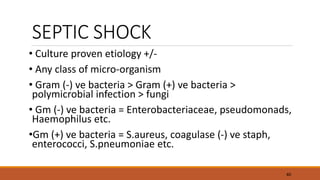
SEPTIC SHOCK
• Culture proven etiology +/-
• Any class of micro-organism
• Gram (-) ve bacteria > Gram (+) ve bacteria >
polymicrobial infection > fungi
• Gm (-) ve bacteria = Enterobacteriaceae, pseudomonads,
Haemophilus etc.
•Gm (+) ve bacteria = S.aureus, coagulase (-) ve staph,
enterococci, S.pneumoniae etc.
40
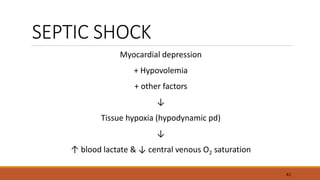
SEPTIC SHOCK
Myocardial depression
+ Hypovolemia
+ other factors
↓
Tissue hypoxia (hypodynamic pd)
↓
↑ blood lactate & ↓ central venous O2 saturation
41
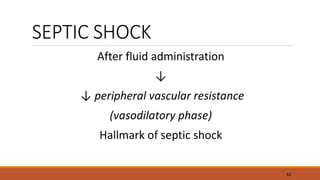
SEPTIC SHOCK
After fluid administration
↓
↓ peripheral vascular resistance
(vasodilatory phase)
Hallmark of septic shock
42
Clinical Features & Management
45
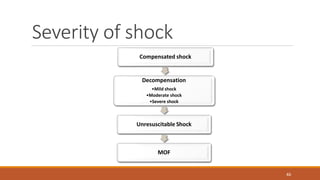
Severity of shock
Compensated shock
Decompensation
•Mild shock
•Moderate shock
•Severe shock
Unresuscitable Shock
MOF
46
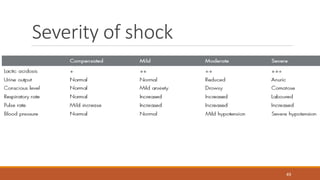
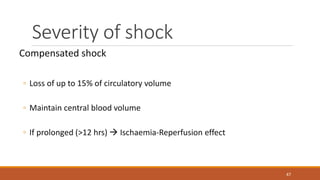
Severity of shock
Compensated shock
◦ Loss of up to 15% of circulatory volume
◦ Maintain central blood volume
◦ If prolonged (>12 hrs)  Ischaemia-Reperfusion effect
47
Severity of shock
Decompensation
◦ Loss of > 15% of circulating volume.
◦ Progressive Renal, Respiratory & Cardiovascular decompensation.
◦ Hypotension  >30-40% volume loss.
48
Severity of shock
49
Hemorrhagic shock
50
Hemorrhagic shock
Most common cause of shock in the surgical or trauma patients
Young patients vs elderly patients
51
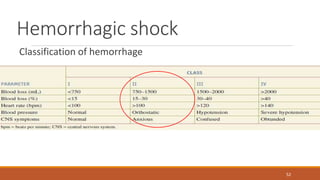
Hemorrhagic shock
Classification of hemorrhage
52
Hemorrhagic shock
Approach to Hemorrhagic shock
Identify haemorrhage
Immediate resuscitative maneuvers
Identify the site of haemorrhage
Haemorrhage control
Damage control resuscitation
53
Hemorrhagic shock
Treatment concurrently with diagnostic evaluation
Time dependent survival
Resuscitative maneuvers
54
Hemorrhagic shock
History
Root cause of hemorrhage & its site
Any underlying Pathology
Any co-morbidities/medications
55
Hemorrhagic shock
Symptoms & Signs:
Agitation, Cold clammy extremities
Tachycardia, Hypotension
Pallor
Weak or absent peripheral pulses
Prolonged capillary refill time
Systemic examination
Symptoms specific to site of Hemorrhage
56
Hemorrhagic shock
Site specific Symptoms & Signs:
Penetrating wounds / Blunt trauma
Sites that can harbor sufficient extra-vascular volume:
Intrathoracic (2-3L/ pleural cavity)
Intraabdominal
Retroperitoneal
# long bones
57
Hemorrhagic shock
Investigations
Hematological & Biochemical Investigations
Lactate levels
Blood grouping & cross matching
Radiological investigations as indicated
58
Hemorrhagic shock
Damage control resuscitation
Permissive hypotension
Use of limited crystalloids and blood products
Anticipate and treat coagulopathy
Hypothermia
DCS
59
Hemorrhagic shock
Fluid therapy
Crystalloid
Hypotonic solutions
60
Hemorrhagic shock
Fluid therapy : Dynamic Fluid Response
To determine shock status
250-500ml bolus over 5-10min
HR, BP & CVP are measured
61
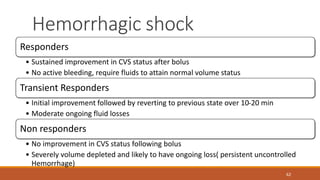
Hemorrhagic shock
Responders
• Sustained improvement in CVS status after bolus
• No active bleeding, require fluids to attain normal volume status
Transient Responders
• Initial improvement followed by reverting to previous state over 10-20 min
• Moderate ongoing fluid losses
Non responders
• No improvement in CVS status following bolus
• Severely volume depleted and likely to have ongoing loss( persistent uncontrolled
Hemorrhage)
62
Hemorrhagic shock
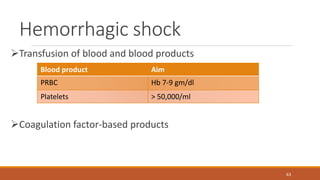
Transfusion of blood and blood products
Coagulation factor-based products
Blood product Aim
PRBC Hb 7-9 gm/dl
Platelets > 50,000/ml
63
Hemorrhagic shock
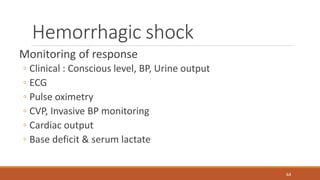
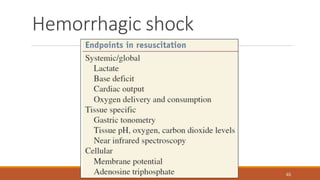
Monitoring of response
◦ Clinical : Conscious level, BP, Urine output
◦ ECG
◦ Pulse oximetry
◦ CVP, Invasive BP monitoring
◦ Cardiac output
◦ Base deficit & serum lactate
64
Hemorrhagic shock
65
Traumatic shock
Initial resuscitation
Control of Hemorrhage
Early stabilization of the fractures, debridement or evacuation of
hematoma
66
Septic Shock
67
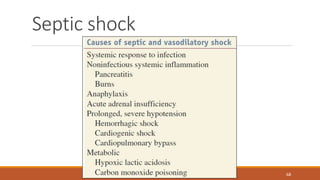
Septic shock
68
SEPSIS SIX
The Sepsis Six is the name given to a bundle of medical therapies designed to reduce
the mortality of patients with sepsis.
The Sepsis Six consists of three diagnostic and three therapeutic steps – all to be
delivered within one hour of the initial diagnosis of sepsis.
◦ Deliver high-flow oxygen.
◦ Take blood cultures.
◦ Administer empiric intravenous antibiotics.
◦ Measure serum lactate and send full blood count.
◦ Start intravenous fluid resuscitation.
◦ Commence accurate urine output measurement.
69
Management of severe sepsis
Initial Resuscitation and Infection Issues
Hemodynamic Support and Adjunctive Therapy
Supportive Therapy of Severe Sepsis
70
Initial Resuscitation and Infection Issues
A. Initial Resuscitation
B. Screening for Sepsis and Performance Improvement
C. Diagnosis
D. Antimicrobial Therapy
E. Source Control
F. Infection Prevention
71
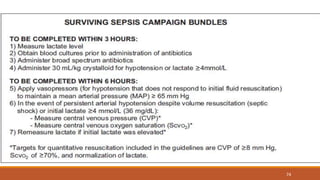
A. Initial Resuscitation
Resuscitation of patients with sepsis- induced tissue
hypoperfusion
◦ defined as hypotension persisting after initial fluid challenge or blood
lactate concentration ≥ 4 mmol/L
EGDT (first 6 hrs of resuscitation)
◦ a) CVP 8–12 mm Hg
◦ b) MAP ≥ 65 mm Hg
◦ c) Urine output ≥ 0.5 mL/kg/hr
◦ d) Scvo2 or Svo2 70% or 65%, respectively
72
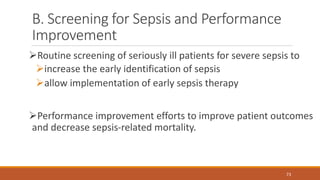
B. Screening for Sepsis and Performance
Improvement
Routine screening of seriously ill patients for severe sepsis to
increase the early identification of sepsis
allow implementation of early sepsis therapy
Performance improvement efforts to improve patient outcomes
and decrease sepsis-related mortality.
73
74
C. Diagnosis
Cultures
Imaging studies
1,3 β-d-glucan assay ,mannan and anti-mannan antibody assays
75
D. Antimicrobial Therapy
Initial empiric anti-infective therapy
Broad spectrum
Anti fungals
Reassessed daily for potential de-escalation
Combination empiric therapy
Duration & De-escalation
76
E. Source Control
Intervention for source control within the first 12 hr of diagnosis.
77
Haemodynamic support & Adjunctive therapy
Fluid therapy
Vasopressors
Inotropic support
Corticosteroids
78
Haemodynamic support & Adjunctive therapy
Fluid therapy
Crystalloids
Albumin
Vasopressors
Noradrenaline
Adrenaline
Vasopressin
Dopamine
79
Ionotropic agents : Dobutamine
Corticosteroid
Supportive therapy
Blood products administration
Mechanical ventilation of sepsis
induced ARDS
Sedation, analgesia & neuromuscular
blockade
Glucose control
80
Renal replacement therapy
DVT prophylaxis
Stress ulcer prophylaxis
Nutrition
Setting goals of care
Cardiogenic Shock
81
Cardiogenic shock
Causes:
◦ Acute MI (most common)
◦ Arrythmia
◦ End stage cardiomyopathy
◦ Myocarditis
◦ Severe myocardial contusion
◦ LV outflow obstruction
◦ Obstruction to LV filling
◦ MR
◦ Acute aortic insufficiency
◦ Metabolic
◦ Drug reactions
82
Cardiogenic shock
Diagnosis
ECG & ECHO
CXR
ABG
Cardiac enzymes
Invasive monitoring
83
Cardiogenic shock
Treatment
Aims of treatment
Adequate oxygenation
Judicious fluid administration
Adequate Analgesia
Correcting electrolyte imbalances
84
Cardiogenic shock
Treatment
Ionotropic support (Dopamine/Dobutamine)
Treatment of cause
85
Obstructive Shock
86
Obstructive shock
Causes:
◦ Tension Pneumothorax
◦ Pericardial Tamponade
◦ Pulmonary embolus
◦ IVC obstruction [Gravid uterus, DVT, Neoplasm]
◦ Increased Intra-thoracic pressure [ Excess end-expiratory pressure, Neoplasm]
87
Obstructive shock
Diagnosis
Diagnosis is clinical
Chest X-Ray
Echocardiography
Pericardiocentesis
Treatment of the cause
88
Neurogenic Shock
89
Neurogenic shock
Causes
Spinal cord Trauma
Spinal cord Neoplasm
Spinal / Epidural anesthesia
90
Neurogenic shock
Diagnosis:
Hypotension with bradycardia
Warm extremities
Motor and sensory deficits
Radiographic evidence of vertebral fracture
91
Neurogenic shock
Treatment
Fluid resuscitation
Ionotropic support
Operative attempt to stabilise the vertebral fracture.
92
THANK YOU
93

Shock - Pathophysiology, Clinical Features & Management

  • 1.
  • 2.
    SAMUEL V GROSS,1872 “Shock is the manifestation of the rude unhinging of the machinery of life” 2
  • 3.
    HISTORICAL PERSPECTIVE • Ambroise Paré(1510) – Fluids to injured patients • ‘Shock’ – 1743 – act of impact/ collision • Guthrie (1815) – described physiological instability • Crile (1899) – Importance of measuring BP • Claude Bernard – Milieu intérieur • Walter B. Cannon – Homeostasis • WW I – Disturbance of nervous system • Alfred Blalock (1934) – 4 categories of shock • Carl John Wiggers (1950) – Wiggers prep 3
  • 4.
    Definition A systemic stateof tissue hypo-perfusion, which is inadequate for normal cellular respiration  Systemic – global phenomenon  Hypoperfusion (relative/ absolute)  Inadequate cellular respiration  Anaerobic, dysfunction  Body responses thereof 4
  • 5.
    Types • Hypovolemic • Cardiogenic •Septic (vasogenic) • Neurogenic • Traumatic • Obstructive 5
  • 6.
    Hypovolemic shock • Hemorrhagic •Trauma • Bleeding disorders • GI/ GU bleed • Non- hemorrhagic • Dehydration • “Inter compartmental fluid mal-adjustments” • Third spacing 6
  • 7.
    Cardiogenic Shock • Pumpfailure • Adequate but ineffective intravascular volume. • Cardiac causes • Pulmonary embolism • High mortality rates 8
  • 8.
    Cardiogenic shock • Hemodynamiccriteria: 1. Sustained Hypotension (i.e. SBP <90 mm Hg for at least 30 minutes) 2. Reduced Cardiac Index (<2.2 L/min per square meter) & 3. Elevated Pulmonary Artery Wedge Pressure (>15 mm Hg) 9
  • 9.
    SEPTIC SHOCK • Foursepsis-related clinical syndromes = Four steps of increasingly exaggerated systemic inflammatory responses SIRS Sepsis Severe Sepsis (Sepsis Syndrome) Septic Shock 11
  • 10.
    DEFINITIONS DESCRIBING THE CONDITIONOF SEPTIC PATIENTS Bacteremia: Bacteria in blood Positive blood cultures Septicemia: Microbes or their toxins in blood 12
  • 11.
    DEFINITIONS DESCRIBING THE CONDITIONOF SEPTIC PATIENTS SIRS: Two or more of the following  (1) Temperature >38°C or <36°C  (2) Heart Rate > 90/ min  (3) Respi rate > 24/ min  (4) TLC >12,000/mm3 or <4,000/mm3) or >10% bands on PBS ◦ SIRS may have a noninfectious etiology Sepsis: SIRS that has a proven/ suspected microbial etiology 13
  • 12.
    DEFINITIONS DESCRIBING THE CONDITIONOF SEPTIC PATIENTS Severe Sepsis (Similar to sepsis syndr): Sepsis with one or more signs of organ dysfunction: 1. Cardiovascular 2. Renal 3. Respiratory 4. Hematologic 5. Unexplained metabolic acidosis 6. Adequate fluid resuscitation 14
  • 13.
    DEFINITIONS DESCRIBING THE CONDITIONOF SEPTIC PATIENTS Septic Shock: Sepsis + Hypotension or Need for vasopressors to maintain systolic BP 90 mmHg or MAP70 mmHg 15
  • 14.
    DEFINITIONS DESCRIBING THE CONDITIONOF SEPTIC PATIENTS Refractory septic shock: Septic shock ◦ lasting for >1 h ◦ Not responding to fluid or pressor administration MODS: Dysfunction of more than one organ system, requiring intervention (individual organ support) to maintain homeostasis 16
  • 15.
    NEUROGENIC SHOCK • Acuteloss of sympathetic vascular tone • Loss of vascular resistance ◦ Pooling in capacitance vessels ◦ Reduced preload ◦ Poor cardiac output ◦ Inadequate pressure in arterial system to maintain capillary perfusion 17
  • 16.
    NEUROGENIC SHOCK Etiology: ◦ Highcervical spinal cord injury (vertebral body #) ◦ inadvertent cephalad migration of spinal anaesthesia ◦ epidural hematoma or devastating head injury Failure of fluid resuscitation to improve hemodynamics, where no source of blood loss or sepsis can be identified Vasopressors are necessary to treat this condition 18
  • 17.
    TRAUMATIC SHOCK • Hemorrhageovertly controlled, but patients continues to lose plasma volume into the interstitium • Secondary microcirculatory injury • Excessive pro-inflammatory response • Third spacing 19
  • 18.
    OBSTRUCTIVE SHOCK • Reductionin preload due to mechanical obstruction of cardiac filling •Common causes: cardiac tamponade, tension pneumothorax, massive pulmonary embolus or air embolus 20
  • 19.
    PATHOPHYSIOLOGY OF SHOCK •Initial response driven by • Tissue hypoperfusion • Developing cellular energy deficit. • Demand-supply mismatch • Neuro-endocrine & inflammatory response (proportional to degree & duration of shock) • The specific responses depends on etiology of shock 21
  • 20.
  • 21.
  • 22.
    ↓ O2 concnin cells ↓ ↓ oxidative phosphorylation ↓ ↓ ATP synthesis ↓ shift from aerobic to anaerobic glycolysis ↓ Pyruvate converted to lactate ↓ accumulation of lactate & inorganic phosphate, thus ↓ pH ↓ intracellular metabolic acidosis  lactate & other wastes exit cells ↓ systemic metabolic acidosis 25
  • 23.
    MICROVASCULAR PATHOPHYSIOLOGY • α1 receptors– vasoconstriction • ẞ2 receptors - vasodilation. • Shock  norepinephrine & epinephrine from adrenal medulla → α1 receptors • Other constrictors: A-II, vasopressin, endothelin 1, and TxA2 • Vasodilators: PG I2, NO and adenosine 28
  • 24.
    Hypoxia & acidosis ↓ Complement& neutrophil activation ↓ Free radical & cytokine release ↓ Injury to capillary endothelial cells ↓ Further activation of immune & coagulation systems ↓ Damage to endothelium with loss of integrity ↓ Leaky capillary endothelium ↓ Tissue edema & cellular hypoxia 29
  • 25.
    CARDIOVASCULAR PATHOPHYSIOLOGY 30 Shock ↓ ↓ Preload &↓ Afterload ↓ ↑ sympathetic output ↓ catecholamine release from adrenal medulla ↓ ↑ heart rate & contractility venous and arterial vasoconstriction (Except in sepsis)
  • 26.
    31 • Arterial vasoconstrictionwith regional variations • Shunting of blood away from less essential organ beds such as the intestine, kidney, and skin • Brain & heart – autoregulatory mechanisms CARDIOVASCULAR PATHOPHYSIOLOGY
  • 27.
    PULMONARY PATHOPHYSIOLOGY • Tachypnea •↑ minute ventilation & ↑ CO2 excretion • Compensatory respiratory alkalosis • Resuscitation induced O2 free radical injury • ALI & ARDS • Non cardiogenic pulmonary edema 32
  • 28.
    RENAL PATHOPHYSIOLOGY • Decreasedrenal blood flow • RAS activation • ↓ GFR + ↑ aldosterone & vasopressin → Oliguria • Further vasoconstriction → ↑ sodium & water retention → edema • Toxic tubular injury & Tubular obstruction 33
  • 29.
    ENDOCRINE PATHOPHYSIOLOGY • Na+& water retention  K+ & H+ lost • Hypovolaemia  ADH • Adrenergic drive  Norepinephrine release •Vasoconstriction •↑ glycogenolysis & ↑ gluconeogenesis •↓ Insulin release 34
  • 30.
    CRH (Hypothalamus) ↓ ACTH (pituitary) ↓ Cortisol(Adrenal Cortex) ↓ Cortisol + Epinephrine + Glucagon  Catabolic state ↓ Gluconeogenesis & Insulin resistance ↓ Hyperglycemia, Muscle protein break down, lipolysis 35 ENDOCRINE PATHOPHYSIOLOGY
  • 31.
    METABOLIC DERANGEMENTS • Disruption ofC-P-L metabolism • Anaerobic metabolism  Lactate • ↑ Hepatic gluconeogenesis • Hepatic lipogenesis  ↑ TG • Protein catabolism → muscle wasting 36
  • 32.
    INFLAMMATORY & IMMUNE RESPONSE Pro-inflammatoryAnti-inflammatory IL-1α/ẞ IL-4 IL-2 IL-10 IL-6 IL-13 IL-8 IL-1Ra IFN-ϒ PGE2 TNF-α TGF-β PAF TNFR- I/II 37
  • 33.
    INFLAMMATORY & IMMUNE RESPONSE •MODS • Counter-regulatory immune response • Delayed MOF 38
  • 34.
    SEPTIC SHOCK • Cultureproven etiology +/- • Any class of micro-organism • Gram (-) ve bacteria > Gram (+) ve bacteria > polymicrobial infection > fungi • Gm (-) ve bacteria = Enterobacteriaceae, pseudomonads, Haemophilus etc. •Gm (+) ve bacteria = S.aureus, coagulase (-) ve staph, enterococci, S.pneumoniae etc. 40
  • 35.
    SEPTIC SHOCK Myocardial depression +Hypovolemia + other factors ↓ Tissue hypoxia (hypodynamic pd) ↓ ↑ blood lactate & ↓ central venous O2 saturation 41
  • 36.
    SEPTIC SHOCK After fluidadministration ↓ ↓ peripheral vascular resistance (vasodilatory phase) Hallmark of septic shock 42
  • 37.
    Clinical Features &Management 45
  • 38.
    Severity of shock Compensatedshock Decompensation •Mild shock •Moderate shock •Severe shock Unresuscitable Shock MOF 46
  • 39.
    Severity of shock Compensatedshock ◦ Loss of up to 15% of circulatory volume ◦ Maintain central blood volume ◦ If prolonged (>12 hrs)  Ischaemia-Reperfusion effect 47
  • 40.
    Severity of shock Decompensation ◦Loss of > 15% of circulating volume. ◦ Progressive Renal, Respiratory & Cardiovascular decompensation. ◦ Hypotension  >30-40% volume loss. 48
  • 41.
  • 42.
  • 43.
    Hemorrhagic shock Most commoncause of shock in the surgical or trauma patients Young patients vs elderly patients 51
  • 44.
  • 45.
    Hemorrhagic shock Approach toHemorrhagic shock Identify haemorrhage Immediate resuscitative maneuvers Identify the site of haemorrhage Haemorrhage control Damage control resuscitation 53
  • 46.
    Hemorrhagic shock Treatment concurrentlywith diagnostic evaluation Time dependent survival Resuscitative maneuvers 54
  • 47.
    Hemorrhagic shock History Root causeof hemorrhage & its site Any underlying Pathology Any co-morbidities/medications 55
  • 48.
    Hemorrhagic shock Symptoms &Signs: Agitation, Cold clammy extremities Tachycardia, Hypotension Pallor Weak or absent peripheral pulses Prolonged capillary refill time Systemic examination Symptoms specific to site of Hemorrhage 56
  • 49.
    Hemorrhagic shock Site specificSymptoms & Signs: Penetrating wounds / Blunt trauma Sites that can harbor sufficient extra-vascular volume: Intrathoracic (2-3L/ pleural cavity) Intraabdominal Retroperitoneal # long bones 57
  • 50.
    Hemorrhagic shock Investigations Hematological &Biochemical Investigations Lactate levels Blood grouping & cross matching Radiological investigations as indicated 58
  • 51.
    Hemorrhagic shock Damage controlresuscitation Permissive hypotension Use of limited crystalloids and blood products Anticipate and treat coagulopathy Hypothermia DCS 59
  • 52.
  • 53.
    Hemorrhagic shock Fluid therapy: Dynamic Fluid Response To determine shock status 250-500ml bolus over 5-10min HR, BP & CVP are measured 61
  • 54.
    Hemorrhagic shock Responders • Sustainedimprovement in CVS status after bolus • No active bleeding, require fluids to attain normal volume status Transient Responders • Initial improvement followed by reverting to previous state over 10-20 min • Moderate ongoing fluid losses Non responders • No improvement in CVS status following bolus • Severely volume depleted and likely to have ongoing loss( persistent uncontrolled Hemorrhage) 62
  • 55.
    Hemorrhagic shock Transfusion ofblood and blood products Coagulation factor-based products Blood product Aim PRBC Hb 7-9 gm/dl Platelets > 50,000/ml 63
  • 56.
    Hemorrhagic shock Monitoring ofresponse ◦ Clinical : Conscious level, BP, Urine output ◦ ECG ◦ Pulse oximetry ◦ CVP, Invasive BP monitoring ◦ Cardiac output ◦ Base deficit & serum lactate 64
  • 57.
  • 58.
    Traumatic shock Initial resuscitation Controlof Hemorrhage Early stabilization of the fractures, debridement or evacuation of hematoma 66
  • 59.
  • 60.
  • 61.
    SEPSIS SIX The SepsisSix is the name given to a bundle of medical therapies designed to reduce the mortality of patients with sepsis. The Sepsis Six consists of three diagnostic and three therapeutic steps – all to be delivered within one hour of the initial diagnosis of sepsis. ◦ Deliver high-flow oxygen. ◦ Take blood cultures. ◦ Administer empiric intravenous antibiotics. ◦ Measure serum lactate and send full blood count. ◦ Start intravenous fluid resuscitation. ◦ Commence accurate urine output measurement. 69
  • 62.
    Management of severesepsis Initial Resuscitation and Infection Issues Hemodynamic Support and Adjunctive Therapy Supportive Therapy of Severe Sepsis 70
  • 63.
    Initial Resuscitation andInfection Issues A. Initial Resuscitation B. Screening for Sepsis and Performance Improvement C. Diagnosis D. Antimicrobial Therapy E. Source Control F. Infection Prevention 71
  • 64.
    A. Initial Resuscitation Resuscitationof patients with sepsis- induced tissue hypoperfusion ◦ defined as hypotension persisting after initial fluid challenge or blood lactate concentration ≥ 4 mmol/L EGDT (first 6 hrs of resuscitation) ◦ a) CVP 8–12 mm Hg ◦ b) MAP ≥ 65 mm Hg ◦ c) Urine output ≥ 0.5 mL/kg/hr ◦ d) Scvo2 or Svo2 70% or 65%, respectively 72
  • 65.
    B. Screening forSepsis and Performance Improvement Routine screening of seriously ill patients for severe sepsis to increase the early identification of sepsis allow implementation of early sepsis therapy Performance improvement efforts to improve patient outcomes and decrease sepsis-related mortality. 73
  • 66.
  • 67.
    C. Diagnosis Cultures Imaging studies 1,3β-d-glucan assay ,mannan and anti-mannan antibody assays 75
  • 68.
    D. Antimicrobial Therapy Initialempiric anti-infective therapy Broad spectrum Anti fungals Reassessed daily for potential de-escalation Combination empiric therapy Duration & De-escalation 76
  • 69.
    E. Source Control Interventionfor source control within the first 12 hr of diagnosis. 77
  • 70.
    Haemodynamic support &Adjunctive therapy Fluid therapy Vasopressors Inotropic support Corticosteroids 78
  • 71.
    Haemodynamic support &Adjunctive therapy Fluid therapy Crystalloids Albumin Vasopressors Noradrenaline Adrenaline Vasopressin Dopamine 79 Ionotropic agents : Dobutamine Corticosteroid
  • 72.
    Supportive therapy Blood productsadministration Mechanical ventilation of sepsis induced ARDS Sedation, analgesia & neuromuscular blockade Glucose control 80 Renal replacement therapy DVT prophylaxis Stress ulcer prophylaxis Nutrition Setting goals of care
  • 73.
  • 74.
    Cardiogenic shock Causes: ◦ AcuteMI (most common) ◦ Arrythmia ◦ End stage cardiomyopathy ◦ Myocarditis ◦ Severe myocardial contusion ◦ LV outflow obstruction ◦ Obstruction to LV filling ◦ MR ◦ Acute aortic insufficiency ◦ Metabolic ◦ Drug reactions 82
  • 75.
    Cardiogenic shock Diagnosis ECG &ECHO CXR ABG Cardiac enzymes Invasive monitoring 83
  • 76.
    Cardiogenic shock Treatment Aims oftreatment Adequate oxygenation Judicious fluid administration Adequate Analgesia Correcting electrolyte imbalances 84
  • 77.
    Cardiogenic shock Treatment Ionotropic support(Dopamine/Dobutamine) Treatment of cause 85
  • 78.
  • 79.
    Obstructive shock Causes: ◦ TensionPneumothorax ◦ Pericardial Tamponade ◦ Pulmonary embolus ◦ IVC obstruction [Gravid uterus, DVT, Neoplasm] ◦ Increased Intra-thoracic pressure [ Excess end-expiratory pressure, Neoplasm] 87
  • 80.
    Obstructive shock Diagnosis Diagnosis isclinical Chest X-Ray Echocardiography Pericardiocentesis Treatment of the cause 88
  • 81.
  • 82.
    Neurogenic shock Causes Spinal cordTrauma Spinal cord Neoplasm Spinal / Epidural anesthesia 90
  • 83.
    Neurogenic shock Diagnosis: Hypotension withbradycardia Warm extremities Motor and sensory deficits Radiographic evidence of vertebral fracture 91
  • 84.
    Neurogenic shock Treatment Fluid resuscitation Ionotropicsupport Operative attempt to stabilise the vertebral fracture. 92
  • 85.

Editor's Notes

  • #20 Treatment: Initially pay attention to the ‘A’ ‘B’ & ‘C’ of resuscitation basics. Control ongoing haemorrhage. Early stabilization of fractures, debridement of devitalized or contaminated tissues, and evacuation of hematoma → ↓ subsequent inflammatory response to the initial insult & ↓ damaged-tissue release of DAMPs and subsequent diffuse organ injury. Supplementation of depleted endogenous antioxidants → ↓ subsequent organ failure and mortality.
  • #76 Cultures as clinically appropriate before antimicrobial therapy if no significant delay (> 45 mins) in the start of antimicrobial(s) (grade 1C). At least 2 sets of blood cultures (both aerobic and anaerobic bottles) be obtained before antimicrobial therapy with at least 1 drawn percutaneously and 1 drawn through each vascular access device, unless the device was recently (<48 hrs) inserted
  • #80 Colloids as well as crystalloids recommended in SSC 2008. Fluid challenge with 1ltr crystalloid or 300-500 ml colloid within 30 min recommended in SSC 2008.