UNITED NATION MILLENIUM
GOALS
INTRODUCTION
• The eight Millennium Development Goals (MDGs) – which range
from halving extreme poverty to halting the spread of HIV/AIDS and
providing universal primary education, all by the target date of 2015
– form a blueprint agreed to by all the world’s countries and all the
world’s leading development institutions. They have galvanized
unprecedented efforts to meet the needs of the world’s poorest
GOAL 1
Target 1.A:
Halve, between 1990 and 2015, the
proportion of people whose income is less
than $1.25 a day
Target 1.B:
Achieve full and productive employment and decent work for
all, including women and young people
Target 1.C:
Halve, between 1990 and 2015, the proportion of people who
suffer from hunger
GOAL 2
Target 2.A:
Ensure that, by 2015, children everywhere,
boys and girls alike, will be able to complete
a full course of primary schooling
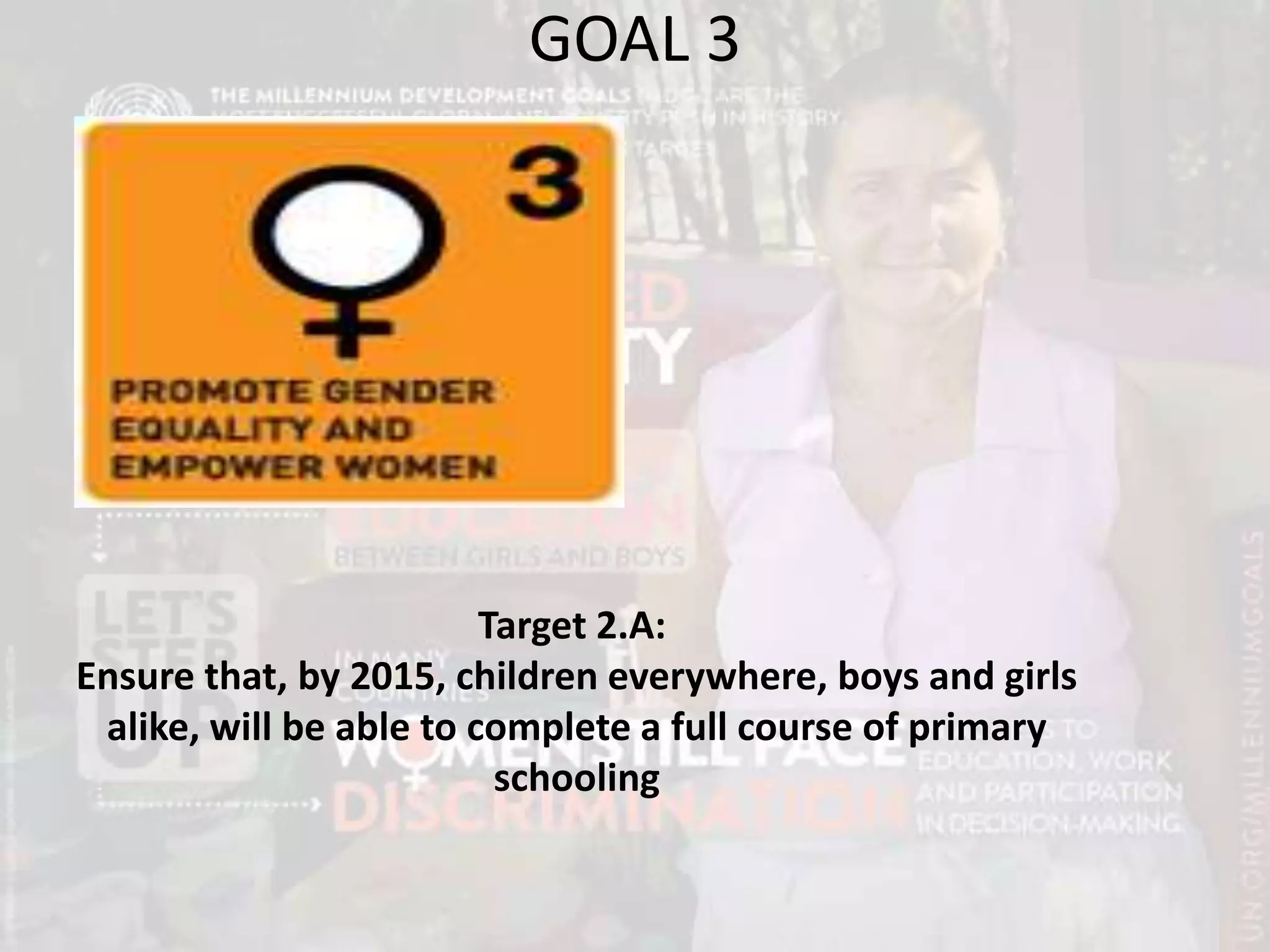
GOAL 3
Target 2.A:
Ensure that, by 2015, children everywhere, boys and girls
alike, will be able to complete a full course of primary
schooling
GOAL 4
Target 4.A:
Reduce by two thirds, between 1990 and 2015, the under-five
mortality rate
GOAL 5
Target 5.A:
Reduce by three quarters, between 1990 and 2015, the maternal
mortality ratio
Target 5.B:
Achieve, by 2015, universal access to reproductive health
GOAL 6
Target 6.A:
Have halted by 2015 and begun to
reverse the spread of HIV/AIDS
Target 6.B:
Achieve, by 2010, universal access to treatment for HIV/AIDS for
all those who need it
Target 6.C:
Have halted by 2015 and begun to reverse the incidence of
malaria and other major diseases
GOAL 7
Target 7.A:
Integrate the principles of sustainable
development into country policies and
programmes and reverse the loss of environmental
resources
Target 7.B:
Reduce biodiversity loss, achieving, by 2010, a
significant reduction in the rate of loss
Target 7.D:
Achieve, by 2020, a significant improvement
in the lives of at least 100 million slum
dwellers
Target 7.C:
Halve, by 2015, the proportion of the
population without sustainable access to
safe drinking water and basic sanitation
GOAL 8
Target 8.A:
Develop further an open, rule-based,
predictable, non-discriminatory
trading and financial system
Target 8.B:
Address the special needs of least developed countries
Target 8.C:
Address the special needs of landlocked developing countries and
small island developing States
Target 8.D:
Deal comprehensively with the debt problems of developing
countries
Target 8.E:
In cooperation with pharmaceutical companies, provide access to
affordable essential drugs in developing countries
Target 8.F:
In cooperation with the private sector, make available benefits of new
technologies, especially information and communications
United nation millenium goals

United nation millenium goals

  • 1.
  • 2.
    INTRODUCTION • The eightMillennium Development Goals (MDGs) – which range from halving extreme poverty to halting the spread of HIV/AIDS and providing universal primary education, all by the target date of 2015 – form a blueprint agreed to by all the world’s countries and all the world’s leading development institutions. They have galvanized unprecedented efforts to meet the needs of the world’s poorest
  • 3.
    GOAL 1 Target 1.A: Halve,between 1990 and 2015, the proportion of people whose income is less than $1.25 a day Target 1.B: Achieve full and productive employment and decent work for all, including women and young people Target 1.C: Halve, between 1990 and 2015, the proportion of people who suffer from hunger
  • 4.
    GOAL 2 Target 2.A: Ensurethat, by 2015, children everywhere, boys and girls alike, will be able to complete a full course of primary schooling
  • 5.
    GOAL 3 Target 2.A: Ensurethat, by 2015, children everywhere, boys and girls alike, will be able to complete a full course of primary schooling
  • 6.
    GOAL 4 Target 4.A: Reduceby two thirds, between 1990 and 2015, the under-five mortality rate
  • 7.
    GOAL 5 Target 5.A: Reduceby three quarters, between 1990 and 2015, the maternal mortality ratio Target 5.B: Achieve, by 2015, universal access to reproductive health
  • 8.
    GOAL 6 Target 6.A: Havehalted by 2015 and begun to reverse the spread of HIV/AIDS Target 6.B: Achieve, by 2010, universal access to treatment for HIV/AIDS for all those who need it Target 6.C: Have halted by 2015 and begun to reverse the incidence of malaria and other major diseases
  • 9.
    GOAL 7 Target 7.A: Integratethe principles of sustainable development into country policies and programmes and reverse the loss of environmental resources Target 7.B: Reduce biodiversity loss, achieving, by 2010, a significant reduction in the rate of loss
  • 10.
    Target 7.D: Achieve, by2020, a significant improvement in the lives of at least 100 million slum dwellers Target 7.C: Halve, by 2015, the proportion of the population without sustainable access to safe drinking water and basic sanitation
  • 11.
    GOAL 8 Target 8.A: Developfurther an open, rule-based, predictable, non-discriminatory trading and financial system Target 8.B: Address the special needs of least developed countries Target 8.C: Address the special needs of landlocked developing countries and small island developing States
  • 12.
    Target 8.D: Deal comprehensivelywith the debt problems of developing countries Target 8.E: In cooperation with pharmaceutical companies, provide access to affordable essential drugs in developing countries Target 8.F: In cooperation with the private sector, make available benefits of new technologies, especially information and communications