“Human Immunodeficiency
Virus”
H = Infects only Human beings
I = Immunodeficiency virus weakens the
immune system and increases the risk of infection
V = Virus that attacks the body
“Acquired Immune Deficiency
Syndrome”
A = Acquired, not inherited
I = Weakens the Immune system
D = Creates a Deficiency of CD4+ cells in the
immune system
S = Syndrome, or a group of illnesses taking place at
the same time
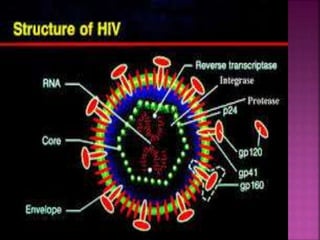
 H.I.V (Human Immunodeficiency Virus) is
a unique type of virus (i.e. a retrovirus) that
invades the T- helper cells (CD4 cells) in the
body of the host (defense mechanism of a
person).
 AIDS:acquired immunodeficiency syndrome is
a disease of the human immune system
caused by infection with human
immunodeficiency virus.In children it is
acquired perinatally or by vertical –maternal-
infant trasmission.
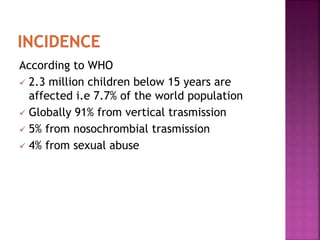
According to WHO
 2.3 million children below 15 years are
affected i.e 7.7% of the world population
 Globally 91% from vertical trasmission
 5% from nosochrombial trasmission
 4% from sexual abuse
 HIV virus
 From mother to featus i.e during
pregnancy,labor and delivery and breast feeding
 Blood trasfusion
 Sexual trasmission
 RISK FACTOR
 Advanced maternal disease
 High maternal viral load
 Prolonged rupture of membranes
 Vaginal bleeding
 During breast feeding
AGENT FACTORS:
 “Human Immunodeficiency virus”
There are two types of HIV.
1. HIV-1
2. HIV-2
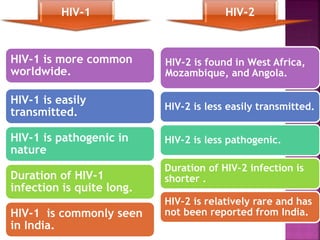
HIV-1 HIV-2
HIV-1 is more common
worldwide.
HIV-1 is easily
transmitted.
HIV-1 is pathogenic in
nature
Duration of HIV-1
infection is quite long.
HIV-1 is commonly seen
in India.
HIV-2 is found in West Africa,
Mozambique, and Angola.
HIV-2 is less easily transmitted.
HIV-2 is less pathogenic.
Duration of HIV-2 infection is
shorter .
HIV-2 is relatively rare and has
not been reported from India.
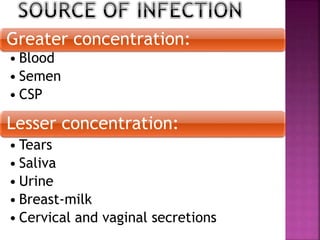
Greater concentration:
• Blood
• Semen
• CSP
Lesser concentration:
• Tears
• Saliva
• Urine
• Breast-milk
• Cervical and vaginal secretions
HOST
FACTORS:
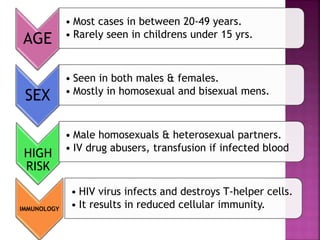
AGE
• Most cases in between 20-49 years.
• Rarely seen in childrens under 15 yrs.
SEX
• Seen in both males & females.
• Mostly in homosexual and bisexual mens.
HIGH
RISK
• Male homosexuals & heterosexual partners.
• IV drug abusers, transfusion if infected blood
IMMUNOLOGY
• HIV virus infects and destroys T-helper cells.
• It results in reduced cellular immunity.
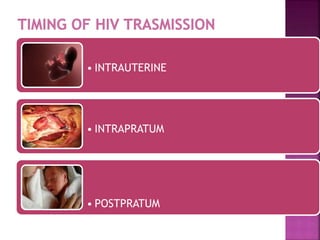
• INTRAUTERINE
• INTRAPRATUM
• POSTPRATUM
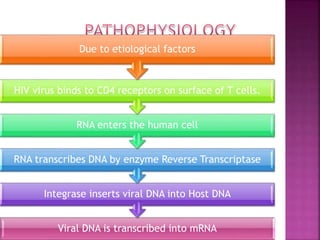
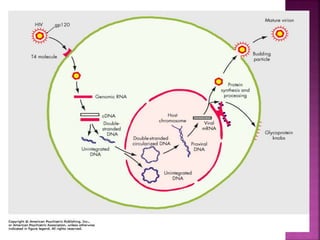
Viral DNA is transcribed into mRNA
Integrase inserts viral DNA into Host DNA
RNA transcribes DNA by enzyme Reverse Transcriptase
RNA enters the human cell
HIV virus binds to CD4 receptors on surface of T cells.
Due to etiological factors
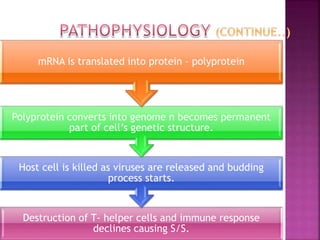
Destruction of T- helper cells and immune response
declines causing S/S.
Host cell is killed as viruses are released and budding
process starts.
Polyprotein converts into genome n becomes permanent
part of cell’s genetic structure.
mRNA is translated into protein – polyprotein
INCUBATION
PERIOD upto 6 years
or more
WHO clinical staging system for HIV infection
and related disease in children:
1. Asymptomatic stage(stage 1)
2. Symptomatic stage(stage 2)
3. AIDS(stage 3)
o Asmptomatic
o Persistant generalized lyphadectomy
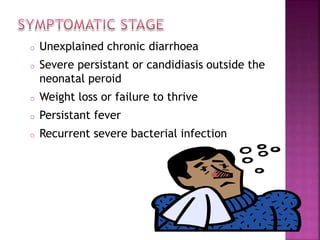
o Unexplained chronic diarrhoea
o Severe persistant or candidiasis outside the
neonatal peroid
o Weight loss or failure to thrive
o Persistant fever
o Recurrent severe bacterial infection
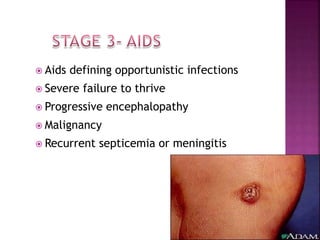
 Aids defining opportunistic infections
 Severe failure to thrive
 Progressive encephalopathy
 Malignancy
 Recurrent septicemia or meningitis
OPPURTUNISTIC
ORGANISMS
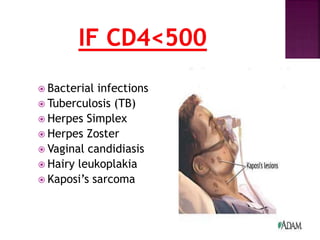
 Bacterial infections
 Tuberculosis (TB)
 Herpes Simplex
 Herpes Zoster
 Vaginal candidiasis
 Hairy leukoplakia
 Kaposi’s sarcoma
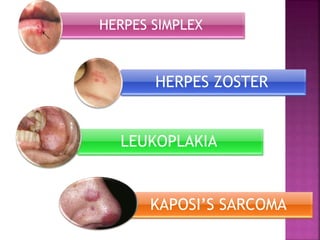
HERPES SIMPLEX
HERPES ZOSTER
LEUKOPLAKIA
KAPOSI’S SARCOMA
 Pneumocystic carinii
 Toxoplasmosis
 Cryptococcosis
 Coccidiodomycosis
 Cryptosporiosis
 Non hodgkin’s lymphoma
 Disseminated mycobacterium avium complex (MAC)
infection
 Histoplasmosis
 CMV retinitis
 CNS lymphoma
 Progressive multifocal leukoencephalopathy
 HIV dementia
CLINICAL:
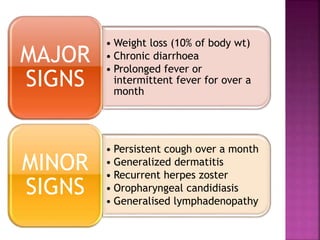
The WHO clinical case defines pediatric AIDS if
the existence of at least two major signs
associated with at least one minor sign in the
absence of other known cases of
immunosupression such as cancer or severe
malnutrition or other recognized etiologies.
• Weight loss (10% of body wt)
• Chronic diarrhoea
• Prolonged fever or
intermittent fever for over a
month
MAJOR
SIGNS
• Persistent cough over a month
• Generalized dermatitis
• Recurrent herpes zoster
• Oropharyngeal candidiasis
• Generalised lymphadenopathy
MINOR
SIGNS
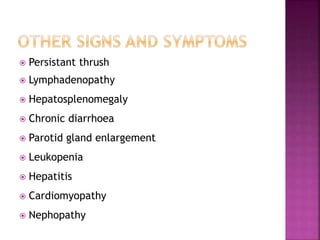
 Persistant thrush
 Lymphadenopathy
 Hepatosplenomegaly
 Chronic diarrhoea
 Parotid gland enlargement
 Leukopenia
 Hepatitis
 Cardiomyopathy
 Nephopathy
SCREENING
TESTS
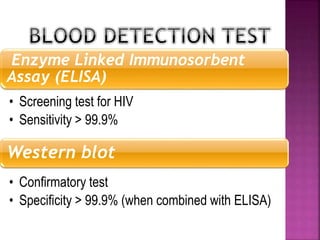
Enzyme Linked Immunosorbent
Assay (ELISA)
• Screening test for HIV
• Sensitivity > 99.9%
Western blot
• Confirmatory test
• Specificity > 99.9% (when combined with ELISA)
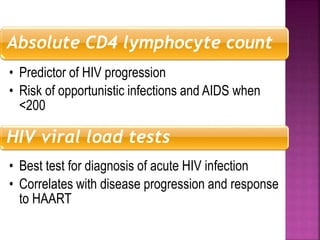
Absolute CD4 lymphocyte count
• Predictor of HIV progression
• Risk of opportunistic infections and AIDS when
<200
HIV viral load tests
• Best test for diagnosis of acute HIV infection
• Correlates with disease progression and response
to HAART
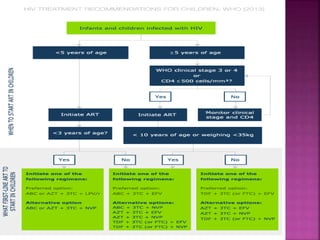
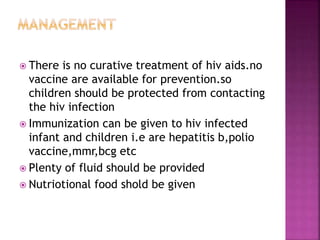
 There is no curative treatment of hiv aids.no
vaccine are available for prevention.so
children should be protected from contacting
the hiv infection
 Immunization can be given to hiv infected
infant and children i.e are hepatitis b,polio
vaccine,mmr,bcg etc
 Plenty of fluid should be provided
 Nutriotional food shold be given
 Medication like
antidiarrhoeal,antipyretics,analgesics,antitur
sive drug shold be given.
 Antiretroviral drugs is given when the child
have signs of immunodepression or hiv
associated symptomsi.e are
didanosine,zalcilabine,staudine etc.these are
used for prolongation of life.
 Other drugs like prolease inhibitors,non
nucleoside reverse transcriptase inhibitors is
also given with antiretroviral combination
therapy
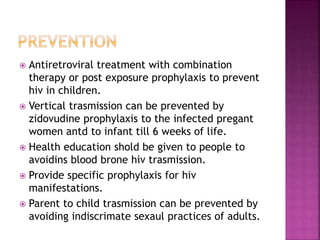
 Antiretroviral treatment with combination
therapy or post exposure prophylaxis to prevent
hiv in children.
 Vertical trasmission can be prevented by
zidovudine prophylaxis to the infected pregant
women antd to infant till 6 weeks of life.
 Health education shold be given to people to
avoidins blood brone hiv trasmission.
 Provide specific prophylaxis for hiv
manifestations.
 Parent to child trasmission can be prevented by
avoiding indiscrimate sexaul practices of adults.
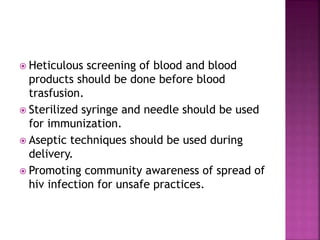
 Heticulous screening of blood and blood
products should be done before blood
trasfusion.
 Sterilized syringe and needle should be used
for immunization.
 Aseptic techniques should be used during
delivery.
 Promoting community awareness of spread of
hiv infection for unsafe practices.
 Risk for infections related to immuodefiency
rate.
 Alterd nutrition related to anorexia,pain in
abdomen.
 Diarrhoea and dehydration related to enteric
pathogens and infection.
 Alterd pain related to advanced hiv diseases.
 Fear and anxiety related to diagnostic and
treatment procedures.
 Knowledge deficit regarding trasmission of
hiv infection.
hiv aids in children

hiv aids in children

  • 2.
    “Human Immunodeficiency Virus” H =Infects only Human beings I = Immunodeficiency virus weakens the immune system and increases the risk of infection V = Virus that attacks the body
  • 3.
    “Acquired Immune Deficiency Syndrome” A= Acquired, not inherited I = Weakens the Immune system D = Creates a Deficiency of CD4+ cells in the immune system S = Syndrome, or a group of illnesses taking place at the same time
  • 4.
     H.I.V (HumanImmunodeficiency Virus) is a unique type of virus (i.e. a retrovirus) that invades the T- helper cells (CD4 cells) in the body of the host (defense mechanism of a person).
  • 5.
     AIDS:acquired immunodeficiencysyndrome is a disease of the human immune system caused by infection with human immunodeficiency virus.In children it is acquired perinatally or by vertical –maternal- infant trasmission.
  • 7.
    According to WHO 2.3 million children below 15 years are affected i.e 7.7% of the world population  Globally 91% from vertical trasmission  5% from nosochrombial trasmission  4% from sexual abuse
  • 8.
     HIV virus From mother to featus i.e during pregnancy,labor and delivery and breast feeding  Blood trasfusion  Sexual trasmission  RISK FACTOR  Advanced maternal disease  High maternal viral load  Prolonged rupture of membranes  Vaginal bleeding  During breast feeding
  • 9.
    AGENT FACTORS:  “HumanImmunodeficiency virus” There are two types of HIV. 1. HIV-1 2. HIV-2
  • 10.
    HIV-1 HIV-2 HIV-1 ismore common worldwide. HIV-1 is easily transmitted. HIV-1 is pathogenic in nature Duration of HIV-1 infection is quite long. HIV-1 is commonly seen in India. HIV-2 is found in West Africa, Mozambique, and Angola. HIV-2 is less easily transmitted. HIV-2 is less pathogenic. Duration of HIV-2 infection is shorter . HIV-2 is relatively rare and has not been reported from India.
  • 11.
    Greater concentration: • Blood •Semen • CSP Lesser concentration: • Tears • Saliva • Urine • Breast-milk • Cervical and vaginal secretions
  • 12.
  • 13.
    AGE • Most casesin between 20-49 years. • Rarely seen in childrens under 15 yrs. SEX • Seen in both males & females. • Mostly in homosexual and bisexual mens. HIGH RISK • Male homosexuals & heterosexual partners. • IV drug abusers, transfusion if infected blood IMMUNOLOGY • HIV virus infects and destroys T-helper cells. • It results in reduced cellular immunity.
  • 14.
  • 15.
    Viral DNA istranscribed into mRNA Integrase inserts viral DNA into Host DNA RNA transcribes DNA by enzyme Reverse Transcriptase RNA enters the human cell HIV virus binds to CD4 receptors on surface of T cells. Due to etiological factors
  • 16.
    Destruction of T-helper cells and immune response declines causing S/S. Host cell is killed as viruses are released and budding process starts. Polyprotein converts into genome n becomes permanent part of cell’s genetic structure. mRNA is translated into protein – polyprotein
  • 19.
  • 20.
    WHO clinical stagingsystem for HIV infection and related disease in children: 1. Asymptomatic stage(stage 1) 2. Symptomatic stage(stage 2) 3. AIDS(stage 3)
  • 21.
    o Asmptomatic o Persistantgeneralized lyphadectomy
  • 23.
    o Unexplained chronicdiarrhoea o Severe persistant or candidiasis outside the neonatal peroid o Weight loss or failure to thrive o Persistant fever o Recurrent severe bacterial infection
  • 24.
     Aids definingopportunistic infections  Severe failure to thrive  Progressive encephalopathy  Malignancy  Recurrent septicemia or meningitis
  • 25.
  • 26.
     Bacterial infections Tuberculosis (TB)  Herpes Simplex  Herpes Zoster  Vaginal candidiasis  Hairy leukoplakia  Kaposi’s sarcoma
  • 27.
  • 28.
     Pneumocystic carinii Toxoplasmosis  Cryptococcosis  Coccidiodomycosis  Cryptosporiosis  Non hodgkin’s lymphoma
  • 29.
     Disseminated mycobacteriumavium complex (MAC) infection  Histoplasmosis  CMV retinitis  CNS lymphoma  Progressive multifocal leukoencephalopathy  HIV dementia
  • 30.
    CLINICAL: The WHO clinicalcase defines pediatric AIDS if the existence of at least two major signs associated with at least one minor sign in the absence of other known cases of immunosupression such as cancer or severe malnutrition or other recognized etiologies.
  • 31.
    • Weight loss(10% of body wt) • Chronic diarrhoea • Prolonged fever or intermittent fever for over a month MAJOR SIGNS • Persistent cough over a month • Generalized dermatitis • Recurrent herpes zoster • Oropharyngeal candidiasis • Generalised lymphadenopathy MINOR SIGNS
  • 32.
     Persistant thrush Lymphadenopathy  Hepatosplenomegaly  Chronic diarrhoea  Parotid gland enlargement  Leukopenia  Hepatitis  Cardiomyopathy  Nephopathy
  • 33.
  • 34.
    Enzyme Linked Immunosorbent Assay(ELISA) • Screening test for HIV • Sensitivity > 99.9% Western blot • Confirmatory test • Specificity > 99.9% (when combined with ELISA)
  • 35.
    Absolute CD4 lymphocytecount • Predictor of HIV progression • Risk of opportunistic infections and AIDS when <200 HIV viral load tests • Best test for diagnosis of acute HIV infection • Correlates with disease progression and response to HAART
  • 38.
     There isno curative treatment of hiv aids.no vaccine are available for prevention.so children should be protected from contacting the hiv infection  Immunization can be given to hiv infected infant and children i.e are hepatitis b,polio vaccine,mmr,bcg etc  Plenty of fluid should be provided  Nutriotional food shold be given
  • 39.
     Medication like antidiarrhoeal,antipyretics,analgesics,antitur sivedrug shold be given.  Antiretroviral drugs is given when the child have signs of immunodepression or hiv associated symptomsi.e are didanosine,zalcilabine,staudine etc.these are used for prolongation of life.  Other drugs like prolease inhibitors,non nucleoside reverse transcriptase inhibitors is also given with antiretroviral combination therapy
  • 40.
     Antiretroviral treatmentwith combination therapy or post exposure prophylaxis to prevent hiv in children.  Vertical trasmission can be prevented by zidovudine prophylaxis to the infected pregant women antd to infant till 6 weeks of life.  Health education shold be given to people to avoidins blood brone hiv trasmission.  Provide specific prophylaxis for hiv manifestations.  Parent to child trasmission can be prevented by avoiding indiscrimate sexaul practices of adults.
  • 41.
     Heticulous screeningof blood and blood products should be done before blood trasfusion.  Sterilized syringe and needle should be used for immunization.  Aseptic techniques should be used during delivery.  Promoting community awareness of spread of hiv infection for unsafe practices.
  • 42.
     Risk forinfections related to immuodefiency rate.  Alterd nutrition related to anorexia,pain in abdomen.  Diarrhoea and dehydration related to enteric pathogens and infection.  Alterd pain related to advanced hiv diseases.  Fear and anxiety related to diagnostic and treatment procedures.  Knowledge deficit regarding trasmission of hiv infection.