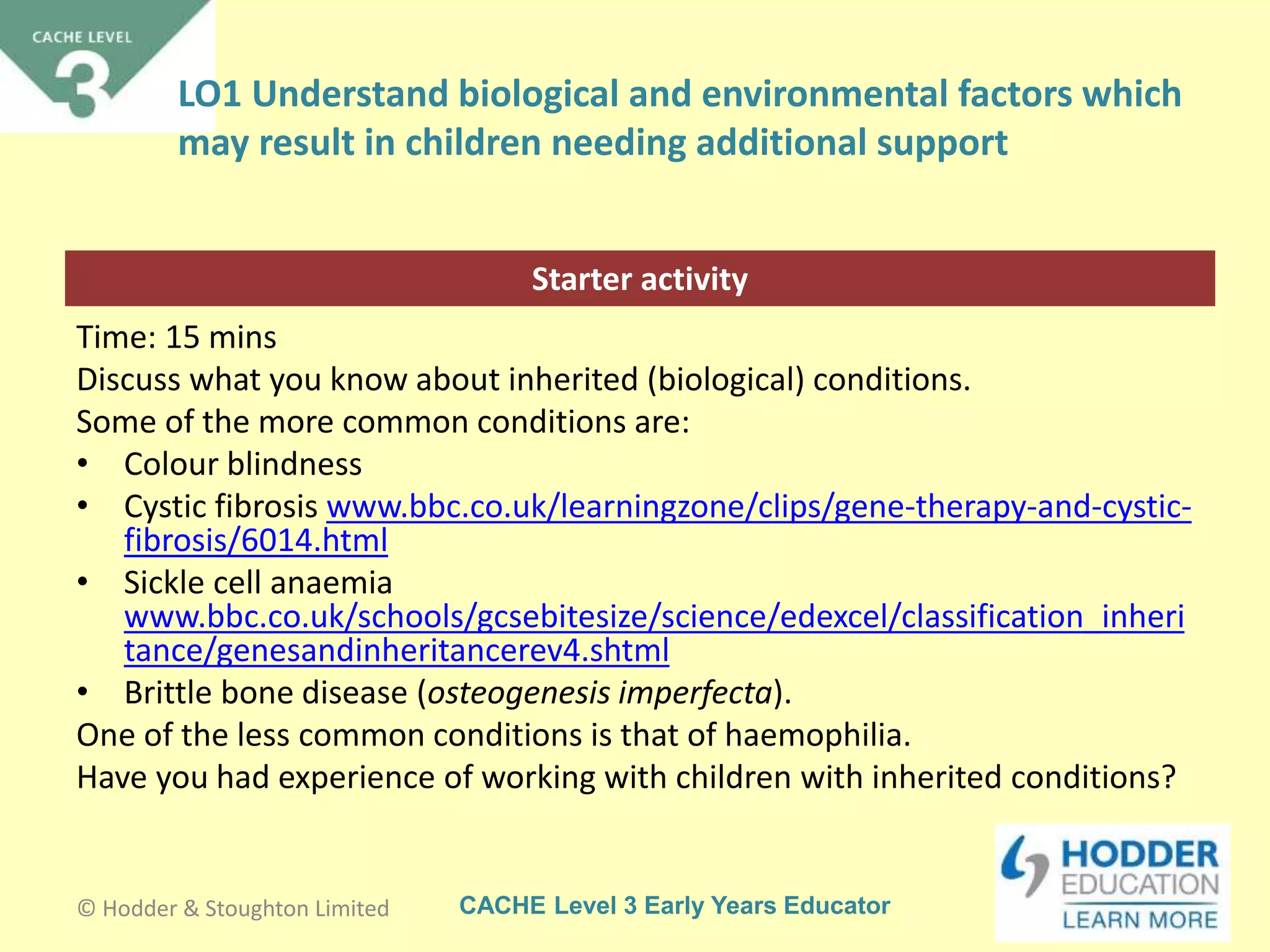
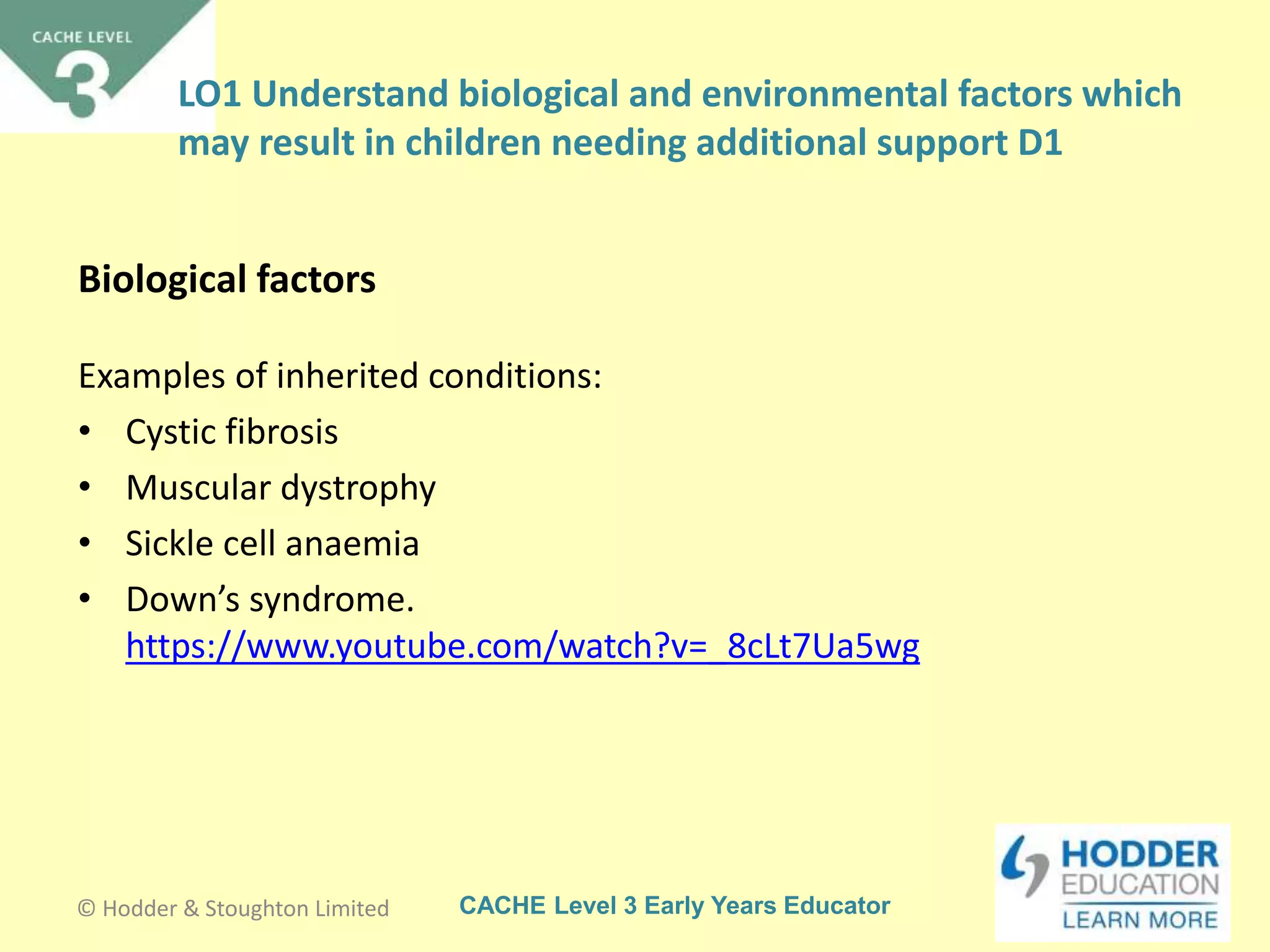
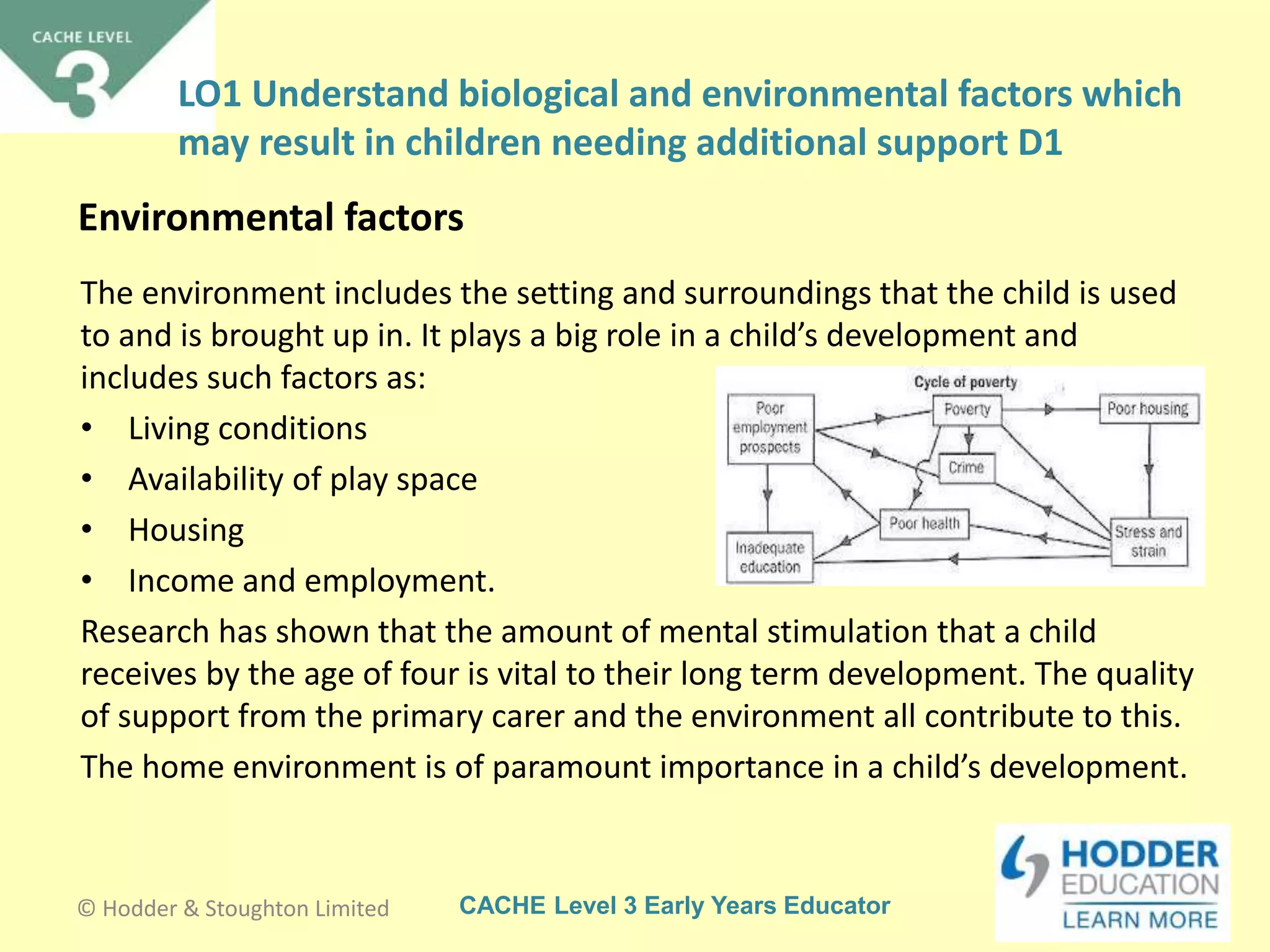
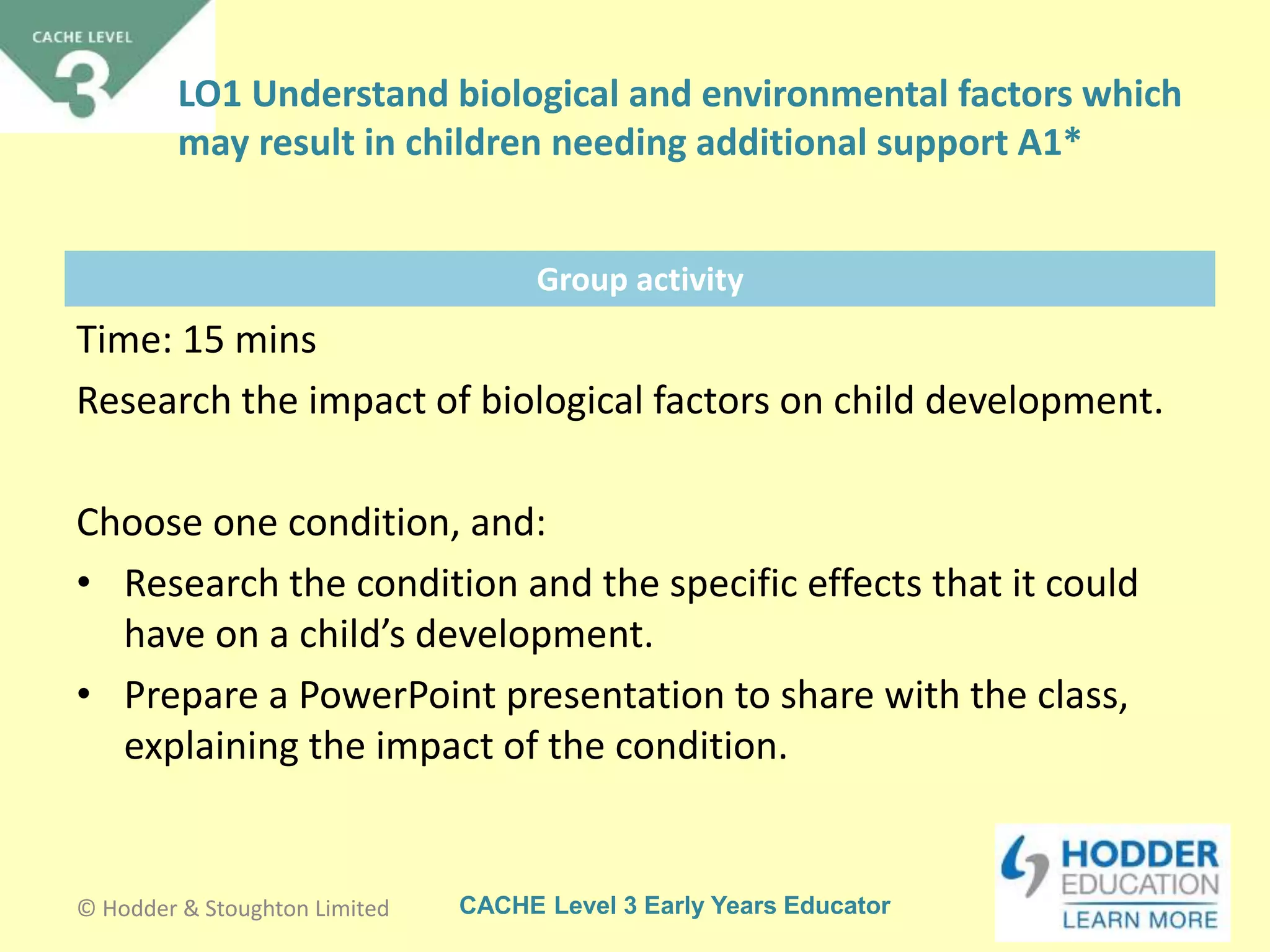
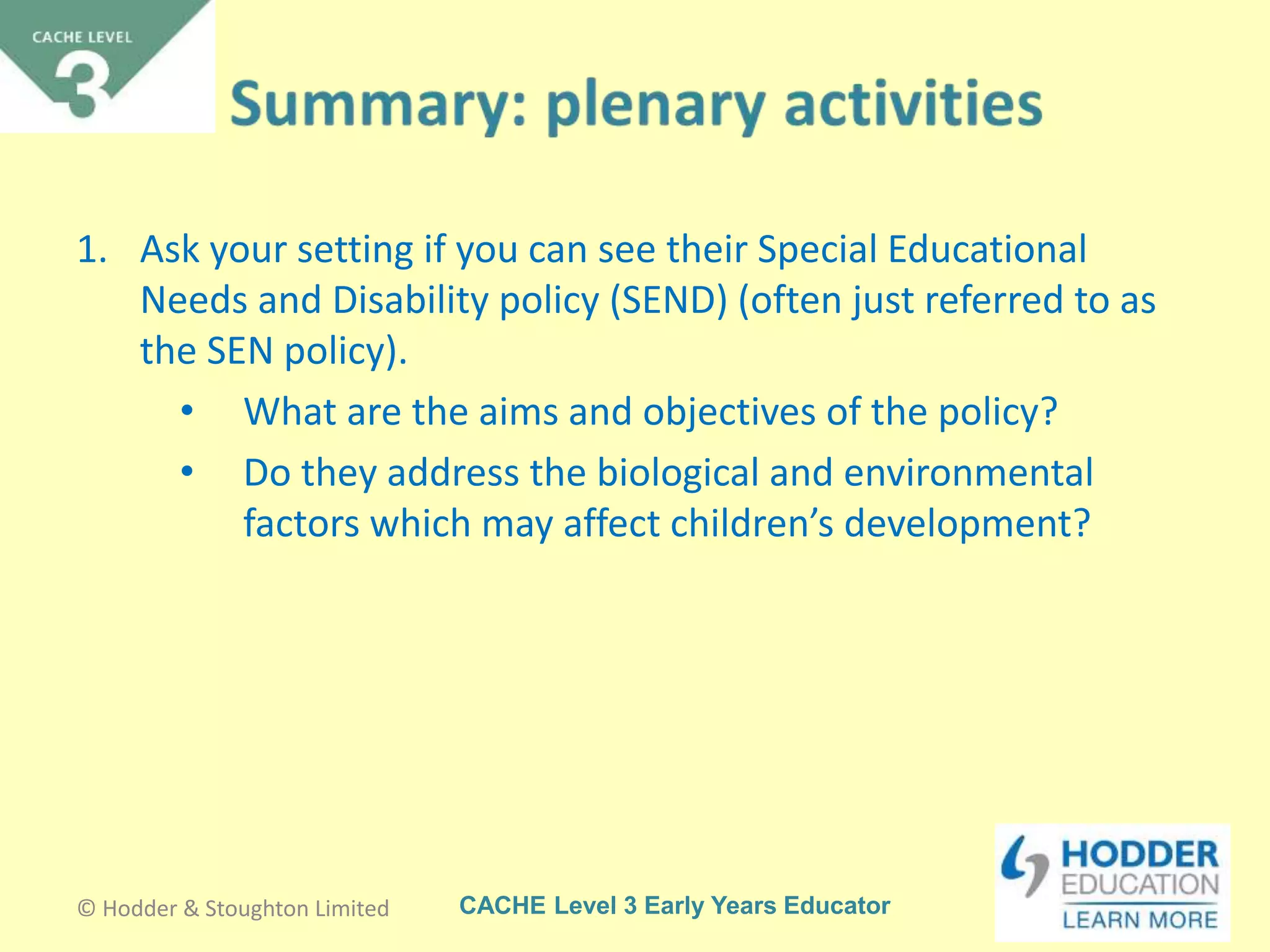
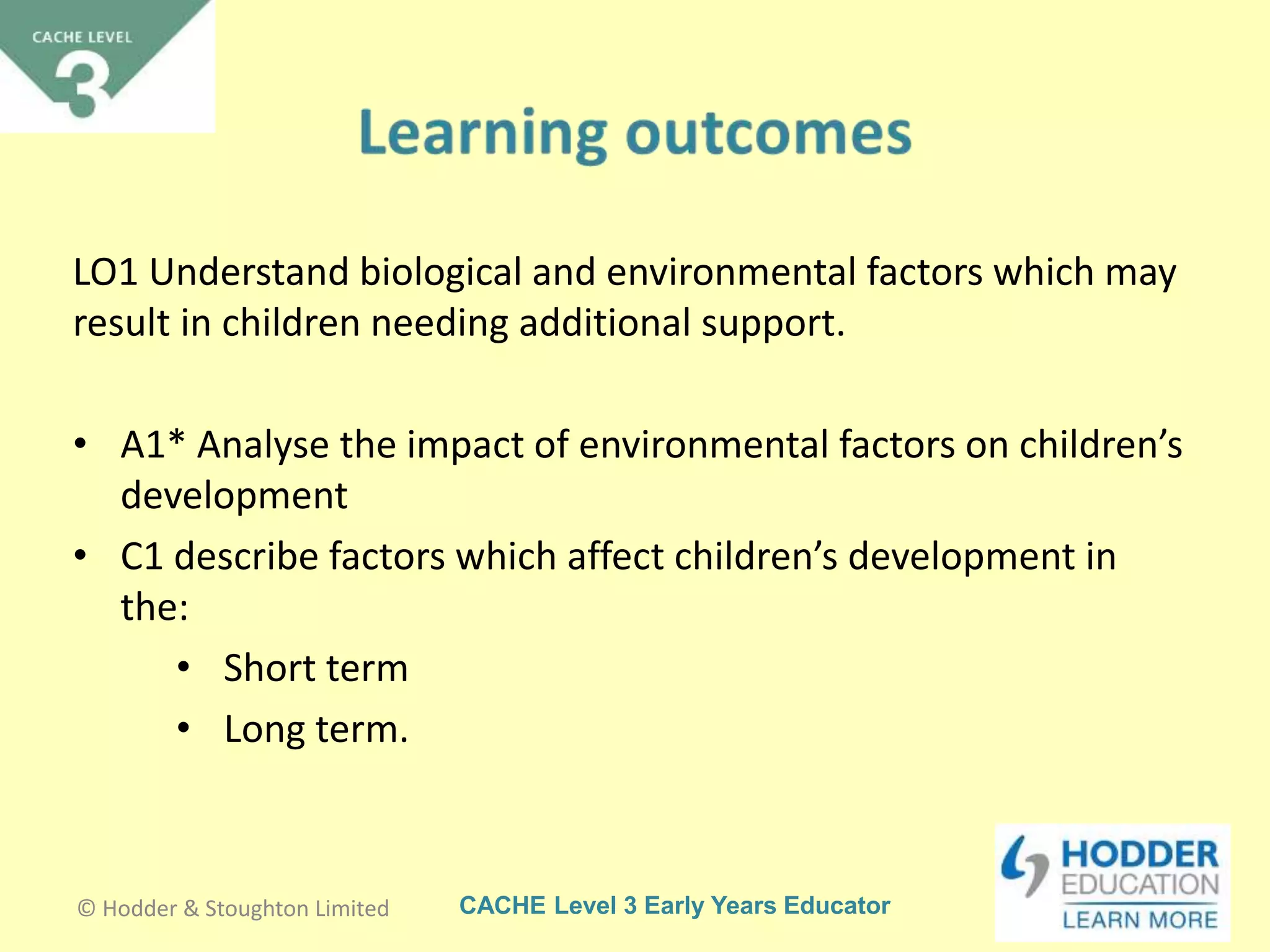
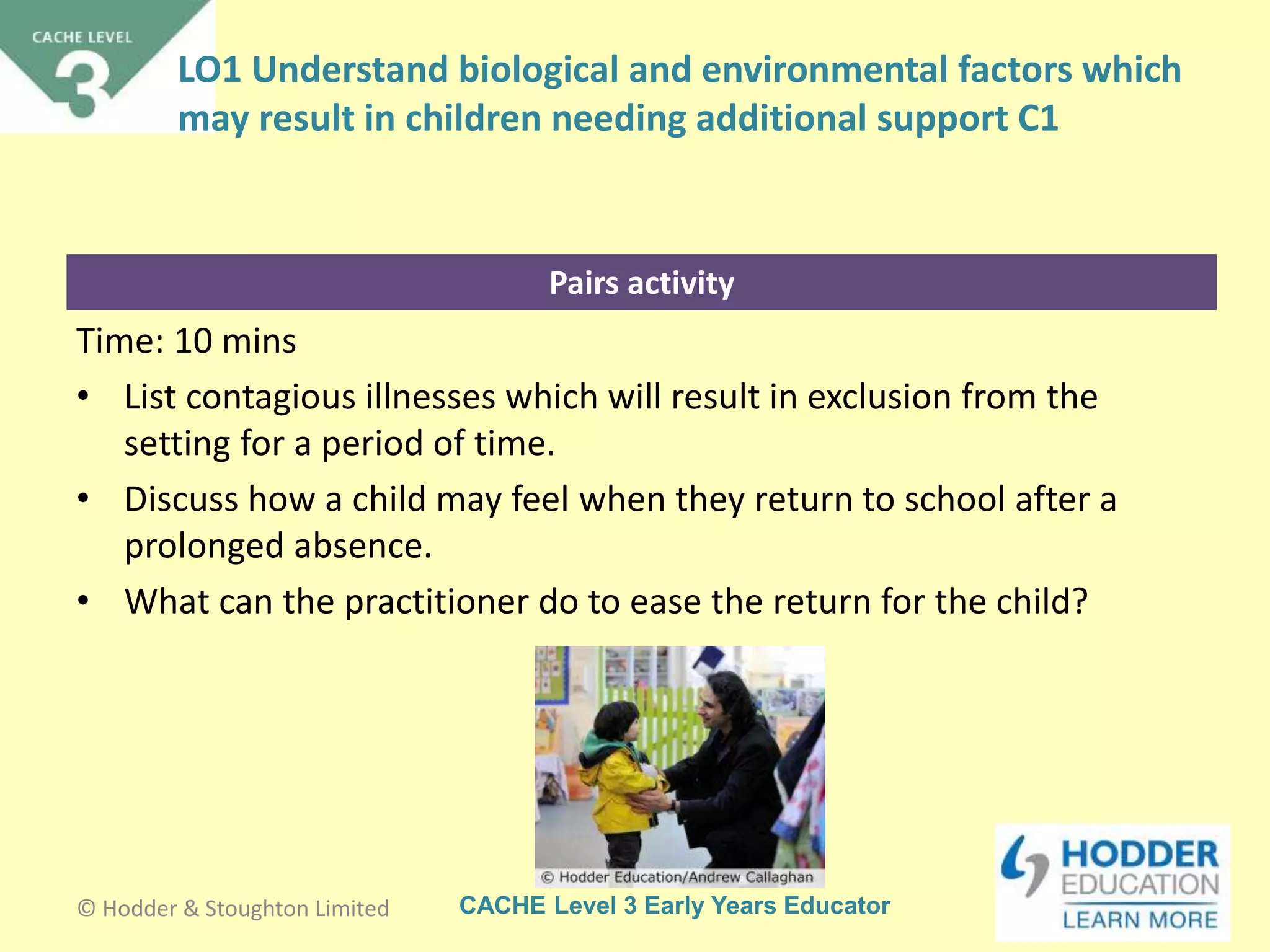
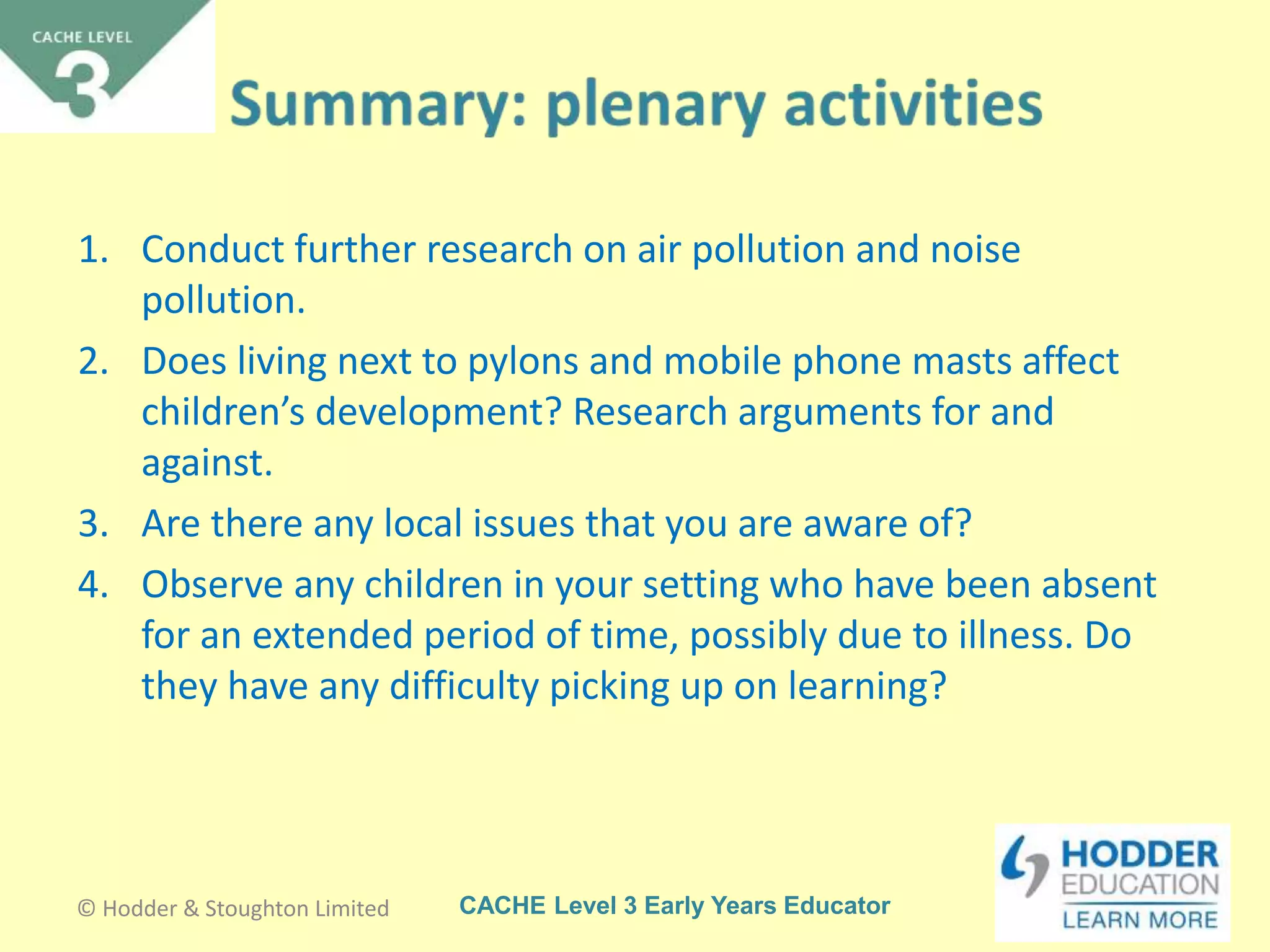
This document discusses biological and environmental factors that may impact child development and result in children needing additional support. It begins by defining biological factors as those resulting from genes passed from parents, such as certain medical conditions. Environmental factors are defined as the settings and surroundings a child is raised in, including living conditions, housing, income, and availability of outdoor play space. The document then analyzes specific examples of how conditions like cystic fibrosis, muscular dystrophy, and Down syndrome can biologically impact a child's development. It also explores how environmental factors such as pollution, poverty, poor housing, and lifestyle choices may negatively influence development.


































![U1.5 lesson3[lo4,lo8]](https://cdn.slidesharecdn.com/ss_thumbnails/u1-150917095042-lva1-app6891-thumbnail.jpg?width=640&height=640&fit=bounds)

![U3.1 lesson1[lo1,lo2,lo3]](https://cdn.slidesharecdn.com/ss_thumbnails/u3-160429093724-thumbnail.jpg?width=640&height=640&fit=bounds)


![U1.4 lesson3[lo3] copy](https://cdn.slidesharecdn.com/ss_thumbnails/u1-151115201251-lva1-app6892-thumbnail.jpg?width=640&height=640&fit=bounds)


![U1 lesson1[lo1]](https://cdn.slidesharecdn.com/ss_thumbnails/u1lesson1lo1-160902095602-thumbnail.jpg?width=640&height=640&fit=bounds)
![U1.5 lesson5[lo6]](https://cdn.slidesharecdn.com/ss_thumbnails/u1-150924185608-lva1-app6891-thumbnail.jpg?width=640&height=640&fit=bounds)

![U1.3 lesson4[lo6]](https://cdn.slidesharecdn.com/ss_thumbnails/u1-150904125355-lva1-app6892-thumbnail.jpg?width=640&height=640&fit=bounds)
![U1.4 lesson1[lo1] copy](https://cdn.slidesharecdn.com/ss_thumbnails/u1-151115200808-lva1-app6891-thumbnail.jpg?width=640&height=640&fit=bounds)
![U1.4 lesson4[lo4]](https://cdn.slidesharecdn.com/ss_thumbnails/u1-151115201506-lva1-app6891-thumbnail.jpg?width=640&height=640&fit=bounds)


