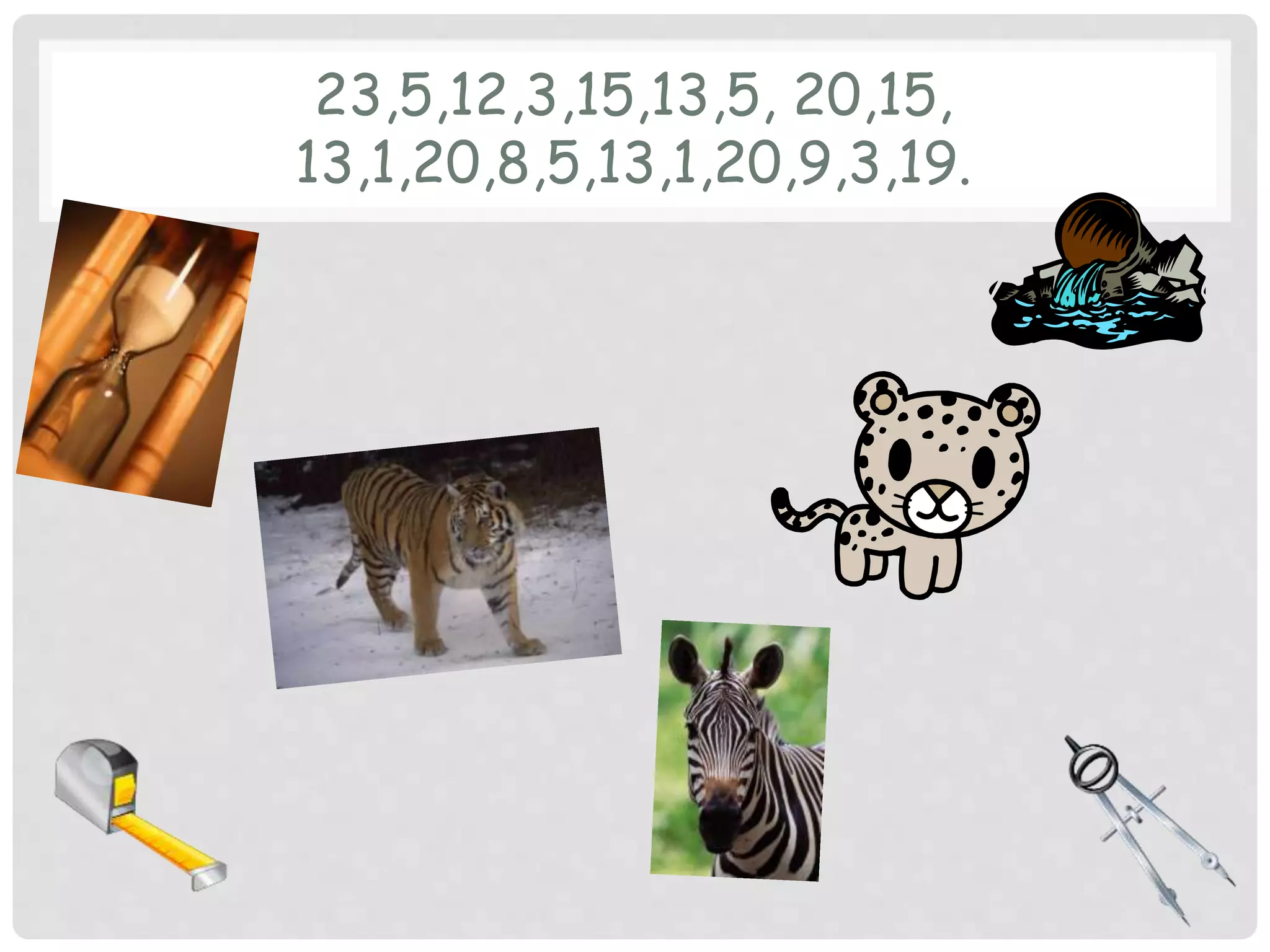
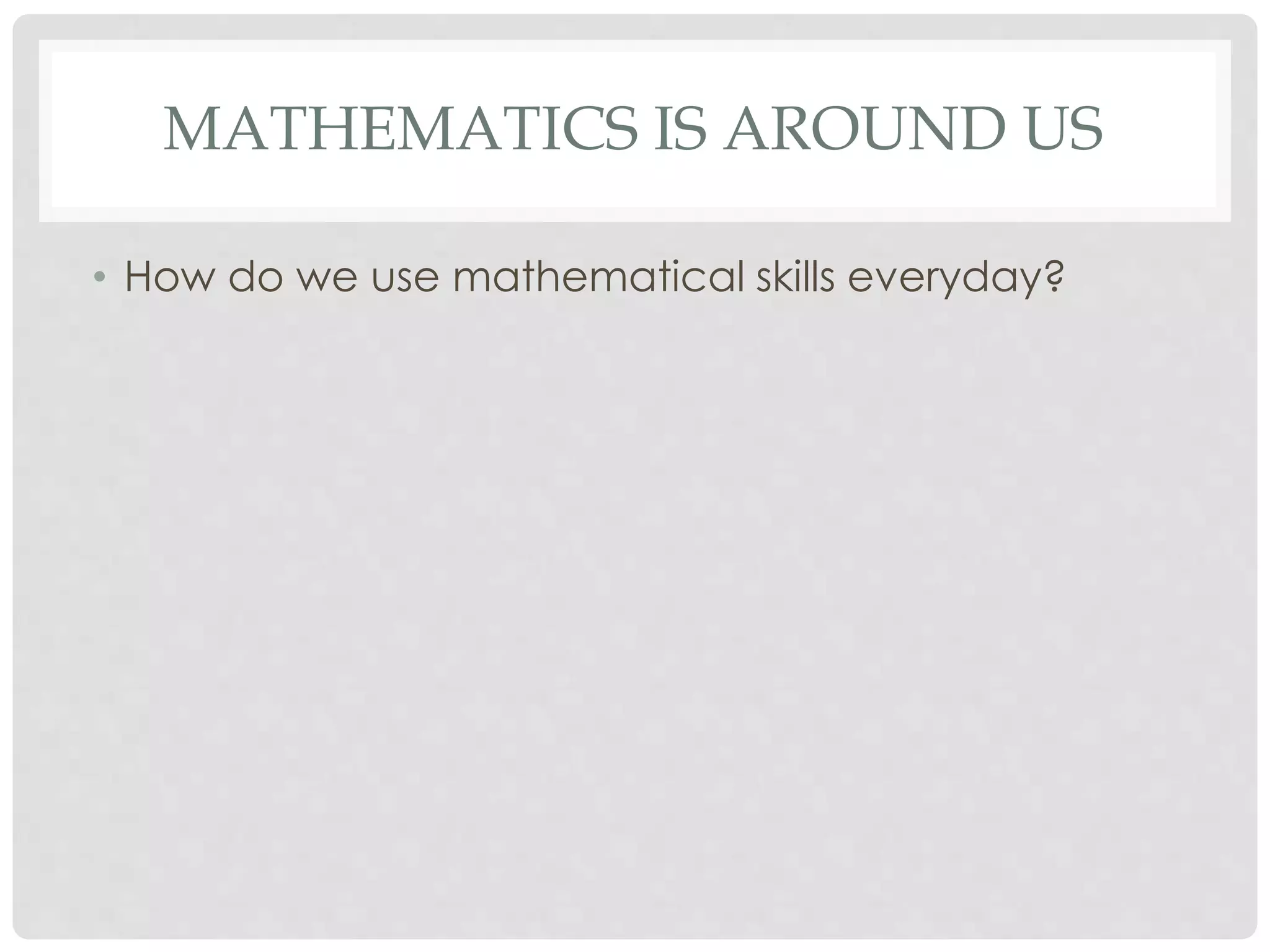
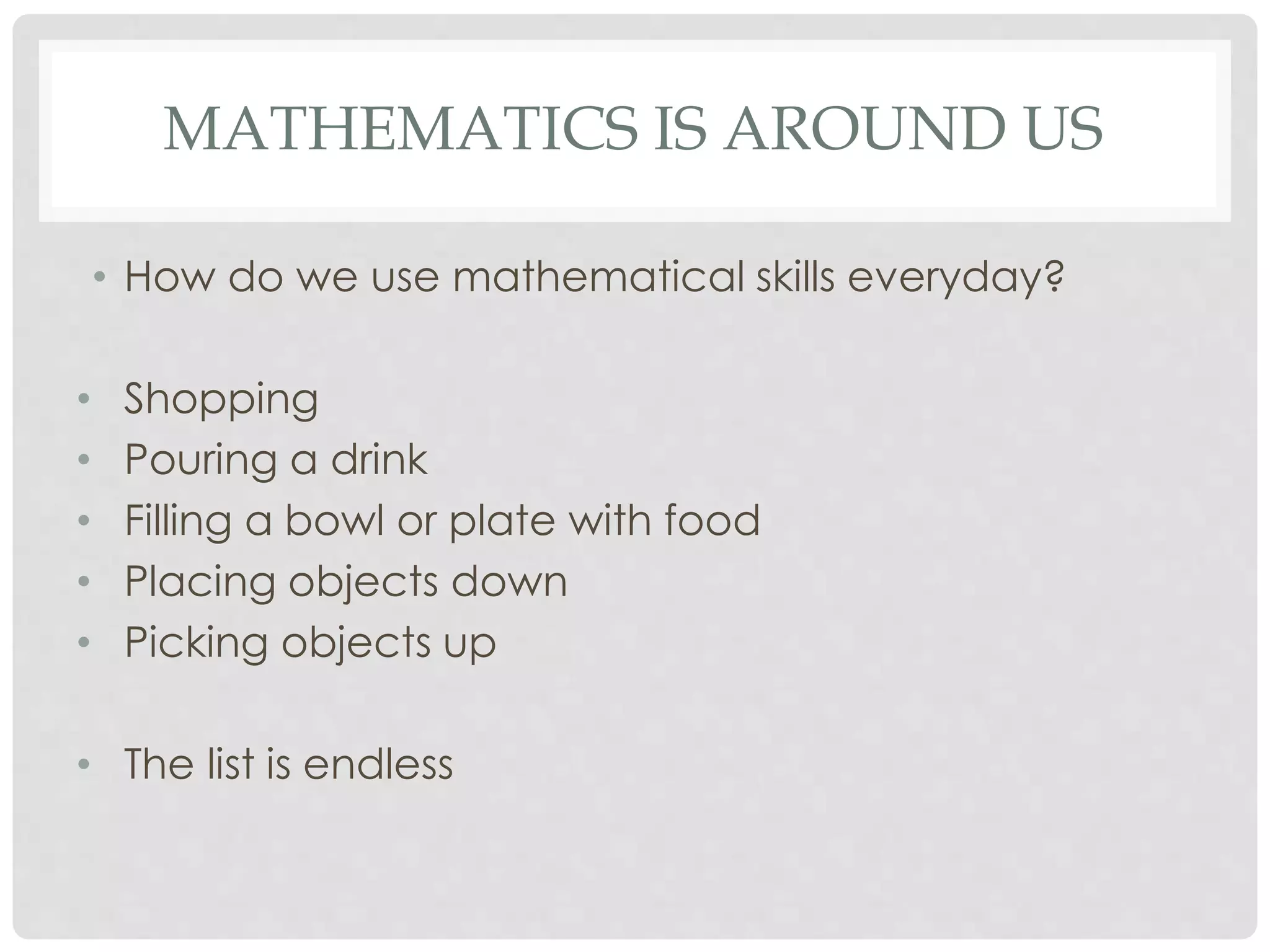
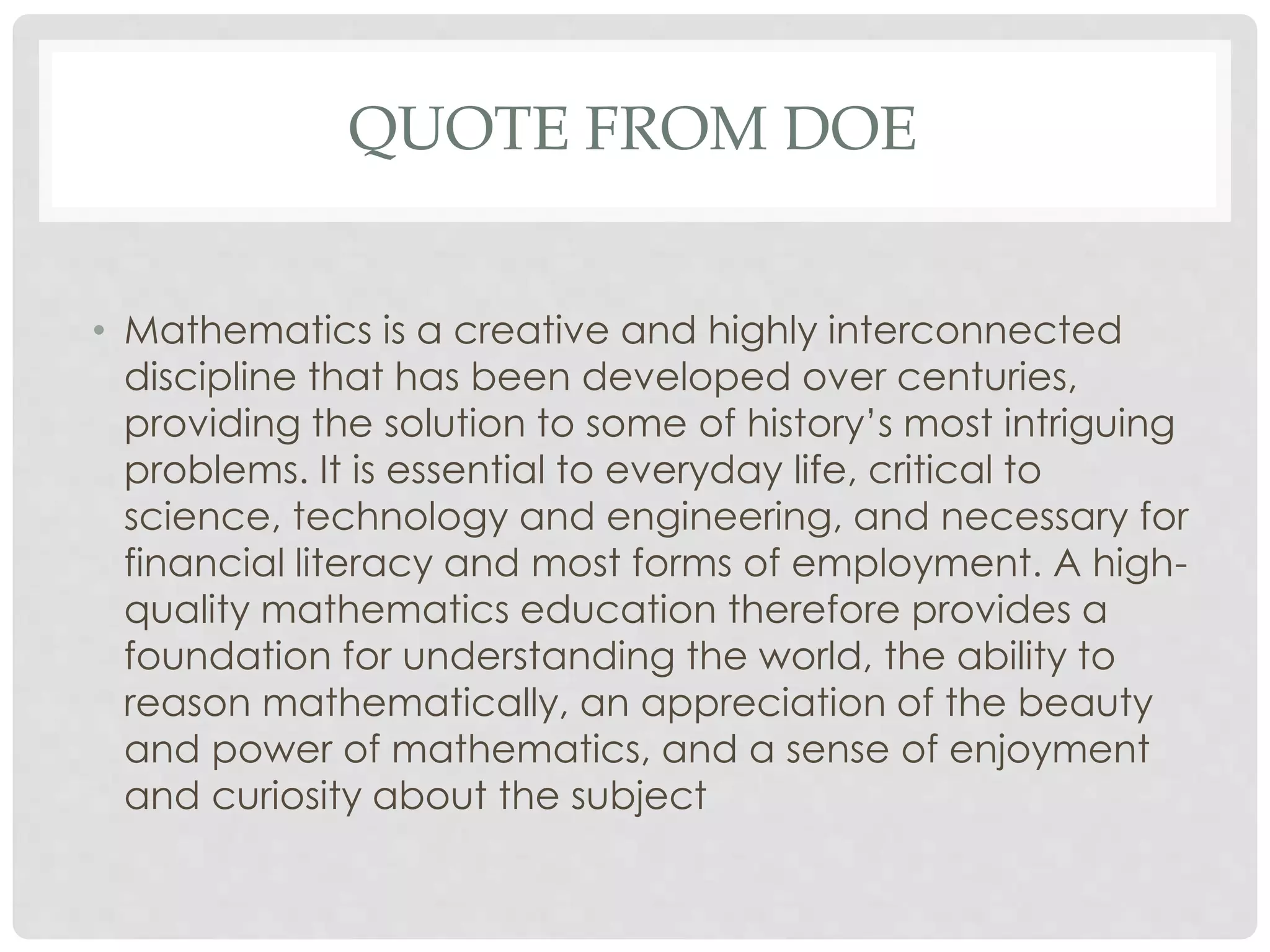
23,5,12,3,15,13,5, 20,15, 
13,1,20,8,5,13,1,20,9,3,19.
MATHEMATICS IS AROUND US 
• How do we use mathematical skills everyday?
MATHEMATICS IS AROUND US 
• How do we use mathematical skills everyday? 
• Shopping 
• Pouring a drink 
• Filling a bowl or plate with food 
• Placing objects down 
• Picking objects up 
• The list is endless
QUOTE FROM DOE 
• Mathematics is a creative and highly interconnected 
discipline that has been developed over centuries, 
providing the solution to some of history’s most intriguing 
problems. It is essential to everyday life, critical to 
science, technology and engineering, and necessary for 
financial literacy and most forms of employment. A high-quality 
mathematics education therefore provides a 
foundation for understanding the world, the ability to 
reason mathematically, an appreciation of the beauty 
and power of mathematics, and a sense of enjoyment 
and curiosity about the subject
AREAS/STRANDS OF MATHEMATICS 
• EYFS 
• Number, shape and measures 
• Primary Framework for Mathematics 
• Using and applying mathematics 
• Counting and understanding number 
• Knowing and using number facts 
• Calculating 
• Understanding shape 
• Measuring 
• Handling data. Sept 2013
UNDERSTAND CHILDREN’S 
MATHEMATICAL DEVELOPMENT 
Research and rediscover Piaget’s constructivist 
theory – 20 minutes 
Look at the stages and link these to maths 
knowledge learnt – use worksheet provided for your 
answers.
UNDERSTAND CHILDREN’S 
MATHEMATICAL DEVELOPMENT 
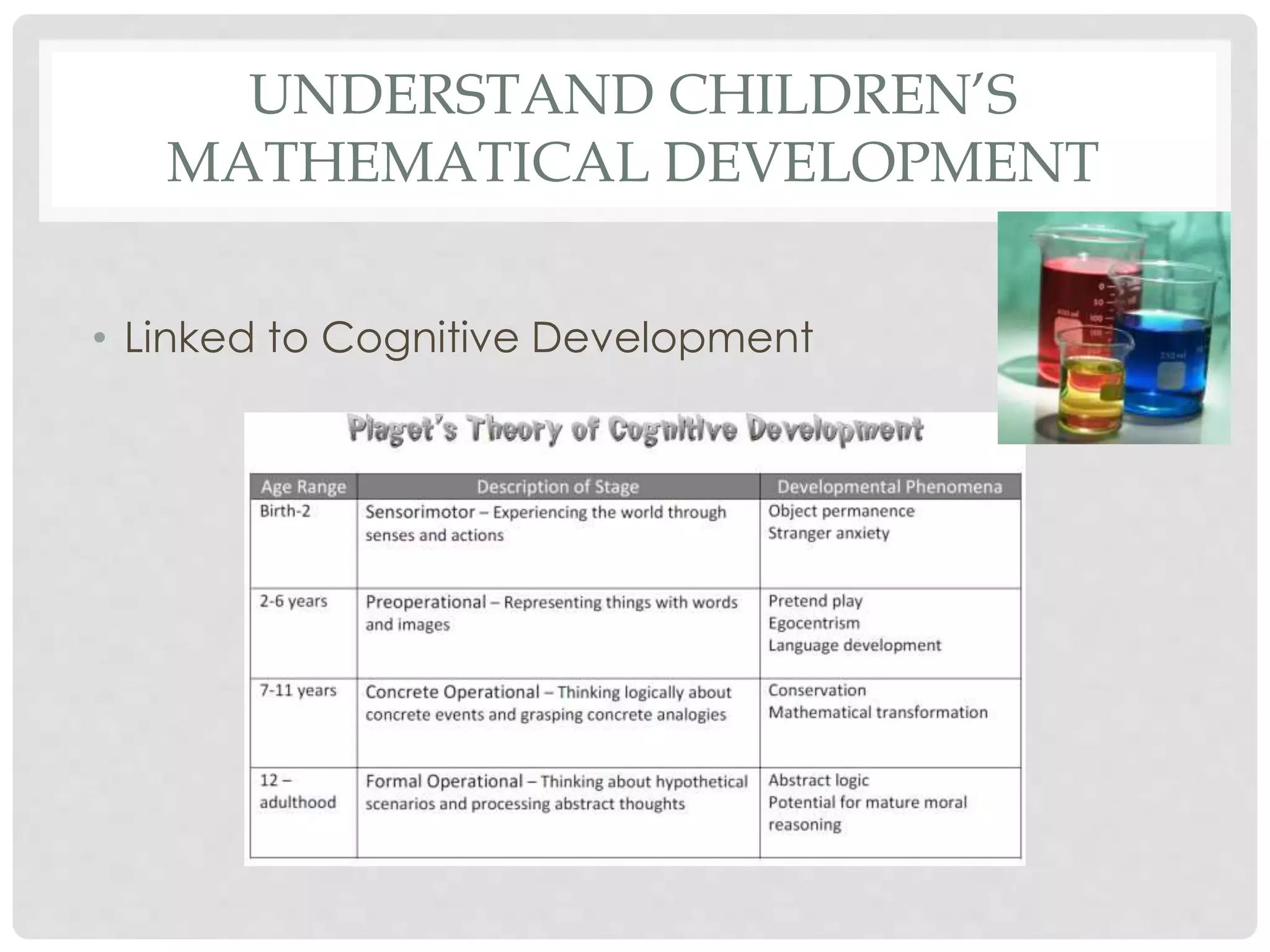
• Linked to Cognitive Development
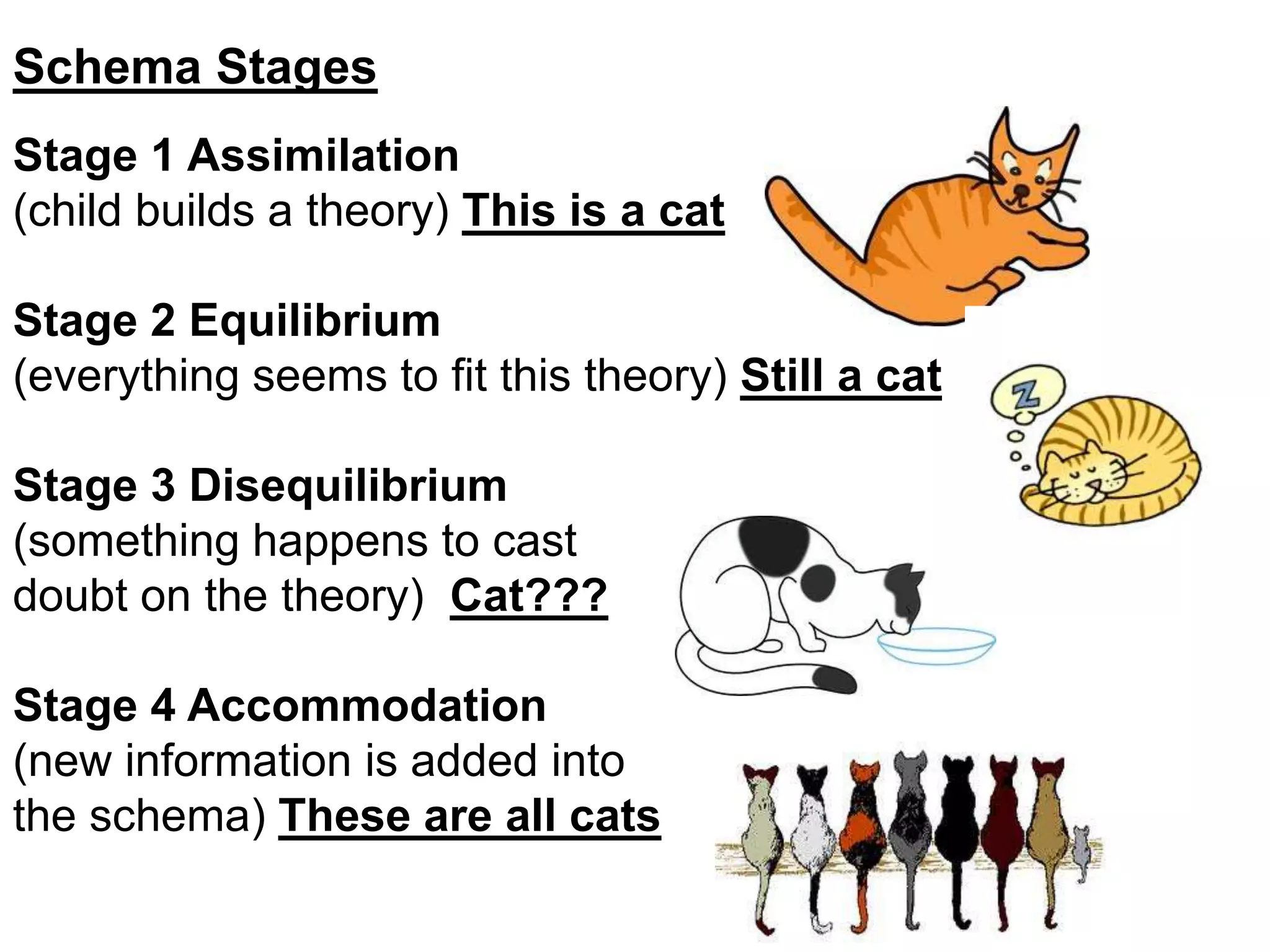
Schema Stages 
Stage 1 Assimilation 
(child builds a theory) This is a cat 
Stage 2 Equilibrium 
(everything seems to fit this theory) Still a cat 
Stage 3 Disequilibrium 
(something happens to cast 
doubt on the theory) Cat??? 
Stage 4 Accommodation 
(new information is added into 
the schema) These are all cats
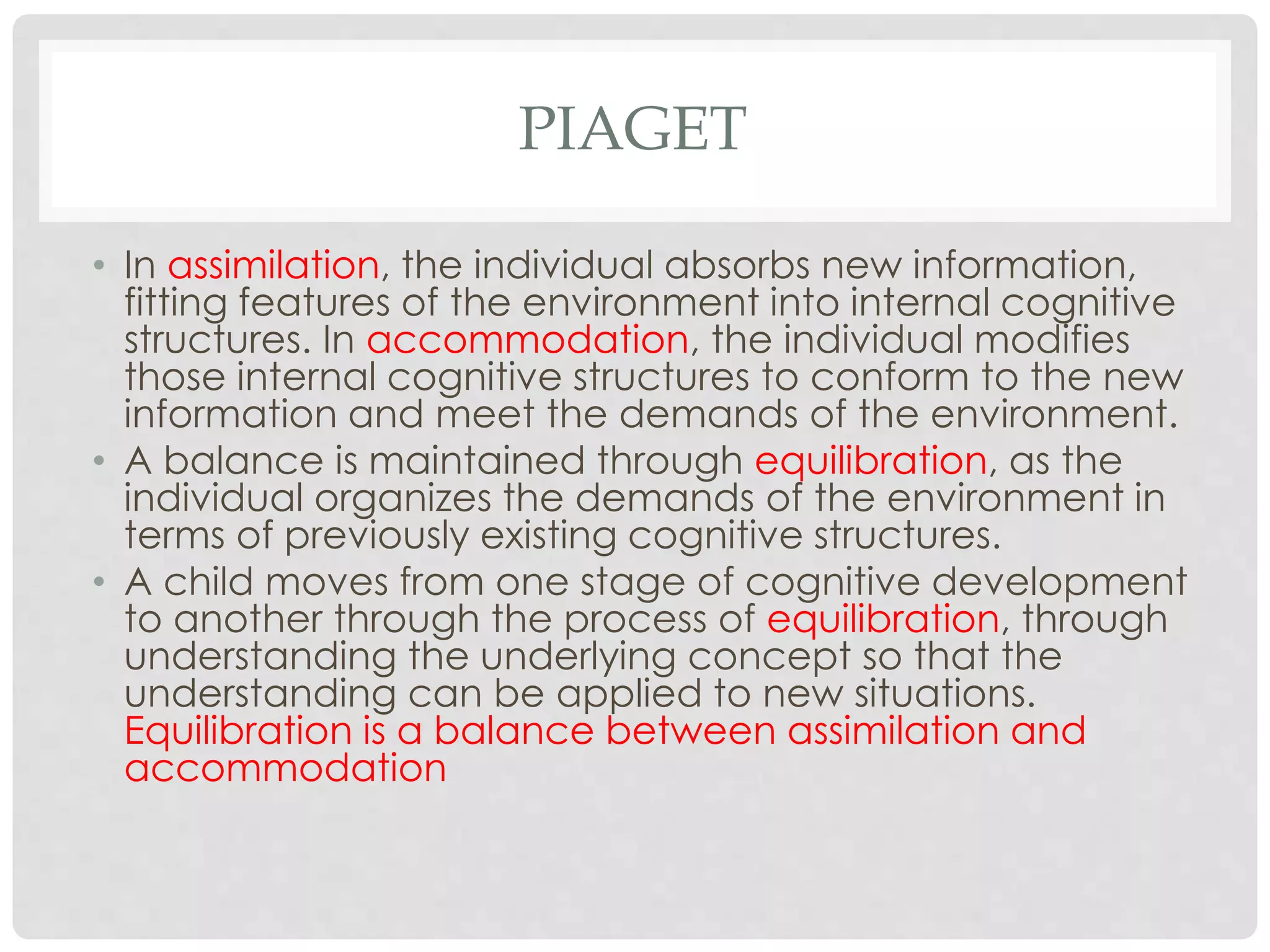
PIAGET 
• In assimilation, the individual absorbs new information, 
fitting features of the environment into internal cognitive 
structures. In accommodation, the individual modifies 
those internal cognitive structures to conform to the new 
information and meet the demands of the environment. 
• A balance is maintained through equilibration, as the 
individual organizes the demands of the environment in 
terms of previously existing cognitive structures. 
• A child moves from one stage of cognitive development 
to another through the process of equilibration, through 
understanding the underlying concept so that the 
understanding can be applied to new situations. 
Equilibration is a balance between assimilation and 
accommodation
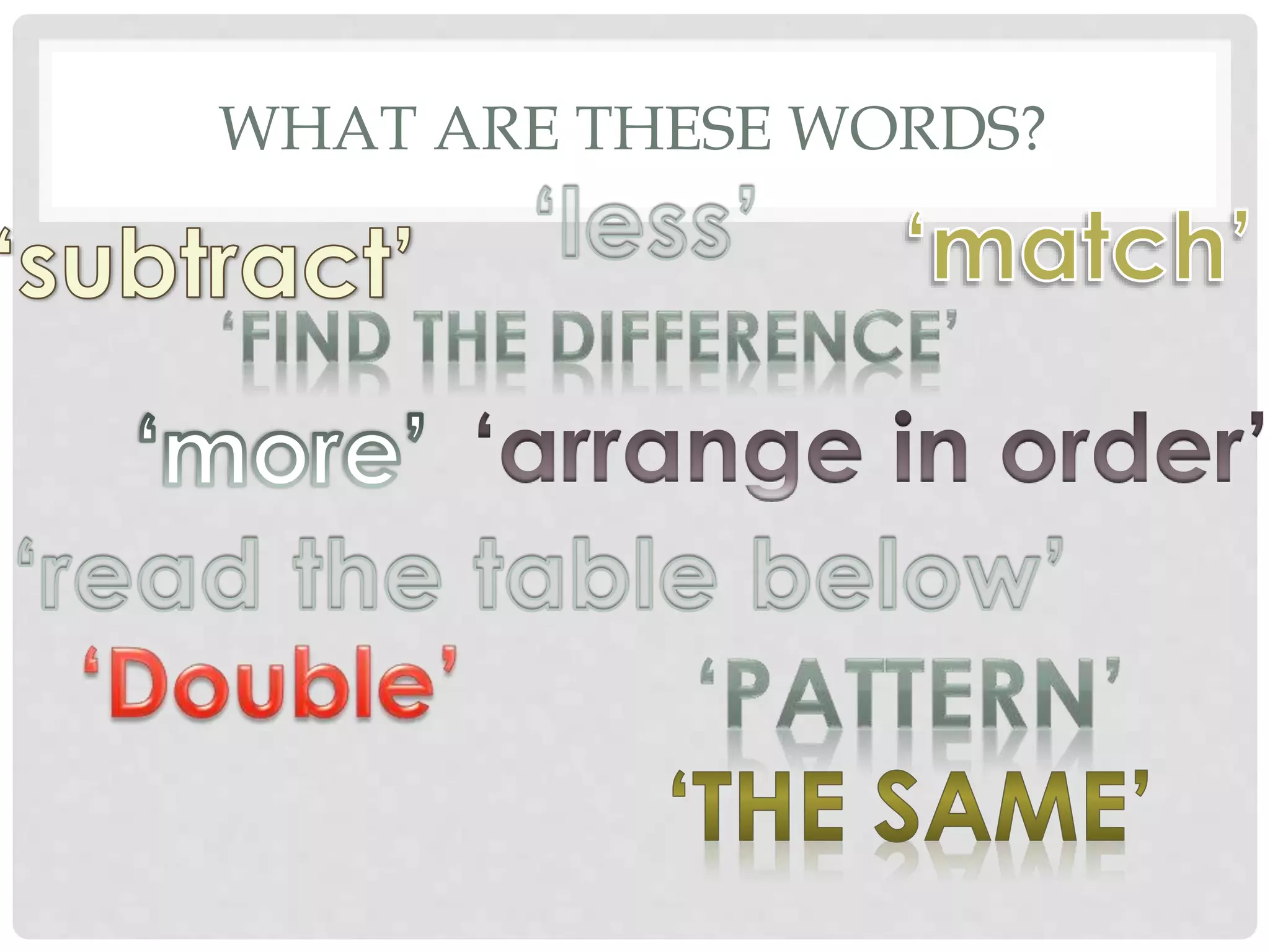
WHAT ARE THESE WORDS?
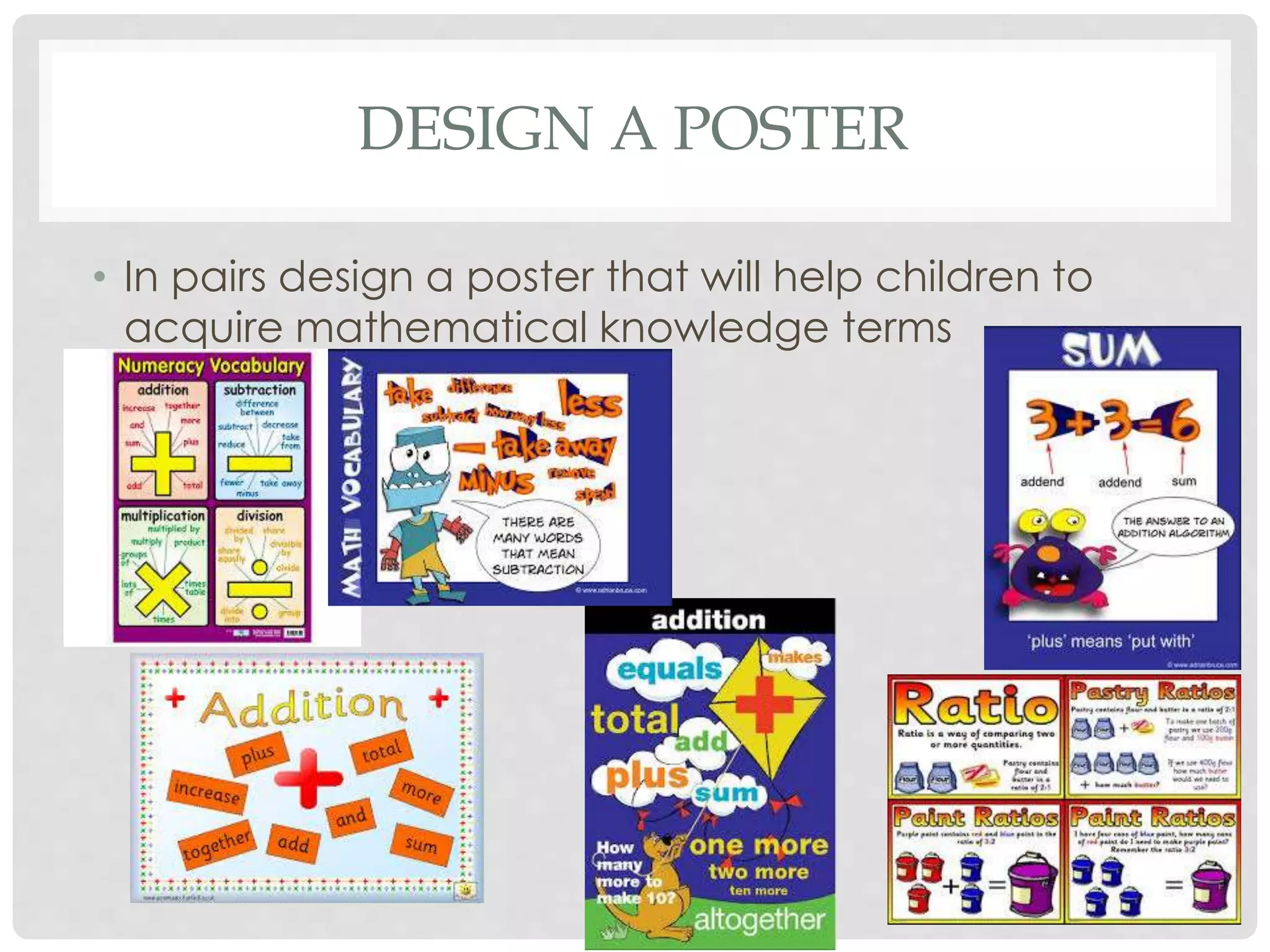
DESIGN A POSTER 
• In pairs design a poster that will help children to 
acquire mathematical knowledge terms
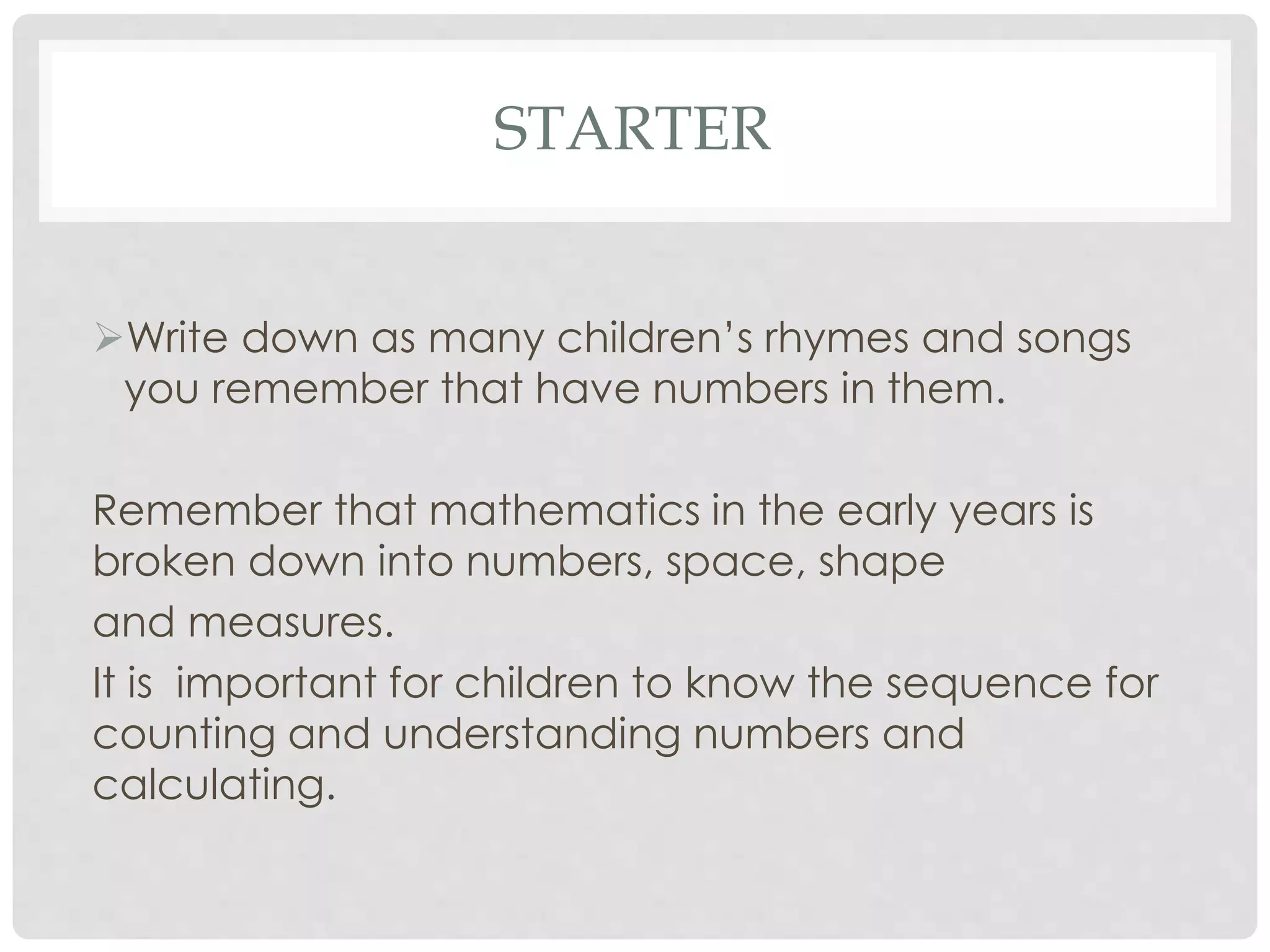
STARTER 
Write down as many children’s rhymes and songs 
you remember that have numbers in them. 
Remember that mathematics in the early years is 
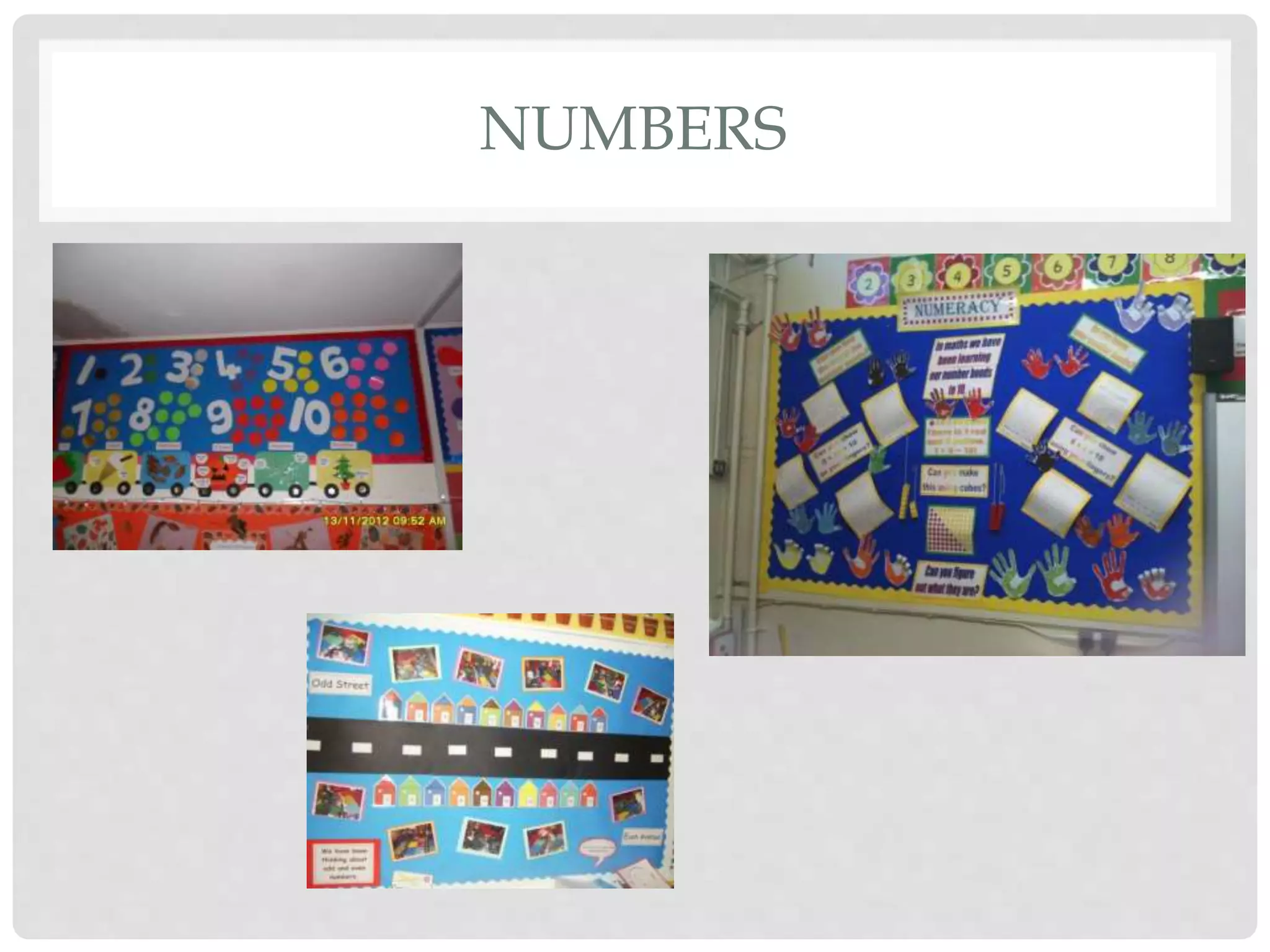
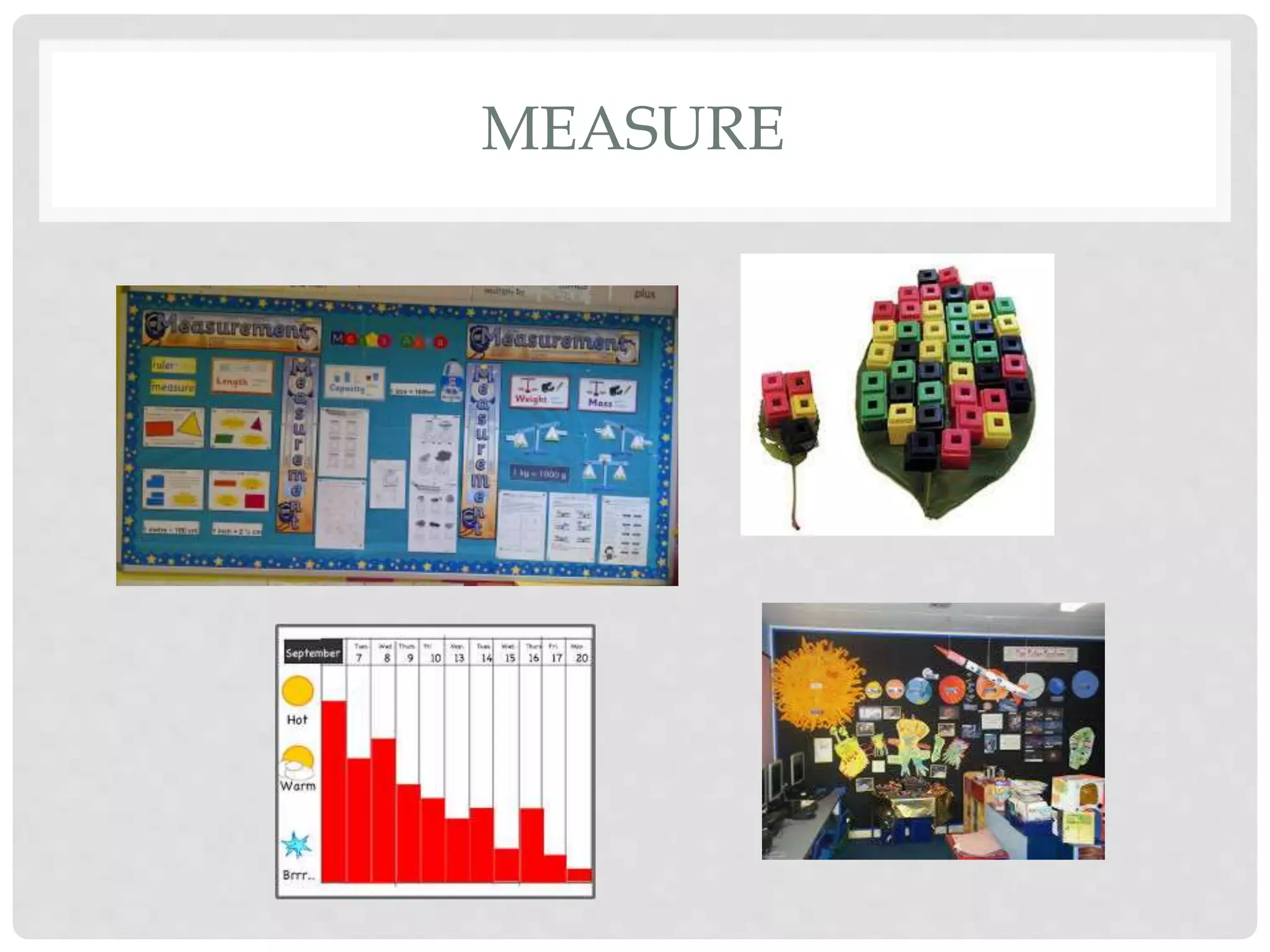
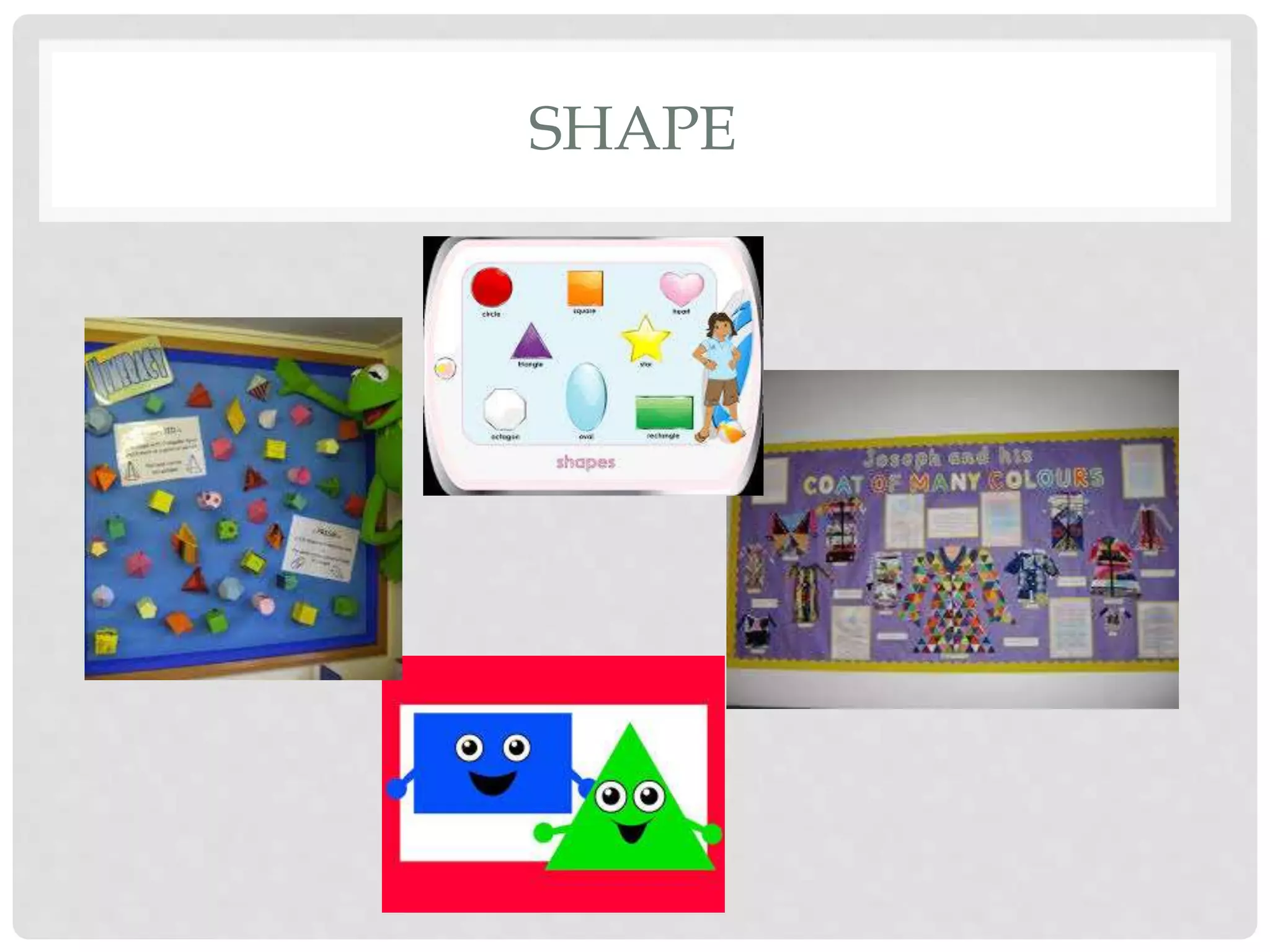
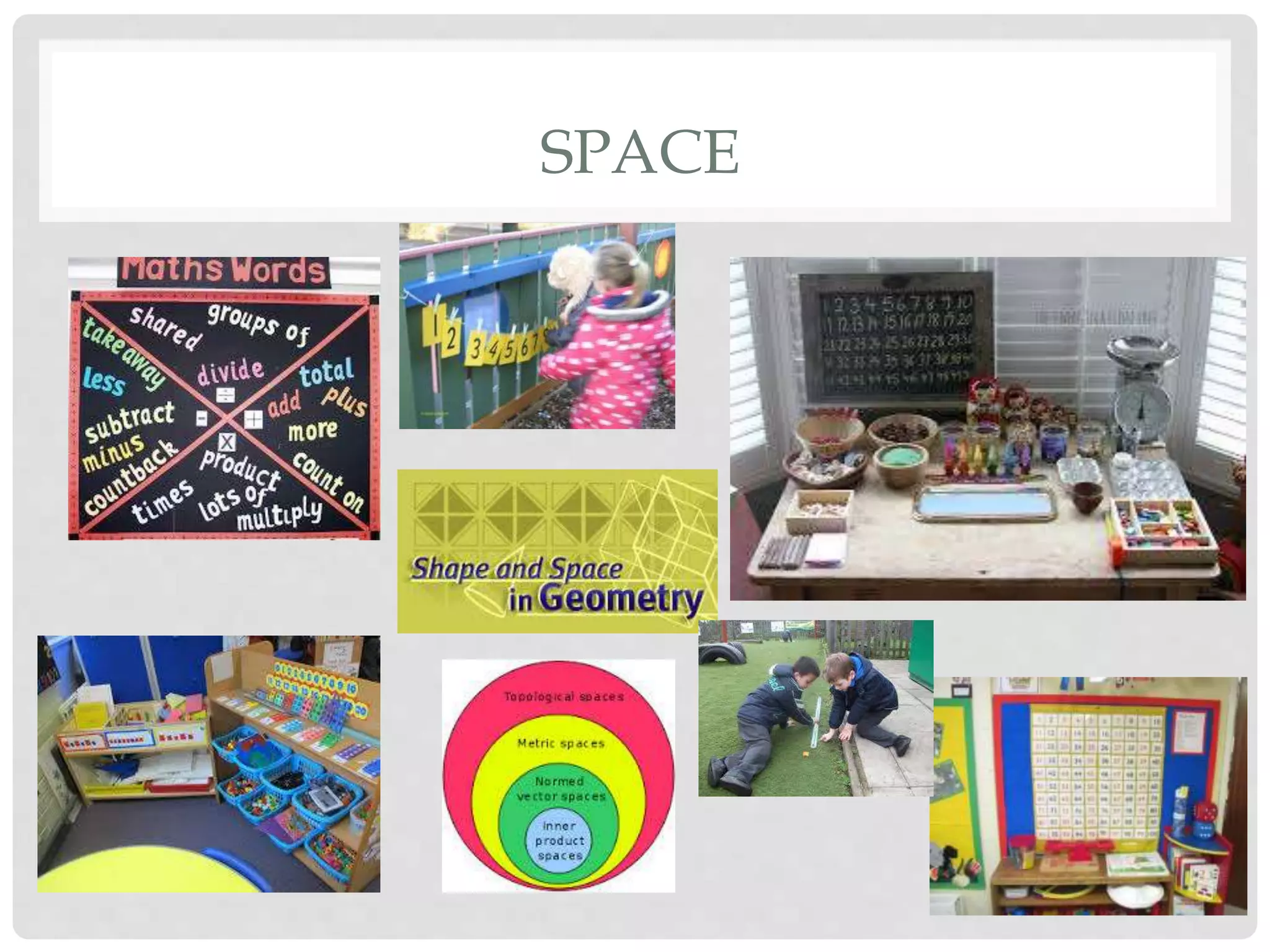
broken down into numbers, space, shape 
and measures. 
It is important for children to know the sequence for 
counting and understanding numbers and 
calculating.
NUMBERS
MEASURE
SHAPE
SPACE
BASIC PRACTICAL SKILLS IN EARLY 
MATHS EXPLORATION 
Identify and describe the skills needed and the 
purpose for these skills using the worksheet 
provided.
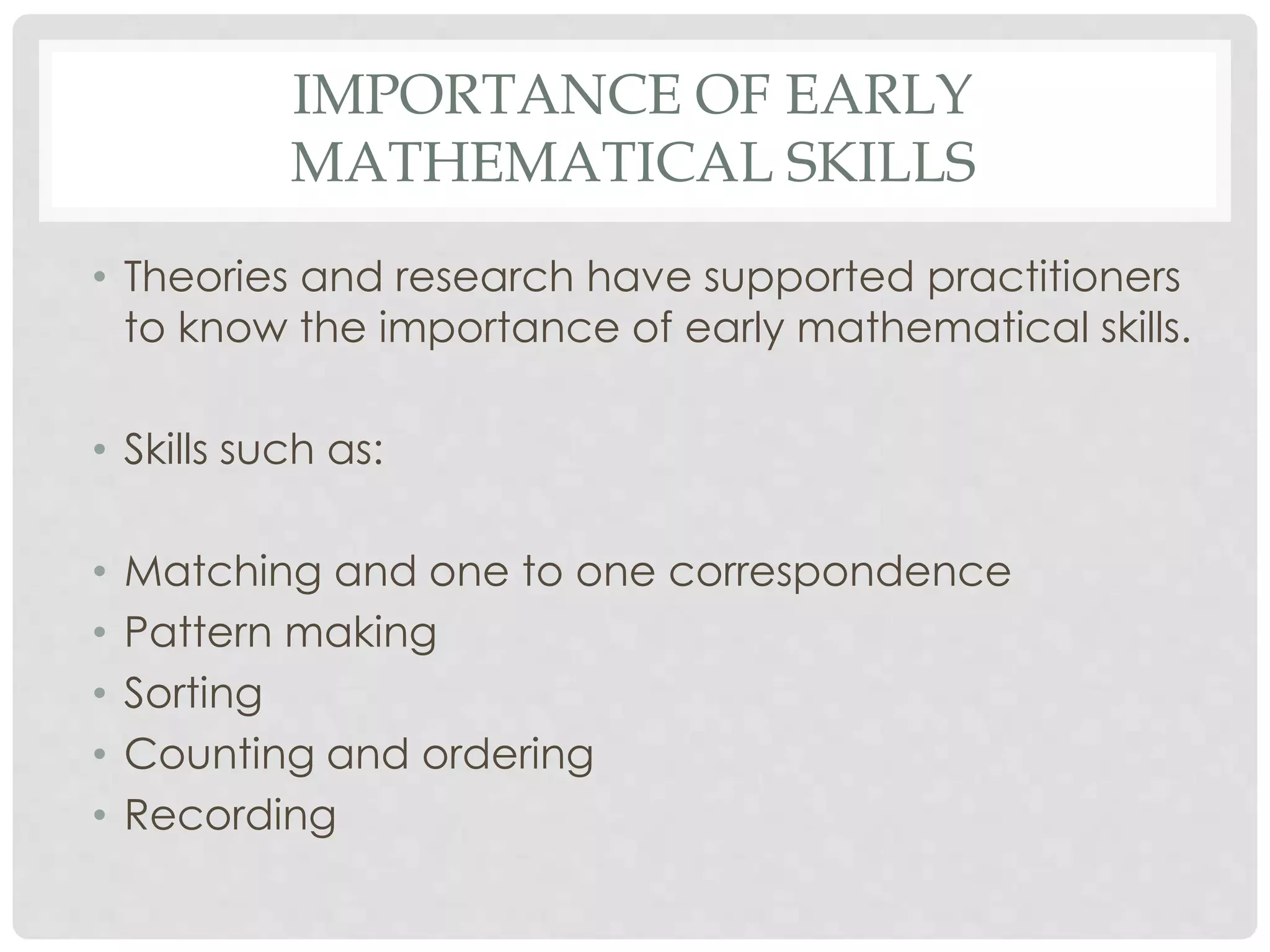
IMPORTANCE OF EARLY 
MATHEMATICAL SKILLS 
• Theories and research have supported practitioners 
to know the importance of early mathematical skills. 
• Skills such as: 
• Matching and one to one correspondence 
• Pattern making 
• Sorting 
• Counting and ordering 
• Recording
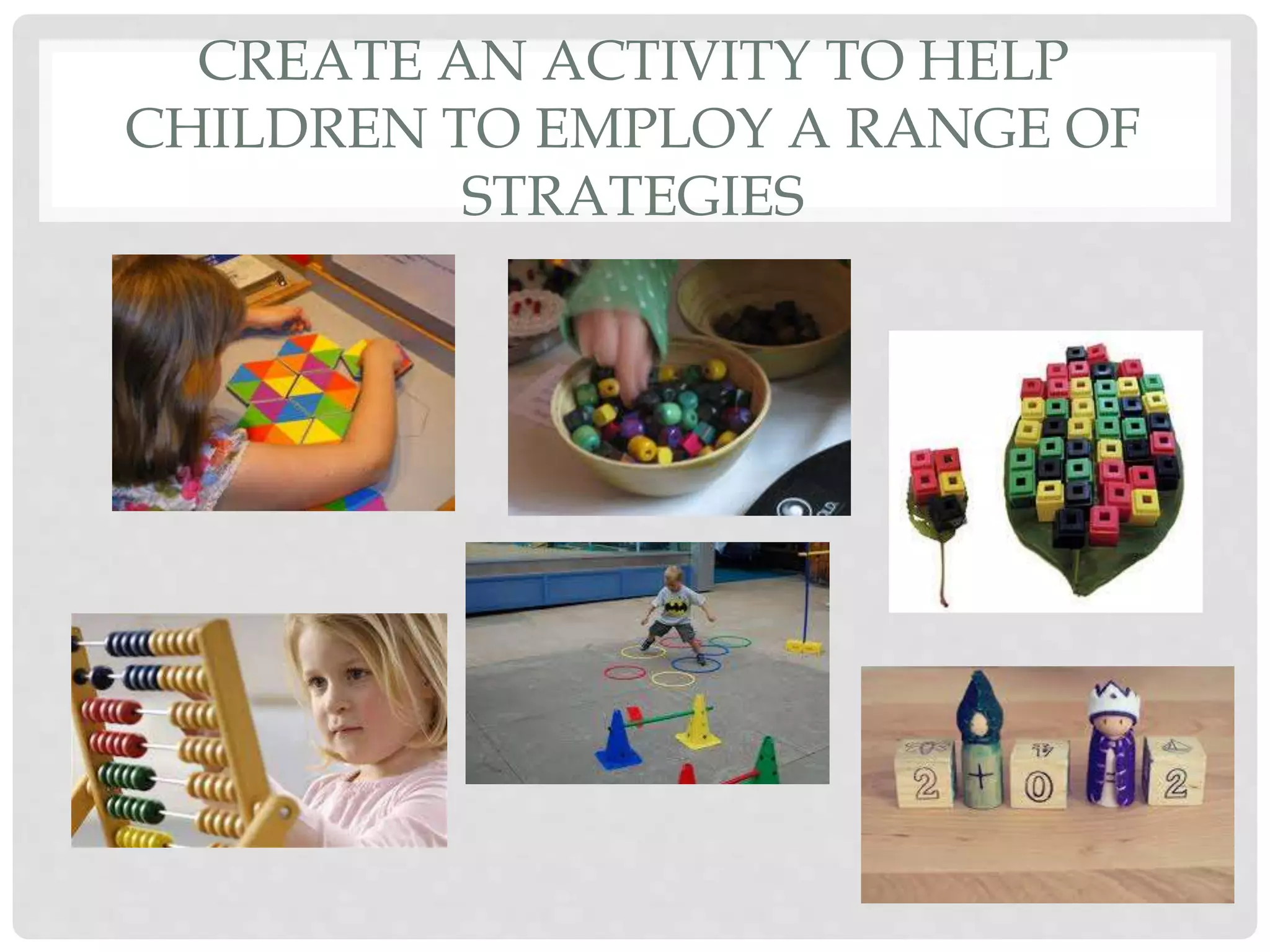
CREATE AN ACTIVITY TO HELP 
CHILDREN TO EMPLOY A RANGE OF 
STRATEGIES
BUILDING CHILDREN’S CONFIDENCE. 
WHAT IS BEST PRACTICE? STARTER
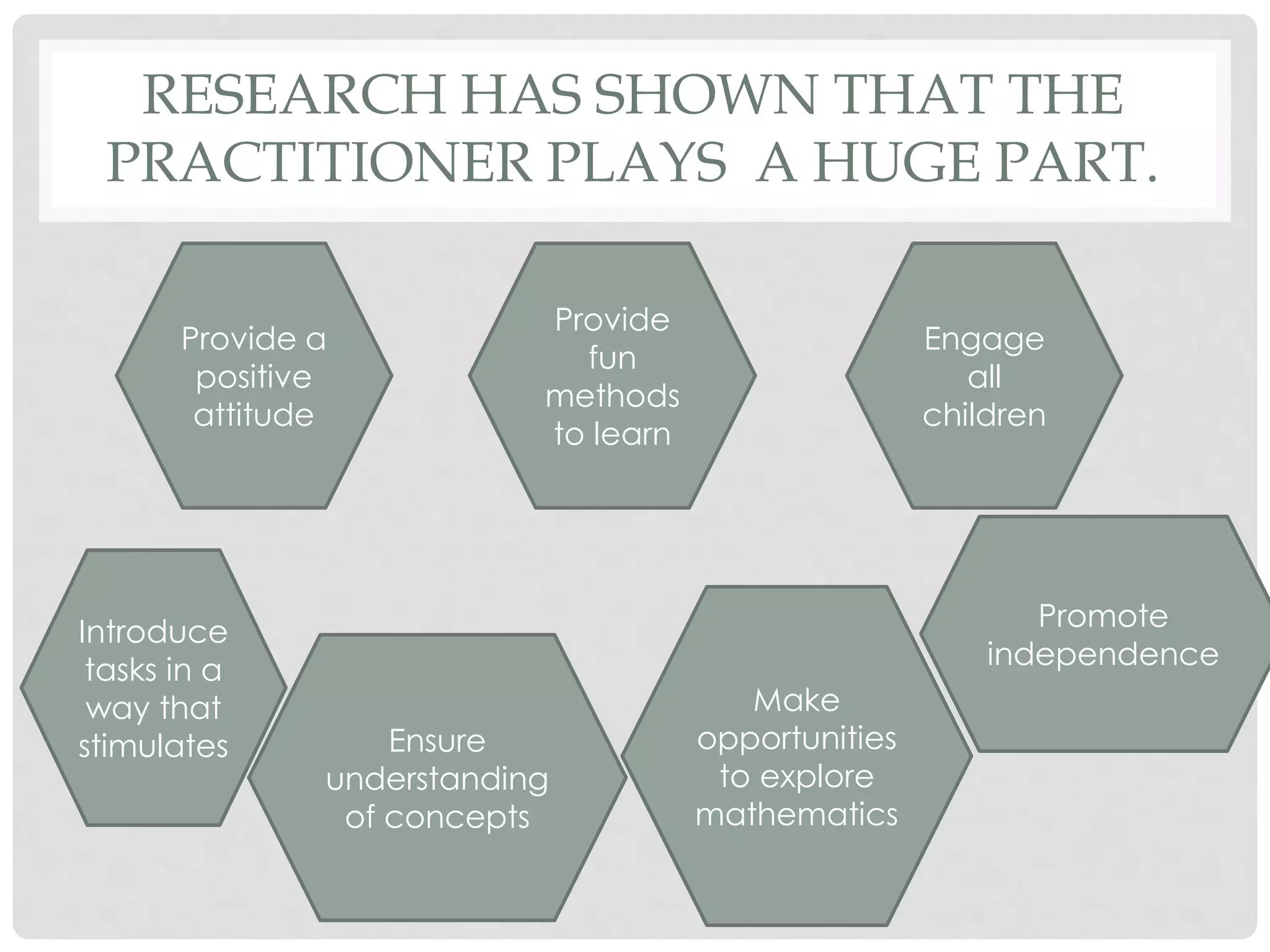
RESEARCH HAS SHOWN THAT THE 
PRACTITIONER PLAYS A HUGE PART. 
Provide a 
positive 
attitude 
Provide 
fun 
methods 
to learn 
Engage 
all 
children 
Introduce 
tasks in a 
way that 
stimulates Ensure 
understanding 
of concepts 
Make 
opportunities 
to explore 
mathematics 
Promote 
independence
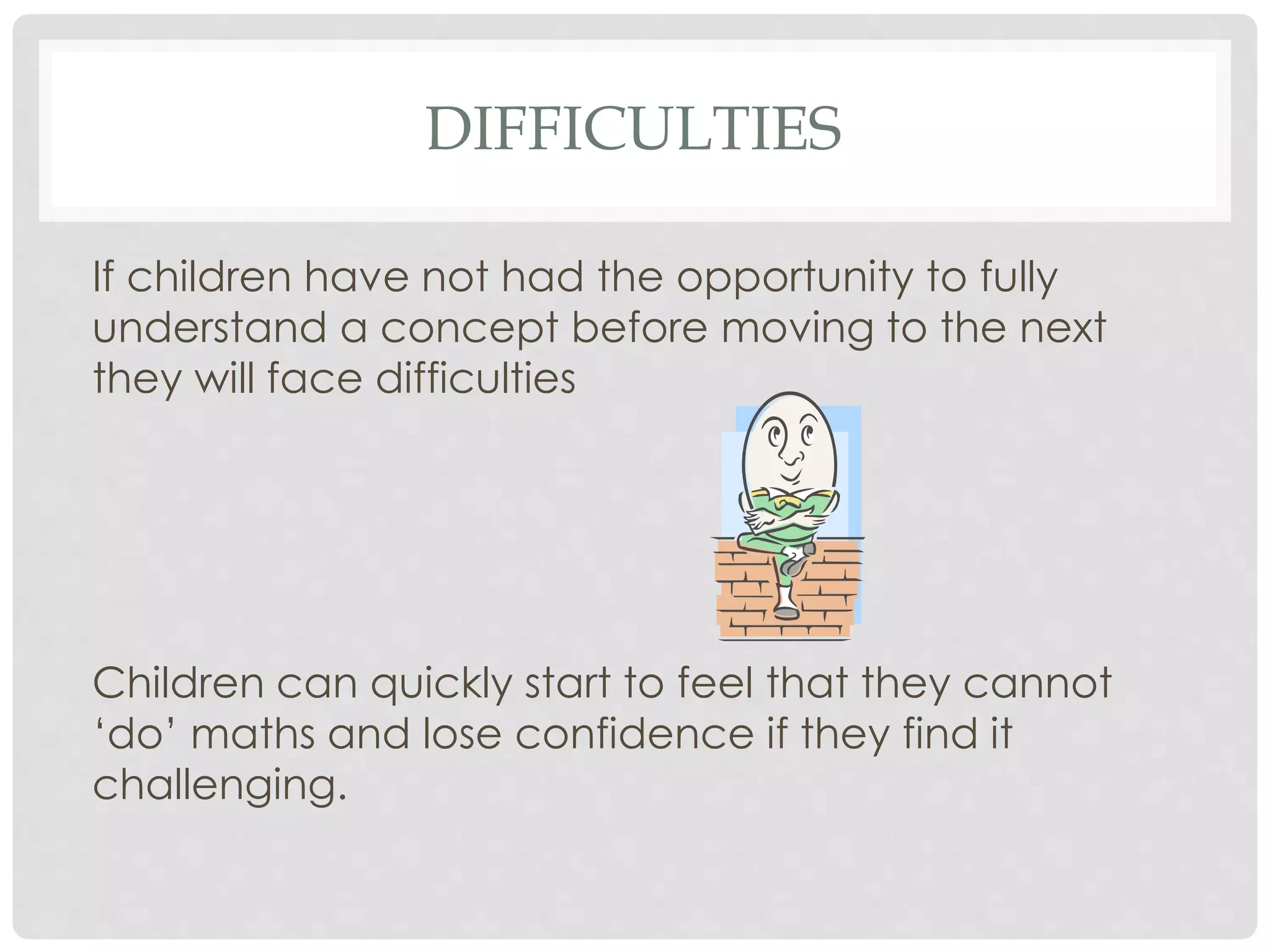
DIFFICULTIES 
If children have not had the opportunity to fully 
understand a concept before moving to the next 
they will face difficulties 
Children can quickly start to feel that they cannot 
‘do’ maths and lose confidence if they find it 
challenging.
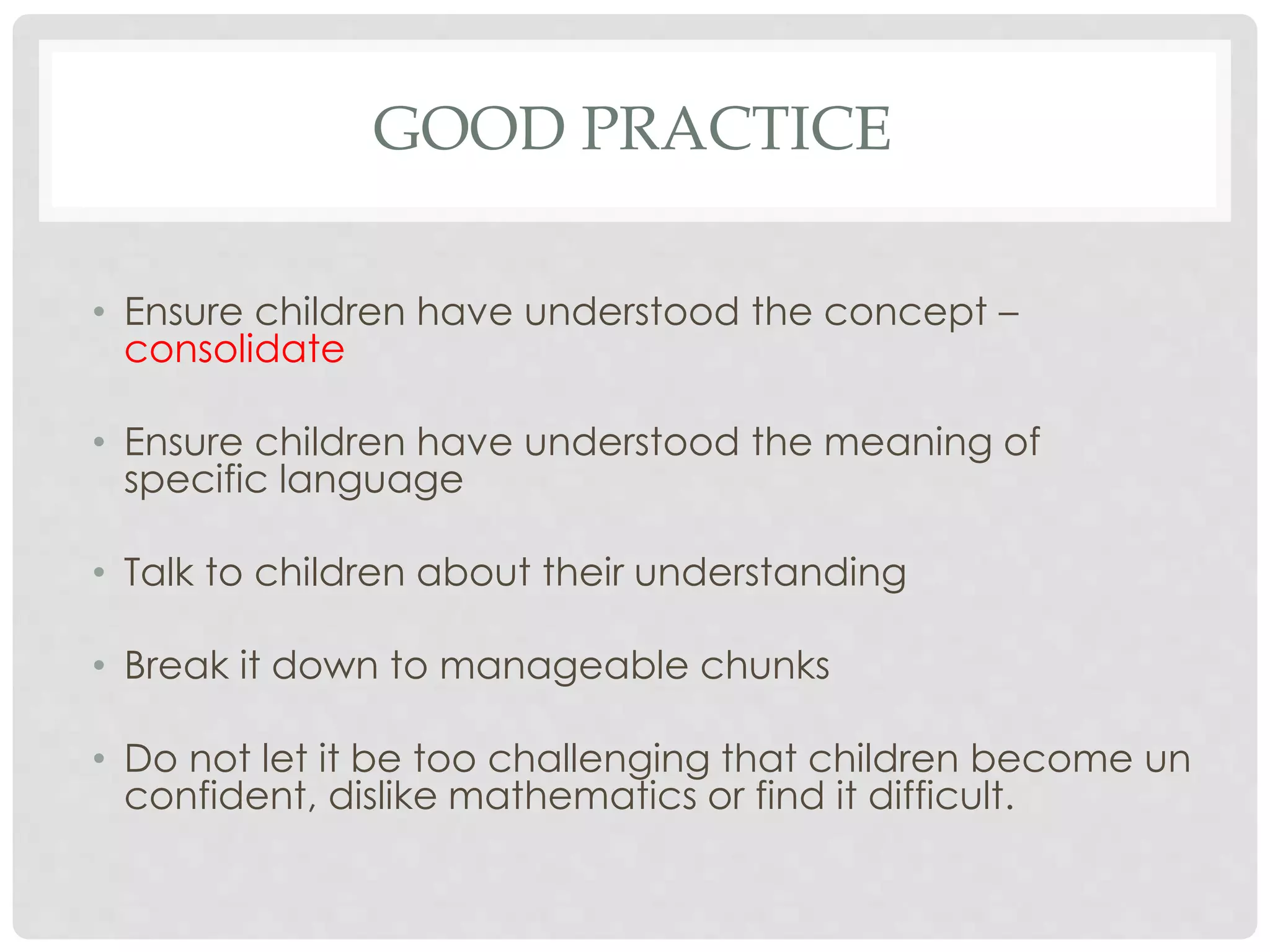
GOOD PRACTICE 
• Ensure children have understood the concept – 
consolidate 
• Ensure children have understood the meaning of 
specific language 
• Talk to children about their understanding 
• Break it down to manageable chunks 
• Do not let it be too challenging that children become un 
confident, dislike mathematics or find it difficult.
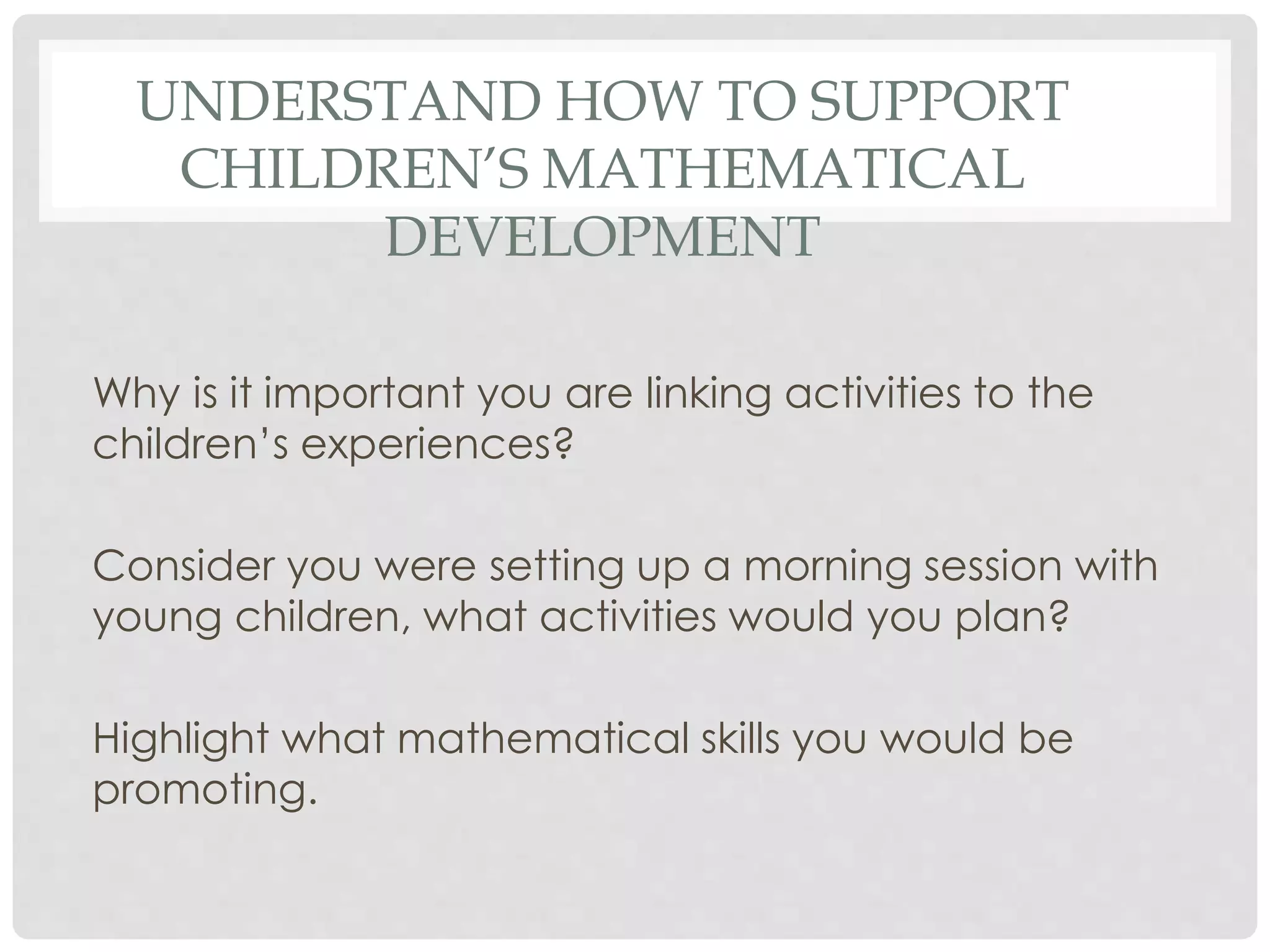
UNDERSTAND HOW TO SUPPORT 
CHILDREN’S MATHEMATICAL 
DEVELOPMENT 
Why is it important you are linking activities to the 
children’s experiences? 
Consider you were setting up a morning session with 
young children, what activities would you plan? 
Highlight what mathematical skills you would be 
promoting.
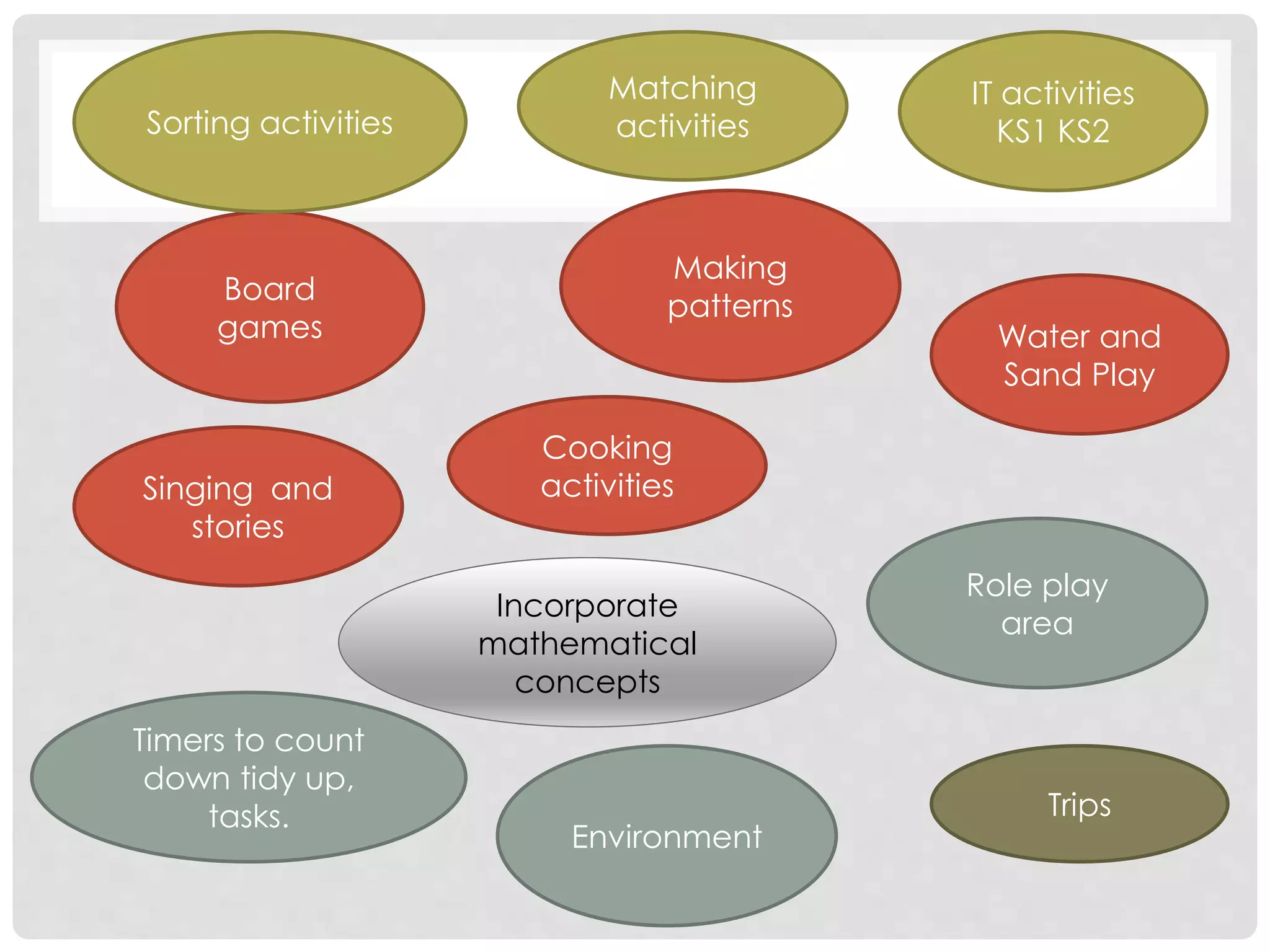
Board 
games 
Matching 
activities 
Making 
patterns 
Environment 
Water and 
Sand Play 
Singing and 
stories 
Timers to count 
down tidy up, 
tasks. 
Role play 
area 
Cooking 
activities 
Trips 
Incorporate 
mathematical 
concepts 
IT activities 
Sorting activities KS1 KS2
DESIGN AN ACTIVITY CONSIDERING 
EYFS A UNIQUE CHILD 
Consider the EYFS and use examples from 
placement to select activities for children that 
support the development of numbers and space, 
shape and measures development. Choose four 
appropriate activities, for children across the age 
range and in different settings, you must give 
reasons for your choice of activities.
CHILDREN’S LEARNING OF 
MATHEMATICS - STARTER 
What will your role be? 
In your groups discuss the role you have been given 
as to what you would witness in practice. 
Can you relate to using these strategies in your own 
practice? 
Did you use these strategies effectively?
CHECKING CHILDREN’S 
UNDERSTANDING TO INFORM 
PLANNING 
In your groups discuss the following points: 
How do we gain knowledge of children’s 
mathematical knowledge? 
When do we check children’s mathematical 
knowledge? 
How will you use the information you have collated?
YOU WILL NEED TO CHECK AND 
KNOW 
• Children’s level of attainment 
• You may target set, particular children to support 
their attainment 
• Check children’s understanding and consolidate 
concepts 
• Ensure activities are tailored to meet the needs of 
your children and provide appropriate challenge to 
them.
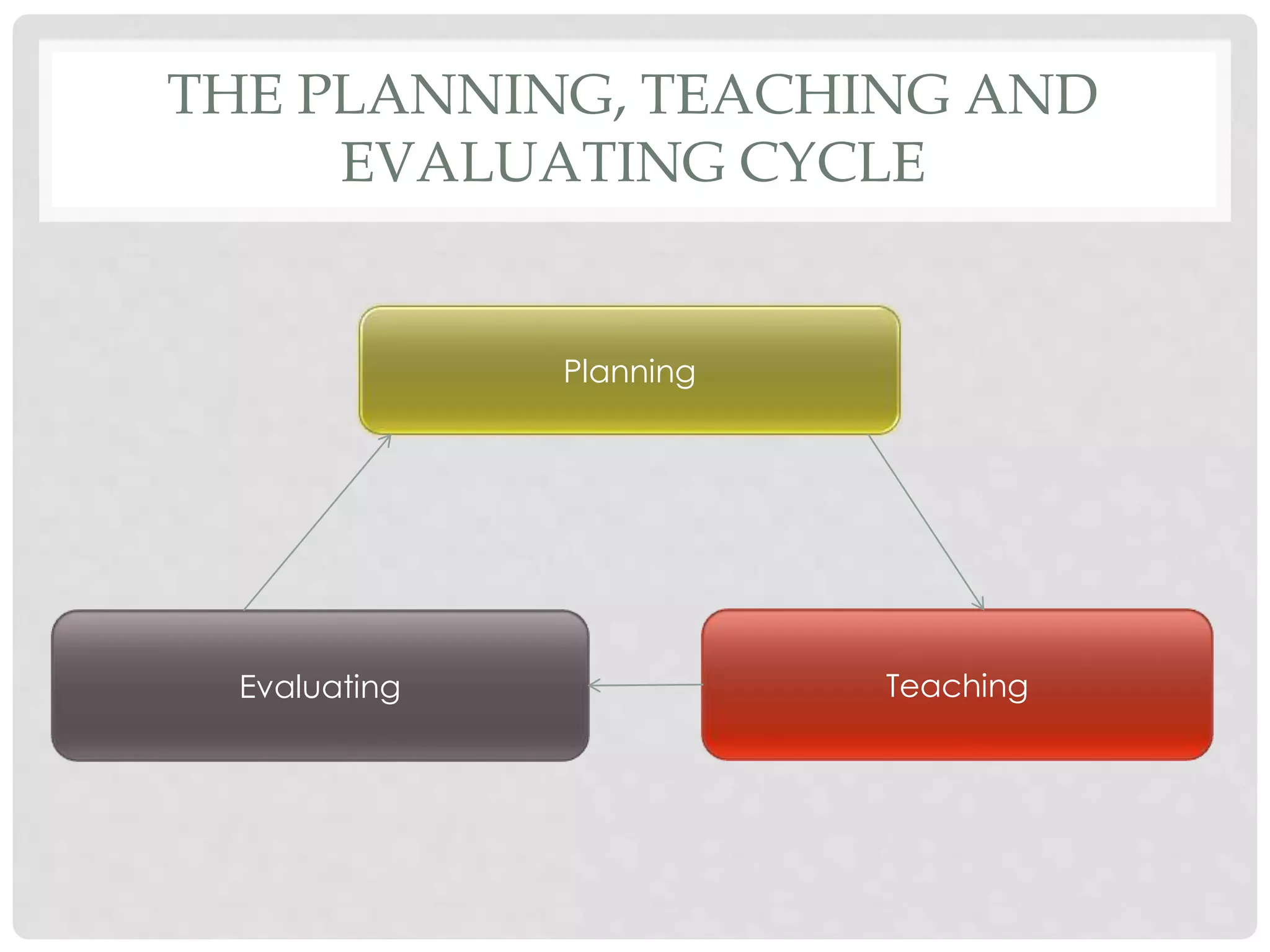
THE PLANNING, TEACHING AND 
EVALUATING CYCLE 
Planning 
Evaluating Teaching
METHODS TO ASSESS CHILDREN’S 
MATHEMATICAL UNDERSTANDING 
Observations 
Practical Tasks 
Questioning 
Summative Assessment (EYFS profile, SATS)
WORKING WITH PARENTS 
How did your settings 
work with parents?
GOOD PRACTICE 
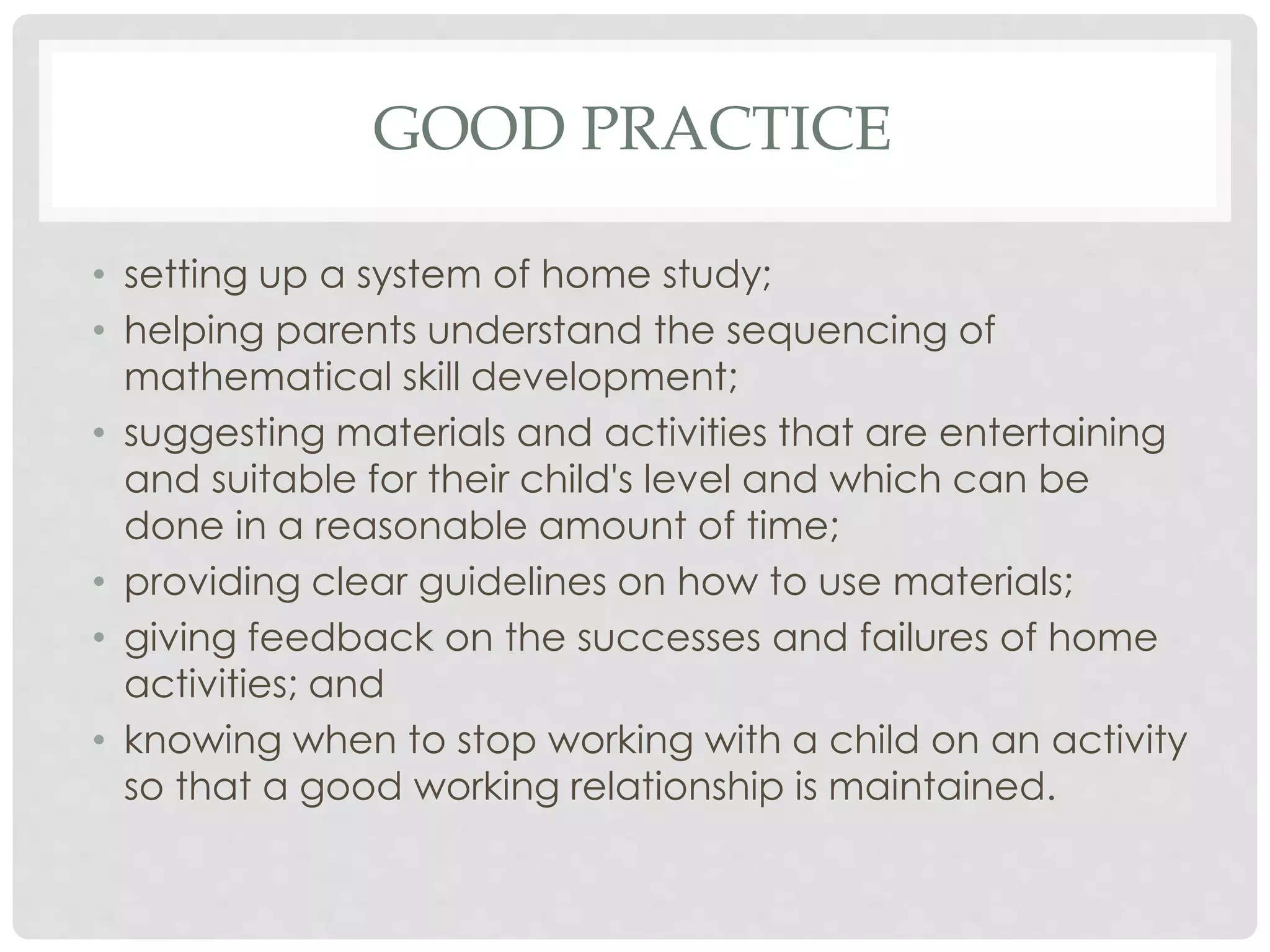
• setting up a system of home study; 
• helping parents understand the sequencing of 
mathematical skill development; 
• suggesting materials and activities that are entertaining 
and suitable for their child's level and which can be 
done in a reasonable amount of time; 
• providing clear guidelines on how to use materials; 
• giving feedback on the successes and failures of home 
activities; and 
• knowing when to stop working with a child on an activity 
so that a good working relationship is maintained.
AND FINALLY ……….. 
Assignment brief 
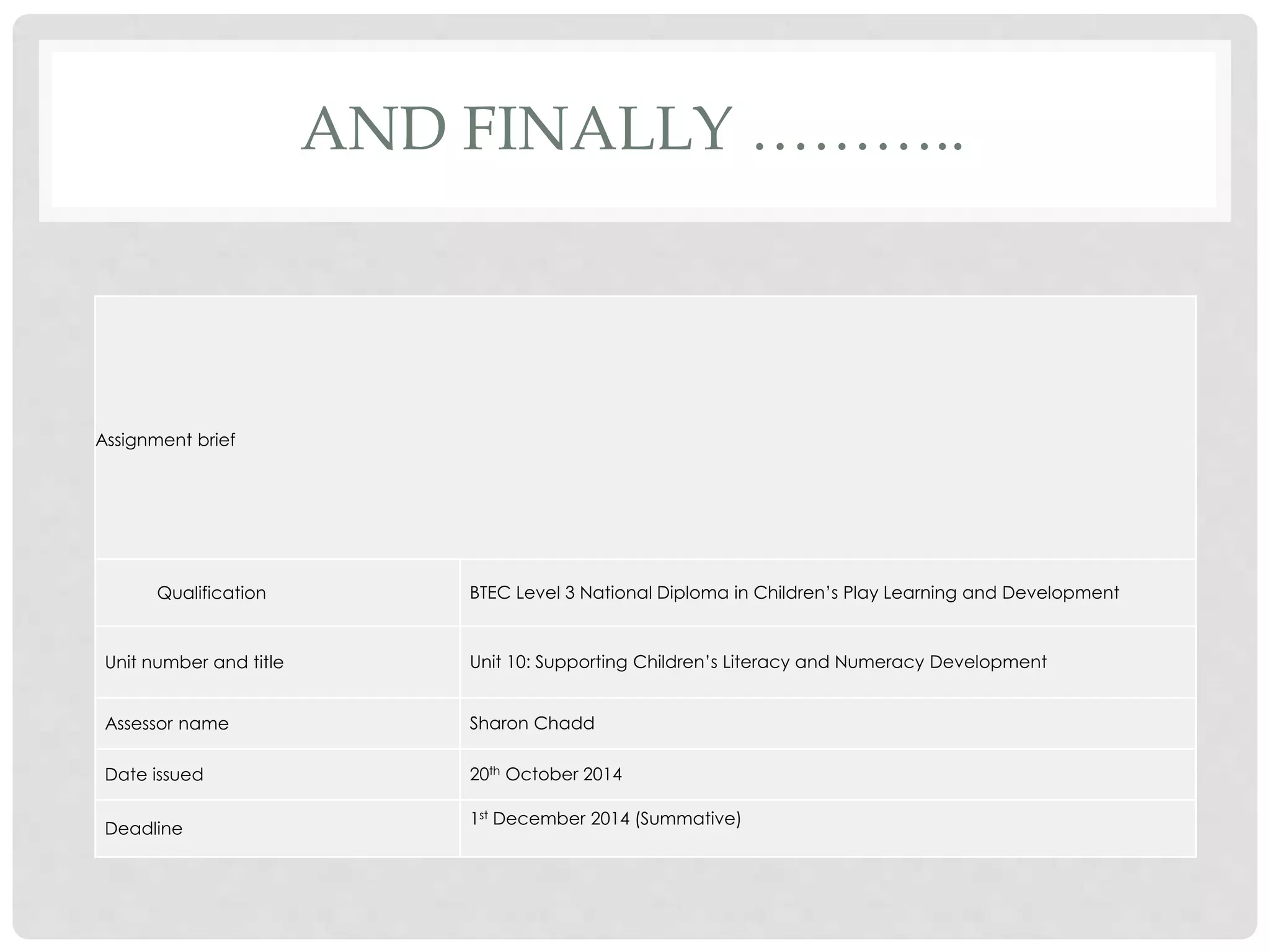
Qualification BTEC Level 3 National Diploma in Children’s Play Learning and Development 
Unit number and title Unit 10: Supporting Children’s Literacy and Numeracy Development 
Assessor name Sharon Chadd 
Date issued 20th October 2014 
Deadline 
1st December 2014 (Summative)
WHAT ARE YOUR STRENGTHS AND 
WEAKNESSES IN MATHS? 
Children will not acquire mathematical 
understanding evenly across the different areas of 
mathematics

Unit 10 mathematics week 2

  • 1.
  • 2.
    MATHEMATICS IS AROUNDUS • How do we use mathematical skills everyday?
  • 3.
    MATHEMATICS IS AROUNDUS • How do we use mathematical skills everyday? • Shopping • Pouring a drink • Filling a bowl or plate with food • Placing objects down • Picking objects up • The list is endless
  • 4.
    QUOTE FROM DOE • Mathematics is a creative and highly interconnected discipline that has been developed over centuries, providing the solution to some of history’s most intriguing problems. It is essential to everyday life, critical to science, technology and engineering, and necessary for financial literacy and most forms of employment. A high-quality mathematics education therefore provides a foundation for understanding the world, the ability to reason mathematically, an appreciation of the beauty and power of mathematics, and a sense of enjoyment and curiosity about the subject
  • 5.
    AREAS/STRANDS OF MATHEMATICS • EYFS • Number, shape and measures • Primary Framework for Mathematics • Using and applying mathematics • Counting and understanding number • Knowing and using number facts • Calculating • Understanding shape • Measuring • Handling data. Sept 2013
  • 6.
    UNDERSTAND CHILDREN’S MATHEMATICALDEVELOPMENT Research and rediscover Piaget’s constructivist theory – 20 minutes Look at the stages and link these to maths knowledge learnt – use worksheet provided for your answers.
  • 7.
    UNDERSTAND CHILDREN’S MATHEMATICALDEVELOPMENT • Linked to Cognitive Development
  • 8.
    Schema Stages Stage1 Assimilation (child builds a theory) This is a cat Stage 2 Equilibrium (everything seems to fit this theory) Still a cat Stage 3 Disequilibrium (something happens to cast doubt on the theory) Cat??? Stage 4 Accommodation (new information is added into the schema) These are all cats
  • 9.
    PIAGET • Inassimilation, the individual absorbs new information, fitting features of the environment into internal cognitive structures. In accommodation, the individual modifies those internal cognitive structures to conform to the new information and meet the demands of the environment. • A balance is maintained through equilibration, as the individual organizes the demands of the environment in terms of previously existing cognitive structures. • A child moves from one stage of cognitive development to another through the process of equilibration, through understanding the underlying concept so that the understanding can be applied to new situations. Equilibration is a balance between assimilation and accommodation
  • 10.
  • 11.
    DESIGN A POSTER • In pairs design a poster that will help children to acquire mathematical knowledge terms
  • 12.
    STARTER Write downas many children’s rhymes and songs you remember that have numbers in them. Remember that mathematics in the early years is broken down into numbers, space, shape and measures. It is important for children to know the sequence for counting and understanding numbers and calculating.
  • 13.
  • 14.
  • 15.
  • 16.
  • 17.
    BASIC PRACTICAL SKILLSIN EARLY MATHS EXPLORATION Identify and describe the skills needed and the purpose for these skills using the worksheet provided.
  • 18.
    IMPORTANCE OF EARLY MATHEMATICAL SKILLS • Theories and research have supported practitioners to know the importance of early mathematical skills. • Skills such as: • Matching and one to one correspondence • Pattern making • Sorting • Counting and ordering • Recording
  • 19.
    CREATE AN ACTIVITYTO HELP CHILDREN TO EMPLOY A RANGE OF STRATEGIES
  • 20.
    BUILDING CHILDREN’S CONFIDENCE. WHAT IS BEST PRACTICE? STARTER
  • 21.
    RESEARCH HAS SHOWNTHAT THE PRACTITIONER PLAYS A HUGE PART. Provide a positive attitude Provide fun methods to learn Engage all children Introduce tasks in a way that stimulates Ensure understanding of concepts Make opportunities to explore mathematics Promote independence
  • 22.
    DIFFICULTIES If childrenhave not had the opportunity to fully understand a concept before moving to the next they will face difficulties Children can quickly start to feel that they cannot ‘do’ maths and lose confidence if they find it challenging.
  • 23.
    GOOD PRACTICE •Ensure children have understood the concept – consolidate • Ensure children have understood the meaning of specific language • Talk to children about their understanding • Break it down to manageable chunks • Do not let it be too challenging that children become un confident, dislike mathematics or find it difficult.
  • 24.
    UNDERSTAND HOW TOSUPPORT CHILDREN’S MATHEMATICAL DEVELOPMENT Why is it important you are linking activities to the children’s experiences? Consider you were setting up a morning session with young children, what activities would you plan? Highlight what mathematical skills you would be promoting.
  • 25.
    Board games Matching activities Making patterns Environment Water and Sand Play Singing and stories Timers to count down tidy up, tasks. Role play area Cooking activities Trips Incorporate mathematical concepts IT activities Sorting activities KS1 KS2
  • 26.
    DESIGN AN ACTIVITYCONSIDERING EYFS A UNIQUE CHILD Consider the EYFS and use examples from placement to select activities for children that support the development of numbers and space, shape and measures development. Choose four appropriate activities, for children across the age range and in different settings, you must give reasons for your choice of activities.
  • 27.
    CHILDREN’S LEARNING OF MATHEMATICS - STARTER What will your role be? In your groups discuss the role you have been given as to what you would witness in practice. Can you relate to using these strategies in your own practice? Did you use these strategies effectively?
  • 28.
    CHECKING CHILDREN’S UNDERSTANDINGTO INFORM PLANNING In your groups discuss the following points: How do we gain knowledge of children’s mathematical knowledge? When do we check children’s mathematical knowledge? How will you use the information you have collated?
  • 29.
    YOU WILL NEEDTO CHECK AND KNOW • Children’s level of attainment • You may target set, particular children to support their attainment • Check children’s understanding and consolidate concepts • Ensure activities are tailored to meet the needs of your children and provide appropriate challenge to them.
  • 30.
    THE PLANNING, TEACHINGAND EVALUATING CYCLE Planning Evaluating Teaching
  • 31.
    METHODS TO ASSESSCHILDREN’S MATHEMATICAL UNDERSTANDING Observations Practical Tasks Questioning Summative Assessment (EYFS profile, SATS)
  • 32.
    WORKING WITH PARENTS How did your settings work with parents?
  • 33.
    GOOD PRACTICE •setting up a system of home study; • helping parents understand the sequencing of mathematical skill development; • suggesting materials and activities that are entertaining and suitable for their child's level and which can be done in a reasonable amount of time; • providing clear guidelines on how to use materials; • giving feedback on the successes and failures of home activities; and • knowing when to stop working with a child on an activity so that a good working relationship is maintained.
  • 34.
    AND FINALLY ……….. Assignment brief Qualification BTEC Level 3 National Diploma in Children’s Play Learning and Development Unit number and title Unit 10: Supporting Children’s Literacy and Numeracy Development Assessor name Sharon Chadd Date issued 20th October 2014 Deadline 1st December 2014 (Summative)
  • 35.
    WHAT ARE YOURSTRENGTHS AND WEAKNESSES IN MATHS? Children will not acquire mathematical understanding evenly across the different areas of mathematics