Types of Drag
Types of Drag
UNIT-I
Wh t i D ?
What is Drag?
Drag is defined as the force that opposes
forward motion through the atmosphere
and is parallel to the direction of the
free-stream velocity of the airflow Drag
free-stream velocity of the airflow. Drag
must be overcome by thrust in order to
achieve forward motion
achieve forward motion.
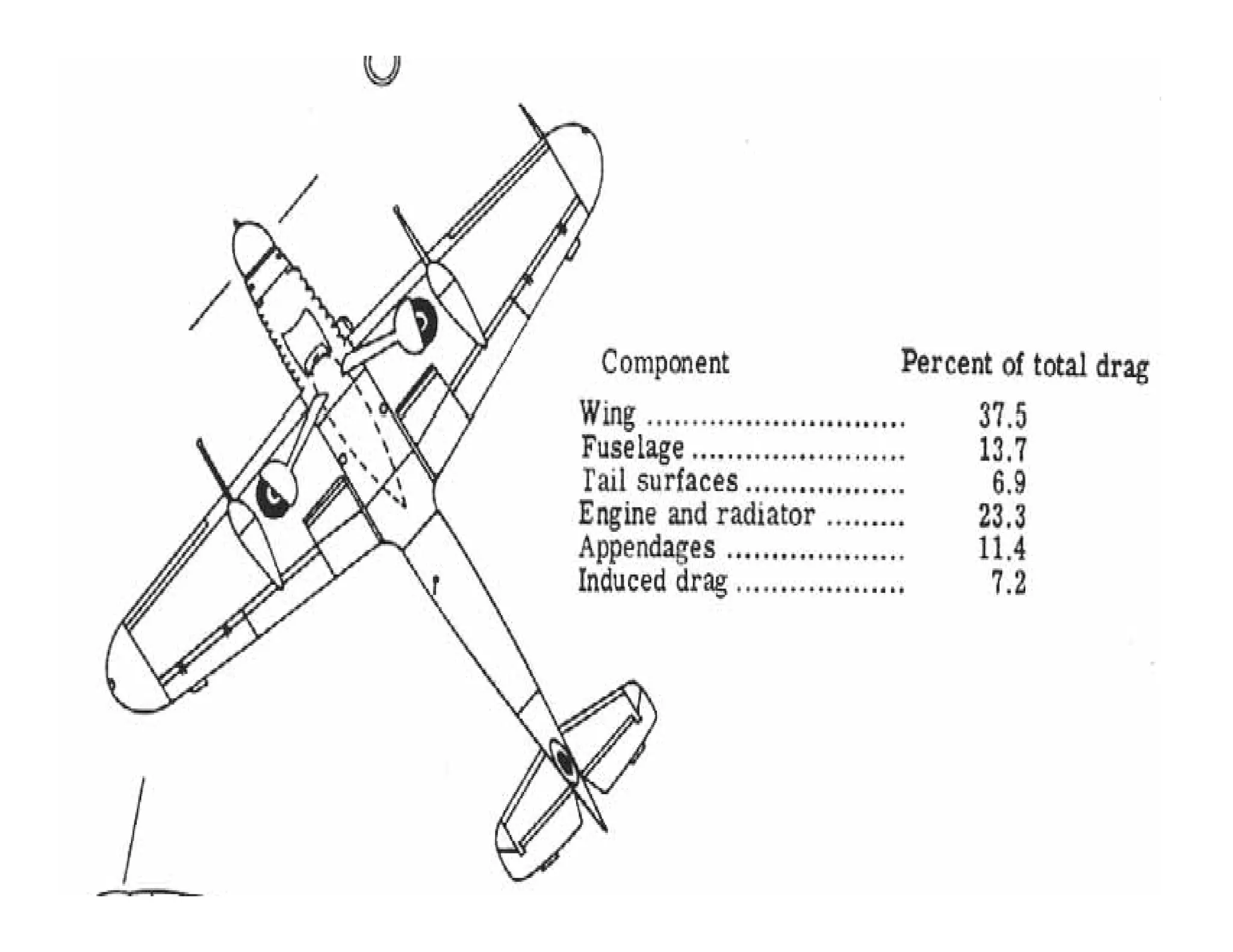
• Drag is generated by every part of the airplane 
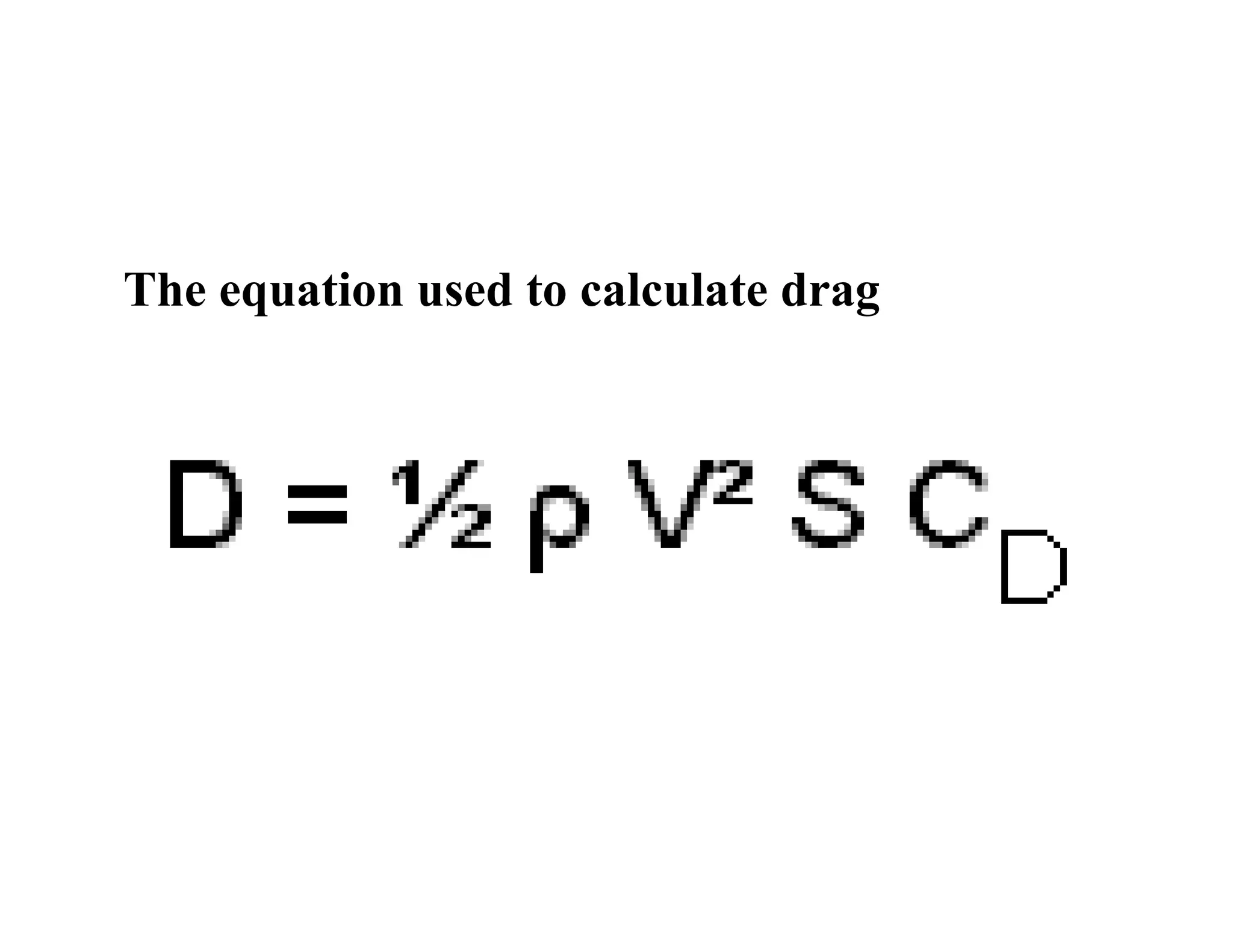
The equation used to calculate drag
Factors Affecting Drag
Factors Affecting Drag
¾ The surface
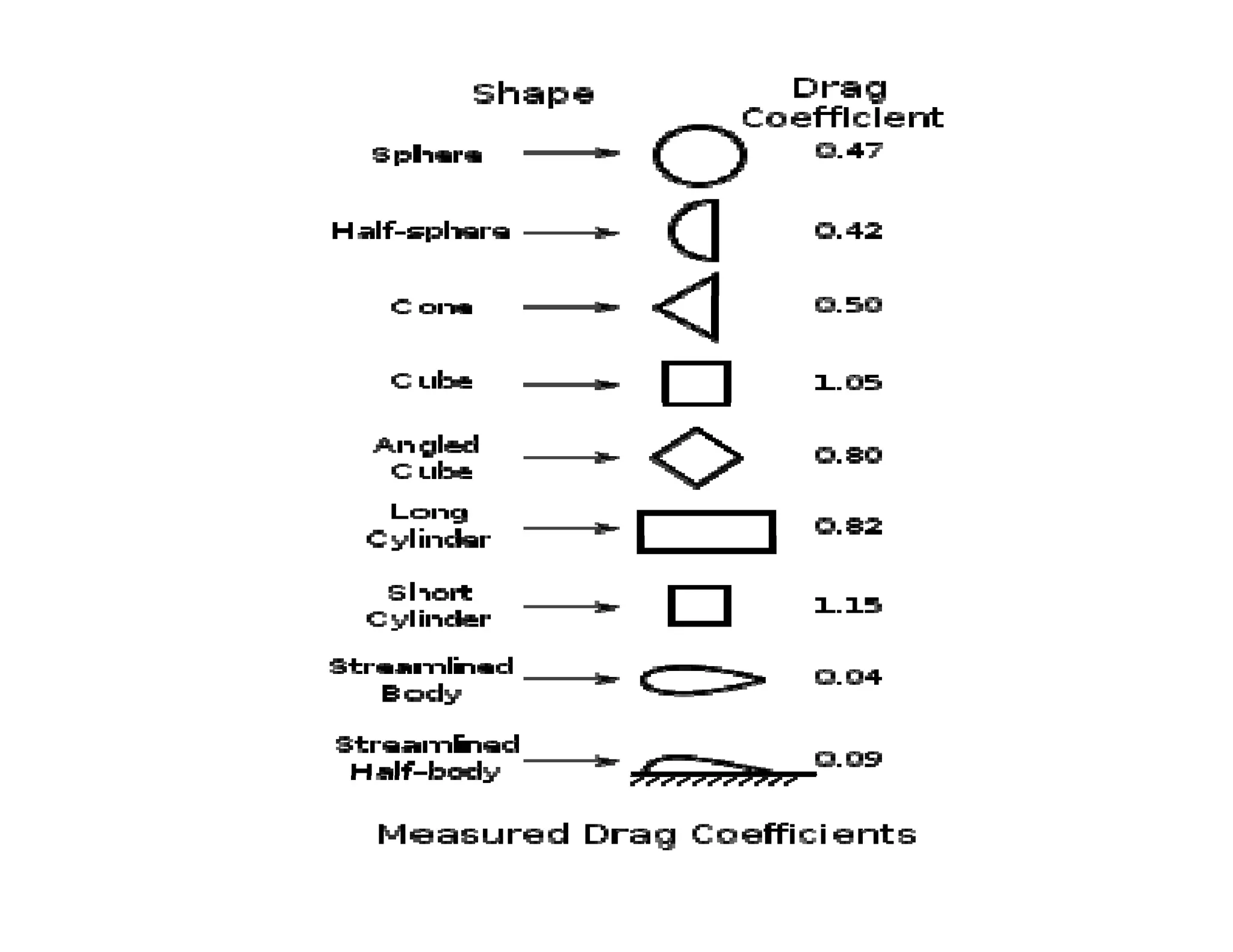
¾ The shape of the body
p y
¾ Frontal area of the body exposed
¾ Square of the velocity of the airflow
¾ The density of the air
¾ The acceleration due to gravity
Th h f th b d
• The shape of the body
The shape of the aircraft is made in such a
h i i i f h b d i
way that minimum portion of the body is
exposed to the airflow. It helps in reducing the
drag
drag.
Th S f
• The Surface
The less is the surface exposed to the
i fl th l ill b th d
airflow, the less will be the drag.
• Frontal area of the body exposed
The frontal area of the body is made in
such a way that it is a streamlined one which
will reduce the drag.
• Velocity of airflow
Th f d d i di l
The force due to drag is directly
proportional to the square of the velocity of the
airflow In order to minimize the drag the
airflow. In order to minimize the drag, the
aircraft is flown when the velocity of the
airflow is less
airflow is less.
• Density of Air
y
The aircraft is made to fly in the air, when
its density is relatively low due to the changing
y y g g
weather condition in order to reduce the drag.
• Acceleration due to Gravity
When the aircraft is made to fly in a less
height that is under the influence of
acceleration due to gravity, then the drag is
g y g
minimum.
There are several types of drag
yp g
¾Form drag or boundary layer pressure drag
¾ Pressure drag
¾Skin friction drag or surface -friction drag
¾Parasite drag
¾Induced drag or Vortex drag
¾ Wave drag
¾ Wave drag.
Form Drag
Form Drag
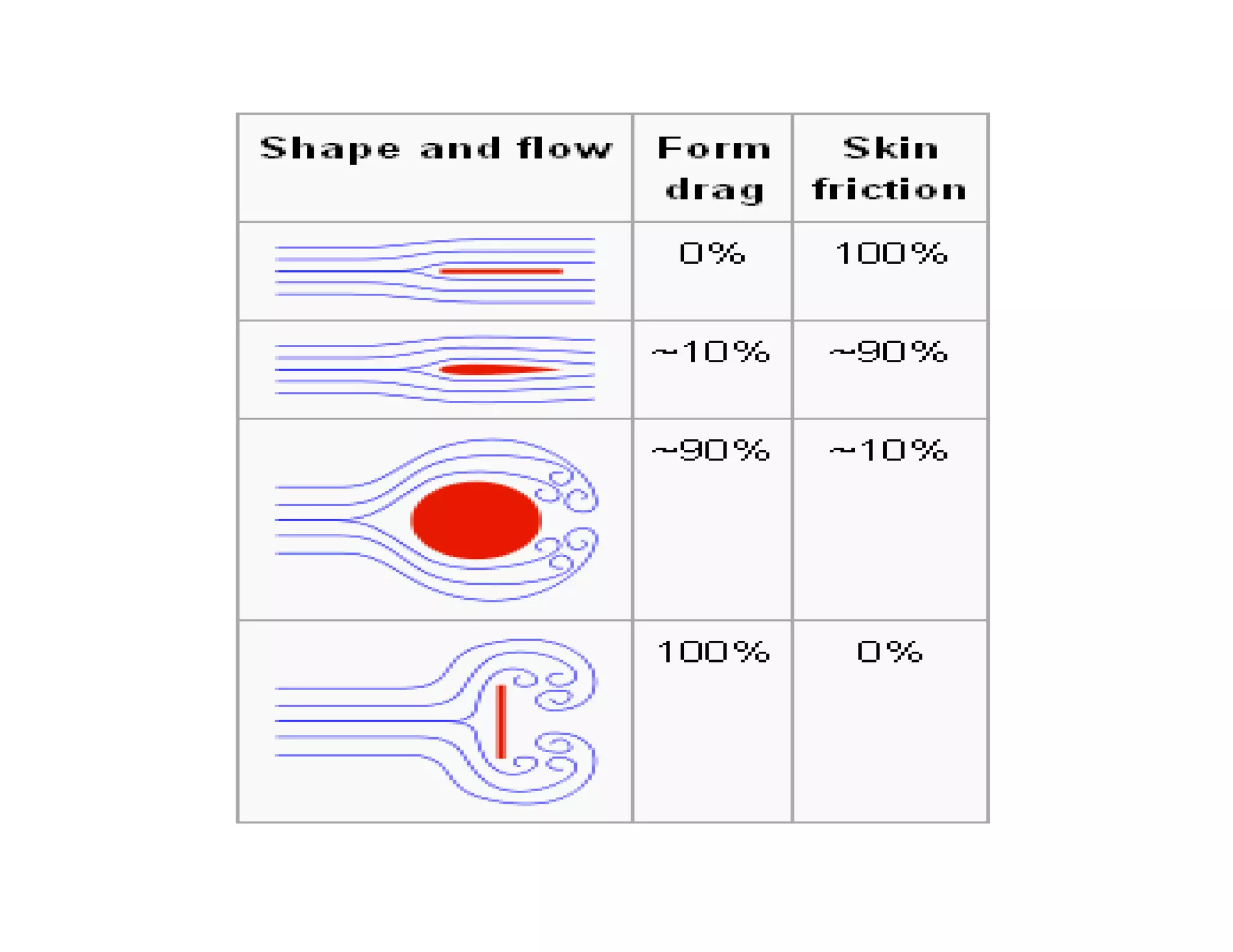
Form drag profile drag or pressure drag
Form drag, profile drag, or pressure drag,
arises because of the shape of the object.
The general size and shape of the body is the
most important factor in form drag
B di i h l i
Bodies with a larger apparent cross-section
will have a higher drag than thinner bodies.
• Form or pressure drag is caused by the air that
is flowing over the aircraft or airfoil.
• The separation of air creates turbulence and
results in low and high pressure that leave a
wake behind the airplane or airfoil
• This opposes forward motion of aircraft
pp
• Since this drag is due to the shape, or form of
the aircraft it is called form drag
the aircraft, it is called form drag.
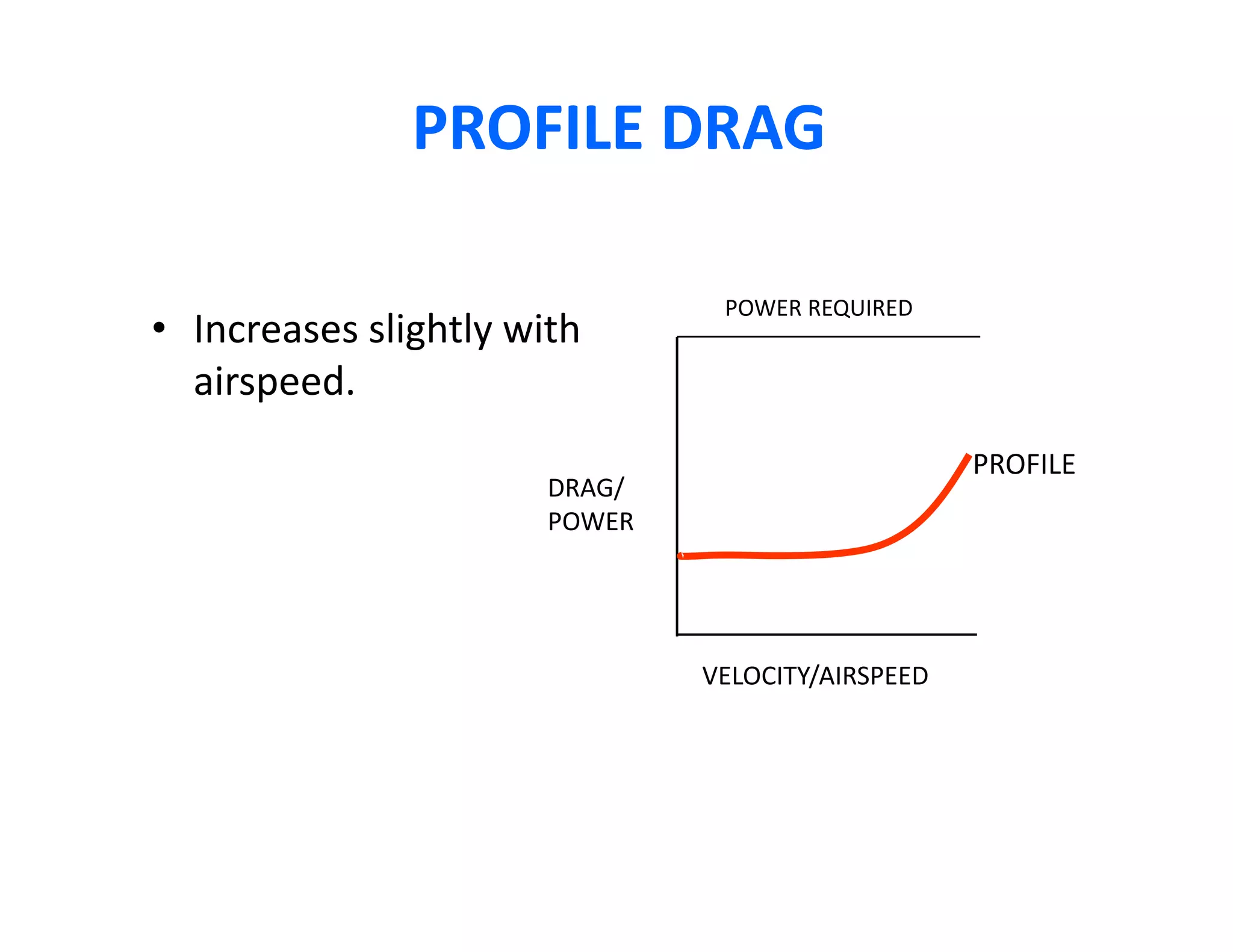
PROFILE DRAG
PROFILE DRAG
• Increases slightly with 
airspeed.
POWER REQUIRED
DRAG/ 
POWER
PROFILE
VELOCITY/AIRSPEED
Skin friction drag
Skin friction drag
• Skin friction drag is caused by the actual contact
of the air particles against the surface of the
aircraft.
• Skin friction drag is an interaction between the
g
airplane surface and the air.
• The magnitude of skin friction drag depends on
the properties of both the surface of solid body
and the air.
h i l ki fi i d b d d
• For the airplane, skin fiction drag can be reduced,
and airspeed can be increased somewhat, by
keeping an aircraft's surface highly polished and
keeping an aircraft s surface highly polished and
clean.
Induced drag or Vortex drag
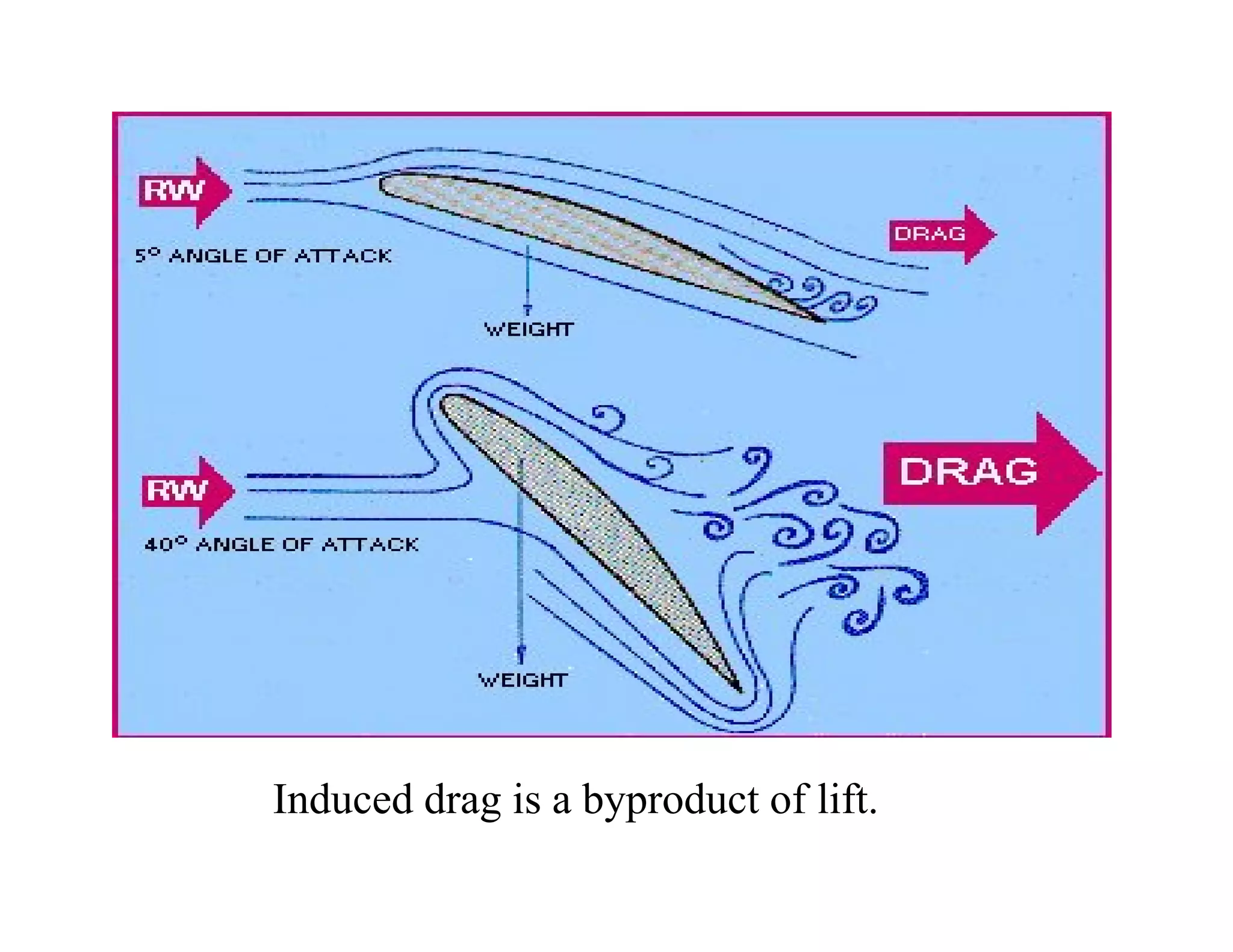
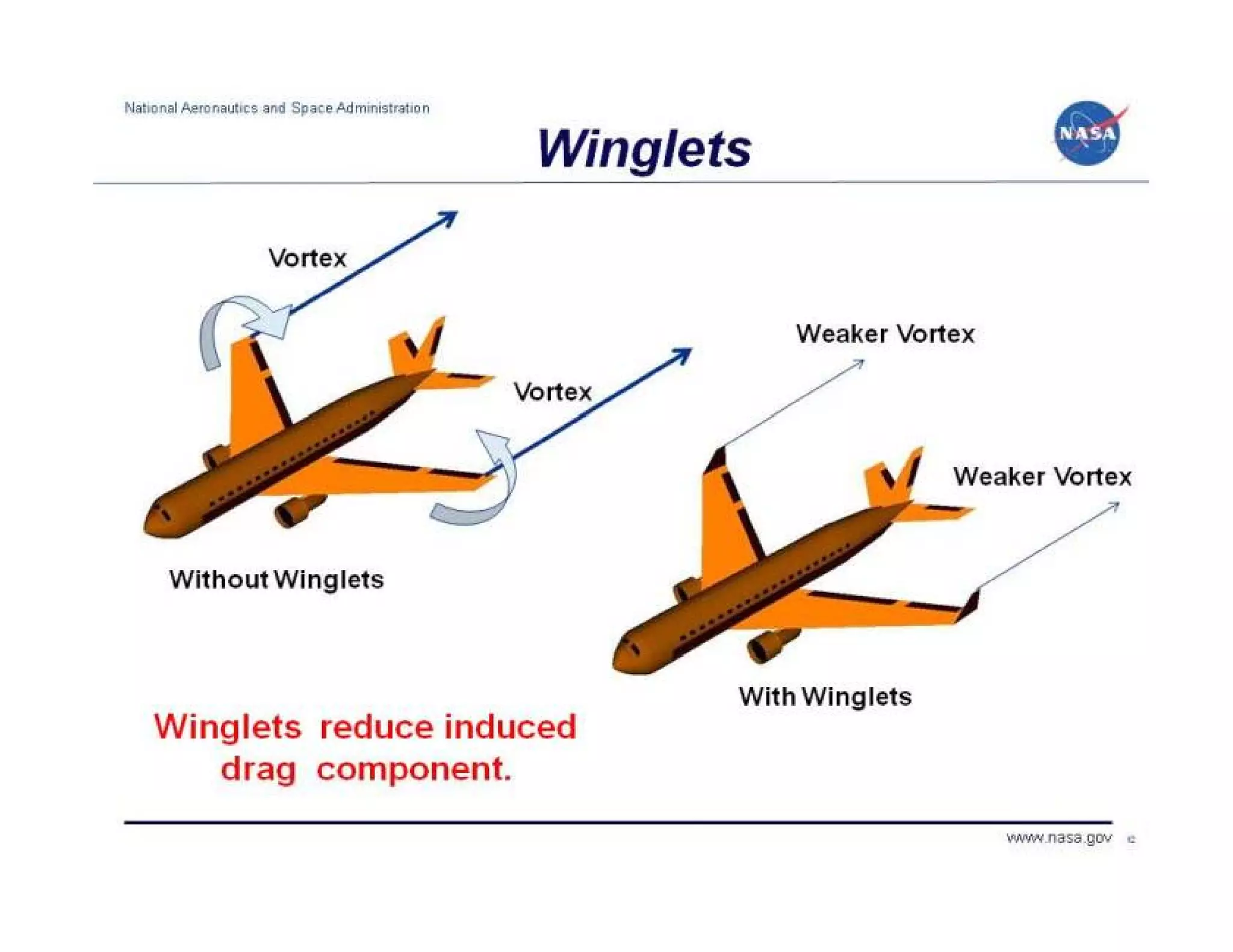
• Induced drag is the drag due to lift.
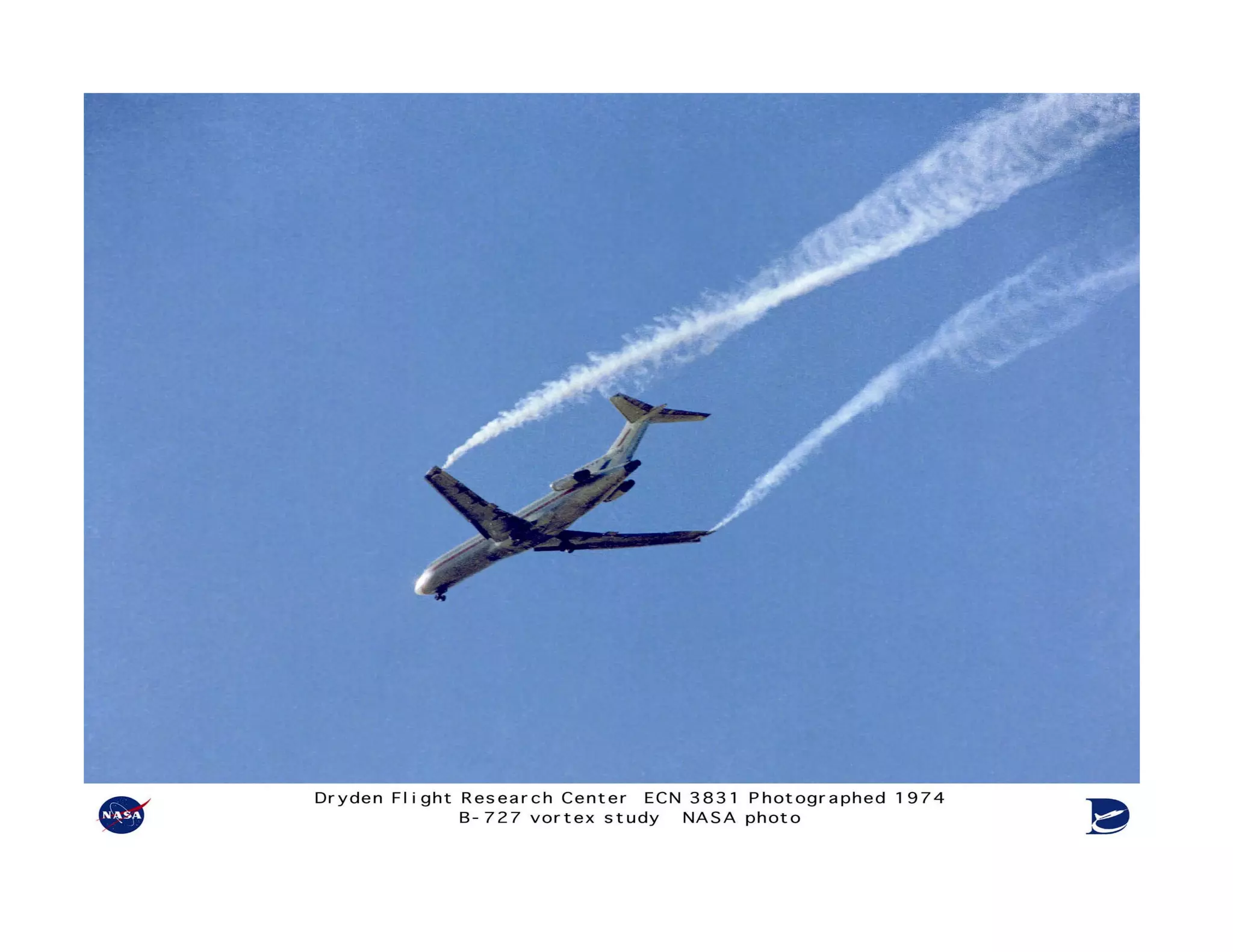
• The high pressure under the wing causes the
airflow at the tips of the wings to curl around
from bottom to top in a circular motion This
from bottom to top in a circular motion. This
results in a trailing vortex.
• Induced drag increases in direct proportion to
g p p
increases in the angle of attack.
• The greater the angle of attack (up to the critical
angle of attack ) the greater the amount of lift
developed and the greater the induced drag.
• It Varies inversely with the airspeed.
V y p
Induced drag is a byproduct of lift.
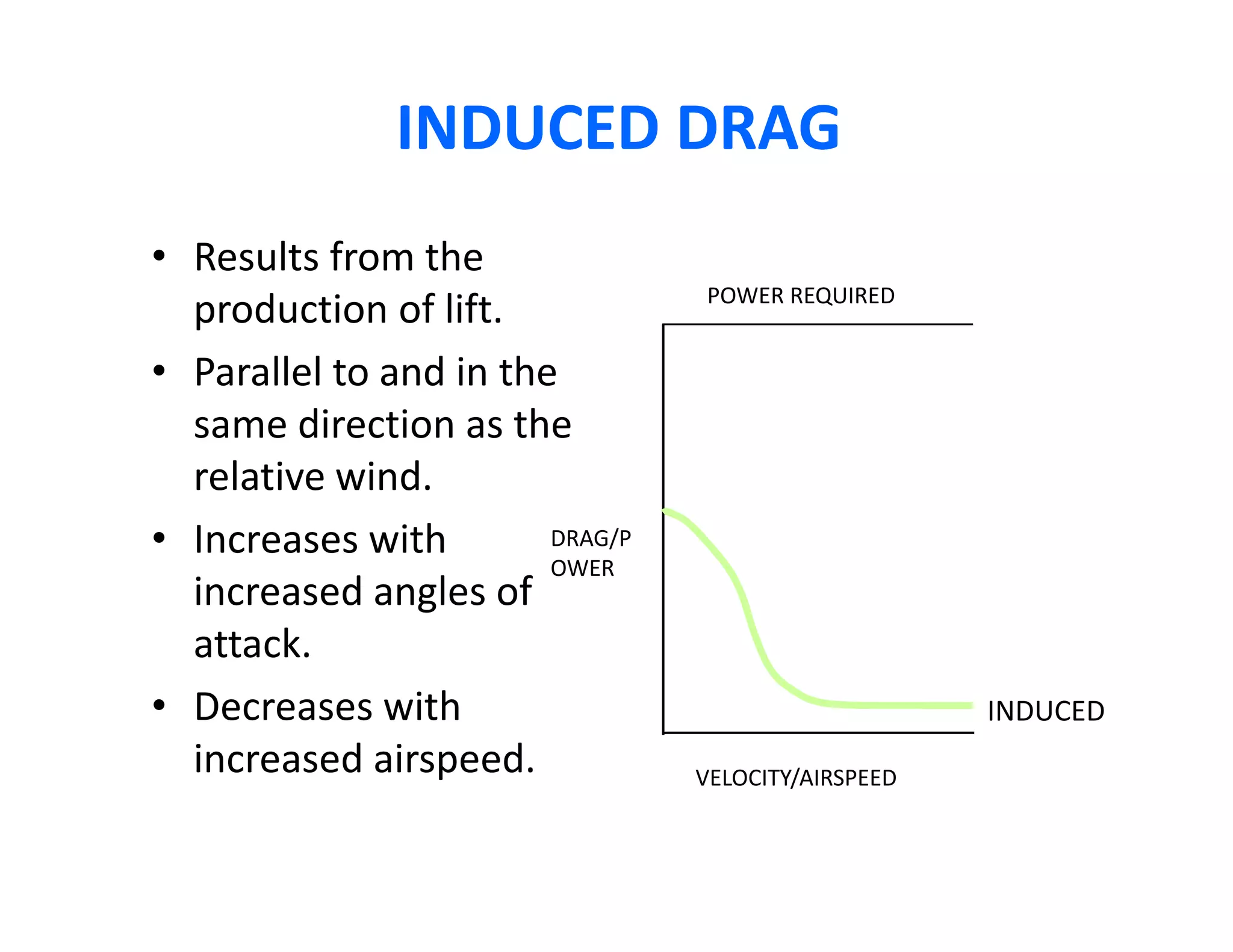
INDUCED DRAG
INDUCED DRAG
• Results from the 
d i f lif POWER REQUIRED
production of lift.
• Parallel to and in the 
di ti th
POWER REQUIRED
same direction as the 
relative wind.
• Increases with DRAG/P
• Increases with 
increased angles of 
attack.
DRAG/P
OWER
attack.
• Decreases with 
increased airspeed. VELOCITY/AIRSPEED
INDUCED
p VELOCITY/AIRSPEED
Parasitic Drag
Parasitic Drag
• The resistance of the air produced by any part of
the airplane that does not produce lift
the airplane that does not produce lift.
• Parasitic drag is made up of viscous pressure drag
(form drag) and drag due to surface roughness
(form drag), and drag due to surface roughness
(skin friction drag). and interference drag
• The parasitic drag is directly proportional to the
p g y p p
size (S), the square of the speed (V2), the density
(p) of the air.
• Parasite drag is directly proportional to the square
of the speed.
PARASITE DRAG
PARASITE DRAG
• Increases rapidly with 
airspeed. PARASITE
POWER REQUIRED
p
DRAG/
PARASITE
DRAG/ 
POWER
VELOCITY/AIRSPEED
INTERFERENCE DRAG
INTERFERENCE DRAG
C t d b th lli i f i t
• Created by the collision of airstreams.
• Causes eddy currents, restrictions, and turbulence
t th fl
to smooth flow.
• Varies directly with the airspeed.
Wave Drag
Wave Drag
• Wave drag occurs in supersonic flight, or flight
abo e the speed of so nd Wa e drag is a form
above the speed of sound. Wave drag is a form
of pressure drag.
h i f b k h d f d
• When an aircraft breaks the speed of sound, a
shock wave is created. A shock wave is a
h i l
strong pressure wave that creates a violent
change in pressure.
• High pressure pushes on the front of the
aircraft. This results in a large pressure drag
toward the rear of the aircraft
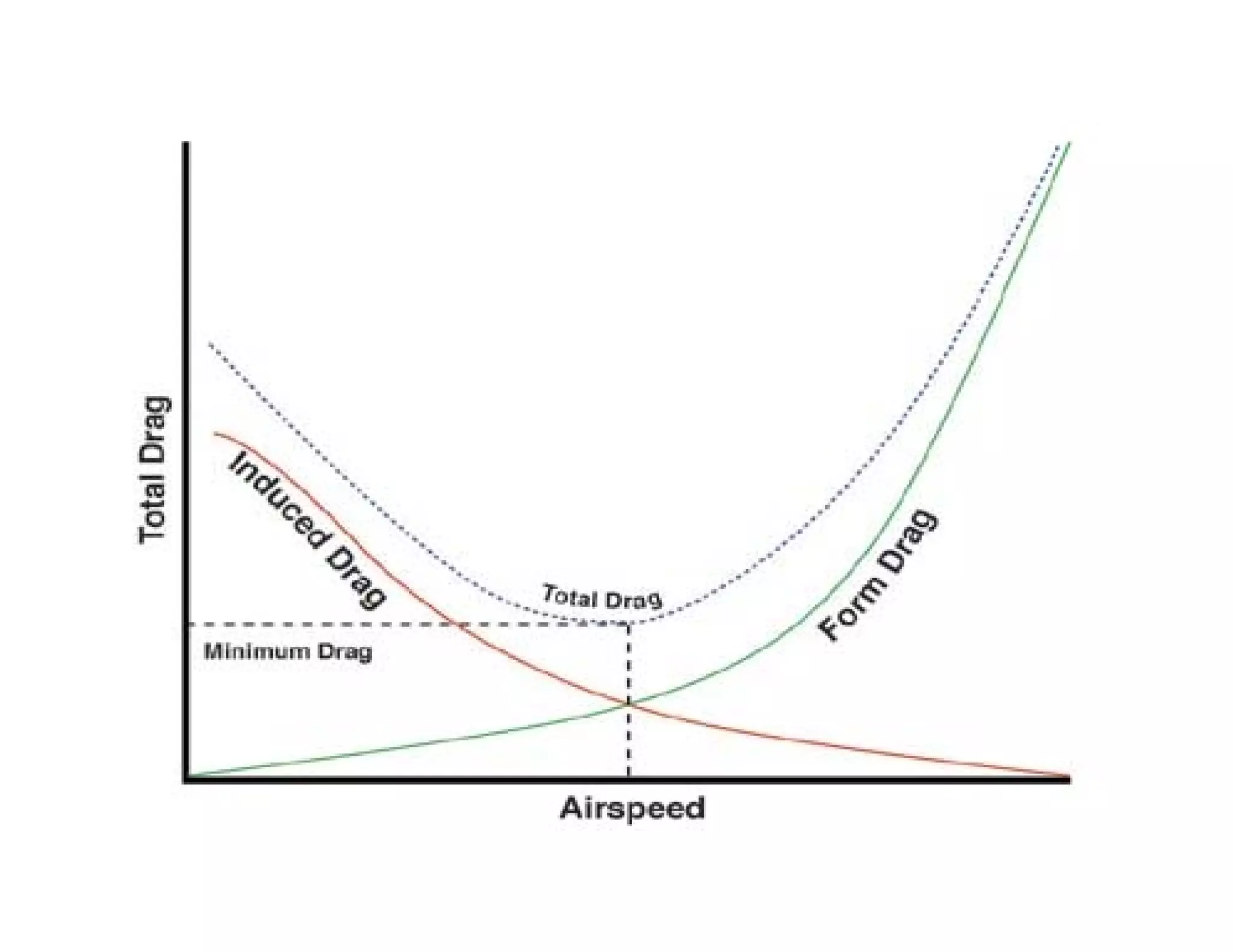
Induced Vs Parasite Drag
The distinction between induced drag and
parasite drag is significant
• In the low airspeeds most of the drag is
• In the low airspeeds, most of the drag is
induced drag. As you go slower and slower,
induced drag increases dramatically and
parasite drag becomes almost negligible.
A hi h i d i d i d i
• At high airspeeds, parasite drag is dominant
and induced drag becomes almost negligible.
• Lift and drag vary directly with the density of
Lift and drag vary directly with the density of
the air. As air density increases, lift and drag
increase and as air density decreases lift and
increase and as air density decreases, lift and
drag decrease. Thus, both lift and drag will
decrease at higher altitudes
decrease at higher altitudes.
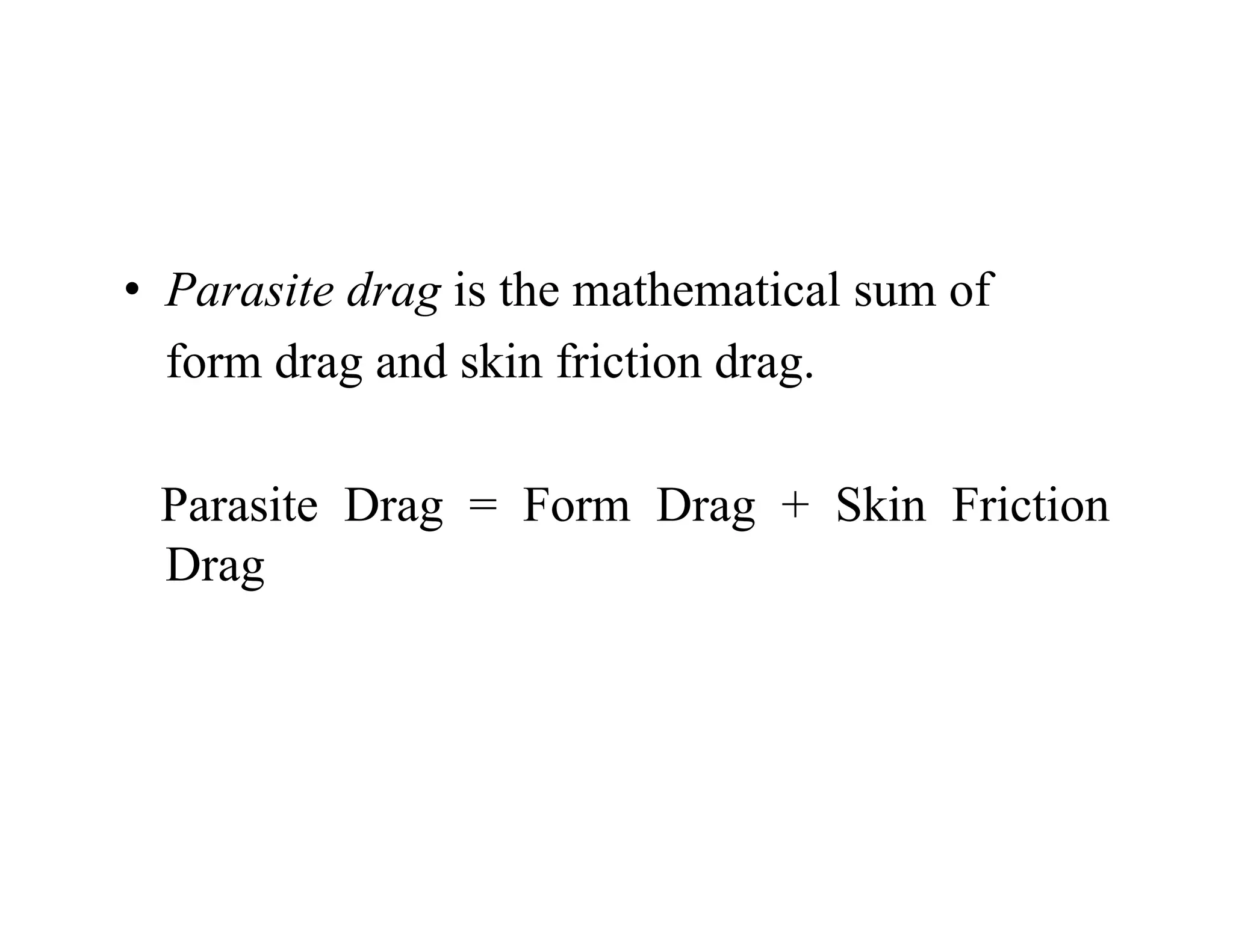
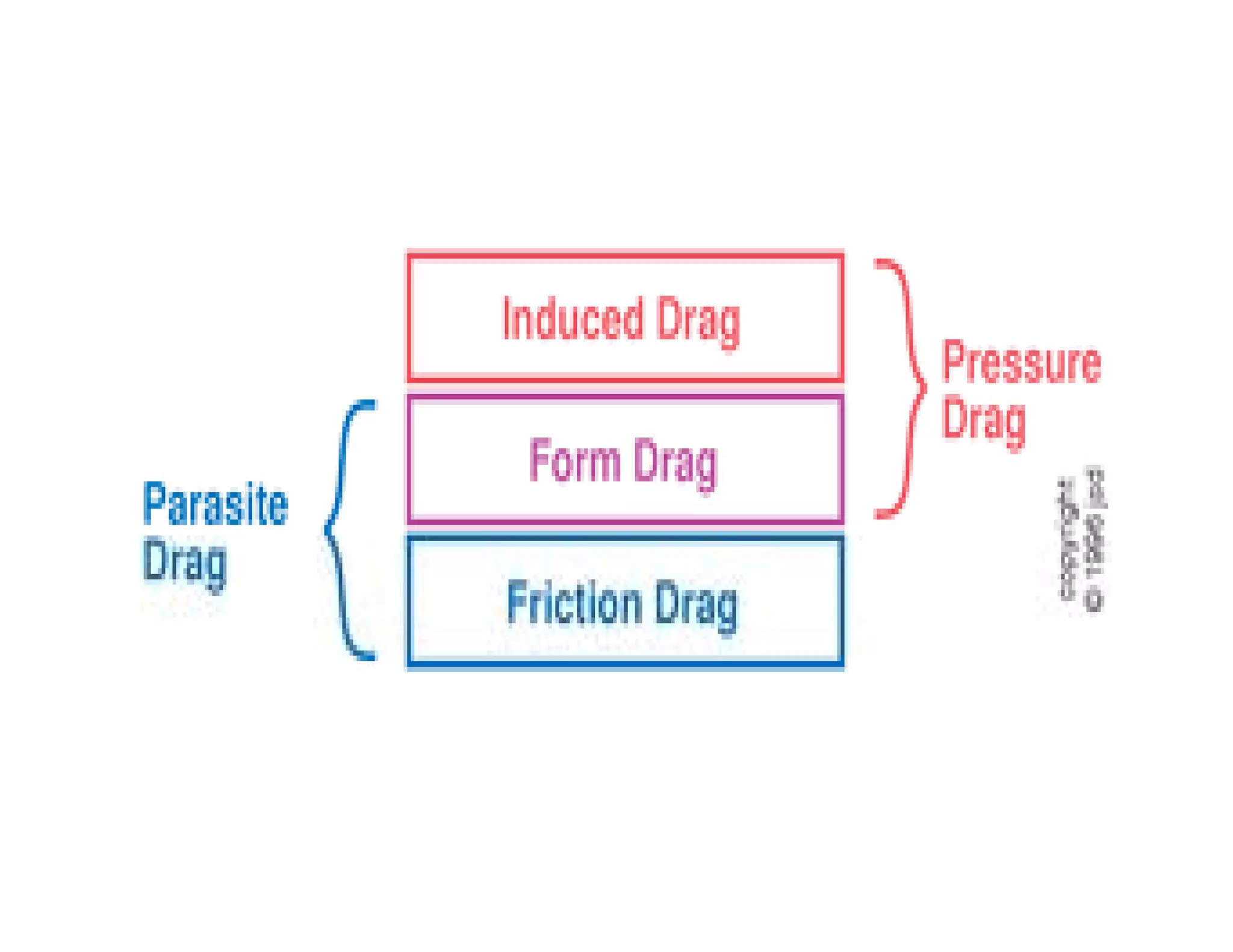
• Parasite drag is the mathematical sum of
Parasite drag is the mathematical sum of
form drag and skin friction drag.
Parasite Drag = Form Drag + Skin Friction
Drag
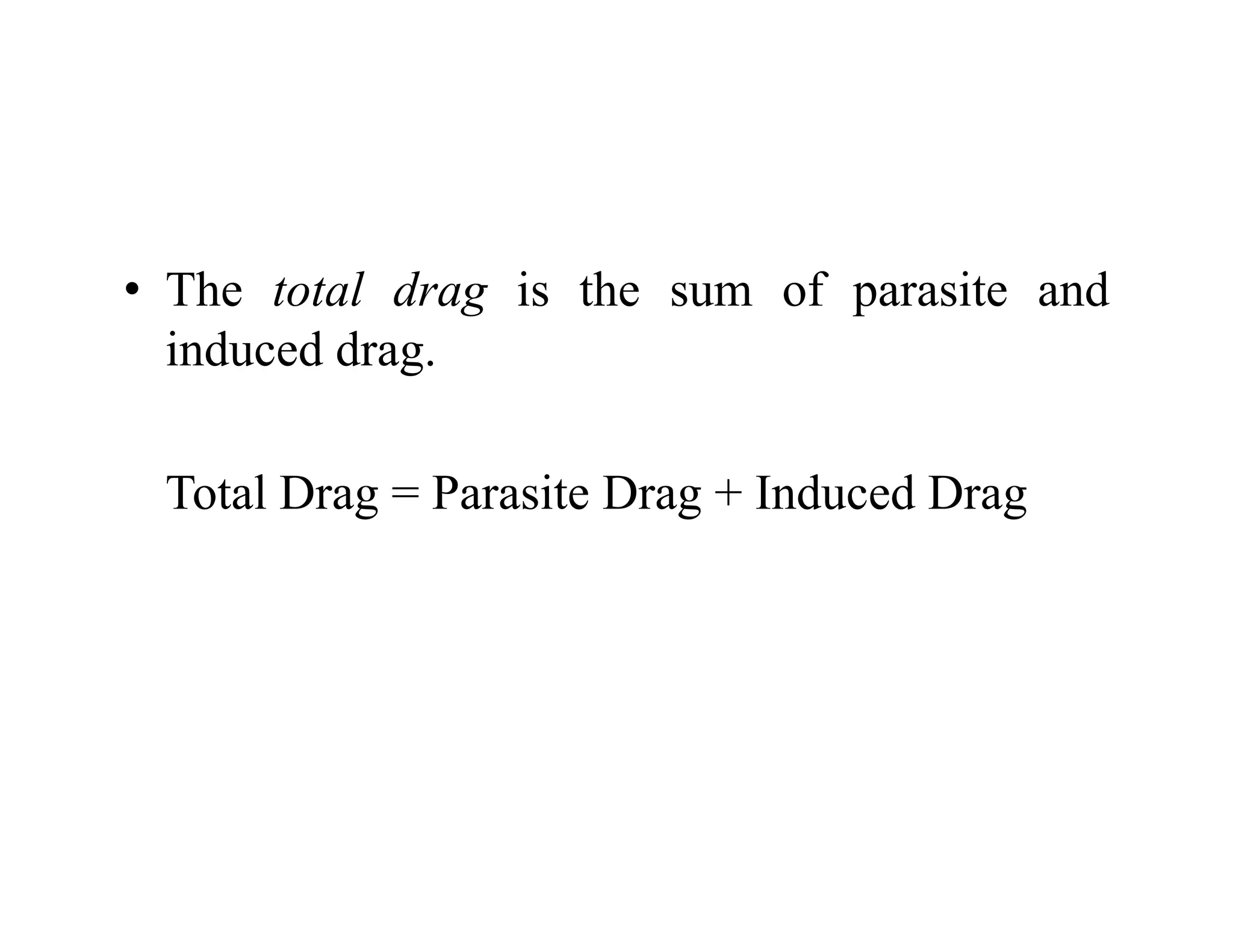
• The total drag is the sum of parasite and
The total drag is the sum of parasite and
induced drag.
Total Drag = Parasite Drag + Induced Drag
Unit I TYPES OF DRAGS

Unit I TYPES OF DRAGS

  • 1.
    Types of Drag Typesof Drag UNIT-I
  • 2.
    Wh t iD ? What is Drag? Drag is defined as the force that opposes forward motion through the atmosphere forward motion through the atmosphere and is parallel to the direction of the free-stream velocity of the airflow Drag free-stream velocity of the airflow. Drag must be overcome by thrust in order to achieve forward motion achieve forward motion.
  • 3.
  • 4.
    The equation usedto calculate drag The equation used to calculate drag
  • 5.
    Factors Affecting Drag Factors Affecting Drag ¾The surface ¾ The shape of the body p y ¾ Frontal area of the body exposed ¾ Square of the velocity of the airflow ¾ Square of the velocity of the airflow ¾ The density of the air ¾ The acceleration due to gravity
  • 6.
    Th h fth b d • The shape of the body The shape of the aircraft is made in such a h i i i f h b d i way that minimum portion of the body is exposed to the airflow. It helps in reducing the drag drag. Th S f • The Surface The less is the surface exposed to the i fl th l ill b th d airflow, the less will be the drag.
  • 7.
    • Frontal areaof the body exposed • Frontal area of the body exposed The frontal area of the body is made in such a way that it is a streamlined one which such a way that it is a streamlined one which will reduce the drag. • Velocity of airflow Th f d d i di l The force due to drag is directly proportional to the square of the velocity of the airflow In order to minimize the drag the airflow. In order to minimize the drag, the aircraft is flown when the velocity of the airflow is less airflow is less.
  • 8.
    • Density ofAir y The aircraft is made to fly in the air, when its density is relatively low due to the changing y y g g weather condition in order to reduce the drag. • Acceleration due to Gravity When the aircraft is made to fly in a less When the aircraft is made to fly in a less height that is under the influence of acceleration due to gravity, then the drag is g y g minimum.
  • 9.
    There are severaltypes of drag yp g ¾Form drag or boundary layer pressure drag ¾Form drag or boundary layer pressure drag ¾ Pressure drag ¾Skin friction drag or surface -friction drag ¾Parasite drag ¾Induced drag or Vortex drag ¾ Wave drag ¾ Wave drag.
  • 10.
    Form Drag Form Drag Formdrag profile drag or pressure drag Form drag, profile drag, or pressure drag, arises because of the shape of the object. The general size and shape of the body is the The general size and shape of the body is the most important factor in form drag B di i h l i Bodies with a larger apparent cross-section will have a higher drag than thinner bodies.
  • 11.
    • Form orpressure drag is caused by the air that is flowing over the aircraft or airfoil. • The separation of air creates turbulence and results in low and high pressure that leave a wake behind the airplane or airfoil • This opposes forward motion of aircraft pp • Since this drag is due to the shape, or form of the aircraft it is called form drag the aircraft, it is called form drag.
  • 12.
  • 13.
    Skin friction drag Skinfriction drag • Skin friction drag is caused by the actual contact of the air particles against the surface of the of the air particles against the surface of the aircraft. • Skin friction drag is an interaction between the g airplane surface and the air. • The magnitude of skin friction drag depends on the properties of both the surface of solid body and the air. h i l ki fi i d b d d • For the airplane, skin fiction drag can be reduced, and airspeed can be increased somewhat, by keeping an aircraft's surface highly polished and keeping an aircraft s surface highly polished and clean.
  • 14.
    Induced drag orVortex drag • Induced drag is the drag due to lift. • The high pressure under the wing causes the airflow at the tips of the wings to curl around from bottom to top in a circular motion This from bottom to top in a circular motion. This results in a trailing vortex. • Induced drag increases in direct proportion to g p p increases in the angle of attack. • The greater the angle of attack (up to the critical angle of attack ) the greater the amount of lift angle of attack ) the greater the amount of lift developed and the greater the induced drag. • It Varies inversely with the airspeed. V y p
  • 15.
    Induced drag isa byproduct of lift.
  • 17.
    INDUCED DRAG INDUCED DRAG • Results from the  d if lif POWER REQUIRED production of lift. • Parallel to and in the  di ti th POWER REQUIRED same direction as the  relative wind. • Increases with DRAG/P • Increases with  increased angles of  attack. DRAG/P OWER attack. • Decreases with  increased airspeed. VELOCITY/AIRSPEED INDUCED p VELOCITY/AIRSPEED
  • 19.
    Parasitic Drag Parasitic Drag •The resistance of the air produced by any part of the airplane that does not produce lift the airplane that does not produce lift. • Parasitic drag is made up of viscous pressure drag (form drag) and drag due to surface roughness (form drag), and drag due to surface roughness (skin friction drag). and interference drag • The parasitic drag is directly proportional to the p g y p p size (S), the square of the speed (V2), the density (p) of the air. • Parasite drag is directly proportional to the square of the speed.
  • 20.
  • 21.
    INTERFERENCE DRAG INTERFERENCE DRAG Ct d b th lli i f i t • Created by the collision of airstreams. • Causes eddy currents, restrictions, and turbulence t th fl to smooth flow. • Varies directly with the airspeed.
  • 22.
    Wave Drag Wave Drag •Wave drag occurs in supersonic flight, or flight abo e the speed of so nd Wa e drag is a form above the speed of sound. Wave drag is a form of pressure drag. h i f b k h d f d • When an aircraft breaks the speed of sound, a shock wave is created. A shock wave is a h i l strong pressure wave that creates a violent change in pressure. • High pressure pushes on the front of the aircraft. This results in a large pressure drag toward the rear of the aircraft
  • 23.
    Induced Vs ParasiteDrag The distinction between induced drag and The distinction between induced drag and parasite drag is significant • In the low airspeeds most of the drag is • In the low airspeeds, most of the drag is induced drag. As you go slower and slower, induced drag increases dramatically and induced drag increases dramatically and parasite drag becomes almost negligible. A hi h i d i d i d i • At high airspeeds, parasite drag is dominant and induced drag becomes almost negligible.
  • 24.
    • Lift anddrag vary directly with the density of Lift and drag vary directly with the density of the air. As air density increases, lift and drag increase and as air density decreases lift and increase and as air density decreases, lift and drag decrease. Thus, both lift and drag will decrease at higher altitudes decrease at higher altitudes.
  • 26.
    • Parasite dragis the mathematical sum of Parasite drag is the mathematical sum of form drag and skin friction drag. Parasite Drag = Form Drag + Skin Friction Drag
  • 27.
    • The totaldrag is the sum of parasite and The total drag is the sum of parasite and induced drag. Total Drag = Parasite Drag + Induced Drag