Ms. Chanda Jabeen
Lecturer
RN, RM, BSN
M.Phil. Epidemiology & Public Health
PhD (Scholar) Epidemiology & Public Health
UNIT-IX: WRITING
RESEARCH PROPOSAL
OBJECTIVE
At the completion of this unit learners will be able
to
 Define research proposal.
 Describe purposes of writing research proposal.
 Follow and complete the provided guidelines for
writing research proposal.
What is a research proposal
 A research proposal is a written document
specifying what the investigator proposes to
study and is written before the project has
commenced.
3
Purpose of a Research Proposal
 Research proposal is intended to convince
others that you have a worthwhile research
project and that you have the competence and
the work-plan to complete it.
 The purpose of a proposal is to sell your idea to
the funding agency. This means that the
investigator must convince the funding agency
that:
4
Purpose of a Research Proposal
 The problem is significant and worthy of study.
 The technical approach is novel and likely to
yield results.
 The investigator and his/her research team
is/are the right group of individuals to carry
out and accomplish the work described in the
research proposal.
5
Parts of Proposal
 Introduction
 Background of the
Study
 Statement of the
Problem
 Theoretical
Framework
 Conceptual
Framework
 Assumptions and
Hypothesis
 Scope and
Delimitations of the
Study
 Limitations of the
Study
 Definition of Terms
Introduction
 Discusses four (4) relevant ideas:
 TOPIC or subject matter: define and elaborate
using methods of paragraph development like
classification and giving examples
 IMPORTANCE of the Topic: cite the role that the
topic plays in your life and the benefits you
derive from it.
 REASONS for Choosing the topic: emphasized
what motivated you to choose the topic.
 PURPOSE of the Study: discusses the objective
of the study.
Background of The Study
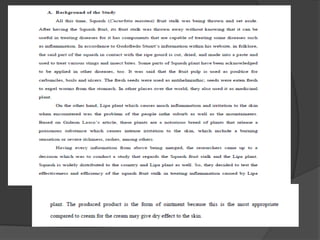
 consists of statements on what led the
investigator to launch the study.
 may have been generated by some
empirical observations, the need to
explore the problem and some other
relevant conditions.
 describe as clearly as possible the
problem intended to be addressed and
refer to the relevant literature in the field.
Background of the Study
 it is an overview of factors which have
led to the problem, comprise the
problem and historical significance
relative to the problem.
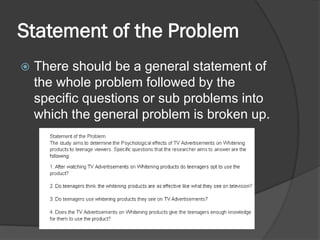
Statement of the Problem
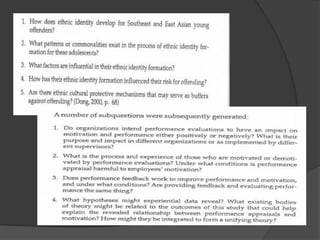
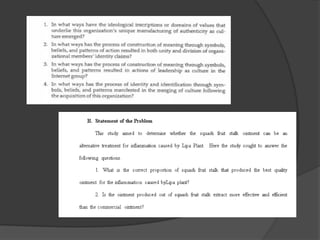
 There should be a general statement of
the whole problem followed by the
specific questions or sub problems into
which the general problem is broken up.
Theoretical Framework
 This is the foundation of the research
study. These are highly related theories
and principles that were established and
proven by authorities
 refers to the set of interrelated construct,
definitions, and prepositions that
presents a systematic view of
phenomena
Theoretical Framework
 an organized body that explains what
has been done and what has been said
on the topic or problem being
investigated.
What must be obtained from a
theory?
 The name/s of author/s of the theory
must be taken including the place and
the time / year when he or she
postulated such a principle or
generalization.
 the part or parts of the theory that are
relevant to your study
 synthesis by relating to your findings
Conceptual Framework
 a tentative explanation or theoretical
explanation of the phenomenon or
problem and serves as the basis for the
formulation research hypotheses.
 consists of the investigator’s own
position on a problem after his exposure
to various theories that have bearing on
the problem
Conceptual Framework
 The conceptual framework becomes the
central theme, the focus, the main thrust
of the study. It serves as a guide in
conducting investigation.
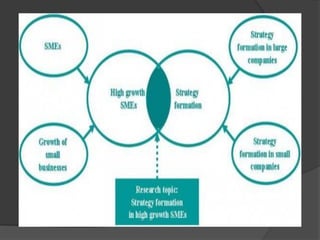
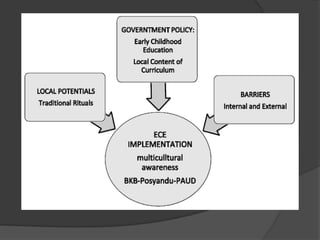
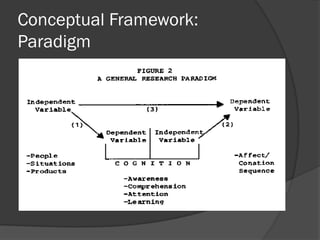
 Paradigm. A paradigm is a
diagrammatic representation of a
conceptual framework. It depicts in a
more vivid way what the conceptual
framework wants to convey.
Conceptual Framework:
Paradigm
Hypothesis
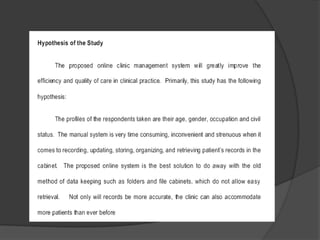
 Hypothesis is a tentative answer to a
research question, it can be derived
 from the observation before the research is
conducted. This is called inductive
hypothesis.
 from the theory. This is called deductive
hypothesis.
Kinds of Hypothesis
 Research hypothesis is usually
developed from experience, literature or
theory, or combination of these. This is
the expected relationship
between variables.
 Null hypothesis is the one that states
NO relationship between varibales. The
function is to let the research test the
hypothesis statistically.
Scope and Delimitations
 The scope and delimitations should
include the following:
 A brief statement of the general purpose of
the study.
 The subject matter and topics studied and
discussed.
 The locale of the study, where the data were
gathered or the entity to which the data
belong.
Scope and Delimitations
 The population or universe from which the
respondents were selected. This must be
large enough to make generalizations
significant.
 The period of the study. This is the time,
either months or years, during which the
data were gathered.
Limitations of the Study
 include the weaknesses of the study
beyond the control of the researcher.
 The weaknesses spring out of the
inaccuracies of the perceptions of the
respondents.
Variables
 is the operationalized way in which the
attribute is represented for further data
processing.
 Values of each variable statistically
"vary" (or are distributed) across the
variable's domain
 Basically, a variable is any factor that
can be controlled, changed, or
measured in an experiment.
Types of Variables
 The independent variable is the one
condition that you change in an
experiment.
 The dependent variable is the variable
that you measure or observe. It is the
factor that is dependent on the state of
the independent variable.
Types of Variables
 A controlled variable or constant
variable is a variable that does not
change during an experiment.
 Extraneous variables are "extra"
variables that may influence the
outcome of an experiment, but aren't
taken into account during measurement.
Significance of the Study
 The rationale, timeliness and/or
relevance of the study. The rationale,
timeliness and/or relevance of the study
to existing conditions must be explained
or discussed.
 Possible solutions to existing problems
or improvement to unsatisfactory
conditions.
Significance of the Study
 Who are to be benefited and how they
are going to be benefited. It must be
shown who are the individuals, groups,
or communities who may be placed in a
more advantageous position on account
of the study.
 Possible contribution to the fund of
knowledge.
Definition of Terms
 Only terms, words, or phrases which
have special or unique meanings in the
study are defined.
 Terms should be defined operationally,
that is how they are used in the study.
 The researcher may develop his own
definition from the characteristics of the
term defined.
Definition of Terms
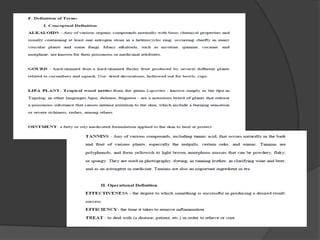
 Definitions may be taken from
encyclopedias, books, magazines and
newspaper articles, dictionaries, and
other publications but the researcher
must acknowledge his sources.
 Definitions should abe brief, clear, and
unequivocal as possible.
 Acronyms should always be spelled out
fully
References
Kumar, R. (2016). Nursing Research and Statistics.
New Delhi: Jaypee Brothers
Polit, D. F., & Beck, C. T. (2017). Nursing research:
Generating and Assessing Evidence for Nursing
Practice (10th ed.). Philadelphia: Lippincott.
Polit, D. F., & Beck, C. T. (2006). Essential of nursing
research: Methods, appraisal, & utilization.
(6thed.). Philadelphia: Lippincott.

Unit 9 Proposal Writing

  • 1.
    Ms. Chanda Jabeen Lecturer RN,RM, BSN M.Phil. Epidemiology & Public Health PhD (Scholar) Epidemiology & Public Health UNIT-IX: WRITING RESEARCH PROPOSAL
  • 2.
    OBJECTIVE At the completionof this unit learners will be able to  Define research proposal.  Describe purposes of writing research proposal.  Follow and complete the provided guidelines for writing research proposal.
  • 3.
    What is aresearch proposal  A research proposal is a written document specifying what the investigator proposes to study and is written before the project has commenced. 3
  • 4.
    Purpose of aResearch Proposal  Research proposal is intended to convince others that you have a worthwhile research project and that you have the competence and the work-plan to complete it.  The purpose of a proposal is to sell your idea to the funding agency. This means that the investigator must convince the funding agency that: 4
  • 5.
    Purpose of aResearch Proposal  The problem is significant and worthy of study.  The technical approach is novel and likely to yield results.  The investigator and his/her research team is/are the right group of individuals to carry out and accomplish the work described in the research proposal. 5
  • 6.
    Parts of Proposal Introduction  Background of the Study  Statement of the Problem  Theoretical Framework  Conceptual Framework  Assumptions and Hypothesis  Scope and Delimitations of the Study  Limitations of the Study  Definition of Terms
  • 7.
    Introduction  Discusses four(4) relevant ideas:  TOPIC or subject matter: define and elaborate using methods of paragraph development like classification and giving examples  IMPORTANCE of the Topic: cite the role that the topic plays in your life and the benefits you derive from it.  REASONS for Choosing the topic: emphasized what motivated you to choose the topic.  PURPOSE of the Study: discusses the objective of the study.
  • 9.
    Background of TheStudy  consists of statements on what led the investigator to launch the study.  may have been generated by some empirical observations, the need to explore the problem and some other relevant conditions.  describe as clearly as possible the problem intended to be addressed and refer to the relevant literature in the field.
  • 10.
    Background of theStudy  it is an overview of factors which have led to the problem, comprise the problem and historical significance relative to the problem.
  • 12.
    Statement of theProblem  There should be a general statement of the whole problem followed by the specific questions or sub problems into which the general problem is broken up.
  • 15.
    Theoretical Framework  Thisis the foundation of the research study. These are highly related theories and principles that were established and proven by authorities  refers to the set of interrelated construct, definitions, and prepositions that presents a systematic view of phenomena
  • 16.
    Theoretical Framework  anorganized body that explains what has been done and what has been said on the topic or problem being investigated.
  • 17.
    What must beobtained from a theory?  The name/s of author/s of the theory must be taken including the place and the time / year when he or she postulated such a principle or generalization.  the part or parts of the theory that are relevant to your study  synthesis by relating to your findings
  • 20.
    Conceptual Framework  atentative explanation or theoretical explanation of the phenomenon or problem and serves as the basis for the formulation research hypotheses.  consists of the investigator’s own position on a problem after his exposure to various theories that have bearing on the problem
  • 21.
    Conceptual Framework  Theconceptual framework becomes the central theme, the focus, the main thrust of the study. It serves as a guide in conducting investigation.  Paradigm. A paradigm is a diagrammatic representation of a conceptual framework. It depicts in a more vivid way what the conceptual framework wants to convey.
  • 22.
  • 23.
    Hypothesis  Hypothesis isa tentative answer to a research question, it can be derived  from the observation before the research is conducted. This is called inductive hypothesis.  from the theory. This is called deductive hypothesis.
  • 25.
    Kinds of Hypothesis Research hypothesis is usually developed from experience, literature or theory, or combination of these. This is the expected relationship between variables.  Null hypothesis is the one that states NO relationship between varibales. The function is to let the research test the hypothesis statistically.
  • 26.
    Scope and Delimitations The scope and delimitations should include the following:  A brief statement of the general purpose of the study.  The subject matter and topics studied and discussed.  The locale of the study, where the data were gathered or the entity to which the data belong.
  • 27.
    Scope and Delimitations The population or universe from which the respondents were selected. This must be large enough to make generalizations significant.  The period of the study. This is the time, either months or years, during which the data were gathered.
  • 29.
    Limitations of theStudy  include the weaknesses of the study beyond the control of the researcher.  The weaknesses spring out of the inaccuracies of the perceptions of the respondents.
  • 31.
    Variables  is theoperationalized way in which the attribute is represented for further data processing.  Values of each variable statistically "vary" (or are distributed) across the variable's domain  Basically, a variable is any factor that can be controlled, changed, or measured in an experiment.
  • 32.
    Types of Variables The independent variable is the one condition that you change in an experiment.  The dependent variable is the variable that you measure or observe. It is the factor that is dependent on the state of the independent variable.
  • 33.
    Types of Variables A controlled variable or constant variable is a variable that does not change during an experiment.  Extraneous variables are "extra" variables that may influence the outcome of an experiment, but aren't taken into account during measurement.
  • 34.
    Significance of theStudy  The rationale, timeliness and/or relevance of the study. The rationale, timeliness and/or relevance of the study to existing conditions must be explained or discussed.  Possible solutions to existing problems or improvement to unsatisfactory conditions.
  • 35.
    Significance of theStudy  Who are to be benefited and how they are going to be benefited. It must be shown who are the individuals, groups, or communities who may be placed in a more advantageous position on account of the study.  Possible contribution to the fund of knowledge.
  • 37.
    Definition of Terms Only terms, words, or phrases which have special or unique meanings in the study are defined.  Terms should be defined operationally, that is how they are used in the study.  The researcher may develop his own definition from the characteristics of the term defined.
  • 38.
    Definition of Terms Definitions may be taken from encyclopedias, books, magazines and newspaper articles, dictionaries, and other publications but the researcher must acknowledge his sources.  Definitions should abe brief, clear, and unequivocal as possible.  Acronyms should always be spelled out fully
  • 40.
    References Kumar, R. (2016).Nursing Research and Statistics. New Delhi: Jaypee Brothers Polit, D. F., & Beck, C. T. (2017). Nursing research: Generating and Assessing Evidence for Nursing Practice (10th ed.). Philadelphia: Lippincott. Polit, D. F., & Beck, C. T. (2006). Essential of nursing research: Methods, appraisal, & utilization. (6thed.). Philadelphia: Lippincott.