Sample Titles
TEACHERS’ QUALIFICATION AND
TECHNOLOGICAL COMPETENCE OF
TECHNOLOGICAL VOCATIONAL AND
LIVELIHOOD EDUCATION STUDENTS
Parts of Chapter 1
Introduction
Statement of the
Problem
Theoretical
Framework
Conceptual
Framework
Hypothesis
Scope and
Delimitations of
the Study
Definition of
Terms
Introduction
Discusses four (4) relevant ideas:
TOPIC or subject matter: define and elaborate using
methods of paragraph development like classification and
giving examples
IMPORTANCE of the Topic: cite the role that the topic plays
in your life and the benefits you derive from it.
REASONS for Choosing the topic: emphasized
what motivated you to choose the topic.
PURPOSE of the Study: discusses the objective of the
study.
Background of The Study
consists of statements on what led the
investigator to launch the study.
may have been generated by some
empirical observations, the need to
explore the problem and some other
relevant conditions.
describe as clearly as possible the problem
intended to be addressed and refer to the
relevant literature in the field.
Background of the Study
it is an overview of factors
which have led to the problem,
comprise the problem and
historical significance relative to
the problem.
Statement of the Problem
There should be a general
statement of the whole problem
followed by the specific
questions or sub problems into
which the general problem is
broken up.
Theoretical Framework
This is the foundation of the research study.
These are highly related theories and
principles that were established and proven
by authorities
refers to the set of interrelated construct,
definitions, and prepositions that presents a
systematic view of phenomena
Theoretical Framework
an organized body that
explains what has been done
and what has been said on the
topic or problem being
investigated.
What must be obtained from a theory?
The name/s of author/s of the theory must be
taken including the place and the time / year
when he or she postulated such a principle
or generalization.
the part or parts of the theory that are
relevant to your study
synthesis by relating to your findings
Conceptual Framework
a tentative explanation or theoretical
explanation of the phenomenon or problem
and serves as the basis for the formulation
research hypotheses.
consists of the investigator’s own position on
a problem after his exposure to various
theories that have bearing on the problem
Conceptual Framework
The conceptual framework becomes the
central theme, the focus, the main thrust of the
study. It serves as a guide in conducting
investigation.
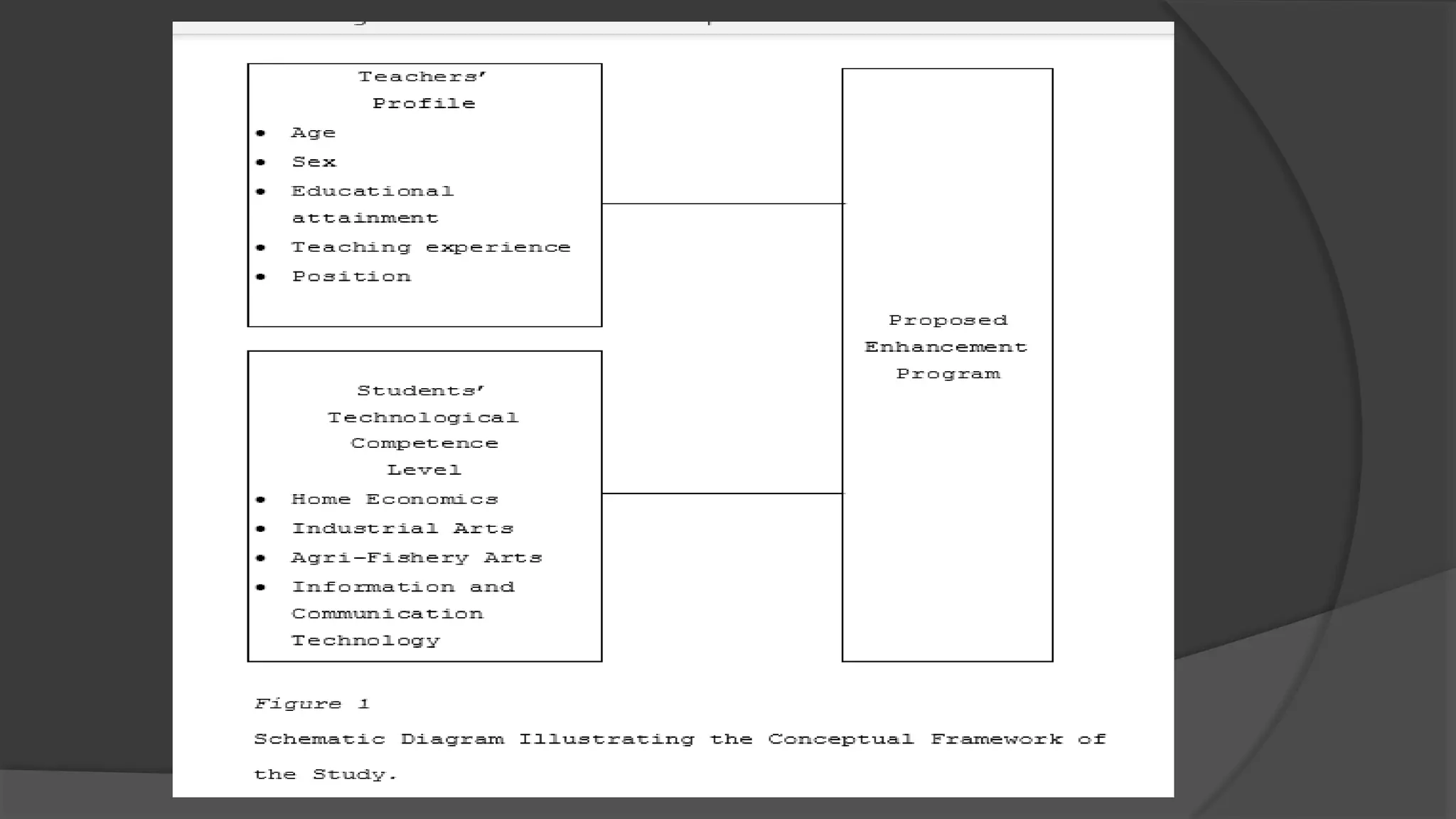
Paradigm. A paradigm is a diagrammatic
representation of a conceptual framework. It
depicts in a more vivid way what the
conceptual framework wants to convey.
Deductive Reasoning
: In deductive reasoning, a conclusion is reached
reductively by applying general rules that hold
over the entirety of
a closed domain of discourse, narrowing the
range under consideration until only the
conclusion is left.
a method of reasoning by which concrete
applications or consequences are deducted from
general principles or theorems
Assumptions and Hypothesis
Historical and descriptive investigations do not
need explicit hypotheses and assumptions. Only
experimental studies need expressly written
assumptions and hypotheses.
Assumptions- a belief that forms one of the
bases for the research. This belief is not to be
tested or supported with empirical data. Very
often belief is not stated in a research proposal.
Hypothesis
is a tentative answer to a research question,
it can be derived
fromthe observation before the research is
conducted. This is called inductive hypothesis.
from the theory. This is called deductive
hypothesis.
There is no significant relationship to…….
Kinds of Hypothesis
Research hypothesis is usually developed from
experience, literature or theory, or combination of
these. This is the expected relationship
between variables.
Null hypothesis is the one that states NO
relationship between varibales. The function is to
let the research test the hypothesis statistically.
Scope and Limitations
The scope and delimitations should
include the following:
A brief statement of the general purpose of the
study.
The subject matter and topics studied and
discussed.
The locale of the study, where the data were
gathered or the entity to which the data belong.
The population or universe from which the
respondents were selected. This must be
large enough to make generalizations
significant.
The period of the study. This is the time,
either months or years, during which the
data were gathered.
Scope and Delimitations of the Study
Delimitations of the Study
include the weaknesses of the
study beyond the control of the
researcher.
The weaknesses spring out of the
inaccuracies of the perceptions of
the respondents.
Significance of the Study
The rationale, timeliness and/or relevance
of the study. The rationale, timeliness
and/or relevance of the study to existing
conditions must be explained or
discussed.
Possible solutions to existing problems or
improvement to unsatisfactory conditions.
Significance of the Study
Who are to be benefited and how they are
going to be benefited. It must be shown
who are the individuals, groups, or
communities who may be placed in a
more advantageous position on account
of the study.
Possible contribution to the fund of
knowledge.
Significance of the Study
Possible implications. It should be
discussed here that the implications
include the possible causes of the
problems discovered, the possible
effects of the problems, and the remedial
measures to solve the problems.
Variables
is the operationalized way in which the attribute is
represented for further data processing.
Values of each variable statistically "vary" (or
are distributed) across the variable's domain
Basically, a variable is any factor that can be
controlled, changed, or measured in an
experiment.
Types of Variables
The independent variable is the one
condition that you change in an
experiment.
The dependent variable is the variable
that you measure or observe. It is the
factor that is dependent on the state of
the independent variable.
Types of Variables
A controlled variable or constant
variable is a variable that does not
change during an experiment.
Extraneous variables are "extra" variables
that may influence the outcome of an
experiment, but aren't taken into account
during measurement.
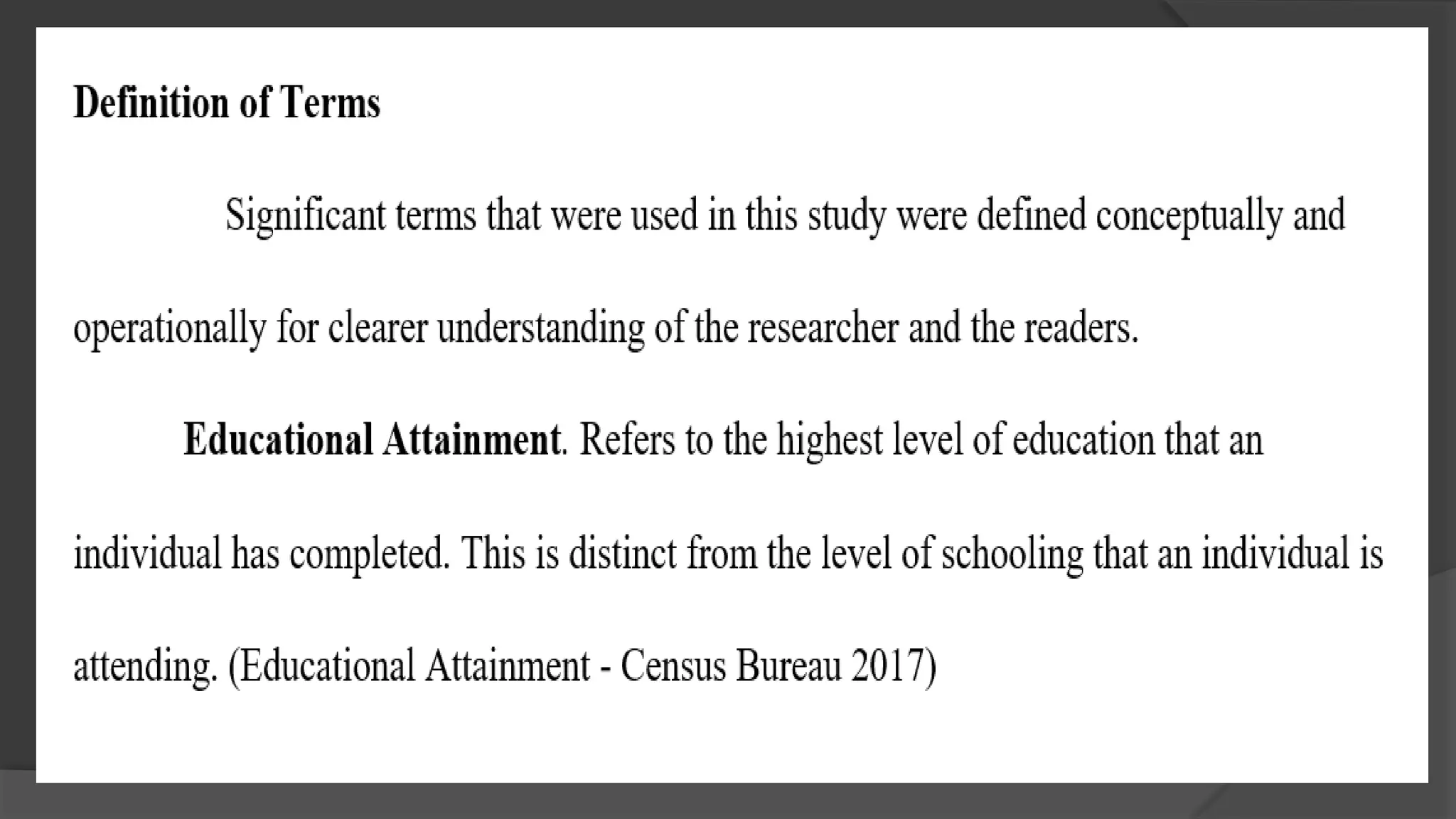
Definition of Terms
Only terms, words, or phrases which have
special or unique meanings in the study are
defined.
Terms should be defined operationally, that
is how they are used in the study.
The researcher may develop his own
definition from the characteristics of the term
defined.
Definition of Terms
Definitions may be taken from
encyclopedias, books, magazines and
newspaper articles, dictionaries, and other
publications but the researcher must
acknowledge his sources.
Definitions should abe brief, clear, and
unequivocal as possible.
Acronyms should always be spelled out fully
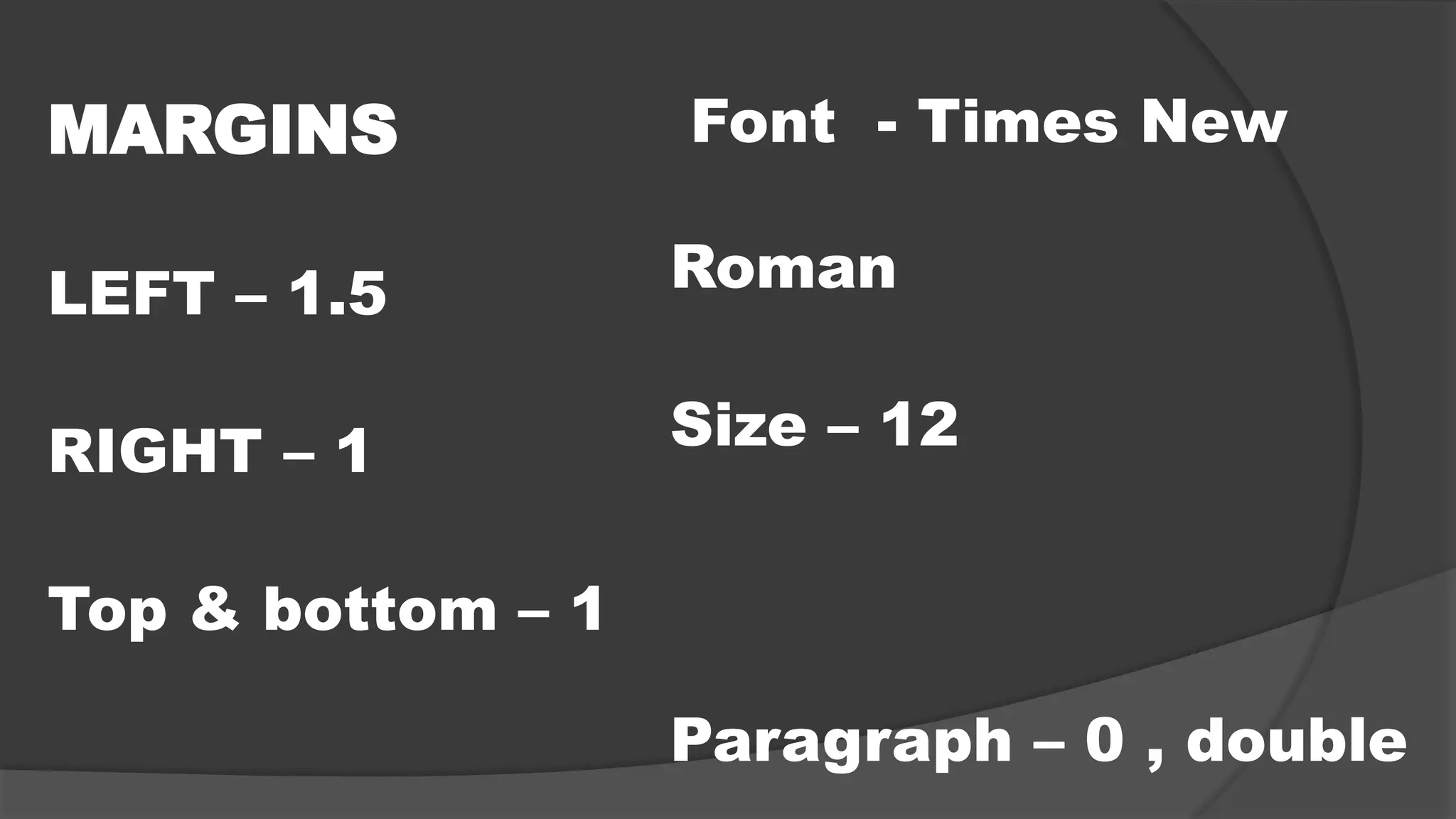
MARGINS
LEFT – 1.5
RIGHT – 1
Top & bottom – 1
Font - Times New
Roman
Size – 12
Paragraph – 0 , double
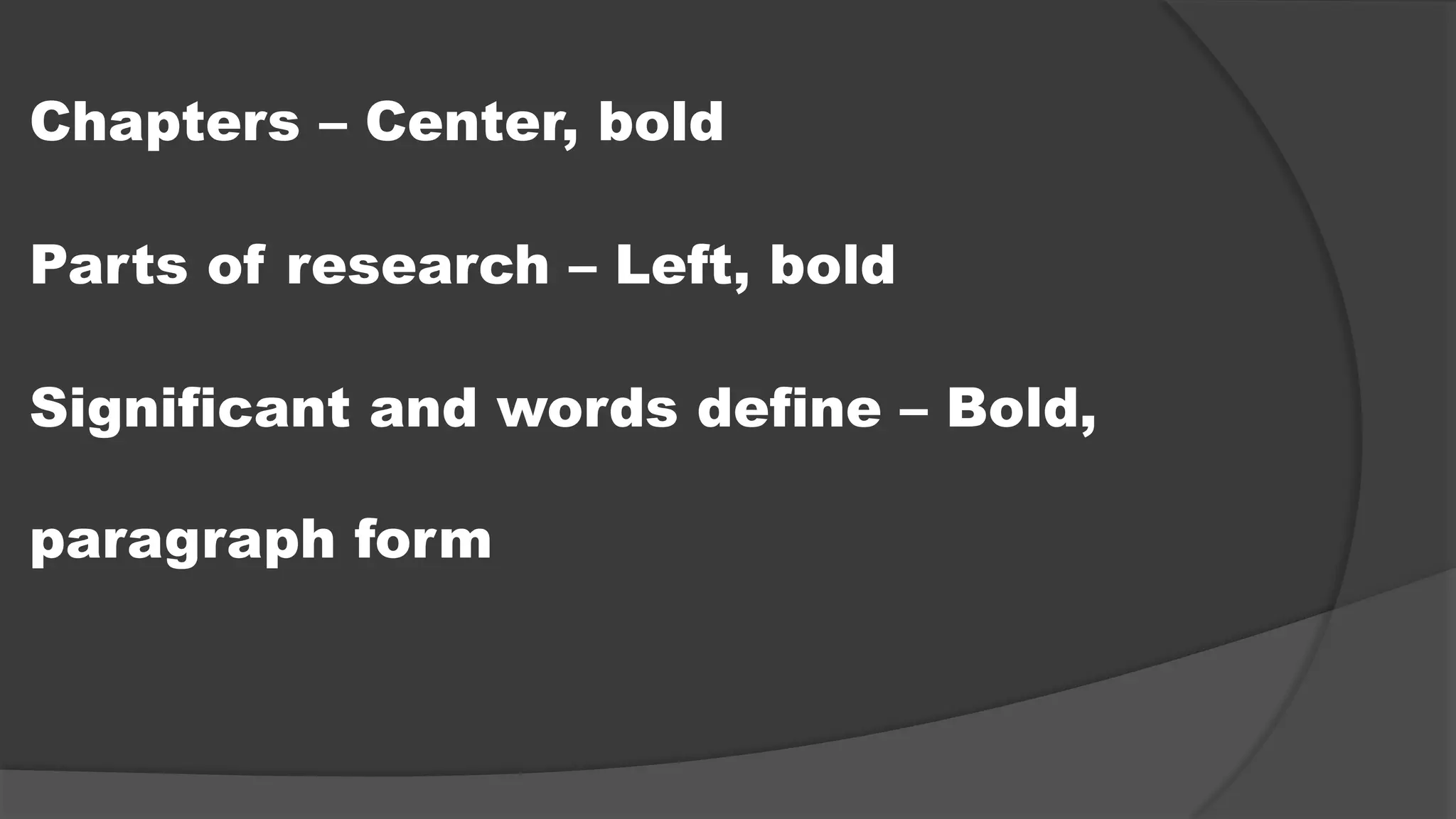
Chapters – Center, bold
Parts of research – Left, bold
Significant and words define – Bold,
paragraph form
A4 size bond paper
References – APA format
chapter1 lesson.pptx

chapter1 lesson.pptx

  • 2.
    Sample Titles TEACHERS’ QUALIFICATIONAND TECHNOLOGICAL COMPETENCE OF TECHNOLOGICAL VOCATIONAL AND LIVELIHOOD EDUCATION STUDENTS
  • 3.
    Parts of Chapter1 Introduction Statement of the Problem Theoretical Framework Conceptual Framework Hypothesis Scope and Delimitations of the Study Definition of Terms
  • 4.
    Introduction Discusses four (4)relevant ideas: TOPIC or subject matter: define and elaborate using methods of paragraph development like classification and giving examples IMPORTANCE of the Topic: cite the role that the topic plays in your life and the benefits you derive from it. REASONS for Choosing the topic: emphasized what motivated you to choose the topic. PURPOSE of the Study: discusses the objective of the study. Background of The Study
  • 5.
    consists of statementson what led the investigator to launch the study. may have been generated by some empirical observations, the need to explore the problem and some other relevant conditions. describe as clearly as possible the problem intended to be addressed and refer to the relevant literature in the field.
  • 6.
    Background of theStudy it is an overview of factors which have led to the problem, comprise the problem and historical significance relative to the problem.
  • 10.
    Statement of theProblem There should be a general statement of the whole problem followed by the specific questions or sub problems into which the general problem is broken up.
  • 14.
    Theoretical Framework This isthe foundation of the research study. These are highly related theories and principles that were established and proven by authorities refers to the set of interrelated construct, definitions, and prepositions that presents a systematic view of phenomena
  • 15.
    Theoretical Framework an organizedbody that explains what has been done and what has been said on the topic or problem being investigated.
  • 16.
    What must beobtained from a theory? The name/s of author/s of the theory must be taken including the place and the time / year when he or she postulated such a principle or generalization. the part or parts of the theory that are relevant to your study synthesis by relating to your findings
  • 18.
    Conceptual Framework a tentativeexplanation or theoretical explanation of the phenomenon or problem and serves as the basis for the formulation research hypotheses. consists of the investigator’s own position on a problem after his exposure to various theories that have bearing on the problem
  • 19.
    Conceptual Framework The conceptualframework becomes the central theme, the focus, the main thrust of the study. It serves as a guide in conducting investigation. Paradigm. A paradigm is a diagrammatic representation of a conceptual framework. It depicts in a more vivid way what the conceptual framework wants to convey.
  • 23.
    Deductive Reasoning : Indeductive reasoning, a conclusion is reached reductively by applying general rules that hold over the entirety of a closed domain of discourse, narrowing the range under consideration until only the conclusion is left. a method of reasoning by which concrete applications or consequences are deducted from general principles or theorems
  • 24.
    Assumptions and Hypothesis Historicaland descriptive investigations do not need explicit hypotheses and assumptions. Only experimental studies need expressly written assumptions and hypotheses. Assumptions- a belief that forms one of the bases for the research. This belief is not to be tested or supported with empirical data. Very often belief is not stated in a research proposal.
  • 25.
    Hypothesis is a tentativeanswer to a research question, it can be derived fromthe observation before the research is conducted. This is called inductive hypothesis. from the theory. This is called deductive hypothesis. There is no significant relationship to…….
  • 26.
    Kinds of Hypothesis Researchhypothesis is usually developed from experience, literature or theory, or combination of these. This is the expected relationship between variables. Null hypothesis is the one that states NO relationship between varibales. The function is to let the research test the hypothesis statistically.
  • 27.
    Scope and Limitations Thescope and delimitations should include the following: A brief statement of the general purpose of the study. The subject matter and topics studied and discussed. The locale of the study, where the data were gathered or the entity to which the data belong.
  • 28.
    The population oruniverse from which the respondents were selected. This must be large enough to make generalizations significant. The period of the study. This is the time, either months or years, during which the data were gathered. Scope and Delimitations of the Study
  • 29.
    Delimitations of theStudy include the weaknesses of the study beyond the control of the researcher. The weaknesses spring out of the inaccuracies of the perceptions of the respondents.
  • 31.
    Significance of theStudy The rationale, timeliness and/or relevance of the study. The rationale, timeliness and/or relevance of the study to existing conditions must be explained or discussed. Possible solutions to existing problems or improvement to unsatisfactory conditions.
  • 32.
    Significance of theStudy Who are to be benefited and how they are going to be benefited. It must be shown who are the individuals, groups, or communities who may be placed in a more advantageous position on account of the study. Possible contribution to the fund of knowledge.
  • 33.
    Significance of theStudy Possible implications. It should be discussed here that the implications include the possible causes of the problems discovered, the possible effects of the problems, and the remedial measures to solve the problems.
  • 37.
    Variables is the operationalizedway in which the attribute is represented for further data processing. Values of each variable statistically "vary" (or are distributed) across the variable's domain Basically, a variable is any factor that can be controlled, changed, or measured in an experiment.
  • 38.
    Types of Variables Theindependent variable is the one condition that you change in an experiment. The dependent variable is the variable that you measure or observe. It is the factor that is dependent on the state of the independent variable.
  • 39.
    Types of Variables Acontrolled variable or constant variable is a variable that does not change during an experiment. Extraneous variables are "extra" variables that may influence the outcome of an experiment, but aren't taken into account during measurement.
  • 40.
    Definition of Terms Onlyterms, words, or phrases which have special or unique meanings in the study are defined. Terms should be defined operationally, that is how they are used in the study. The researcher may develop his own definition from the characteristics of the term defined.
  • 41.
    Definition of Terms Definitionsmay be taken from encyclopedias, books, magazines and newspaper articles, dictionaries, and other publications but the researcher must acknowledge his sources. Definitions should abe brief, clear, and unequivocal as possible. Acronyms should always be spelled out fully
  • 44.
    MARGINS LEFT – 1.5 RIGHT– 1 Top & bottom – 1 Font - Times New Roman Size – 12 Paragraph – 0 , double
  • 45.
    Chapters – Center,bold Parts of research – Left, bold Significant and words define – Bold, paragraph form
  • 46.
    A4 size bondpaper References – APA format