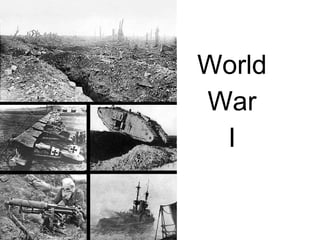
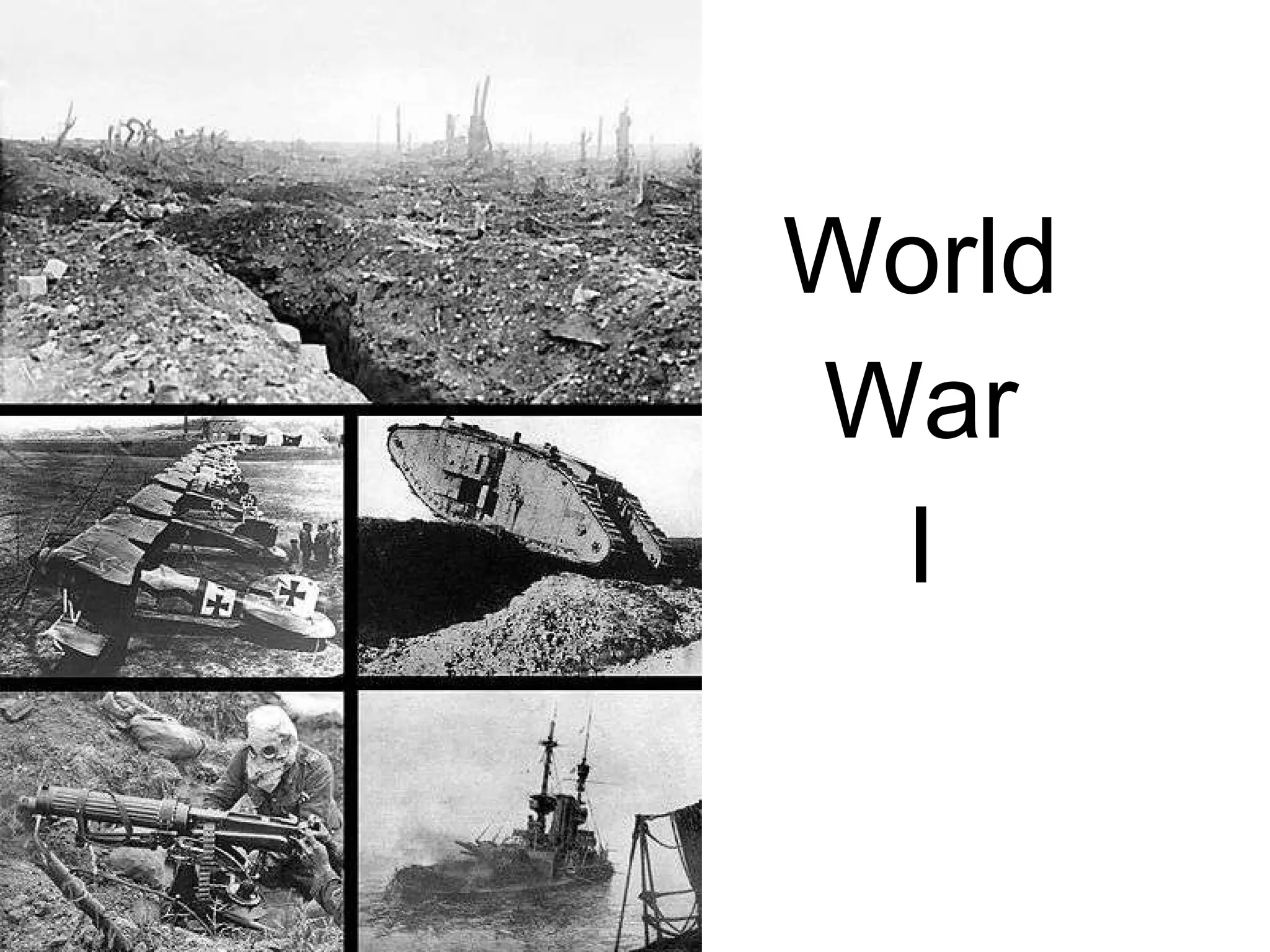
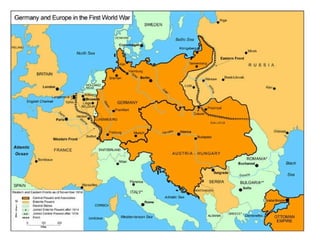
World War I
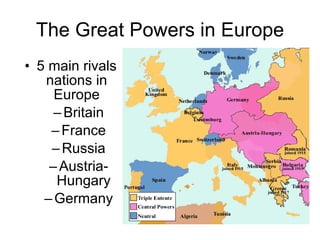
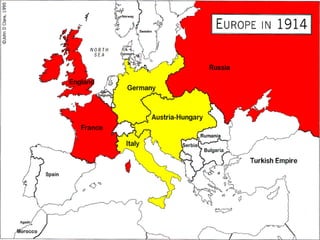
The Great Powers in Europe 5 main rivals nations in Europe Britain France Russia Austria-Hungary Germany
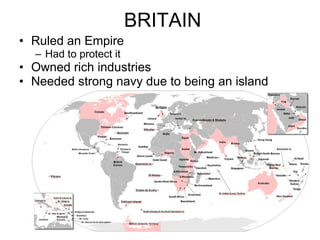
BRITAIN Ruled an Empire Had to protect it Owned rich industries Needed strong navy due to being an island
FRANCE Owerseas Empire Resented losing Alsace and Lorraine Franco-Prussian War 1871


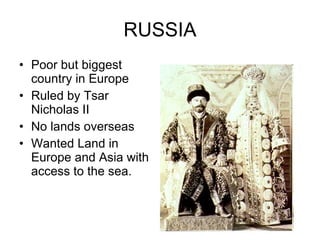
RUSSIA Poor but biggest country in Europe Ruled by Tsar Nicholas II No lands overseas Wanted Land in Europe and Asia with access to the sea.
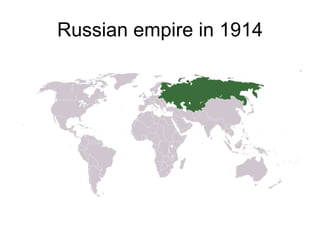
Russian empire in 1914
 
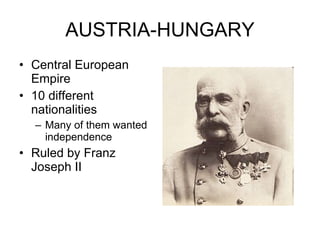
AUSTRIA-HUNGARY Central European Empire  10 different nationalities Many of them wanted independence Ruled by Franz Joseph II
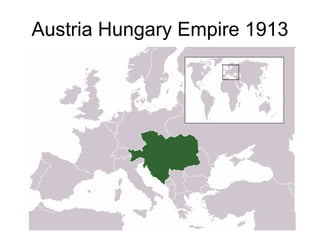
Austria Hungary Empire 1913
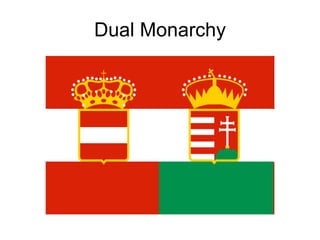
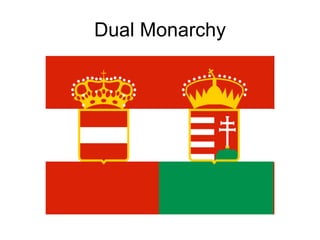
Dual Monarchy
GERMANY Small Empire Ruled by Kaiser Wilhelm II Jelaous of Britain’s superior sea power and colonies Wanted to increase German influence and wealth
 
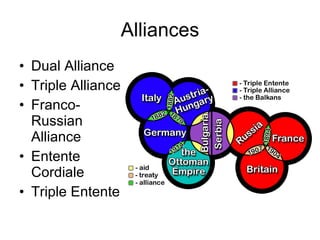
Alliances Dual Alliance Triple Alliance Franco-Russian Alliance Entente Cordiale Triple Entente
Causes of WW1
Nr.1 Assassination in Sarajevo
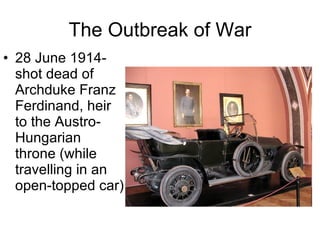
The Outbreak of War 28 June 1914- shot dead of Archduke Franz Ferdinand, heir to the Austro-Hungarian throne (while travelling in an open-topped car)
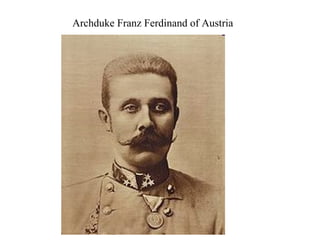
Archduke Franz Ferdinand of Austria
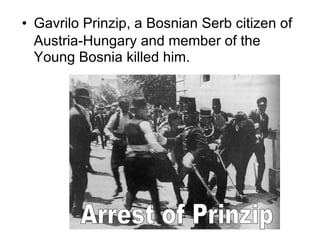
Gavrilo Prinzip, a Bosnian Serb citizen of Austria-Hungary and member of the   Young Bosnia killed him. Arrest of Prinzip
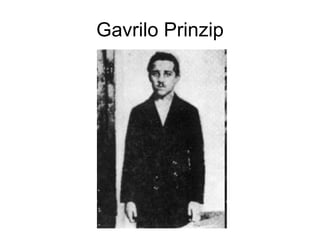
Gavrilo Prinzip
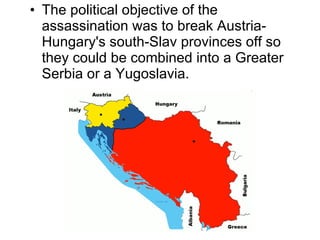
The political objective of the assassination was to break Austria-Hungary's south-Slav provinces off so they could be combined into a Greater Serbia or a Yugoslavia.
The assassins belonged to the movement called Young Bosnia (or Black Hand).  Serbian military officers stood behind the attack.
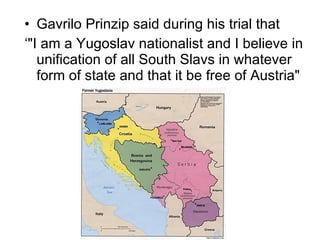
Gavrilo Prinzip said during his trial that  ‘ "I am a Yugoslav nationalist and I believe in unification of all South Slavs in whatever form of state and that it be free of Austria"
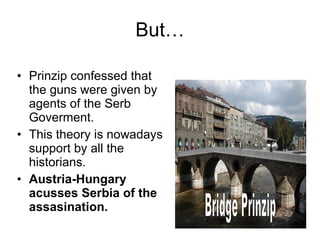
But… Prinzip confessed that the guns were given by agents of the Serb Goverment.  This theory is nowadays support by all the historians. Austria-Hungary acusses Serbia of the assasination. Bridge Prinzip
On 23 July 1914, an ultimatum was sent to Serbia with ten demands. Some were extreme. Serbia rejected the sixth demand  6. To take judicial  proceedings against the guilties
A-H will take part in the investigations
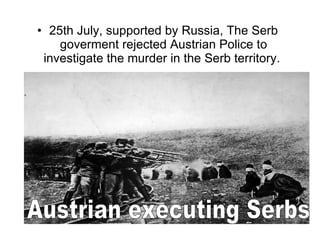
25th July, supported by Russia, The Serb goverment rejected Austrian Police to investigate the murder in the Serb territory.  Austrian executing Serbs
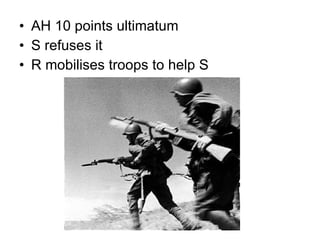
AH 10 points ultimatum S refuses it R mobilises troops to help S
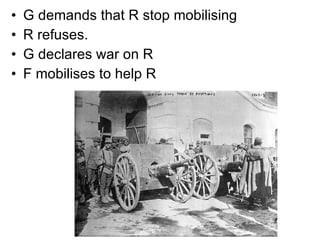
G demands that R stop mobilising R refuses.  G declares war on R F mobilises to help R
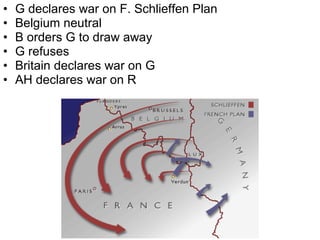
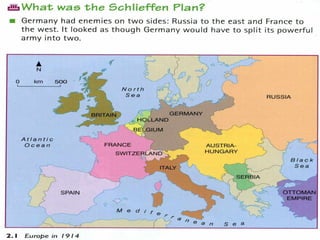
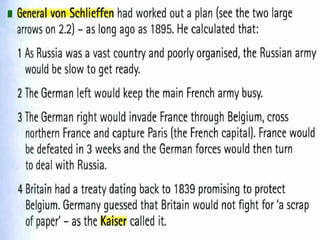
G declares war on F. Schlieffen Plan Belgium neutral B orders G to draw away G refuses Britain declares war on G AH declares war on R
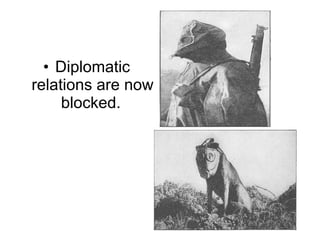
Diplomatic relations are now blocked.
Nr.2 Alliances
 
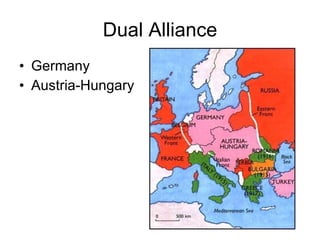
Dual Alliance Germany  Austria-Hungary
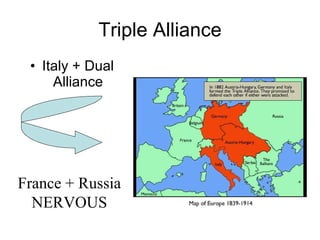
Triple Alliance Italy + Dual Alliance France + Russia NERVOUS
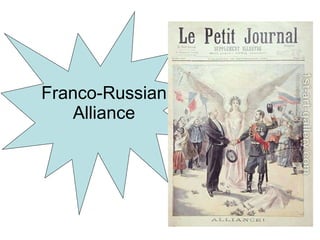
Franco-Russian Alliance
ENTENTE NO MILITARY AGREEMENTS Finally , it changed
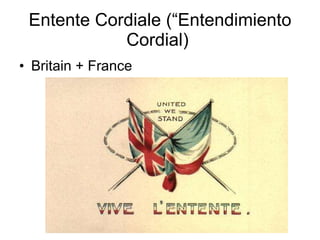
Entente Cordiale (“Entendimiento Cordial)  Britain + France
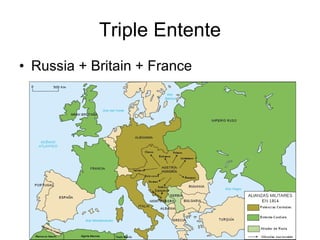
Triple Entente Russia + Britain + France
Results More tension G + AH + I felt surrounded R worried about AH intentions in Balkans UK + G building best navy in the world
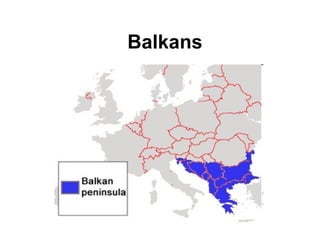
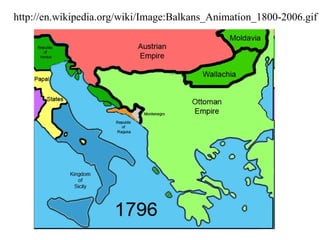
Balkans
http://en.wikipedia.org/wiki/Image:Balkans_Animation_1800-2006.gif
Nr. 3 Tension builds: Imperialism and militarism
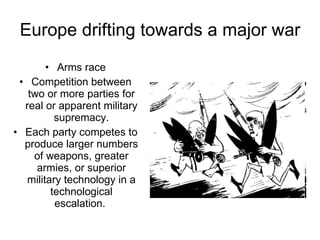
Europe drifting towards a major war Arms race Competition between two or more parties for real or apparent military supremacy. Each party competes to produce larger numbers of weapons, greater armies, or superior military technology in a technological escalation.
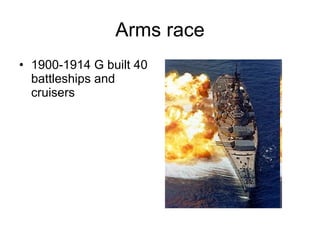
Arms race 1900-1914 G built 40 battleships and cruisers
Britain policy Two Power Standard Royal Navy always had to be as big as the next 2 strongest navies in Europe put together
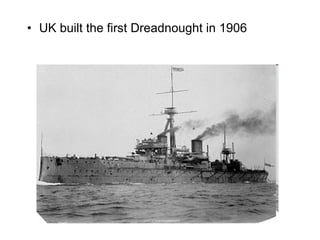
UK built the first Dreadnought in 1906
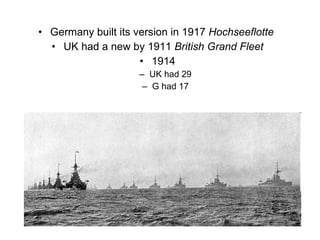
Germany built its version in 1917  Hochseeflotte   UK had a new by 1911  British Grand Fleet 1914 UK had 29 G had 17
Nr. 4 Nationalism
Nationalism means being a strong supporter of the rights and interests of one's country.
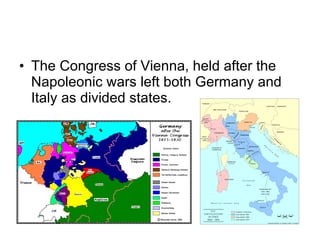
The Congress of Vienna, held after the Napoleonic wars left both Germany and Italy as divided states.
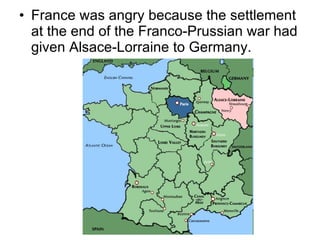
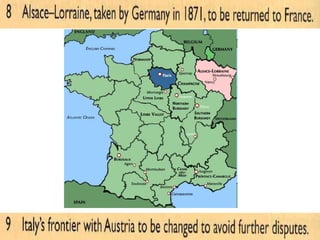
France was angry because the settlement at the end of the Franco-Prussian war had given Alsace-Lorraine to Germany.
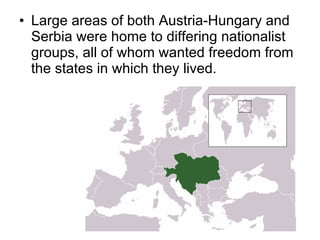
Large areas of both Austria-Hungary and Serbia were home to differing nationalist groups, all of whom wanted freedom from the states in which they lived.
Dual Monarchy
Nr. 5 Crises
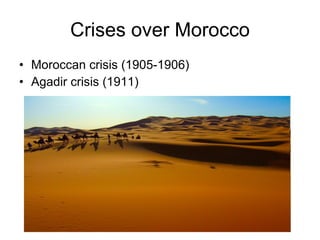
Crises over Morocco Moroccan crisis (1905-1906) Agadir crisis (1911)
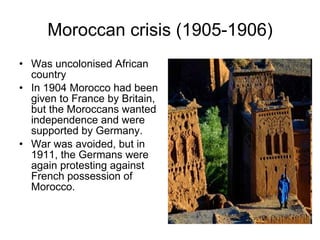
Moroccan crisis (1905-1906) Was uncolonised African country In 1904 Morocco had been given to France by Britain, but the Moroccans wanted independence and were supported by Germany.  War was avoided, but in 1911, the Germans were again protesting against French possession of Morocco.
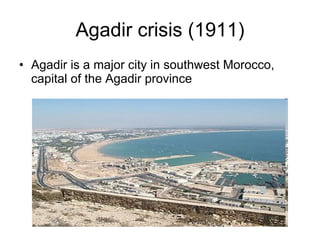
Agadir crisis (1911) Agadir is a major city in southwest Morocco, capital of the Agadir province
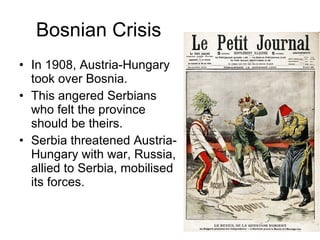
Bosnian Crisis In 1908, Austria-Hungary took over Bosnia.  This angered Serbians who felt the province should be theirs.  Serbia threatened Austria-Hungary with war, Russia, allied to Serbia, mobilised its forces.
Germany, allied to Austria-Hungary mobilised its forces and prepared to threaten Russia.  War was avoided when Russia backed down.
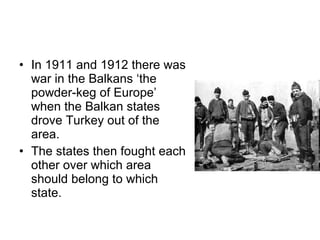
In 1911 and 1912 there was war in the Balkans  ‘the powder-keg of Europe’  when the Balkan states drove Turkey out of the area.  The states then fought each other over which area should belong to which state.
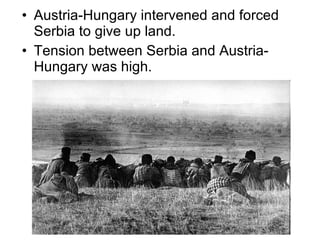
Austria-Hungary intervened and forced Serbia to give up land.  Tension between Serbia and Austria-Hungary was high.
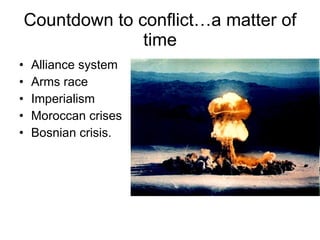
Countdown to conflict…a matter of time Alliance system Arms race Imperialism Moroccan crises Bosnian crisis.
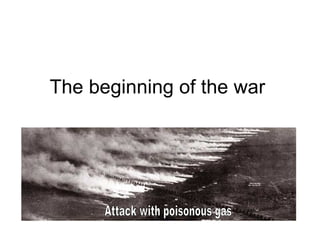
The beginning of the war Attack with poisonous gas
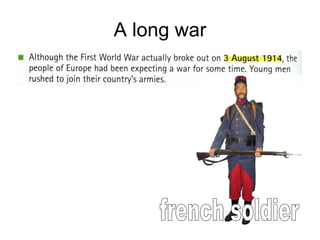
A long war french soldier
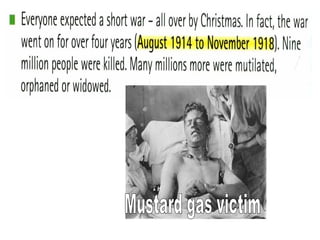
Mustard gas victim
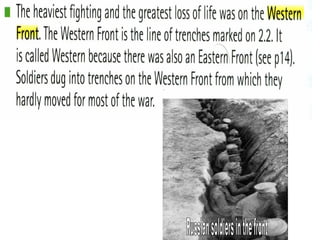
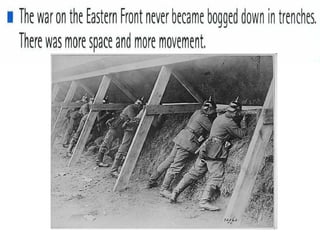
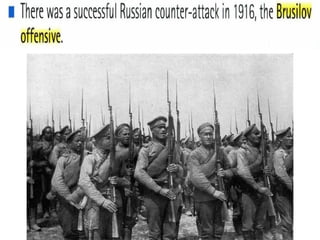
Russian soldiers in the front
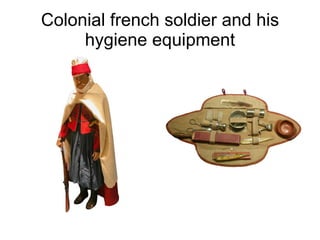
Colonial french soldier and his hygiene equipment
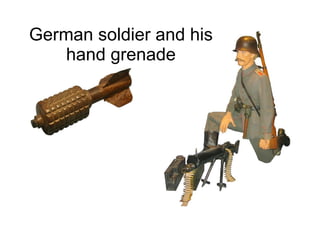
German soldier and his hand grenade
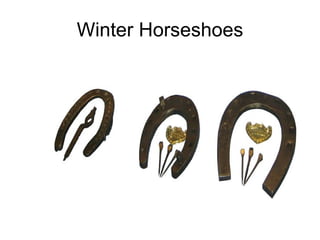
Winter Horseshoes
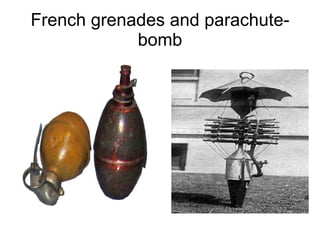
French grenades and parachute-bomb
 
BBC movies WW1 http://www.bbc.co.uk/history/worldwars/wwone/launch_ani_wwone_movies.shtml
 
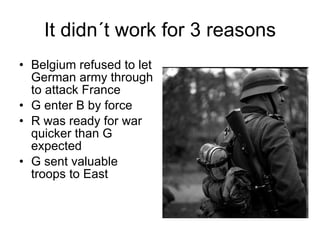
It didn´t work for 3 reasons Belgium refused to let German army through to attack France G enter B by force R was ready for war quicker than G expected G sent valuable troops to East
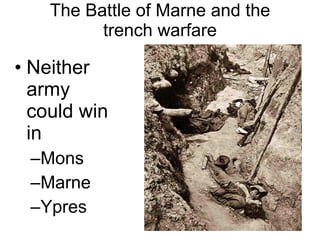
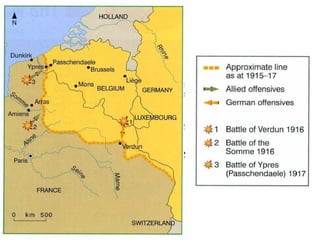
The Battle of Marne and the trench warfare Neither army could win in Mons Marne Ypres
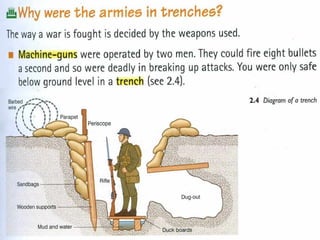
Virtual view of Trench http://www.bbc.co.uk/history/worldwars/wwone/launch_vt_trench_life.shtml
Luxury trench http://www.bbc.co.uk/history/worldwars/wwone/launch_vt_dugout_int.shtml


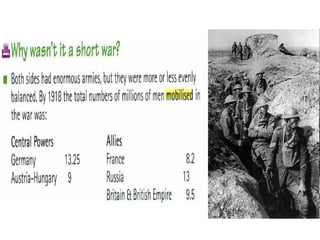
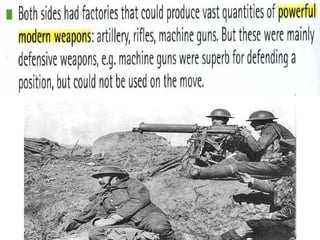
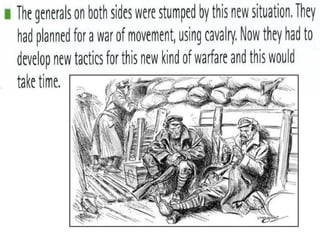
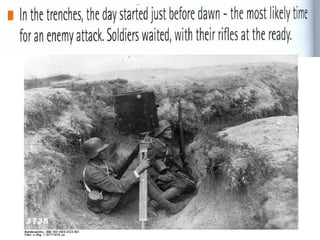
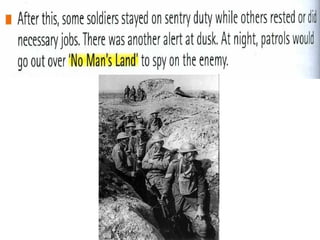
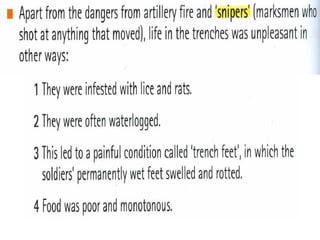
Stalemate (=deadlock) in the West This war was different for the general and the soldiers Deadlock in the trenches


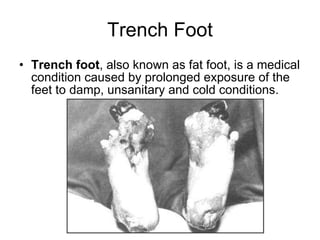
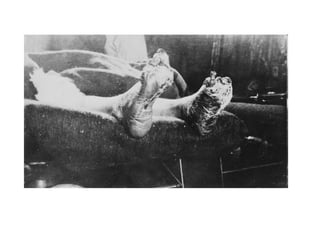
Trench Foot Trench foot , also known as fat foot, is a medical condition caused by prolonged exposure of the feet to damp, unsanitary and cold conditions.
 
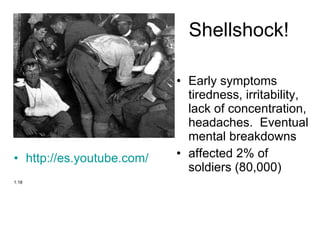
Shellshock! Early symptoms tiredness, irritability, lack of concentration, headaches.  Eventual mental breakdowns affected 2% of soldiers (80,000) http://es.youtube.com/watch?v=RRv56gsqkzs&feature=related   1:18
Verdun-Shellshock http://www.youtube.com/watch?v=SS1dO0JC2EE&feature=related
 
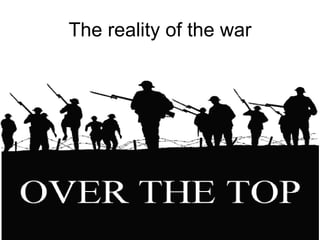
The reality of the war
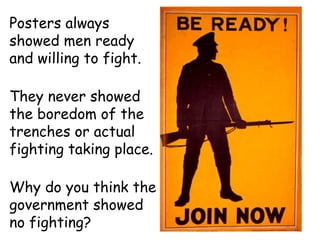
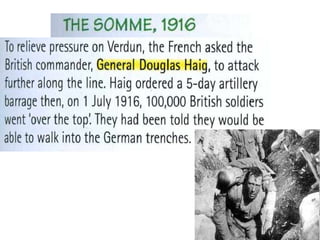
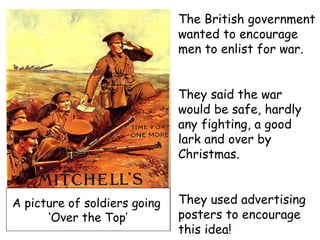
The British government wanted to encourage men to enlist for war. They said the war would be safe, hardly any fighting, a good lark and over by Christmas. They used advertising posters to encourage this idea! A picture of soldiers going  ‘ Over the Top’
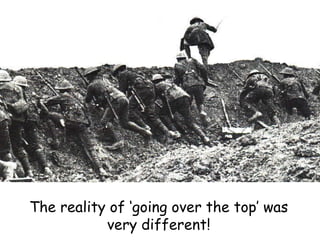
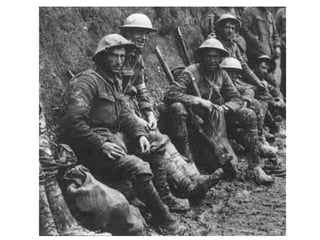
The reality of ‘going over the top’ was very different!
Soldiers were expected to carry all of their equipment with them at all times. They were supposed to keep it clean and in good condition – they were British after all.
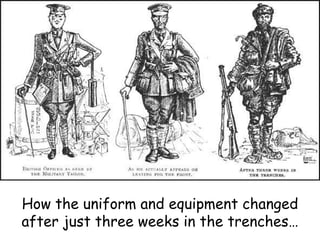
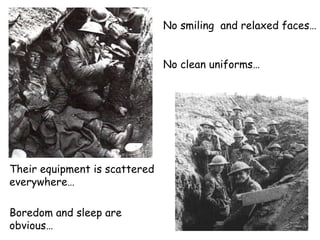
How the uniform and equipment changed after just three weeks in the trenches…
Posters always showed men ready and willing to fight. They never showed the boredom of the trenches or actual fighting taking place. Why do you think the government showed no fighting?
 
No smiling  and relaxed faces… No clean uniforms… Their equipment is scattered everywhere… Boredom and sleep are obvious…
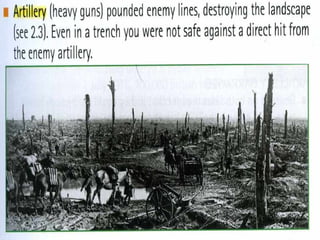
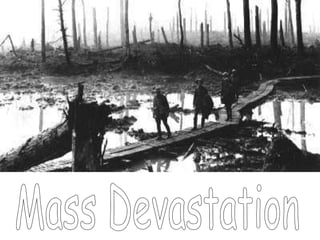
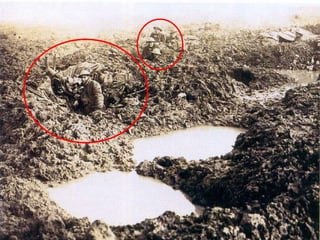
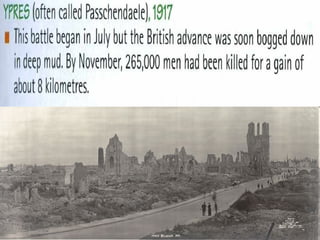
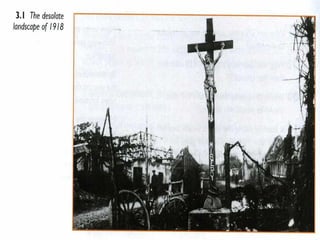
Mass Devastation
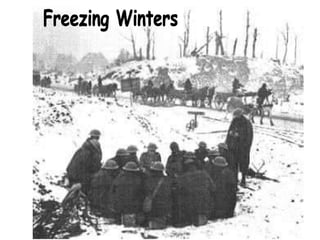
Freezing Winters
 
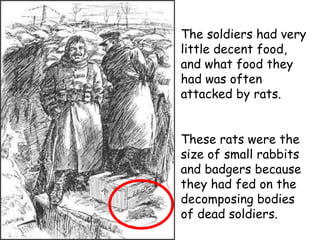
The soldiers had very little decent food, and what food they had was often attacked by rats. These rats were the size of small rabbits and badgers because they had fed on the decomposing bodies of dead soldiers.
 
 
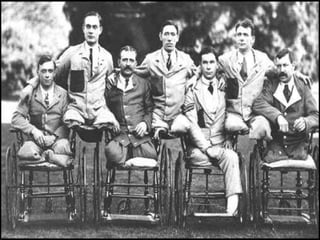
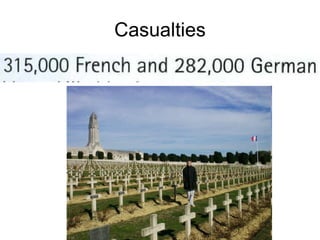
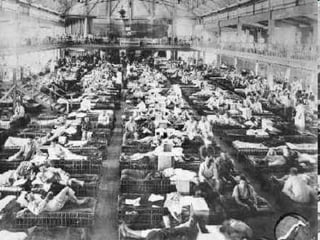
Casualties
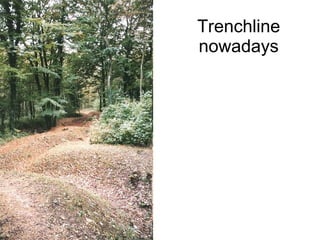
Trenchline nowadays
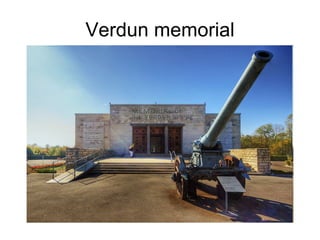
Verdun memorial


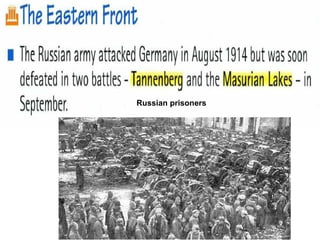
Russian prisoners


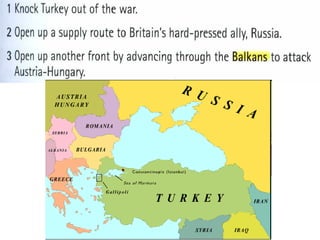
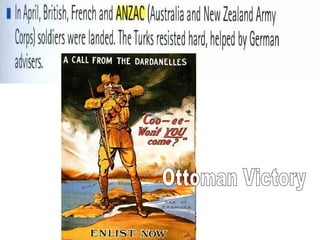
Ottoman Victory
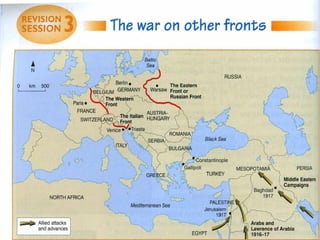
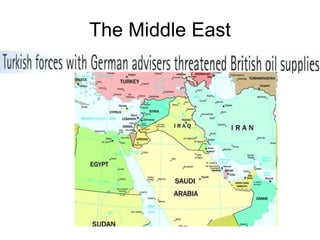
The Middle East
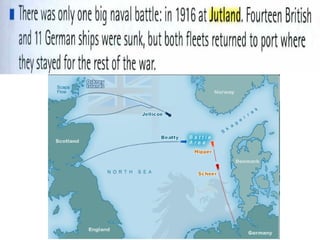
WW1 did not stop at western front Navy’s blockades in the North Sea and the Baltic were really important in wearing Germany down Blockades were more important than all-out battles
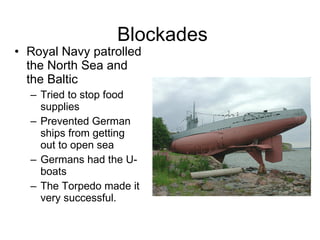
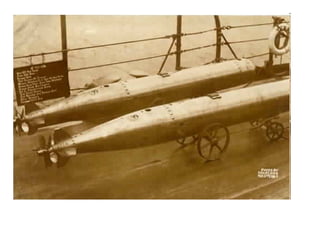
Blockades Royal Navy patrolled the North Sea and the Baltic Tried to stop food supplies Prevented German ships from getting out to open sea Germans had the U-boats The Torpedo made it very successful.
 
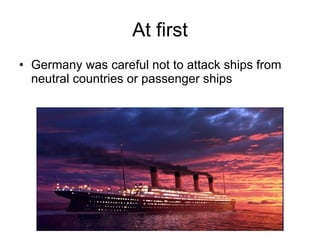
At first Germany was careful not to attack ships from neutral countries or passenger ships
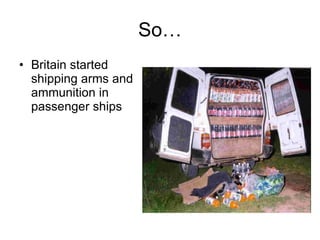
So… Britain started shipping arms and ammunition in passenger ships
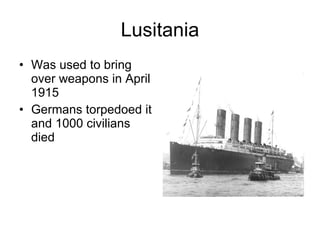
Lusitania Was used to bring over weapons in April 1915 Germans torpedoed it and 1000 civilians died
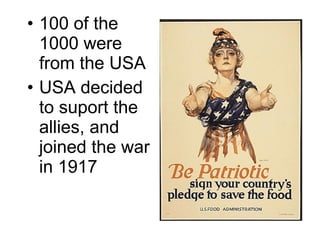
100 of the 1000 were from the USA USA decided to suport the allies, and joined the war in 1917
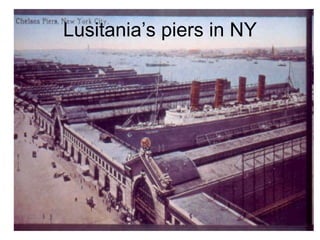
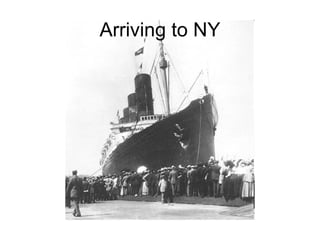
Lusitania’s piers in NY
Arriving to NY


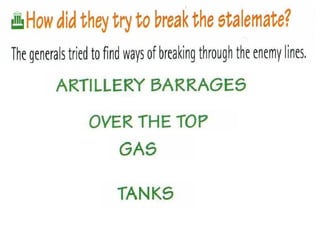
2 fronts Naval blockades. USA troops+supplies. Allied tanks broke the stalemate.
Finally ended in November 1918 Luddendorf decided to send one more big attack Allies counterattacked from different sides Trench warfare had worn Germany down Mutinies Food shortages Revolution in Germany
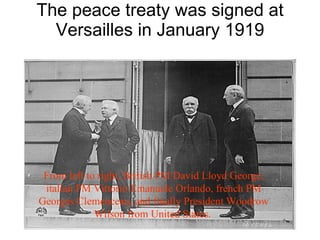
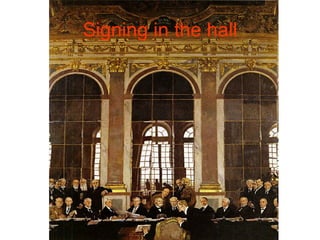
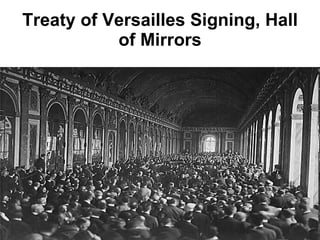
The peace treaty was signed at Versailles in January 1919 From left to right, British PM David Lloyd George, italian PM Vittorio Emanuele Orlando, french PM Georges Clemenceau, and finally President Woodrow Wilson from United States.
 
Signing in the hall
Treaty of Versailles Signing, Hall of Mirrors
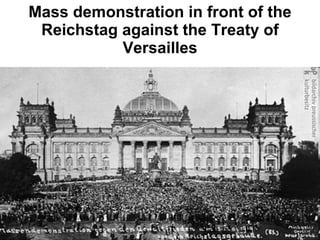
Mass demonstration in front of the Reichstag against the Treaty of Versailles
 
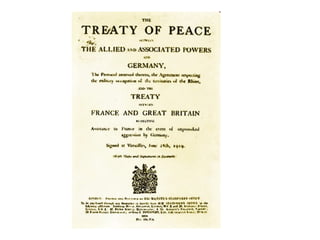
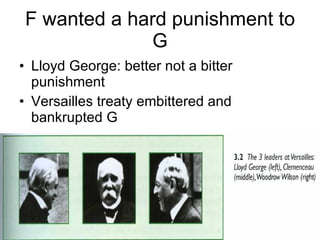
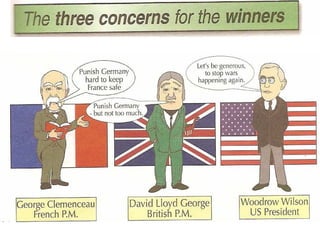
F wanted a hard punishment to G Lloyd George: better not a bitter punishment Versailles treaty embittered and bankrupted G
 
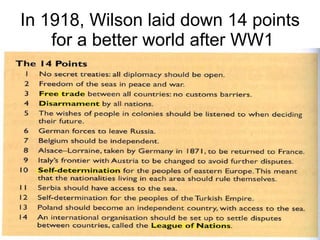
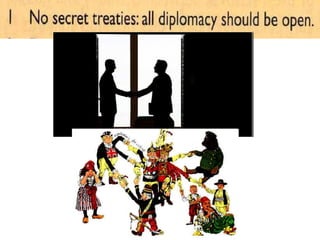
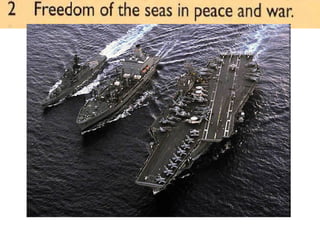
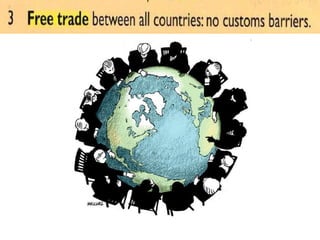
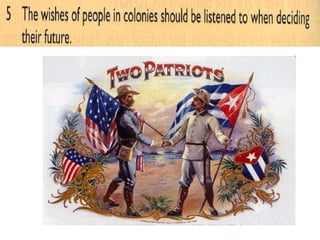
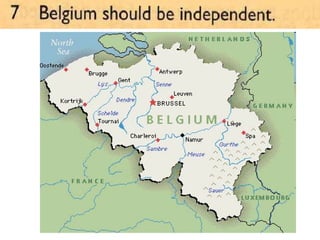
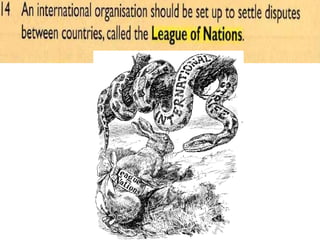
In 1918, Wilson laid down 14 points  for a better world after WW1


Just domestic safety


Unit 7 ww1