ECOSYSTEMS
Marcela Carbo
   The plants and animals that are found in a
    particular location are referred to as an
    ecosystem.
   These plants and animals depend on each other
    to survive.
   In a delicate balance, these life forms help to
    sustain one another in regular patterns.
   Disruptions to an ecosystem can be disastrous to
    all    organisms     within     the    ecosystem.
   As an example, consider what happens when a new
    plant or animal is introduced into an ecosystem,
    where it did not before exist.
   The new organism competes with the natural
    organisms from that location for available resources.
   These unnatural strangers can push other organisms
    out, causing them to become extinct.
   This can then effect still other organisms that
    depended on the extinct organism as a source of
    food.
   Throughout the history of the Earth, the
    delicate balance found within ecosystems
    have been disrupted by natural disasters such
    as fires, floods, storms, volcano eruptions, and
    so forth.
   In recent years however, mankind has
    increasingly been effecting the many
    ecosystems around the world.
   As geographers study the many ecosystems
    around the world, many similarities or patterns
    become evident from one ecosystem to
    another.
   This allows scientists to group ecosystems into
    categories called biomes.
   The most commonly accepted biomes that exist on
    the Earth are:

   Tundra
   Desert
   Grassland
   Tropical Rain Forest
   Deciduous Forest
   Coniferous Forest
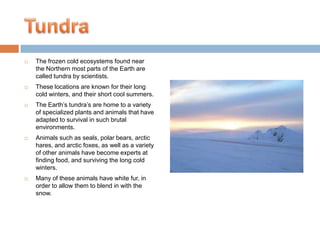
   The frozen cold ecosystems found near
    the Northern most parts of the Earth are
    called tundra by scientists.
   These locations are known for their long
    cold winters, and their short cool summers.
   The Earth’s tundra’s are home to a variety
    of specialized plants and animals that have
    adapted to survival in such brutal
    environments.
   Animals such as seals, polar bears, arctic
    hares, and arctic foxes, as well as a variety
    of other animals have become experts at
    finding food, and surviving the long cold
    winters.
   Many of these animals have white fur, in
    order to allow them to blend in with the
    snow.
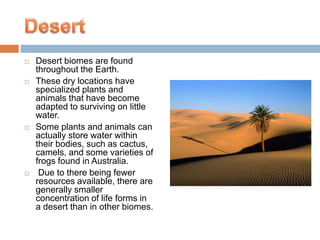
   Desert biomes are found
    throughout the Earth.
   These dry locations have
    specialized plants and
    animals that have become
    adapted to surviving on little
    water.
   Some plants and animals can
    actually store water within
    their bodies, such as cactus,
    camels, and some varieties of
    frogs found in Australia.
    Due to there being fewer
    resources available, there are
    generally smaller
    concentration of life forms in
    a desert than in other biomes.
   Grassland      biomes     exist
    throughout the Earth, and in
    many cases can be vast,
    expanding across millions of
    square miles.
   These biomes are marked by
    sparse trees, and extensive
    grasses, as well as a variety
    of small and large animals.
   Some of the largest land
    animals on Earth live in
    grasslands,          including
    American bison, elephants,
    giraffes,   and    so    forth.
   Tropical rain forests are found
    in locations that receive
    significant amounts of
    precipitation. These locations
    are easily recognizable by
    their abundance of life forms.
    These life forms include
    numerous trees, plants such
    as ferns, and an abundance
    of insects, spiders, snakes,
    monkeys, and other plants
    and animals.
   Tropical rain forests are very
    important to the overall health
    of the planet Earth, and are
    responsible for replenishing a
    significant portion of the
    atmosphere’s oxygen supply.
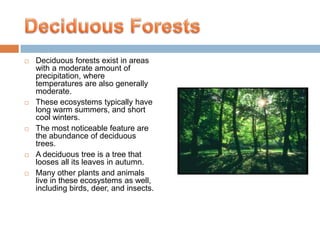
   Deciduous forests exist in areas
    with a moderate amount of
    precipitation, where
    temperatures are also generally
    moderate.
   These ecosystems typically have
    long warm summers, and short
    cool winters.
   The most noticeable feature are
    the abundance of deciduous
    trees.
   A deciduous tree is a tree that
    looses all its leaves in autumn.
   Many other plants and animals
    live in these ecosystems as well,
    including birds, deer, and insects.
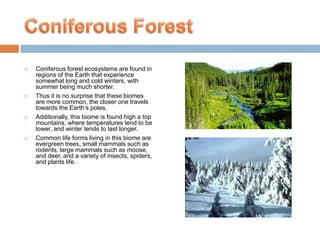
   Coniferous forest ecosystems are found in
    regions of the Earth that experience
    somewhat long and cold winters, with
    summer being much shorter.
   Thus it is no surprise that these biomes
    are more common, the closer one travels
    towards the Earth’s poles.
   Additionally, this biome is found high a top
    mountains, where temperatures tend to be
    lower, and winter tends to last longer.
   Common life forms living in this biome are
    evergreen trees, small mammals such as
    rodents, large mammals such as moose,
    and deer, and a variety of insects, spiders,
    and plants life.

Ecosystems

  • 1.
  • 2.
    The plants and animals that are found in a particular location are referred to as an ecosystem.  These plants and animals depend on each other to survive.  In a delicate balance, these life forms help to sustain one another in regular patterns.  Disruptions to an ecosystem can be disastrous to all organisms within the ecosystem.
  • 3.
    As an example, consider what happens when a new plant or animal is introduced into an ecosystem, where it did not before exist.  The new organism competes with the natural organisms from that location for available resources.  These unnatural strangers can push other organisms out, causing them to become extinct.  This can then effect still other organisms that depended on the extinct organism as a source of food.
  • 4.
    Throughout the history of the Earth, the delicate balance found within ecosystems have been disrupted by natural disasters such as fires, floods, storms, volcano eruptions, and so forth.  In recent years however, mankind has increasingly been effecting the many ecosystems around the world.
  • 5.
    As geographers study the many ecosystems around the world, many similarities or patterns become evident from one ecosystem to another.  This allows scientists to group ecosystems into categories called biomes.
  • 6.
    The most commonly accepted biomes that exist on the Earth are:  Tundra  Desert  Grassland  Tropical Rain Forest  Deciduous Forest  Coniferous Forest
  • 7.
    The frozen cold ecosystems found near the Northern most parts of the Earth are called tundra by scientists.  These locations are known for their long cold winters, and their short cool summers.  The Earth’s tundra’s are home to a variety of specialized plants and animals that have adapted to survival in such brutal environments.  Animals such as seals, polar bears, arctic hares, and arctic foxes, as well as a variety of other animals have become experts at finding food, and surviving the long cold winters.  Many of these animals have white fur, in order to allow them to blend in with the snow.
  • 8.
    Desert biomes are found throughout the Earth.  These dry locations have specialized plants and animals that have become adapted to surviving on little water.  Some plants and animals can actually store water within their bodies, such as cactus, camels, and some varieties of frogs found in Australia.  Due to there being fewer resources available, there are generally smaller concentration of life forms in a desert than in other biomes.
  • 9.
    Grassland biomes exist throughout the Earth, and in many cases can be vast, expanding across millions of square miles.  These biomes are marked by sparse trees, and extensive grasses, as well as a variety of small and large animals.  Some of the largest land animals on Earth live in grasslands, including American bison, elephants, giraffes, and so forth.
  • 10.
    Tropical rain forests are found in locations that receive significant amounts of precipitation. These locations are easily recognizable by their abundance of life forms. These life forms include numerous trees, plants such as ferns, and an abundance of insects, spiders, snakes, monkeys, and other plants and animals.  Tropical rain forests are very important to the overall health of the planet Earth, and are responsible for replenishing a significant portion of the atmosphere’s oxygen supply.
  • 11.
    Deciduous forests exist in areas with a moderate amount of precipitation, where temperatures are also generally moderate.  These ecosystems typically have long warm summers, and short cool winters.  The most noticeable feature are the abundance of deciduous trees.  A deciduous tree is a tree that looses all its leaves in autumn.  Many other plants and animals live in these ecosystems as well, including birds, deer, and insects.
  • 12.
    Coniferous forest ecosystems are found in regions of the Earth that experience somewhat long and cold winters, with summer being much shorter.  Thus it is no surprise that these biomes are more common, the closer one travels towards the Earth’s poles.  Additionally, this biome is found high a top mountains, where temperatures tend to be lower, and winter tends to last longer.  Common life forms living in this biome are evergreen trees, small mammals such as rodents, large mammals such as moose, and deer, and a variety of insects, spiders, and plants life.