5 Ecosystems
José Ángel.
THE EARTH’S TERRESTRIAL ECOSYSTEMS
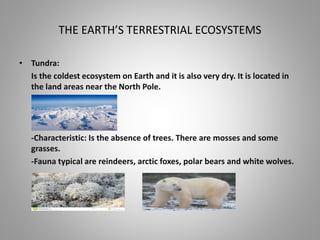
• Tundra:
Is the coldest ecosystem on Earth and it is also very dry. It is located in
the land areas near the North Pole.
-Characteristic: Is the absence of trees. There are mosses and some
grasses.
-Fauna typical are reindeers, arctic foxes, polar bears and white wolves.
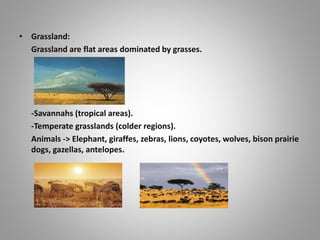
• Grassland:
Grassland are flat areas dominated by grasses.
-Savannahs (tropical areas).
-Temperate grasslands (colder regions).
Animals -> Elephant, giraffes, zebras, lions, coyotes, wolves, bison prairie
dogs, gazellas, antelopes.
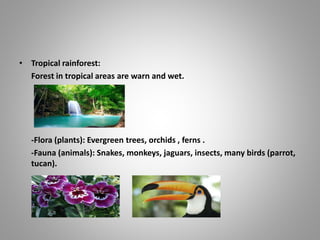
• Tropical rainforest:
Forest in tropical areas are warn and wet.
-Flora (plants): Evergreen trees, orchids , ferns .
-Fauna (animals): Snakes, monkeys, jaguars, insects, many birds (parrot,
tucan).
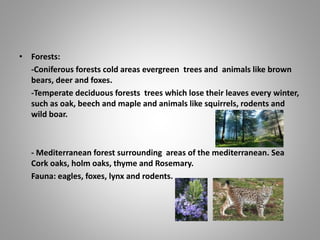
• Forests:
-Coniferous forests cold areas evergreen trees and animals like brown
bears, deer and foxes.
-Temperate deciduous forests trees which lose their leaves every winter,
such as oak, beech and maple and animals like squirrels, rodents and
wild boar.
- Mediterranean forest surrounding areas of the mediterranean. Sea
Cork oaks, holm oaks, thyme and Rosemary.
Fauna: eagles, foxes, lynx and rodents.
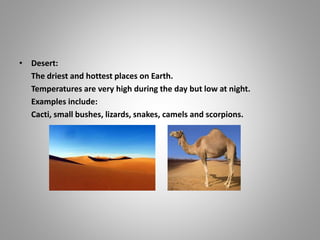
• Desert:
The driest and hottest places on Earth.
Temperatures are very high during the day but low at night.
Examples include:
Cacti, small bushes, lizards, snakes, camels and scorpions.
AQUATIC AND ARTIFICIAL ECOSYSTEMS
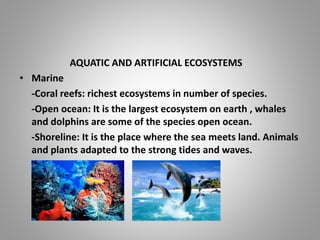
• Marine
-Coral reefs: richest ecosystems in number of species.
-Open ocean: It is the largest ecosystem on earth , whales
and dolphins are some of the species open ocean.
-Shoreline: It is the place where the sea meets land. Animals
and plants adapted to the strong tides and waves.
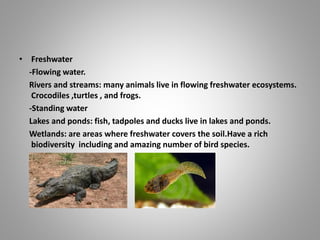
• Freshwater
-Flowing water.
Rivers and streams: many animals live in flowing freshwater ecosystems.
Crocodiles ,turtles , and frogs.
-Standing water
Lakes and ponds: fish, tadpoles and ducks live in lakes and ponds.
Wetlands: are areas where freshwater covers the soil.Have a rich
biodiversity including and amazing number of bird species.

Unit 5 Ecosystems

  • 1.
  • 2.
    THE EARTH’S TERRESTRIALECOSYSTEMS • Tundra: Is the coldest ecosystem on Earth and it is also very dry. It is located in the land areas near the North Pole. -Characteristic: Is the absence of trees. There are mosses and some grasses. -Fauna typical are reindeers, arctic foxes, polar bears and white wolves.
  • 3.
    • Grassland: Grassland areflat areas dominated by grasses. -Savannahs (tropical areas). -Temperate grasslands (colder regions). Animals -> Elephant, giraffes, zebras, lions, coyotes, wolves, bison prairie dogs, gazellas, antelopes.
  • 4.
    • Tropical rainforest: Forestin tropical areas are warn and wet. -Flora (plants): Evergreen trees, orchids , ferns . -Fauna (animals): Snakes, monkeys, jaguars, insects, many birds (parrot, tucan).
  • 5.
    • Forests: -Coniferous forestscold areas evergreen trees and animals like brown bears, deer and foxes. -Temperate deciduous forests trees which lose their leaves every winter, such as oak, beech and maple and animals like squirrels, rodents and wild boar. - Mediterranean forest surrounding areas of the mediterranean. Sea Cork oaks, holm oaks, thyme and Rosemary. Fauna: eagles, foxes, lynx and rodents.
  • 6.
    • Desert: The driestand hottest places on Earth. Temperatures are very high during the day but low at night. Examples include: Cacti, small bushes, lizards, snakes, camels and scorpions.
  • 7.
    AQUATIC AND ARTIFICIALECOSYSTEMS • Marine -Coral reefs: richest ecosystems in number of species. -Open ocean: It is the largest ecosystem on earth , whales and dolphins are some of the species open ocean. -Shoreline: It is the place where the sea meets land. Animals and plants adapted to the strong tides and waves.
  • 8.
    • Freshwater -Flowing water. Riversand streams: many animals live in flowing freshwater ecosystems. Crocodiles ,turtles , and frogs. -Standing water Lakes and ponds: fish, tadpoles and ducks live in lakes and ponds. Wetlands: are areas where freshwater covers the soil.Have a rich biodiversity including and amazing number of bird species.