Learning Style Preferences  of Undergraduate Business Majors Academy of Business Research, Fall 2011 Atlantic City, New Jersey Jennifer Edmonds, PhD Dean Frear, PhD Wilkes University
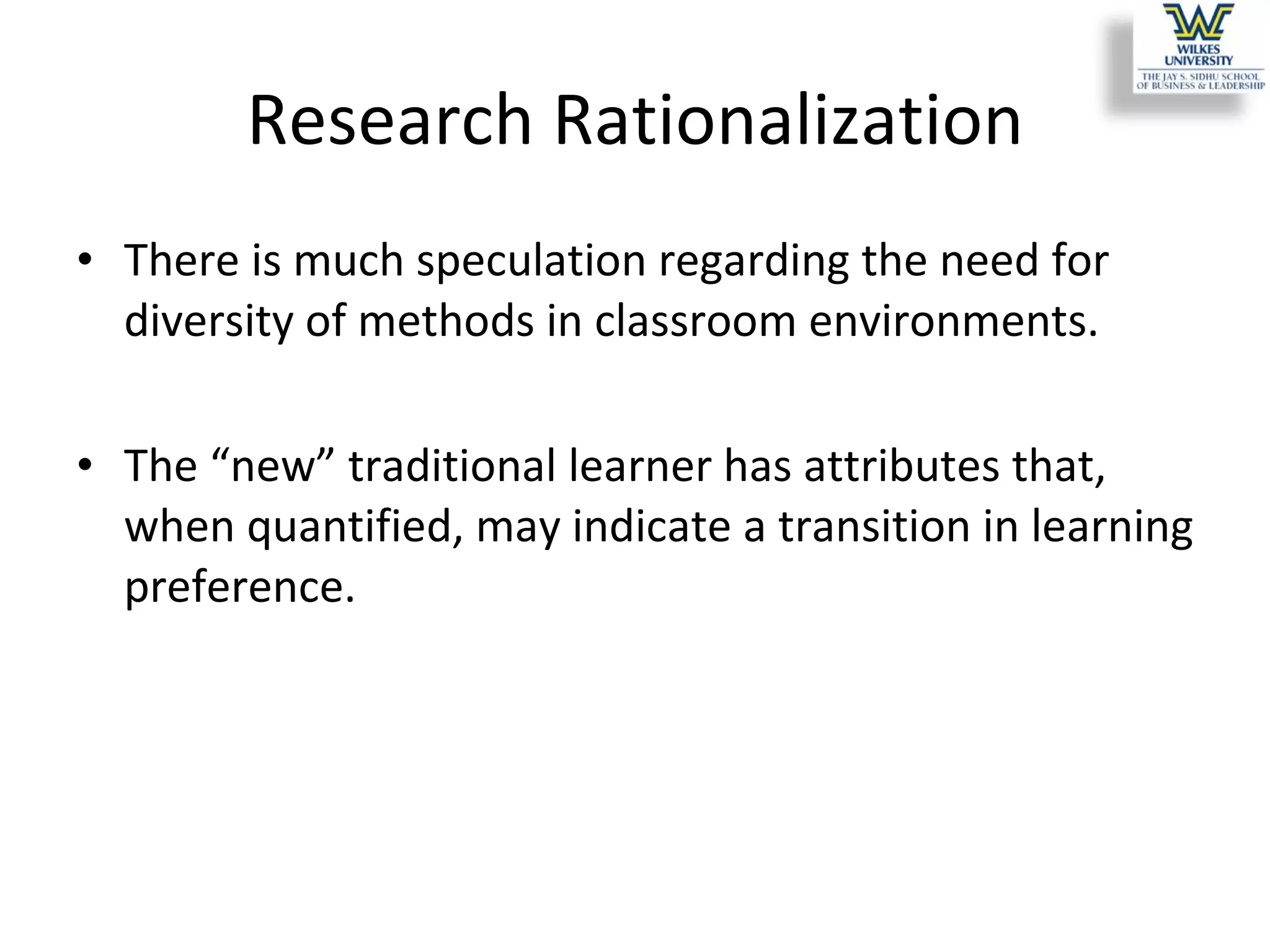
Research Rationalization There is much speculation regarding the need for diversity of methods in classroom environments.  The “new” traditional learner has attributes that, when quantified, may indicate a transition in learning preference.
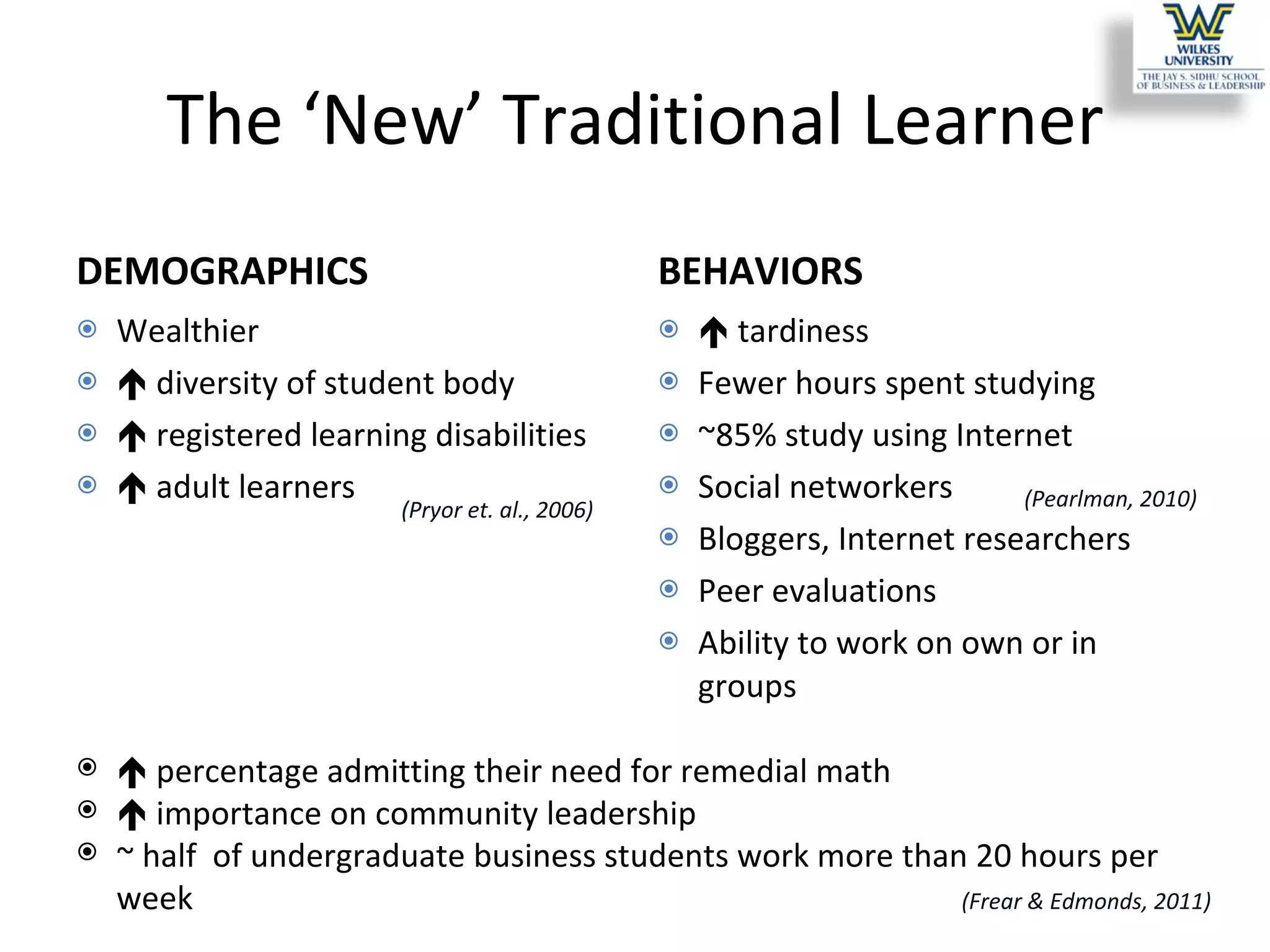
The ‘New’ Traditional Learner DEMOGRAPHICS Wealthier    diversity of student body    registered learning disabilities    adult learners BEHAVIORS    tardiness Fewer hours spent studying ~85% study using Internet Social networkers Bloggers, Internet researchers Peer evaluations Ability to work on own or in groups    percentage admitting their need for remedial math    importance on community leadership ~ half  of undergraduate business students work more than 20 hours per week (Pearlman, 2010) (Frear & Edmonds, 2011) (Pryor et. al., 2006)
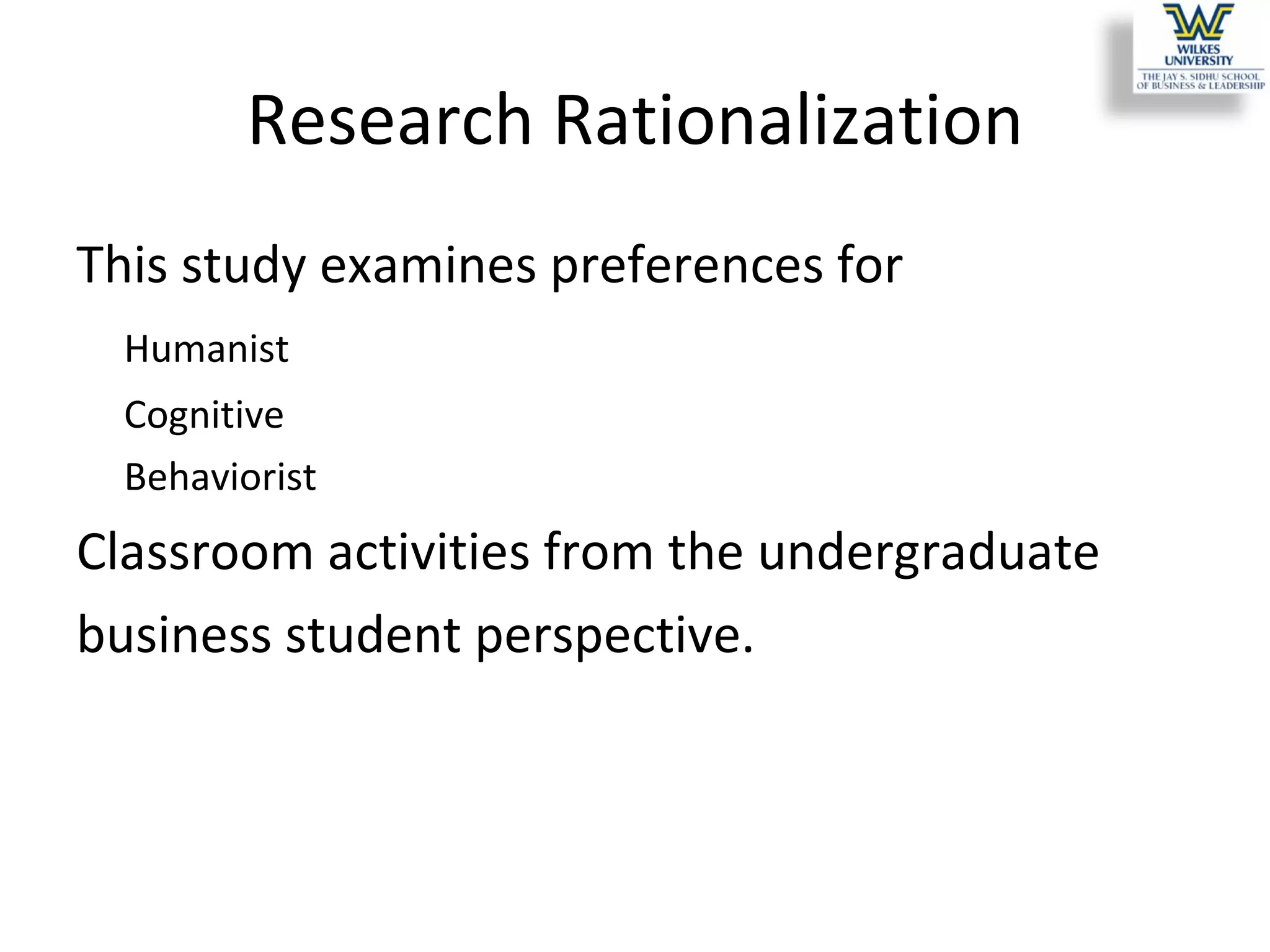
Research Rationalization This study examines preferences for  Humanist  Cognitive  Behaviorist  Classroom activities from the undergraduate business student perspective.
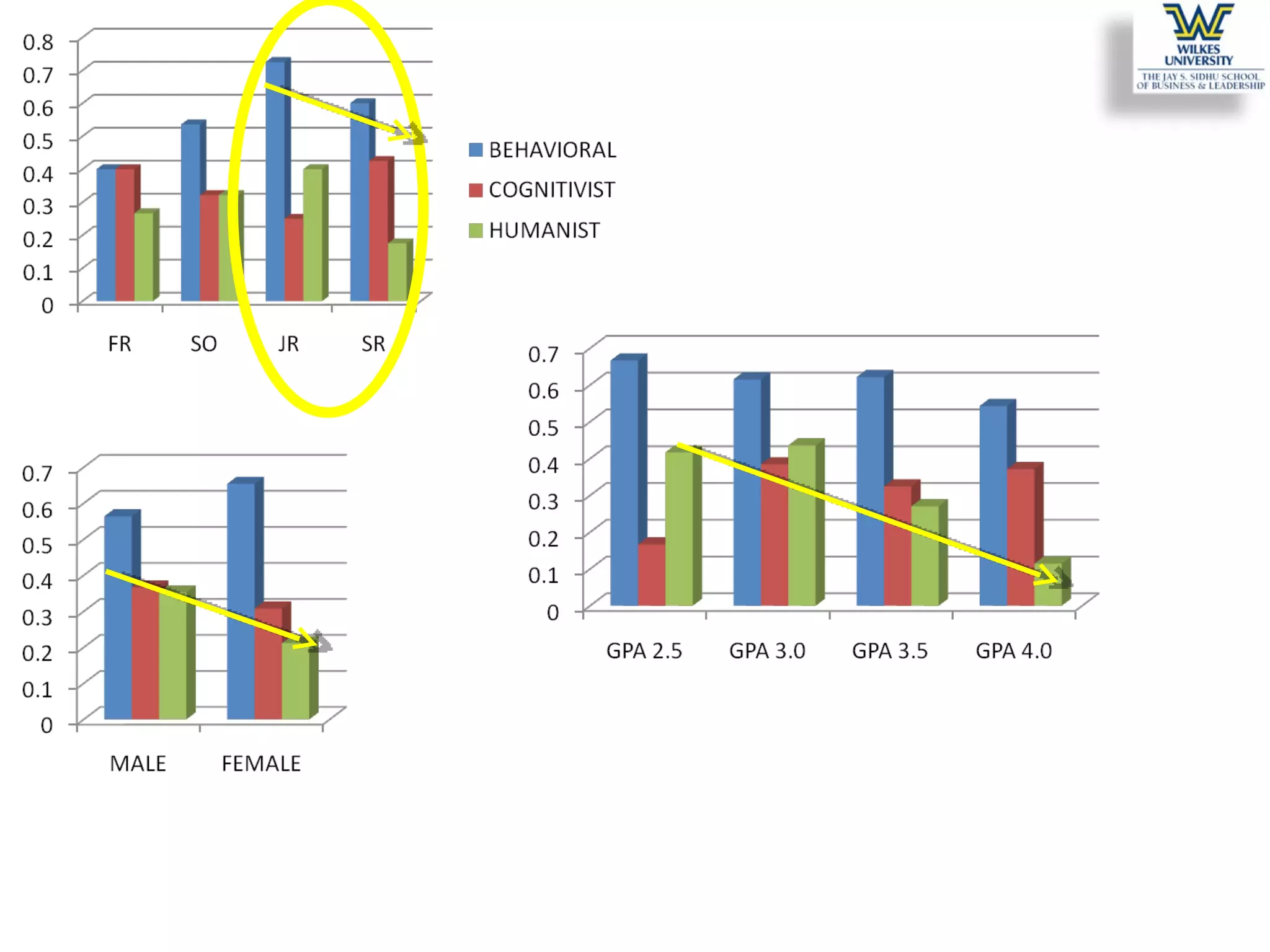
Research Rationalization Investigates differences in learning style preferences based on:  Age  Class standing  Gender  This research attempts to determine the presence of an emerging learning model. Based on the identified preferences, the results should help educators understand those classroom activities that promote better learning.
Background
BEHAVIORIST Careful organization & presentation of information in a designed sequence Closed-ended learning Styles Include: Lecture  Reading Text and/or Other Materials Note-Taking Aids/Worksheets Question & Answer Sessions
COGNITIVE to motivate students to learn something  new  (using prior knowledge) Styles Include: Lecture Reading Text and/or Other Materials Illustrations/Examples Class Presentations Case Study
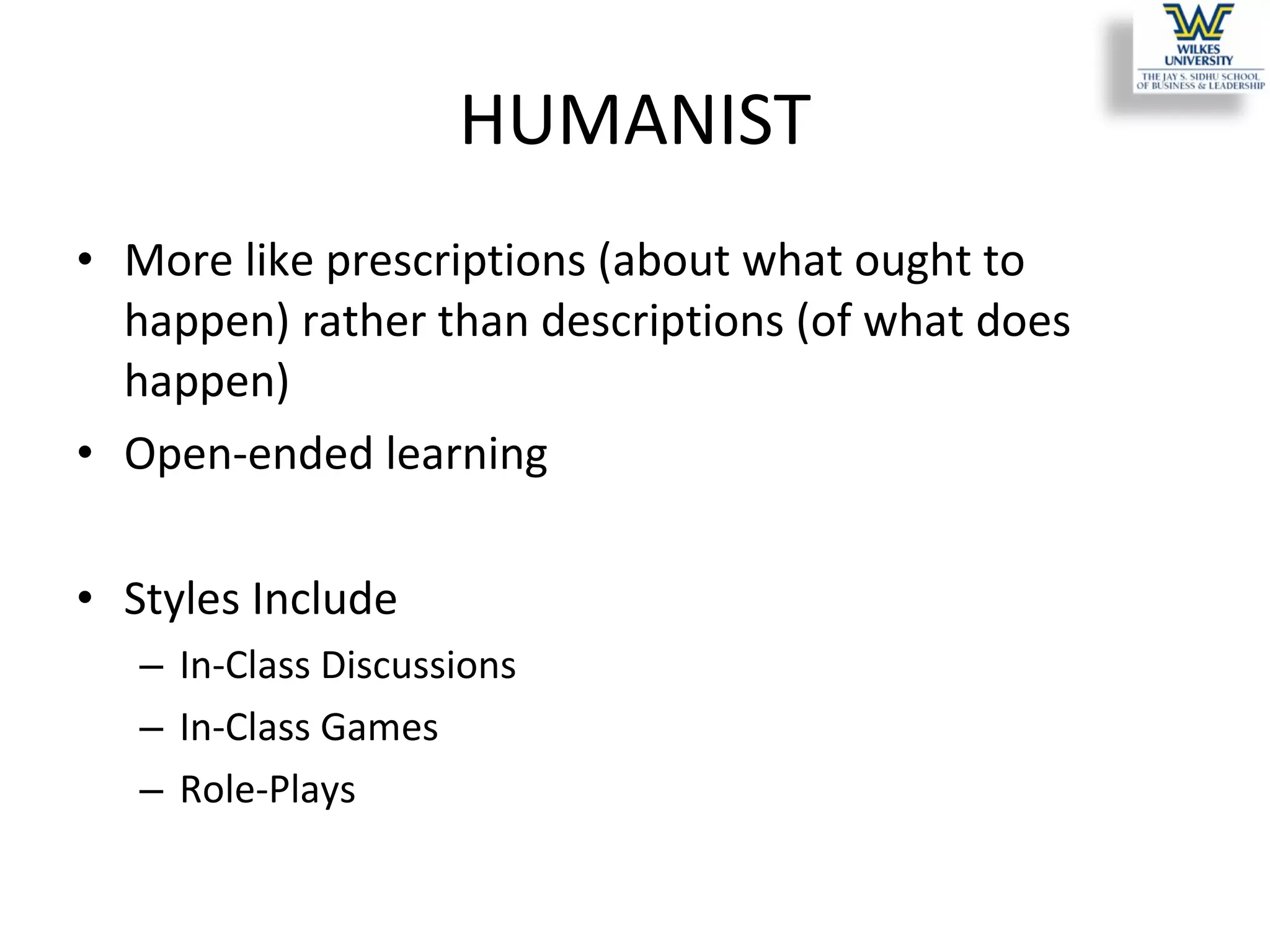
HUMANIST More like prescriptions (about what ought to happen) rather than descriptions (of what does happen) Open-ended learning Styles Include In-Class Discussions In-Class Games Role-Plays
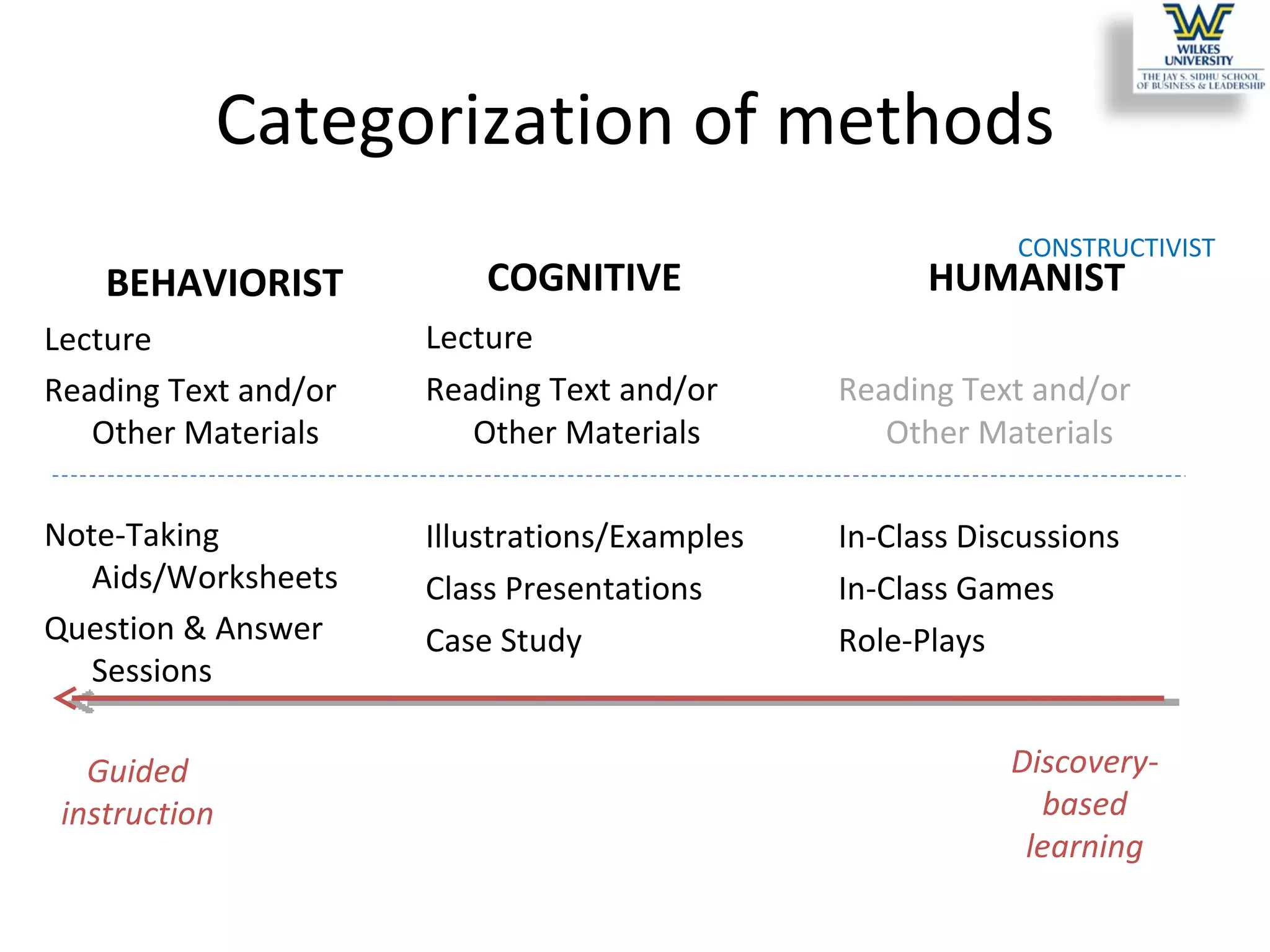
Categorization of methods HUMANIST Reading Text and/or Other Materials In-Class Discussions In-Class Games Role-Plays COGNITIVE Lecture Reading Text and/or Other Materials Illustrations/Examples Class Presentations Case Study BEHAVIORIST Lecture  Reading Text and/or Other Materials Note-Taking Aids/Worksheets Question & Answer Sessions CONSTRUCTIVIST Guided instruction Discovery-based learning
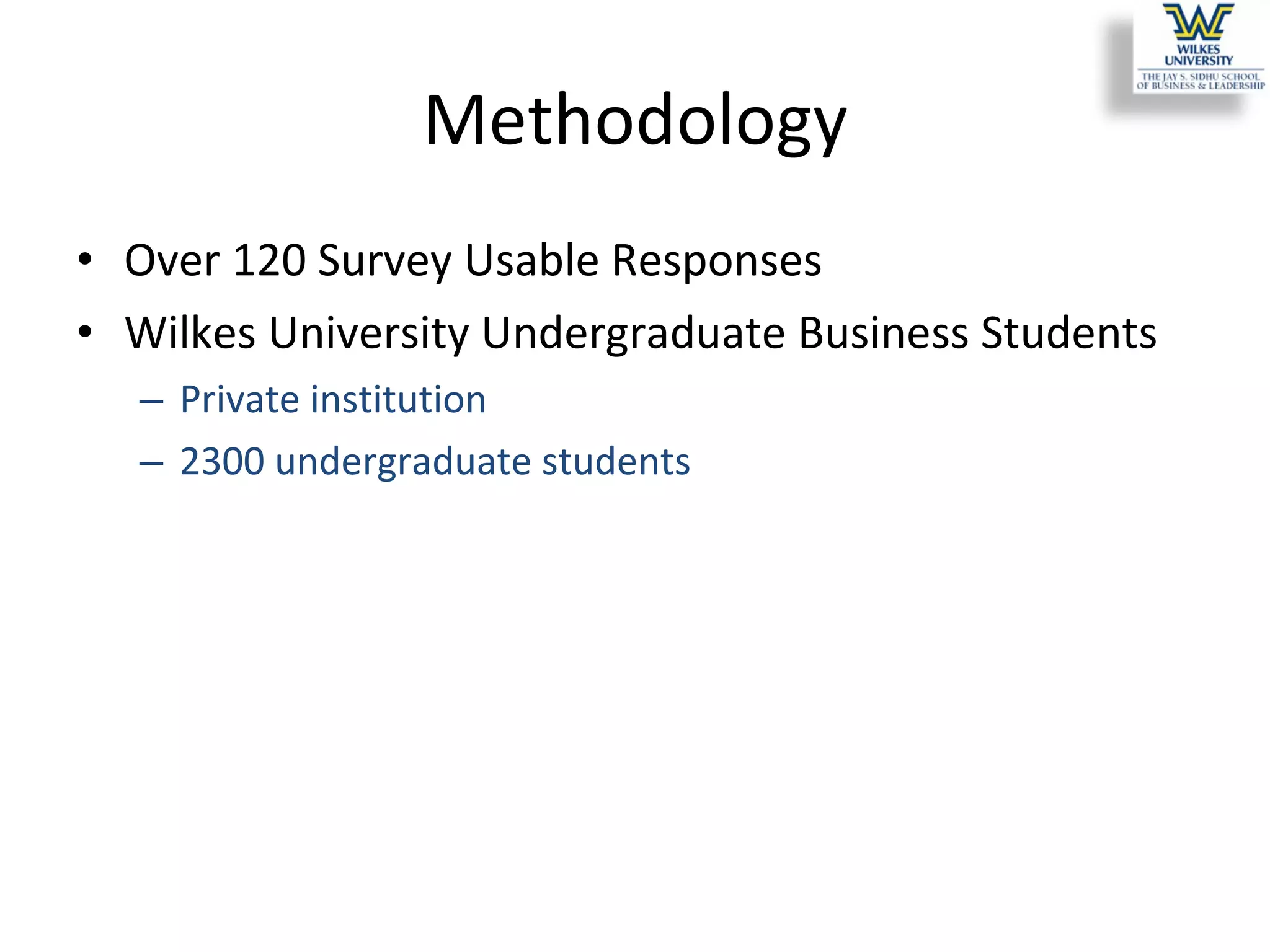
Methodology Over 120 Survey Usable Responses Wilkes University Undergraduate Business Students Private institution 2300 undergraduate students
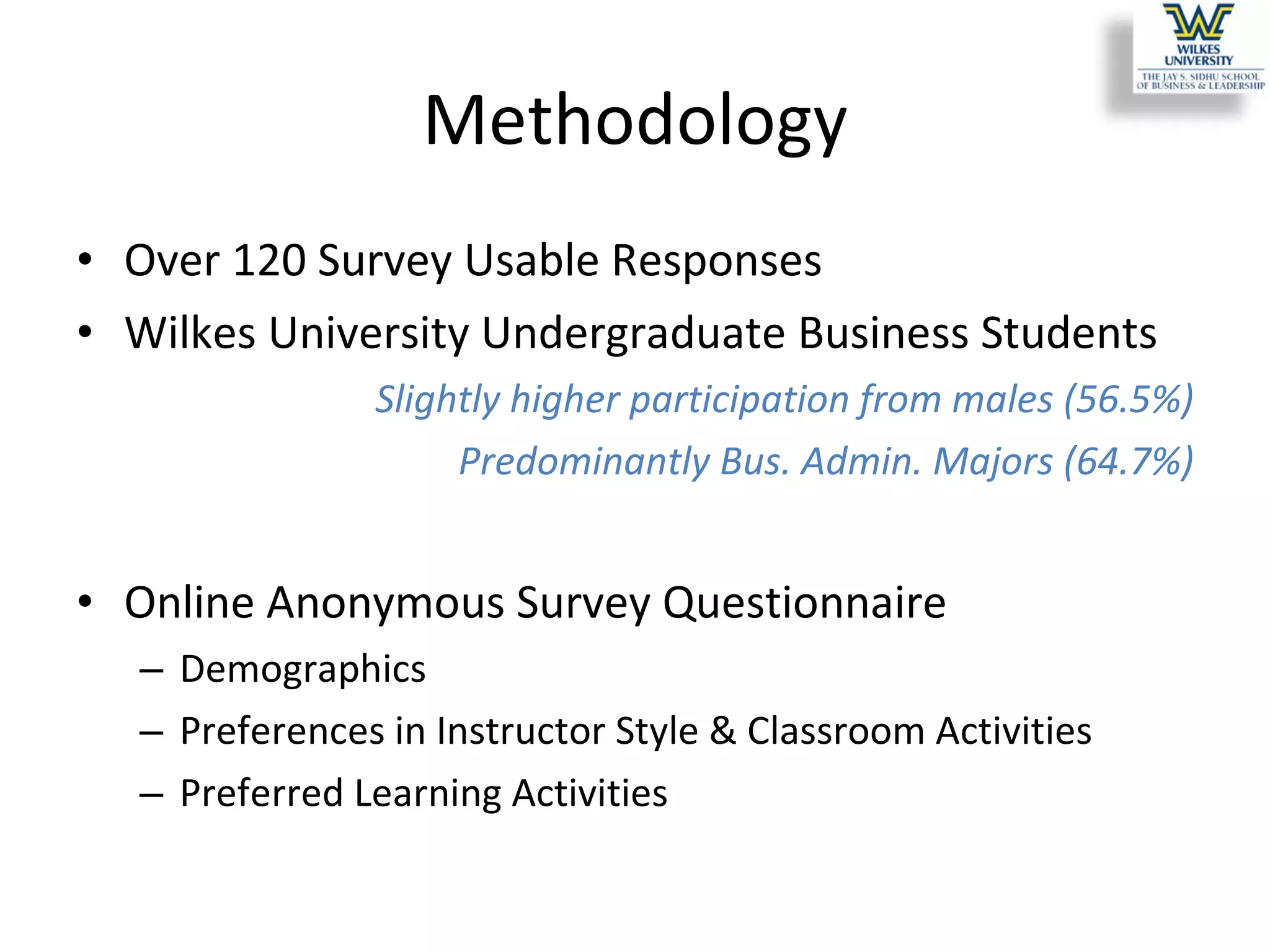
Methodology Over 120 Survey Usable Responses Wilkes University Undergraduate Business Students Slightly higher participation from males (56.5%) Predominantly Bus. Admin. Majors (64.7%) Online Anonymous Survey Questionnaire Demographics  Preferences in Instructor Style & Classroom Activities Preferred Learning Activities
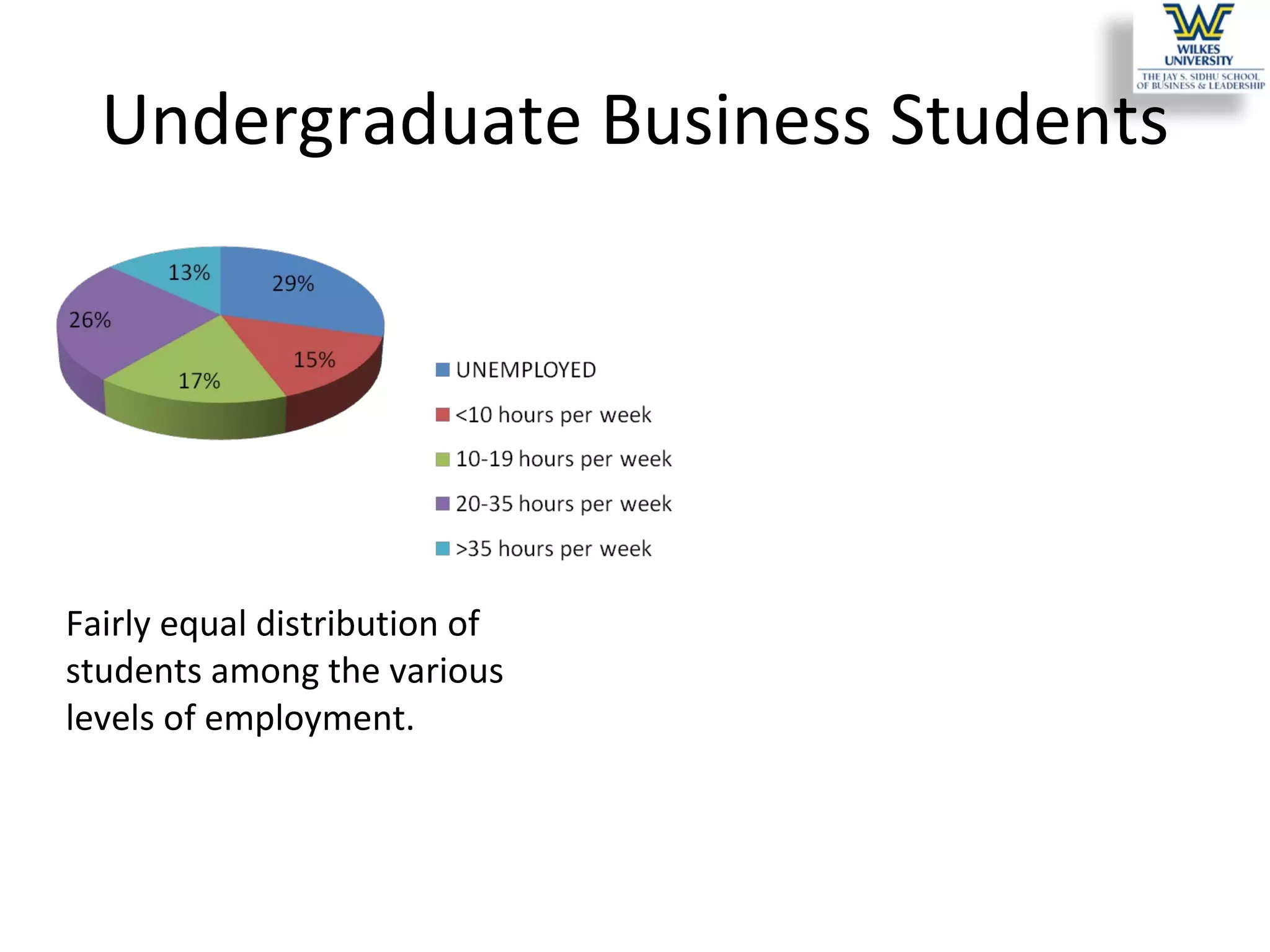
Undergraduate Business Students Fairly equal distribution of students among the various levels of employment.
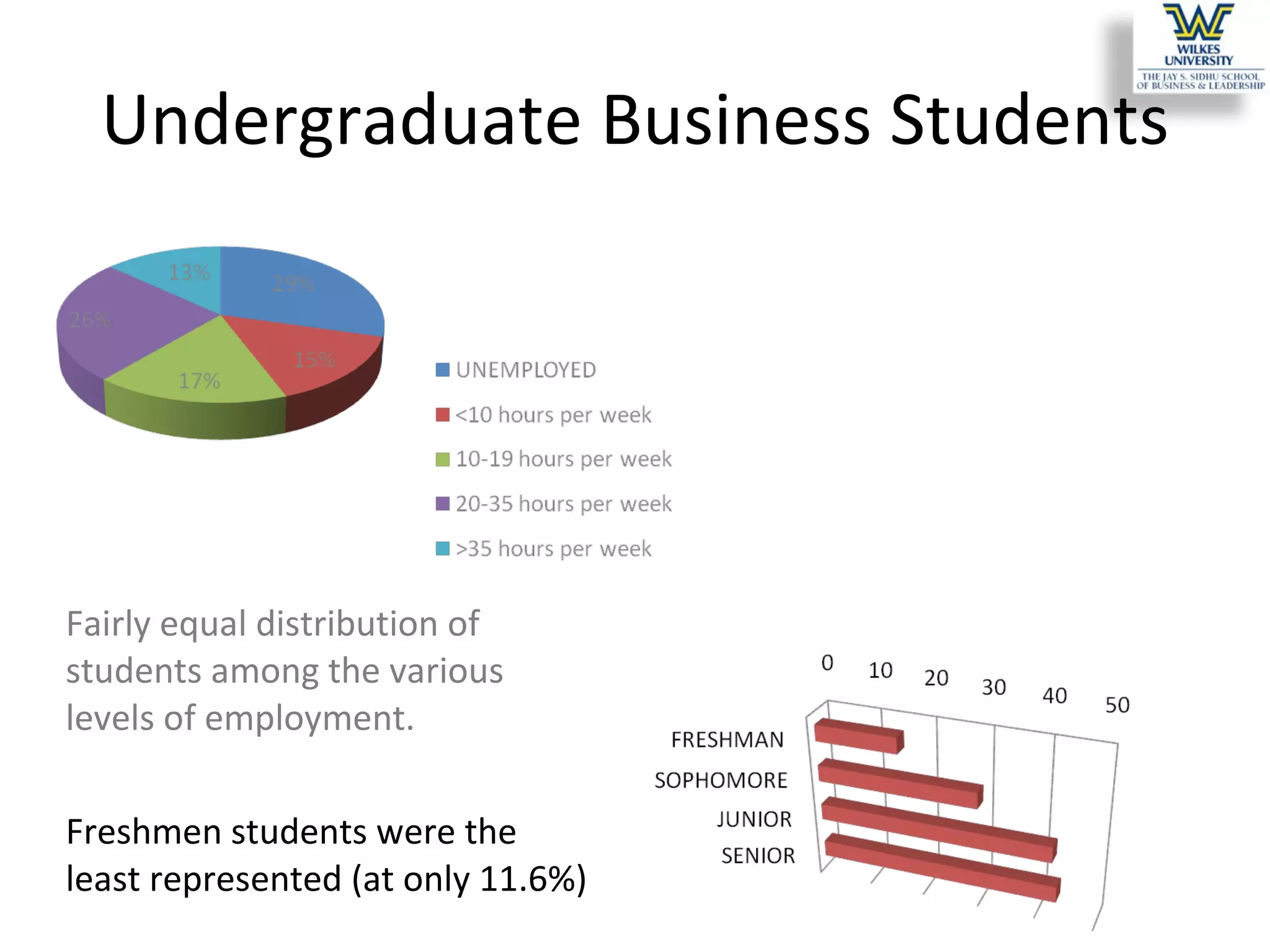
Undergraduate Business Students Fairly equal distribution of students among the various levels of employment. Freshmen students were the least represented (at only 11.6%)
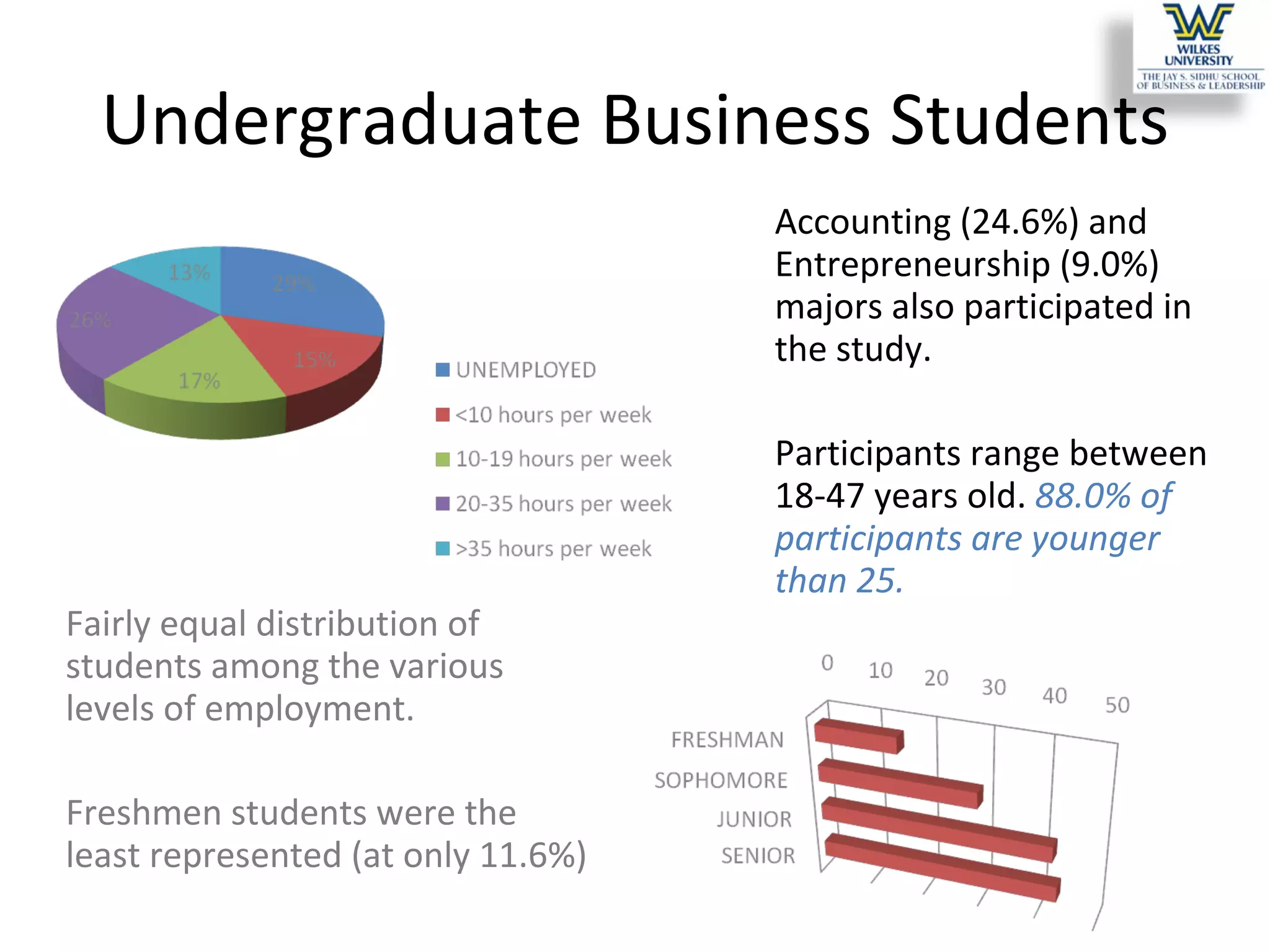
Undergraduate Business Students Fairly equal distribution of students among the various levels of employment. Freshmen students were the least represented (at only 11.6%) Accounting (24.6%) and Entrepreneurship (9.0%) majors also participated in the study. Participants range between 18-47 years old.  88.0% of participants are younger than 25.
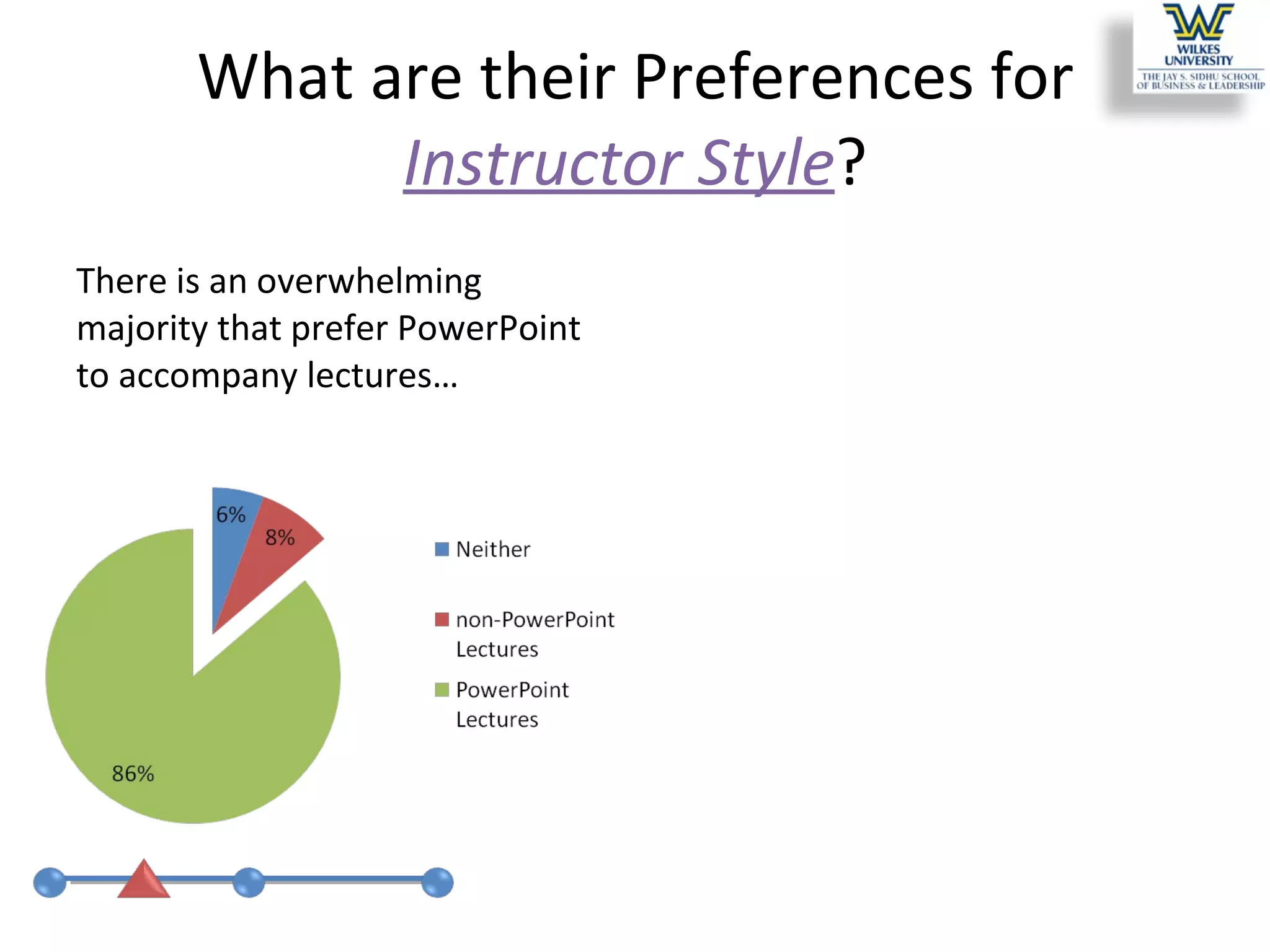
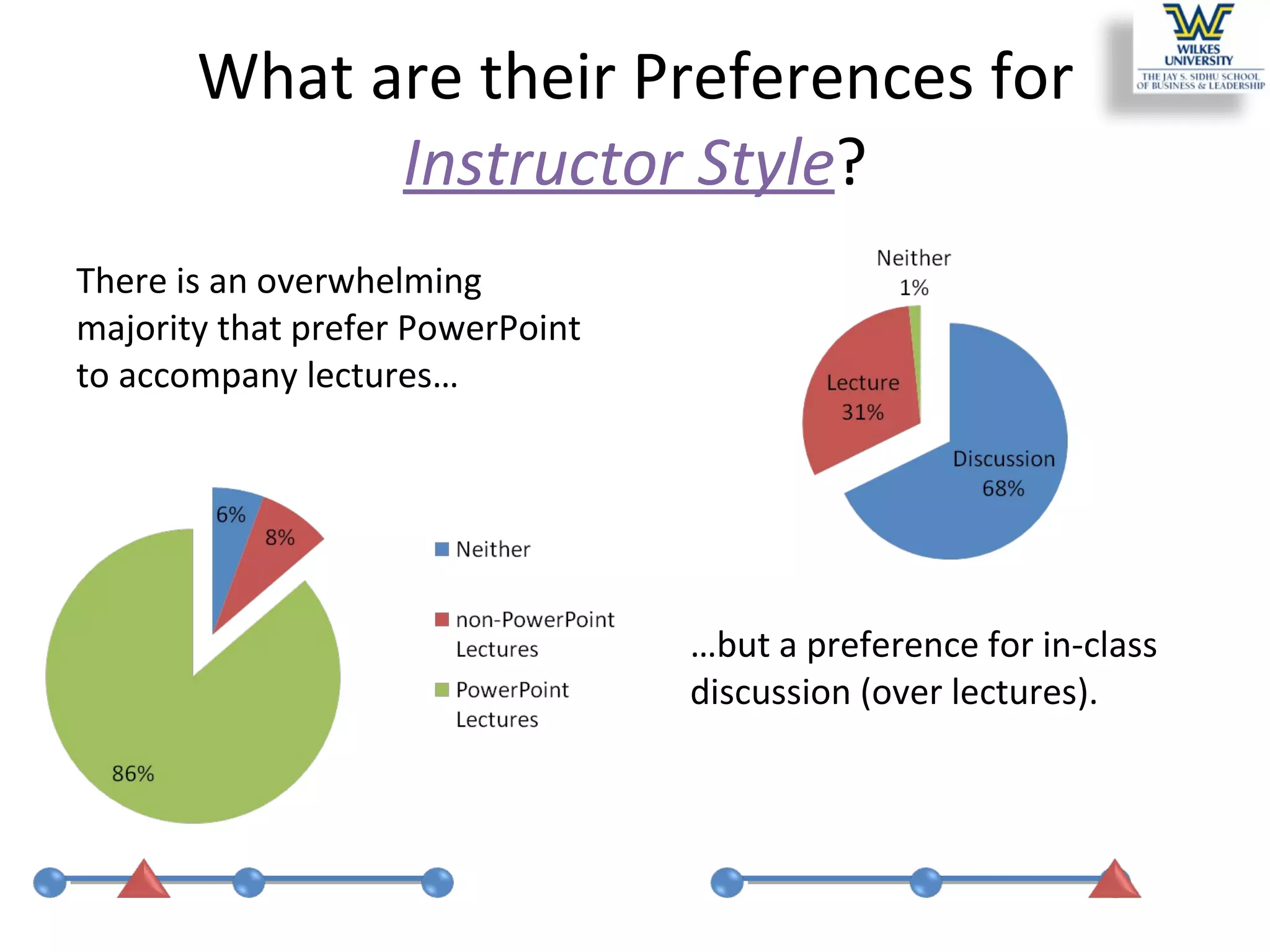
What are their Preferences for  Instructor Style ? There is an overwhelming majority that prefer PowerPoint to accompany lectures…
What are their Preferences for  Instructor Style ? There is an overwhelming majority that prefer PowerPoint to accompany lectures… … but a preference for in-class discussion (over lectures).
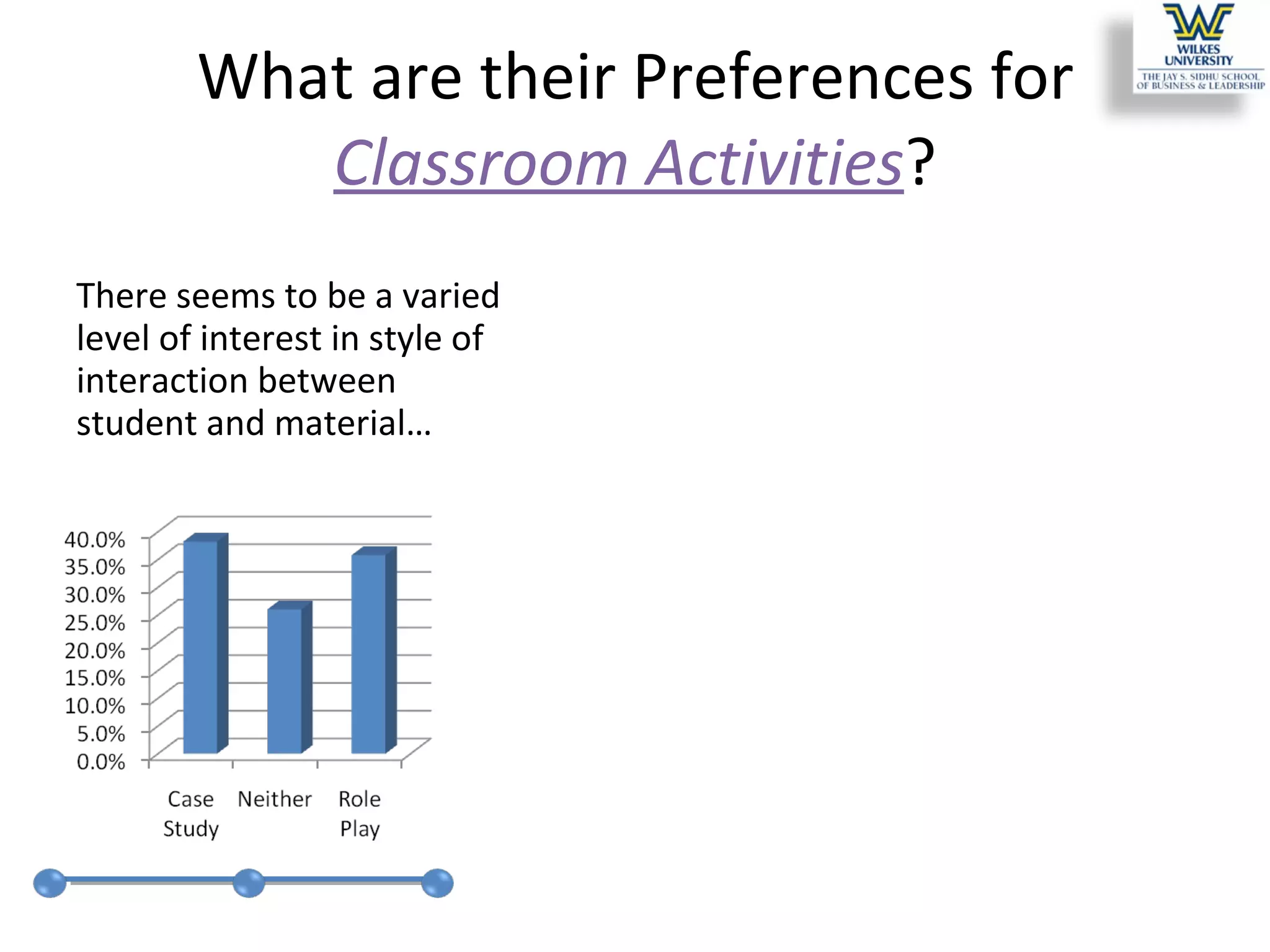
What are their Preferences for  Classroom Activities ? There seems to be a varied level of interest in style of interaction between student and material…
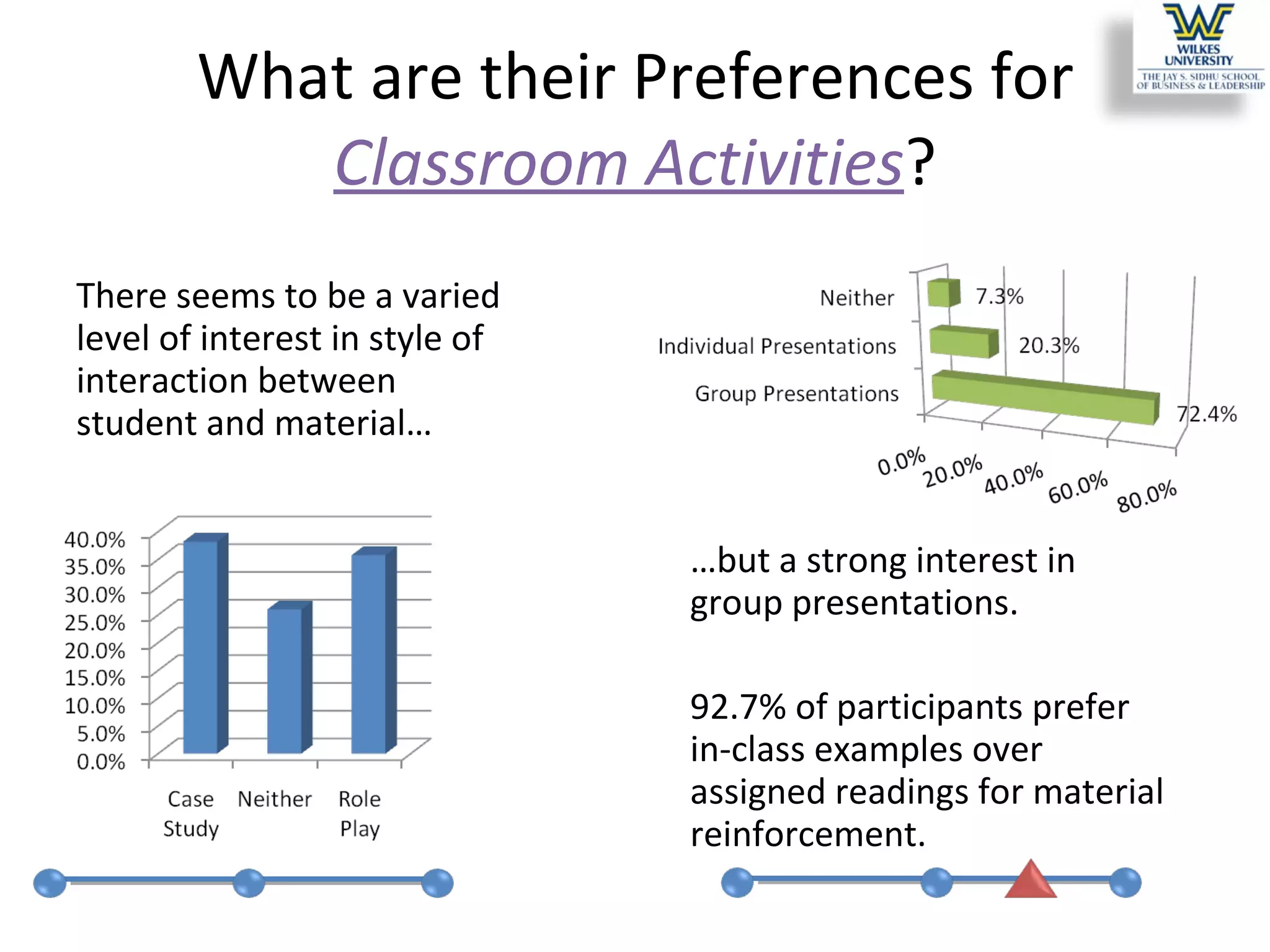
What are their Preferences for  Classroom Activities ? There seems to be a varied level of interest in style of interaction between student and material… … but a strong interest in group presentations. 92.7% of participants prefer in-class examples over assigned readings for material reinforcement.
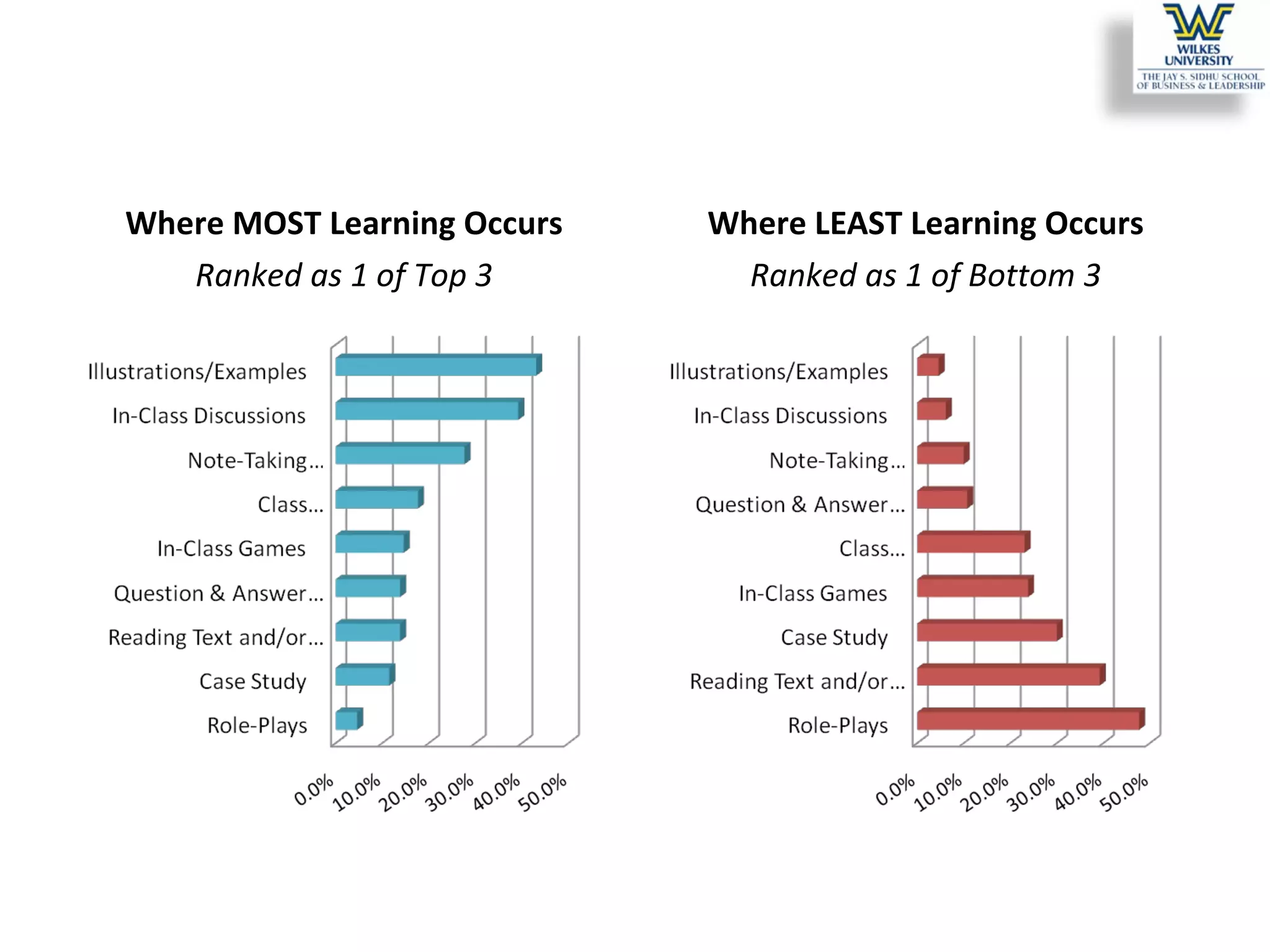
Where MOST Learning Occurs Ranked as 1 of Top 3 Where LEAST Learning Occurs Ranked as 1 of Bottom 3
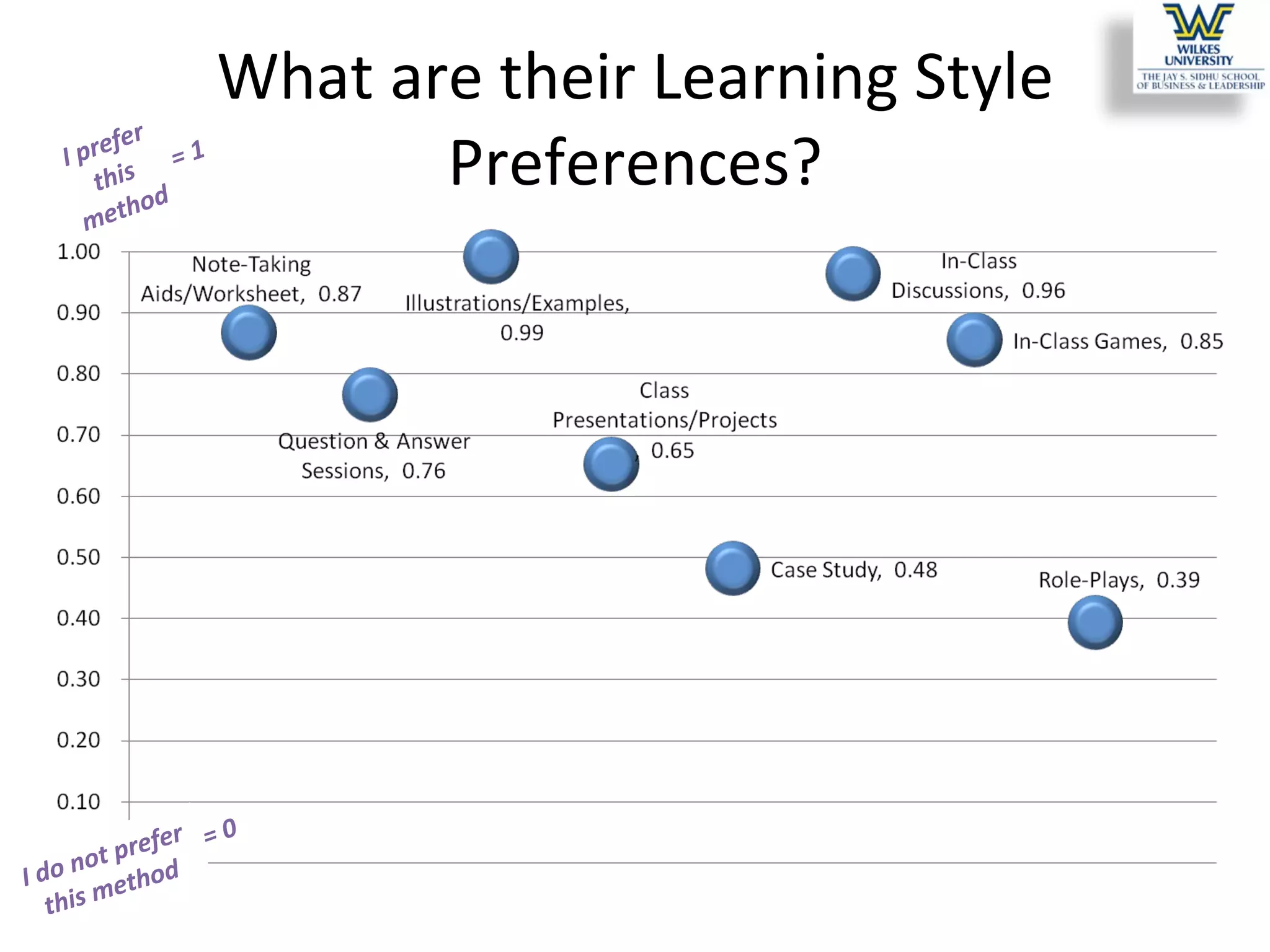
What are their Learning Style Preferences? I prefer this method I do not prefer this method = 1 = 0
 
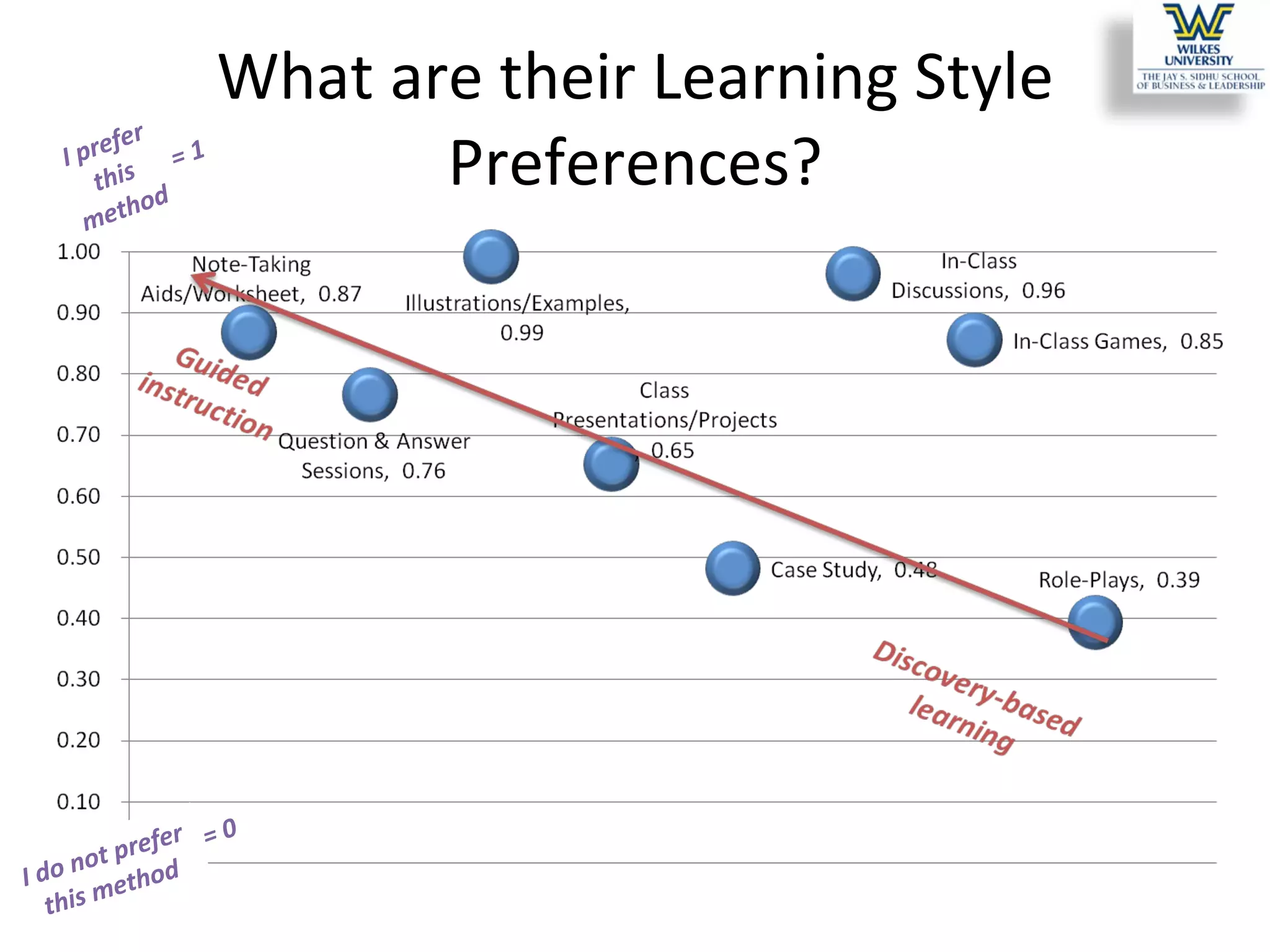
What are their Learning Style Preferences? I prefer this method I do not prefer this method = 1 = 0
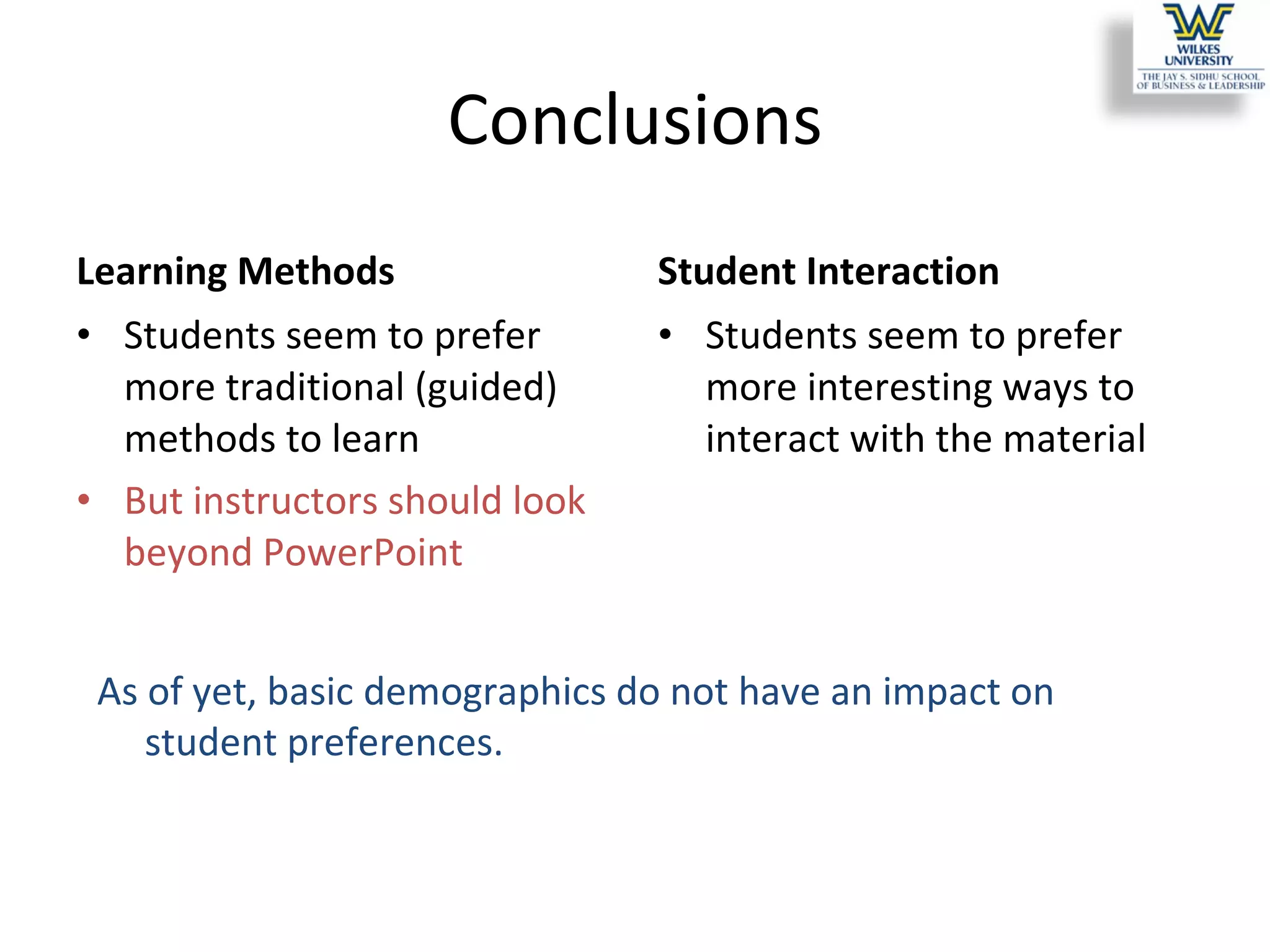
Conclusions Learning Methods Students seem to prefer more traditional (guided) methods to learn But instructors should look beyond PowerPoint Student Interaction Students seem to prefer more interesting ways to interact with the material As of yet, basic demographics do not have an impact on student preferences.
Future Research

Undergrad Learning Style Preferences

  • 1.
    Learning Style Preferences of Undergraduate Business Majors Academy of Business Research, Fall 2011 Atlantic City, New Jersey Jennifer Edmonds, PhD Dean Frear, PhD Wilkes University
  • 2.
    Research Rationalization Thereis much speculation regarding the need for diversity of methods in classroom environments. The “new” traditional learner has attributes that, when quantified, may indicate a transition in learning preference.
  • 3.
    The ‘New’ TraditionalLearner DEMOGRAPHICS Wealthier  diversity of student body  registered learning disabilities  adult learners BEHAVIORS  tardiness Fewer hours spent studying ~85% study using Internet Social networkers Bloggers, Internet researchers Peer evaluations Ability to work on own or in groups  percentage admitting their need for remedial math  importance on community leadership ~ half of undergraduate business students work more than 20 hours per week (Pearlman, 2010) (Frear & Edmonds, 2011) (Pryor et. al., 2006)
  • 4.
    Research Rationalization Thisstudy examines preferences for Humanist Cognitive Behaviorist Classroom activities from the undergraduate business student perspective.
  • 5.
    Research Rationalization Investigatesdifferences in learning style preferences based on: Age Class standing Gender This research attempts to determine the presence of an emerging learning model. Based on the identified preferences, the results should help educators understand those classroom activities that promote better learning.
  • 6.
  • 7.
    BEHAVIORIST Careful organization& presentation of information in a designed sequence Closed-ended learning Styles Include: Lecture Reading Text and/or Other Materials Note-Taking Aids/Worksheets Question & Answer Sessions
  • 8.
    COGNITIVE to motivatestudents to learn something new (using prior knowledge) Styles Include: Lecture Reading Text and/or Other Materials Illustrations/Examples Class Presentations Case Study
  • 9.
    HUMANIST More likeprescriptions (about what ought to happen) rather than descriptions (of what does happen) Open-ended learning Styles Include In-Class Discussions In-Class Games Role-Plays
  • 10.
    Categorization of methodsHUMANIST Reading Text and/or Other Materials In-Class Discussions In-Class Games Role-Plays COGNITIVE Lecture Reading Text and/or Other Materials Illustrations/Examples Class Presentations Case Study BEHAVIORIST Lecture Reading Text and/or Other Materials Note-Taking Aids/Worksheets Question & Answer Sessions CONSTRUCTIVIST Guided instruction Discovery-based learning
  • 11.
    Methodology Over 120Survey Usable Responses Wilkes University Undergraduate Business Students Private institution 2300 undergraduate students
  • 12.
    Methodology Over 120Survey Usable Responses Wilkes University Undergraduate Business Students Slightly higher participation from males (56.5%) Predominantly Bus. Admin. Majors (64.7%) Online Anonymous Survey Questionnaire Demographics Preferences in Instructor Style & Classroom Activities Preferred Learning Activities
  • 13.
    Undergraduate Business StudentsFairly equal distribution of students among the various levels of employment.
  • 14.
    Undergraduate Business StudentsFairly equal distribution of students among the various levels of employment. Freshmen students were the least represented (at only 11.6%)
  • 15.
    Undergraduate Business StudentsFairly equal distribution of students among the various levels of employment. Freshmen students were the least represented (at only 11.6%) Accounting (24.6%) and Entrepreneurship (9.0%) majors also participated in the study. Participants range between 18-47 years old. 88.0% of participants are younger than 25.
  • 16.
    What are theirPreferences for Instructor Style ? There is an overwhelming majority that prefer PowerPoint to accompany lectures…
  • 17.
    What are theirPreferences for Instructor Style ? There is an overwhelming majority that prefer PowerPoint to accompany lectures… … but a preference for in-class discussion (over lectures).
  • 18.
    What are theirPreferences for Classroom Activities ? There seems to be a varied level of interest in style of interaction between student and material…
  • 19.
    What are theirPreferences for Classroom Activities ? There seems to be a varied level of interest in style of interaction between student and material… … but a strong interest in group presentations. 92.7% of participants prefer in-class examples over assigned readings for material reinforcement.
  • 20.
    Where MOST LearningOccurs Ranked as 1 of Top 3 Where LEAST Learning Occurs Ranked as 1 of Bottom 3
  • 21.
    What are theirLearning Style Preferences? I prefer this method I do not prefer this method = 1 = 0
  • 22.
  • 23.
    What are theirLearning Style Preferences? I prefer this method I do not prefer this method = 1 = 0
  • 24.
    Conclusions Learning MethodsStudents seem to prefer more traditional (guided) methods to learn But instructors should look beyond PowerPoint Student Interaction Students seem to prefer more interesting ways to interact with the material As of yet, basic demographics do not have an impact on student preferences.
  • 25.