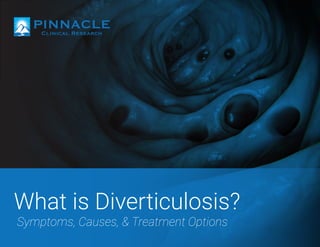
What is Diverticulosis?
Symptoms, Causes, & Treatment Options
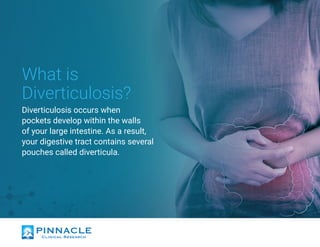
What is
Diverticulosis?
Diverticulosis occurs when
pockets develop within the walls
of your large intestine. As a result,
your digestive tract contains several
pouches called diverticula.
Causes of Diverticulosis
While the exact cause is unknown, several
factors can increase your likelihood of
developing the condition, including:
•	 Not eating enough fiber
•	 Straining during bowel movements
•	 Constipation
Most people with diverticulosis don’t experience
symptoms until it’s turned into diverticulitis.
That’s why it’s important to seek medical
attention if you’re often constipated.
Diverticulitis symptoms include:
•	 Bloating
•	 Stomach pain
•	 Chills
•	 Abdominal cramping
•	 Abdominal tenderness
•	 Diarrhea
•	 Fever
Diverticulosis Symptoms
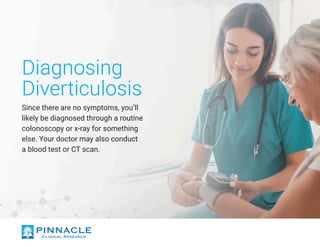
Diagnosing
Diverticulosis
Since there are no symptoms, you’ll
likely be diagnosed through a routine
colonoscopy or x-ray for something
else. Your doctor may also conduct
a blood test or CT scan.
Treating Diverticulosis
Treatments include:
•	 Increasing fiber intake
•	 Staying hydrated
•	 Ingest foods with probiotics – like
yogurt, tempeh, kombucha, or sauerkraut
•	 Eat lots of fruits and vegetables
•	 Eat dark leafy greens
•	 Take a fiber supplement
Risks of Diverticulosis
Diverticulosis occurs mostly in people 60 years
or older. Some other risks include:
•	 Peptic ulcers
•	 Irritable Bowel Syndrome
•	 Eating a diet high in red meat and fat
•	 Obesity
•	 A sedentary lifestyle
•	 Smoking
•	 Long-term use of certain medications
If You Think You May
Have Diverticulosis, Let
Us Help You
At Pinnacle Research, we specialize in the
exploration of diseases. We work with more than
70 referring physicians in San Antonio and Austin,
providing clinical trials in liver disease.
San Antonio Office – 210.982.0320
Austin Office – 512.384.1560
info@pinnacleresearch.com
PinnacleResearch.com

What is Diverticulosis?

  • 1.
    What is Diverticulosis? Symptoms,Causes, & Treatment Options
  • 2.
    What is Diverticulosis? Diverticulosis occurswhen pockets develop within the walls of your large intestine. As a result, your digestive tract contains several pouches called diverticula.
  • 3.
    Causes of Diverticulosis Whilethe exact cause is unknown, several factors can increase your likelihood of developing the condition, including: • Not eating enough fiber • Straining during bowel movements • Constipation
  • 4.
    Most people withdiverticulosis don’t experience symptoms until it’s turned into diverticulitis. That’s why it’s important to seek medical attention if you’re often constipated. Diverticulitis symptoms include: • Bloating • Stomach pain • Chills • Abdominal cramping • Abdominal tenderness • Diarrhea • Fever Diverticulosis Symptoms
  • 5.
    Diagnosing Diverticulosis Since there areno symptoms, you’ll likely be diagnosed through a routine colonoscopy or x-ray for something else. Your doctor may also conduct a blood test or CT scan.
  • 6.
    Treating Diverticulosis Treatments include: • Increasing fiber intake • Staying hydrated • Ingest foods with probiotics – like yogurt, tempeh, kombucha, or sauerkraut • Eat lots of fruits and vegetables • Eat dark leafy greens • Take a fiber supplement
  • 7.
    Risks of Diverticulosis Diverticulosisoccurs mostly in people 60 years or older. Some other risks include: • Peptic ulcers • Irritable Bowel Syndrome • Eating a diet high in red meat and fat • Obesity • A sedentary lifestyle • Smoking • Long-term use of certain medications
  • 8.
    If You ThinkYou May Have Diverticulosis, Let Us Help You At Pinnacle Research, we specialize in the exploration of diseases. We work with more than 70 referring physicians in San Antonio and Austin, providing clinical trials in liver disease. San Antonio Office – 210.982.0320 Austin Office – 512.384.1560 info@pinnacleresearch.com PinnacleResearch.com