
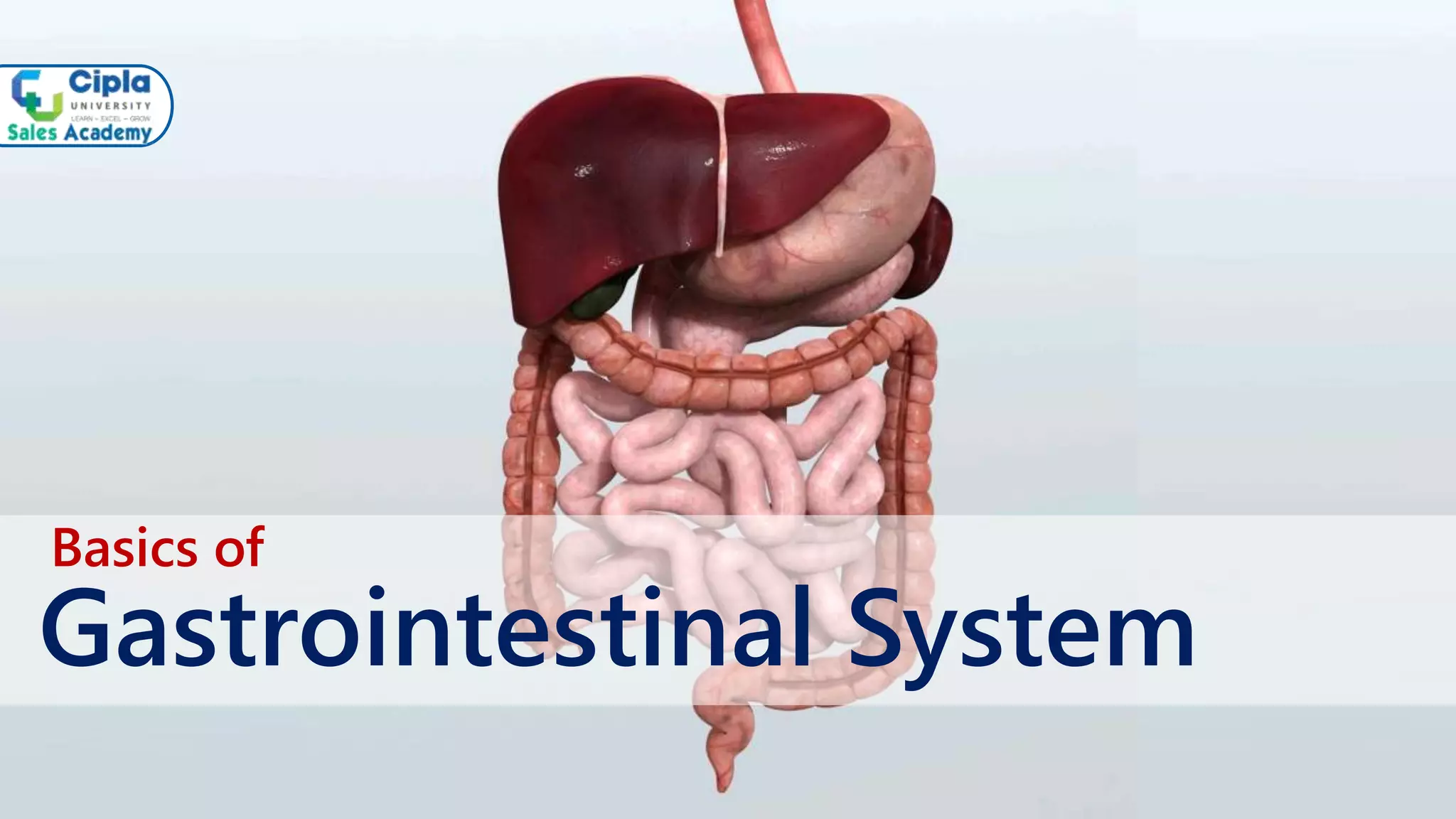
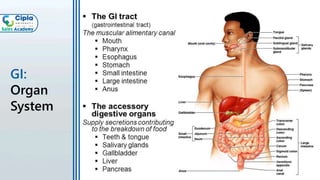
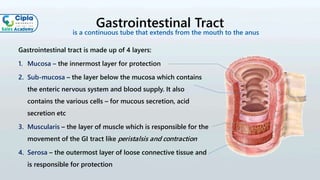
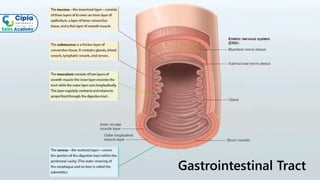
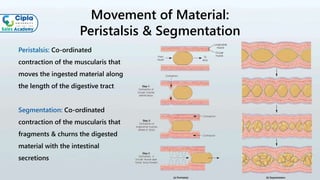
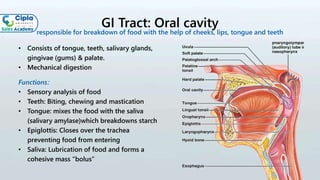
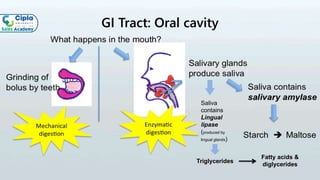
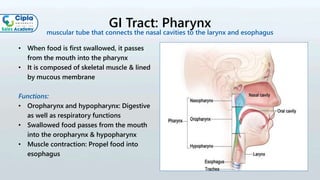
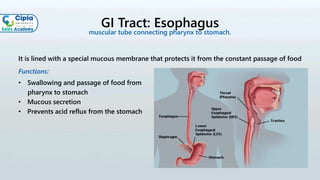
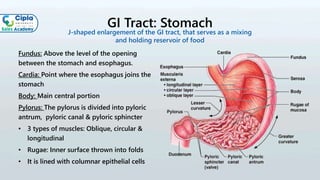
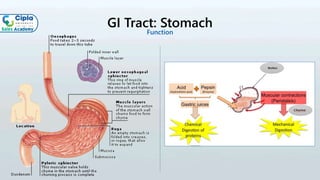
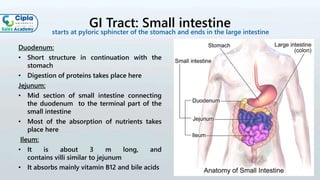
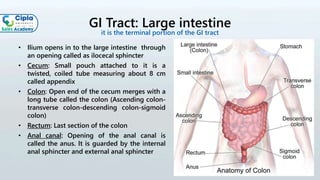
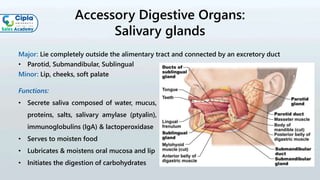
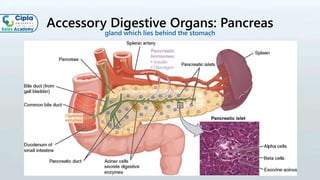
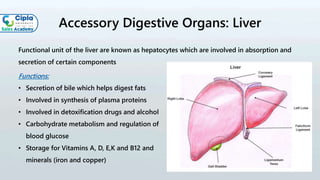
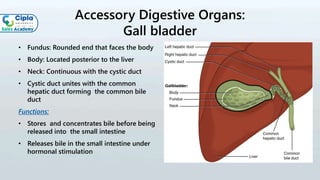
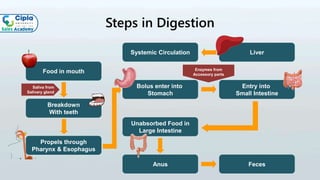
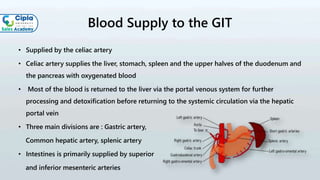

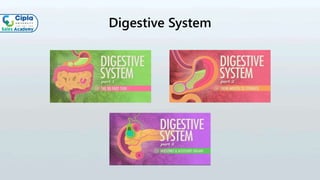


The gastrointestinal system is made up of a series of organs that break down food and absorb nutrients. Food is broken down mechanically and chemically by the teeth, tongue, stomach, and enzymes in the saliva, stomach, pancreas and small intestine. The GI tract is a continuous tube extending from the mouth to the anus, composed of four layers. Accessory organs including the liver, gallbladder and pancreas produce bile and enzymes that aid in digestion before nutrients are absorbed in the small intestine and waste is eliminated from the large intestine and rectum. The GI system works through a process of mechanical and chemical breakdown of food, peristalsis to move food through the tract, and absorption of nutrients into circulation.


![ONFH[AVN HIP] -TRIPLE REGIME -A NOVAL SURGICAL CONCEPT .pptx](https://cdn.slidesharecdn.com/ss_thumbnails/onfhavnhip2026koaconcalicutdrgokuldevdrmashraf-260210064517-213ec005-thumbnail.jpg?width=640&height=640&fit=bounds)


