TYPHOID
Presented by: B. Ephrath Sharon
B. Pharmacy
Annamacharya college of pharmacy,
Rajampet
CONTENTS
Introduction
Causes
Clinical symptoms
Mode of transmission
Prevention
Treatment
conclusion
introduction
 Typhoid is a acute systemic illness, mainly caused by
bacterial infection.
 Typhoid fever is highly contagious.
 It is mainly caused by contaminated food and water.
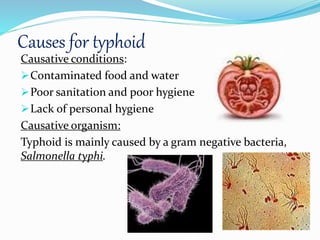
Causes for typhoid
Causative conditions:
Contaminated food and water
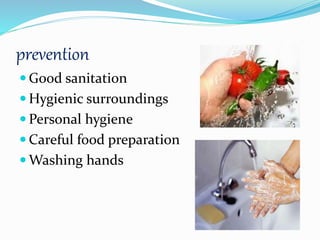
Poor sanitation and poor hygiene
Lack of personal hygiene
Causative organism:
Typhoid is mainly caused by a gram negative bacteria,
Salmonella typhi.
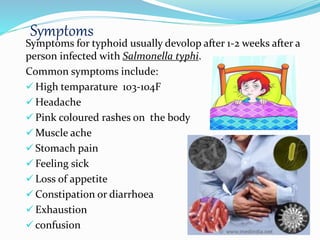
Symptoms
Symptoms for typhoid usually devolop after 1-2 weeks after a
person infected with Salmonella typhi.
Common symptoms include:
 High temparature 103-104F
 Headache
 Pink coloured rashes on the body
 Muscle ache
 Stomach pain
 Feeling sick
 Loss of appetite
 Constipation or diarrhoea
 Exhaustion
 confusion
Mode of transmission
 To human through human only.
 Through infected person’s urine
and stools.
 Due to poor sanitation.
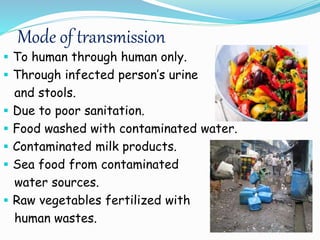
 Food washed with contaminated water.
 Contaminated milk products.
 Sea food from contaminated
water sources.
 Raw vegetables fertilized with
human wastes.
prevention
 Good sanitation
 Hygienic surroundings
 Personal hygiene
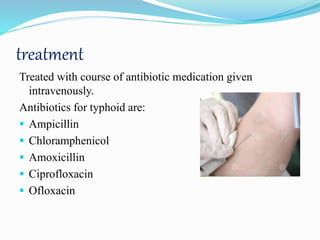
 Careful food preparation
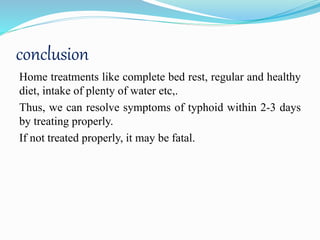
 Washing hands
treatment
Treated with course of antibiotic medication given
intravenously.
Antibiotics for typhoid are:
 Ampicillin
 Chloramphenicol
 Amoxicillin
 Ciprofloxacin
 Ofloxacin
conclusion
Home treatments like complete bed rest, regular and healthy
diet, intake of plenty of water etc,.
Thus, we can resolve symptoms of typhoid within 2-3 days
by treating properly.
If not treated properly, it may be fatal.
Typhoid ppt

Typhoid ppt

  • 1.
    TYPHOID Presented by: B.Ephrath Sharon B. Pharmacy Annamacharya college of pharmacy, Rajampet
  • 2.
    CONTENTS Introduction Causes Clinical symptoms Mode oftransmission Prevention Treatment conclusion
  • 3.
    introduction  Typhoid isa acute systemic illness, mainly caused by bacterial infection.  Typhoid fever is highly contagious.  It is mainly caused by contaminated food and water.
  • 4.
    Causes for typhoid Causativeconditions: Contaminated food and water Poor sanitation and poor hygiene Lack of personal hygiene Causative organism: Typhoid is mainly caused by a gram negative bacteria, Salmonella typhi.
  • 5.
    Symptoms Symptoms for typhoidusually devolop after 1-2 weeks after a person infected with Salmonella typhi. Common symptoms include:  High temparature 103-104F  Headache  Pink coloured rashes on the body  Muscle ache  Stomach pain  Feeling sick  Loss of appetite  Constipation or diarrhoea  Exhaustion  confusion
  • 6.
    Mode of transmission To human through human only.  Through infected person’s urine and stools.  Due to poor sanitation.  Food washed with contaminated water.  Contaminated milk products.  Sea food from contaminated water sources.  Raw vegetables fertilized with human wastes.
  • 7.
    prevention  Good sanitation Hygienic surroundings  Personal hygiene  Careful food preparation  Washing hands
  • 8.
    treatment Treated with courseof antibiotic medication given intravenously. Antibiotics for typhoid are:  Ampicillin  Chloramphenicol  Amoxicillin  Ciprofloxacin  Ofloxacin
  • 9.
    conclusion Home treatments likecomplete bed rest, regular and healthy diet, intake of plenty of water etc,. Thus, we can resolve symptoms of typhoid within 2-3 days by treating properly. If not treated properly, it may be fatal.