By Azhar Manzoor
Introduction
 Typhoid fever is a life threatening infection of the intestinal
tract and bloodstream caused by Salmonella Typhi bacteria of
the family enterobacteriaceae or salmonella paratyphi (A,B or C)
 Clinically characterized by typical continuous fever for 3 to 4
weeks with relative bradycardia with involvement of intestinal
lymphoid tissue, reticuloendothelial system & gallbladder
 S. Typhi is a gram negative, non-spore forming, motile bacteria.
 The bacteria grows best at 37°C.
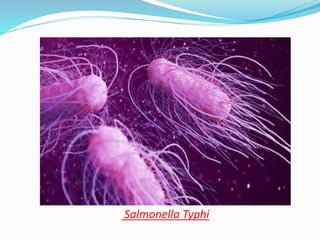
Salmonella Typhi
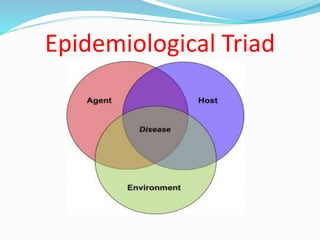
Epidemiological Triad
Agent
 Typhoid fever is caused by S.Typhi.
 Persons with typhoid fever carry the bacteria in their
bloodstream & intestinal tract.
 Both cases & carriers carry Salmonella Typhi in their
feces.
 S typhi is a gram negative, spore forming, motile
bacteria.
 The bacteria grows best at 37°C.
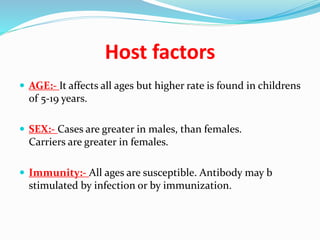
Host factors
 AGE:- It affects all ages but higher rate is found in childrens
of 5-19 years.
 SEX:- Cases are greater in males, than females.
Carriers are greater in females.
 Immunity:- All ages are susceptible. Antibody may b
stimulated by infection or by immunization.
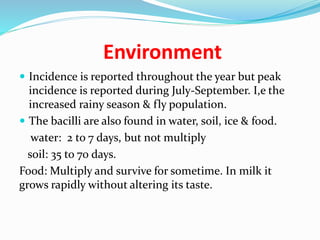
Environment
 Incidence is reported through0ut the year but peak
incidence is reported during July-September. I,e the
increased rainy season & fly population.
 The bacilli are also found in water, soil, ice & food.
water: 2 to 7 days, but not multiply
soil: 35 to 70 days.
Food: Multiply and survive for sometime. In milk it
grows rapidly without altering its taste.
Others
 Pollution of drinking water supplies.
 Open field defecation & urination.
 Low personal hygiene.
 Poor food hygiene.
 Health ignorance.
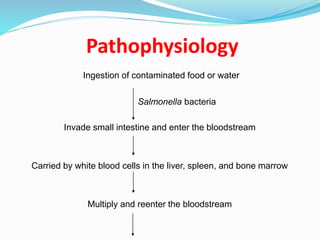
Pathophysiology
Ingestion of contaminated food or water
Salmonella bacteria
Invade small intestine and enter the bloodstream
Carried by white blood cells in the liver, spleen, and bone marrow
Multiply and reenter the bloodstream
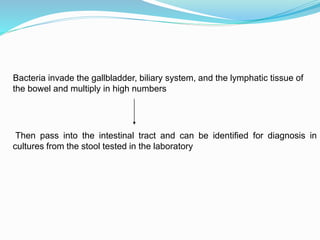
Bacteria invade the gallbladder, biliary system, and the lymphatic tissue of
the bowel and multiply in high numbers
Then pass into the intestinal tract and can be identified for diagnosis in
cultures from the stool tested in the laboratory
Incubation Period
 Incubation period is usually 10-14 days.
It may be as short as 3 days or as long as 21 days.
Modes of transmission
 Typhoid fever occurs through fecal oral route or
urine-oral route.
Direct Transmission:- Through hands contaminated
with faeces or urine of cases or carriers.
Indirect transmission:- Through ingestion of
contaminated food, H2O, milk, Soil.
Flies play a role in transmission.
Clinical symptoms
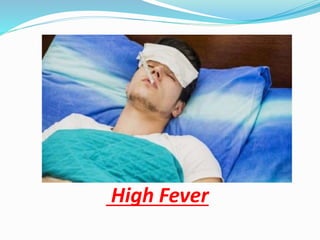
 High fever ranges from 103-104°F (39° to 40°C)
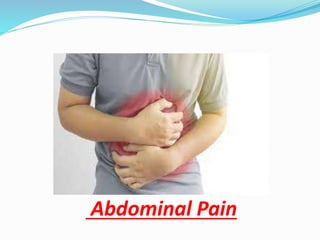
 Weakness, headache, abdominal pain, loss of appetite.
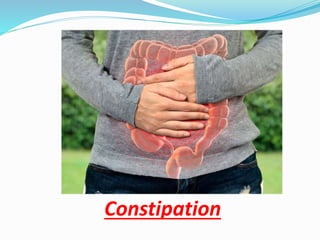
 The patient looks: constipation, diarrhea.
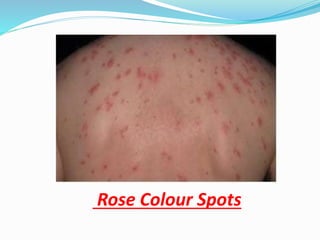
 Rose colour spots appears in some cases.
Headache
High Fever
Weakness
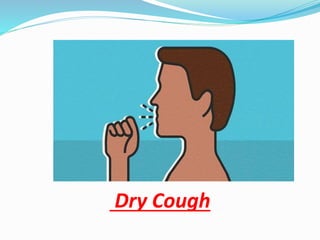
Dry Cough
Abdominal Pain
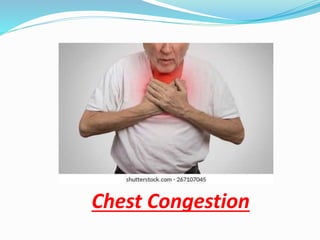
Chest Congestion
Rose Colour Spots
Constipation
Complications
 Hallucination
 Endocarditis
 Myocarditis
 Pancreatitis
 Pneumonia
 Meningitis
 Bleeding in intestine
 Holes in intestine
Diagnosis
 Blood culture
 Stool culture
 Urine culture
 Bone marrow culture
 ELISA from blood (igM & igG)
 WIDAL test.
Treatement
 Activity- Rest is helpful.
 Medical Care- Antibiotics, Corticosteroids,
Antipyretics.
 Diet- Fluid & electrolytes should be monitered. soft
digestable food is preferred. *
 Surgical care- in case of intestinal perforation.
 First line antibiotics- Choloramphenicol-oral, IV
500mg qid (50mg/kg in 4 doses) for 14 days.
 Trimethoprim-Sulphamethoxazole-Oral, IV 160-800mg
bid(4-20mg/kg in 2 doses) 14 days.
 Ampicillin/Amoxycillin-Oral,IM,IV 1000-2000mg
qid(50-100mg/kg in 4 doses for 14 days.
 2nd line antibiotics- Ciprofloxacin Oral/IV 500mg bid
or 200mg bid 10-14 days.
 Norfloxacin Oral 400mg bid 10 days.
Preventive measures
 Carriers should be prevented from handling food,
milk, or water for others
 Isolation
 Disinfection
 Water sanitation
 Food sanitation
 Excretic disposal
 Fly control
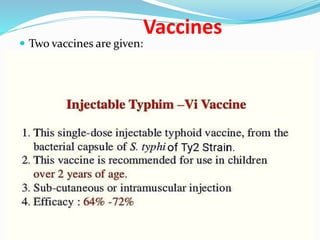
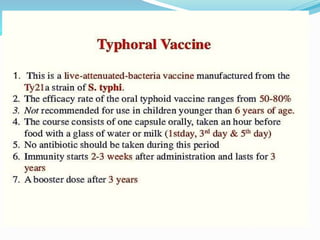
Vaccines
 Two vaccines are given:
Summary and Conclusion
Introduction
Epidemiological triad
Pathophysiology
Incubation period
Modes of transmission
Clinical symptoms
Diagnosis
Treatement & prevention
TYPHOID FEVER

TYPHOID FEVER

  • 1.
  • 2.
    Introduction  Typhoid feveris a life threatening infection of the intestinal tract and bloodstream caused by Salmonella Typhi bacteria of the family enterobacteriaceae or salmonella paratyphi (A,B or C)  Clinically characterized by typical continuous fever for 3 to 4 weeks with relative bradycardia with involvement of intestinal lymphoid tissue, reticuloendothelial system & gallbladder  S. Typhi is a gram negative, non-spore forming, motile bacteria.  The bacteria grows best at 37°C.
  • 3.
  • 6.
  • 7.
    Agent  Typhoid feveris caused by S.Typhi.  Persons with typhoid fever carry the bacteria in their bloodstream & intestinal tract.  Both cases & carriers carry Salmonella Typhi in their feces.  S typhi is a gram negative, spore forming, motile bacteria.  The bacteria grows best at 37°C.
  • 8.
    Host factors  AGE:-It affects all ages but higher rate is found in childrens of 5-19 years.  SEX:- Cases are greater in males, than females. Carriers are greater in females.  Immunity:- All ages are susceptible. Antibody may b stimulated by infection or by immunization.
  • 9.
    Environment  Incidence isreported through0ut the year but peak incidence is reported during July-September. I,e the increased rainy season & fly population.  The bacilli are also found in water, soil, ice & food. water: 2 to 7 days, but not multiply soil: 35 to 70 days. Food: Multiply and survive for sometime. In milk it grows rapidly without altering its taste.
  • 10.
    Others  Pollution ofdrinking water supplies.  Open field defecation & urination.  Low personal hygiene.  Poor food hygiene.  Health ignorance.

  • 11.
    Pathophysiology Ingestion of contaminatedfood or water Salmonella bacteria Invade small intestine and enter the bloodstream Carried by white blood cells in the liver, spleen, and bone marrow Multiply and reenter the bloodstream
  • 12.
    Bacteria invade thegallbladder, biliary system, and the lymphatic tissue of the bowel and multiply in high numbers Then pass into the intestinal tract and can be identified for diagnosis in cultures from the stool tested in the laboratory
  • 13.
    Incubation Period  Incubationperiod is usually 10-14 days. It may be as short as 3 days or as long as 21 days.
  • 14.
    Modes of transmission Typhoid fever occurs through fecal oral route or urine-oral route. Direct Transmission:- Through hands contaminated with faeces or urine of cases or carriers. Indirect transmission:- Through ingestion of contaminated food, H2O, milk, Soil. Flies play a role in transmission.
  • 15.
    Clinical symptoms  Highfever ranges from 103-104°F (39° to 40°C)  Weakness, headache, abdominal pain, loss of appetite.  The patient looks: constipation, diarrhea.  Rose colour spots appears in some cases.
  • 16.
  • 17.
  • 18.
  • 19.
  • 20.
  • 21.
  • 22.
  • 23.
  • 24.
    Complications  Hallucination  Endocarditis Myocarditis  Pancreatitis  Pneumonia  Meningitis  Bleeding in intestine  Holes in intestine
  • 25.
    Diagnosis  Blood culture Stool culture  Urine culture  Bone marrow culture  ELISA from blood (igM & igG)  WIDAL test.
  • 26.
    Treatement  Activity- Restis helpful.  Medical Care- Antibiotics, Corticosteroids, Antipyretics.  Diet- Fluid & electrolytes should be monitered. soft digestable food is preferred. *  Surgical care- in case of intestinal perforation.
  • 27.
     First lineantibiotics- Choloramphenicol-oral, IV 500mg qid (50mg/kg in 4 doses) for 14 days.  Trimethoprim-Sulphamethoxazole-Oral, IV 160-800mg bid(4-20mg/kg in 2 doses) 14 days.  Ampicillin/Amoxycillin-Oral,IM,IV 1000-2000mg qid(50-100mg/kg in 4 doses for 14 days.  2nd line antibiotics- Ciprofloxacin Oral/IV 500mg bid or 200mg bid 10-14 days.  Norfloxacin Oral 400mg bid 10 days.
  • 28.
    Preventive measures  Carriersshould be prevented from handling food, milk, or water for others  Isolation  Disinfection  Water sanitation  Food sanitation  Excretic disposal  Fly control
  • 29.
  • 31.
    Summary and Conclusion Introduction Epidemiologicaltriad Pathophysiology Incubation period Modes of transmission Clinical symptoms Diagnosis Treatement & prevention