Types of Mutation
Sr. Kaslin Juliat SAL
Assistant Professor
St. Xavier’s College, Mahuadanr,
Nilamber Pitamber University
 A mutation is a change that occurs in our DNA
sequence, either due to mistakes when DNA is
copied or as the result of environmental factors such
as UV light.
 The DNA sequence of a gene can be altered in a
number of ways.
 Gene mutations have varying effects on health,
depending on where they occur and whether they
alter the function of essential proteins.
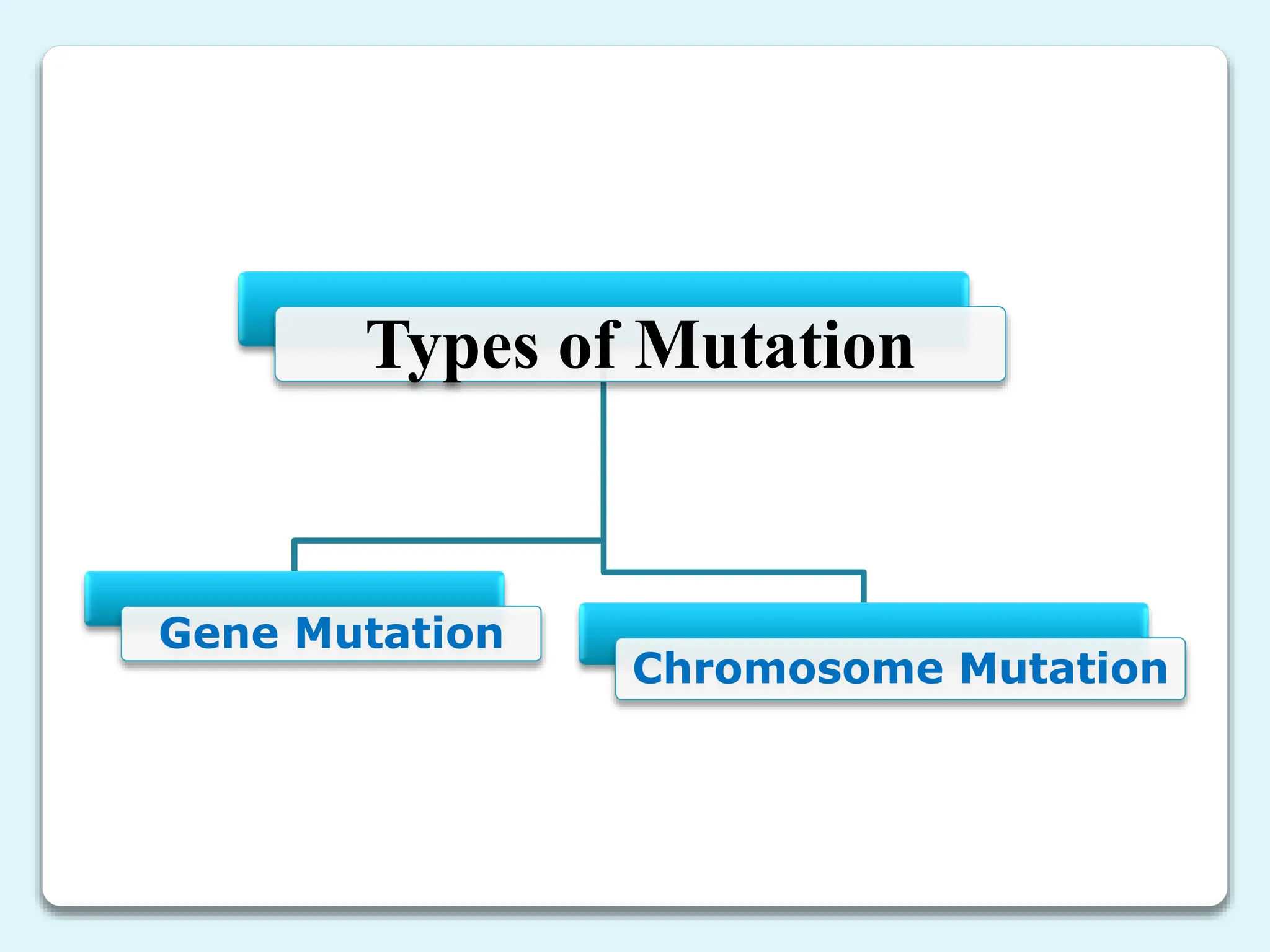
Types of Mutation
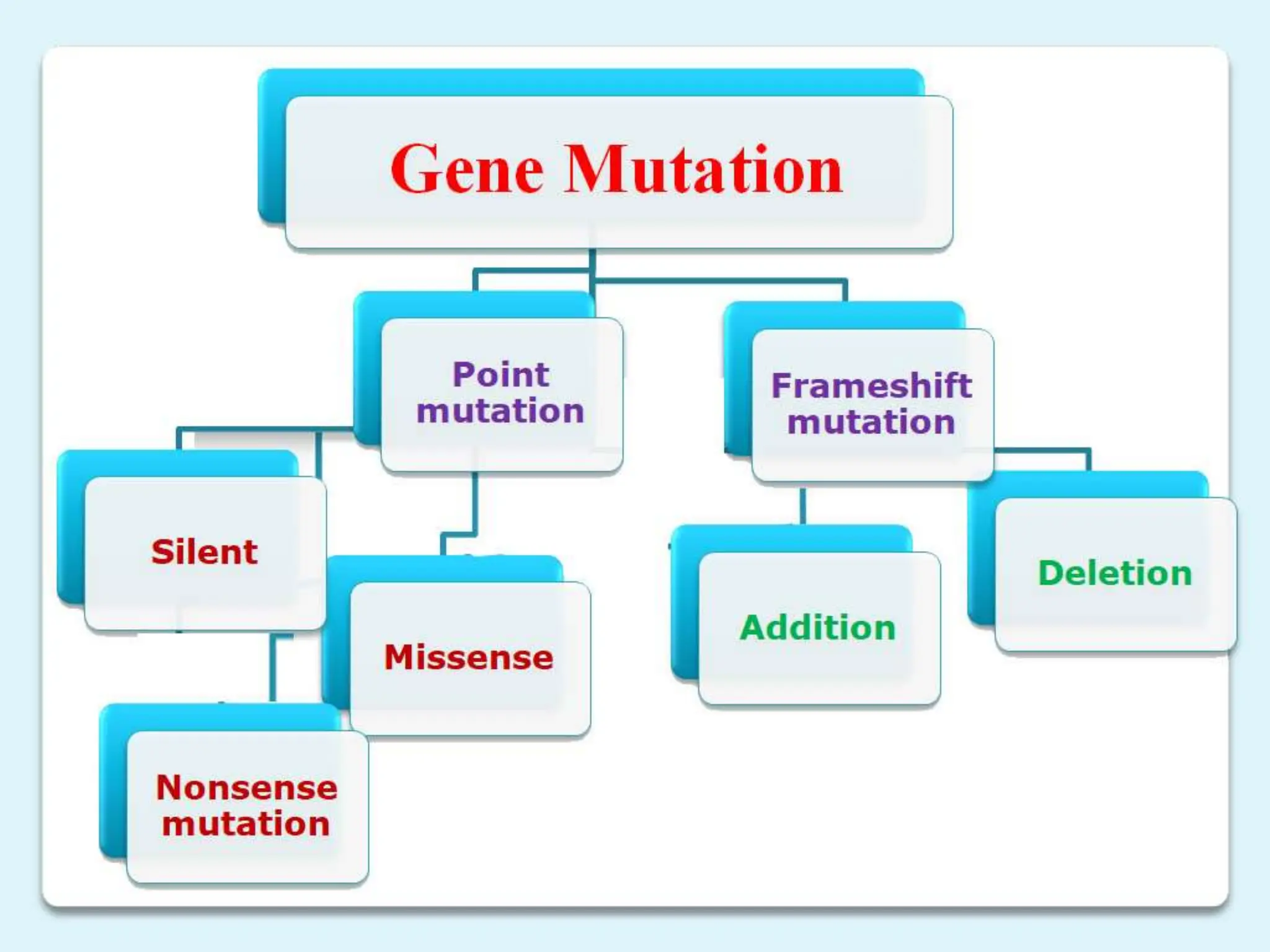
Gene Mutation
Chromosome Mutation
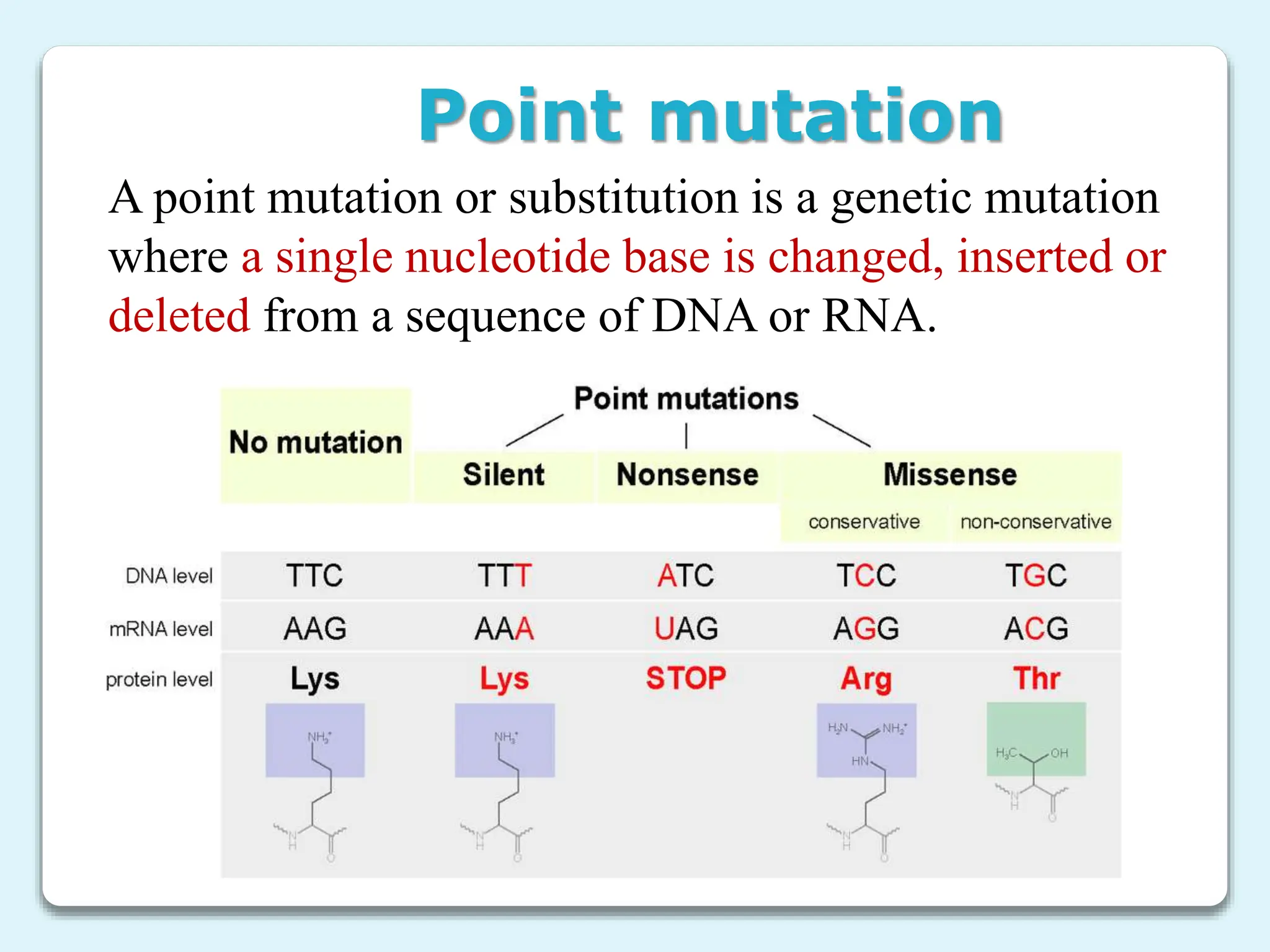
A point mutation or substitution is a genetic mutation
where a single nucleotide base is changed, inserted or
deleted from a sequence of DNA or RNA.
Point mutation
Silent mutations are mutations in DNA
that do not have an observable effect on
the organism's phenotype. They are a
specific type of neutral mutation.
Silent mutations
Nonsense mutation
 A nonsense mutation is also a change in one DNA
base pair.
 Instead of substituting one amino acid for another,
however, the altered DNA sequence prematurely
signals the cell to stop building a protein.
 This type of mutation results in a shortened protein
that may function improperly or not at all.
Missense mutation
 This type of mutation is a change in one DNA
base pair that results in the substitution of one
amino acid for another in the protein made by a
gene.
Frameshift mutation
 This type of mutation occurs when the addition or
loss of DNA bases changes a gene's reading frame.
 A reading frame consists of groups of 3 bases that
each code for one amino acid.
 A frameshift mutation shifts the grouping of these
bases and changes the code for amino acids.
 The resulting protein is usually nonfunctional.
 Insertions, deletions, and duplications can all be
frameshift mutations.
Deletion
 A deletion changes the number of DNA bases by
removing a piece of DNA.
 Small deletions may remove one or a few base pairs
within a gene, while larger deletions can remove an
entire gene or several neighboring genes.
 The deleted DNA may alter the function of the
resulting protein(s).
Insertion
 An insertion changes the number of DNA
bases in a gene by adding a piece of DNA.
 As a result, the protein made by the gene may
not function properly.
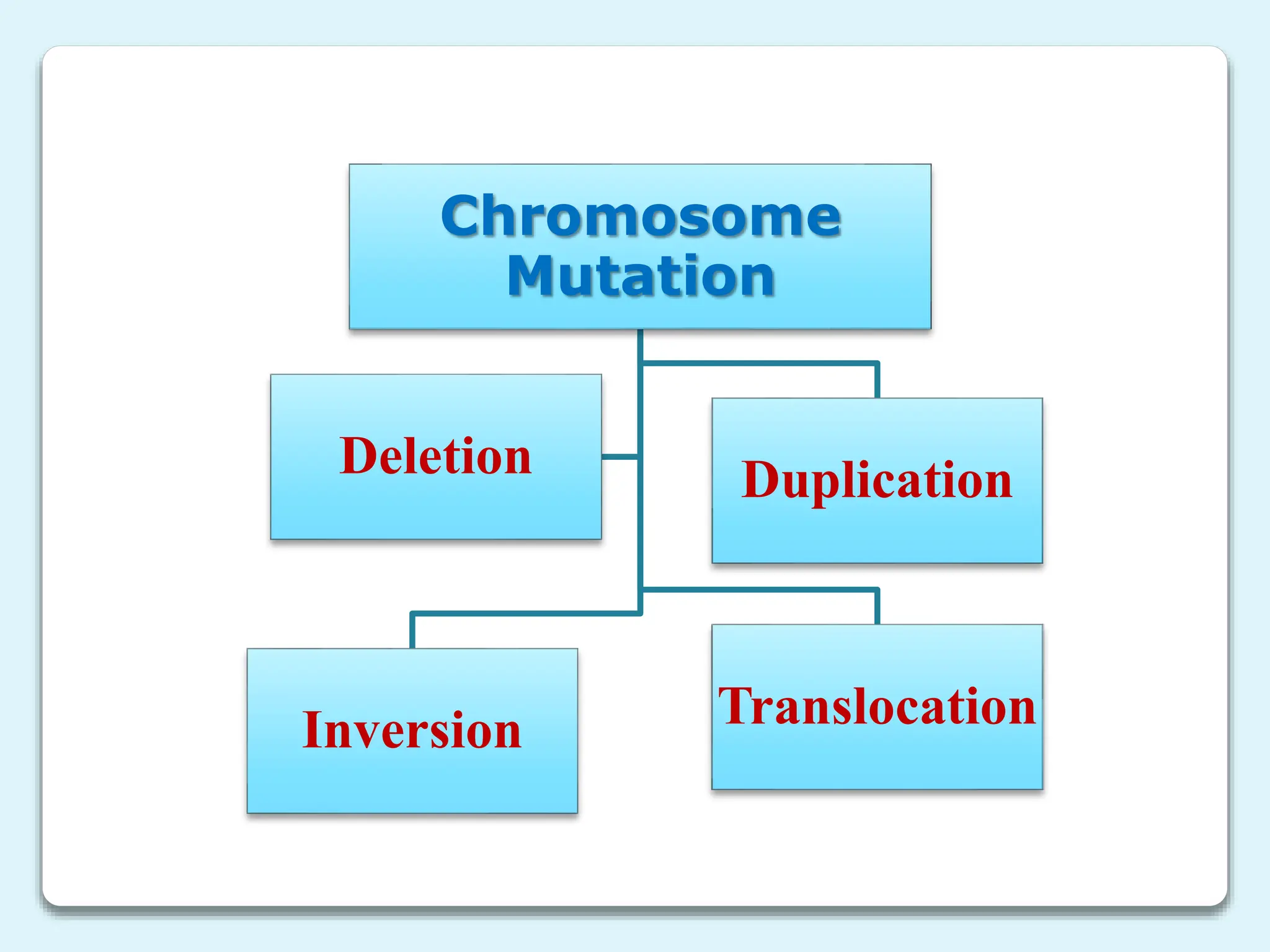
Chromosome
Mutation
Inversion Translocation
Duplication
Deletion
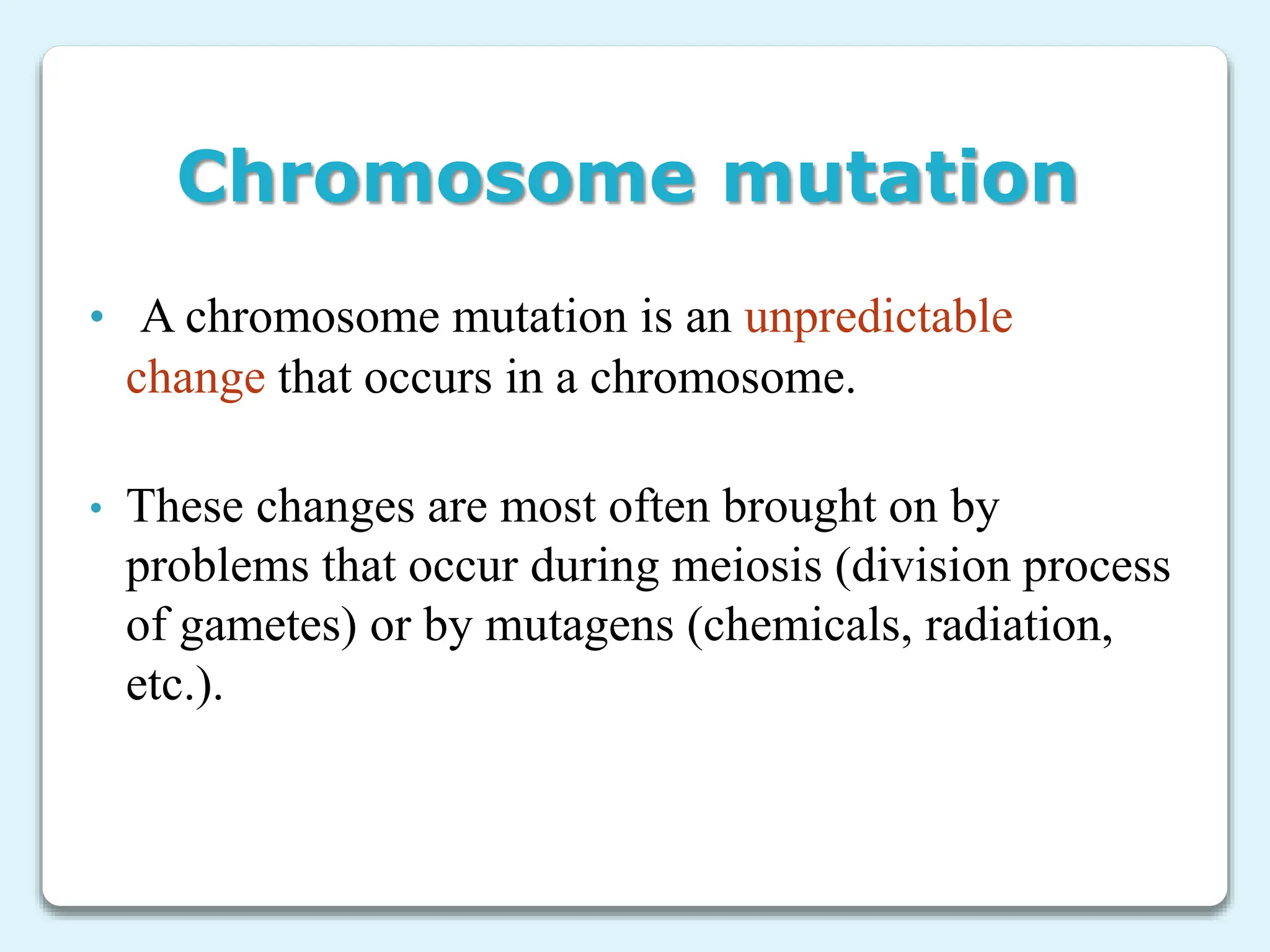
Chromosome mutation
• A chromosome mutation is an unpredictable
change that occurs in a chromosome.
• These changes are most often brought on by
problems that occur during meiosis (division process
of gametes) or by mutagens (chemicals, radiation,
etc.).
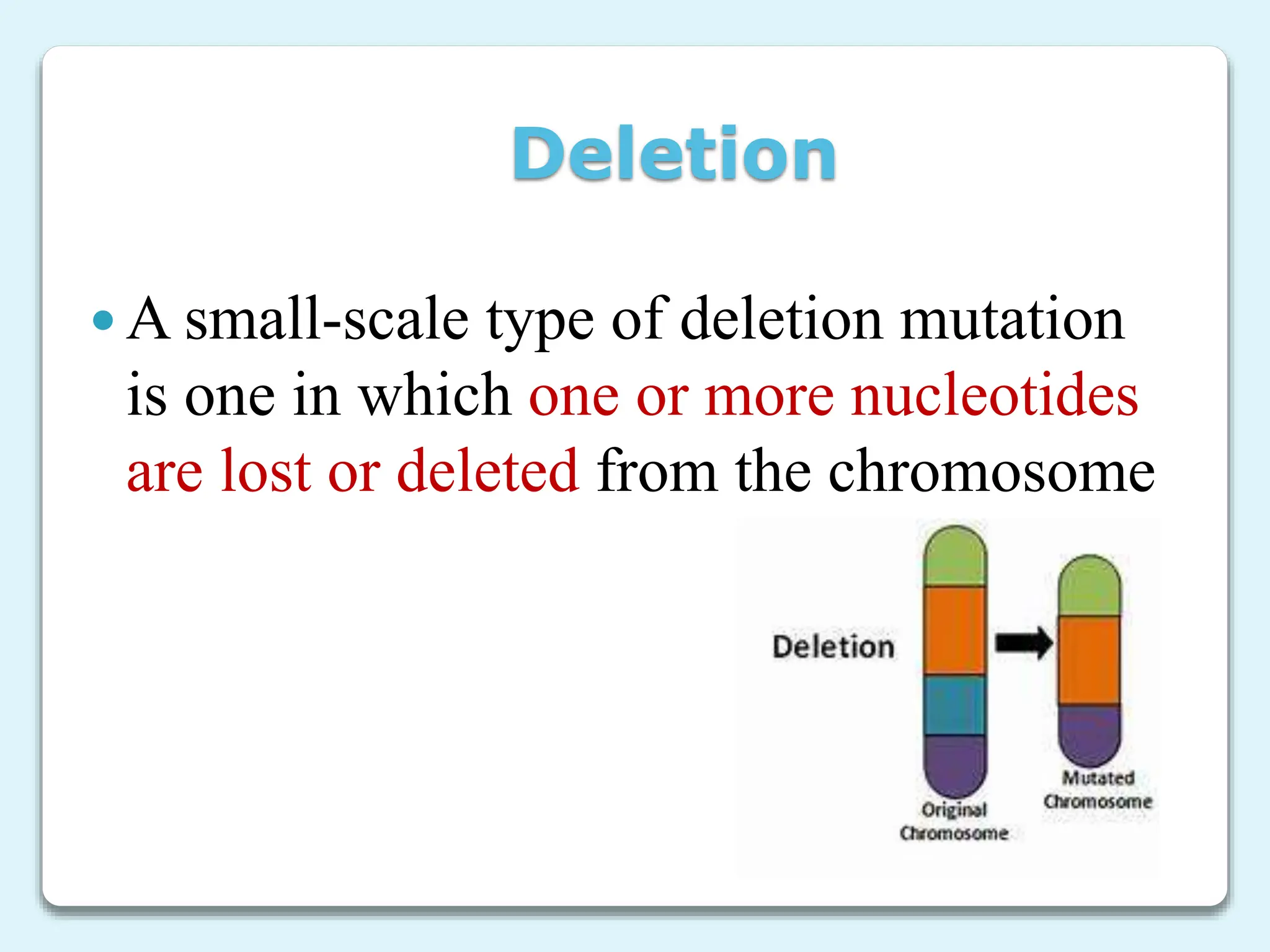
Deletion
 A small-scale type of deletion mutation
is one in which one or more nucleotides
are lost or deleted from the chromosome
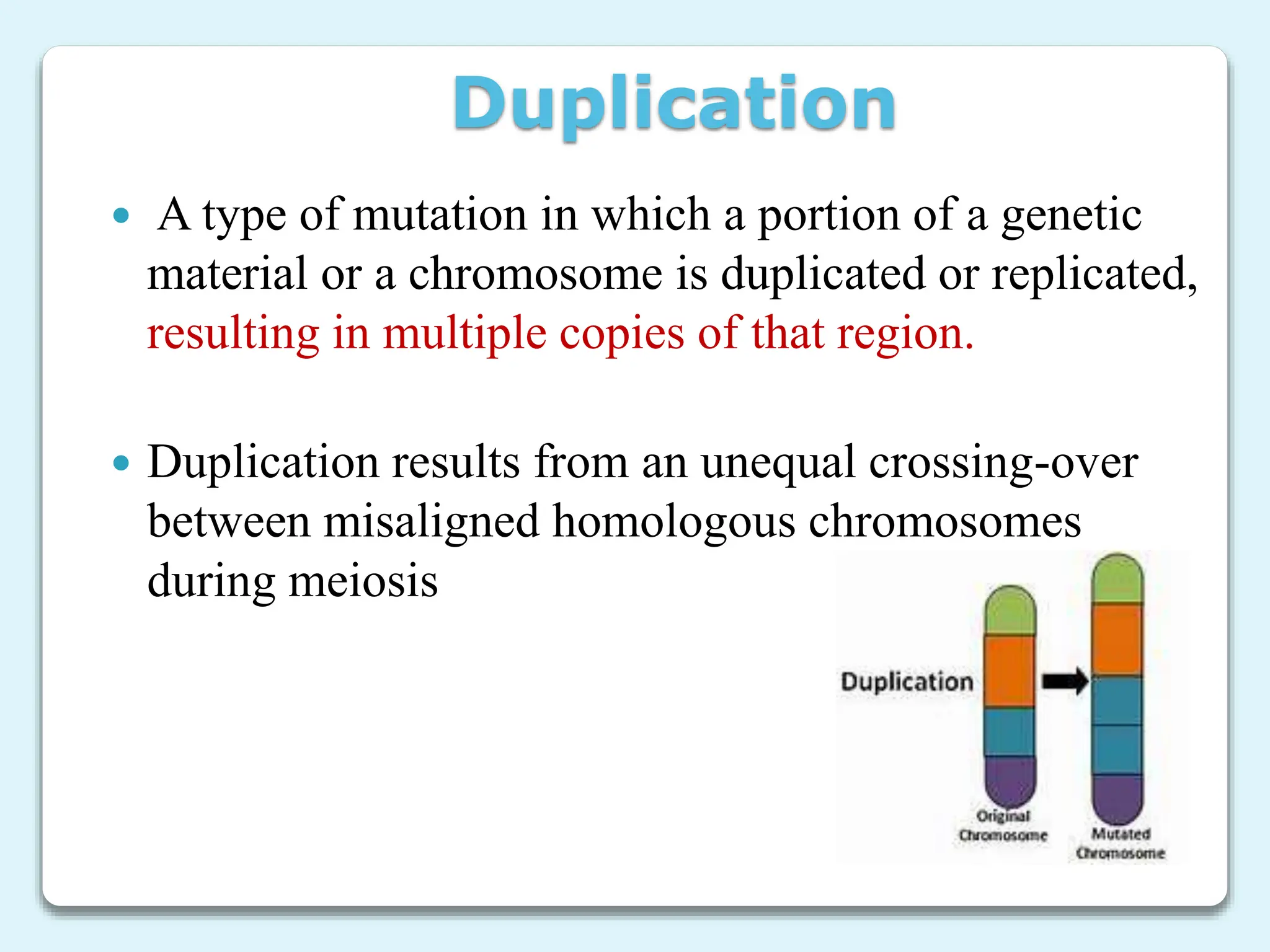
Duplication
 A type of mutation in which a portion of a genetic
material or a chromosome is duplicated or replicated,
resulting in multiple copies of that region.
 Duplication results from an unequal crossing-over
between misaligned homologous chromosomes
during meiosis
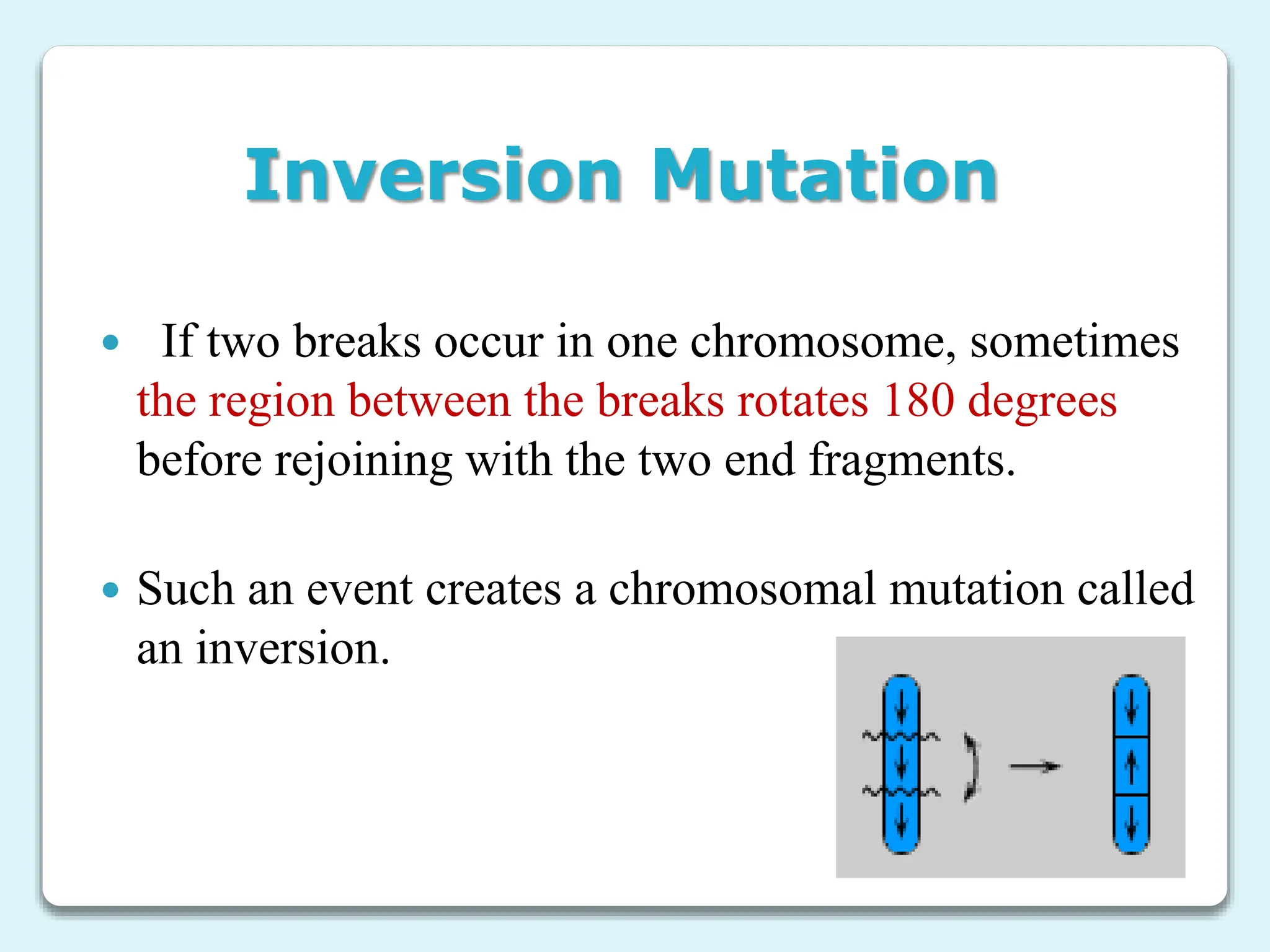
Inversion Mutation
 If two breaks occur in one chromosome, sometimes
the region between the breaks rotates 180 degrees
before rejoining with the two end fragments.
 Such an event creates a chromosomal mutation called
an inversion.
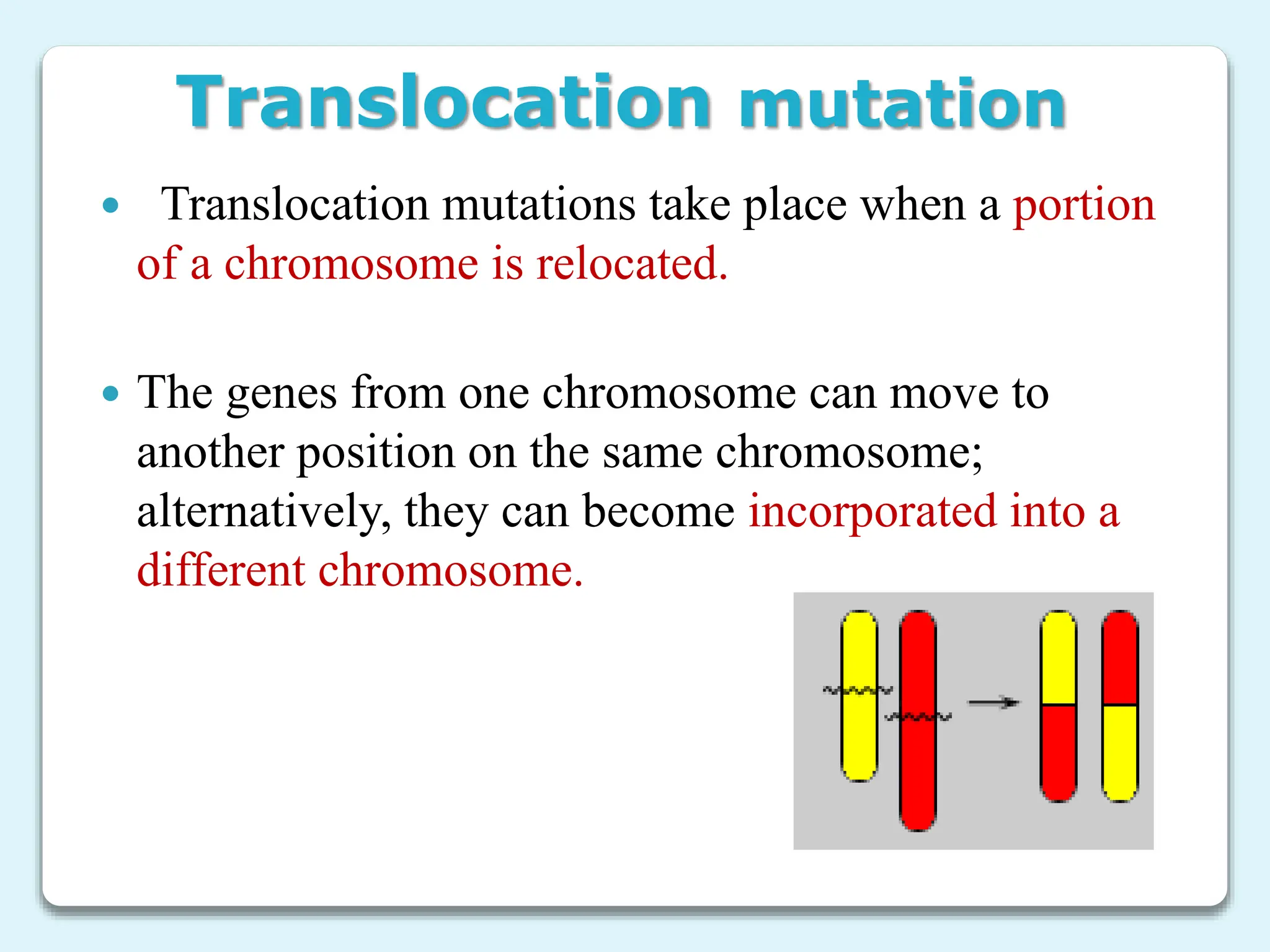
Translocation mutation
 Translocation mutations take place when a portion
of a chromosome is relocated.
 The genes from one chromosome can move to
another position on the same chromosome;
alternatively, they can become incorporated into a
different chromosome.
typesofmutation-200424155121.ppt slides for grade 10

typesofmutation-200424155121.ppt slides for grade 10

  • 1.
    Types of Mutation Sr.Kaslin Juliat SAL Assistant Professor St. Xavier’s College, Mahuadanr, Nilamber Pitamber University
  • 2.
     A mutationis a change that occurs in our DNA sequence, either due to mistakes when DNA is copied or as the result of environmental factors such as UV light.  The DNA sequence of a gene can be altered in a number of ways.  Gene mutations have varying effects on health, depending on where they occur and whether they alter the function of essential proteins.
  • 3.
    Types of Mutation GeneMutation Chromosome Mutation
  • 5.
    A point mutationor substitution is a genetic mutation where a single nucleotide base is changed, inserted or deleted from a sequence of DNA or RNA. Point mutation
  • 6.
    Silent mutations aremutations in DNA that do not have an observable effect on the organism's phenotype. They are a specific type of neutral mutation. Silent mutations
  • 7.
    Nonsense mutation  Anonsense mutation is also a change in one DNA base pair.  Instead of substituting one amino acid for another, however, the altered DNA sequence prematurely signals the cell to stop building a protein.  This type of mutation results in a shortened protein that may function improperly or not at all.
  • 8.
    Missense mutation  Thistype of mutation is a change in one DNA base pair that results in the substitution of one amino acid for another in the protein made by a gene.
  • 9.
    Frameshift mutation  Thistype of mutation occurs when the addition or loss of DNA bases changes a gene's reading frame.  A reading frame consists of groups of 3 bases that each code for one amino acid.  A frameshift mutation shifts the grouping of these bases and changes the code for amino acids.  The resulting protein is usually nonfunctional.  Insertions, deletions, and duplications can all be frameshift mutations.
  • 10.
    Deletion  A deletionchanges the number of DNA bases by removing a piece of DNA.  Small deletions may remove one or a few base pairs within a gene, while larger deletions can remove an entire gene or several neighboring genes.  The deleted DNA may alter the function of the resulting protein(s).
  • 11.
    Insertion  An insertionchanges the number of DNA bases in a gene by adding a piece of DNA.  As a result, the protein made by the gene may not function properly.
  • 12.
  • 13.
    Chromosome mutation • Achromosome mutation is an unpredictable change that occurs in a chromosome. • These changes are most often brought on by problems that occur during meiosis (division process of gametes) or by mutagens (chemicals, radiation, etc.).
  • 14.
    Deletion  A small-scaletype of deletion mutation is one in which one or more nucleotides are lost or deleted from the chromosome
  • 15.
    Duplication  A typeof mutation in which a portion of a genetic material or a chromosome is duplicated or replicated, resulting in multiple copies of that region.  Duplication results from an unequal crossing-over between misaligned homologous chromosomes during meiosis
  • 16.
    Inversion Mutation  Iftwo breaks occur in one chromosome, sometimes the region between the breaks rotates 180 degrees before rejoining with the two end fragments.  Such an event creates a chromosomal mutation called an inversion.
  • 17.
    Translocation mutation  Translocationmutations take place when a portion of a chromosome is relocated.  The genes from one chromosome can move to another position on the same chromosome; alternatively, they can become incorporated into a different chromosome.