The Human Body: The
Reproductive System
Review
 Mitosis is the type of cell division that occurs
in non-reproductive cells.
 Produces exact copies of the parent cell
 Meiosis is cell division that occurs in
reproductive cells; gametes.
 Produces egg and sperm cells with half the
genetic material of the parent cells.
 23 chromosomes are contained in gametes; this
is so that when egg and sperm meet, they
produce offspring with 46 chromosomes.
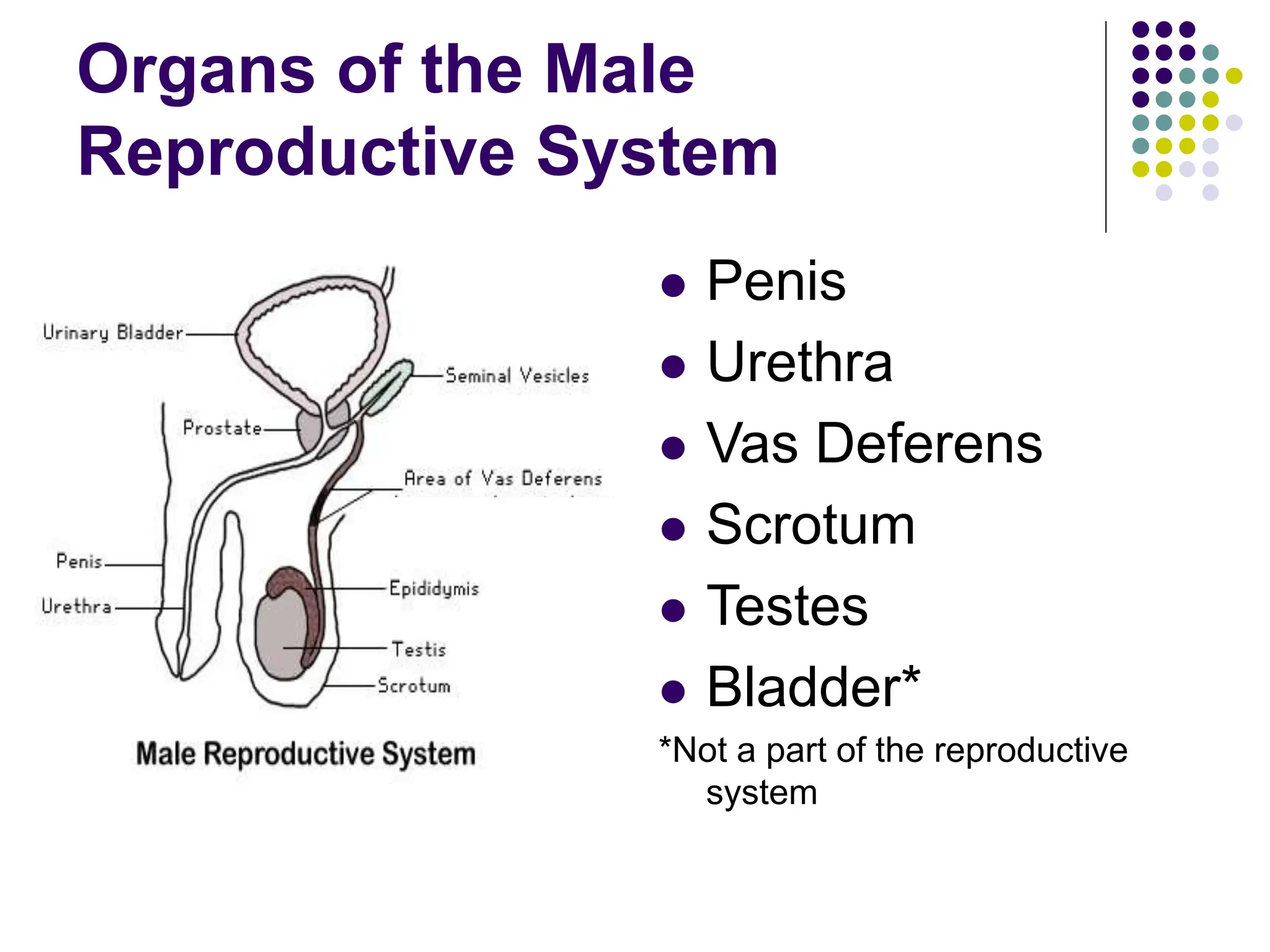
Organs of the Male
Reproductive System
 Penis
 Urethra
 Vas Deferens
 Scrotum
 Testes
 Bladder*
*Not a part of the reproductive
system
External Organs of the Male
Reproductive System
 Penis: the external reproductive organ,
urethra passes through the penis and allows
urine and semen to exit the body.
 Scrotum: a sac or pouch which holds the
testes.
 The function of the scrotum is to maintain the
proper temperature of the testes. (slightly cooler
than body temperature)
 Sperm is destroyed unless a temperature of 97o is
maintained.
Internal Organs of the Male
Reproductive System
 Bladder*: holds urine prior to urination. Urine
leaves the bladder via the urethra. (Not part of
reproductive system)
 Urethra: a tube which allows urine and semen to
exit the body. Connects to the bladder
Internal Organs of the Male
Reproductive System
 Prostate: gland that secretes fluid which is
a component of semen.
 Vas deferens: a tube which connects the
testes to the urethra and allows semen to
exit the body.
 Testes: two glands which produce sperm
and hormones (testosterone)
Organs of the Female
Reproductive System
 Vagina
 Cervix
 Uterus
 Fallopian Tubes
 Ovary
Organs of the Female
Reproductive System
 Vagina: also called the birth canal, a tube
leading from the uterus to the outside of the
body. (Where sperm enters. It is acidic.)
 Cervix: the lower portion of the uterus; where
the vagina and uterus meet. (Dilates for the
delivery of baby.)
Organs of the Female
Reproductive System
 Uterus: a hollow, fist-sized organ located
between the bladder and rectum. (Where the
zygote implants and the embryo develops)
 Fallopian Tubes: also called oviducts; are two
tubes connecting the uterus with the ovaries.
(site of fertilization)
Organs of the Female
Reproductive System
 Ovaries: small organs on the ends of the
Fallopian tubes responsible for the production
and release of eggs (ova-pl).
 Females are born with all of the eggs they will
ever produce.
 Ovaries alternate the release of eggs each month.
 Like testes, the ovaries produce hormones-
estrogen.
 This release of the ova is called ovulation.
The Menstrual Cycle
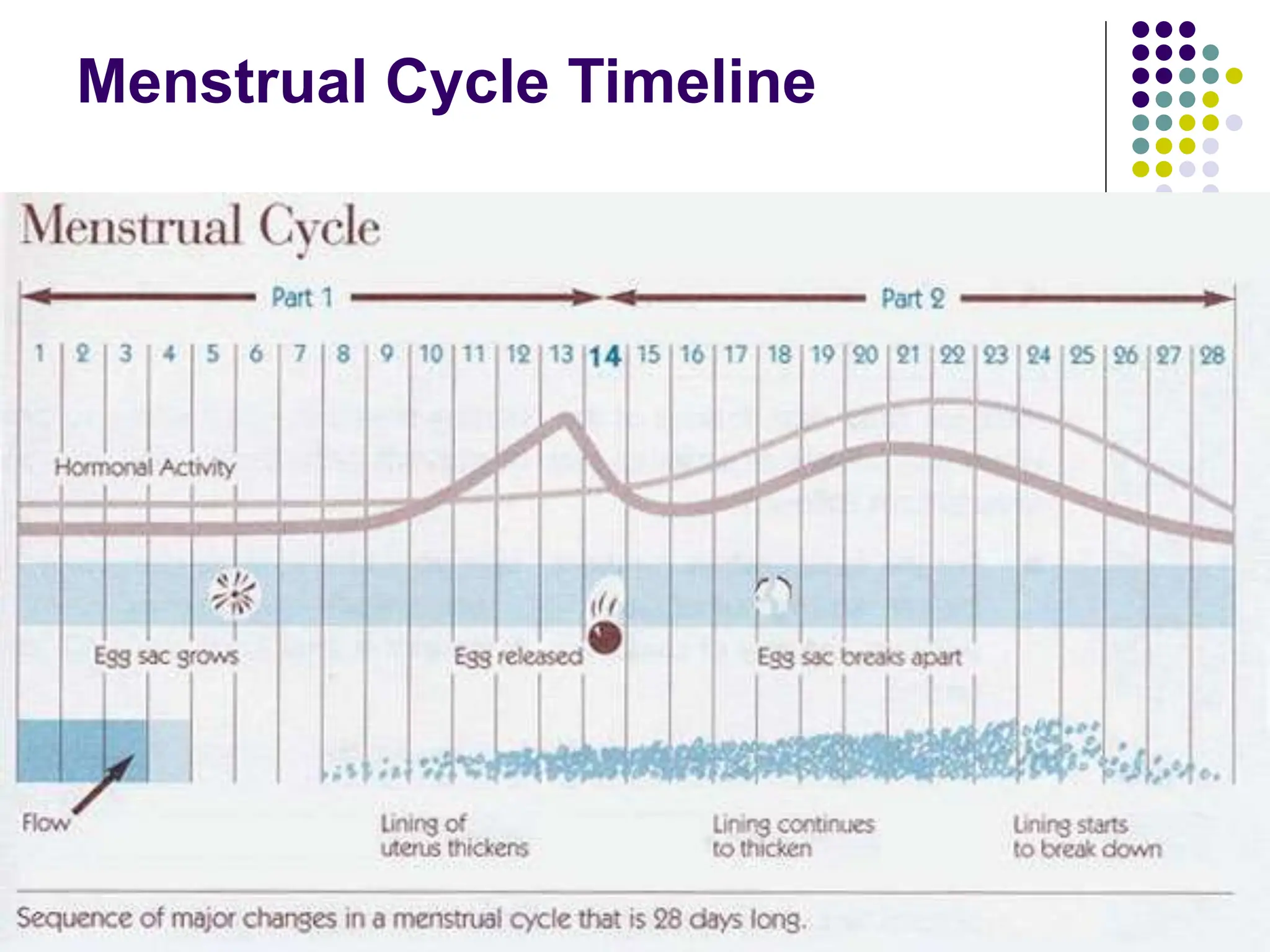
 The menstrual cycle typically lasts 28 days;
approximately 1 month.
 One cycle is the amount of time from the
beginning of one period to the beginning of the
next period.
 The beginning of a period is marked by the
release of the blood and lining from the inside
of the uterus.
 This flow of blood typically lasts 3-7 days and is
called menstruation.
The Menstrual Cycle
 After menstruation, the ovaries release
hormones that tell the uterus to grow a new
lining and prepare to receive a new egg.
 As the uterus prepares a new lining, one of the
ovaries releases an egg. This is called
ovulation.
 Ovulation occurs about halfway through a
woman’s cycle.
 The egg travels through the Fallopian tube. If it
is not fertilized it breaks down and is released
with the lining and blood of the uterus.
Menstrual Cycle Timeline
The Menstrual Cycle and
Fertilization
 If the egg is fertilized by a sperm cell, the egg
will implant in the lining of the uterus and
begin to develop.
 Zygote: The first cells of a new organism; the time
from fertilization to implantation.
 Embryo: The zygote is called an embryo from
implantation to 8 weeks.
 Fetus: After 8 weeks of development, the embryo
is known as a fetus.
 *To get from zygote to fetus, mitosis and
differentiation occurs
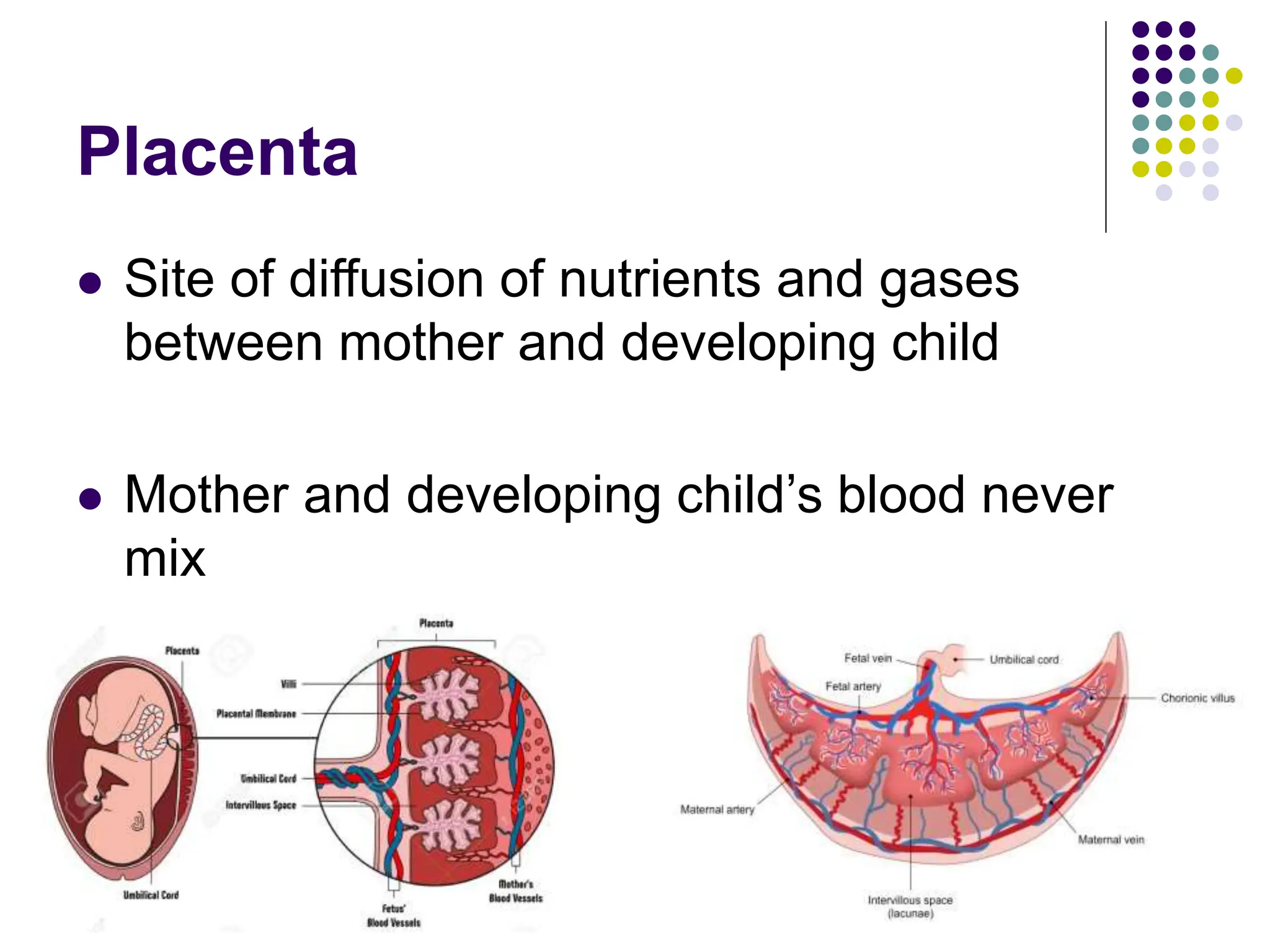
Placenta
 Site of diffusion of nutrients and gases
between mother and developing child
 Mother and developing child’s blood never
mix

Reproductive System PPT2.ppt for grade 10

  • 1.
    The Human Body:The Reproductive System
  • 2.
    Review  Mitosis isthe type of cell division that occurs in non-reproductive cells.  Produces exact copies of the parent cell  Meiosis is cell division that occurs in reproductive cells; gametes.  Produces egg and sperm cells with half the genetic material of the parent cells.  23 chromosomes are contained in gametes; this is so that when egg and sperm meet, they produce offspring with 46 chromosomes.
  • 3.
    Organs of theMale Reproductive System  Penis  Urethra  Vas Deferens  Scrotum  Testes  Bladder* *Not a part of the reproductive system
  • 4.
    External Organs ofthe Male Reproductive System  Penis: the external reproductive organ, urethra passes through the penis and allows urine and semen to exit the body.  Scrotum: a sac or pouch which holds the testes.  The function of the scrotum is to maintain the proper temperature of the testes. (slightly cooler than body temperature)  Sperm is destroyed unless a temperature of 97o is maintained.
  • 5.
    Internal Organs ofthe Male Reproductive System  Bladder*: holds urine prior to urination. Urine leaves the bladder via the urethra. (Not part of reproductive system)  Urethra: a tube which allows urine and semen to exit the body. Connects to the bladder
  • 6.
    Internal Organs ofthe Male Reproductive System  Prostate: gland that secretes fluid which is a component of semen.  Vas deferens: a tube which connects the testes to the urethra and allows semen to exit the body.  Testes: two glands which produce sperm and hormones (testosterone)
  • 7.
    Organs of theFemale Reproductive System  Vagina  Cervix  Uterus  Fallopian Tubes  Ovary
  • 8.
    Organs of theFemale Reproductive System  Vagina: also called the birth canal, a tube leading from the uterus to the outside of the body. (Where sperm enters. It is acidic.)  Cervix: the lower portion of the uterus; where the vagina and uterus meet. (Dilates for the delivery of baby.)
  • 9.
    Organs of theFemale Reproductive System  Uterus: a hollow, fist-sized organ located between the bladder and rectum. (Where the zygote implants and the embryo develops)  Fallopian Tubes: also called oviducts; are two tubes connecting the uterus with the ovaries. (site of fertilization)
  • 10.
    Organs of theFemale Reproductive System  Ovaries: small organs on the ends of the Fallopian tubes responsible for the production and release of eggs (ova-pl).  Females are born with all of the eggs they will ever produce.  Ovaries alternate the release of eggs each month.  Like testes, the ovaries produce hormones- estrogen.  This release of the ova is called ovulation.
  • 11.
    The Menstrual Cycle The menstrual cycle typically lasts 28 days; approximately 1 month.  One cycle is the amount of time from the beginning of one period to the beginning of the next period.  The beginning of a period is marked by the release of the blood and lining from the inside of the uterus.  This flow of blood typically lasts 3-7 days and is called menstruation.
  • 12.
    The Menstrual Cycle After menstruation, the ovaries release hormones that tell the uterus to grow a new lining and prepare to receive a new egg.  As the uterus prepares a new lining, one of the ovaries releases an egg. This is called ovulation.  Ovulation occurs about halfway through a woman’s cycle.  The egg travels through the Fallopian tube. If it is not fertilized it breaks down and is released with the lining and blood of the uterus.
  • 13.
  • 14.
  • 15.
    The Menstrual Cycleand Fertilization  If the egg is fertilized by a sperm cell, the egg will implant in the lining of the uterus and begin to develop.  Zygote: The first cells of a new organism; the time from fertilization to implantation.  Embryo: The zygote is called an embryo from implantation to 8 weeks.  Fetus: After 8 weeks of development, the embryo is known as a fetus.  *To get from zygote to fetus, mitosis and differentiation occurs
  • 16.
    Placenta  Site ofdiffusion of nutrients and gases between mother and developing child  Mother and developing child’s blood never mix